What is Rudrastra?

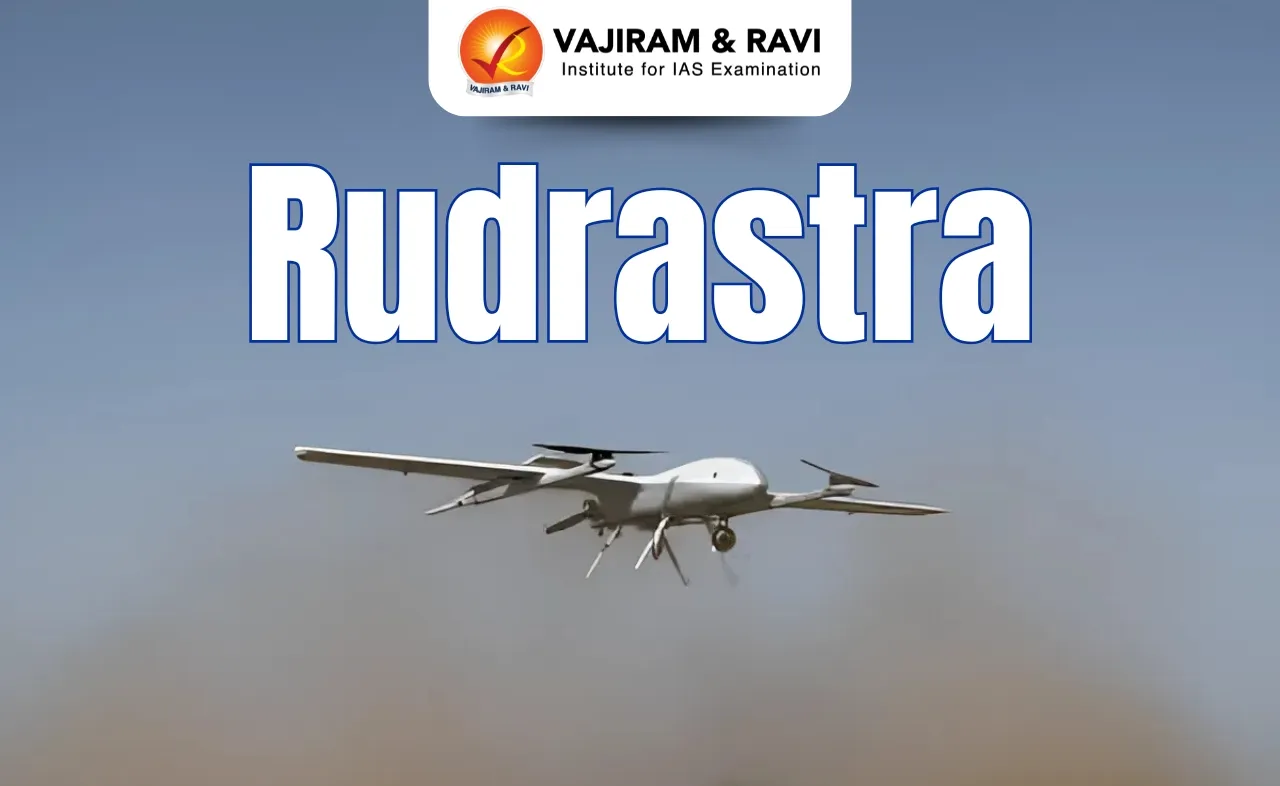
Rudrastra

Rudrastra Latest News

India’s latest homegrown battlefield tech marvel Rudrastra was successfully tested by the Indian Army.

About Rudrastra

  • It is a hybrid Vertical Take-Off and Landing (VTOL) drone developed by Solar Aerospace and Defence Limited (SDAL).

Features of Rudrastra

  • It can not only take off like a helicopter but also cruise like an aircraft, making it versatile and hard to spot.
  • The drone is equipped with smart warheads meant for anti-personnel roles, meaning it can target enemy soldiers and positions with high accuracy.
  • It can hit targets more than 50 km away.
  • In tests at the Pokhran range, it demonstrated a full range of 170 km and stayed in the air for nearly 90 minutes, relaying real-time video and returning on its own.
  • It even dropped an airburst munition that exploded low to the ground, damaging a wide area, perfect for enemy camps or artillery.
  • It’s meant for deep strikes, think enemy artillery guns or terrorist hideouts well inside hostile territory.
  • The drone can quietly sneak in, strike, and return, all without risking lives. It gives the Army a powerful “stand-off weapon” that works from a safe distance

Source: ET

Rudrastra FAQs

Q1: What is a vertical takeoff and landing vehicle?

Ans: Vertical takeoff and landing (VTOL) aircraft have the capability to take off from a standstill, rise straight up, fly from one place to another, and then set down vertically again. 

Q2: What is the difference between stand-off and stand-in weapons?

Ans: Typical stand-off weapons include cruise missiles, glide bombs and short-range ballistic missiles. Standoff missiles belong to the larger class of ranged weapons and are complemented by the Stand-in Attack Weapon (SiAW), a missile with a shorter range that is fired by an aircraft after penetrating enemy airspace.

Shongtong Karcham Hydroelectric Project

Shongtong Karcham Hydroelectric Project

Shongtong Karcham Hydroelectric Project Latest News

Himachal Pradesh Chief Minister recently set a firm Nov 2026 deadline for the completion of the long-delayed Shongtong-Karcham hydroelectric project.

About Shongtong Karcham Hydroelectric Project

  • It is a hydropower project, on the river Satluj in the Kinnaur District of Himachal Pradesh.
  • It is a run-of-river project.
  • Capacity: 3 × 150 MW Francis turbines, totaling 450 MW; produces 1,594 million units per year.
  • The gross head and net head of the project will be 128.57 m and 126.58 m respectively. 
  • The total number of penstocks, pipes, or long channels that carry water down from the hydroelectric reservoir to the turbines inside the actual power station is expected to be 3 in number. 
  • The penstock length will be 5.1 m. The project is expected to generate 1,593.93 GWh of electricity.
  • The project is being developed and currently owned by Himachal Pradesh Power.

Source: TOI

Shongtong Karcham Hydroelectric Project FAQs

Q1: The Shongtong Karcham Project is located in which district of Himachal Pradesh?

Ans: Kinnaur

Q2: On which river is Shongtong Karcham hydropower project located?

Ans: Satluj River

Q3: What is the total installed capacity of the Shongtong Karcham Hydroelectric Project?

Ans: 450 MW

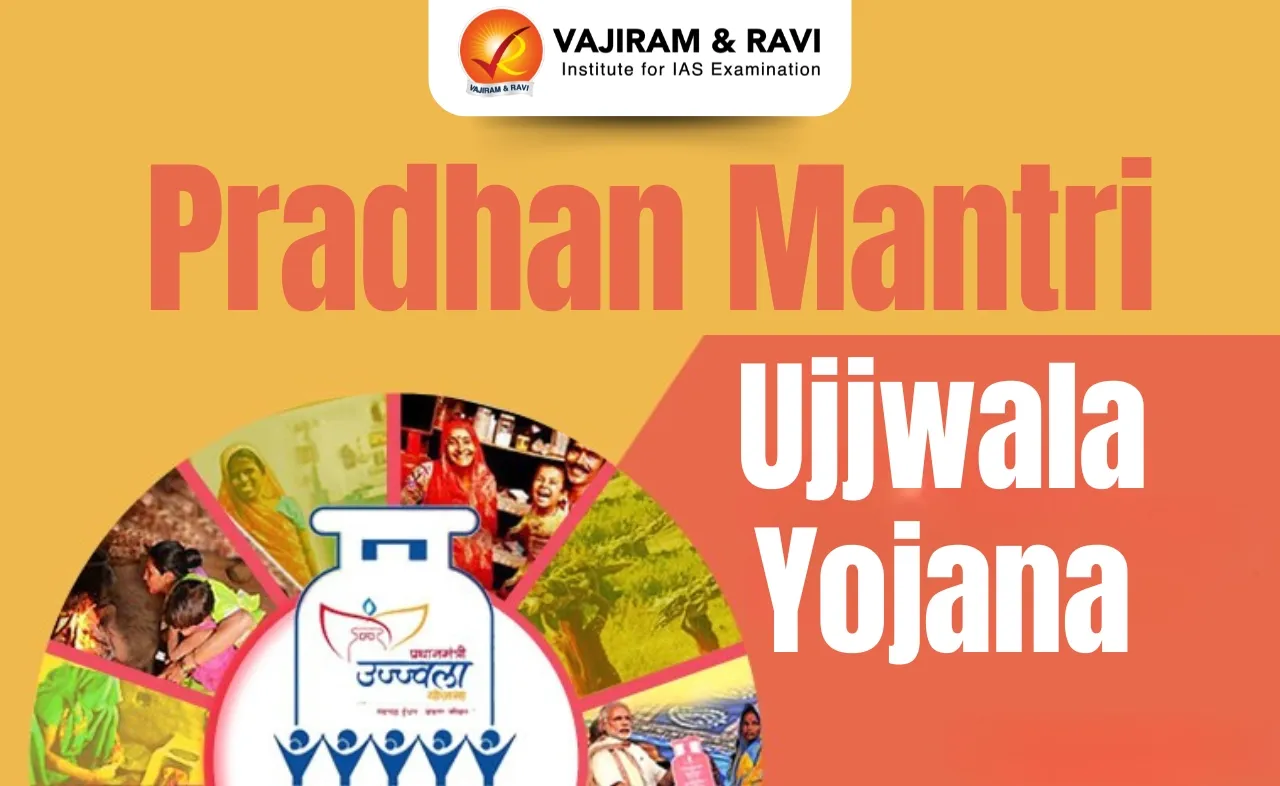
Pradhan Mantri Ujjwala Yojana (PMUY)

Pradhan Mantri Ujjwala Yojana

Pradhan Mantri Ujjwala Yojana Latest News

Consumption of petroleum products, especially diesel and cooking gas in Andaman & Nicobar (A&N) Islands, has jumped in recent years, aided by Pradhan Mantri Ujjwala Yojana.

About Pradhan Mantri Ujjwala Yojana

  • It is a flagship scheme of the Ministry of Petroleum and Natural Gas (MOPNG) launched in May 2016.
  • Objective: To make clean cooking fuel such as LPG available to the rural and deprived households which were otherwise using traditional cooking fuels such as firewood, coal, cow-dung cakes, etc. 
  • Benefits:
    • Rs. 1600 for a 14.2 kg cylinder or Rs. 1150 for a 5 kg cylinder. 
    • Additionally, All PMUY beneficiaries will be provided with their first LPG refill and stove (hot plate), both free of cost, along with their deposit-free connection.
    • Priority would be given to the states which have lower LPG coverage (compared to the national average) as on 1st Jan 2016.
  • Eligibility: An adult woman belonging to a poor household and not having an LPG connection in her household will be eligible under UJJWALA 2.0. The beneficiaries should belong to any of the following categories:
    • Eligible as per the SECC 2011 list
    • Belongs to SC/ST households, be a beneficiary of Pradhan Mantri Awas Yojana (PMAY), Antyodaya Anna Yojana (AAY), Forest dwellers, Most Backward Classes (MBC), Tea and Ex-Tea Garden Tribes, People residing in river islands (Beneficiary will submit supporting document).
    • If she is not falling in the above 2 categories, then she can stake her claim to be a beneficiary under a poor household by submitting a 14-point declaration (as per prescribed format).
  • Exclusions: Male members from a household cannot apply for the scheme.

Source: DH

Pradhan Mantri Ujjwala Yojana FAQs

Q1: In which year was the Pradhan Mantri Ujjwala Yojana (PMUY) launched?

Ans: 2016

Q2: The Pradhan Mantri Ujjwala Yojana is implemented by which Ministry

Ans: Ministry of Petroleum and Natural Gas

Q3: What is the main objective of PMUY?

Ans: To provide clean cooking fuel (LPG) to rural and deprived households.

Sharda River

Sharda River

Sharda River Latest News

Four teenagers drowned after being swept away while bathing in the Sharda River recently.

About Key Facts about Sharda River

  • It is a river of northern India and western Nepal. 
  • Course
    • It rises as the Kali River in far northern Uttarakhand state in the Great Himalayas on the eastern slopes of the Nanda Devi massif. 
    • The river then flows generally south-southwest, where it constitutes the border between Uttarakhand state and Nepal. 
    • Descending from the mountains, it enters the Indo-Gangetic Plain at Barmdeo Mandi (Nepal), widening there above the Sharda Barrage. Below that point it is known as the Sharda River. 
    • The Sharda then continues southeastward into India through northern Uttar Pradesh state before joining the Ghaghara River (a tributary of the Ganges) southwest of Bahraich, after a course of about 300 miles (480 km).
  • Its major tributaries are the Dhauliganga, Goriganga, and Sarju. 
  • The Sharda Barrage (dam), near Banbasa (Uttarakhand), is the source of the Sharda Canal (completed 1930), one of the longest irrigation canals in northern India.

Source: TOI

Sharda River FAQs

Q1: Which river is known as the Sharda river?

Ans: The Sharda River is the name given to the Mahakali River in India.

Q2: The Sharda River originates in which Indian state?

Ans: Uttarakhand

Q3: The Sharda River forms the international boundary between India and which country?

Ans: Nepal

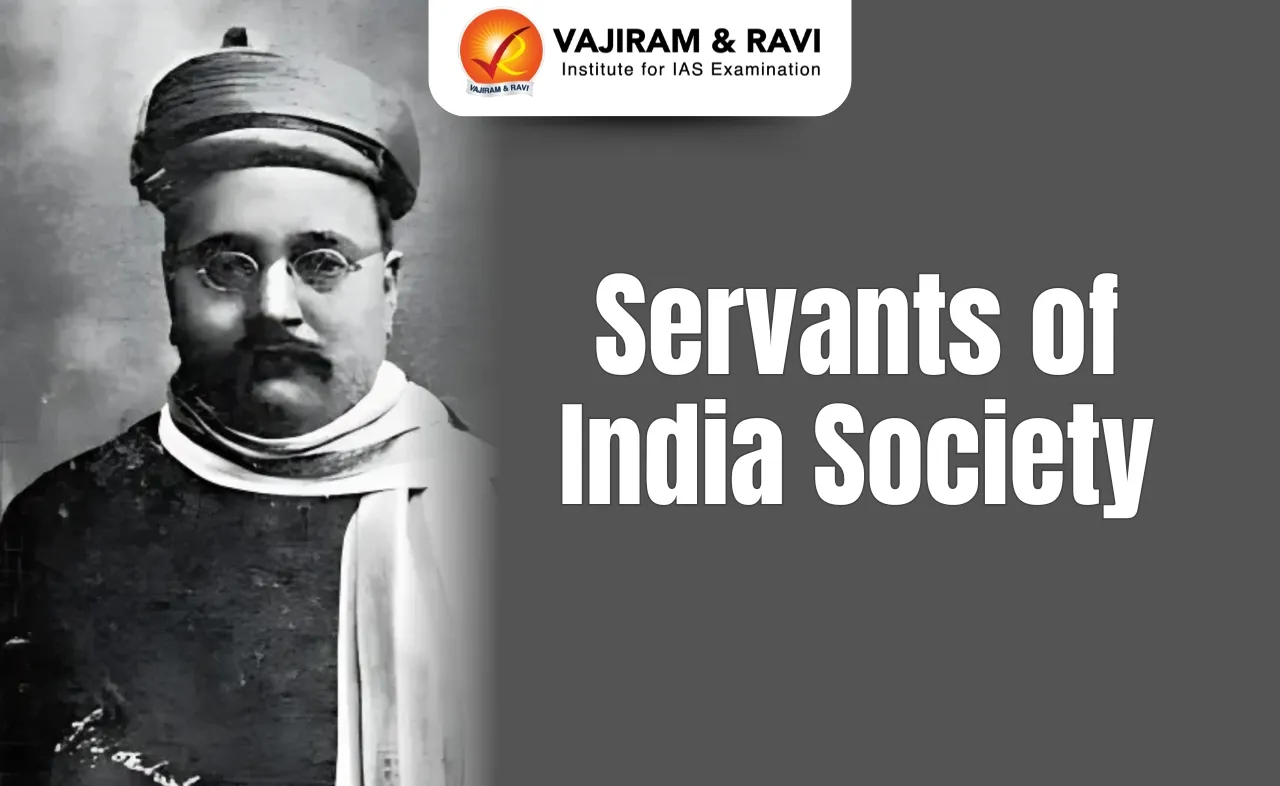
Servants of India Society

Servants of India Society

Servants of India Society Latest News

Tensions between the Pune-based Gokhale Institute of Politics and Economics (GIPE) and parent Servants of India Society (SIS) have flared again, with both trading allegations over control of a key bank account.

About Servants of India Society

  • The Servants of India Society (SIS) was founded by Gopal Krishna Gokhale, along with G.K. Devadhar, A.V. Patwardhan, and N.A. Dravid, in Pune, Maharashtra, on June 12, 1905.
  • According to Gokhale, the society's objectives were to train individuals who were willing to devote their lives to the country's cause in a religious spirit, for political education and agitation and to promote the national interest of the Indian people through constitutional means.
  • The members of the society were considered as young missionaries of Indian nationalism. 
  • Several young Indian nationalists, including V.S. Sreenivasa Sasthri, Hriday Nath Kunzru, and A.V. Thakkar, enrolled as a members of the SIS.
  • Members go through a five-year training period and agree to serve on extremely modest salaries. 
  • In 1915 Gokhale was succeeded as president by Srinivasa Sastri (1869–1946). 
  • The organization has its headquarters in Pune (Poona) and branches in Chennai (Madras), Mumbai (Bombay), Allahabad, Nagpur, and other locales. 
  • Though the number of members has dwindled over time, the society has been influential in its demonstration of the ideals of social service.

Source: TOI

Servants of India Society FAQs

Q1: Who was the founder of the Servants of India Society?

Ans: Gopal Krishna Gokhale

Q2: What was the main aim of the Servants of India Society?

Ans: Political education and national service through constitutional means.

Q3: In which year was the Servants of India Society founded?

Ans: 1905

DNA Identification

DNA Identification

DNA Identification Latest News

After the Air India Boeing 787 Dreamliner crash in Ahmedabad, authorities are using DNA analysis to identify the remains of those killed in the accident.    

About DNA Identification

  • It is the gold standard for identifying human remains, especially after mass fatality events in which bodies might not be easy to identify otherwise.

Collection and Storing Samples of DNA

  • As soon as an individual dies, their DNA begins to degrade.
  • DNA survives much better in cold and dry conditions, than when it is hot and humid. Once collected, stored in as cool and dry an environment as possible.
  • DNA samples should be frozen at minus 20 degrees Celsius, or, in the case of soft tissues (skin, muscles, etc.), they may be stored in 95% ethanol.
  • DNA from soft tissues degrades much faster than that from hard tissues (bones and teeth).
  • This is because cells in hard tissues are largely protected from the effects of putrefaction and decomposition.

Methods to Analyse DNA Samples

Short Tandem Repeat (STR) Analysis

  • It evaluates short tandem repeats, which are essentially short repeating sequences of DNA.
  • STRs are used for DNA identification as they widely vary between individuals. “After analysing 15 or more of these hyper-variable regions of DNA… the resulting profile can be used to ascertain family relationships with a high degree of confidence,
  • STRs are typically found on nuclear DNA which is located within the nucleus of a cell.
  • Therefore, to carry out STR analysis it is essential that the nuclear DNA extracted from the sample is not degraded.

Mitochondrial DNA (mtDNA) Analysis

  • It is used when nuclear DNA is degraded or unavailable.
  • Mitochondrial DNA is found within the cell’s energy-producing organelles known as mitochondria.
  • As mtDNA is present in multiple copies within the cell, it is easier to recover from human remains that are not well preserved.
  • This is used for identification because mtDNA is passed down by the mother, unchanged, to all her children.
  • This means that samples from a person’s remains can be matched with reference samples from their mother, maternal grandmother, sibling, maternal aunts or uncles, and distant relatives as long as they belong to the maternal line of inheritance.

Y Chromosome Analysis

  • Humans have two types of sex chromosomes, X and Y: biological males typically have one X and one Y chromosome, and biological females typically have two X chromosomes.
  • In this method, a panel of STR on Y chromosomes, passed on from father to son, is examined to match the remains of the victim with their male relatives.
  • “This can be useful when close relatives are not available for comparison: any member of the paternal line, including brothers, paternal uncles, and paternal male cousins, may be used for matching,”

Single Nucleotide Polymorphisms (SNPs) Analysis

  • It is used when the DNA to be analysed is highly degraded.
  • A SNP is a variation in the DNA sequence where a single base — A, C, G, or T — at a specific location differs among people.
  • Given that SNPs are unique to each person, they can be used for identification purposes with the help of reference samples taken from the victim’s personal belongings such as a toothbrush and hairbrush.

Source: IE

DNA Identification FAQs

Q1: Where is DNA found?

Ans: Most DNA is located in the cell nucleus (where it is called nuclear DNA), but a small amount of DNA can also be found in the mitochondria 

Q2: What is the method of DNA identification?

Ans: The most common form of DNA analysis is called polymerase chain reaction (PCR).

PRASHAD Scheme

PRASHAD Scheme

PRASHAD Scheme Latest News

After years of back and forth between the Karnataka government and the Centre, there is finally some progress on the development of Chamundi Hills under the Pilgrimage Rejuvenation and Spiritual Heritage Augmentation Drive (PRASHAD) scheme of the Central government.

About PRASHAD Scheme

  • The PRASHAD (Pilgrimage Rejuvenation and Spiritual Heritage Augmentation Drive) was launched in the year 2014-2015 under the Ministry of Tourism.
  • It is a Central Sector Scheme with the objective of integrated development of identified pilgrimage destinations. 
  • The primary objective of the scheme is to develop tourism infrastructure at pilgrimage and heritage sites, ensuring a more enriching experience for pilgrims and heritage enthusiasts.
  • Under the scheme, the ministry provides financial assistance to state governments and Union Territory administrations for the development of tourism infrastructure at these sites.
  • Additionally, the scheme incorporates voluntary contributions through Corporate Social Responsibility (CSR) initiatives and Public-Private Partnerships (PPP).
  • The scheme aims at infrastructure development such as entry points (road, rail, and water transport), last-mile connectivity, basic tourism facilities like information/interpretation centers, ATMs/money exchange, eco-friendly modes of transport, area lighting and illumination with renewable sources of energy, parking, drinking water, toilets, cloakrooms, waiting rooms, first aid centers, craft bazaars/haats/souvenir shops/cafeterias, rain shelters, telecom facilities, internet connectivity, etc

Source: TH

PRASHAD Scheme FAQs

Q1: What does the acronym PRASHAD stand for?

Ans: Pilgrimage Rejuvenation and Spiritual Heritage Augmentation Drive

Q2: In which year was the PRASHAD Scheme launched?

Ans: 2014-2015

Q3: Which ministry implements the PRASHAD Scheme?

Ans: Ministry of Tourism

Spartaeus Karigiri

Spartaeus Karigir

Spartaeus Karigiri Latest News

Recently, a team of researchers has identified a new species of jumping spider and named it as Spartaeus karigiri.      

About Spartaeus Karigiri

  • It is a jumping spider belonging to the Spartaeinae subfamily found in southern India.
  • It is for the first time that the genera Spartaeus and Sonoita (specific groups within subfamily), previously known only from Southeast Asia and Africa, have been found in India. 
  • It is named after Karigiri, or Elephant Hill, in Devarayanadurga, Karnataka, where the spiders were first observed. 

Features of Spartaeus Karigiri

  • It is known for its intelligent hunting skills and web-invasion tactics. 
  • These species are known for their keen eyesight and unique hunting methods, often deceiving other spiders by mimicking prey. 
  • With these findings, India’s spider fauna under the Spartaeinae subfamily has grown to 15 species across 10 genera.
  • In addition, Sonoita cf. lightfooti, a species previously thought to be confined to Africa, was also identified in Karnataka.

Source: TH

Spartaeus Karigiri FAQs

Q1: What are the characteristics of arachnids?

Ans: Arachnids have two body segments. They also have jointed legs and an exoskeleton. Arachnids have appendages with special uses and a free-flowing circulatory system.

India’s Aviation Safety Credentials Reaffirmed Amidst Air India Crash Probe

India Aviation Safety Rating

India’s Aviation Sector Latest News

  • India was rated well above the global average in terms of its operations and airworthiness by the International Civil Aviation Organisation (ICAO) when the Directorate General of Civil Aviation (DGCA) was last audited in November 2022.

Introduction

  • In the wake of the tragic Air India AI-171 crash in Ahmedabad that claimed 241 lives, India’s aviation safety record has come under renewed scrutiny. 
  • However, global aviation watchdogs, the International Civil Aviation Organisation (ICAO) and the United States Federal Aviation Administration (FAA), have reiterated India’s strong performance in airworthiness and operations. 
  • The ongoing investigation into the accident is being handled in line with international protocols, even as India’s civil aviation safety oversight continues to receive global recognition.

India’s Global Aviation Safety Ranking

  • India, currently the third-largest domestic aviation market after the US and China, has shown remarkable progress in civil aviation safety over the last decade. 
  • The ICAO, a specialised UN agency responsible for global civil aviation standards, audited India’s Directorate General of Civil Aviation (DGCA) in November 2022 under its Universal Safety Oversight Audit Programme (USOAP).
  • India received an Effective Implementation (EI) score of 85.65%, significantly up from 69.95% in 2018. 
  • This placed India well above the global average across all eight audited areas, including legislation, organisation, licensing, operations, airworthiness, accident investigation, air navigation services, and aerodromes.

Performance in Key Parameters

  • Two of the most crucial categories under ICAO’s audit, operations and airworthiness, highlighted India’s strong credentials:
    • Operations: India scored 94.02%, higher than the global average of 72.28%, and surpassing the US (86.51%) and China (90%) in their respective 2024 audits.
    • Airworthiness: India secured 97.06%, well ahead of the US (89.13%) and China (94.83%).
  • Such rankings underscore India’s robust regulatory infrastructure in civil aviation, even though the country faces the unique challenges of rapid growth and infrastructure expansion.

FAA’s Category 1 Safety Assessment

  • The Federal Aviation Administration (FAA) of the United States, regarded as the foremost global aviation regulator, conducted an audit of the DGCA in October 2021. 
  • It focused on aircraft operations, airworthiness, and personnel licensing. Following successful compliance, India retained the Category 1 status under the FAA’s International Aviation Safety Assessment (IASA) program.
  • In April 2023, the FAA formally informed the DGCA that India continues to meet ICAO’s international safety oversight standards, allowing Indian carriers to operate and expand services to the US and codeshare with American Airlines. 
  • This recognition was crucial for India’s aviation ambitions and international credibility.

Air India AI-171 Crash and Investigative Response

  • On June 13, 2025, Air India flight AI-171 tragically crashed in Ahmedabad, killing all 241 people onboard and causing additional casualties on the ground when it struck a nearby medical college building. 
  • It was the deadliest Indian aviation accident in more than a decade, bringing global attention to India’s aviation safety mechanisms.
  • In response, the Aircraft Accident Investigation Bureau (AAIB) of India initiated a probe aligned with ICAO protocols. Due to the involvement of a US-made Boeing aircraft, the US National Transportation Safety Board (NTSB) joined the investigation. 
  • The UK’s Air Accidents Investigation Branch (AAIB-UK) is also contributing, given the presence of British citizens among the victims. Aircraft manufacturer Boeing and engine producer GE are also participating, per ICAO guidelines.

Importance of Global Validation

  • The ICAO and FAA assessments are more than symbolic recognitions; they are functional validations that determine whether countries can run safe, globally interoperable aviation systems. 
  • For India, these validations are critical not just for foreign operations and code-sharing, but also for public confidence amidst domestic tragedies.
  • Despite the AI-171 crash, India’s comprehensive audit scores, regulatory compliance, and collaboration with global bodies show that isolated incidents must not overshadow overall systemic progress
  • As India expands airport infrastructure, introduces newer aircraft fleets, and scales its regional connectivity schemes, international trust remains a vital currency.

Way Ahead

  • India’s aviation regulator faces a dual challenge: managing rapid sectoral growth while ensuring uncompromised safety standards
  • The AI-171 crash is a grave moment that demands full transparency and systemic learning. At the same time, India’s demonstrated adherence to international norms and its high safety ratings position it well for proactive recovery.
  • Enhanced training for personnel, adoption of predictive maintenance using AI, and periodic compliance checks could further reinforce India’s aviation ecosystem. 
  • The key lies in balancing growth with vigilance, and ensuring that air safety remains a top national priority.

Source : IE

India’s Aviation Safety FAQs

Q1: What is India’s current rating by ICAO on airworthiness?

Ans: India scored 97.06% in airworthiness, significantly above the global average.

Q2: What is the FAA's current classification of India’s aviation safety status?

Ans: The US FAA has granted India Category 1 status, indicating compliance with international safety oversight standards.

Q3: Who is investigating the Air India AI-171 crash?

Ans: The Aircraft Accident Investigation Bureau, with support from US NTSB, UK AAIB, Boeing, and GE, is leading the probe under ICAO norms.

Q4: How did India fare in operations audits under ICAO?

Ans: India achieved 94.02% in operations, surpassing both the US and China.

Q5: Why is India’s ICAO Effective Implementation score important?

Ans: It reflects the country’s compliance with global aviation safety standards, influencing international operations and public trust.

How Iran-Israel Conflict Impacts Indian Economy, Inflation & Trade

Iran-Israel Conflict Impact on India

Iran-Israel Conflict Impact on India Latest News

  • Just as global trade was stabilizing with shipping returning to the Red Sea, the Iran-Israel conflict has reignited fears of oil price surges and trade disruptions. 
  • The Sensex dropped 573 points amid global market jitters. Experts caution that Iran could block the Strait of Hormuz — a vital route for 20–25% of global oil and key LNG exports from Qatar and the UAE, both crucial to India's energy needs.

Impact of Iran-Israel Crisis on Indian Economy

  • The escalating Israel-Iran conflict adds another layer of uncertainty, potentially affecting India's economic outlook in the coming months.

Growth and Inflation at Risk

  • The escalating Iran-Israel conflict may create macroeconomic challenges for India, particularly due to its heavy reliance on oil imports. 
  • A $10/bbl increase could lower India’s real GDP growth by 0.3 percentage points and raise consumer inflation by 0.4 points.
  • This threatens to reverse India’s recent inflation relief — retail inflation had eased to a 75-month low of 2.82% in May 2025, prompting a 50 basis point repo rate cut by the RBI. 
  • As oil prices climb, Indian refiners require more dollars to purchase crude, increasing dollar demand, weakening the rupee, and inflating import costs — creating a feedback loop that worsens India’s current account deficit.

Energy Supply Disruption Concerns Grow

  • Although energy infrastructure has not yet been directly targeted, risks remain high. 
    • Iran reported no immediate damage to its refineries, which have a capacity of 2.8 million barrels/day. 
  • Still, its crude exports may drop below 1.5 million b/d this month, as per S&P Global, adding further uncertainty to global energy markets.

Broader Energy Price Spike Beyond Crude Oil

  • The ongoing Middle East conflict has triggered a surge not only in crude oil prices but also in other critical energy imports for India — including LPG, natural gas, petrochemicals, and fertilisers. 
  • Any disruption could significantly impact India's rural economy and food inflation due to increased fertiliser costs.

Rural and Agricultural Impact

  • Higher fertiliser and LPG prices threaten to burden rural households and reduce farm productivity. 
  • This could reverse recent gains in food price stability and drive overall inflation upward.

Manufacturing and Industrial Sectors Face Margin Pressures

  • Key sectors like aviation, chemicals, paints, tyres, cement, and logistics — all heavily reliant on petroleum-based inputs — are likely to see reduced profit margins due to rising raw material costs. 
  • Crisil Ratings warns that the impact may differ across sectors depending on their oil dependency.

Sectoral Divide: Winners and Losers

  • While upstream oil companies may benefit from higher crude prices, downstream refiners could see their margins squeezed. 
  • Industries indirectly linked to crude oil — including packaging, plastic products, paints, and specialty chemicals — may pass on the cost to consumers or absorb it, affecting demand or profits respectively.

Rising Costs for MSMEs and Consumers

  • If tensions escalate, transport fares and logistics costs may rise, hitting grocery supply chains and increasing costs for MSMEs. 
  • These businesses may struggle with higher input costs and stagnant demand, leading to tighter margins.

Gold Prices Soar Amid Uncertainty

  • Gold futures in India crossed ₹1 lakh per 10 grams, driven by a weak rupee and investor flight to safe assets. 
  • Retail jewellery demand remains subdued due to high prices, though investment demand is expected to stay strong.

Red Sea Relief Short-Lived as Conflict Escalates

  • In May, exporters were optimistic as conditions in the Red Sea improved and normal shipping resumed. 
  • However, with that confrontation now a reality, traders’ fears have materialised.
  • For India — which imports over 80% of its crude — this poses significant macroeconomic risks.

Freight Rates and Insurance Costs Set to Surge

  • With vessels likely reverting to the longer Cape of Good Hope route, shipping costs are expected to stay high
  • The detour adds 10–14 days per voyage, straining vessel availability and driving up freight rates and insurance premiums.

LNG Shipping Severely Impacted

  • LNG flows through the Suez Canal plummeted from 34.94 million tonnes in 2022 to just 4.15 million tonnes in 2024. 
  • Meanwhile, LNG volumes via the Cape route surged over five-fold — from 11.76 million tonnes in 2022 to 59.37 million tonnes in 2024. 
  • This shift underscores the growing logistical burden and potential energy supply risks for countries like India.

Source: IEET

Iran-Israel conflict impact on India FAQs

Q1: How does the Iran-Israel conflict affect India's economy?

Ans: It raises oil prices, weakens the rupee, increases inflation, and impacts GDP growth and trade balance due to import dependence.

Q2: Which sectors in India are most affected?

Ans: Aviation, chemicals, tyres, and logistics suffer from high petroleum-based input costs, reducing their profit margins significantly.

Q3: How does the conflict influence inflation in India?

Ans: Higher crude and fertiliser prices push food and transport costs up, reversing recent inflation relief and affecting rural households.

Q4: What happens to LNG shipments due to the crisis?

Ans: LNG shipping through the Suez Canal has dropped sharply, forcing rerouting via Cape of Good Hope and increasing costs.

Q5: How is the rupee impacted by rising oil prices?

Ans: Rising oil prices increase dollar demand for imports, weakening the rupee and further inflating India’s import bill and deficit.

Delhi HC Issues Comprehensive Guidelines for MTP in Sexual Assault Cases

Medical Termination of Pregnancy

Medical Termination of Pregnancy Latest News

  • The Delhi High Court has stepped in to address procedural lapses and miscommunication that led to delays in the Medical Termination of Pregnancy (MTP) for a minor rape survivor. 
  • The case exposed systemic flaws in how hospitals and authorities handle MTP in sexual assault cases, particularly those involving minors.
  • It prompted the court to frame detailed guidelines aimed at ensuring timely, sensitive, and legally compliant medical care.

Background of the Case

  • A 17-year-old rape survivor was taken to AIIMS, Delhi, for medical examination and MTP.
  • Hospital authorities initially refused to conduct an ultrasound due to lack of ID documents, despite the survivor being accompanied by police and an FIR being registered.
  • The Child Welfare Committee (CWC) directed termination, but the hospital demanded age verification via ossification test and continued to delay.
  • After CWC’s personal intervention, the ultrasound revealed a gestation of 25 weeks and 4 days—beyond the legal limit of 24 weeks under the MTP Act, 1971.
  • The hospital refused further action without court orders.
  • Following court direction, a medical board assessed the gestation to be 23 weeks and 4 days, finding the survivor fit for MTP.

Lapses Identified by the Court

  • Hospitals applied routine diagnostic protocols rigidly, even in POCSO cases.
  • Discrepancy in ultrasound findings raised concerns about medical accuracy.
  • Administrative delays resulted in psychological and physical hardship to the survivor.

Guidelines Issued by the Delhi High Court

  • Directions to hospitals:
    • Identity verification: No separate ID verification required if the survivor is accompanied by police with FIR and case files.
    • Immediate medical attention:
      • Mandatory comprehensive examination upon presentation of a pregnant sexual assault survivor.
      • In cases where gestation appears over 24 weeks, hospitals must constitute a medical board immediately without waiting for court orders.
    • Legal and procedural awareness:
      • SOPs, MTP Act, and POCSO guidelines must be accessible in Emergency and Gynaecology departments.
      • Doctors to be sensitized and trained in legal obligations under MTP and POCSO Acts.
    • Training and accountability:
      • Quarterly training for medical staff in coordination with Delhi State Legal Services Authority (DSLSA) and Delhi High Court Legal Services Committee (DHCLSC).
      • Appointment of nodal officers in each government hospital to coordinate with CWC, Investigating officers (IOs), and courts.
      • Informed consent: MTP consent must be taken in a language understood by the survivor or guardian (Hindi/English).
  • Directions to Delhi Police:
    • Biannual training: IOs in POCSO cases must undergo mandatory six-monthly training on MTP protocols and court coordination.
    • Documentation: Training completion certificates to be filed in service records.
    • Prompt medical action: IOs to ensure survivors are brought to hospitals or boards at the earliest opportunity with relevant documentation.
  • Earlier guidelines by the Court:
    • April 2025 guidelines:
      • CWCs must immediately notify DHCLSC when referring to minor survivors with gestational age over 24 weeks for MTP.
      • DHCLSC to promptly decide on approaching courts for necessary permissions to avoid delay.
    • January 2023 guidelines:
      • Mandatory Urine Pregnancy Tests during medical examination of sexual assault survivors.
      • Adult survivors found pregnant must be presented to the medical board the same day.
      • State governments directed to ensure medical boards are available in hospitals.

Conclusion

  • The Delhi High Court's proactive judicial intervention underscores the need for sensitive, efficient, and legally sound procedures in cases involving the MTP of sexual assault survivors. 
  • These guidelines aim to bridge institutional gaps and uphold the fundamental rights of survivors, particularly minors, under the ambit of constitutional and statutory protections.

Source: TH

Medical Termination of Pregnancy FAQs

Q1: What prompted the Delhi High Court to issue guidelines regarding Medical Termination of Pregnancy (MTP) in cases involving sexual assault survivors?

Ans: The Delhi HC acted after a minor rape survivor was denied timely MTP at AIIMS due to administrative delays, miscommunication, and insistence on identity documents despite police and CWC involvement.

Q2: What are the key directions issued by the Delhi High Court to hospitals regarding MTP procedures in sexual assault cases?

Ans: Hospitals were directed to conduct immediate medical examinations, form medical boards without court orders if pregnancy exceeds 24 weeks, and avoid rigid procedural requirements like ID verification when police FIRs are available.

Q3: How has the Delhi High Court sought to ensure legal compliance and sensitivity among medical professionals in MTP cases?

Ans: The court mandated quarterly training for medical staff, accessible SOPs and laws in emergency departments, and appointment of nodal officers to coordinate medico-legal procedures.

Q4: What measures were directed at the Delhi Police to improve their handling of MTP-related cases under POCSO?

Ans: Delhi Police officers handling sexual assault cases were ordered to undergo biannual training on MTP procedures, ensure prompt medical presentation of survivors, and maintain training certificates in service records.

Q5: What were the previously issued guidelines by the Delhi High Court to expedite MTP in cases involving minors beyond the 24-week limit?

Ans: In earlier rulings, the court directed that CWCs must immediately inform the DHCLSC for legal intervention when minors with pregnancies beyond 24 weeks seek termination, to prevent judicial delay.
Enquire Now