Atal Pension Yojana, Features, Objectives, Significance

Atal Pension Yojana

The Atal Pension Yojana (APY) is a government-backed pension scheme launched in 2015 to offer social security to workers in the unorganized sector. Operated under the Pension Fund Regulatory and Development Authority (PFRDA), the scheme ensures a fixed monthly income to subscribers post the age of 60. It is a crucial step towards promoting the retirement planning, especially among individuals with no access to formal pension mechanisms.

Atal Pension Yojana Features

Atal Pension Yojana is uniquely designed to ensure a stable income for people in their retirement years. Key features of the scheme include:

  1. Eligibility: Open to all Indian citizens aged between 18 and 40 years.
  2. Guaranteed Pension: Subscribers can opt for a fixed pension ranging from ₹1,000 to ₹5,000 per month, depending on the contribution made.
  3. Government Co-Contribution: For subscribers who enrolled between June 1, 2015, and March 31, 2016, and met certain criteria, the government contributed 50% of the subscriber’s amount or ₹1,000 per annum for five years.
  4. Auto-Debit Facility: Monthly contributions are auto-debited from the subscriber’s bank account, ensuring consistency and ease of saving.
  5. Tax Benefits: Contributions under APY qualify for tax deductions under Section 80C of the Income Tax Act.
  6. Portability: Subscribers can continue with their accounts even if they change their residence or job.
  7. Nominee Option: Subscribers can nominate a beneficiary to receive the pension amount in case of their demise.

Atal Pension Yojana Objectives

The Atal Pension Yojana has been implemented with the following key objectives:

  1. Ensure Retirement Security: To provide a sustainable source of income to citizens during their old age, thereby reducing dependency.
  2. Promote Retirement Savings: Encourage individuals, especially in the informal sector, to adopt a savings habit for their future needs.
  3. Expand Social Security Net: Extend pension coverage to segments of society that traditionally lack retirement benefits.
  4. Strengthen Financial Inclusion: Increase awareness and access to financial instruments among low-income and rural populations.
  5. Encourage Government Participation: Increases early adoption through government co-contribution as an incentive for initial subscribers.
  6. Widen Pension Coverage in India: Develop a broad-based, inclusive, and robust pension system to cater to the socio-economically weaker sections.

Atal Pension Yojana Significance

Atal Pension Yojana holds varied significance in the broader context of social welfare and economic inclusion in India which is discussed below:

  1. It guarantees a regular income post-retirement, ensuring that the elderly can maintain a basic standard of living.
  2. APY is a step towards offering structured pension benefits to workers who do not fall under formal employment systems.
  3. The scheme requires nominal contributions, making it accessible to even low-income earners.
  4. It encourages financial planning and awareness regarding old-age security among rural and semi-urban populations.
  5. With a regular pension, elderly citizens are less likely to fall into poverty, thus reducing the socio-economic burden on families and the government.
  6. Initial government support helps in building trust and promotes early participation.

Atal Pension Yojana Limitation

Despite its many benefits, the Atal Pension Yojana also has some limitations. These Atal Pension Yojana Limitation restrict its optimal outreach and effectiveness which is discussed below:

  1. Limited Awareness: Many eligible citizens, especially in rural and backward areas, remain unaware of the scheme and its advantages.
  2. Age Restriction: Only individuals aged between 18 and 40 can join the scheme, excluding older citizens who are equally in need of pension support.
  3. Low Enrollment Rates: The scheme has not yet achieved the scale intended, partly due to low financial literacy and trust in pension schemes.
  4. Contribution Affordability: Even the small monthly contributions may be difficult for some individuals with irregular or minimal income.
  5. Fixed Pension Amount: The maximum pension offered (₹5,000 per month) may not be sufficient in urban areas with high living costs.
  6. Banking Infrastructure Constraints: Limited banking facilities in remote regions make it difficult for some citizens to access or continue with the scheme.

Lack of Flexibility: Subscribers cannot change pension slabs frequently, and early exit (except in exceptional cases) is discouraged.

Atal Pension Yojana FAQs

Q1: Who is eligible to enroll in the Atal Pension Yojana?

Ans: Any Indian citizen between 18 and 40 years of age with a bank account is eligible to enroll.

Q2: What is the minimum and maximum pension amount offered under APY?

Ans: Subscribers can choose a monthly pension of ₹1,000, ₹2,000, ₹3,000, ₹4,000, or ₹5,000 after attaining the age of 60.

Q3: Can a person with an EPF account or income tax payer enroll in APY?

Ans: Yes, they can enroll, but such individuals will not be eligible for the government co-contribution benefits.

Q4: Is there any penalty for late payments?

Ans: Yes. The penalty ranges from ₹1 to ₹10 per month based on the contribution amount in case of delayed payment.

Q5: What happens if the subscriber dies before attaining the age of 60?

Ans: The nominee or spouse will be entitled to receive the total accumulated corpus or continue contributing until maturity.

Mission Indradhanush Yojana, Launched Date, Objective, Challenges

Mission Indradhanush Yojana

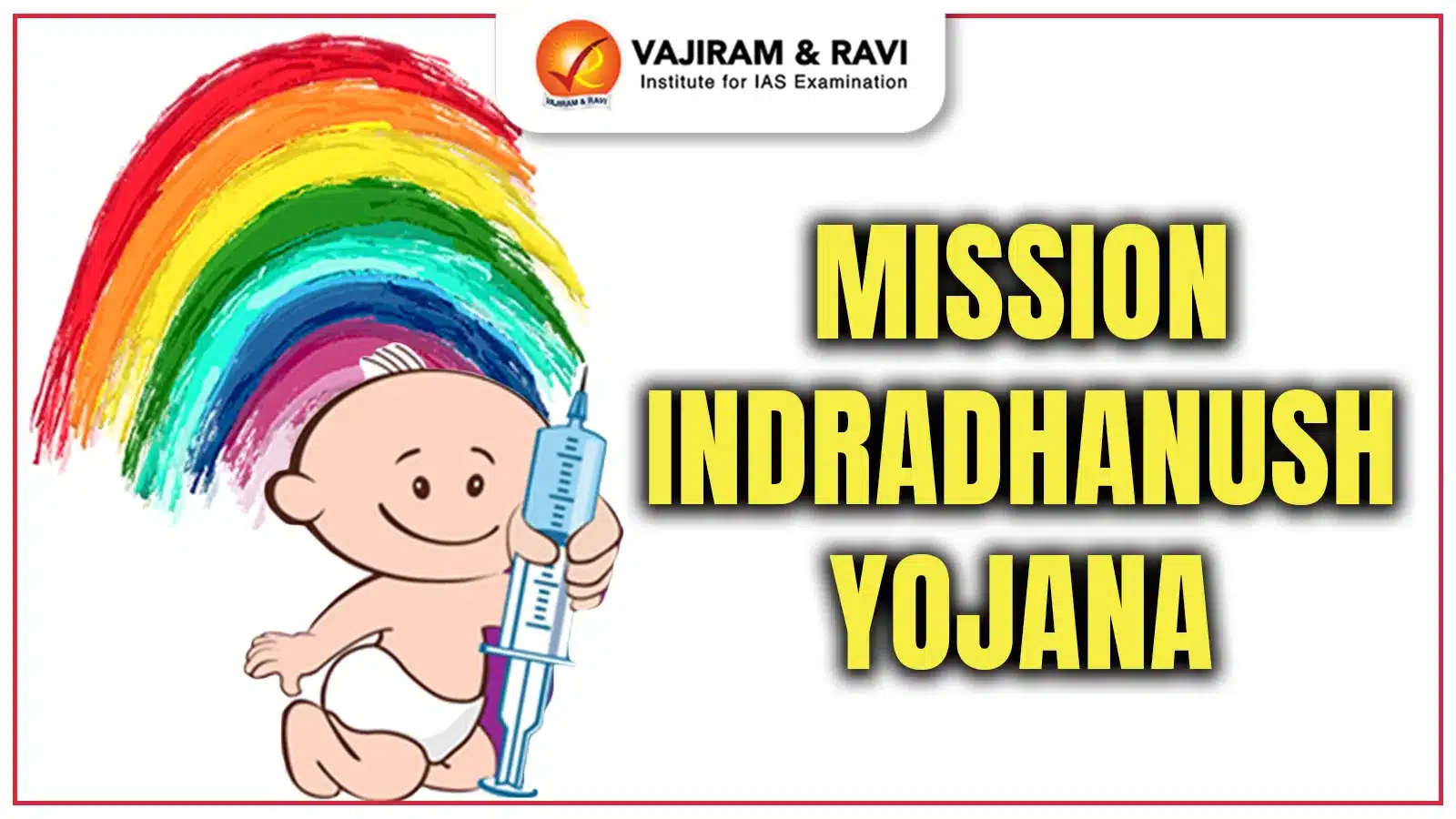
Mission Indradhanush Yojana was launched on December 25, 2014, by Union Health Minister JP Nadda, which is a flagship immunization initiative of the Government of India. It aims to increase the immunization coverage for children under two years and pregnant women. The Mission is also known as “Mission Rainbow,” focuses on reducing child mortality due to vaccine-preventable diseases. With targeted strategies, periodic campaigns, and intensive monitoring, it has evolved into multiple phases like Intensified Mission Indradhanush (IMI) and its subsequent versions. It plays a crucial role in enhancing public health infrastructure across the country.

Mission Indradhanush Yojana Objectives

The Mission Indradhanush Yojana Objectives is to achieve full immunization coverage for all children and pregnant women in India. It strives to close the immunization gaps in underserved, remote, and marginalized communities. The mission seeks to reduce child mortality and morbidity by protecting against life-threatening diseases. By ensuring last-mile delivery of essential vaccines, it supports the government’s goal of achieving Universal Immunization. It also encourages inter-departmental coordination to ensure better health outcomes.

Mission Indradhanush Yojana Diseases Covered

The inclusion of Mission Indradhanush Yojana Diseases Covered aligns with WHO-recommended immunization schedules which is discussed below:

  1. Diphtheria: A serious bacterial infection that primarily impacts the respiratory system. If left untreated, it can result in complications such as breathing difficulties, heart damage, and even death.
  2. Pertussis (Whooping Cough): A highly contagious respiratory illness characterized by severe, repetitive coughing fits. It poses significant risks to infants and young children due to its potential complications.
  3. Tetanus: Triggered by a bacterial toxin, tetanus causes intense muscle stiffness and spasms. Without timely medical intervention, it can be fatal.
  4. Tuberculosis (TB): A bacterial infection that most commonly affects the lungs, though it can spread to other organs. TB remains a major public health concern due to its contagious nature.
  5. Polio: A viral disease that can invade the nervous system and lead to paralysis. In its most severe form, polio can be life-threatening.
  6. Hepatitis B: This viral infection targets the liver and can result in chronic conditions, including liver cirrhosis and hepatocellular carcinoma (liver cancer).
  7. Meningitis and Pneumonia caused by Haemophilus influenzae: These bacterial infections can cause inflammation of the brain and lung tissues, respectively. Both conditions are potentially life-threatening and require immediate medical attention.

List of Mission Indradhanush Yojana Covered State/Districts

The program covered 201 high-focus districts in its initial phase and later expanded to more regions. States like Bihar, Uttar Pradesh, Madhya Pradesh, and Rajasthan saw extensive implementation due to their low immunization coverage. Each state included specific districts based on immunization gaps identified by surveys. The table below includes the List of Mission Indradhanush Yojana Covered State:

State/UT

Districts Covered

Andhra Pradesh

East Godavari, Guntur, Krishna, Kurnool, Visakhapatnam

Arunachal Pradesh

Changlong, East Kameng, East Siang, Lohit, Upper Siang

Assam

Bongaigaon, Darrang, Dhubri, Goalpara, Hailakandi, Karimganj, Kokrajhar, Nagaon

Bihar

Araria, Begusarai, Champaran East, Champaran West, Darbhanga, Gaya, Jamui, Katihar, Kishanganj, Muzaffarpur, Patna, Saharsa, Samastipur, Sitamarhi

Chhattisgarh

Balodabazar Bhatapara, Bijapur, Bilaspur, Dantewada, Jashpur, Korba, Raipur, Sarguja

Delhi

North-East, North-West

Gujarat

Ahmedabad, Ahmedabad Corpn., Banaskantha, Dahod, Dangs, Kutch, Panchmahal, Sabarkantha, Valsad

Haryana

Faridabad, Gurgaon, Mewat, Palwal, Panipat

Jammu & Kashmir

Doda, Kishtwar, Poonch, Rajouri, Ramban

Jharkhand

Deoghar, Dhanbad, Giridih, Godda, Pakur, Sahibganj

Karnataka

Bangalore (Urban), Bellary, Gulbarga, Koppal, Raichur, Yadgir

Kerala

Kasaragod, Malappuram

Madhya Pradesh

Alirajpur, Anuppur, Chhatarpur, Damoh, Jhabua, Mandla, Panna, Raisen, Rewa, Sagar, Satna, Shadol, Tikamgarh, Umariya, Vidisha

Maharashtra

Beed, Dhule, Hingoli, Jalgaon, Nanded, Nasik, Thane

Manipur

Churachandpur, Senapati, Tamenglong, Ukhrul

Meghalaya

East Khasi Hills, West Garo Hills, West Khasi Hills

Mizoram

Lawngtlai, Lunglei, Mamit, Saiha

Nagaland

Dimapur, Kiphire, Kohima, Mon, Tuensang, Wokha

Odisha

Boudh, Gajapati, Ganjam, Kandhamal, Khurda, Koraput, Malkangiri, Nabarangpur, Nuapada, Rayagada

Pondicherry

Yanam

Punjab

Gurdaspur, Ludhiana, Muktsar

Rajasthan

Alwar, Barmer, Bundi, Dhaulpur, Jaipur, Jodhpur, Karauli, Sawai Madhopur, Tonk

Tamil Nadu

Coimbatore, Kancheepuram, Madurai, Thiruvallur, Tiruchirappalli, Tirunelveli, Vellore, Virudhunagar

Telangana

Adilabad, Mahbubnagar

Intensified Mission Indradhanush (IMI)

  1. Launched on October 8, 2017, Intensified Mission Indradhanush (IMI) aimed to reach every child under two and pregnant women left out of routine immunization. 
  2. It focused on 173 districts and urban areas with low vaccination coverage. 
  3. The goal was to achieve over 90% full immunization by December 2018. It involved four intensified rounds of immunization, each conducted for seven days. 
  4. Ministries other than Health, like WCD and Urban Development, participated actively to ensure inter-sectoral coordination.

Intensified Mission Indradhanush 3.0

  1. Intensified Mission Indradhanush 3.0 was introduced in February 2021 to address disruptions caused by the COVID-19 pandemic. 
  2. It was conducted in two rounds across 250 districts. 
  3. The campaign focused on vaccinating children and pregnant women who missed doses during lockdowns. 
  4. It emphasized rigorous micro-planning and community engagement to restore immunization levels. Special attention was given to urban slums, tribal areas, and hard-to-reach pockets. 
  5. It helped regain momentum in public health services affected by the pandemic.

Intensified Mission Indradhanush 4.0

  1. Intensified Mission Indradhanush 4.0 was launched in February 2022 with the aim to cover 416 districts across 33 states and UTs. This phase conducted three rounds of immunisation from February to May 2022. 
  2. It focused on those who had missed their regular doses in earlier campaigns or during the pandemic. 
  3. The campaign used a revised strategy with greater focus on urban and peri-urban areas. 
  4. Technological platforms and real-time data tracking enhanced accountability and effectiveness.

Intensified Mission Indradhanush 5.0

  1. Intensified Mission Indradhanush 5.0 was carried out from August to October 2023 and introduced a major upgrade in monitoring through the U-WIN digital platform. 
  2. It extended the vaccination age group from 0–2 years to children up to 5 years. 
  3. The campaign focused particularly on improving Measles-Rubella vaccination. The use of a digital platform allowed better beneficiary tracking, improved data quality, and ensured no child was left behind. 
  4. IMI 5.0 showed a more data-driven and digital future for India’s immunization system.

Vaccination Strategy

Mission Indradhanush Yojana follows a structured, multi-layered strategy to reach all eligible beneficiaries. It integrates routine immunization with special catch-up rounds for those who missed vaccines. The program uses micro-planning at the block level to identify target groups and ensure door-to-door outreach. Health workers, ASHAs, and ANMs play a vital role in mobilization and administration. Regular monitoring through district and state-level task forces ensures transparency. Effective cold chain and logistics systems are also integral to its success.

Mission Indradhanush Yojana Challenges

Despite notable progress of Mission Indradhanush Yojana continues to encounter several operational challenges:

  1. Geographical Accessibility: Reaching remote or underserved regions remains a significant obstacle in vaccine delivery. To mitigate this, mobile health units and targeted outreach initiatives have been deployed.
  2. Public Awareness and Education: Limited awareness and persistent misconceptions about immunization hinder vaccine coverage. Addressing these gaps through sustained educational efforts is essential.
  3. Supply Chain Efficiency: Ensuring an uninterrupted and timely supply of vaccines necessitates robust logistics and inventory management systems to avoid stockouts and delays.

Mission Indradhanush Yojana Solutions

To tackle these issues, the Mission Indradhanush Yojana incorporates a range of strategic measures:

  1. Expanded Outreach Campaigns: Educational drives and information dissemination efforts are undertaken to raise public awareness and emphasize the importance of timely vaccination.
  2. Enhanced Logistics Framework: Strengthening the infrastructure for storage, transport, and distribution ensures the availability of vaccines across all targeted regions.
  3. Community-Based Mobilization: Active participation of community leaders and local healthcare personnel is encouraged to build trust, resolve doubts, and improve acceptance of immunization programs.

Mission Indradhanush 2.0

Mission Indradhanush 2.0 was launched in December 2019 and continued till March 2020. It was designed to build upon the previous gains and address missed targets. The program focused on 272 districts across 27 states and UTs. It used an evidence-based approach to identify areas with low vaccine coverage. Community mobilization, improved logistics, and digital tools were key pillars. This phase was especially important in re-energizing frontline health workers and public health awareness campaigns.

Mission Indradhanush Yojana Achievements

  1. Mission Indradhanush Yojana significantly increased India’s immunization coverage, with many districts crossing the 90% mark in full immunization. 
  2. It helped reduce incidence rates of vaccine-preventable diseases like polio and measles. The campaign also improved community-level awareness regarding maternal and child healthcare. 
  3. It strengthened India’s health infrastructure and built inter-sectoral coordination models that were later used during COVID-19 vaccination drives. 
  4. Global agencies like WHO and UNICEF have recognized India’s commitment and success through this initiative.

Mission Indradhanush Yojana FAQs

Q1: What is the Mission Indradhanush Yojana?

Ans: It is a government immunization program launched in 2014 to improve vaccine coverage for children under 2 years and pregnant women.

Q2: How many diseases are covered under this scheme?

Ans: Initially seven; now expanded to include vaccines for up to 12 diseases depending on the region and availability.

Q3: What is Intensified Mission Indradhanush (IMI)?

Ans: IMI is a focused immunization campaign under the mission to reach left-out and resistant populations.

Q4: Is Mission Indradhanush still active?

Ans: Yes, its latest version IMI 5.0 was launched in 2023 and continues with targeted coverage strategies.

Q5: Who monitors the campaign?

Ans: Monitoring is done at district, state, and national levels with oversight mechanisms like PRAGATI and digital platforms like U-WIN.

Kanchuria Tripuraensis and Kanchuria Priyasankari

Kanchuria Tripuraensis and Kanchuria Priyasankari

Kanchuria Tripuraensis and Kanchuria Priyasankari Latest News

Conservation activists have expressed concern over tourism promotion through wildlife safari in the Kali Tiger Reserve.

About Kanchuria Tripuraensis and Kanchuria Priyasankari

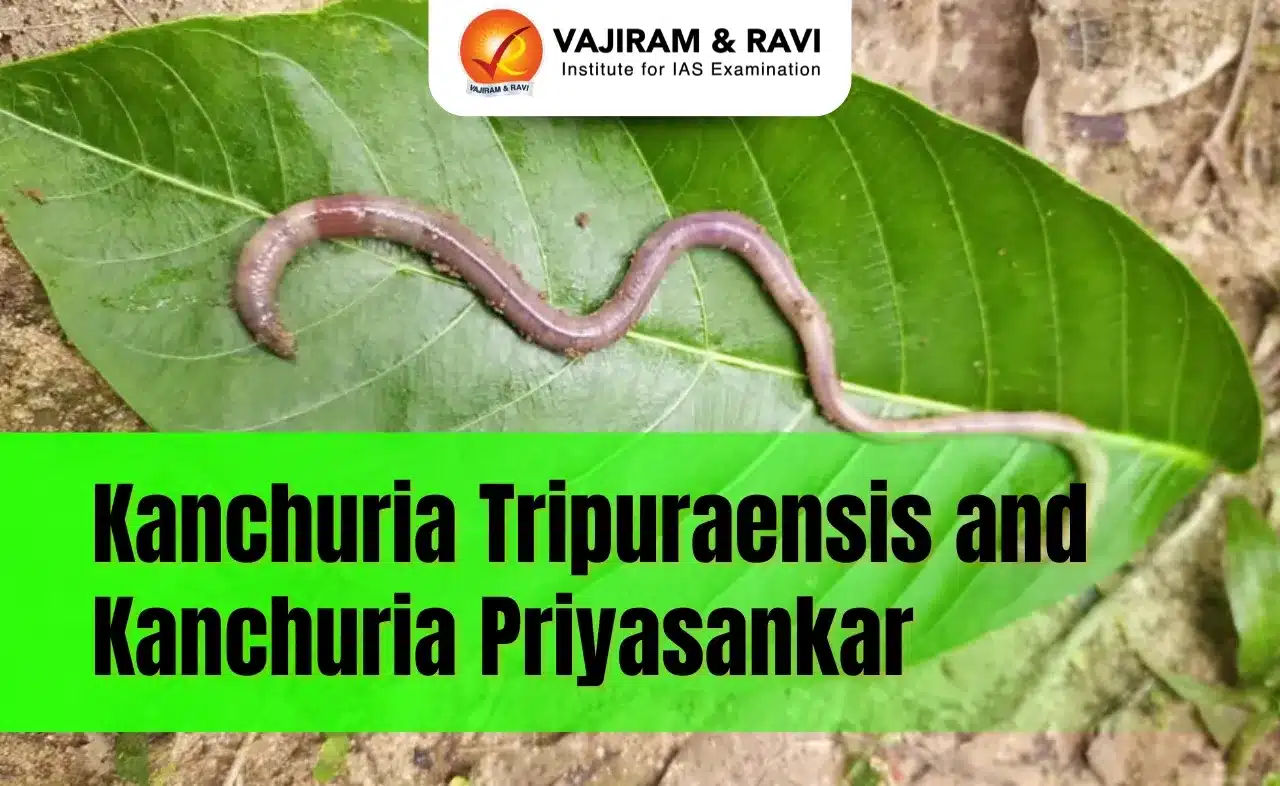
  • These are two new species of earthworms discovered in Tripura.
  • Kanchuria tripuraensis has been named after Tripura, where it was found thriving in rubber and pineapple plantations — highlighting the ecological diversity of even agriculturally modified landscapes.
  • Kanchuria priyasankari is a tribute to Prof. Priyasankar Chaudhuri, whose four-decade-long dedication to earthworm taxonomy has placed Tripura on the national and international map for soil biodiversity studies.
  • K. tripuraensis is unique within its genus for having single ventromedian spermathecae in segments 7 and 8—a distinguishing morphological feature. 
  • K. priyasankari, a member of the turaensis species group, is characterised by its comparatively smaller size and a distinctive spermathecal structure that sets it apart from its close relative, K. turaensis.
  • With these additions, the genus Kanchuria—which is endemic to Northeast India—the genus count reaches 10. 
  • This discovery also raises the number of documented megadrile earthworm species in Tripura to 38, cementing the Eastern Himalaya–Northeastern Hills as the second-richest region in India in terms of earthworm diversity.

Source: IT

Kanchuria tripuraensis and Kanchuria priyasankari FAQs

Q1: Kanchuria tripuraensis was discovered in which Indian state?

Ans: Tripura

Q2: Kanchuria priyasankari is named in honour of which scientist?

Ans: Prof. Priyasankar Chaudhuri

Q3: Which species group does Kanchuria priyasankari belong to?

Ans: Turaensis group

Q4: What characterizes Kanchuria priyasankari in comparison to Kanchuria turaensis?

Ans: Smaller size and distinctive spermathecal structure

Portulaca Bharat

Portulaca Bharat

Portulaca Bharat Latest News

A new flowering plant species with unusual morphological characteristics named Portulaca bharat has been recently discovered in the rocky and semi-arid landscape of Aravali hills near Jaipur.

About Portulaca Bharat

  • It is a new species of flowering plant.
  • It was discovered in the rocky and semi-arid landscape of the Aravali hills near Jaipur, Rajasthan.
  • With no other populations currently known, Portulaca bharat has been provisionally assessed as “data deficient” under the IUCN Red List guidelines.
  • It adds to the list of Indian endemics.
  • The plant’s narrow endemism and specific habitat requirements make it highly vulnerable to habitat degradation and climate change.
  • The genus Portulaca currently comprises about 153 species worldwide, primarily found in tropical and subtropical regions.
    • These succulent plants are known for their toughness, water-storing tissues, and adaptation to extreme environments. 
    • In India, 11 species are currently known, including four endemics, mostly distributed in dry and semi-arid habitats.

Source: TH

Portulaca bharat FAQs

Q1: Portulaca bharat, a newly discovered species, was found in which region of India?

Ans: Aravali Hills near Jaipur, Rajasthan

Q2: What is the conservation status of Portulaca bharat under the IUCN Red List guidelines?

Ans: Data Deficient

Q3: Which of the following is a key characteristic of Portulaca species?

Ans: Water-storing tissues for surviving extreme environments

Q4: In what type of habitat was Portulaca bharat discovered?

Ans: Rocky and semi-arid landscape

Daily Editorial Analysis 17 June 2025

Daily Editorial Analysis

India’s Fiscal Consolidation Trajectory - Strengths, Slippages, and Policy Implications


Context:

  • The article provides a detailed analysis of the Government of India's (GoI’s) fiscal performance for the financial year 2024–25 (FY25), based on provisional data, and evaluates its implications for FY26.
  • It highlights key trends in deficit containment, capex growth, revenue collection, and looming policy changes, which are crucial from the perspective of macroeconomic management and fiscal federalism in India.

 Fiscal Performance in FY25 - A Mixed Bag:

  • Fiscal deficit trends:
    • FY25 fiscal deficit stood at Rs 15.77 trillion, slightly above the Revised Estimate (RE) of Rs 15.7 trillion.
    • As a percentage of GDP, the fiscal deficit was contained at 4.8%, aligning with the target due to higher-than-estimated nominal GDP.
  • Revenue deficit milestone:
    • Revenue deficit was curtailed to Rs 5.7 trillion, lower than RE of Rs 6.1 trillion.
    • This amounted to 1.7% of GDP, a 17-year low, and an improvement from the 1.9% target.
  • Capital expenditure (Capex) surge:
    • Capex exceeded expectations, reflecting stronger infrastructure push.
    • April 2025 alone saw 61% year-on-year increase in capex, reaching Rs 1.6 trillion.

Receipts and Revenue Challenges:

  • Shortfall in tax revenues:
    • Gross tax revenues missed FY25 RE by Rs 0.6 trillion.
    • To meet FY26 targets, tax revenue must grow at 12.5%, up from earlier 10.8% projection.
  • Compensatory dividends: A Rs 0.4 trillion higher-than-budgeted RBI dividend transfer, offering partial cushion for FY26.
  • Miscellaneous capital receipts: In April 2025, such receipts were 46% of FY26 BE, versus nil in April 2024, indicating positive early momentum. 

FY26 Outlook - Optimism with Caveats:

  • Nominal GDP revision as a fiscal cushion:
    • FY25 nominal GDP was 2% higher than First Advance Estimate.
    • Despite a lower FY26 nominal growth projection of 9% (ICRA), the fiscal deficit can be contained at 4.4%, aided by a larger base effect.
  • Capital expenditure momentum: Capex can potentially exceed BE by Rs 0.8 trillion, pushing the total to Rs 12.0 trillion, ensuring higher public investment momentum.
  • Expenditure composition and timing: FY26 requires higher revenue expenditure growth than earlier estimated, but lower capex growth, due to front-loading in April.

 Emerging Fiscal Policy Considerations:

  • Finance Commission recommendations: The 16th Finance Commission's upcoming report will redefine Centre-State fiscal relations for the next five years.
  • Geopolitical and defence implications: Potential increase in defence spending due to global tensions may crowd out developmental expenditure.
  • Pay Commission (8th) impact: The timing of the Pay Commission award could strain central finances and influence state-level fiscal decisions.
  • Future of GST compensation cess: The imminent cessation of GST compensation cess in its current form raises questions on Centre-State revenue sharing.

Conclusion - A Cautiously Optimistic Fiscal Trajectory:

  • India’s fiscal consolidation trajectory appears largely on track, with encouraging signs from higher capex and lower revenue deficit.
  • However, medium-term sustainability will depend on structural reforms in revenue mobilization, expenditure efficiency, and Centre-State fiscal coordination in light of upcoming institutional and geopolitical developments.

India’s Fiscal Consolidation Trajectory FAQs

Q1. What factors contributed to the containment of India's fiscal deficit at 4.8% of GDP in FY2025 despite a marginal overshoot in absolute terms?

Ans. The containment was aided by higher-than-expected nominal GDP and significant savings in revenue expenditure that offset shortfalls in receipts.

Q2. How did the Government of India's capital expenditure performance in FY2025 impact fiscal trends and planning for FY2026?

Ans. A back-ended surge in capex, especially in Q4 of FY2025, created momentum for early spending in FY2026 and reduced the required capex growth rate for the rest of the fiscal.

Q3. What are the implications of the shortfall in gross tax revenues in FY2025 for fiscal planning in FY2026?

Ans. The Rs 0.6 trillion shortfall has increased the required growth rate in gross tax revenue to 12.5% in FY2026, raising concerns about revenue buoyancy.

Q4. Why is the upward revision of nominal GDP estimates for FY2025 significant for India's fiscal consolidation path?

Ans. It provides a larger economic base that helps in meeting deficit and debt targets, even with moderate slippages or lower projected growth in FY2026.

Q5. What key fiscal policy developments could influence Centre-State fiscal dynamics in the near future?

Ans. Recommendations of the 16th Finance Commission, restructuring of GST compensation cess, potential Pay Commission awards, and rising defence spending could all significantly impact intergovernmental fiscal relations and priorities.
Source: IE

Serving Justices, But Not Justice


Context

  • The Indian judiciary, often hailed as the guardian of constitutional morality and a bulwark against executive excesses, has long been viewed as one of the most trusted public institutions in the country.
  • Yet, recent revelations and controversies have cast a long shadow over the credibility of this institution.
  • The case of Justice Yashwant Varma, involving sacks of cash found amidst a fire at his official residence, followed by opaque proceedings and an impeachment recommendation, exemplifies a broader malaise.
  • The problem lies not just in the specific allegations of corruption, but in the lack of transparency that characterises the judiciary’s own internal accountability mechanisms, particularly the so-called ‘in-house procedure’.

The Justice Varma Controversy: A Symptom of a Deeper Problem

  • On March 14, a fire broke out at Justice Yashwant Varma’s residence, leading to the discovery of half-burnt sacks allegedly filled with cash.
  • Within days, Justice Varma was relieved of his duties and transferred from the Delhi High Court to the Allahabad High Court.
  • Eventually, an impeachment recommendation followed, reportedly based on a judicial inquiry.
  • The swift and secretive nature of these developments is unusual and troubling.
  • Though the Supreme Court made some material public, such as video footage and redacted correspondence, crucial documents, including reports by the Commissioner of Police and the judicial committee's final findings, were withheld.
  • Most concerning is the disappearance of the alleged sacks of cash, reportedly removed by Justice Varma’s staff, raising serious questions about the integrity of the investigative process.
  • Why was such critical evidence not preserved? Why were law enforcement agencies seemingly unable or unwilling to secure the scene?
  • These questions remain unanswered, as they are enveloped in the secrecy of the judiciary’s internal disciplinary system.

The ‘In-House Procedure’: Institutionalised Opacity

  • The Justice Varma episode illustrates the inherent opacity of the judiciary’s ‘in-house procedure’, an informal mechanism designed by the higher judiciary to deal with allegations of judicial misconduct.
  • Under this system, inquiries are conducted exclusively by fellow judges, and nearly all aspects of the process, from the complaint’s existence to the findings of the inquiry, are shrouded in secrecy.
  • The problems with this system are numerous:
    • Lack of transparency: The public is not entitled to know whether an inquiry was conducted or what its outcome was.
    • Absence of procedural safeguards: Unlike regular inquiries, these proceedings are not bound by legal norms or due process requirements.
    • No public accountability: There is no external oversight or appeal, and even findings of guilt are not published.
  • The judiciary, while demanding accountability from other institutions, exempts itself from the same standards, thus undermining its own legitimacy. 

Precedents of Concern: A Pattern of Secrecy and Impunity

  • Justice Ramana and the Andhra Pradesh Allegations (2020)
    • Grave accusations made by the Chief Minister against Justice Ramana and other judges were summarily dismissed without explanation.
    • There was no public record of any inquiry into Justice J.K. Maheshwari, another named judge, who was soon elevated to the Supreme Court.
  • Sexual Harassment Allegations Against CJI Ranjan Gogoi (2019)
    • A former employee accused then CJI Gogoi of sexual harassment and victimisation.
    • The inquiry, conducted by his peers, exonerated him, without allowing the complainant legal representation or access to the final report.
    • Meanwhile, the Court launched a separate inquiry into an alleged conspiracy against the judiciary, a claim that lacked evidentiary backing.
    • After Justice Gogoi’s retirement, the complainant was reinstated with full back wages, a tacit admission of procedural and moral inconsistency.
  • Allegations Against Justice Surya Kant
    • Slated to become the CJI in 2025, Justice Surya Kant has faced serious allegations ranging from corruption to abuse of power.
    • Although some judges expressed concern and called for inquiry, there is no public record of any investigation into the charges.
    • Yet, his career trajectory has remained unaffectedunderscoring the in-house system’s tendency to brush controversies under the carpet.

The Case for Reform: Transparency as a Democratic Imperative

  • The opacity of the judicial accountability process stands in sharp contrast to the principles the judiciary has itself laid down.
  • The Supreme Court has repeatedly affirmed that the right to information is intrinsic to the freedom of speech and expression, and a cornerstone of participatory democracy. Yet, the judiciary’s internal practices betray these ideals.
  • Public disclosure of in-house inquiry findings is essential:
    • It would develop institutional trust by showing that misconduct is taken seriously.
    • It would deter future impropriety by signalling that judicial office is not immune from scrutiny.
    • It would affirm the judiciary’s own moral and legal authority by holding itself to the same standards it imposes on others.
  • Secrecy does not protect the judiciary’s independence; it erodes it.
  • Independence does not mean insulation from accountability, rather, it should coexist with mechanisms that ensure public confidence.

Conclusion

  • The Justice Varma case, and others like it, should serve as a wake-up call and the judiciary cannot continue to operate in a parallel universe, where norms of due process and transparency do not apply.
  • While it rightly demands autonomy and respect, it must also embrace scrutiny and openness.
  • A reformed, transparent mechanism for dealing with judicial misconduct, possibly involving a mix of judicial and independent oversight, is not just desirable; it is essential for the continued legitimacy of the Indian judiciary.
  • Until then, the in-house procedure will continue to resemble a papal conclave, leaving the public to interpret shadows and smoke instead of facts and findings.

Serving Justices, But Not Justice FAQs

Q1. What sparked the inquiry against Justice Yashwant Varma?

Ans. The inquiry was triggered after several sacks of cash were discovered during a fire at his official residence.

Q2. What is the 'in-house procedure'?

Ans. The 'in-house procedure' is an internal mechanism through which senior judges investigate allegations of misconduct against other judges, without public disclosure.

Q3. Why is the in-house procedure criticized?

Ans. It is criticized for being opaque, lacking transparency, and not ensuring public accountability.

Q4. What happened in the sexual harassment case against CJI Ranjan Gogoi?

Ans. CJI Gogoi was exonerated by a closed-door judicial committee, while the complainant was denied legal representation and access to the final report.

Q5. What reforms are necessary in Indian Judiciary?

Ans. Judicial inquiries should be made transparent to uphold public trust and strengthen institutional accountability.

Source: The Hindu


India’s Uneasy Balancing Act in the Bay of Bengal


Context

  • India’s economic engagement in the Bay of Bengal region appears to be entering a dynamic and consequential phase.
  • On the surface, there are several encouraging indicators: trade volumes are increasing, major eastern ports such as Visakhapatnam, Paradip, and Haldia are witnessing steady growth in cargo throughput, and the recent signing of the BIMSTEC Maritime Transport Cooperation Agreement augurs well for improved regional integration.
  • However, this optimism is tempered by emerging geopolitical tensions, particularly in India’s relationship with Bangladesh.
  • These tensions have cast a shadow on India’s broader regional ambitions and exposed the fragility of its leadership claims in the Bay of Bengal.

The Withdrawal of the Transshipment Facility: Strategic Signal or Logistical Necessity?

  • A critical turning point came in April when India abruptly withdrew a transshipment facility that allowed Bangladesh to route exports through Indian ports to third-country destinations.
  • While New Delhi justified this move on logistical grounds, citing congestion and resultant delays at Indian terminals, the decision coincided with a diplomatic misstep in Dhaka.
  • Bangladesh’s interim Chief Adviser, speaking in Beijing, referred to India’s northeastern states as landlocked and suggested that Bangladesh served as their maritime gateway.
  • This statement clashed with New Delhi’s strategic narrative, which positions the Northeast as a linchpin of regional connectivity, not a dependent outpost.
  • Although India’s concerns about logistics may be valid, the timing of the decision appeared retaliatory, especially in light of Bangladesh’s growing engagement with China and its broader hedging strategy.
  • In Dhaka, the move was interpreted not as a pragmatic trade adjustment but as a calculated message, India was asserting displeasure through economic means.

The Larger Context: India’s Maritime Push

  • This controversy unfolded just as India was redoubling its efforts to strengthen regional integration through maritime initiatives.
  • Under the Sagarmala programme, India has invested substantially in improving port infrastructure and coastal logistics.
  • Trade along the eastern seaboard has more than doubled over the past decade, thanks in part to policy incentives such as GST cuts on bunker fuel and support for coastal shipping.
  • The BIMSTEC Maritime Transport Cooperation Agreement represents another layer of this effort, aiming to harmonise customs procedures and create multimodal linkages that would benefit not only India but also smaller landlocked or less-connected countries such as Bhutan, Nepal, and Myanmar.
  • However, India’s unilateral withdrawal of the transshipment facility appears at odds with the cooperative ethos these regional efforts promote.
  • For Bangladesh’s export-reliant economy, particularly its ready-made garment sector, the loss of access to Indian transshipment ports introduces significant uncertainty and cost, especially when alternatives via Sri Lanka or Southeast Asia are less viable.

Potential Implications of India’s Move

  • Escalating Trade Frictions
    • The situation worsened in mid-May when India imposed new restrictions on the import of several Bangladeshi goods, mandating that they enter only through select seaports, rather than via the more accessible northeastern land ports.
    • Indian officials framed this as a reciprocal measure following Bangladesh’s earlier restrictions on Indian yarn imports.
    • However, given that India’s transshipment rollback preceded Bangladesh’s actions, many in Dhaka perceived the Indian response as excessive and punitive.
    • These tit-for-tat measures risk undermining years of progress in regional cooperation. Some in New Delhi argue that Dhaka is being warned of the perils of strategic hedging, given its closer ties with China and Pakistan.
    • Yet, Bangladesh, as a sovereign nation, is within its rights to diversify its foreign policy.
    • If India begins to weaponize trade access in response to perceived diplomatic slights, it risks transforming economic cooperation into a geopolitical contest, precisely what BIMSTEC and other multilateral efforts were designed to avoid.
  • The Risk of Undermining Regional Trust
    • The implications extend beyond bilateral relations. Other regional capitals, Naypyidaw, Bangkok, Colombo are observing these developments closely.
    • The concern is not merely that India is using its leverage; great powers often do.
    • Rather, the concern is that India is doing so in a domain traditionally kept separate from geopolitics: regional trade infrastructure.
    • Once considered neutral and collective, these maritime corridors are beginning to feel conditional and transactional.
    • India does retain considerable strategic advantages. Its port infrastructure is the most advanced in the region, and its capacity for multimodal transport is unmatched among BIMSTEC countries.
    • However, material capacity alone is insufficient for regional leadership.
    • In a region historically marred by mistrust and fragmentation, India’s credibility, its consistency, fairness, and reliability, will ultimately determine the success of its regional ambitions.

The Way Ahead: Rebuilding Credibility and Drawing Clearer Lines

  • The Bay of Bengal stands at an inflection On one hand, it offers tremendous potential as a connective corridor between South and Southeast Asia.
  • well-executed BIMSTEC Free Trade Agreement could reshape trade patterns and deepen economic ties.
  • On the other hand, the region remains vulnerable to strategic anxieties and national rivalries.
  • The recent blurring of economic policy and geopolitical positioning threatens to derail India’s carefully constructed narrative of regional cooperation.
  • There is still time for course correction. India could reframe its withdrawal of the transshipment facility as a temporary measure and set clear, rule-based criteria for its reinstatement.
  • Better yet, it could establish a depoliticised mechanism for trade facilitation, one that ensures predictability and fairness irrespective of diplomatic currents.
  • Such a move would not only reassure Bangladesh but also reinforce India’s image as a responsible regional leader.

Conclusion

  • The central question facing India is whether it can balance the assertion of its strategic interests with the cultivation of regional trust.
  • Its recent actions have sent mixed signals, combining infrastructural ambition with political reactivity.
  • For India to truly lead in the Bay of Bengal, it must ensure that its economic policies serve as bridges, not battlegrounds.
  • The success of its regional vision hinges not merely on ports and corridors, but on the credibility, it commands among its neighbours.

India’s Uneasy Balancing Act in the Bay of Bengal FAQs

Q1. Why did India withdraw the transshipment facility for Bangladesh?

Ans. India withdrew the transshipment facility for Bangladesh citing port congestion, but the move was widely interpreted as a political signal linked to Bangladesh’s growing ties with China.

Q2. What is the Sagarmala programme?

Ans. The Sagarmala programme is India’s flagship initiative aimed at enhancing coastal logistics, improving port infrastructure, and boosting maritime trade.

Q3. How does the BIMSTEC Maritime Agreement help trade?

Ans. The BIMSTEC Maritime Transport Cooperation Agreement helps trade by harmonising customs procedures and promoting multimodal linkages to reduce costs and delays in the Bay of Bengal region.

Q4. What was Bangladesh’s statement that upset India?

Ans. Bangladesh’s interim Chief Adviser referred to India’s northeastern states as “landlocked” and described Bangladesh as their maritime lifeline, a statement that was not well received in New Delhi.

Q5. What risk does India face by linking trade to politics?

Ans. By linking trade access to political considerations, India risks eroding regional trust and weakening the credibility of its leadership in Bay of Bengal cooperation efforts.

Source: The Hindu

Daily Editorial Analysis FAQs

Q1: What is editorial analysis?

Ans: Editorial analysis is the critical examination and interpretation of newspaper editorials to extract key insights, arguments, and perspectives relevant to UPSC preparation.

Q2: What is an editorial analyst?

Ans: An editorial analyst is someone who studies and breaks down editorials to highlight their relevance, structure, and usefulness for competitive exams like the UPSC.

Q3: What is an editorial for UPSC?

Ans: For UPSC, an editorial refers to opinion-based articles in reputed newspapers that provide analysis on current affairs, governance, policy, and socio-economic issues.

Q4: What are the sources of UPSC Editorial Analysis?

Ans: Key sources include editorials from The Hindu and Indian Express.

Q5: Can Editorial Analysis help in Mains Answer Writing?

Ans: Yes, editorial analysis enhances content quality, analytical depth, and structure in Mains answer writing.


Valley Fever

Valley Fever

Valley Fever Latest News

A new study suggests dogs could play a surprising role in public health by helping detect the early spread of Valley fever.

About Valley Fever

  • Valley fever, also known as acute coccidioidomycosis, is a fungal infection caused by coccidioides organisms. 
  • Two coccidioides fungi species cause valley fever. These fungi are commonly found in soil in specific regions. 
  • They are found in the Pacific Northwest and southwestern United States, and parts of Mexico, Central America, and South America.

Valley Fever Transmission

  • The fungi's spores can be stirred into the air by anything that disrupts the soil, such as farming, construction, and wind.
  • People can then breathe the fungi into their lungs. 
  • Pets can also become infected. 
  • Valley fever does not spread from person to person or between people and animals.
  • The infection starts in the lungs. It commonly affects people over 60 years of age.

Valley Fever Symptoms

  • Most people with an infection by this fungus never have symptoms. 
  • Others may have cold- or flu-like symptoms or symptoms of pneumonia. 
  • If symptoms occur, they typically start 5 to 21 days after exposure to the fungus.
  • Rarely, the infection spreads from the lungs through the bloodstream to involve the skin, bones, joints, lymph nodes, and central nervous system or other organs. This spread is called disseminated coccidioidomycosis.

Valley Fever Treatment

  • Mild cases of valley fever usually resolve on their own. 
  • In more-severe cases, doctors treat the infection with antifungal medications.
  • Sometimes surgery is needed to remove the infected part of the lung (for chronic or severe disease).

Source: TOI

Valley Fever FAQs

Q1: What is Valley fever caused by?

Ans: It is a fungal infection caused by coccidioides organisms.

Q2: Can you fully recover from Valley fever?

Ans: Most people who have Valley fever fully recover. A small percentage of people develop long-term lung infections.

Q3: Can Valley fever spread?

Ans: Valley fever is not contagious and cannot spread from one person or animal to another.

Achal Fast Patrol Vessel

Achal Fast Patrol Vessel

Achal Fast Patrol Vessel Latest News

Recently, the Achal Fast Patrol Vessel was ceremoniously launched in Goa.

About Achal Fast Patrol Vessel

  • It is the fifth Fast Patrol Vessel (FPV) in a series of eight being constructed by Goa Shipyard Ltd (GSL) for the Indian Coast Guard (ICG).
  • Designed and constructed under stringent dual-class certification from the American Bureau of Shipping and Indian Register of Shipping,

Features of Fast Patrol Vessel

  • The FPV features over 60% indigenous content.
  • The vessel measures 52 meters in length and 8 meters in breadth, with a displacement of 320 tons.
  • It is powered by a CPP-based propulsion system, the vessel can reach a top speed of 27 knots.
  • With its primary roles of protection, monitoring, control, and surveillance, ‘Achal’ is equipped to safeguard offshore assets and island territories.
  • Its launch marks another milestone in the long-standing partnership between the Indian Coast Guard and GSL, further reinforcing the collective march towards Aatmanirbharta in defence manufacturing.
  • It is built at a total cost of Rs 473 crore, the project has also provided a significant boost to local industry by generating substantial employment and supporting MSMEs engaged in production activities at various factories and within GSL.

Source: PIB

Achal Fast Patrol Vessel FAQs

Q1: What is the role of fast patrol vessel?

Ans: Fast Patrol Vessels for Indian Coast Guard are designed to offer high speed and enhanced maritime security. The primary role of the vessel is to perform Fisheries Protection, monitor foreign-chartered trawlers, EEZ and Coastal Patrol, Anti-Smuggling and Search and Rescue Operations.

Q2: What is Indian Coast Guard?

Ans: It is an armed force that protects India’s maritime interests and enforces maritime law, with jurisdiction over the territorial waters of India, including its contiguous zone and exclusive economic zone.

Extended Trajectory-Long Duration Hypersonic Cruise Missile (ET-LDHCM)

Extended Trajectory-Long Duration Hypersonic Cruise Missile (ET-LDHCM)

Extended Trajectory-Long Duration Hypersonic Cruise Missile Latest News

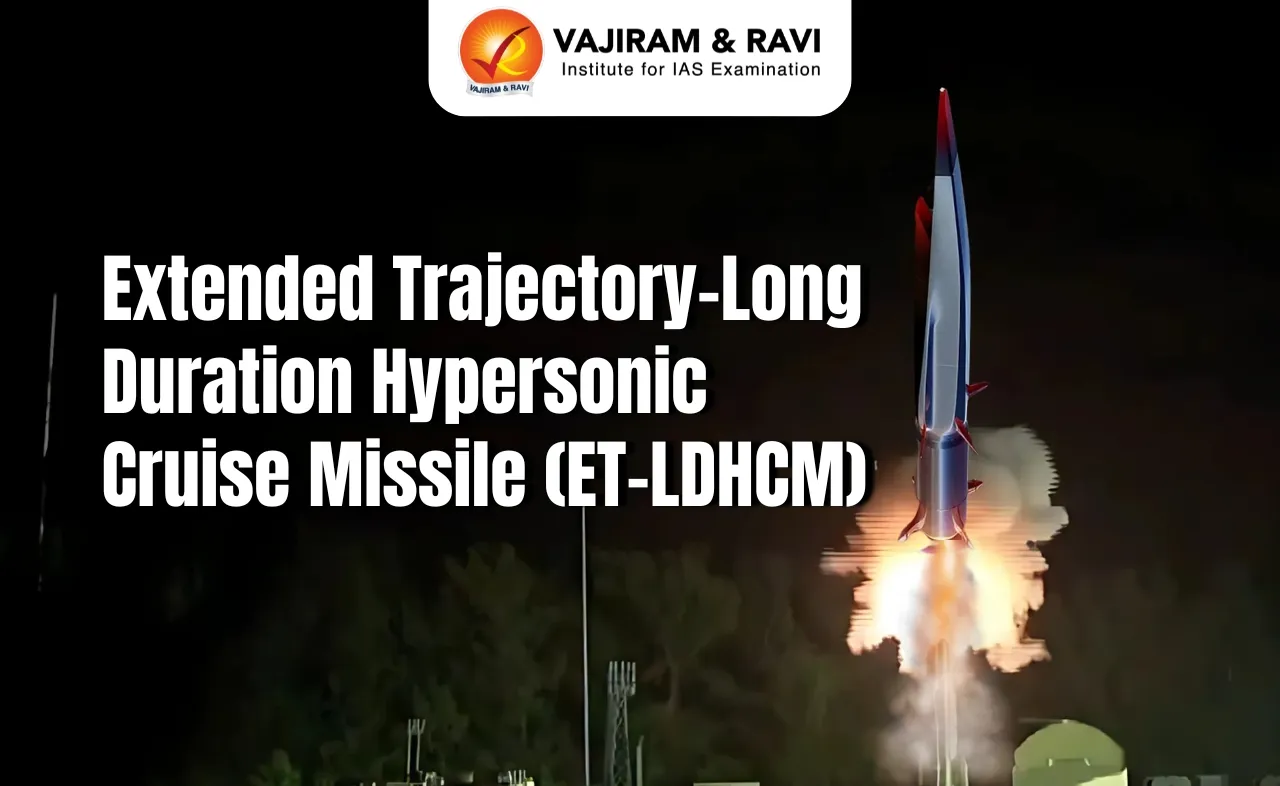
India is preparing to test its most advanced indigenously developed hypersonic missile—the Extended Trajectory-Long Duration Hypersonic Cruise Missile (ET-LDHCM).

About Extended Trajectory-Long Duration Hypersonic Cruise Missile

  • It is a long-range hypersonic cruise missile.
  • It is indigenously developed by India’s Defence Research and Development Organisation (DRDO) under a classified initiative known as ‘Project Vishnu’.
  • Designed for launch from land, sea, or air, the missile enhances India’s flexibility across strike platforms and mission types.
  • Once operational, it will place India among the handful of nations, including the US, China, and Russia, to field hypersonic weapon systems.

Extended Trajectory-Long Duration Hypersonic Cruise Missile Features

  • The ET-LDHCM system reportedly reaches speeds up to Mach 8, or about 11,000 kmph.
  • Designed for both conventional and nuclear missions, the missile can carry warheads weighing between 1,000 and 2,000 kg over a range of approximately 1,500 km.
  • Unlike ballistic missiles, the ET-LDHCM flies at low altitudes and is capable of course correction mid-flight.
  • Its speed, altitude-hugging flight profile, and mid-air manoeuvrability are designed to evade modern radar and air defence systems, enabling deep strikes into adversary territory.
  • Powered by a scramjet engine that uses atmospheric oxygen to sustain high speeds, the missile marks a major propulsion breakthrough.
  • Built with heat- and oxidation-resistant materials, it can withstand extreme temperatures exceeding 2,000 degree celsius.

Source: INDIA

Extended Trajectory-Long Duration Hypersonic Cruise Missile FAQs

Q1: The Extended Trajectory–Long Duration Hypersonic Cruise Missile (ET-LDHCM) is being developed by which Indian organization?

Ans: DRDO

Q2: ET-LDHCM is being developed under which classified initiative?

Ans: Project Vishnu

Q3: What is the maximum speed that ET-LDHCM is expected to reach?

Ans: Mach 8

Q4: Which type of engine powers the ET-LDHCM?

Ans: Scramjet engine

Q5: What is a key distinguishing feature of ET-LDHCM compared to ballistic missiles?

Ans: It flies at low altitudes and can correct course mid-flight

What is Synthetic Aperture Radar?

Synthetic Aperture Radar

Synthetic Aperture Radar Latest News

Recently, NASA said the NASA-ISRO SAR mission had arrived at ISRO’s spaceport in Sriharikota.

About Synthetic Aperture Radar

  • It is a type of active data collection where an instrument sends out a pulse of energy and then records the amount of that energy reflected back after it interacts with Earth.
  • SAR imagery is created from the reaction of an emitted pulse of energy with physical structures (like mountains, forests, and sea ice) and conditions like soil moisture. 
  • It is a way to make sharp pictures even when it’s dark or cloudy.

Working of Synthetic Aperture Radar

  • SAR systems send out microwave pulses and record the echoes that bounce back from the ground, ocean, ice or buildings.
  • Then, clever signal processing turns those echoes into detailed images.
  • The key element is the antenna that receives the echoes. Usually, the longer a physical antenna, the better the resolution — but a large antenna is hard to build and maintain.
  • On a SAR, a small antenna is carried on a moving platform like a satellite. As a result each echo is recorded at a slightly different position.
  • By stitching them together with precise timing and phase information, software can help mimic a single antenna hundreds of metres long.
  • Since microwaves penetrate clouds, smoke, and even light rainfall, SAR can collect data 24/7. If a SAR unit is mounted on an orbiting satellite, it can map swaths of land hundreds of kilometres wide in a single overpass.
  • Different materials like soil, vegetation, water, and metals reflect microwaves differently, allowing SAR to detect changes invisible to optical sensors.

Source: TH

Synthetic Aperture Radar FAQs

Q1: What is the use of SAR image?

Ans: Synthetic-aperture radar (SAR) is a form of radar that is used to create two-dimensional images or three-dimensional reconstructions of objects, such as landscapes.

Q2: What is LiDAR full form?

Ans: Light Detection and Ranging

What is Rinderpest?

Rinderpest

Rinderpest Latest News

India has secured a prestigious position in global animal health with the designation of the ICAR-National Institute of High Security Animal Diseases (NIHSAD) in Bhopal as a Category A Rinderpest Holding Facility (RHF).

About Rinderpest

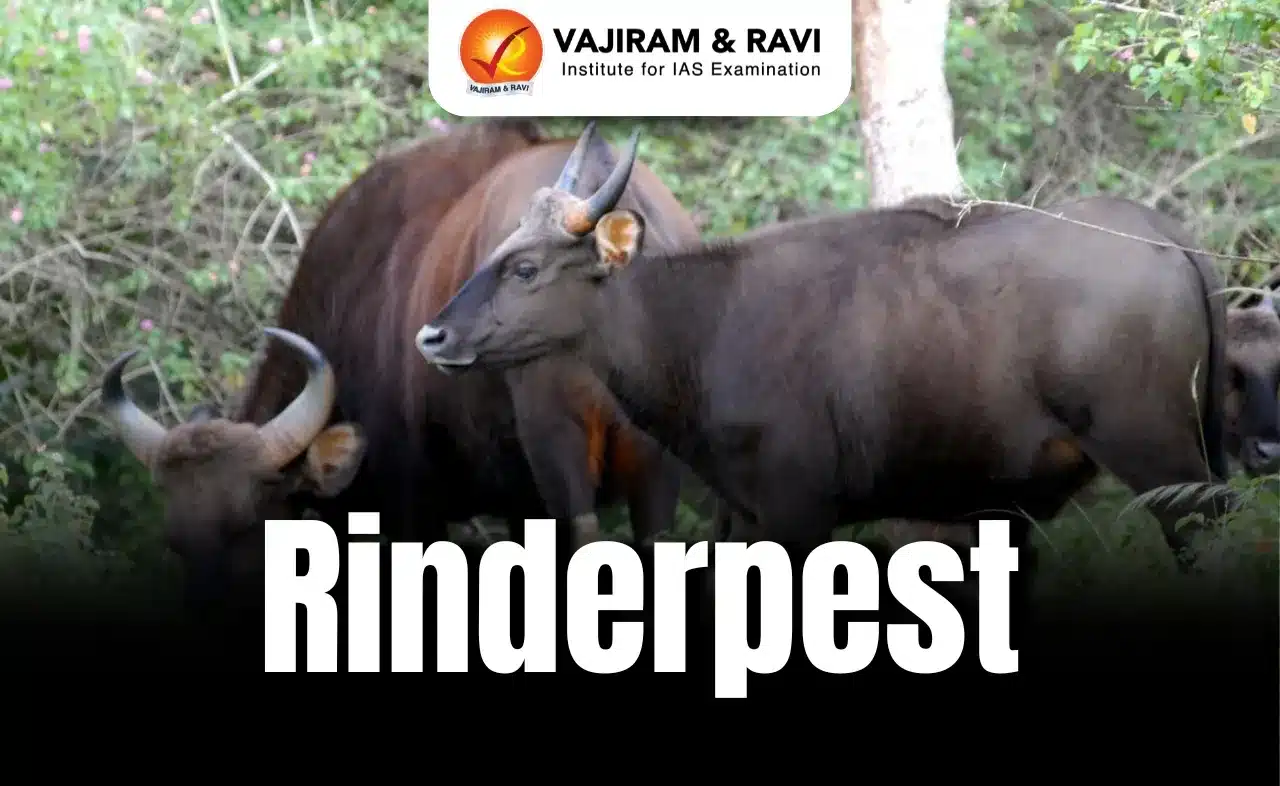
  • It is also known as cattle plague, is a contagious viral disease affecting clovenhoofed animals (mainly cattle and buffalo).
  • It is caused by a virus of the Paramyxoviridae family, genus Morbillivirus.
  • Many species of wild and domestic cloven-hoofed animals (including sheep and goats) show only mild symptoms of the disease when infected, but for cattle and buffalo, mortality rates can reach up to 100 per cent in highly susceptible herds.
  • Other than cattle and buffalo, rinderpest can infect zebus, water buffaloes, African buffaloes, eland, kudu, wildebeest, various antelopes, bushpigs, warthogs, giraffes.

Transmission of Rinderpest

  • It is spread by effective contact between animals carrying the virus and susceptible animals. The virus is found in nasal secretions a few days before any clinical signs appear.
  • As the disease progresses the virus is found in most body fluids and either death ensues, or the animal recovers, develops immunity and clears the virus from the body.

Symptoms of Rinderpest

  • In cattle, signs of the disease include fever, erosive lesions in the mouth, discharge from the nose and eyes, profuse diarrhoea and dehydration, often leading to death within 10 to 15 days.
  • In other species rinderpest may show milder clinical signs.
  • There is no public health risk, since rinderpest does not affect people.
  • It historically occurred in Europe, Africa and Asia.
  • In 2011 this disease was officially eradicated.

Designation of Rinderpest Holding Facility

  • It is given by the World Organisation for Animal Health (WOAH) and the United Nations’ Food and Agriculture Organization (FAO).  
  • To prevent its re-emergence, WOAH and FAO restrict the storage of Rinderpest Virus-Containing Material (RVCM) to a select few high-security laboratories worldwide.
  • ICAR-NIHSAD, a Biosafety Level-3 (BSL-3) facility and WOAH reference laboratory for avian influenza, was designated as India’s RVCM repository in 2012.
  • Following a rigorous evaluation the institute earned Category A RHF status for one year.
  • This recognition places India among a distinguished group of only six facilities worldwide entrusted with the critical responsibility of securely holding rinderpest virus material.

Source: PIB

Rinderpest

Q1: What is the disease blue tongue?

Ans: Bluetongue is an insect-borne, viral disease that affects sheep, cattle, and other ruminants.

Q2: What does World Organisation for Animal Health (WOAH) do?

Ans: The WOAH 's objectives are to: ensure transparency in the global animal disease and zoonosis situation. collect, analyse and disseminate scientific veterinary information. provide expertise and encourage international solidarity in the control of animal

Grand Cross of the Order of Makarios III

Grand Cross of the Order of Makarios III

Grand Cross of the Order of Makarios III Latest News

Recently, Prime Minister of India was conferred with the Grand Cross of the Order of Makarios III of Cyprus.

About Grand Cross of the Order of Makarios III

  • It is the highest civilian honour of Cyprus.
  • It was named after the country’s first president, Archbishop Makarios III.
  • It recognises outstanding contributions and achievements.
  • History: The Order of Makarios III, established in 1991, acknowledges exceptional service and contributions to Cyprus or the international community.
  • The honour symbolises Cyprus’s appreciation for exceptional service, leadership, or contributions that have positively impacted the country or the world.
  • The Order of Makarios III comprises multiple grades, with the Grand Cross being one of the highest honours, possibly second only to the Grand Collar.
  • The President of Cyprus typically bestows this award, highlighting the recipient’s achievements and contributions.

Key Facts about Cyprus

  • It is a Eurasian island country located in the extreme northeastern corner of the Mediterranean Sea, south of the Anatolian peninsula (Asia Minor) or modern-day Turkey.
  • It is the third largest Mediterranean island after Sicily and Sardinia.
  • Major Cities: Limassol, Larnaca, Famagusta, and Paphos.
  • Highest Point: Mount Olympus (1,952 m)
  • Capital: Nicosia  

Source:TH

Grand Cross of the Order of Makarios III FAQs

Q1: Which country gives Grand Cross of the Order of Makarios III award?

Ans: Cyprus

Q2: What currency is spent in Cyprus?

Ans: Euro

Samarth Incubation Programme

Samarth Incubation Programme

Samarth Incubation Program Latest News

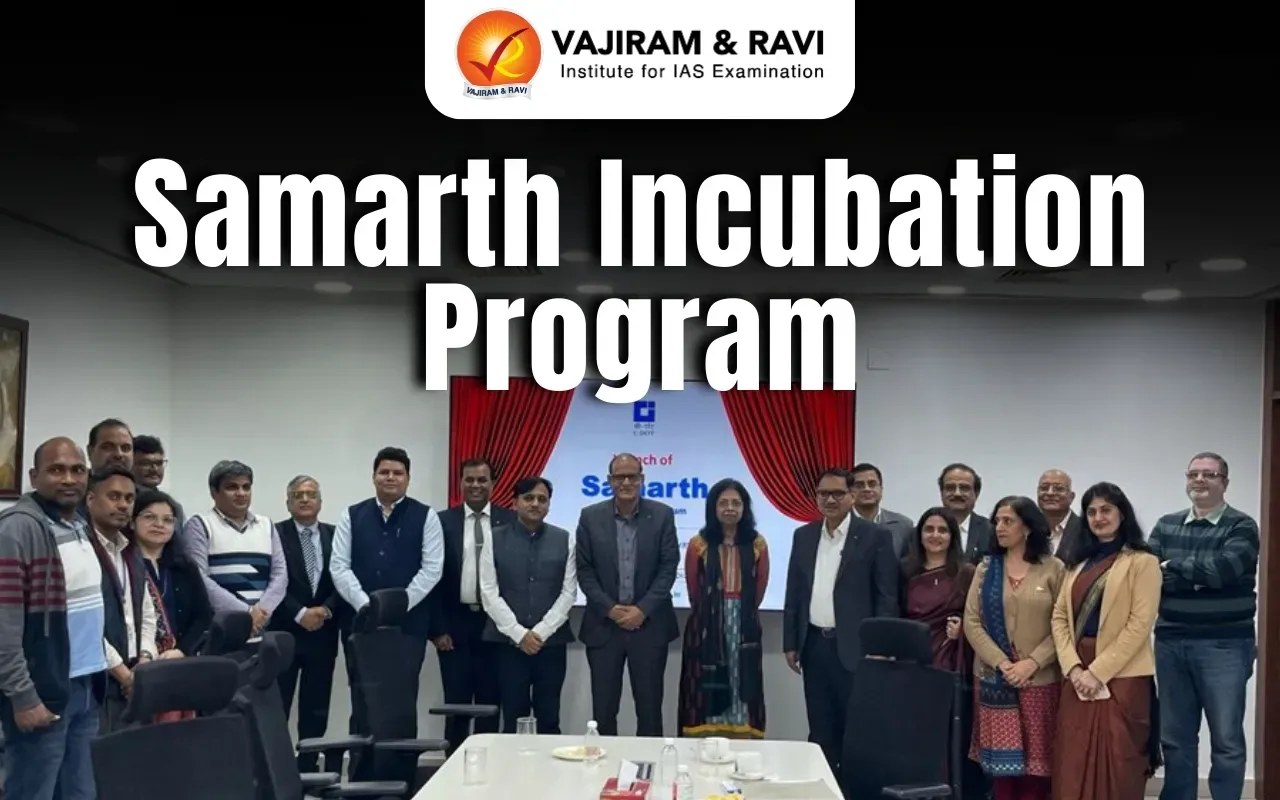
Recently, the Centre for Development of Telematics (C-DOT), an autonomous telecom R&D institution under the Department of Telecommunications (DoT), Government of India, launched the ‘Samarth’ Program.

About Samarth Incubation Program

  • It is a cutting edge Incubation Program for startups in Telecom & ICT Sector.
  • It is an initiative of the Centre for Development of Telematics (C-DOT), an autonomous telecom R&D institution.
  • This initiative is aimed at nurturing sustainable and scalable business models by providing startups with financial grant, advanced resources and guidance for transition from ideation to commercialization.
  • In the first phase 18 startups have been selected in cohort 1 through a competitive process. 

Features of Samarth Incubation Program 

  • Each selected startup receives a grant of up to ₹5 lakh, fully furnished office space for six months at C-DOT campuses in Delhi and Bengaluru.
  • It also provides access to C-DOT’s lab facilities, and mentorship from C-DOT technologists and external experts.
  • It offers holistic support to startups and innovators working in telecom applications, cybersecurity, 5G/6G technologies, artificial intelligence, IoT, and quantum technologies.
  • The program is structured in two cohorts of six months each, accommodating up to 18 startups per cohort—thus supporting a maximum of 36 startups under the initiative.
  • Delivered in a hybrid format, “Samarth” leverages state-of-the-art infrastructure, expert mentorship, and access to a strong network of investors and industry leaders to empower emerging entrepreneurs.
  • Progressing startups will also be eligible for potential collaboration and further financial grants under the C-DOT Collaborative Research Program (CCRP).
  • Implementing Partners: Software Technology Parks of India (STPI) and TiE  (The Indus Entrepreneurs  have been selected as the implementation partner for the program. 

Source: PIB

Samarth Incubation Program FAQs

Q1: What is an incubation program?

Ans: Incubation programs provide you with management and mentoring, access to market resources, networking opportunities and business skills training.

Q2: What is the primary objective of the Samarth Incubation Programme?

Ans: To support startups in telecom, cybersecurity, AI, and quantum technologies.

PM Modi’s Cyprus Visit: Strategic Boost to India–Cyprus Ties

PM Modi Cyprus Visit

PM Modi Cyprus Visit Latest News

  • Prime Minister Narendra Modi paid a state visit to Cyprus. During this visit, he held talks with President Nikos Christodoulides.
  • PM Modi’s visit was the first by an Indian Prime Minister to Cyprus in over two decades. It underscores the strategic depth and enduring friendship between the two democracies.

Key Highlights of the Visit

  • PM Modi Conferred Cyprus's Highest Honour
    • Cyprus President awarded PM Modi the "Grand Cross of the Order of Makarios III", the country’s highest civilian honour.
  • Focus on implementing the 2024 Apia Commonwealth Ocean Declaration
    • The leaders committed to enhancing coordination within international bodies like the UN and the Commonwealth, with a focus on implementing the 2024 Apia Commonwealth Ocean Declaration.
      • This Declaration emphasizes sustainable ocean governance, climate resilience, marine biodiversity protection, and capacity-building among member states 
      • The inaugural Commonwealth Ocean Ministers Meeting was held in Cyprus in April 2024.
      • This led to the creation of the Blue Charter Centre of Excellence to promote sustainable ocean practices and build capacity among Commonwealth nations.
  • Strengthening Political Dialogue
    • The two countries agreed to hold regular high-level political dialogue and activate institutional mechanisms through their foreign ministries to monitor and implement an upcoming bilateral Action Plan.
  • Support for Cyprus Sovereignty and UN-Led Peace
    • India reiterated support for Cyprus’ sovereignty and UN-backed efforts for a bizonal, bicommunal federation. 
      • Bizonal: The territory is divided into two zones, reflecting the geographical separation of the two communities.
      • Bicommunal: The federation is structured to accommodate and represent the interests of both Greek Cypriot and Turkish Cypriot communities.
    • Both opposed unilateral actions that hinder negotiations.
  • Enhanced Defence and Security Cooperation
    • Cyprus and India condemned terrorism, including recent attacks in Kashmir. 
    • They pledged joint action on counter-terrorism, cyber security, defence production, maritime security, and crisis response coordination.
  • Connectivity and Regional Integration
    • Both sides endorsed the India–Middle East–Europe Economic Corridor (IMEC) as a game-changer for connectivity. 
    • Cyprus offered to serve as a logistics hub and gateway for Indian trade into Europe.
  • EU–India Strategic Engagement
    • Cyprus pledged to support India-EU ties during its 2026 EU Council Presidency. 
      • Cyprus will assume Presidency of the Council of the European Union in early 2026.
    • Both nations welcomed progress in key areas like trade, defence, energy, and space, and committed to concluding the EU–India Free Trade Agreement by year-end. 
    • Both sides also supported continued collaboration through the EU–India Trade and Technology Council and extending the 2025 Strategic Roadmap.
  • Trade, Innovation, and Economic Partnerships
    • India and Cyprus agreed to expand trade and investment. 
    • A Cyprus–India Business Forum and potential MoU on innovation and technology (AI, digital infrastructure, research) are planned.
  • Mobility, Tourism, and Cultural Ties
    • A Mobility Pilot Program will be finalized by end-2025. 
    • Both leaders called for boosting tourism, cultural ties, and exploring direct air connectivity between the two nations.
  • Action Plan 2025–2029
    • A detailed five-year Action Plan will guide bilateral cooperation, monitored jointly by the respective foreign ministries, to ensure sustained progress in strategic areas.

India’s Supports to Cyprus’s Sovereignty: A Strong Message To Turkey

  • During this visit, India reiterated its support for the independence, sovereignty, territorial integrity, and unity of the Republic of Cyprus. 
  • This strong diplomatic message comes at a time when India–Turkey relations are tense, particularly due to Turkey’s vocal criticism of India on Kashmir and its support for Pakistan following the Pahalgam attack and Operation Sindoor.
  • PM Modi’s symbolic visit to the Historic Centre of Nicosia, overlooking Turkish-controlled Northern Cyprus, further highlighted India’s solidarity with Cyprus.

Turkey–Cyprus Conflict

  • The Turkey–Cyprus conflict stems from the island’s division between Greek and Turkish Cypriots
  • After gaining independence from Britain in 1960, tensions rose due to Greek Cypriot demands for union with Greece and Turkish Cypriot fears. 
  • A 1974 Greek-backed coup triggered a Turkish invasion, resulting in the north being controlled by the Turkish Republic of Northern Cyprus (TRNC), recognized only by Turkey. 
  • The island remains divided, with the UN maintaining a buffer zone. 
  • Repeated UN-led negotiations have failed to resolve issues like territorial return and political equality. 
  • Recent disputes over natural gas exploration have further deepened tensions in the Eastern Mediterranean.

Source: TH | News18 | MEA

PM Modi Cyprus Visit FAQs

Q1: Why did PM Modi visit Cyprus in 2024?

Ans: To deepen strategic ties, boost trade, defend Cyprus sovereignty, and support global cooperation on ocean governance.

Q2: What honour did Cyprus bestow on PM Modi?

Ans: He was awarded the Grand Cross of the Order of Makarios III, Cyprus's highest civilian honour.

Q3: What is the India–Cyprus stance on Turkey?

Ans: India reaffirmed support for Cyprus, opposing Turkey’s interference and unilateral actions in the region.

Q4: What economic initiatives were discussed?

Ans: Plans include a business forum, innovation MoU, and Cyprus as a logistics hub for Indian trade into Europe.

Q5: What is the Apia Ocean Declaration?

Ans: It’s a 2024 pact promoting sustainable ocean governance and biodiversity, backed strongly by India and Cyprus.

India’s 2027 Census: First Digital and Caste-Based Count

India 2027 Census

India 2027 Census Latest News

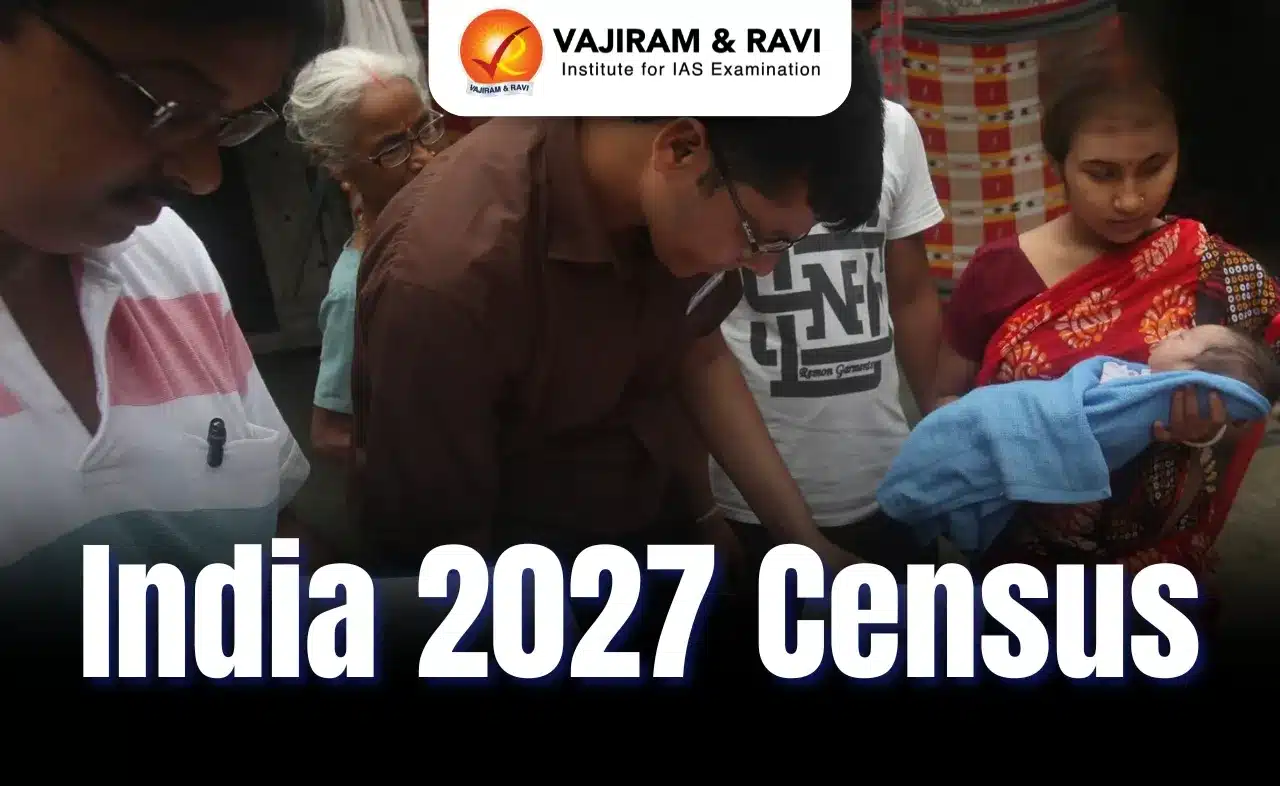
  • The government has officially announced that India’s 16th Census will be conducted in two phases, with reference dates of October 1, 2026, for snow-bound areas and March 1, 2027, for the rest of the country. 
  • This will be the first nationwide caste-based enumeration since 1931. 
  • A Gazette notification under Section 3 of the Census Act, 1948, was issued, initiating house-listing and housing surveys ahead of the population count.

How the Census is Conducted: Process and Timeline

  • Two-Phase Structure
    • The Census is conducted in two main phases:
      • House-listing and Housing Census: Records details about buildings and households.
      • Population Enumeration: Captures individual-level demographic and socio-economic data.
  • Preparatory Steps
    • Before enumeration, states freeze administrative boundaries, conduct mapping exercises, and train enumerators.
  • House-listing Phase (Expected in 2026)
    • Enumerators collect data on: Household composition and building usage; Construction material, rooms, ownership; Access to water, electricity, sanitation; Cooking fuel and ownership of assets (TV, phone, vehicle, etc.).
    • This phase offers insight into housing quality and amenities across India.
  • Population Enumeration (February 2027)
    • Covers individual details such as:
      • Name, age, sex, relationship to household head
      • Marital status, education, occupation, religion
      • Caste/tribe status, disability, and migration history
      • Even homeless individuals are included.

How the 2027 Census Will Be Conducted: A Digital Leap

  • First Digital Census in India
    • The 2027 Census marks India’s transition to a digital framework, using mobile apps, cloud systems, and real-time monitoring tools to conduct and manage the enumeration process.
  • Introduction of Self-Enumeration
    • For the first time, households will have the option to self-enumerate via a government portal or mobile app. 
    • After submitting their data, they receive a unique ID to show the enumerator during verification.
  • Digital Tools for Enumerators
    • Enumerators will use smartphones or handheld devices with a preloaded Census app. 
    • Though paper-based forms are still allowed, most are expected to adopt the digital mode due to better remuneration and widespread smartphone access.
  • Advanced Monitoring and Supervision
    • The Census Management and Monitoring System (CMMS) will enable:
      • Real-time dashboards
      • Field issue resolution
      • Progress tracking and data quality control
  • Historic Inclusion of Caste Data
    • This Census will be the first since 1931 to collect caste data for all communities, adding a significant new dimension to the dataset.

How Census 2027 Will Differ from the 2011 Census

  • Digital First Approach
    • Census 2027 will be India’s first fully digital Census, unlike the paper-based 2011 Census. 
    • It allows self-enumeration, mobile-based data entry, and real-time supervision.
  • GPS and Geofencing Integration
    • While 2011 relied on physical maps, the 2027 Census will feature GPS tagging of households and geofencing to ensure complete and accurate coverage.
  • Real-Time Error Detection
    • Enumerators will receive mobile alerts for data inconsistencies, such as unrealistic household sizes or age errors—features absent in 2011.
  • Standardised Digital Coding System
    • Unlike 2011, where descriptive handwritten entries often led to inconsistencies and delays, the 2027 Census introduces:
      • Pre-loaded drop-down menus (code directories) for caste, language, occupation, etc.
      • Uniform coding across the country to ensure fast, computerised processing.
  • Enhanced Data Quality and Timeliness
    • With tech-enabled checks and uniform input methods, Census 2027 aims for higher accuracy and quicker data dissemination compared to the lengthy timelines of 2011.

Challenges in the 2027 Census and How They’re Being Addressed

  • Digital Literacy Among Enumerators
    • Challenge: Many enumerators may lack experience with digital tools.
    • Solution: Extensive training modules, simulations, and multilingual interfaces have been introduced.
  • Connectivity Issues in Remote Areas
    • Challenge: Poor internet access in rural or remote locations.
    • Solution: The app works offline and auto-syncs data once connectivity returns, ensuring uninterrupted data collection.
  • Technical Glitches and App Updates
    • Challenge: Software bugs or technical failures during fieldwork.
    • Solution: Enumerators will be equipped with field support tools and real-time diagnostics to troubleshoot problems quickly.
  • GPS Drift and Location Errors
    • Challenge: Inaccurate GPS tagging of households.
    • Solution: Supervisors will verify and manually adjust coordinates when needed to ensure accuracy.
  • Respondent Reluctance or Fear
    • Challenge: Some individuals may resist or fear sharing personal information.
    • Solution: Enumerators are trained in soft skills and legal protocols. The system includes mobile alerts to log refusals or delays for supervisory review.
  • Quality Control and Error Detection
    • Challenge: Risk of incorrect or duplicate data entries.
    • Solution: Supervisors will review flagged forms; automated checks identify errors like unrealistic ages or duplicate entries before final submission. Periodic audits ensure data reliability.

Source: IE

India 2027 Census FAQs

Q1: What is new in India’s 2027 Census?

Ans: It includes caste enumeration, digital tools, GPS tracking, and online self-enumeration for the first time in history.

Q2: When will the 2027 Census be conducted?

Ans: House-listing starts in 2026; population count will be conducted in February 2027 across the country.

Q3: How is self-enumeration introduced?

Ans: People can fill data online or via app and share a generated ID with enumerators for verification.

Q4: Why is caste data being collected?

Ans: It’s the first all-community caste count since 1931, aimed at better policy planning and resource distribution.

Q5: What challenges does digital enumeration face?

Ans: Enumerators need training; offline sync, real-time support, and quality checks help address digital and connectivity issues.

Rise of AI and Influencers in India’s News Landscape: Insights from 2025 Digital News Report

AI in Indian News Consumption

Artificial Intelligence Latest News

  • Influencers and generative AI are “supercharging a fragmented alternative media environment” for news, says the 2025 Reuters Digital News Report.

Digital Media Landscape in Transition

  • India’s news consumption patterns are undergoing a radical transformation, driven by the convergence of generative AI tools and the growing influence of social media personalities. 
  • According to the 2025 Digital News Report by the Reuters Institute for the Study of Journalism, video-led content, AI-powered summarisation tools, and non-traditional news voices are redefining how Indians, particularly the youth, access and engage with news.
  • The report, based on an annual survey across 48 countries, including India, highlights a rising preference for personalised, bite-sized, and video-driven news formats, often delivered by influencers or through AI interfaces. This evolution signals a significant shift away from traditional platforms like print, TV, and news websites.

Generative AI Becomes a Popular News Tool

  • Generative AI platforms such as ChatGPT and Perplexity AI have emerged as prominent tools for news consumption in India. 
  • These tools are increasingly being used to simplify complex topics and generate personalised summaries for users.
  • The report found that India leads in adopting generative AI for news access, with 44% of Indian respondents expressing comfort with AI tools. 
  • Nearly one-fifth of them use chatbots weekly for news, making it the most popular option among the surveyed countries.
  • AI-driven news consumption offers several advantages: it condenses lengthy reports, avoids ideological bias (to an extent), and allows users to seek specific clarifications interactively. 
  • However, this also raises concerns about the authenticity and editorial integrity of AI-generated content, especially when used as a primary source.

Social Media Influencers as Emerging News Voices

  • Parallel to AI adoption is the rise of news influencers, personalities who use platforms like YouTube and Instagram to deliver commentary, satire, and educational content. 
  • These influencers often command follower counts in the millions and wield considerable sway over public opinion.
  • These creators blur the lines between journalism, commentary, and entertainment, often connecting with audiences more deeply than traditional media can.

Video Emerges as the Preferred Medium

  • Across countries like India, Thailand, the Philippines, and Kenya, more people now prefer watching the news rather than reading it. 
  • This has further pushed both influencers and news organisations to adopt video-first strategies.
  • In India, YouTube has become a dominant hub for political talk shows, explainer content, and ideological debates. 
  • This shift toward video content reflects broader generational changes, particularly among Indians aged 18-34, who overwhelmingly turn to social media and platforms like YouTube over news websites for daily information.

Traditional Media Faces Sharp Decline

  • The report confirms that legacy formats such as television broadcasts, newspapers, and even standalone news websites are witnessing waning user engagement. 
  • Only 24% of respondents aged 18-34 consider news websites as their main news source, compared to 41% who prefer social media and video platforms.
  • This trend has profound implications for journalistic sustainability, credibility, and the economics of news production in India. 
  • Legacy organisations are now being forced to diversify digitally and engage audiences through short-form video, social media interactions, and even AI-generated news formats.

Misinformation and the Challenge of Trust

  • Trust in news globally remains stagnant at 40%, as per the 2025 survey. In India, while platforms like WhatsApp are not broadly seen as high-risk vectors of misinformation due to their closed-group nature, they remain an exception. 
  • India, being WhatsApp’s largest market, has faced several incidents where fake news videos circulating in large groups have incited mob violence and even fatalities.
  • Interestingly, 11% of Indian respondents believe that their own friends and family also contribute to spreading misinformation, pointing to a trust deficit even within personal networks.

The Future of News Consumption in India

  • The blending of AI tools and influencer-led journalism reflects an ongoing democratisation of news access, personalised, on-demand, and vernacular in spirit. 
  • However, it also necessitates critical thinking, digital literacy, and regulatory oversight to ensure that the public discourse remains constructive and accurate.
  • Traditional media outlets, while still relevant, are being challenged to adapt faster than ever. 
  • The onus now lies on institutions to harness these new technologies responsibly and find synergies with emerging voices without compromising journalistic ethics.

Source: TH

AI in Indian News Consumption FAQs

Q1: What is the Digital News Report 2025?

Ans: It is an annual global survey by the Reuters Institute assessing news consumption trends across 48 countries, including India.

Q2: How are Indians using AI for news?

Ans: Indians are increasingly using generative AI tools like ChatGPT and Perplexity to simplify and summarise news content.

Q3: Who are some popular news influencers in India?

Ans: Influencers like Dhruv Rathee, Ravish Kumar, Akash Banerjee, and Ranveer Allahbadia are leading new-age news commentary on YouTube.

Q4: What is the preferred medium of news for young Indians?

Ans: Most young Indians prefer video-based news via platforms like YouTube and Instagram over traditional websites or print.

Q5: What concerns exist around misinformation in India?

Ans: India faces significant challenges with misinformation, especially through WhatsApp groups, which have at times incited violence.

Enquire Now