
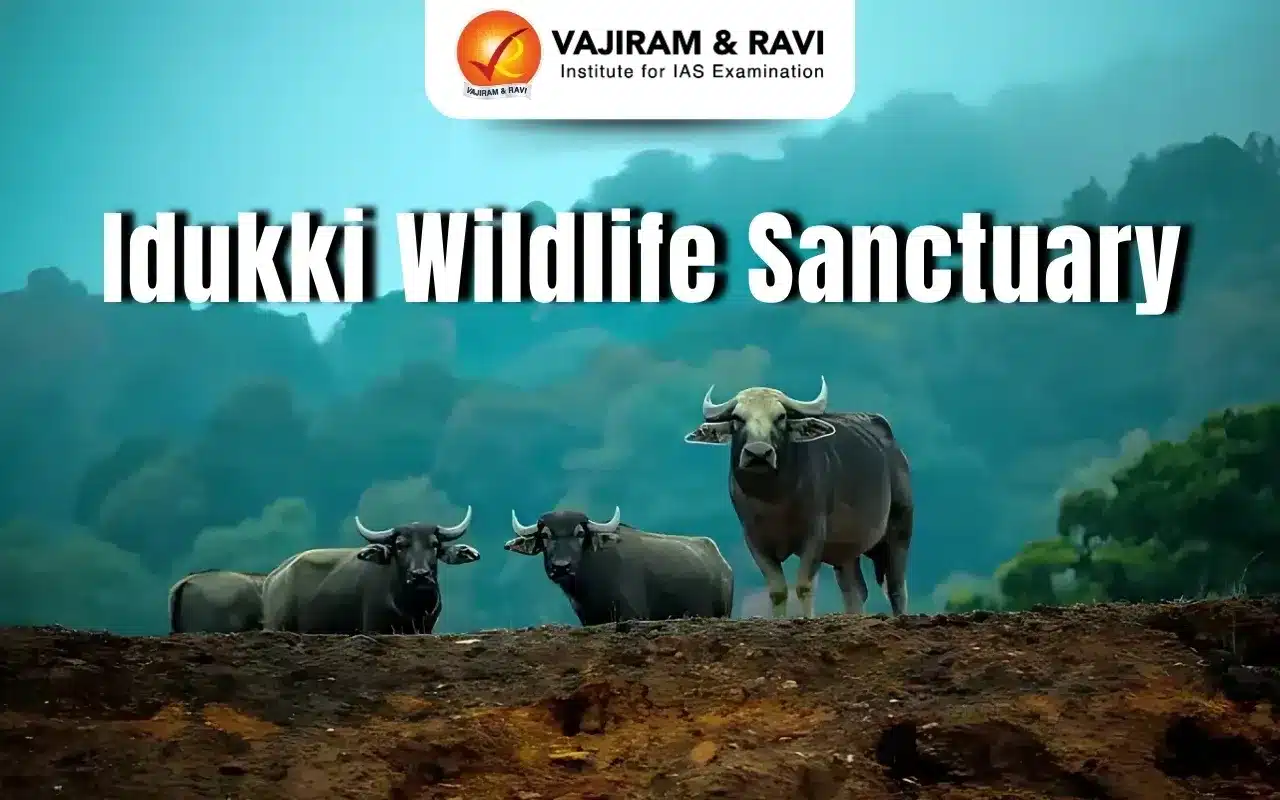
Idukki Wildlife Sanctuary Latest News
Tribal students and residents of Kannampadi within the Idukki Wildlife Sanctuary are about to open a new chapter in their life, with three new libraries set to open in the tribal settlement.
About Idukki Wildlife Sanctuary
- Location: It is located in the state of Kerala.
- It covers forests surrounding the Idukki Arch Dam.
- Terrain: The terrain of the sanctuary is characterized by steep mountains, valleys, and hills.
- Topography: Altitude ranging from 450 to 1272 m. The highest peak is Vanjur Medu (1272 m).
- Rivers: The major rivers flowing through the area are Periyar and Cheruthoniar.
- Rainfall: Average rainfall is 3800 mm.
- Vegetation: West Coast Tropical Evergreen forests, Semi Evergreen forests, Moist Deciduous Forests, Hill shoals, and Grasslands.
Flora and Fauna of Idukki Wildlife Sanctuary
- Forests are essentially dense teak, rosewood, jackfruit, ebony, cinnamon, and diverse bamboo species.
- It is home to Elephants, bison, sambar deer, wild dogs, jungle cats, tiger, wild boar etc apart from various species of snakes including cobra, viper, krait, etc.
- Birds include jungle fowl, myna, laughing thrush, black bulbul, peafowl, woodpecker, kingfisher, etc.
- It is home to the endangered species of the Nilgiri Tahr
Source: TH
Idukki Wildlife Sanctuary FAQs
Q1: Which is the largest wildlife sanctuary in Kerala?
Ans: Periyar Wildlife sanctuary
Q2: What is the speciality of Nilgiri tahr?
Ans: The Nilgiri tahr is a stocky goat with short, coarse fur and a bristly mane.
Q3: Where are Sholas found in India?
Ans: They are found only in South India in the Southern Western Ghats high altitude mountains in the states of Karnataka, Kerala and Tamil Nadu(Nilgiri).

