
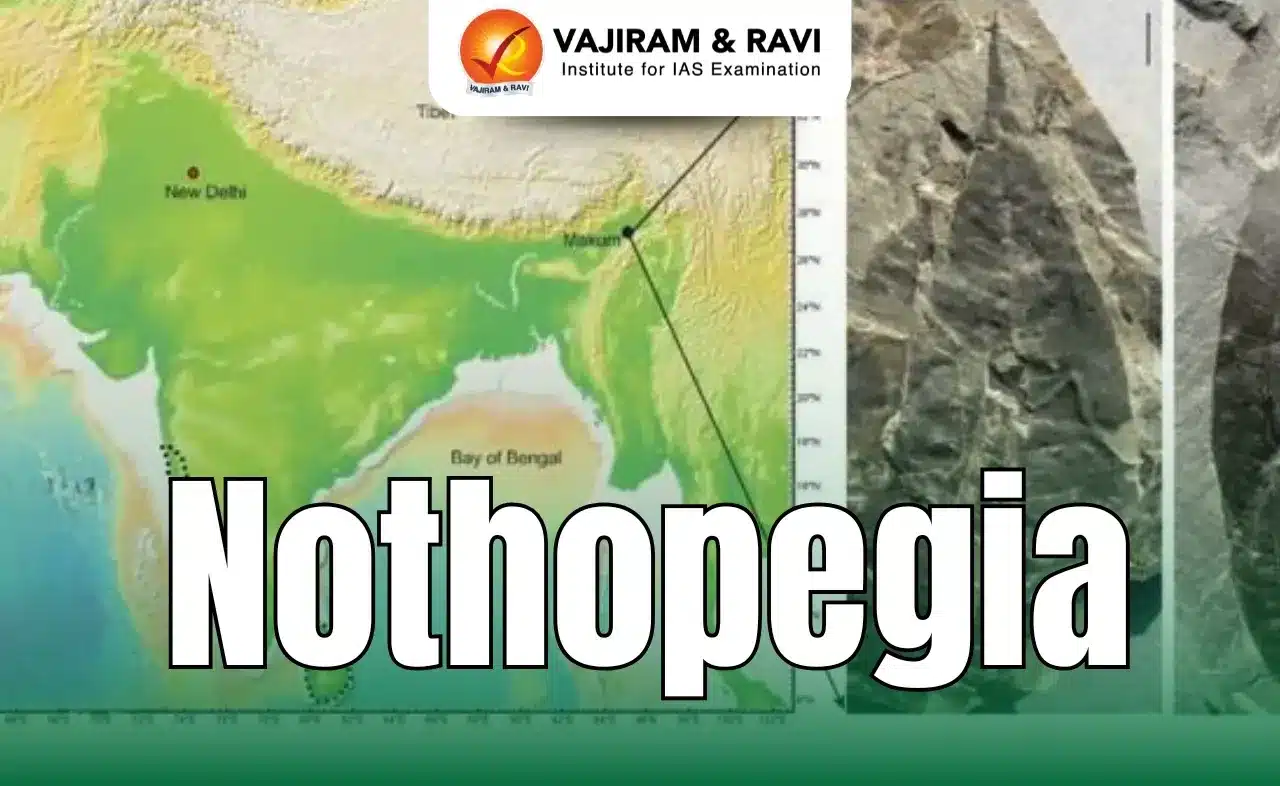
Nothopegia Latest News
Recently, a team of researchers discovered 24-million-year-old fossilized leaves resembling modern plant species of the Nothopegia genus from Makum Coalfield of Assam.
About Nothopegia
- It is a genus of plants in the family Anacardiaceae.
- The native range of this genus is Bangladesh, India, Sri Lanka.
- At present species of this genus are found in Western Ghats region.
Key Findings of Nothopegiae
- These fossilized leaves, dating back around 24–23 million years to the late Oligocene epoch, were the world’s oldest known fossil record of a plant genus called Nothopegia.
- It is suggested that the ancient environment of northeast India once provided a perfect home for Nothopegia.
- The Himalayas began their dramatic rise due to tectonic movements, bringing with them sweeping changes in temperature, rainfall, and wind patterns.
- These geological convulsions cooled the northeast, rendering it inhospitable for many tropical plant species, including Nothopegia.
- The species survived in the climatically stable Western Ghats, making it a living relic of an ancient ecological past.
- Methodology used: Herbarium comparison, Cluster analysis, Climate Leaf Analysis Multivariate Program (CLAMP)
Source: PIB
Nothopegia FAQs
Q1: Where is Western Ghats located?
Ans: A chain of mountains running parallel to India's western coast the Ghats traverse the States of Kerala, Tamil Nadu, Karnataka, Goa, Maharashtra and Gujarat.
Q2: What happened in the oligocene epoch?
Ans: Global climates became cooler during the Oligocene, causing sea levels to drop.
Q3: What are the stages of the Oligocene period?
Ans: The Early Oligocene Rupelian Stage includes the interval from 34–28.5 Ma. The Late Oligocene Chattian Stage is dated between 28.5–23.8 Ma

