
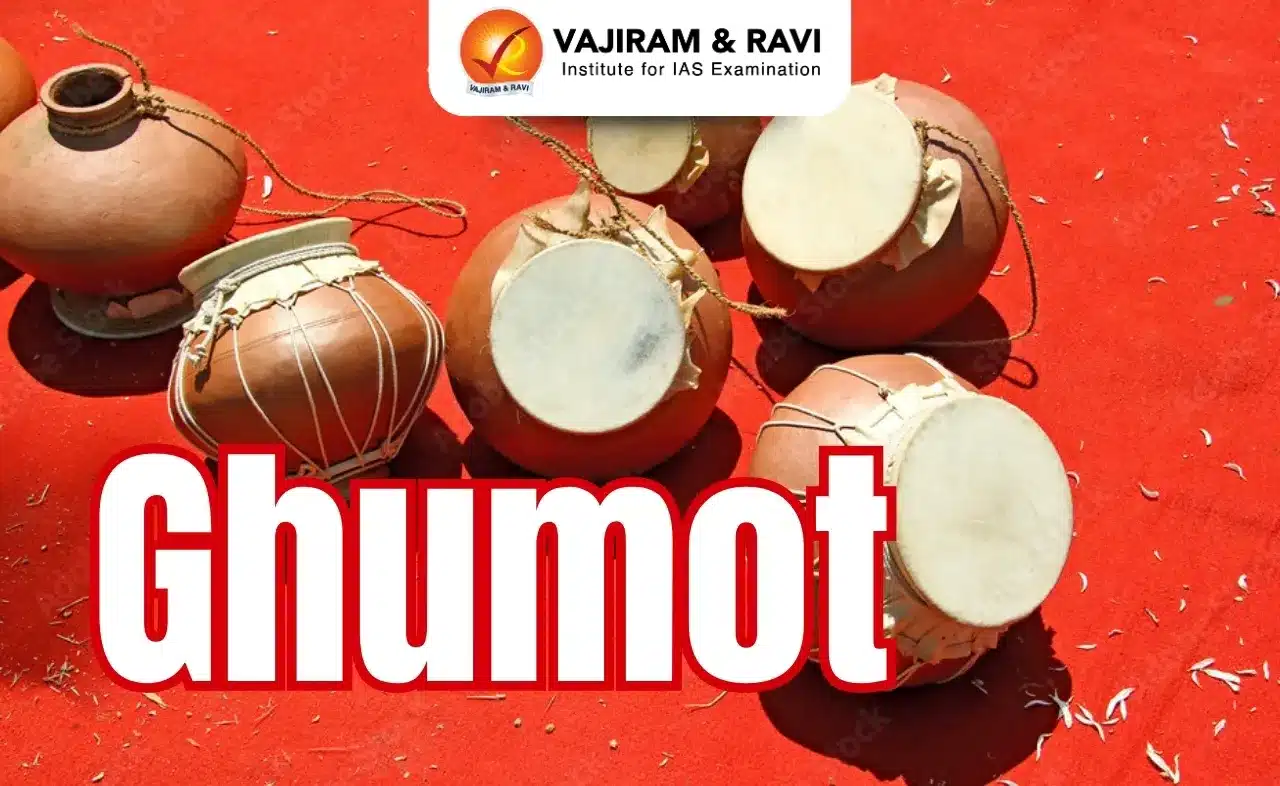
Ghumot Latest News
In 2019, Goa state cabinet declared ghumot as the state's heritage instrument without monitor lizard skin which has sparked an aesthetics debate on folk music.
About Ghumot
- Ghumot (or Ghumat) is a traditional membranophone percussion instrument that features in several religious and cultural practices of Goa.
How is it designed?
- It is made with an earthen clay pot with one side left open and the mouth covered with animal hide, usually that of the Indian monitor lizard (now largely replaced by goat hide).
- The rim is designed to secure the membrane, and the instrument is often warmed near a bonfire to tighten the skin for enhanced sound.
- The ghumot player strikes on this tightly tied membrane to create sharp beats.
Where is it Used?
- The instrument is also played in a pre-wedding ‘roce’ ceremony of Goan Christians, where the ghumata vazop comes alive.
- It assumes significance during Hindu religious rituals such as the Ganapati Stotra, Ganapati Arati and Ganapati Visarjana observed during Ganesh Chaturthi.
- It is also instrinsic to the zagor or harvest season, usually organised by the mandd (village committee) and Shigmo or Holi.
- It has significance among the Hindus and Christians in the western state and was originally made and played only by the local tribal community.
Source: DTE
Ghumot FAQs
Q1: What is ghumat made of?
Ans: Ghumat is a percussion instrument made of earthenware and lizard skin.
Q2: What is the heritage instrument of Goa?
Ans: Ghumat
