
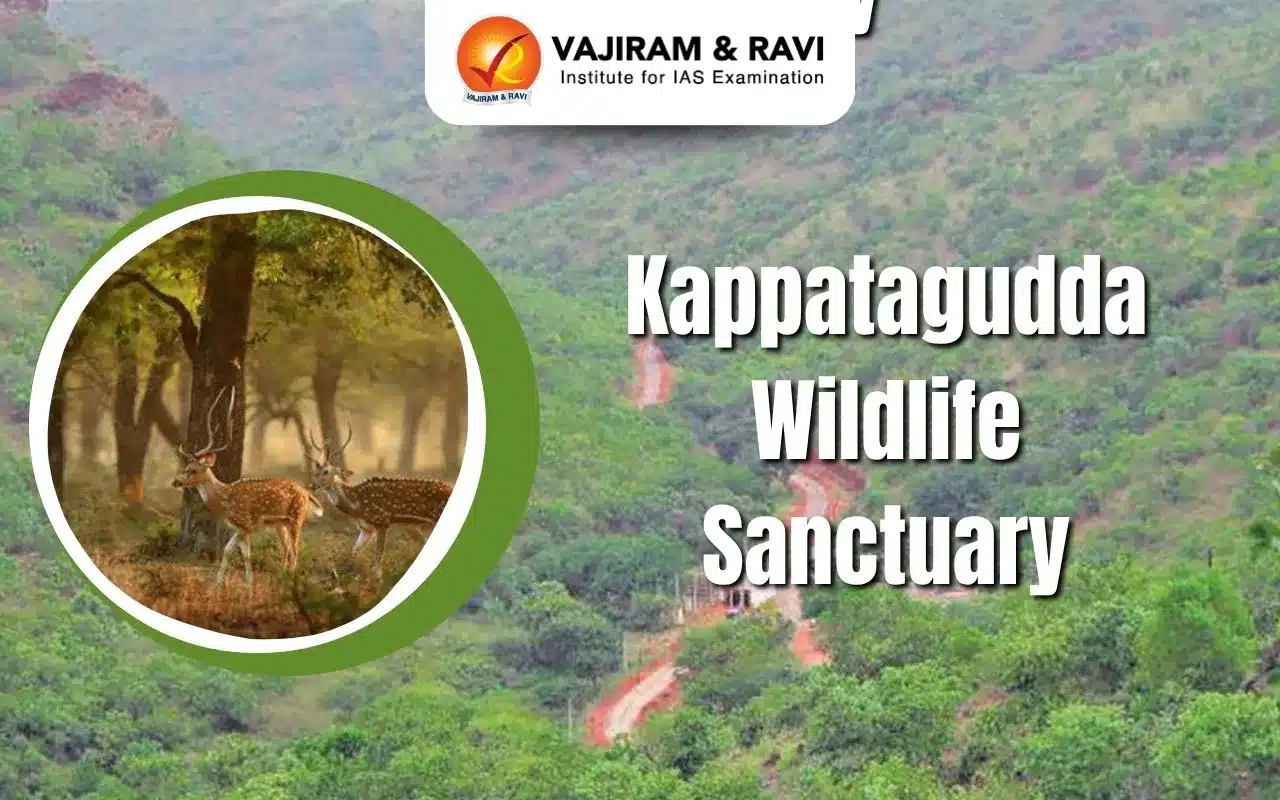
Kappatagudda Wildlife Sanctuary Latest News
The Union government recently issued the final notification declaring the Eco Sensitive Zone (ESZ) around the Kappatagudda Wildlife Sanctuary, marking the culmination of a decade-long movement to protect the ecologically rich region in arid north Karnataka.
About Kappatagudda Wildlife Sanctuary
- It is located in the Gadag district of Karnataka.
- It spans over 244.15 sq.km.
- The sanctuary features diverse habitats—dry deciduous forests, grasslands, scrublands, and riverine zones—earning it the nickname “Western Ghats of North Karnataka”.
- The sanctuary’s historical significance traces back centuries, evident in the remnants of ancient temples and ruins that dot the hillsides.
- These structures are adorned with intricate carvings and tell tales of dynasties that once ruled the land, such as the Chalukyas and Rashtrakutas.
- Moreover, the architectural marvels strewn across Kappatagudda, such as the Kappatagudda Jain Basadi, Brahma Jinalaya, Trikuteshwara Temple, and the Dambala Temple, stand testament to the craftsmanship and religious diversity of the region.
- Flora:
- The sanctuary supports diverse vegetation typical of dry-scrub and deciduous ecosystems.
- The forest has about 400 medicinal plant species.
- Fauna:
- Carnivores such as gray wolves, striped hyenas, leopards, and golden jackals are in good numbers.
- Small carnivores such as jungle cats, rusty-spotted cats, small Indian civets, common palm civets, ruddy mongooses, and Indian gray mongooses also exist.
Source: DH
Kappatagudda Wildlife Sanctuary FAQs
Q1: Kappatagudda Wildlife Sanctuary is located in which Indian state?
Ans: Karnataka
Q2: What is the approximate area covered by Kappatagudda Wildlife Sanctuary?
Ans: 244.15 sq.km
Q3: The Kappatagudda region is associated with which historic dynasties?
Ans: Chalukyas and Rashtrakutas
Q4: Which ecosystem types are represented in the Kappatagudda Wildlife Sanctuary?
Ans: Dry deciduous, grasslands, scrublands, and riverine zones.
