UPSC Daily Quiz 28 June 2025

UPSC Daily Quiz

The Daily UPSC Quiz by Vajiram & Ravi is a thoughtfully curated initiative designed to support UPSC aspirants in strengthening their current affairs knowledge and core conceptual understanding. Aligned with the UPSC Syllabus 2025, this daily quiz serves as a revision resource, helping candidates assess their preparation, revise key topics, and stay updated with relevant issues. Whether you are preparing for Prelims or sharpening your revision for Mains, consistent practice with these Daily UPSC Quiz can significantly enhance accuracy, speed, and confidence in solving exam-level questions.

[WpProQuiz 10]

UPSC Daily Quiz FAQs

Q1: What is the Daily UPSC Quiz?

Ans: The Daily UPSC Quiz is a set of practice questions based on current affairs, static subjects, and PYQs that help aspirants enhance retention and test conceptual clarity regularly.

Q2: How is the Daily Quiz useful for UPSC preparation?

Ans: Daily quizzes support learning, help in revision, improve time management, and boost accuracy for both UPSC Prelims and Mains through consistent practice.

Q3: Are the quiz questions based on the UPSC syllabus?

Ans: Yes, all questions are aligned with the UPSC Syllabus 2025, covering key areas like Polity, Economy, Environment, History, Geography, and Current Affairs.

Q4: Are solutions and explanations provided with the quiz?

Ans: Yes, each quiz includes detailed explanations and source references to enhance conceptual understanding and enable self-assessment.

Q5: Is the Daily UPSC Quiz suitable for both Prelims and Mains?

Ans: Primarily focused on Prelims (MCQ format), but it also indirectly helps in Mains by strengthening subject knowledge and factual clarity.

Difference Between Cabinet and Council of Ministers

Difference Between Cabinet and Council of Ministers

The Prime Minister of India holds the primary responsibility for selecting the members of the Council of Ministers, considering factors such as experience and seniority. This council is organised into distinct categories, namely Cabinet Ministers, Ministers of State, Deputy Ministers, and Parliamentary Secretaries. While the terms "Cabinet" and "Council of Ministers" are sometimes used interchangeably, they represent different entities with unique functions, even though both operate under the Prime Minister's leadership. Understanding Difference Between Cabinet and Council of Ministers is crucial for UPSC aspirants preparing for the IAS Exam.

Council of Ministers

The Council of Ministers is a constitutional body under Article 74 and 75 of the Indian Constitution. It includes all categories of ministers, Cabinet Ministers, Ministers of State (MoS), and Deputy Ministers. It assists the President in the exercise of executive powers and helps the Prime Minister in administrative decision-making. The Council is collectively responsible to the Lok Sabha.

Cabinet

The Cabinet is a smaller, core group within the Council of Ministers, consisting of senior-most leaders who head key ministries. The Cabinet is responsible for formulating policies, taking important decisions, and advising the Prime Minister on crucial national matters. It is recognized as a constitutional body through the 44th Amendment Act, 1978. The Cabinet exercises more direct control over executive functions than the larger Council.

Difference Between Cabinet and Council of Ministers

The Cabinet and the Council of Ministers are two essential components of a government, each with distinct roles and structures. While both play different yet effective roles in governance, their functions and composition differ significantly.

Difference Between Cabinet and Council of Ministers
Cabinet Council of Ministers

The cabinet consists of many senior ministers who hold important portfolios such as defence, home affairs, education etc.

They consist of Cabinet Ministers, Deputy Ministers and Ministers of State

It was conferred the status of a constitutional body after the passing of the Constitutional Amendment Act of 1978 (Also Known as 44th Amendment)

It is a constitutional body

The Cabinet consists of some of the most experienced ministers. Thus the Prime Minister seeks their advice on important matters. The decisions of the cabinet are binding to all ministers

It is up to the Prime Minister to consult with the council of ministers or not  when it comes to making important decisions 

It enforces the collective responsibility of the council to its members

It enforces collective responsibility to the lower houses of the parliament

The Cabinet meets as frequently as possible to formulate policies and to decide on certain matters of national importance

The meetings between the council of ministers are rare.

The size of the cabinet is about 15-20 ministers

The council of ministers usually consists of about 60 to 70 ministers of the government.

Articles Related to Cabinet and Council of Ministers

Articles Related to Cabinet and Council of Ministers are important for the candidates to understand and prepare, especially in Indian Polity (GS Paper 2). The Indian Constitution lays down specific provisions that define the structure, powers, functions, and responsibilities of the executive branch at both the Union and State levels. The table below highlights the constitutional articles related to the Council of Ministers and Cabinet, explaining their relevance in the functioning of the executive:

Articles Related to Cabinet and Council of Ministers
Article Provision

Article 74

There shall be a Council of Ministers with the Prime Minister at the head to aid and advise the President.

Article 75

Deals with the appointment, tenure, and responsibilities of ministers. Also mentions collective responsibility to the Lok Sabha.

Article 77

Relates to the conduct of government business — all executive actions of the Union shall be taken in the name of the President.

Article 78

Duties of the Prime Minister regarding communication between the President and the Council of Ministers.

Article 163

Corresponding provision for Council of Ministers in states, with the Chief Minister as head, to aid and advise the Governor.

Article 164

Covers appointment of Chief Ministers and State Ministers, their tenure, and responsibilities.

Article 166

Conduct of business of the Government of a State, similar to Article 77 but for state executives.

Article 167

Duties of the Chief Minister in regard to communication with the Governor, similar to Article 78 for the Union.

Also Check
Difference Between Cabinet and Council of Ministers Difference between National Anthem and National Song
Difference Between GMT and IST Difference Between Citizenship and Nationality
Difference Between District Collector and District Magistrate Difference Between Kumbh and Mahakumbh
Difference Between Fundamental Rights and Fundamental Duties Differences Between Censure and No-Confidence Motion
Differences Between Absolute Poverty and Relative Poverty Difference Between Wildlife Sanctuary and National Park

Difference Between Cabinet and Council of Ministers FAQs

Q1: What is the role of the Council of Ministers?

Ans: The Council of Ministers plays a crucial role in assisting the Prime Minister by providing policy advice and making key decisions related to the administration of the government.

Q2: What is the difference between Cabinet and Council of Ministers in India?

Ans: In India, the Cabinet is the supreme decision-making body, composed of the Prime Minister and the Cabinet Ministers. On the other hand, the term "Council of Ministers" refers to a broader group that includes both Cabinet Ministers and Ministers of State.

Q3: Who are Cabinet ministers?

Ans: Cabinet ministers hold the highest-ranking positions within the Cabinet, overseeing and directing key government departments and agencies.

Q4: What is the role of Cabinet ministers?

Ans: Cabinet ministers are responsible for overseeing and managing key government departments and agencies, while also providing the Prime Minister with advice on matters of policy and administration.

Q5: Who are ministers of state?

Ans: Ministers of State are junior members of the Council of Ministers who support Cabinet ministers in carrying out their duties.

Difference Between Delhi and New Delhi, History, Other Details

Difference Between Delhi and New Delhi

Many people often confuse Delhi and New Delhi, using the terms interchangeably. However, they are not the same. Delhi represents the larger metropolitan region, while New Delhi is a consciously planned area within Delhi that serves as India’s capital. For UPSC aspirants, grasping the Difference Between Delhi and New Delhi is not only important—it’s an essential part of understanding India’s administrative setup, history, and culture. This article includes  the Difference Between Delhi and New Delhi.

Difference Between Delhi and New Delhi

While the terms 'Delhi' and 'New Delhi' are often used interchangeably, they represent distinct aspects of India's vibrant capital region. Knowing their differences not only enhances your understanding but also deepens your appreciation of this metropolitan city as well.

Difference Between Delhi and New Delhi
Delhi New Delhi

The history of Delhi can be traced back to the 6th Century BCE. 

New Delhi was designed and built in the 20th Century. 

Delhi is a Union Territory and it has borders with the states of Haryana and Uttar Pradesh. Delhi is surrounded by Haryana on three sides and Uttar Pradesh is located to the East of Delhi.

Union Territory of Delhi has 9 districts and New Delhi is one of the 9 districts of Delhi.  New Delhi is the National Capital of India.

Delhi has served as a capital of various kingdoms and empires, most notably the Delhi Sultanate and the Mughal Empire. The city has been captured, ransacked and rebuilt several times, particularly during the mediaeval period

The foundation stone of New Delhi was laid by Emperor George V during the Delhi Durbar of 1911. It was designed by British architects Sir Edwin Lutyens and Sir Herbert Baker. The new capital was inaugurated on 13 February 1931, by Viceroy and Governor-General of India Lord Irwin.

Some of the famous monuments of Delhi are Red Fort, Humayun Tomb, Jama Masjid, Lotus Temple etc.

Some of the important buildings of New Delhi are Rashtrapati Bhavan, India Gate, Parliament of India, Lodhi garden, Akshardham Temple, Connaught Place, Jantar Mantar.

Total Area of Delhi is 46,208 square kms.

Total Area of New Delhi is 42.7 square kms.

The architecture of monuments and buildings in Delhi is influenced by Mughal architecture

The architecture of monuments and buildings in New Delhi is influenced by Western Architecture.

About Delhi

  1. Delhi has witnessed the rise and fall of great empires like the Mauryas, Mughals, and the British, leaving behind a legacy of historical events and landmarks.
  2. The city is home to iconic monuments such as Qutub Minar, Red Fort, and Jama Masjid, showcasing diverse architectural styles from different eras.
  3. Delhi celebrates festivals like Diwali, Eid, and Holi, bringing together people of various backgrounds. It also reflects linguistic diversity, with Hindi, Punjabi, Urdu, and other regional languages widely spoken.
  4. As a Union Territory and India’s capital, Delhi is governed by both the Lieutenant Governor and the Chief Minister, housing the central government offices and ministries.
  5. Known for its historical charm, vibrant culture, shopping destinations, and street food, Delhi attracts tourists from across the globe.
  6. Delhi has a robust transport system, including the Delhi Metro, a strong road network, and the Indira Gandhi International Airport as a key travel hub.
  7. The city faces pressing issues like air pollution and waste management, especially during winter months, leading to ongoing mitigation efforts.

About New Delhi

  1. New Delhi has witnessed the rise of empires like the British and a legacy of monumental events and architectural landmarks.
  2. The city is home to famous monuments such as Rashtrapati Bhavan, India Gate, and Parliament House, showcasing a blend of British colonial and Indian architectural styles.
  3. New Delhi celebrates various festivals like Diwali, Eid, Holi, and Christmas, bringing together people from different cultures and religions.
  4. Hindi is the official language, with English widely spoken. Regional languages like Punjabi and Urdu are also commonly used.
  5. As India’s capital, New Delhi houses the central government, including the President’s residence and Parliament, and is governed by both the President and the Prime Minister.
  6. Known for its vibrant culture, shopping destinations, street food, and historical monuments, New Delhi attracts tourists from around the world.
  7. The city boasts an efficient transport network, including the Delhi Metro, an extensive road system, and Indira Gandhi International Airport, a key travel hub.
  8. New Delhi faces significant issues like air pollution and waste management, especially during the winter months, with ongoing efforts to address these concerns.

Difference Between Delhi, New Delhi, NCT Delhi, Delhi NCR

The geographical and administrative distinctions between Delhi, New Delhi, NCT Delhi, and Delhi NCR is essential to understand for clarity, especially in governance, planning, and exam-related topics. While these terms are often used interchangeably, each represents a specific region with its own administrative boundaries and significance. The table below provides a concise comparison to help differentiate them effectively.

Difference Between Delhi, New Delhi, NCT Delhi, Delhi NCR
Term Description

Delhi

The capital of India and one of the world’s oldest cities, governed as a Union Territory under the central government.

New Delhi

A district within Delhi; it serves as the seat of the Indian government and is part of the nine districts in the region.

NCT Delhi

Stands for National Capital Territory; it refers to the entire administrative region of Delhi, established by the 69th Constitutional Amendment.

Delhi NCR

Refers to the National Capital Region, including Delhi and its adjoining towns and cities (like Noida, Gurgaon, Ghaziabad) planned for integrated regional development.

Also Check
Difference Between Cabinet and Council of Ministers Difference between National Anthem and National Song
Difference Between GMT and IST Difference Between Citizenship and Nationality
Difference Between District Collector and District Magistrate Difference Between Kumbh and Mahakumbh
Difference Between Fundamental Rights and Fundamental Duties Differences Between Censure and No-Confidence Motion
Differences Between Absolute Poverty and Relative Poverty Difference Between Wildlife Sanctuary and National Park

Difference Between Delhi and New Delhi FAQs

Q1: What is the difference between Old Delhi and New Delhi?

Ans: Old Delhi, historic from the Mughal era, contrasts with New Delhi, designed by the British and Edwin Lutyens.

Q2: Why did the British shift their capital to New Delhi?

Ans: The British moved India's capital from Calcutta to New Delhi in 1911 due to the city's symbolic significance.

Q3: How are Delhi and New Delhi governed?

Ans: Delhi has a unique administrative structure with NCT, a Lieutenant Governor, Chief Minister, and New Delhi's NDMC setup.

Q4: How is Delhi connected to the rest of India and the world?

Ans: Delhi has strong transport links via air, rail, and road, with efficient connections to nearby states and cities.

Largest Lakes in the World, Top 10 List, Location, Area

Largest Lakes in the World

Lakes are the natural source of water and enhance the beauty of Earth’s landscapes. Found in mountains, valleys, and plains. From the vast Caspian Sea, which shares the boundaries with various countries, to iconic freshwater lakes like Superior, Victoria, and Baikal, each lake has unique geographical features. These bodies of water provide vital habitats for wildlife and contribute to local economies through fishing, tourism, and agriculture. Lakes not only add to the scenic beauty of the planet but are also essential for maintaining ecological balance, making them irreplaceable components of Earth's natural heritage.

Largest Lakes in the World

The Caspian Sea is recognized as the Largest Lake in the world, according to Britannica which is located between Europe and Asia and covers a vast area 389,000 square kilometres (150,000 square miles). The length of the Caspian Sea is approximately 1119 kilometres (745 miles) and reaches depths of up to 1,025 metres (3,365 feet). It has a volume of 78,200 cubic kilometres (18,800 cubic miles). This lake shares the boundaries with Eastern Europe, West Asia, and Central Asia, the Caspian Sea making an impression of lake as well as the sea.

List of Top 10 Largest Lakes in the World

Lakes act as the reservoirs of freshwater used for various purposes such as irrigation, agriculture,for drinking purposes, industrial purposes and many more. Below in the table we have shared the List of Top 10 Largest Lakes in the World:

List of Top 10 Largest Lakes in the World
Rank Lake Name Lake Type Area (km²) Countries with Shoreline

1

Caspian Sea

Saline water

389,000

Kazakhstan, Turkmenistan, Azerbaijan, Russia, Iran

2

Superior Lake

Freshwater

82,100

Canada, United States

3

Victoria Lake

Freshwater

59,940

Tanzania, Uganda, Kenya

4

Huron Lake

Freshwater

59,590

Canada, United States

5

Michigan Lake

Freshwater

58,030

United States

6

Tanganyika Lake

Freshwater

32,900

Tanzania, Democratic Republic of the Congo, Burundi, Zambia

7

Baikal Lake

Freshwater

31,722

Russia

8

Great Bear Lake

Freshwater

31,153

Canada

9

Malawi Lake

Freshwater

29,600

Malawi, Mozambique, Tanzania

10

Great Slave Lake

Freshwater

27,200

Canada

Largest Lakes in the World Facts

We have share a brief description of the Largest Lakes in the World including some important facts along:

Caspian Sea

The Caspian Sea, though referred to as a “sea,” is actually geologically more like a small ocean than a lake. Enclosed entirely by land, it holds the title of the World’s Largest Lake by area. Bordering five countries, it contains a huge volume of saltwater, surpassing that of all the freshwater lakes on Earth combined. This immense body of water is a key geographical feature in the surrounding region. Its length stretches to 1,199 km, with a maximum depth of 1,025 metres and a total volume of 78,200 km³.

Superior Lake

Lake Superior, the Largest Lake for Freshwater in the world by surface area, lies on the border between Canada and the United States and is a key part of the Great Lakes system. Renowned for its cold, crystal-clear waters and historical shipwrecks, it attracts both tourists and historians. The lake is surrounded by a stunning landscape that includes rugged coastlines, dense forests, and charming cities. Spanning a length of 616 kilometres, Lake Superior reaches a maximum depth of 406 metres and has a volume of 12,070 cubic kilometres.

Victoria Lake

Lake Victoria holds the title of Africa’s Largest Lake by area and ranks as the second-largest freshwater lake in the world. Spanning the borders of multiple countries, it plays a crucial role in feeding the Nile River and is renowned for its rich biodiversity. With numerous islands scattered across its surface, Lake Victoria is not only a vital natural resource but also a breathtaking view of nature. It stretches 322 km in length, reaches a maximum depth of 81 metres, and has a volume of 2,420 km³.

Huron Lake

Lake Huron, one of the finest lakes in North America, shares the borders of both Canada and the United States. It forms part of the world’s largest freshwater lake system, sharing this distinction with Lake Michigan. Notable for its fast-flowing streams and the beautiful Georgian Bay, Lake Huron possesses unique natural features. The lake, named after the indigenous Huron tribe, carries a rich historical legacy while also serving as a vital source of freshwater. It stretches 332 kilometres in length, reaches a maximum depth of 229 metres, and holds a volume of 3,520 cubic kilometres.

Michigan Lake

Lake Michigan, one of the Great Lakes, stands out among its remarkable neighbours. It stretches along the border of the United States and shares water connections with Lake Huron, forming part of the world's largest freshwater lake system. Known for its stunning beaches and diverse ecosystems, Lake Michigan plays a vital role as a freshwater source for the surrounding region. The iconic Mackinac Bridge serves as a geographic landmark, separating Lake Michigan from Lake Huron, though not affecting their hydrological connection.

With a length of 494 km, a maximum depth of 282 m, and a volume of 4,930 km³, Lake Michigan is both expansive and deep.

Tanganyika Lake

Lake Tanganyika is considered the second oldest freshwater lake in the world and ranks as the second deepest, following Lake Baikal. Spanning four countries—Tanzania, the Democratic Republic of the Congo, Burundi, and Zambia—it stretches an impressive 676 km in length. With a maximum depth of 1,470 metres, it holds a vast volume of 18,750 km³ of water. TheTanganyika Lake not only serves as a vital water source for the surrounding regions but is also home to a variety of unique fish species, making it a remarkable natural landmark.

Baikal Lake

Lake Baikal is the world's deepest freshwater lake, reaching a maximum depth of 1,642 metres. It is also the oldest freshwater lake, believed to be millions of years old. This vast lake holds a significant portion of the planet’s freshwater supply, with an estimated volume of 23,610 cubic kilometres. Baikal Lake, a UNESCO World Heritage Site, is renowned for its exceptional biodiversity, hosting numerous unique aquatic ecosystems that cannot be found anywhere else. With a length of 636 kilometres, it stands as one of the most remarkable natural landmarks on Earth.

Great Bear Lake

Great Bear Lake, located in the Northwest Territories of Canada, is a stunning natural wonder despite its cold and remote setting. As the fourth-largest freshwater lake in the world, it holds an impressive volume of water. The lake is surrounded by vast tundra and boreal forests, offering a glimpse into an ancient landscape. Fishing is a popular pastime in the area, which is an essential part of the local ecosystem. Great Bear Lake is truly a breathtaking and significant feature of Canada's natural beauty.

It spans 373 kilometres in length, reaches a maximum depth of 446 metres, and holds a volume of 2,234 cubic kilometres of water.

Malawi Lake

Lake Malawi, often referred to as the “Lake of the Stars,” is located in East Africa, holding the border between Malawi and Mozambique. As the third-largest freshwater lake in Africa and the ninth-largest in the world, it is renowned for its exceptional biodiversity. The lake is particularly famous for its vibrant cichlid fish population, and holding a variety of aquatic ecosystems. The surrounding landscapes are equally breathtaking, featuring beautiful beaches, towering mountains, and national parks. The lake stretches 579 kilometres in length, reaches a maximum depth of 706 metres, and holds a volume of 8,640 km³ of water.

Great Slave Lake

Great Slave Lake, the second-largest freshwater lake in Canada after Great Bear Lake, is situated in the North-Western Region and is characterised by its harsh, subtropical climate with long, cold winters. This vast body of water serves as a crucial habitat for migratory birds and sustains local fishing communities, providing them with a vital source of livelihood. The lake also holds historical significance, with archaeological findings indicating the presence of indigenous settlements dating back thousands of years. During the winter months, the lake’s beauty is particularly breathtaking. Great Slave Lake stretches 480 km in length, has a maximum depth of 614 metres, and holds a volume of 1,115 km³.

What is the Difference Between a Lake and a Sea?

Difference Between a Lake and a Sea is essential in geography as both are large water bodies but vary significantly in terms of size, formation, and ecological impact. While lakes are generally enclosed freshwater bodies found inland, seas are large saltwater expanses connected to oceans. The table below highlights the key distinctions between a lake and a sea across various parameters.

Difference Between a Lake and a Sea
Feature Lake Sea

Location

Inland, surrounded by land

Partially enclosed by land, connected to an ocean

Water Type

Mostly freshwater (some saline)

Saltwater

Size

Generally smaller

Larger in area and depth

Connection

Not connected to oceans

Connected to oceans

Tides & Currents

No tides, minimal water movement

Affected by tides and ocean currents

Formation

Formed by glaciers, tectonic shifts, or dams

Formed by tectonic activity and part of ocean basins

Examples

Lake Victoria, Lake Superior, Dead Sea (salt lake)

Arabian Sea, South China Sea, Mediterranean Sea

Largest Lakes in the World FAQs

Q1: Which is the largest lake in the world?

Ans: The Caspian Sea is the largest lake in the world which covers an area of 389,000 km².

Q2: Which lake holds the title of largest lake by volume?

Ans: Baikal Lake holds the title of largest lake by volume (23,610 km³) and it is also the world's deepest lake (1,642 m).

Q3: Why is the Caspian Sea regarded as a lake?

Ans: The Caspian Sea does not feed into an ocean, but it has the size and depth of a sea. This distinction is not merely semantic. However, it has economic, military, and political implications.

Q4: How many countries border the Caspian Sea?

Ans: The Caspian Sea is bordered by five countries: Russia to the northwest, Kazakhstan to the northeast, Turkmenistan to the southeast, Iran to the south, and Azerbaijan to the west.

Q5: What country has 7000 lakes?

Ans: Switzerland is the country holding more than 7000 lakes.

Legislatures of the World, List, Capital, Parliaments Names

Legislatures of the World

The legislative body in any country is known as the Parliament. The main functions of any legislature of any country are three in number, which includes, law creation, executing the law and safeguarding the law. The Legislative Bodies are of 2 types, Unicameral, Bicameral. In India, Parliament is known as Sansad, Having the two houses, Lower House, Lok Sabha and the Upper House, Rajya Sabha. Check about the List of Legislatures of the World with other important details in the article below.

Legislatures of the World

A parliament is the supreme legislative institution in a country, entrusted with representing its citizens or regions. Its primary role is to draft, amend, and pass laws. The word "parliament" traces its roots to the French term parler, meaning "to speak" or "to discuss."

In most nations, parliaments are composed of elected or appointed representatives who act on behalf of their constituents. Their structure and powers vary globally, yet their fundamental responsibilities remain consistent. Every nation has its unique parliamentary system, named and structured to reflect its history, culture, and governance model. Below, we present a List of Legislatures of the World and their respective parliaments to deepen your understanding of global legislative systems.

List of Legislatures of the World

Different countries have distinct names for their legislative assemblies, often influenced by their governance style and traditions. Here’s a List of Legislatures of the World:

List of Legislatures of the World
Countries Capitals Parliament of different Countries

Afghanistan

Kabul

Shora

Albania

Tirana

People’s Assembly

Algeria

Algiers

National People’s Assembly

Andorra

Andorra La Vella

General Council

Angola

Luanda

National People’s Assembly

Argentina

Buenos Aires

National Congress

Australia

Canberra

Federal Parliament

Austria

Vienna

National Assembly

Azerbaijan

Baku

Melli Majlis

Bahamas

Nassau

General Assembly

Bahrain

Manama

Consultative Council

Bangladesh

Dhaka

Jatia Parliament

Belize

Belmopan

National Assembly

Bhutan

Thimphu

Tsogdu

Bolivia

Sucre

National Congress

Botswana

Gaborone

National Assembly

Brazil

Brasilia

National Congress

Britain

London

Parliament (House Of Commons And House Of Lords)

Brunei

Bandar Seri Begawan

National Assembly

Bulgaria

Sofia

Narodno Sabranie

Cambodia

Phnom Penh

National Assembly

Canada

Ottawa

Parliament

China

Beijing

National People’s Assembly

Colombia

Bogota

Congress

Comoros

Moroni

Legislative Council And Senate

Costa Rice

San Jose

Legislative Council And Senate

Croatia

Zagreb

Sabor

Cuba

Havana

National Assembly Of People’s Power

Denmark

Copenagen

Folketing

East Timor

Dili

Constituent Assembly

Ecuador

Quito

National Congress

Egypt

Cairo

People’s Assembly

El Salvador

San Salvador

Legislative Assembly

Ethiopia

Addis Ababa

Federal Council And House Of Representative

Fiji Islands

Suva

Senate & House Of Representative

Finland

Helsinki

Eduskusta (Parliament)

France

Paris

National Assembly

Germany

Berlin

Bundestag (Lower House) & Bundesrat (Upper House)

Great Britain

London

Parliament

Greece

Athens

Chamber Of Deputies

Guyana

Georgetown

National Assembly

Hungary

Budapest

National Assembly

Iceland

reykjavik

Althing

India

New Delhi

Sansad

Indonesia

Jakarta

People’s Consultative Assembly

Iran

Tehran

Majlis

Iraq

Baghdad

National Assembly

Ireland

Dublin

Oireachtas

Israel

Jerusalem

The Knesset

Italy

Rome

Chamber Of Deputies And Senate

Japan

Tokyo

Diet

Jordan

Amman

National Assembly

Korea(North)

Pyongyang

Supreme People’s Assembly

Korea(South)

Seoul

National Assembly

Kuwait

Kuwait City

National Assembly

Lebanon

Beirut

National Assembly

Laos

Vientiane

People’s Supreme Assembly

Lativa

Riga

Saeima

Lesotho

Maseru

National Assembly And Senate

Libya

Tripoli

General People’s Congress

Lithuania

Vilnius

Seimas

Luxembourg

Luxembourg

Chamber Of Deputies

Madagascar

Antananarivo

National People’s Assembly

Malaysia

Kuala Lumpur

Majilis

Maldives

Male

Majilis

Mongolia

Ulaanbaatar

Great People’s Khural

Montenegro

Podgorica

Federal Assembly

Mozambique

Maputo

People’s Assembly

Myanmar

Naypyidaw

Pyithu Hluttaw

Nepal

Kathmandu

Federal Parliament of Nepal

Netherlands

Amsterdam

States-General (Staten-General)

New Zealand

Wellington

Parliament (House Of Representatives)

Norway

Oslo

Storting

Oman

Muscat

Monarchy

Pakistan

Islamabad

National Assembly & Senate

Papua New Guinea

Port Moresby

National Parliament

Paraguay

Asuncion

Senate & Chamber Of Deputies

Philippines

Manila

The Congress

Poland

Warsaw

Sejm

Romania

Bucharest

Great National Assembly

Russia

Moscow

Duma & Federal Council

Saudi Arabia

Riyadh

Majlis Al-Shura

South Africa

Pretoria

Parliament

Spain

Madrid

Crotes

Taiwan

Taipei

Yuan

Turkey

Ankara

Grand National Assembly

Uruguay

Montevideo

General Assembly

USA

Washington D.C.

Congress

Uzbekistan

Tashkent

Oliy Majlis

Vietnam

Hanoi

National Assembly

Zambia

Lusaka

National Assembly

Zimbabwe

Harare

Parliament

Legislatures of the World FAQs

Q1: Which country has different houses of parliament?

Ans: In India, there are two houses of the legislature, the Rajya Sabha, and Lok Sabha. Similarly, other countries have different parliament houses of the legislature.

Q2: What are the different types of Parliaments?

Ans: There are two different types of Parliaments known as Bicameral and Unicameral.

Q3: What is Parliament?

Ans: Parliament is the legislative body of government. A parliament has generally three functions that are representing the electorate, making laws, and supervising the government during hearings and inquiries.

Q4: What is the Parliament name of the USA?

Ans: United States Congress

Statistics Day 2025

Statistics Day 2025

Statistics Day 2025 Latest News

The Ministry of Statistics and Programme Implementation (MoSPI) will celebrate the 19th Statistics Day in Delhi on June 29th.

What is Statistics Day?

  • Statistics Day is celebrated annually on 29th June to commemorate the birth anniversary of Prof. Prasanta Chandra Mahalanobis, a pioneering Indian statistician and planner.
  • The day aims to create awareness, especially among the youth, about the importance of statistics in socio-economic planning and evidence-based policymaking.
  • Theme of Statistics Day 2025: “75 Years of National Sample Survey”
  • It highlights the long-standing contribution of the National Sample Survey (NSS) in providing reliable, timely, and large-scale socio-economic data essential for governance and national development.
  • Organised by: Ministry of Statistics and Programme Implementation (MoSPI)

About Prasanta Chandra Mahalanobis

  • Birth: 29 June 1893
  • Known as the Father of Indian Statistics.
  • Creator of Mahalanobis Distance – a key statistical metric for multivariate data analysis.
  • Founder of the Indian Statistical Institute (ISI) in 1931.
  • Established the National Sample Survey (NSS) in 1950.
  • Member of India’s First Planning Commission, contributed to Five-Year Plans.
  • Awarded the Padma Vibhushan for his contribution to science and statistics.
  • Advocate of data-based governance and planning.

Other Important Facts

  • National Statistics Day was first celebrated in 2007.
  • World Statistics Day is observed by the United Nations every five years on 20th October.

Source: PIB

Statistics Day 2025 FAQs

Q1: When is National Statistics Day celebrated?

Ans: On 29th June every year in India.

Q2: Why is it observed?

Ans: To commemorate the birth anniversary of Prof. P.C. Mahalanobis, the father of Indian statistics.

Q3: What is the theme for Statistics Day 2025?

Ans: The theme for Statistics Day 2025 is “75 Years of National Sample Survey”.

Q4: Who organises the celebrations?

Ans: The Ministry of Statistics and Programme Implementation (MoSPI), Government of India.

Q5: What are Mahalanobis’ key contributions?

Ans: He founded ISI Kolkata and pioneered the Mahalanobis distance and large-scale sample surveys in India.

DNA Polymorphism & Fingerprinting

DNA Polymorphism & Fingerprinting

DNA Polymorphism & Fingerprinting Latest News

Last DNA match day occurred after the family held a symbolic funeral for the victims of Air India Flight AI 171, which crashed on June 12, 2025, resulting in the tragic death of 241 people.

What is DNA?

  • DNA (Deoxyribonucleic Acid) is the hereditary material found in almost all human cells – blood, skin, bone, teeth, etc.
  • Humans have 46 chromosomes:
    • 23 inherited from the father (via sperm)
    • 23 inherited from the mother (via egg)
  • Genes within chromosomes determine physical traits and biological identity.

DNA Polymorphisms

  • DNA polymorphisms are variations in DNA sequences unique to individuals.
  • Useful for:
    • Parentage identification
    • Genetic lineage tracing
    • Identity verification in forensic science
  • Enable accurate matching between body samples and known relatives.

Short Tandem Repeats (STRs)

  • STRs are short, repeating sequences of DNA bases (e.g., GATCGATC).
  • Each individual has a unique STR pattern, making them ideal for:
    • Criminal investigations
    • Forensic victim identification
    • Ancestry and paternity testing
  • STRs are inherited, providing strong evidence for genetic relationships.

PCR (Polymerase Chain Reaction) in DNA Amplification

  • PCR is a technique to amplify small amounts of DNA for analysis.
  • Steps involved:
    • DNA Extraction from bones, blood, or tissue
    • Denaturation (95°C): DNA strands are separated
    • Annealing (60°C): Primers bind to specific DNA sequences
    • Extension (72°C): DNA polymerase builds new strands
    • Cycling: Steps are repeated to create millions of DNA copies

DNA Fingerprinting

  • A DNA fingerprinting is a unique genetic profile built using STR variations.
  • Capillary Electrophoresis separates STR fragments based on size using electric current.
  • Final output is a distinct DNA profile, unique to each person (except identical twins).
  • Sources for DNA: blood, saliva, bone, teeth, skin cells, sweat, semen.

Source: IE

DNA Polymorphism & Fingerprinting FAQs

Q1: What is DNA polymorphism?

Ans: It refers to the genetic variations in DNA sequences among individuals of a population.

Q2: How is DNA fingerprinting done?

Ans: By analysing specific polymorphic DNA regions using techniques like PCR or gel electrophoresis.

Q3: What is the use of DNA fingerprinting in forensics?

Ans: It is used for identification in criminal investigations, paternity testing, and disaster victim identification.

Q4: Who developed DNA fingerprinting?

Ans: Sir Alec Jeffreys in 1984.

Q5: What makes DNA fingerprinting highly specific?

Ans: The uniqueness of variable number tandem repeats (VNTRs) in each individual's genome.

Nuvvuagittuq Greenstone Belt

Nuvvuagittuq Greenstone Belt

Nuvvuagittuq Greenstone Belt Latest News

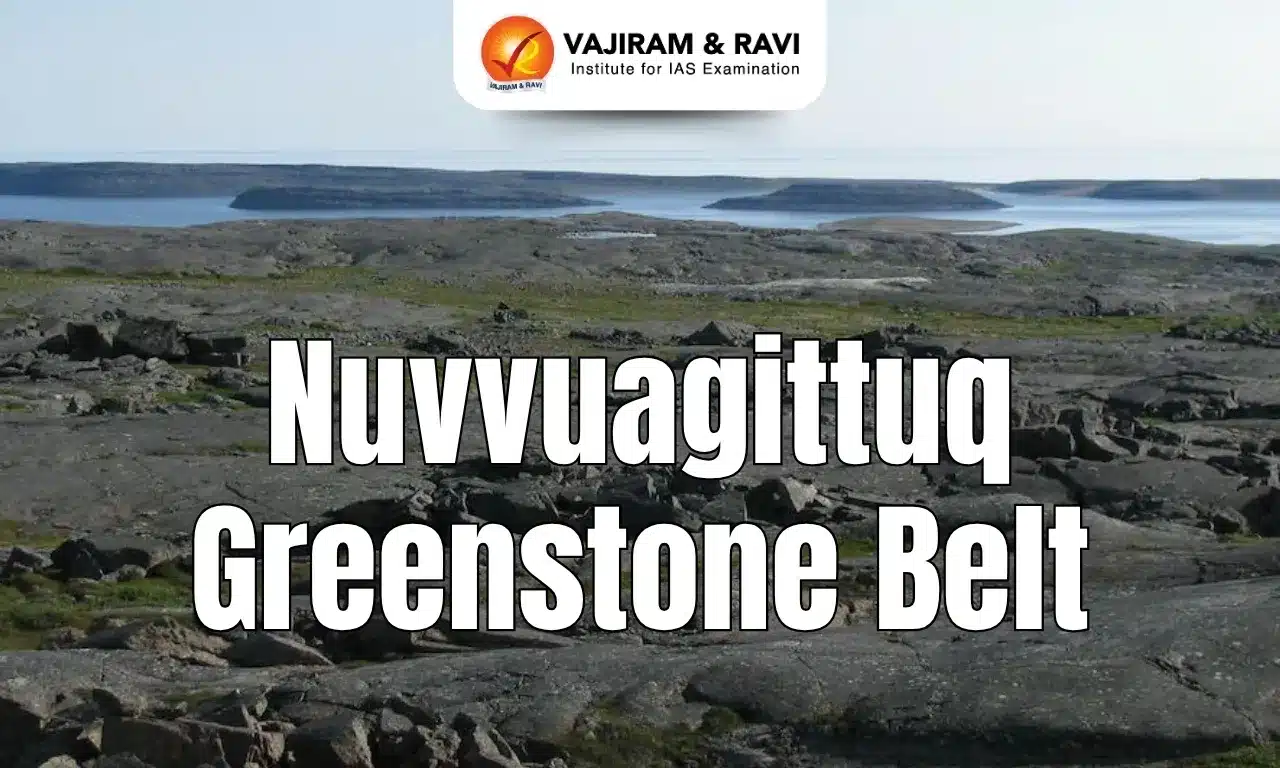
Recently, scientists determined that rocks from the Nuvvuagittuq Greenstone Belt are approximately 4.16 billion years old, using two independent radioactive dating methods.

About Nuvvuagittuq Greenstone Belt

  • The Nuvvuagittuq Greenstone Belt is a region of ancient rock formations located on the eastern shore of Hudson Bay in Quebec, Canada.
  • These rocks have been known for their exceptional age and unique geological features, making the region a critical site for studies of Earth’s early history.
  • This makes them potentially the oldest known rocks on Earth, challenging earlier estimates and rivalling other ancient formations like the Acasta Gneiss Complex (∼4 billion years old).

Scientific Significance

  • Researchers used radiometric dating, which tracks the decay of radioactive isotopes over time.
  • Earth formed around 4.5 billion years ago, but most early rocks were destroyed or transformed due to tectonic activity and melting.
  • Rocks older than 4 billion years are extremely rare and provide a window into the planet's earliest crust.
  • The rock site lies on Inuit tribal land in Inukjuak, Nunavik.
  • Due to environmental damage from earlier research and reports of rock samples being sold online, the local Inuit community has restricted further sampling.
  • The community, led by the Pituvik Landholding Corporation, seeks to collaborate with scientists to create a provincial park to balance research and conservation.

What are Ultramafic Rocks?

  • Ultramafic rocks are dark-colored igneous or meta-igneous rocks rich in Magnesium oxide (MgO) and Iron oxide (FeO), but low in Silica. 
  • They contain over 90% mafic minerals, and are poor in potassium.
  • The Earth’s mantle is believed to be composed predominantly of ultramafic rock types.
  • These rocks are commonly found in orogenic (mountain-forming) belts and can offer insights into mantle composition and deep Earth processes.

Source: TH

Nuvvuagittuq Greenstone Belt FAQs

Q1: What is the Nuvvuagittuq Greenstone Belt?

Ans: A metamorphosed volcanic-sedimentary rock sequence in Quebec, Canada, containing some of Earth's oldest surface rocks.

Q2: Why is it significant?

Ans: It contains microfossils (potentially Earth’s oldest life evidence) and offers insights into early geological processes.

Q3: What are its key rock types?

Ans: Dominated by cummingtonite amphibolites, with mafic/ultramafic sills and banded iron formations.

Mahua

Mahua

Mahua Latest News

Mahua: The Lifeline of Central India's Tribal Communities

About Mahua

Aspect

Details

Botanical identity

The Mahua tree (Madhuca longifolia) is a medium-sized deciduous tree that grows to a height of 16–20 metres, predominantly found in the forests of Central India.

Seasonal blooming cycle

The tree produces creamy-white flowers between March and April, which fall before dawn. The fruits ripen from June to August.

Cultural and Religious Value

Mahua is revered as a “Tree of Life” among tribal communities and is considered sacred. Its flowers, leaves, fruits, seeds, and even fruit shells are used in everyday tribal practices, including funeral rites.

Geographical distribution

It is commonly found in West Bengal, Odisha, Chhattisgarh, Jharkhand, Bihar, parts of Northern and Central India, and also in Maharashtra, Gujarat, Telangana, Tamil Nadu, and Kerala.

Nutritional and Economic Role

The flowers are consumed raw or sun-dried and are highly nutritious. They are traditionally fermented to produce a strong alcoholic drink, which is a major source of livelihood for tribal families.

Livelihood support

The collection and processing of Mahua flowers support tribal economies, offering food security, employment, and income generation, especially for women collectors.

Ecological importance

Mahua’s night-blooming, strong-smelling flowers attract bats, aiding in pollination and seed dispersal. Sloth bears and other forest animals also feed on its flowers, showing its importance in the forest food web.

Inter-species Competition

Sloth bears and humans often compete for Mahua flowers and leaves, indicating their high ecological and economic demand.

Innovation and Value Addition

A new product called Mahua Nutra Beverage has been developed by TRIFED, in collaboration with the Foundation for Innovation and Technology Transfer (FIIT), to enhance tribal income.

Nutritional enhancement

The Mahua Nutra Beverage is blended with pomegranate juice to improve aroma, flavour, texture, and nutritional value, while masking the strong Mahua flavour.

Policy significance

This is the first such initiative in Jharkhand and in India, reflecting TRIFED’s focus on value addition of Minor Forest Produce (MFP) through scientific innovation and technology transfer.


Source: DTE

Mahua FAQs

Q1: What is the Mahua tree known for?

Ans: It is a multipurpose tree native to India, valued for its edible flowers, oil seeds, and medicinal use.

Q2: Where is it primarily found?

Ans: It is mainly found in central and eastern India, especially in tribal and forested regions.

Q3: What are the economic uses of Mahua?

Ans: Flowers are fermented to make liquor; seeds yield oil used in soaps, cooking, and traditional medicine.

Mahavir Jayanti 2025, History, Significance, Celebrations

Mahavir Jayanti 2025

Mahavir Jayanti 2025 traces its roots in Jainism, celebrating the birth of Lord Mahavir, the 24th and last Tirthankara. Celebrated on 10th April, this year marks the 2623rd birth anniversary of Lord Mahavir. The day is celebrated every year with the aim of reflecting core values of Jain philosophy- Ahimsa (non-violence), Satya (truth), Asteya(non-stealing), Brahmacharya (celibacy) and Aparigrapha(non-attachment). The day includes praying, charity, and celebration by Jain communities in India and all over the world.

Mahavir Jayanti 2025 Overview

Mahavir Jayanti 2025 is celebrated this year on 10th April 2025 and observed every year on Trayodashi Tithi of Shukla Paksha in Chaitra month. 

Overview 

Details

Festival Name

Mahavir Jayanti / Mahaveer Janma Kalyanak

Date in 2025

April 10 (Thursday)

Tithi

Trayodashi Tithi (Shukla Paksha, Chaitra month)Trayodashi Tithi (Shukla Paksha, Chaitra month)

Birth Anniversary

2623rd

Birthplace

Kundalagrama (Vaishali, Bihar)

Parents

King Siddhartha and Queen Trishala

Key Teachings

Ahimsa, Satya, Asteya, Brahmacharya, Aparigraha

Major Celebration Events

Rath Yatra, Temple Worship, Prayers, Charity

Observed In

India, Nepal, UK, USA (by Jain diaspora)

Mahavir Jayanti 2025 Historical Background

  • Lord Mahavir was born in Kundalagrama in 599 BC, in the present Vaishali district of Bihar. 
  • Son of King Siddhartha and Queen Trishala, Mahavir’s birth name was Vardhamana. 
  • After reaching the age of 30, Vardhaman renounced worldly life and his kingdom in the search of truth. 
  • After spending 12 years in penance, he attained Kevala Jnana. 
  • Founder of Jain religion, he promoted the idea of spiritual liberation. 
  • Lord Mahavir attained Moksha(liberation) at the age of 72 in 527 BC.

Who was Lord Mahavir?

Lord Mahavir, birth name Vardhamana was born in the present day Vaishali district in Bihar, India. Born in a royal kshatriya family, he gave up all his worldly pleasures in the search of truth. In his journey of 12 years, after intense penance and meditation, he attained Kevala Jnana(omniscience). His teachings focused on: 

  • Ahimsa (non-violence)
  • Satya (Truthfulness)
  • Asteya (Non-Stealing)
  • Brahmacharya ( Celibacy)
  • Aparigraha (non-possessiveness) 

At the age of 72, he attained Moksha in 527 BCE at Pavapuri, Bihar.

Mahavir Jayanti 2025 Significance

Mahavir Jayanti is significant due to the following reasons: 

  • The day celebrates the teachings of Lord Mahavir on his birth date. 
  • It aims to spread awareness about the Jain values like non-violence, minimalism and truth. 
  • The day motivates us to reflect on detachment from material life. 
  • Mahavir Jayanti helps us focus on spiritual cleansing and community service. 

Mahavir Jayanti 2025 Celebrations

Mahavir Jayanti is celebrated in the following manner: 

  • Devotees visit temples and offer prayers with traditional rituals.
  • Sacred Jain Agamas (holy scriptures) are read and reflected upon.
  • Acts of charity, including feeding the poor and supporting the underprivileged, are widely undertaken.
  • Grand Rath Yatras (chariot processions) are organized, carrying the idol of Lord Mahavir with devotional songs.
  • Hymns are sung, and followers engage in meditation on Lord Mahavir’s teachings.
  • Celebrations take place not only across India but also among Jain communities in Nepal, the UK, and the USA.

Mahavir Jayanti 2025 FAQs

Q1: What is Mahavir Jayanti 2025?

Ans: Mahavir Jayanti 2025 is a significant Jain festival celebrated on April 10, marking the birth anniversary of Lord Mahavir, the 24th Tirthankara.

Q2: Why is there a holiday on April 10, 2025?

Ans: April 10, 2025, is a public holiday in observance of Mahavir Jayanti, honoring Lord Mahavir's birth.

Q3: Is Mahavir Jayanti a national holiday?

Ans: Mahavir Jayanti is a public holiday in several Indian states; however, it is not a nationwide holiday, and observance may vary by region.

Q4: Who is the wife of Lord Mahavir?

Ans: Lord Mahavir was married to Princess Yashoda, and they had a daughter named Priyadarshana.

Q5: Who is the son of Buddha?

Ans: Buddha's son was Rāhula, who later became one of his prominent disciples.

Sagarmala Finance Corporation Limited

Sagarmala Finance Corporation Limited

Sagarmala Finance Corporation Limited Latest News

Recently, the Union Minister of Ports, Shipping & Waterways (MoPSW) inaugurated Sagarmala Finance Corporation Limited (SMFCL).

About Sagarmala Finance Corporation Limited

  • It is India’s first Non-Banking Financial Company (NBFC) in the maritime sector.
  • It was formerly known as Sagarmala Development Company Limited.
  • SMFCL —a Mini Ratna, Category-I, Central Public Sector Enterprise—has been formally registered as a Non-Banking Financial Company (NBFC) with the Reserve Bank of India (RBI).
  • As a sector-specific NBFC, SMFCL is uniquely poised to bridge financing gaps in the maritime sector and catalyse economic growth.
  • Functions: The Corporation will offer tailored financial products—including short, medium, and long-term funding—to a diverse range of stakeholders such as port authorities, shipping companies, MSMEs, startups, and maritime educational institutions.
  • It will also support strategic sectors like shipbuilding, renewable energy, cruise tourism, and maritime education, further reinforcing India’s vision to emerge as a global maritime leader.
  • It is set to provide a more focused and accessible financial ecosystem for India’s maritime growth, enabling projects that contribute to sustainable development, innovation, and national logistics efficiency.
  • SMFCL is now positioned to play a transformative role in India’s maritime infrastructure development, in alignment with the Amrit Kaal Vision 2047.

Source: PIB

Sagarmala Finance Corporation Limited FAQs

Q1: What is the purpose of the Sagarmala Project?

Ans: It has been initiated by the Government of India after Cabinet approved it in 2015 to promote port-led development in India. The project aims to harness the 7500 km long coastline of the country to unleash its economic potential.

Q2: Which ministry is Sagarmala Development Company Limited under?

Ans: Ministry of Ports, Shipping and Waterways

Silica Gel Desiccant

Silica Gel Desiccant

Silica Gel Desiccant Latest News

According to health professionals most silica beads found in silica gel desiccant sachets are non-toxic and don’t present the same risk as silica dust.

About Silica Gel Desiccant

  • Silica gel desiccants are common moisture adsorbing agents used throughout many industries worldwide.
  • The silica gel desiccant removes excess moisture from the air.

Composition of Silica Gel Desiccant

  • It is made of silicon dioxide (like most sands or quartz) which is a hydrophilic or water-loving material.
  • Some variants of silica gel contain a moisture-sensitive dye. One particular variant is based on cobalt chloride.

Working of Silica Gel Desiccant

  • The beads are porous on the nano-scale with pore sizes only 15 times larger than the radius of their atoms.
  • These pores have a capillary effect, meaning they condense and draw moisture into the bead similar to how trees transport water through the channelled structures in wood.
  • In addition, sponge-like porosity makes their surface area very large. A single gram of silica gel can have an area of up to 700 square metres.

Application of Silica Gel Desiccant

  • It can be used in safeguarding sensitive and effective raw materials like electronics, pharmaceuticals, food, or precision instruments.
  • It is used as a drying agent in industrial gases, and dehydration processes
  • It is very useful in the control of moisture levels in the manufacturing, packaging, or storage of automotive parts and vehicles.
  • It prevents the formation of rust and corrosion.
  • It is used in air conditioning systems i.e one can use silica gel in automotive air conditioning systems to soak up excess moisture and keep your humidity levels at optimal levels.

Source: DTE

Silica Gel Desiccant FAQs

Q1: What happens if you put silica gel in water?

Ans: Some types of silica gel will "pop" when exposed to enough water.

Q2: What is the chemical name for silica gel?

Ans: silicon dioxide

Q3: Why are silica gels used?

Ans: Silica gel is used to prolong a food product's shelf life.

Daily Editorial Analysis 28 June 2025

Daily Editorial Analysis

A China-led Trilateral Nexus as India's New Challenge

Context

  • China recently held its first trilateral meeting with Pakistan and Bangladesh in Kunming, following a similar May meeting with Pakistan and Afghanistan.
  • These China-led trilaterals aim to boost regional cooperation and revive Pakistan’s role in regional dynamics.
  • Strategically, Beijing is leveraging India’s tense relations with Bangladesh and growing footprint in Afghanistan to counter New Delhi’s influence and divert its attention.

A War That Redefined Regional Alignments

  • The 1962 India-China war shaped lasting regional dynamics. Post-war, China found a strategic ally in Pakistan to contain India and safeguard its own geopolitical interests.
  • China-Pakistan Strategic Bond
    • Pakistan views China as a reliable partner for economic and military support.
    • By the end of 2024, Pakistan owed China over $29 billion, and over 80% of its arms imports were Chinese in origin.
  • China's Diplomatic Shielding
    • China has repeatedly shielded Pakistan-backed terrorists at the UN and other platforms, solidifying their alliance beyond bilateral trade and defense.
  • Operation Sindoor and Recent Tensions
    • During India’s Operation Sindoor in May 2025—retaliation for the Pahalgam terror attack—China criticized India’s response as “regrettable” and pushed for dialogue.
    • It endorsed Pakistan’s call for an investigation instead.
    • The conflict saw Pakistan deploying Chinese-made equipment—from radars, drones, and missiles to fighter jets—underscoring Beijing’s deep military support.
  • Post-Conflict Diplomacy and Trilateral Outreach
    • Soon after the escalation, Pakistan’s Foreign Minister met his Chinese counterpart to reaffirm their “iron-clad friendship.”
    • The subsequent trilateral meetings with Afghanistan and others are seen as a diplomatic extension of that bond.

Resurfacing an Old Strategy

  • The China-Pakistan “plus one” strategy—using third countries to isolate India—is not new.
  • As early as 1965, Pakistan considered using East Pakistan, China, and Nepal to sever India from its Siliguri Corridor.
  • The idea appears to be reviving, especially as both Beijing and Rawalpindi confront a confident and assertive India.
  • India’s Assertive Posture
    • India’s retaliatory strikes post-Uri (2016), Pulwama (2019), and Pahalgam (2025) show a decisive shift from past restraint.
      • No tolerance for nuclear blackmail
      • Indus Waters Treaty suspended, trade halted, port access restricted
      • Military strikes have weakened Pakistan’s operational confidence
      • Diplomatically, India has worked to isolate Pakistan globally
  • Stiff Pushback Against China
    • India’s response to Chinese aggression in Doklam and Galwan surprised Beijing.
    • It included:
      • Increased cooperation with like-minded democracies
      • Expanded presence in the Indo-Pacific and South Asia
    • Diplomatic outreach by India has slowed China’s regional influence.
  • Shifting Regional Ties
    • India’s pragmatic diplomacy is undermining Chinese momentum in South Asia:
      • Maldives: President Muizzu, once anti-India, has turned to Delhi to save the economy.
      • Nepal: Despite signing BRI agreements, funding disputes stall progress.
      • Sri Lanka: President Anura Kumara Dissanayake visited India before China.
      • Bangladesh: Despite tensions, India allowed trilateral energy cooperation with Nepal.

China's Strategic Trilateral Push

  • China’s trilateral meetings with Afghanistan and Bangladesh aim to:
    • Reclaim influence post-regime changes in 2021 (Afghanistan) and 2024 (Bangladesh)
    • Offset India’s deepening ties with the Taliban
    • Reinforce Pakistan’s relevance in the region
  • Potential Security Threats
    • China-backed Pakistan is using historic linkages with Bangladesh and Afghanistan to:
      • Foster cross-border terrorism.
      • Distract India with security threats.
      • Undermine India's neighbourhood influence, opening space for Chinese BRI investments and geostrategic dominance.

China – The Primary Strategic Challenge

  • Recent regional shifts reaffirm that China—not Pakistan—is India’s most formidable challenge.
  • Beijing is leveraging its growing influence and alliance with Pakistan to counter India’s rising confidence and regional outreach.
  • Trilateral Nexus as a Geopolitical Tool
    • China views the trilateral mechanism as a way to undermine India’s diplomacy and distract it with fresh security and political challenges, especially as India builds regional consensus against terrorism.

Conclusion

  • South Asian countries now face the difficult task of balancing between India and China, as Beijing uses Islamabad as a proxy to complicate India’s strategic environment and expand its regional footprint.
  • India must continue to:
    • Assert its redlines clearly
    • Warn neighbours of consequences—economic, military, and political
    • Deter misadventures through visible and credible retaliatory strategies

Practising Equality in Constitutional Courts

Context

  • On May 13, 2025, the Supreme Court of India passed a judgment in Jitender @ Kalla vs State (Govt.) of NCT of Delhi, revisiting its earlier decisions in Indira Jaising vs Supreme Court of India (2017 and 2023).
  • The judgment focused on refining the methodology for designating lawyers as senior advocates.
  • Despite its significant implications for judicial equity and democratic access to justice, the ruling received little public attention, mistakenly perceived as an internal matter of the judiciary.
  • However, the issue cuts much deeper, revealing the systemic inequality entrenched within the Indian legal profession.

The Legal Profession’s Public Character and Systemic Inequality

  • The legal profession, unlike many others, bears a distinctly public character. It forms a cornerstone of both judicial and political democracies.
  • Consequently, any stratification within this profession, especially one sanctioned by statute and reinforced by judicial endorsement, has profound repercussions on the integrity of the justice delivery system.
  • India's legal hierarchy, particularly the designation of senior advocates under Section 16 of the Advocates Act, 1961, embodies what may be described as a form of legal plutocracy.
  • This classification, predicated on ambiguous criteria such as ‘standing at the Bar’ and ‘special knowledge or experience in law,’ institutionalises inequality within a profession that should ideally be democratic and egalitarian.
  • The resultant divide undermines the constitutional promise of equality before the law and reduces access to justice for marginalized voices.

Comparative Analysis: Lessons from the United States

  • The danger of elite capture in the legal profession is not unique to India.
  • The American experience, as detailed in Reuters' 2014 report ‘The Echo Chamber, is illustrative.
  • The study revealed that a mere 66 out of 17,000 lawyers who petitioned the U.S. Supreme Court controlled 43% of the appeals, a clear indication of corporate and elite dominance.
  • Though India has not replicated this model wholesale, the structural vulnerability is apparent.
  • With the senior advocate system, Indian courts risk gravitating toward a similarly exclusionary structure where a privileged few monopolize legal representation in constitutional and high-stakes matters.

Judicial Response and Its Limitations

  • The Supreme Court's attempts to reform this process, notably through the 2017 Indira Jaising judgment, and more recently in Jitender, have focused largely on procedural refinements rather than substantive reform.
  • While the Court acknowledged that the point-based system for designation was highly subjective, it chose not to strike down the classification altogether.
  • Instead, it suggested peripheral adjustments, such as High Courts framing new rules without addressing the core constitutional challenge: whether this classification passes the test of Article 14 (equality before law).
  • In fact, the Jitender judgment paradoxically critiques the very guidelines laid down in Jaising as subjective, yet continues to endorse the structure.
  • This internal inconsistency raises questions about the coherence of the Court’s reasoning.
  • The deeper issue whether such classification serves any public or constitutional interest, remains ignored.

The Core Constitutional Challenge and Consequences

  • The Core Constitutional Challenge
    • The challenge to Section 16 and related Supreme Court Rules was grounded in the argument that the classification is inherently arbitrary and discriminatory.
    • The designation does not necessarily advance the legal system; rather, it reinforces social stratification.
    • Many competent lawyers who are not designated continue to contribute significantly to the cause of justice.
    • As such, the distinction lacks a rational nexus with the objectives it purports to serve.
    • Nevertheless, the Court sidestepped this argument, asserting that as long as procedural safeguards exist, the classification can be maintained. This is problematic.
  • Consequences: Intellectual Apartheid and Judicial Insularity
    • The stratification of the legal profession creates what can only be described as intellectual apartheid.
    • small cadre of star lawyers dominates the judicial discourse, marginalising thousands of competent but less visible lawyers.
    • This insularity narrows the perspectives available to the Court, impacting the richness and representativeness of legal arguments, especially on matters of national importance.
    • The challenge to the Waqf (Amendment) Act serves as a recent example, where only a select few voices were heard.

Conclusion

  • A truly democratic legal profession should prioritise competence, commitment to justice, and representation of diverse voices, not social pedigree or courtroom visibility.
  • The time has come for India to evolve a more equitable, transparent, and constitutionally sound system that recognizes all advocates as equal participants in the justice system.
  • Only then can the promise of justice, social, economic, and political, be truly realised.

Practising Equality in Constitutional Courts FAQs

Q1. What does Section 16 of the Advocates Act, 1961 do?
Ans. Section 16 of the Advocates Act, 1961 classifies advocates into two categories: senior advocates and other advocates, based on criteria such as ability, standing at the Bar, or special knowledge in law.

Q2.  Which recent case revisited the designation of senior advocates?
Ans. The case of Jitender @ Kalla vs State (Govt.) of NCT of Delhi in 2025 revisited the process and criteria for designating senior advocates.

Q3. What is the main criticism of the senior advocate system?
Ans. The main criticism is that the senior advocate system institutionalized inequality within the legal profession and promotes elitism.

Q4. What concept explains judges favoring similar individuals in designations?
Ans. The concept of ‘homo social morphing’ explains how judges tend to favor individuals who resemble themselves, often excluding marginalized groups.

Q5.  What constitutional principle does the current designation system undermine?
Ans. The current designation system undermines the constitutional principle of equality before the law

Source: The Hindu

Daily Editorial Analysis 28 June 2025 FAQs

Q1: What is editorial analysis?

Ans: Editorial analysis is the critical examination and interpretation of newspaper editorials to extract key insights, arguments, and perspectives relevant to UPSC preparation.

Q2: What is an editorial analyst?

Ans: An editorial analyst is someone who studies and breaks down editorials to highlight their relevance, structure, and usefulness for competitive exams like the UPSC.

Q3: What is an editorial for UPSC?

Ans: For UPSC, an editorial refers to opinion-based articles in reputed newspapers that provide analysis on current affairs, governance, policy, and socio-economic issues.

Q4: What are the sources of UPSC Editorial Analysis?

Ans: Key sources include editorials from The Hindu and Indian Express.

Q5: Can Editorial Analysis help in Mains Answer Writing?

Ans: Yes, editorial analysis enhances content quality, analytical depth, and structure in Mains answer writing.

Kharai Camel

kharai camel

Kharai Camel Latest News

Despite the National Green Tribunal (NGT) orders, illegal salt pans and encroachment of creeks continue to threaten Kachchh’s Kharai camels.

About Kharai Camel

  • It is indigenous to Gujarat, derives its name from the local term “Khara,” meaning saline, reflecting its adaptability to both desert and coastal ecosystems.
  • The Kharai is known for its rare ability to swim long distances and graze on mangroves.
  • The camels swim long distances in the sea to reach its grazing areas, usually more than 3 km at a time even in deep waters.
  • It has been preserved by the Rabari and Fakirani Jat tribes for over 400 years
  • These camels exist, primarily in Kutch, where they play a crucial role in local ecosystems, particularly in maintaining mangrove forests.
  • Kharai camel milk is not only rich in nutrients but also has therapeutic properties.
  • The milk contains antibodies that are similar to those found in human milk, making it easier to digest and beneficial for boosting the immune system.
  • Conservation Status: IUCN: Endangered

Source: DTE

Kharai Camel FAQs

Q1: What is the IUCN status of Kharai camels?

Ans: Endangered

Q2: Which tribes have Kharai camels?

Ans: Historically, the Kharai camel has been conserved by the Rabari and Fakirani Jat tribes of Gujarat.

India Refuses to Sign SCO Statement Over Terrorism Omission

India SCO statement 2025

India SCO Statement 2025 Latest News

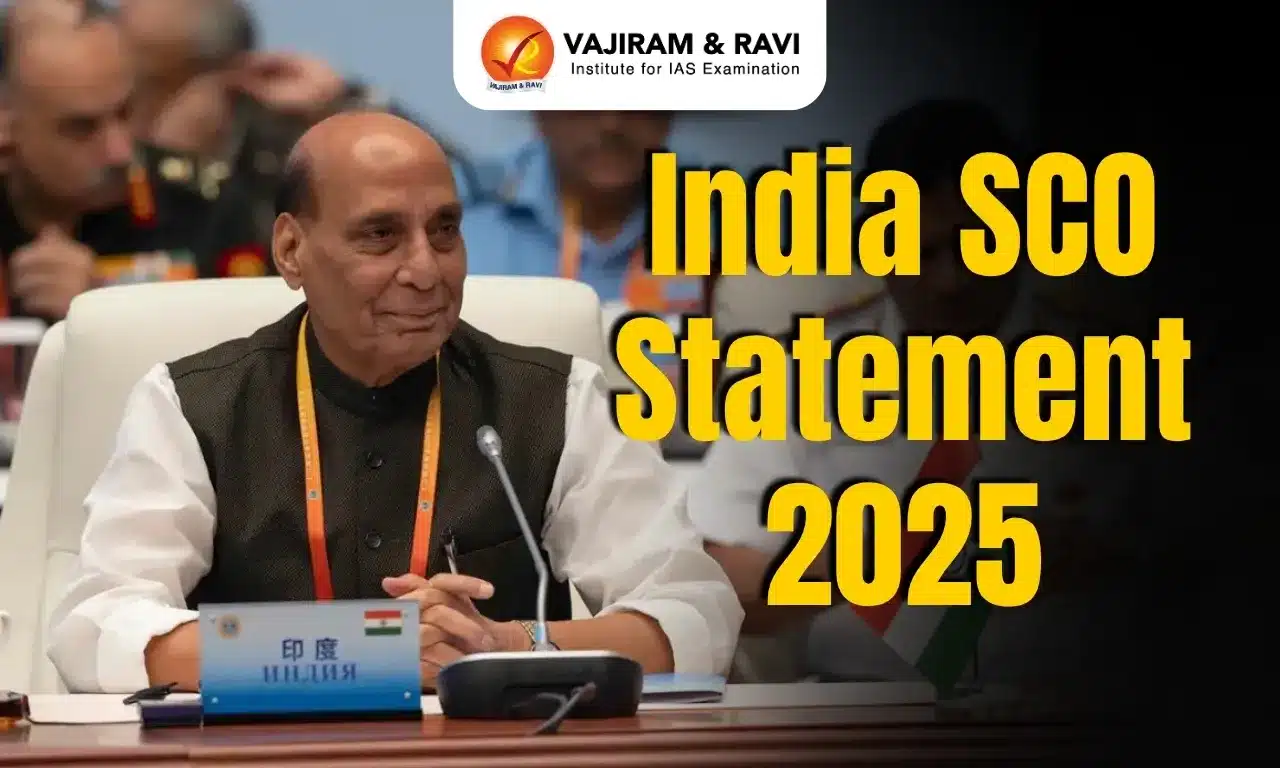
  • India refused to endorse the joint declaration at the Shanghai Cooperation Organisation (SCO) Defence Ministers’ meeting in China, objecting to the omission of references to terrorism. 
  • As the current SCO chair, Beijing hosted the 2025 defence ministers' meeting in Qingdao.
  • According to the MEA, India had strongly pushed for including terrorism concerns, but one country blocked the consensus, leading to the exclusion and India’s decision to withhold endorsement.

Shanghai Cooperation Organisation (SCO)

  • SCO is a regional bloc of 10 countries: India, China, Russia, Pakistan, Kazakhstan, Kyrgyzstan, Tajikistan, Uzbekistan, Iran, and Belarus. 
  • It is the world’s largest regional organisation by area and population.

Origins and Formation

  • The SCO evolved from the “Shanghai Five” (1996), formed by China, Russia, Kazakhstan, Kyrgyzstan, and Tajikistan to address post-Soviet security concerns, including religious extremism and ethnic tensions.
  • It was formally established on June 15, 2001, in Shanghai.

Focus on Regional Security

Unlike most global organisations, the SCO focuses on security cooperation among Asian nations. It addresses challenges like terrorism, separatism, and extremism.

RATS – The Security Arm

  • The SCO’s Regional Anti-Terrorist Structure (RATS) is its key security mechanism. 
  • It facilitates intelligence sharing and coordination among member states through regular meetings and exchanges.

India Refuses to Sign SCO Draft Statement

  • At the 2025 SCO Defence Ministers’ meeting, Defence Minister Rajnath Singh refused to sign the joint statement.
  • This was after the joint statement excluded any mention of the April 22 Pahalgam terror attack but included a reference to the Jaffar Express hijacking in Balochistan.

India’s Objection: Terrorism Omitted

  • According to MEA, India had pushed to include references to terrorism, particularly Operation Sindoor and the Pahalgam attack, but “one particular country” objected—a veiled reference to Pakistan.
  • As consensus was required, the statement was not adopted.

India Highlights Pahalgam Attack and Operation Sindoor

  • In his speech, Indian Defence Minister strongly condemned the Pahalgam terror attack, where victims were targeted based on religious identity. 
  • He named The Resistance Front, a proxy of Lashkar-e-Taiba (LeT), as responsible.
  • He described India’s retaliatory Operation Sindoor as a demonstration of its zero tolerance for terrorism.

No Tolerance for Double Standards

  • India asserted that peace cannot coexist with terrorism or WMD proliferation. It called for:
    • Decisive global action against terror sponsors
    • Consequences for countries enabling cross-border terrorism
    • An end to SCO’s silence on state-sponsored terror

India’s Refusal to Sign SCO Draft Statement – Analysis

SCO, traditionally dominated by Russia and China, now sees China playing a more dominant role due to Russia’s preoccupation with the Ukraine war

China-Pakistan Nexus at Play

  • China, a staunch ally of Pakistan, has extended military and diplomatic support to Islamabad following India’s Operation Sindoor. 
  • It has consistently shielded Pakistan in global forums from criticism over terrorism.

India’s Refusal – A Strategic Signal

  • Rajnath Singh’s refusal to sign the SCO draft document, which ignored the Pahalgam terror attack but mentioned the Balochistan train hijacking, sent a strong diplomatic message. 
  • As a result, no joint statement was issued at this year’s meeting.

Reaffirming India’s Stance on Terrorism

  • India reiterated its "no compromise on terrorism" doctrine. 
  • Indian Minister’s action reflects New Delhi’s consistent position that terrorism and normal diplomatic engagement cannot coexist.

What Lies Ahead

  • All eyes are now on the upcoming SCO Council of Heads of State meeting in Tianjin this autumn. 
  • India’s stance may influence future regional discourse on terrorism and security cooperation.

Source: IE | LM | TH

India SCO Statement 2025 FAQs

Q1: Why did India refuse to sign the SCO statement?

Ans: Because it excluded terrorism references, including the Pahalgam attack, which India insisted on including.

Q2: What was India’s objection at the SCO Defence Ministers’ meeting?

Ans: India objected to the omission of terrorism and the inclusion of the Balochistan hijacking incident.

Q3: Which country likely blocked terrorism references in the SCO draft?

Ans: Pakistan is believed to have blocked the consensus on including terrorism-related content in the draft.

Q4: What is India's position on terrorism in global forums?

Ans: India maintains a firm "no compromise on terrorism" stance and expects global acknowledgment of terror threats.

Q5: What impact did Rajnath Singh’s action have at the SCO?

Ans: It prevented the issuance of a joint statement, signalling India’s uncompromising position on cross-border terrorism.

India’s Coastline Grows by 3,500 km After Precise Mapping

India Coastline Expansion

India Coastline Expansion Latest News

  • India’s coastline has increased by nearly 50%, not due to territorial expansion but because of more accurate recent measurements. 
  • The number of offshore islands has also risen slightly following a reassessment and recount. While these changes hold administrative and strategic significance, they do not reflect any actual change on the ground.

India’s Coastline Now Measures 11,098 km

  • India’s coastline has increased from 7,516 km to 11,098 km, a rise of 3,582 km (nearly 48%). 
  • This change is due to improved measurement techniques, not territorial expansion.

From Low to High-Resolution Mapping

  • The previous measurement used low-resolution data (scale 1:4,500,000), which missed fine land features.
  • The new measurement used high-resolution data (scale 1:250,000), capturing more bends, curves, and irregularities, thereby increasing the measured length.

How Scale Affects Measurement

  • Using a smaller-scale “ruler” (low resolution) smoothens out intricate details, showing straight lines where bends exist.
  • High-resolution tools now map minute variations more precisely, thanks to modern GIS software, replacing older manual methods.

Inclusion of Offshore Islands

  • Another contributor to the increase is the inclusion of many previously uncounted offshore islands, which were either invisible in older data or missed due to manual limitations.

Significance

  • Though the actual land has not changed, the updated coastline data holds strategic and administrative value, improving mapping accuracy and planning for coastal development and security.

The Coastline Paradox: Why Lengths Keep Changing

  • India’s new coastline measurement is more accurate but still not definitive. 
  • This is due to the coastline paradox, which states that irregular natural features like coastlines have no fixed length, as the measured length increases with finer resolution.

Precision Changes Everything

  • The more detailed the measurement (higher resolution), the longer the coastline appears. 
  • Advancements in mapping technologies, such as GIS, lead to greater precision and thus a longer calculated length.

The Paradox Beyond Coastlines

  • The coastline paradox applies to other natural features too, like river networks and mountain ranges. 
  • For instance, river banks are irregular, but river lengths are typically calculated along the main stream, avoiding the same variability.

Periodic Reassessment Now a Norm

  • Due to evolving technology and natural processes (like erosion and land reclamation), India has decided to recalculate its coastline every 10 years. 
  • This aligns with practices in other countries to maintain updated and precise coastal data.

Implications

  • The changing length has administrative, environmental, and strategic relevance, even if it doesn’t reflect a change in physical territory. 
  • It emphasizes the importance of continuous monitoring and adaptive planning.

Island Counting: A Different Challenge

  • Unlike coastlines, island counts don’t face measurement paradoxes, but they do suffer from classification ambiguities—such as whether a landmass submerged at high tide qualifies as an island.

Previous Discrepancies in Island Numbers

  • In 2016, the Surveyor General of India listed 1,382 offshore islands, while state agencies, Coast Guard, and Navy reported a lower count of 1,334. 
  • The difference arose due to varying definitions and criteria.

Standardisation and Updated Island Count

  • A data reconciliation and standardisation exercise resolved these discrepancies. The final count is:
    • 1,298 offshore islands
    • 91 inshore islands
    • Total: 1,389 islands
  • This count excludes river islands like those in Assam and West Bengal.

Why It Matters

  • Standardising island counts has administrative, security, and environmental implications, especially for maritime boundaries, disaster planning, and coastal development.

Source: IE | WION

India Coastline Expansion FAQs

Q1: Why has India’s coastline length increased?

Ans: Due to better high-resolution mapping tools that capture more detail in coastline curves and offshore islands.

Q2: What is the coastline paradox?

Ans: It refers to the fact that natural coastlines have no fixed length and grow with measurement precision.

Q3: How often will India now reassess its coastline?

Ans: India will now recalculate its coastline every 10 years due to evolving tech and natural changes.

Q4: How many islands does India now officially have?

Ans: After standardisation, India has 1,389 islands, including 1,298 offshore and 91 inshore islands.

Q5: Does the new coastline length reflect land acquisition?

Ans: No, it only reflects improved measurement accuracy, not any territorial expansion.

India Rejects Arbitration Court Ruling Under Indus Waters Treaty

The Indus Water Treaty

Indus Waters Treaty Latest News

  • India has rejected a Court of Arbitration ruling that issued a "supplemental award" on its competence concerning the Kishenganga and Ratle hydroelectric projects in Jammu and Kashmir.

Grievance Redressal Mechanism under the Indus Waters Treaty

  • The Indus Waters Treaty (IWT), signed in 1960 between India and Pakistan with the World Bank as a guarantor, includes structured mechanisms for resolving disputes and differences over the interpretation and application of its provisions. 
  • These mechanisms include:
    • Permanent Indus Commission (PIC):
      • Comprising one commissioner from each country, the PIC serves as the first tier for resolving issues. 
      • It conducts annual meetings and field visits and works to resolve technical and operational matters through mutual consultation.
    • Neutral Expert Mechanism:
      • For technical differences that cannot be resolved at the PIC level, either party can approach the World Bank to appoint a neutral expert. 
      • The expert’s mandate is limited to factual and technical questions, and their decisions are binding on both parties.
    • Court of Arbitration (CoA):
      • For disputes involving legal interpretations or the validity of treaty provisions, a Court of Arbitration can be constituted. 
      • However, both countries must agree on invoking this mechanism. Any deviation from mutual consent challenges the treaty’s fundamental design.
  • India has consistently favoured the Neutral Expert route, while Pakistan has pushed for the arbitration court on issues like the design of hydropower projects. 
  • India maintains that parallel proceedings before both mechanisms violate the treaty's structure and purpose.

India’s Rejection of the Court of Arbitration’s Authority

  • Recently, the Hague-based Court of Arbitration issued a supplemental award asserting its jurisdiction over disputes concerning the Kishenganga and Ratle hydropower projects in Jammu and Kashmir.
  • India has categorically rejected the authority of the Court of Arbitration, labelling it “illegally constituted” and devoid of legal legitimacy. 
  • Ministry of External Affairs (MEA) stated that the very constitution of the court violates the provisions of the IWT, and hence, any decisions or awards issued by it are “per se void.” 
    • India reiterated that it never recognised the court’s authority and views its functioning as lacking legal standing.
  • In response to Pakistan's request, the arbitration court examined India’s move to place the IWT in abeyance after the April 22 Pahalgam terror attack, which killed 26 Indian civilians. 
  • India clarified that its suspension of treaty obligations was a sovereign act justified under international law and that a tribunal formed without mutual consent has no jurisdiction over such decisions.

Pakistan’s Legal Strategy and India’s Firm Opposition

  • India has accused Pakistan of manipulating international legal mechanisms to divert global attention from its support of cross-border terrorism. 
  • The MEA described the court’s proceedings as a “charade at Pakistan’s behest” and reiterated that Pakistan must permanently renounce terrorism before India considers resuming its treaty obligations.
  • The legal confrontation stems from longstanding differences over the design parameters of the Kishenganga (Jhelum tributary) and Ratle (Chenab) hydroelectric projects. 
  • In 2015, Pakistan approached the World Bank for the appointment of a Neutral Expert, but later shifted to seek arbitration in 2016. 
  • India, upholding the original treaty provisions, continued to insist on the Neutral Expert route, rejecting arbitration as a breach of the IWT's sequential dispute resolution framework.

Treaty Review, Neutral Expert Engagement, and Strategic Implications

  • On October 13, 2022, in an unusual move, the World Bank appointed both a Neutral Expert and constituted a Court of Arbitration simultaneously, based on separate requests by India and Pakistan. 
  • India objected to this parallel process, asserting it violated the treaty’s single-track mechanism for handling disputes. 
  • Consequently, while India has actively participated in the Neutral Expert proceedings, it has refused to recognise or engage with the arbitration court.
  • This legal escalation coincides with the 65th anniversary of the Indus Waters Treaty. 
  • Reflecting a broader strategic posture, India issued formal notices to Pakistan in January 2023 and September 2024, calling for a comprehensive review and potential modification of the treaty, in light of evolving geopolitical and hydrological conditions.
  • India’s recent decision to suspend treaty obligations is part of this larger recalibration. 
  • The government maintains that under international law, this action is valid until Pakistan takes verifiable steps to cease support for terrorism. 
  • These developments mark a significant turning point in the water-sharing relationship between the two nations, with far-reaching diplomatic and political implications for the future of the treaty.

Source: IE | TOI | IT

Indus Waters Treaty Dispute FAQs

Q1: What is the Indus Waters Treaty?

Ans: The Indus Waters Treaty is a 1960 agreement between India and Pakistan that governs the sharing of the Indus river system, with the World Bank as a third-party signatory.

Q2: Why has India rejected the Court of Arbitration's authority?

Ans: India considers the arbitration court illegally constituted and argues that it breaches the treaty’s provisions by bypassing mutual consent.

Q3: What triggered the current legal standoff?

Ans: Disputes over the design of Kishenganga and Ratle hydroelectric projects led to Pakistan seeking arbitration, while India insisted on a neutral expert.

Q4: What does placing the treaty in abeyance mean?

Ans: India has suspended its treaty obligations, citing Pakistan’s continued support for cross-border terrorism as justification under international law.

Q5: Is India participating in any dispute resolution mechanism?

Ans: Yes, India is engaging with the Neutral Expert proceedings, which it considers consistent with the treaty.

Enquire Now