Essential Tremors

Essential Tremors

Essential Tremors Latest News

Recently, a person suffering successfully underwent the relatively new Magnetic Resonance-guided Focused Ultrasound (MRgFUS) procedure for his essential tremors.

About Essential Tremors

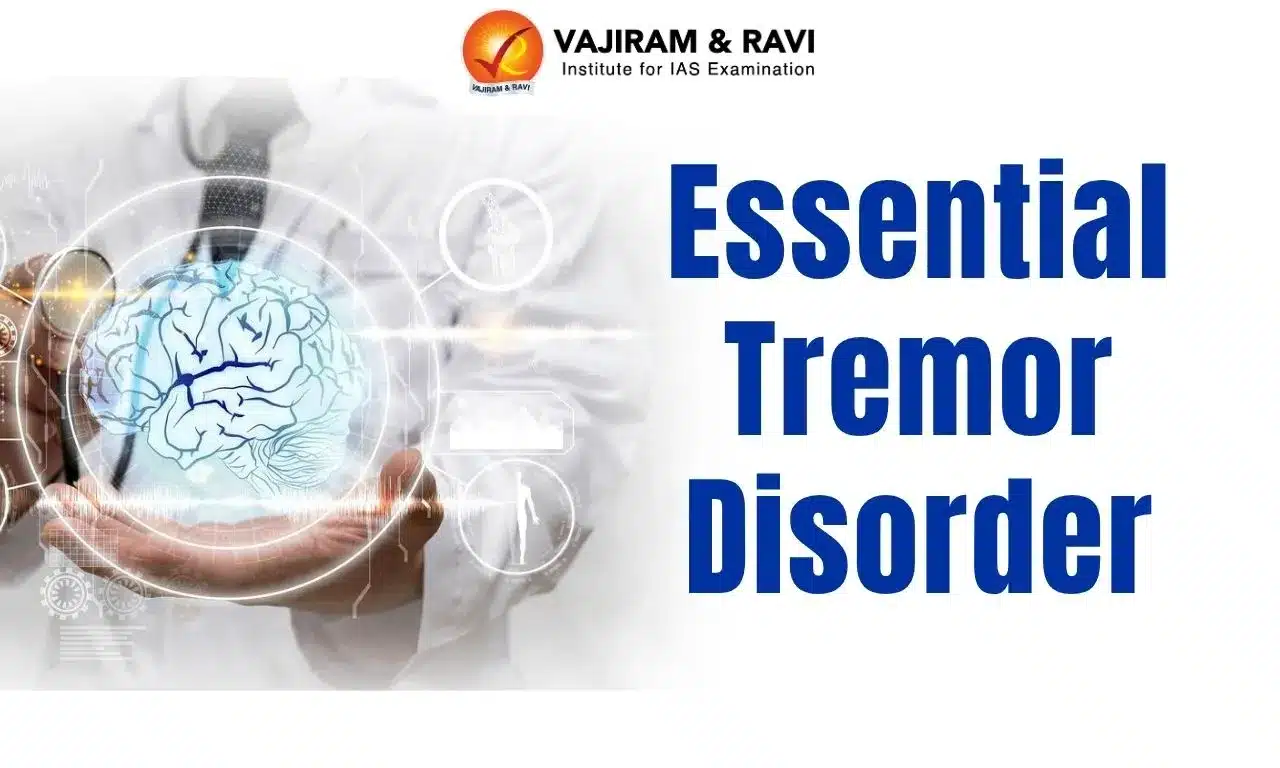
  • It is a neurological disorder that causes hands, head, trunk, voice or legs to shake rhythmically. 
  • It is most common among people older than 65, but it can affect people at any age.
  • It is one of the most common neurological disorders affecting around 1% of the general population worldwide.

Causes of Essential Tremors

  • The cause of essential tremor is unknown. However, one theory suggests that your cerebellum and other parts of your brain are not communicating correctly. The cerebellum controls muscle coordination.
  • In most people, the condition seems to be passed down from a parent to a child.
  • And also, if parents have ET, there is a 50% chance that children will inherit the gene responsible for the condition.
  • The prevalence increases with age, with approximately 5% of individuals over the age of 60 experiencing it.
  • Treatments: There’s no cure for essential tremor, but there are ways to treat it. The main treatment options are medications, assistive devices, botulinum toxin, deep brain stimulation and focused ultrasound. 

Key facts about MRgFUS

  • MRgFUS intervention is a non-surgical procedure that uses focused ultrasound waves guided by MRI to target brain tissue responsible for tremors in patients with Parkinson’s disease or essential tremor. 
  • It is currently approved for Essential Tremor (ET) and Tremor-Dominant Parkinson’s Disease (TD-PD), this technique offers new hope for patients whose symptoms significantly disrupt daily life.
  • MRgFUS treatment targets a key relay centre in the brain i.e thalamus.
  • Focused ultrasound energy is used to thermally ablate this specific area, leading to a marked reduction—and in many cases, near-complete resolution—of tremors, often within the same session.

Source: TH

Essential Tremors FAQs

Q1: What is meant by an essential tremor?

Ans: Essential tremor (ET) is a neurological disorder that causes your hands, head, trunk, voice or legs to shake rhythmically.

Q2: What is a Neurological Disorder?

Ans: Neurological disorders are medically defined as disorders that affect the brain as well as the nerves found throughout the human body and the spinal cord.

India to Fast Track 52 Military Satellites to Boost Border Surveillance

Military Satellites

Military Satellites Latest News

  • The Union government has ordered the fast-tracking of the launch of 52 dedicated surveillance satellites, enhancing round-the-clock monitoring of the coastline and land borders.

India Accelerates Defence Surveillance with 52 New Military Satellites

  • India is taking a significant leap in its space-based military capabilities with the fast-tracking of 52 surveillance satellites. 
  • Following the learnings from Operation Sindoor, which showcased the strategic value of satellite-based intelligence, the government has moved swiftly to enhance round-the-clock surveillance over its land borders and coastline. 
  • This decision marks a pivotal shift in India’s national security framework by integrating space technology more deeply into defence operations.

Operation Sindoor: A Trigger for Strategic Space Expansion

  • The impetus for this initiative stems from Operation Sindoor, where satellite imagery played a vital role in enabling swift military responses. 
  • Satellite data provided Indian defence forces with real-time intelligence on the movement and trajectory of drones and missiles, helping avert substantial damage to military assets.
  • It was during this operation that India reportedly faced satellite-assisted activities from adversaries, with claims that China extended space-based support to Pakistan. 
  • In this context, enhancing indigenous surveillance capacity has become a top priority for national security.

SBS-III Programme: India’s New Space Security Vision

  • To execute this strategic expansion, the Cabinet Committee, led by Prime Minister Narendra Modi, approved a $3.2 billion budget in October 2024 for the SBS-III programme
  • This programme is aimed at developing a new generation of military satellites over the next decade.
  • Key features of the SBS-III programme include:
    • 52 satellites to be launched in total.
    • ISRO to design and launch the first 21 satellites.
    • Private space sector companies will develop and launch the remaining 31 satellites.
    • The Defence Space Agency (DSA) will be responsible for managing the satellite constellation’s operational command.

Enhanced Capabilities with Next-Gen Surveillance Tech

  • The new surveillance satellites will feature next-generation radar imaging systems, capable of providing all-weather, day-and-night coverage
  • According to defence officials, these satellites are expected to drastically improve intelligence gathering, especially in remote or high-risk border zones.
  • Artificial Intelligence (AI) will play a significant role in the functionality of these satellites. AI integration will:
    • Enable automated threat detection.
    • Enhance data processing speed and accuracy.
    • Provide predictive intelligence through machine learning algorithms.
  • These advancements are expected to support India’s ability to monitor adversarial activities with greater precision and real-time responsiveness.

Strategic Coverage Areas: Focus on China, Pakistan, and the Indian Ocean

  • The satellite network will prioritise three critical theatres:
    • India-China border, particularly in Ladakh and Arunachal Pradesh.
    • India-Pakistan border, including monitoring infiltration routes and missile deployments.
    • Indian Ocean Region (IOR), to track naval movements and maritime threats.
  • The deployment is aimed at reducing India’s dependence on foreign satellite intelligence and enabling self-reliance in space-based defence infrastructure.

ISRO and Private Sector Collaboration

  • This initiative highlights India’s evolving approach to defence-sector partnerships, especially the growing role of private players in space technology. 
  • The government’s call for early deployment has been positively received by private aerospace companies, indicating a new chapter in public-private collaboration.
  • By 2026, the first set of satellites is expected to be launched, establishing a secure, scalable surveillance grid capable of serving India's strategic needs for years to come.

Source: TH

India’s Military Surveillance Satellites FAQs

Q1: What is the SBS-III programme?

Ans: The SBS-III programme is India’s $3.2 billion defence initiative to deploy 52 next-gen military satellites for enhanced surveillance.

Q2: What prompted India to accelerate satellite surveillance?

Ans: The success of satellite surveillance during Operation Sindoor highlighted the need for real-time intelligence and border monitoring.

Q3: Who will operate the new military satellite system?

Ans: The Defence Space Agency (DSA) will manage the operations of the new surveillance satellite network.

Q4: What technological features will the new satellites include?

Ans: The satellites will have AI-enabled radar imaging for all-weather, day-night surveillance and faster threat detection.

Q5: What regions will these satellites primarily monitor?

Ans: The surveillance network will focus on the borders with China and Pakistan, and the Indian Ocean Region.

Safeguarding Culture, The Role of Geographical Indication Tag India in Preventing Cultural Misappropriation

Geographical Indication Tag India

GI Tag and Cultural Protection Latest News

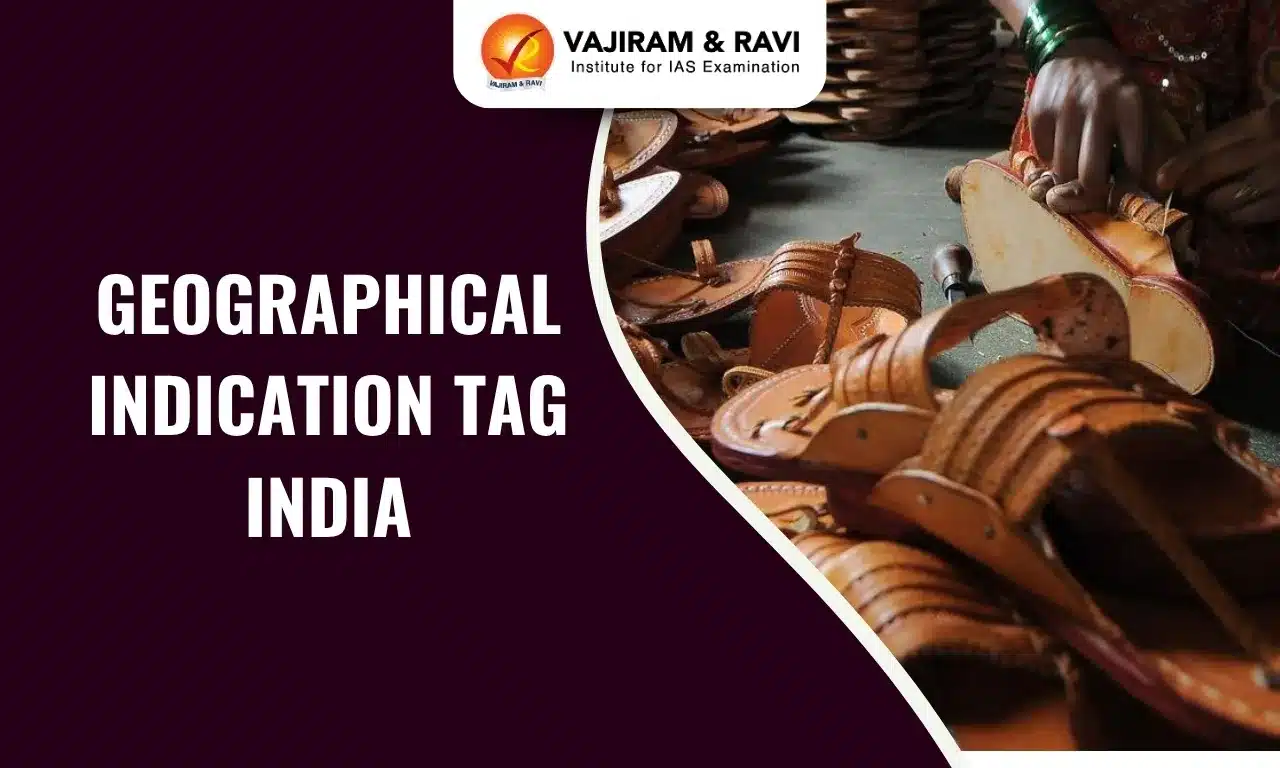
  • Recently, an Italian luxury brand Prada unveiled footwear inspired by India’s Geographical Indication (GI)-tagged Kolhapuri chappals.

India’s Geographical Indications and the Threat of Cultural Appropriation

  • In June 2025, Italian fashion house Prada showcased a footwear line inspired by India’s iconic GI-tagged Kolhapuri chappals at its Spring/Summer 2026 menswear show in Milan. 
  • The move triggered sharp criticism in India, reigniting debates over cultural appropriation and the effectiveness of Geographical Indications (GI) in safeguarding traditional knowledge and craftsmanship.
  • The incident is part of a broader pattern where Indian cultural and artisanal products are used, often without acknowledgement or benefit-sharing, by global corporations. 
  • As the conversation around cultural appropriation intensifies, GI tags emerge as a legal and policy mechanism to both protect and promote India’s cultural heritage.

Understanding Geographical Indications (GI)

  • A Geographical Indication is a form of intellectual property right that identifies goods as originating from a particular geographical region, where specific qualities, reputation, or characteristics of the product are essentially attributable to its place of origin.
  • India currently has 658 registered GI-tagged products, spanning diverse categories such as textiles (e.g., Kancheepuram silk), agriculture (e.g., Basmati rice), handicrafts (e.g., Madhubani paintings), and food (e.g., Darjeeling tea).
  • What sets GIs apart from trademarks is their collective ownership. Unlike a trademark owned by a single entity, a GI belongs to a community of producers, artisans, or cultivators, and it cannot be sold, assigned, or transferred.

Legal Framework in India and Globally

  • India, as a signatory to the TRIPS Agreement under the WTO framework, enacted the Geographical Indications of Goods (Registration and Protection) Act, 1999, which came into effect in 2003. This law provides:
    • Registration of GI goods
    • Legal protection against unauthorised usage
    • Penalties for infringement
    • Legal standing for authorised users to initiate action against misuse
  • Internationally, GI protection stems from agreements like the Paris Convention for the Protection of Industrial Property (1883) and more clearly from the TRIPS Agreement (1995). 
  • However, GI rights are territorial; there is no globally recognised GI tag. This means that even if Kolhapuri chappals are GI-protected in India, that protection doesn’t extend automatically to countries like Italy or the U.S.

India’s Experience with Cultural and Biological Appropriation

  • India’s struggle against cultural misappropriation is not new. Some notable past instances include:
    • Basmati Rice Patent (1997): Ricetec Inc., a U.S.-based company, was granted a patent for novel lines and grains of Basmati rice. After legal intervention by Indian authorities, the patent was eventually nullified.
    • Turmeric Patent (1995): The University of Mississippi was granted a patent for turmeric’s wound-healing properties, a use deeply embedded in Indian Ayurveda. India successfully challenged and revoked the patent.
    • Neem Patent (2000): A neem-based antifungal patent granted to a U.S. agency and a multinational firm was revoked by the European Patent Office after evidence of traditional Indian knowledge was submitted.
  • These cases exemplify the vulnerability of traditional Indian knowledge and the need for pre-emptive protection mechanisms.

Towards Stronger Cultural Safeguards

  • While GI tags offer domestic legal protection, they fall short when it comes to transnational enforcement. There are some pathways to international GI protection, such as:
    • Seeking bilateral or multilateral recognition.
    • Registering GIs in foreign jurisdictions.
    • Using trade negotiations to include GI protections in Free Trade Agreements.
  • Furthermore, experts advocate for the expansion of the Traditional Knowledge Digital Library (TKDL), a government-run initiative that documents traditional medicinal knowledge. 
  • The proposal is to widen its scope to include cultural artefacts, arts, crafts, and grassroots expressions, and to make it a searchable database. This could aid brands and foreign agencies in conducting due diligence before launching culturally inspired products.

Conclusion

  • The Prada-Kolhapuri incident highlights the urgency for robust international frameworks and enhanced domestic capabilities to prevent cultural misappropriation. 
  • While GI tags serve as effective tools for domestic enforcement, their scope must be broadened through diplomacy, global advocacy, and digital documentation of traditional knowledge.
  • India must continue to build institutional capacity, strengthen cross-border GI enforcement mechanisms, and raise awareness globally about the significance and sanctity of its cultural and artisanal heritage.

Source: TH

GI Tag and Cultural Protection FAQs

Q1: What is a Geographical Indication (GI) tag?

Ans: A GI tag is a form of intellectual property that identifies products as originating from a specific region, attributing unique qualities to that origin.

Q2: How many products in India currently have a GI tag?

Ans: India has 658 registered GI-tagged goods across various categories including textiles, food, handicrafts, and agriculture.

Q3: Can GI tags offer international protection?

Ans: No automatic international GI protection exists; recognition must be sought in each individual country or region.

Q4: What legal recourse exists if GI-tagged Indian products are misused abroad?

Ans: Infringement can be challenged through foreign courts if the GI is registered in that jurisdiction or protected via trade agreements.

Q5: What reforms are suggested to prevent cultural misappropriation?

Ans: Expanding the Traditional Knowledge Digital Library and creating a global searchable database are key steps proposed for safeguarding traditional knowledge and expressions.

RBI Report, India Continues to Power Global Growth

RBI Report

RBI Report Latest News

  • Despite global economic uncertainty, the Indian economy continues to drive global growth, supported by strong fundamentals and prudent policies, according to RBI's latest Financial Stability Report.

Financial Stability Report (FSR)

  • FSR is a biannual publication released by the Reserve Bank of India (RBI). 
  • It provides a comprehensive assessment of the health, resilience, and risks facing the Indian financial system.

Purpose

  • To ensure transparency, promote public confidence, and guide policy actions aimed at preserving financial stability in India.

Key Features

  • Published Twice a Year
    • Released in June and December to give regular updates.
  • Covers Entire Financial System
    • Includes banks, non-banking financial companies (NBFCs), cooperative banks, and other financial intermediaries.
  • Assesses Systemic Risks
    • Evaluates both domestic and global risks that may affect India’s financial stability.
  • Stress Tests
    • Conducts stress testing on banks to gauge their ability to withstand adverse economic conditions (like high NPAs, credit shocks, etc.).
  • Policy Guidance
    • Offers insights for regulators and policymakers on maintaining stability and resilience.
  •  
  •  
  •  
  •  

Key Highlights of the June 2025 Financial Stability Report (FSR)

  • India Remains a Key Global Growth Driver
    • Despite a challenging global environment, India continues to contribute significantly to global growth.
    • Growth is supported by strong domestic demand, sound macroeconomic fundamentals, and prudent policymaking.
  • GDP Growth Outlook for FY26
    • Real GDP growth projected at 6.5% for FY2026.
    • Growth remains below RBI's aspirations, constrained by global uncertainty, trade disruptions, and elevated geopolitical tensions.
  • Risks to Growth: External and Climate-Linked
    • External spillovers (e.g., US tariffs, global trade fragmentation) and weather-related events (e.g., climate shocks) may impact India’s growth.
    • Geopolitical risks and policy unpredictability have raised global economic uncertainty.
  • Inflation Under Control
    • Inflation outlook is benign, with CPI aligning with RBI’s target of 4% ± 2% band.
    • May 2025 CPI at 2.8%, the lowest since February 2019.
    • RBI expresses greater confidence in durable price stability under the Flexible Inflation Targeting (FIT) framework.
  • Financial Stability and Sectoral Resilience
    • Indian financial system shows improving resilience, with:
      • Strong capital buffers
      • Low non-performing assets (NPAs)
      • Healthy profitability
  • Stress Tests Confirm Systemic Strength
    • Stress tests show that:
      • Banks and NBFCs maintain adequate capital even under adverse scenarios.
      • Mutual funds and clearing corporations show strong resilience.
      • Insurance sector maintains a solvency ratio well above minimum thresholds.
  • Scheduled Commercial Banks (SCBs) in Strong Health
    • SCBs benefit from:
      • Multi-decadal low NPAs
      • Robust capital and earnings
    • Macro stress tests validate that most SCBs are adequately capitalized.
  • NBFCs and Corporate Sector Remain Robust
    • NBFCs exhibit:
      • Sizable capital buffers
      • Improving asset quality
      • Strong profitability
    • Corporate balance sheets continue to support macroeconomic stability.
  • Financial Conditions Remain Supportive
    • Financial conditions have eased due to:
      • Accommodative monetary policy
      • Low market volatility
  • Global Financial System: Elevated Risks
    • Near-term global financial stability risks have increased.
    • April 2025’s market turbulence exposed vulnerabilities and high asset price sensitivity.
    • Risks from high public debt, tech disruptions, climate change, and prolonged conflicts remain significant.
  • Systemic Risk Perception: Medium but Stable
    • Systemic Risk Survey (SRS) in May 2025:
      • All major risk categories rated as ‘medium risk’
      • 92% respondents are confident in the soundness of the Indian financial system.
  • Need for Policy Vigilance
    • The report emphasizes the need for vigilance, agility, and prudence among central banks and regulators.
    • The global economic landscape is becoming harder to forecast due to structural shifts and shocks.

Source: IETH

RBI Report FAQs

Q1: What is the RBI Financial Stability Report?

Ans: A biannual Financial Stability Report assessing India’s financial health, systemic risks, and resilience.

Q2: What growth rate has RBI projected for FY26?

Ans: RBI projects 6.5% GDP growth for FY2026 despite global uncertainties.

Q3: How is inflation performing according to the RBI Report?

Ans: Inflation is within target, with CPI at 2.8% in May 2025.

Q4: What strengthens India’s financial resilience?

Ans: Strong capital buffers, low NPAs, and robust earnings in banks and NBFCs.

Q5: What are the global risks mentioned in the RBI Report?

Ans: Geopolitical tensions, high debt, trade disruptions, and climate events threaten global financial stability.

India’s Constitution, Secular in Spirit, Beyond the Word

India’s Constitution

India’s Constitution Latest News

  • Vice President Jagdeep Dhankhar has criticized the Emergency-era inclusion of the words “socialist” and “secular” in the Constitution’s Preamble, calling it a "sacrilege to the spirit of Sanatan".
  • These terms were added via the 42nd Constitutional Amendment, which made sweeping changes to the Constitution during the Emergency. 
  • Although many of those changes were reversed by the 44th Amendment in 1978, the additions to the Preamble remain intact.

Preamble The Vision of the Constitution

  • Described by the Supreme Court in In Re: The Berubari Union (1961) as “a key to open the mind of the makers”.
  • Serves as the vision statement of the Constitution, outlining its core values and purpose.
  • Original Preamble (1950)
    • Described India as a “Sovereign Democratic Republic”.
    • Guaranteed Justice, Equality, Liberty, and Fraternity to all citizens.

Changes Introduced by the 42nd Amendment (1976)

  • Inserted the words: “Socialist” and “Secular”, making India a “Sovereign Socialist Secular Democratic Republic”.
  • Added the word “integrity” to the phrase on fraternity, which now reads: “assuring the dignity of the individual and the unity and integrity of the Nation…”

Other Key Provisions of the 42nd Amendment

  • Introduced a new chapter on Fundamental Duties of citizens.
  • Added several new Directive Principles of State Policy.
  • Diluted judicial review by curbing the powers of the courts.
  • Froze delimitation of constituencies, affecting electoral boundaries.

Reasons Behind the Changes Introduced by the 42nd Amendment

  • Political Context: The Emergency Rule
      • The 42nd Amendment was enacted during the Emergency (1975–77) when Prime Minister Indira Gandhi ruled by decree.
      • Experts feel she wanted to reshape the Constitution to align with her ideological and political agenda.
  • Parliament vs Judiciary: The Land Reform Debate
    • Since the 1950s, a conflict between Parliament and the judiciary centered on land reform and the right to property.
    • Courts often upheld fundamental rights over collective socioeconomic goals, which frustrated the political class.

Why “Socialist” Was Added

  • The them PM Indira Gandhi had taken a clear leftward shift with moves like:
    • Bank nationalization (1969)
    • Abolition of privy purses (1971)
    • Campaigning with "Garibi Hatao" (End Poverty)
  • Adding “socialist” to the Preamble signaled alignment with her economic vision.
  • The Statement of Objects and Reasons for the amendment said this addition was meant to prioritize Directive Principles over Fundamental Rights, which were seen as hindrances to socioeconomic reform.

Why “Secular” Was Added

  • The move wasn’t directly explained, but analysts feel it occurred due to political rise of Bhartiya Jan Sangh.
  • Indira Gandhi defended the addition by claiming the founding fathers intended India to be secular and socialist, and the amendment merely made it explicit.

Why “Integrity” Was Included

  • Indira Gandhi’s Emergency-era rhetoric focused on national unity and the threat of divisive forces.
  • The word “integrity” was added to reinforce the idea of an indivisible nation.
  • Then Law Minister H. R. Gokhale emphasized that integrity meant maintaining the territorial and social indivisibility of the country.

Significance of These Changes

  • The addition of "socialist" and "secular" to the Preamble through the 42nd Amendment was largely symbolic.
  • As per the Supreme Court’s Berubari Union (1960) ruling, the Preamble is not a source of substantive power and not considered part of the Constitution’s enforceable text.

Secularism Already Ingrained in the Constitution

  • Secularism is embedded in key constitutional provisions:
    • Article 14 – Right to equality before the law.
    • Article 15 – Prohibition of discrimination based on religion, caste, sex, etc.
    • Article 16 – Equality of opportunity in public employment.
  • These articles reflect the inherent secular nature of the Constitution even before 1976.

Judicial Endorsement of Secularism

  • In Kesavananda Bharati (1973), a 13-judge bench held that secularism is a basic feature of the Constitution and cannot be removed or diluted.
  • In S. R. Bommai (1994), the Supreme Court reaffirmed secularism as a cornerstone of Centre-State relations and constitutional governance.

Socialism and Directive Principles

  • In Minerva Mills v Union of India (1980), the SC upheld that socialism is a constitutional ideal, rooted in Part IV: Directive Principles of State Policy.
  • The Court noted that framing a Socialist State aimed to ensure social, economic, and political justice.

Recent Judicial Endorsement (2024)

  • In November 2024, a two-judge Bench led by then CJI Sanjiv Khanna dismissed petitions challenging the inclusion of “secular” and “socialist” in the Preamble.
  • The Court ruled that:
    • These additions did not restrict legislation or governance.
    • They did not infringe on fundamental rights or alter the basic structure of the Constitution.

Conclusion

  • While added during the Emergency, the terms “secular” and “socialist” reflect values already embedded in the Constitution. 
  • The Supreme Court has consistently upheld these principles as basic features, immune to dilution or removal.

Source: IEIT

India’s Constitution FAQs

Q1: What is the Preamble’s role in India’s Constitution?

Ans: It acts as a vision statement, reflecting core principles but carries no substantive power.

Q2: When were 'secular' and 'socialist' added to the Preamble?

Ans: During the Emergency via the 42nd Amendment in 1976.

Q3: Why was 'socialist' added to India’s Constitution?

Ans: To reflect Indira Gandhi's left-leaning economic agenda and emphasize social justice goals.

Q4: Is secularism enforceable through India’s Constitution?

Ans: Yes, through Articles 14, 15, and 16 ensuring equality, non-discrimination, and opportunity.

Q5: What did the Supreme Court say about secularism?

Ans: In multiple rulings, it declared secularism a basic, unamendable feature of the Constitution.

Enquire Now