
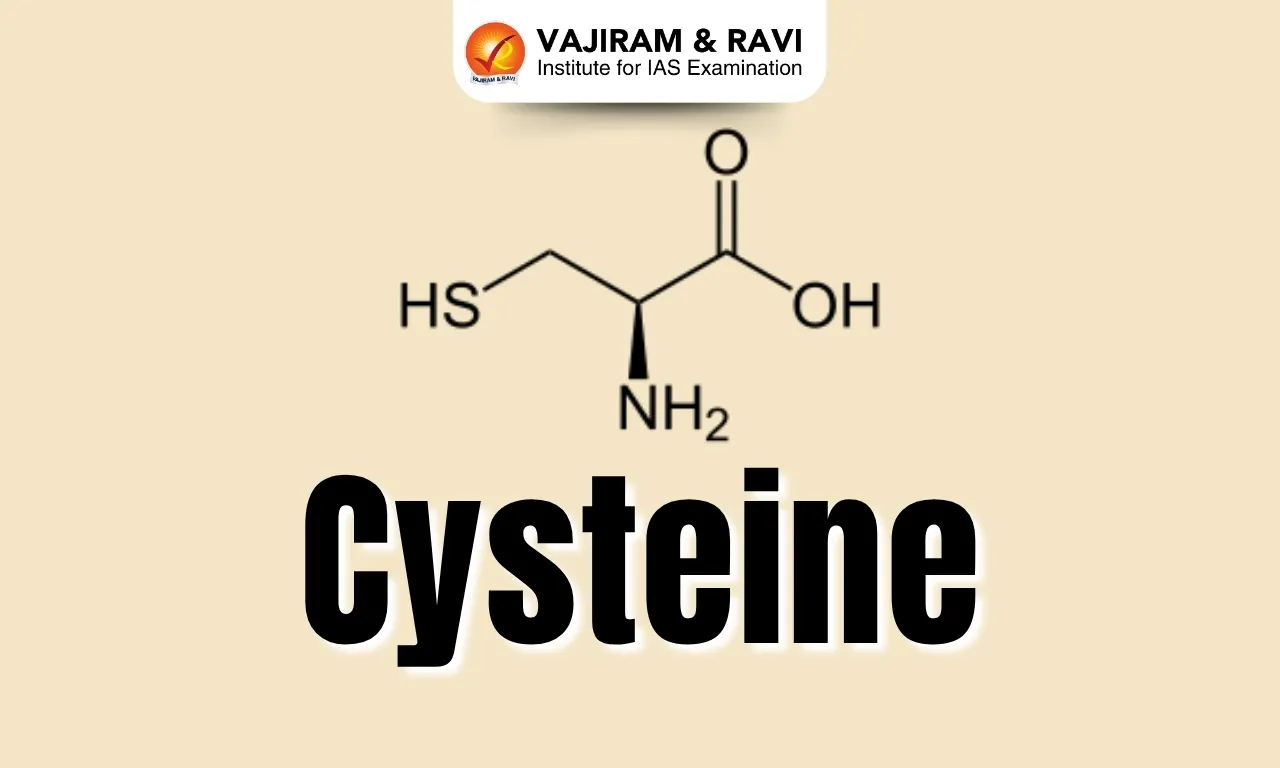
Cysteine Latest News
The researchers recently found that removing just one amino acid, cysteine, from the diet of mice led to a dramatic and rapid loss of 30% of the body weight in a week.
About Cysteine
- It is a sulfur containing amino acid with diverse roles in protein function and oxidative metabolism.
- It is a non-essential amino acid.
- It is one of the least abundant amino acids, yet it is frequently found as a highly conserved residue within functional (regulatory, catalytic, or binding) sites in proteins.
- It is abundant in beta-keratin, a key structural protein in nails, skin, and hair.
- Importance:
- Cysteine is important for making collagen. It affects skin elasticity and texture.
- It helps make antioxidants like glutathione, which protect our cells from harm.
- It also plays a role in creating taurine, a substance that helps with things like digestion and keeping our heart healthy.
- Cysteine is also involved in helping our body get rid of harmful substances through a process called detoxification.
- Low cysteine levels might mean that your body isn't making enough of this semi-essential amino acid, or you're not getting enough from foods like meat, dairy, and eggs.
- Symptoms of low levels of Cysteine may include fatigue, weakness, slow growth in children, and a weakened immune system.
What are Amino Acids?
- An amino acid is the fundamental molecule that serves as the building block for proteins.
- There are 20 different amino acids.
- A protein consists of one or more chains of amino acids (called polypeptides) whose sequence is encoded in a gene.
- Essential amino acids:
- Essential amino acids cannot be made by the body. As a result, they must come from food.
- The 9 essential amino acids are histidine, isoleucine, leucine, lysine, methionine, phenylalanine, threonine, tryptophan, and valine.
- Non-Essential amino acids:
- Nonessential means that our bodies can produce the amino acid, even if we do not get it from the food we eat.
- Nonessential amino acids include alanine, arginine, asparagine, aspartic acid, cysteine, glutamic acid, glutamine, glycine, proline, serine, and tyrosine.
Source: TH
Cysteine FAQ's
Q1: What type of amino acid is cysteine classified as?
Ans: Non-essential amino acid
Q2: Which element makes cysteine distinct among many other amino acids?
Ans: Sulfur
Q3: What food is high in cysteine?
Ans: Rich food sources of cysteine are poultry, egg, beef, and whole grains.
Q4: Which powerful antioxidant is synthesized with the help of cysteine?
Ans: Glutathione
