
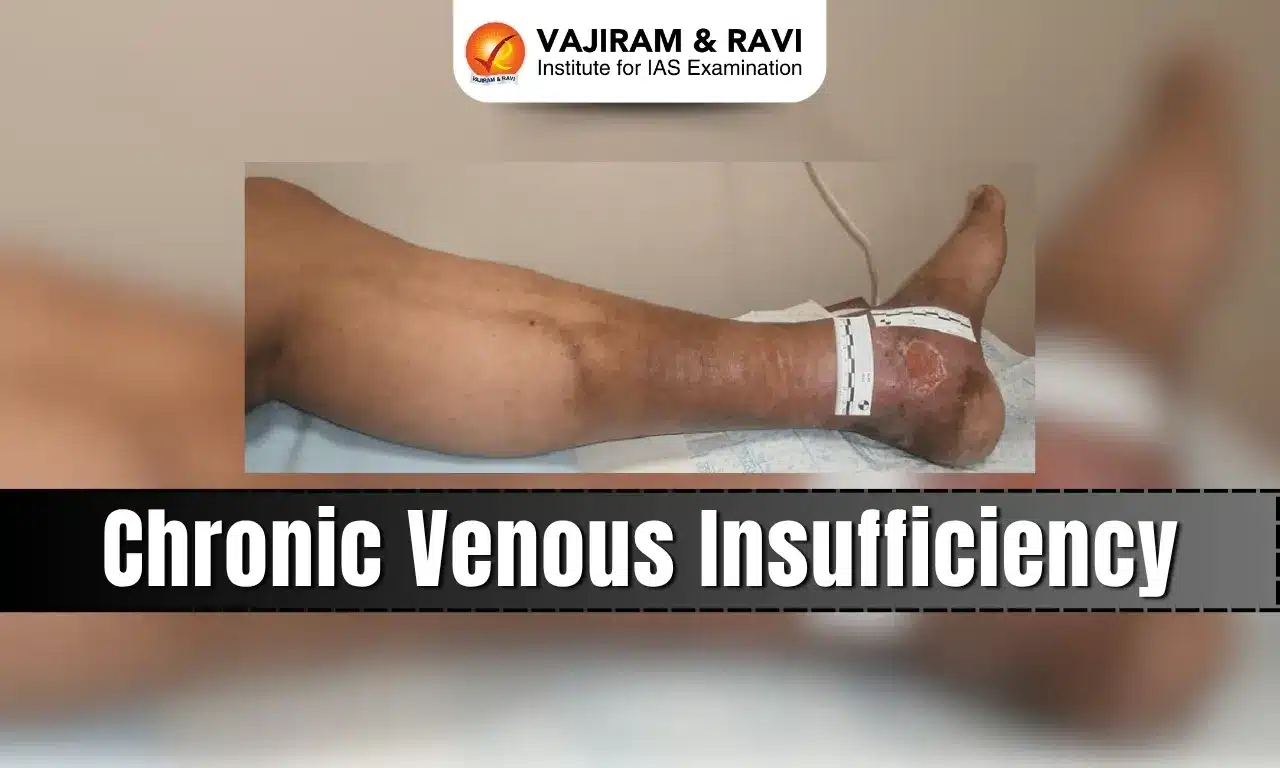
Chronic Venous Insufficiency Latest News
US President Donald Trump has been recently diagnosed with chronic venous insufficiency (CVI).
About Chronic Venous Insufficiency
- The CVI occurs when your leg veins struggle to allow the flow of blood back to the heart.
- Under normal conditions, the valves in our veins facilitate the flow of blood towards the heart.
- However, when they don't work on the optimum level, the blood may flow backwards and accumulate (pool) in your legs.
- The condition may not be a serious health threat, but it can cause pain, swelling, cramps, skin changes, varicose veins, leg ulcers, etc.
- People are more likely to have the condition if/when they are overweight or pregnant or have a family history of the problem.
- People may also experience it if they have ever sustained an injury to their leg, had surgery, or had previous blood clots.
- It affects about 1 in 20 adults. Common among older adults, its risk heightens with age.
Chronic Venous Insufficiency Treatments
- From lifestyle changes to surgery, there are multiple ways to address the issue.
- Regular exercise, leg elevation, and weight management are considered the first steps to treat the condition.
- Medicines that boost blood flow through the vessels and compression therapy, which involves tight stockings or bandages, help a long way.
Source: NDTV
Chronic Venous Insufficiency FAQs
Q1: What is Chronic Venous Insufficiency (CVI)?
Ans: A condition where leg veins struggle to return blood to the heart.
Q2: What role do valves in the veins play under normal conditions?
Ans: They facilitate one-way blood flow toward the heart.
Q3: What happens when vein valves don't function properly in Chronic Venous Insufficiency?
Ans: Blood flows backward and pools in the legs

