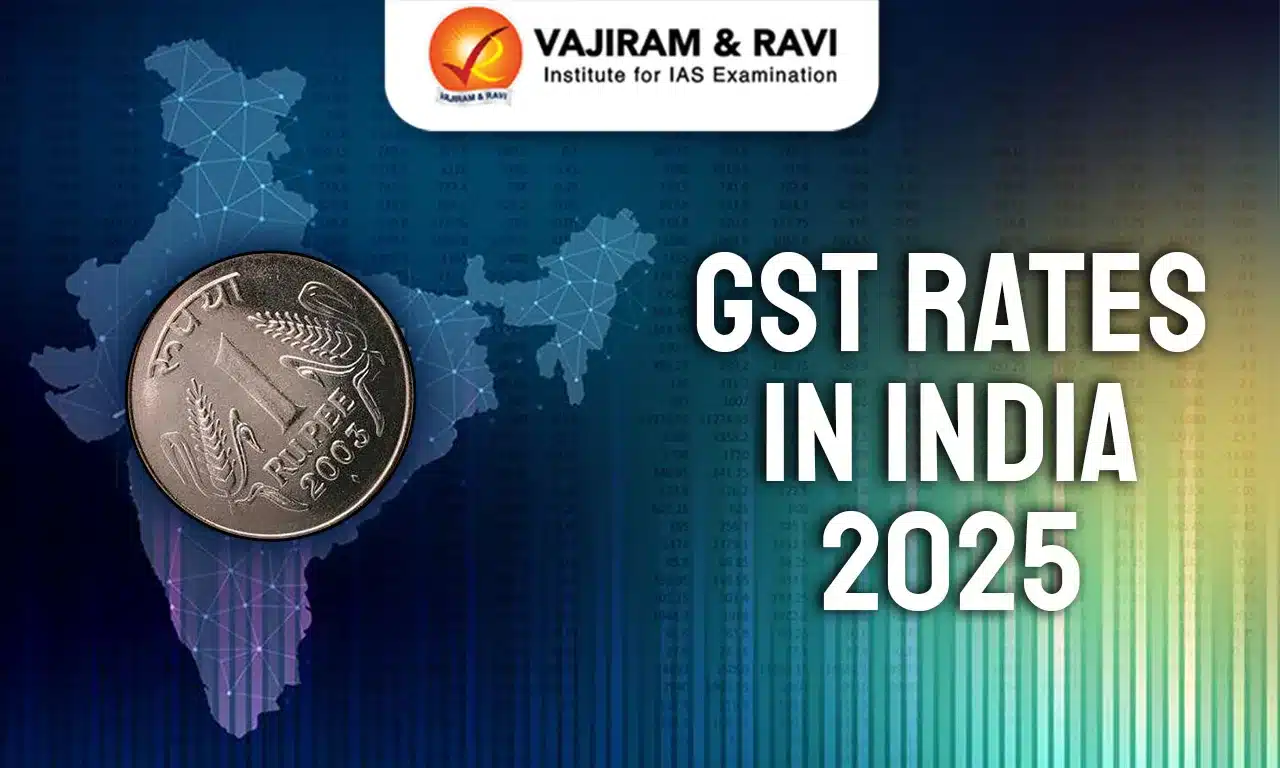
The Goods and Services Tax (GST) was introduced on July 1, 2017, is India’s unified indirect tax system that subsumed most central and state-level taxes. GST is destination-based and applies at every value-addition stage, but allows input tax credit, preventing tax-on-tax cascading.
India currently uses five standard GST slabs including 0%, 5%, 12%, 18%, and 28%. Other than this, two niche rates including 0.25% and 3% are apply to select luxury and precious goods, making it effectively seven rates.
GST Rates Meaning
GST, or Goods and Services Tax, is applied on the supply of goods and services across India. Introduced on 1st July 2017, GST replaced the indirect taxes like VAT, service tax, excise duty, and more. Under the GST system, goods and services are taxed at different slab rates depending on their nature, necessity, and usage. The government uses these rates to classify items as essential, standard, or luxury, thereby deciding how much tax should be charged on them.
Some goods attract a cess (extra charge), especially those causing environmental or social harm (e.g., tobacco, coal). GST Rates in India define how much tax a consumer pays when buying a good or service, and they form the backbone of India's unified tax system.
Types of GST Rates in India 2025
India follows a multi-tier GST Rate structure, with different slabs designed to balance affordability for consumers and revenue needs for the government. As of mid‑2025, the major GST slabs are:
| Types of GST Rates in India 2025 |
| GST Rate |
Type |
Category of Goods/Services |
Examples |
|
0%
|
Zero Rate
|
Essential goods and services
|
Fresh fruits & vegetables, milk, education services, healthcare
|
|
5%
|
Lower Rate
|
Mass consumption items
|
Footwear (< ₹1000), packaged food, rail tickets, small restaurants
|
|
12%
|
Standard Rate (Lower Tier)
|
Standard goods & services
|
Processed food, garments (> ₹1000), mobile phones, fertilizers
|
|
18%
|
Standard Rate (Upper Tier)
|
Most goods and services
|
Soaps, toothpaste, dining in restaurants, ACs, IT services
|
|
28%
|
Higher Rate
|
Luxury and demerit goods
|
Cars, tobacco, pan masala, aerated drinks
|
|
Cess
|
Compensation Cess
|
Additional tax on sin and luxury goods (over GST rate)
|
Cigarettes, luxury cars, coal
|
List of Items Taxed at 0% GST Rate
Under the 0% GST rate category, essential goods and services are exempted from tax to ensure affordability and accessibility for all sections of society. These items List of Items Taxed at 0% GST Rate include unprocessed, unbranded, and basic necessities that are crucial for daily life and public welfare. The goal of the 0% rate is to reduce the financial burden on consumers, especially the economically weaker sections.
| List of Items Taxed at 0% GST Rate |
| Product/Service |
GST rate |
|
Milk
|
0%
|
|
Kajal
|
0%
|
|
Eggs
|
0%
|
|
Educational services
|
0%
|
|
Curd
|
0%
|
|
Lassi
|
0%
|
|
Health services
|
0%
|
|
Children's drawing and colouring books
|
0%
|
|
Unpacked foodgrains
|
0%
|
|
Unbranded atta/maida
|
0%
|
|
Unpacked paneer
|
0%
|
|
Gur (Jaggery)
|
0%
|
|
Besan (Gram flour)
|
0%
|
|
Unbranded natural honey
|
0%
|
|
Fresh vegetables
|
0%
|
|
Salt
|
0%
|
|
Prasad (Religious offerings)
|
0%
|
|
Palmyra jaggery
|
0%
|
|
Phool bhari jhadoo (Traditional broom)
|
0%
|
List of Items Taxed at 5% GST Rate
List of Items Taxed at 5% GST Rate slab are generally considered essential or semi-essential goods and services that are used widely by consumers but are slightly processed or branded. This lower tax rate ensures affordability while enabling some revenue generation for the government.
| List of Items Taxed at 5% GST Rate |
| Product/Service |
GST Rate |
|
Edible oil (packaged and branded)
|
5%
|
|
Footwear (priced below ₹1,000)
|
5%
|
|
Tea, coffee (except instant coffee)
|
5%
|
|
Sugar
|
5%
|
|
Coal
|
5%
|
|
Frozen vegetables (not canned)
|
5%
|
|
LPG for domestic use
|
5%
|
|
Life-saving drugs
|
5%
|
|
Packaged cereals and pulses
|
5%
|
|
Agarbatti (incense sticks)
|
5%
|
|
Cashew nuts
|
5%
|
|
Walking sticks
|
5%
|
List of Items Taxed at 12% GST Rate
List of Items Taxed at 12% GST Rate slab are generally processed or manufactured goods and services that are moderately essential but not critical to everyday survival. These include a range of FMCG and household utility products.
| List of Items Taxed at 12% GST Rate |
| Product/Service |
GST Rate |
|
Packed fruit juices
|
12%
|
|
Ghee
|
12%
|
|
Tooth powder
|
12%
|
|
Sewing machines
|
12%
|
|
Umbrellas
|
12%
|
|
Cell phones and telecom equipment
|
12%
|
|
Processed food products (cornflakes, etc.)
|
12%
|
|
Fertilizers
|
12%
|
|
Ayurvedic medicines
|
12%
|
|
Hotel accommodation (₹1,000–₹2,500/night)
|
12%
|
List of Items Taxed at 18% GST Rate
The List of Items Taxed at 18% GST Rate is one of the most commonly applied slabs in India. It is levied on standard goods and services that are not considered essentials. Most consumer durable goods, software services, and banking services fall under this category.
| List of Items Taxed at 18% GST Rate |
| Product/Service |
GST Rate |
|
Toothpaste and cosmetics
|
18%
|
|
Instant food items
|
18%
|
|
ACs and refrigerators
|
18%
|
|
Soaps and shampoos
|
18%
|
|
Restaurants (non-AC or without liquor)
|
18%
|
|
Financial and banking services
|
18%
|
|
Branded garments above ₹1,000
|
18%
|
|
IT services and telecom services
|
18%
|
|
Food delivery services
|
18%
|
|
Printer and computer monitors
|
18%
|
List of Items Taxed at 28% GST Rate
The List of Items Taxed at 28% GST Rate slab includes luxury goods, sin goods, and items considered non-essential or environmentally harmful. The intent is to discourage consumption of such goods while generating higher revenue from high-end usage.
| List of Items Taxed at 28% GST Rate |
| Product/Service |
GST Rate |
|
Luxury cars
|
28%
|
|
Tobacco and cigarette products
|
28% (+ cess)
|
|
Aerated drinks
|
28%
|
|
Air conditioners
|
28%
|
|
Dishwashers and vacuum cleaners
|
28%
|
|
Paints and varnishes
|
28%
|
|
Cement
|
28%
|
|
Motorcycles over 350cc
|
28%
|
|
Personal aircrafts and yachts
|
28%
|
|
Gambling and betting services
|
28%
|
List of Items Taxed at 3% GST Rate
The List of Items Taxed at 3% GST Rate is applicable to precious metals and articles related to the jewelry industry. These goods are taxed at a lower rate considering their high base value.
| List of Items Taxed at 3% GST Rate |
| Product/Service |
GST Rate |
|
Gold and gold jewelry
|
3%
|
|
Silver and silver jewelry
|
3%
|
|
Platinum and precious metals
|
3%
|
|
Diamonds (cut and polished)
|
3%
|
List of Items Taxed at 0.25% GST Rate
This ultra-low rate of 0.25% is specifically reserved for rough and semi-polished precious stones. It was introduced to support the gems and jewelry industry while still ensuring some taxation on high-value raw materials.
| List of Items Taxed at 0.25% GST Rate |
| Product/Service |
GST Rate |
|
Rough diamonds
|
0.25%
|
|
Precious and semi-precious stones (unpolished)
|
0.25%
|
What are the GST Rates in India 2025?
In 2025, businesses can expect a substantial progress in GST Rates rationalisation as proposed by the GST Council. The Group of Ministers (GoM) on Rate Rationalisation and the Fitment Committee are actively evaluating strategies to streamline the existing GST structure. This includes reducing the number of tax slabs by merging similar rates, correcting inverted duty structures, and reassessing current GST exemptions.
These reforms aim to simplify compliance, enhance revenue efficiency, and create a more uniform taxation system across sectors. The government’s efforts reflect its commitment to making GST more business-friendly while maintaining fiscal stability.
GST Rate Changes at 55th GST Council Meeting
Several tariff changes were implemented in early 2025:
- Fortified Rice Kernels (HSN 1904): GST rate lowered from 18% to 5%.
- Gene therapy for life‑threatening conditions: Fully exempted.
- Food distributed under ICDS to weaker sections: Eligible for 5% conditional rate.
- Sale of used EVs: Taxed at 5% for individuals; 18% on profit margins for businesses.
- Medical training by approved NSDC partners and certain LRSAM sub‑systems: Exempted.
- Penal charges by banks/NBFCs: Clarified as non-GSTable (exempted)
GST Rate Changes at 54th GST Council Meeting
54th GST Council Meeting was led by FM Nirmala Sitharaman, the Council recommended several rate updates to align similar products and ease consumer burden:
- Extruded/expanded snack pellets (HSN 1905 90 30): Reduced to 12% from 18%, matching other savory snacks. The existing 5% continues for uncooked pellets.
- Cancer drugs (Trastuzumab Deruxtecan, Osimertinib, Durvalumab): GST lowered to 5% from 12%.
- Car and motorcycle seats (HSN 9401): Increased to 28% (was 18%) for parity with motorcycle seats.
- Roof-mounted railway AC units: Clearly classified under 28%.
- Helicopter passenger transport (seat-sharing): GST set at 5%, though process of charters remains at 18%.
GST Rate Changes at 53rd GST Council Meeting
- A series of rate rationalisations and new exemptions aimed at reducing costs and simplifying compliance :
- Cartons/boxes (HS 4819): Slashed from 18% to 12%.
- Milk cans (iron, steel, aluminum): Unified at 12%.
- Solar cookers & sprinklers: Standardised at 12%.
- Aircraft parts/toolkits: IGST set at 5% for the MRO sector.
- Extra Neutral Alcohol (ENA) for making human liquors: Exempted from GST.
- Railway services (platform tickets, retiring rooms, cloakrooms, battery-operated cars): Exempted.
- Hostel accommodation (< ₹20,000/month, ≤ 90 days): Exempt.
- TCS for e-commerce suppliers: Reduced from 1% to 0.5%
GST Rate Changes at 52nd GST Council Meeting
Indexed key recommendations that made the way for future rate changes including:
- Exemption of ENA for liquor production confirmed in the 53rd Council
GST Rate Changes at 50th GST Council Meeting
- Focused on compliance and procedural enhancements, no major rate shifts were introduced in this meeting.
GST Rates for Goods and Services with HSN Chapters
Understanding GST rates becomes easier when categorized through HSN (Harmonized System of Nomenclature) codes. These codes systematically classify goods and services under the GST regime in India. The following tables provide a detailed breakdown of GST Rates for Goods and Services with HSN Chapters. This classification helps businesses, professionals, and taxpayers identify the correct GST rate for compliance and invoicing purposes.
| GST Rates for Goods and Services with HSN Chapters |
| HSN Chapter |
Category of Goods |
GST Rate(s) |
|
01–05
|
Live animals, meat, fish, dairy, other animal products
|
Mostly 0%, some at 5%–12%
|
|
06–14
|
Plants, vegetables, coffee, spices, oilseeds, flowers
|
0%, 5%, some luxury items at 18%
|
|
15
|
Animal/vegetable fats and oils
|
5%, 12%, refined oils at 18%
|
|
16–24
|
Prepared food items (meat, sugar, bakery, beverages)
|
5%, 12%, processed at 18%
|
|
25–27
|
Minerals, fuels, petroleum products (excluding 5 listed petroleum items)
|
5%, 18%, 28% for coal
|
|
28–38
|
Chemicals, fertilizers, pharma, etc.
|
5% (fertilizers), 12–18% for most
|
|
39–40
|
Plastics, rubber and articles thereof
|
12%, 18%, special items at 28%
|
|
41–43
|
Leather and articles, fur
|
12%, 18%
|
|
44–46
|
Wood and wooden items
|
12%, 18%, luxury furniture at 28%
|
|
47–49
|
Paper, printed books, newspapers
|
Books at 0%, other items at 12–18%
|
|
50–63
|
Textiles and apparel
|
5%, 12%, luxury wear at 18%
|
|
64–67
|
Footwear, headgear, umbrellas
|
Footwear up to ₹1000 – 5%, above ₹1000 – 18%
|
|
68–70
|
Cement, ceramics, glass
|
18%, cement at 28%
|
|
71
|
Precious stones, jewellery
|
3% (gold, silver, diamonds)
|
|
72–83
|
Metals and articles thereof
|
18%, some at 12%
|
|
84–85
|
Machinery, electrical equipment
|
18%, mobile phones at 12%
|
|
86–89
|
Vehicles, ships, aircraft
|
12%, 18%, luxury cars at 28% + cess
|
|
90–92
|
Optical, medical instruments, musical instruments
|
12%, 18%
|
|
93
|
Arms and ammunition
|
18%, some at 28%
|
|
94–96
|
Furniture, toys, sports items, pens
|
12%, 18%, luxury items at 28%
|
|
97
|
Works of art and antiques
|
12%
|
GST Rates in India 2025 FAQs
Q1: Will GST rates change in 2025?
Ans: Yes. The GST Council is considering merging rate slabs to simplify the structure.
Q2: What are the GST rates in India for 2025?
Ans: They are: 0%, 5%, 12%, 18%, 28%, 3%, and 0.25%
Q3: Why do some items have 3% or 0.25% tax?
Ans: To accommodate trade in high-value goods like jewellery and rough stones, these niche slabs ensure a simplified tax structure.
Q4: What changed at the 54th GST Council?
Ans: Namkeens moved from 18% to 12%; select cancer drugs from 12% to 5%; car seats reclassified to 28%
Q5: How are GST rates decided?
Ans: By the GST Council based on Fitment Committee reports and revenue data.