
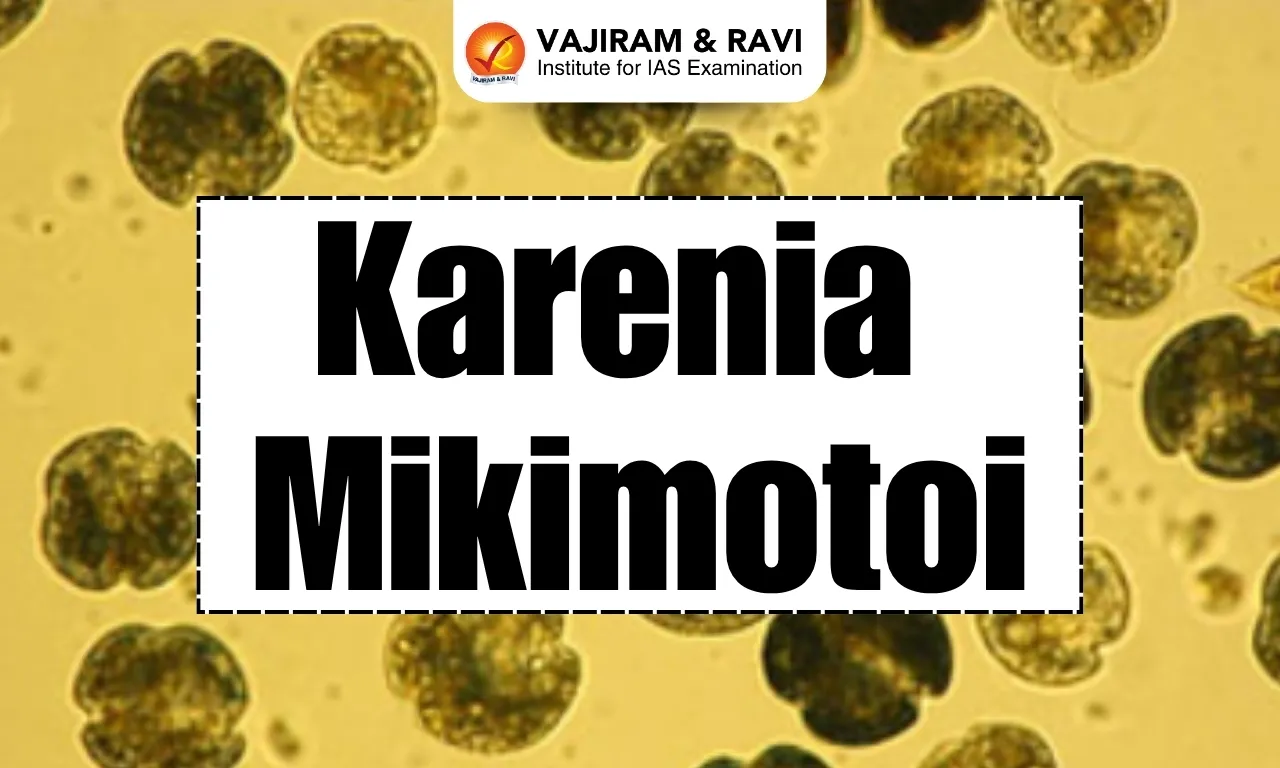
Karenia Mikimotoi Latest News
A massive outbreak of toxic algae due to karenia mikimotoi off South Australia, which has devastated hundreds of species of marine life and disrupted local tourism and fishing.
About Karenia Mikimotoi
- It is one of the most common red-tide dinoflagellates proliferating in the eastern North Atlantic and around Japan.
- It releases hemolytic toxins and ichthyo toxins, causing massive negative impacts on fishery and marine ecological environment.
- There have not been confirmed reports of direct impacts to human health by Karenia mikimotoi, but blooms of this species can cause large-scale mortality events of marine fauna such as shellfish, echinoderms, crustaceans, and fish.
- Anoxic conditions can also occur when K. mikimotoi cells die in large numbers and subsequent breakdown by bacteria deplete oxygen in the surrounding waters.
- It is less toxic but more globally widespread with blooms reported in Ireland, Norway, India, Japan, Korea, Australia, South Africa, Alaska, Texas, and the east coast of the U.S.
Key Features of Karenia Mikimotoi
- It is a photosynthetic species with several oval to round yellow-brown chloroplasts, each with a pyrenoid. The large ellipsoidal nucleus is located in the left hypothecal lobe.
- It can adapt to various light, temperature, salinity, and nutrient conditions.
Source: DD News
Karenia Mikimotoi FAQs
Q1: What is the size of karenia Mikimotoi?
Ans: 18–37 μm long
Q2: What does karenia mikimotoi cause?
Ans: Karenia mikimotoi does not produce a toxin that is harmful to humans and does not cause long term harmful effects. However, it is toxic to marine wildlife by damaging gills and gill structures.
