
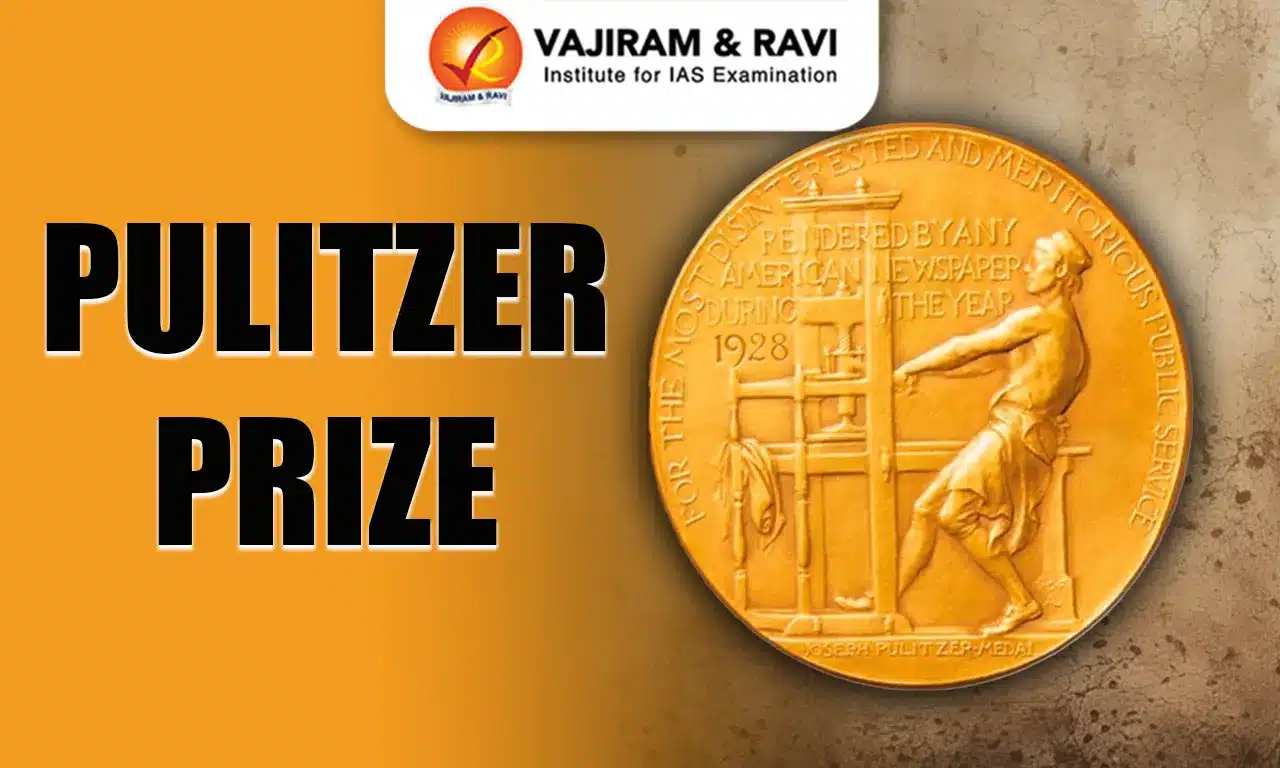
The Pulitzer Prize is one of the most prestigious honors in journalism, literature, and the arts. First awarded in 1917, it was established through the will of newspaper publisher Joseph Pulitzer and is administered by Columbia University. Over the years, it has come to symbolize excellence and achievement in public storytelling, commentary, and creative work across the globe.
Pulitzer Prize
The Pulitzer Prize, administered by Columbia University, honors excellence in journalism, literature, and music composition in the United States. Established in 1917 through the will of newspaper publisher Joseph Pulitzer, it is widely regarded as one of the Most Prestigious Awards in the World. Often called the "gold standard" of American journalism, the prize reflects a legacy of impactful storytelling and public service.
Pulitzer Prize History
- Origin and Purpose:
- The Pulitzer Prize was established in 1917 through the will of Hungarian-American newspaper magnate Joseph Pulitzer.
- Pulitzer was known for his journalistic integrity and aimed to promote excellence in journalism, literature, and music.
- Category Expansion Timeline:
- 1917: First Pulitzer Prizes awarded.
- 1922: Drama and Poetry categories introduced.
- 1924: Special Journalism category added.
- 1931: Public Service prize established.
- 1943: International Reporting category introduced.
- Notable Winners: Some of the most renowned recipients include Ernest Hemingway, William Faulkner, Toni Morrison, and Bob Dylan.
- Legacy:
- The Pulitzer Prize remains a globally respected award.
- It is viewed as a benchmark of excellence in journalism, literature, and music, reflecting the power of these fields to inform and inspire.
Pulitzer Prize Receivers
- Categories:
- The Pulitzer Prize includes 22 categories across journalism, literature, drama, and music.
- It covers everything from investigative reporting and commentary to poetry, fiction, and historical writing.
- Jury Selection
- Each category has a jury of three respected experts who serve for a year.
- They review all submissions and shortlist finalists for each category.
- Board Voting
-
-
- The Pulitzer Prize Board makes the final call.
- A winner must get at least 75% of board members' votes to be awarded the prize.
-
- No Compensation
-
- Neither the jurors nor board members are paid.
- This unpaid service helps uphold the fairness and credibility of the award.
Pulitzer Prize Category
The Pulitzer Prize is awarded in various categories. As of 2023, there are twenty-three categories in which prizes are awarded annually.
- Journalism Categories
- Reporting
- Feature Writing
- Editorial Writing
- Commentary
- Criticism
- Public Service
- Letters Categories
- Fiction
- Drama
- History
- Biography
- Poetry
- General Nonfiction
- Music
- Special Citations and Awards
List of Pulitzer Prize Winners in 2021
Journalism
- Public Service: The New York Times
- Criticism: Wesley Morris of The New York Times
- Editorial Writing: Robert Greene of the Los Angeles Times
- International Reporting: Megha Rajagopalan, Alison Killing, and Christo Buschek of BuzzFeed News
- Breaking News Reporting: Staff of the Star Tribune, Minneapolis, Minn.
- Investigative Reporting: Matt Rocheleau, Vernal Coleman, Laura Crimaldi, Evan Allen, and Brendan McCarthy of The Boston Globe
- Explanatory Reporting: Andrew Chung, Lawrence Hurley, Andrea Januta, Jaimi Dowdell, and Jackie Botts of Reuters
- Local Reporting: Kathleen McGrory and Neil Bedi of the Tampa Bay Times
- National Reporting: Staffs of The Marshall Project; AL.com, Birmingham; IndyStar, Indianapolis; and the Invisible Institute, Chicago
- Feature Writing: Mitchell S. Jackson, freelance contributor, Runner’s World
- Commentary: Michael Paul Williams of the Richmond (Va.) Times-Dispatch
- Breaking News Photography: Photography Staff of Associated Press
- Feature Photography: Emilio Morenatti of Associated Press
- Audio Reporting: Lisa Hagen, Chris Haxel, Graham Smith, and Robert Little of National Public Radio
Books, Drama and Music
- Fiction: "The Night Watchman" by Louise Erdrich
- Drama: "The Hot Wing King" by Katori Hall
- History: "Franchise: The Golden Arches in Black America" by Marcia Chatelain (Liveright/Norton)
- Biography or Autobiography: "The Dead Are Arising: The Life of Malcolm X" by Les Payne and Tamara Payne
- Poetry: "Postcolonial Love Poem" by Natalie Diaz
- General Non-fiction: "Wilmington’s Lie: The Murderous Coup of 1898 and the Rise of White Supremacy" by David Zucchino
- Music: "Stride" by Tania León (Peermusic Classical)
Special Citation
- Darnella Frazier: The teenager who recorded the killing of George
Pulitzer Prize Criticism
- The Pulitzer Prize has often been seen as favoring large, well-established publications, which may limit recognition for independent or underrepresented voices in journalism.
- Winners are chosen by a panel of jurors, and critics argue that personal preferences and biases can influence decisions, potentially excluding worthy but unconventional entries.
- The prize categories have been criticized for not evolving with the field. Emerging forms of journalism, such as multimedia or data-driven reporting, often go unrecognized.
- Until 2008, work published solely on digital platforms was not eligible. This exclusion drew criticism for overlooking the growing relevance of online journalism.
- The decision-making process is not fully disclosed to the public, leading to concerns about fairness, openness, and accountability in how winners are selected.
Pulitzer Prize FAQs
Q1: What is the Pulitzer Prize?
Ans: The Pulitzer Prize is a prestigious American award recognizing excellence in journalism, literature, drama, and musical composition.
Q2: Who established the Pulitzer Prize?
Ans: Joseph Pulitzer, a Hungarian-American newspaper publisher, established the prize through provisions in his 1904 will.
Q3: When was the first Pulitzer Prize awarded?
Ans: The first Pulitzer Prizes were awarded in 1917 by Columbia University.
Q4: How many categories are there in the Pulitzer Prize?
Ans: There are 23 categories, including public service, investigative reporting, fiction, poetry, and music.
Q5: Which Indian-origin journalist has won the Pulitzer Prize?
Ans: Several have won, including Siddhartha Mukherjee (General Nonfiction, 2011) and Geeta Anand (Explanatory Reporting, 2003).
