
Biochar Latest News
The Indian carbon market set to be launched in 2026, CO2 removal technologies such as biochar are expected to play a crucial role.
About Biochar
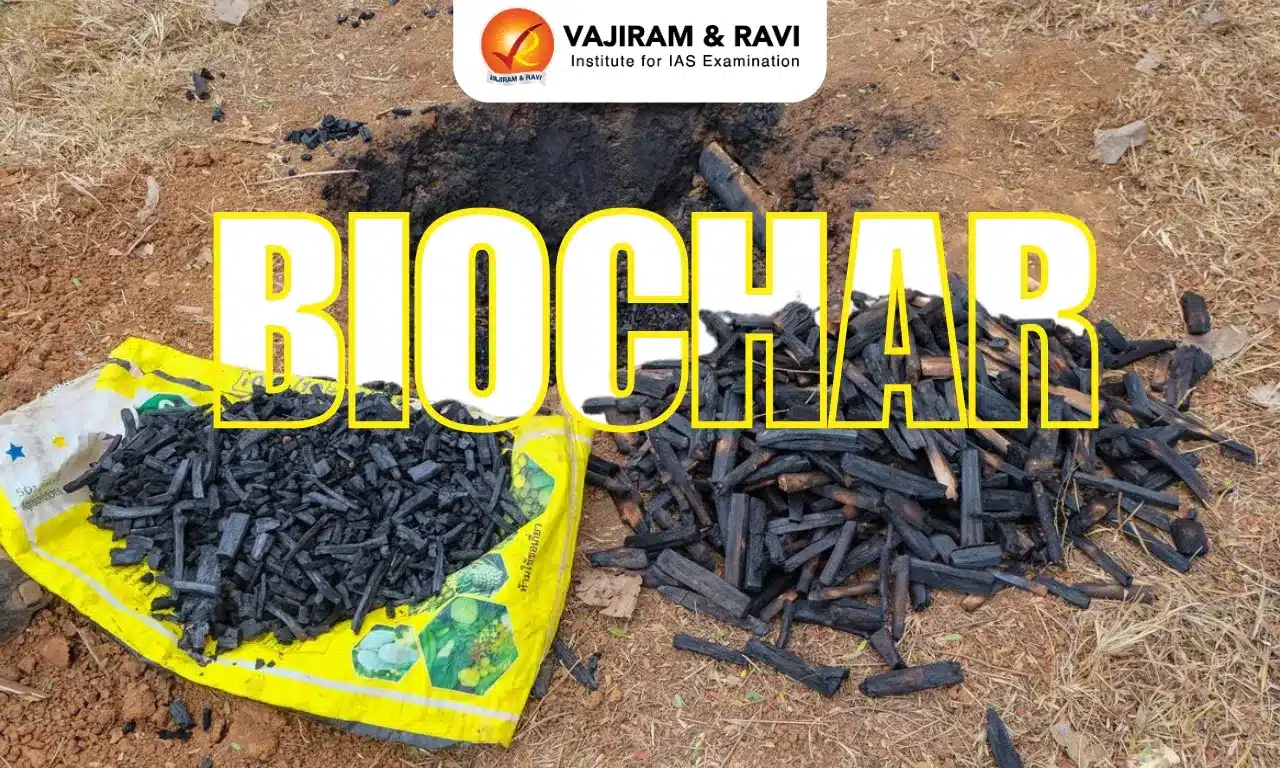
- Biochar is a type of charcoal rich in carbon and is produced from agricultural residue and organic municipal solid waste.
- It offers a sustainable alternative to manage waste and capture carbon.
- It is granular material obtained by heating crop residue at 400°C to 600°C in a kiln-shaped structure in the absence of oxygen.
- Advantage of Biochar: It can hold carbon in the soil for 100-1,000 years due to its strong and stable characteristics, making it an effective long-term carbon sink.
Potential Applications of Biochar
- Agriculture: Applying biochar can improve water retention, particularly in semi-dry and nutrient-depleted soils. This, in turn, can abate nitrous oxide emissions by 30-50%.
- Biochar can also enhance soil organic carbon, helping restore degraded soils.
- Industries: In carbon capture applications, modified biochar can adsorb CO₂ from industrial exhaust gases. However, its carbon removal efficiency is currently lower than that of conventional methods.
- Construction sector: Biochar can be explored as a low-carbon alternative to building materials and makes building materials a stable carbon sink.
- Wastewater Treatment: Biochar offers a low-cost and effective option to reduce pollution.
Source: TH
Biochar FAQs
Q1: What is the main source of biochar?
Ans: Crop straw and residues, animal manures, fruit pits, twigs, and leaf litter forestry wastes as well as food leftover and bagasse.
Q2: What are the advantages of biochar?
Ans: To provide a physical environment that supports an aerobic, healthy soil ecosystem and thus leads to improved plant health and vitality indirectly.

