S.H.I.N.E. Initiative

SHINE initiative

S.H.I.N.E. Initiative Latest News

Recently, the Department of Health Research (DHR) and the Indian Council of Medical Research (ICMR) organized a nationwide open day titled S.H.I.N.E. initiative.

About S.H.I.N.E. Initiative

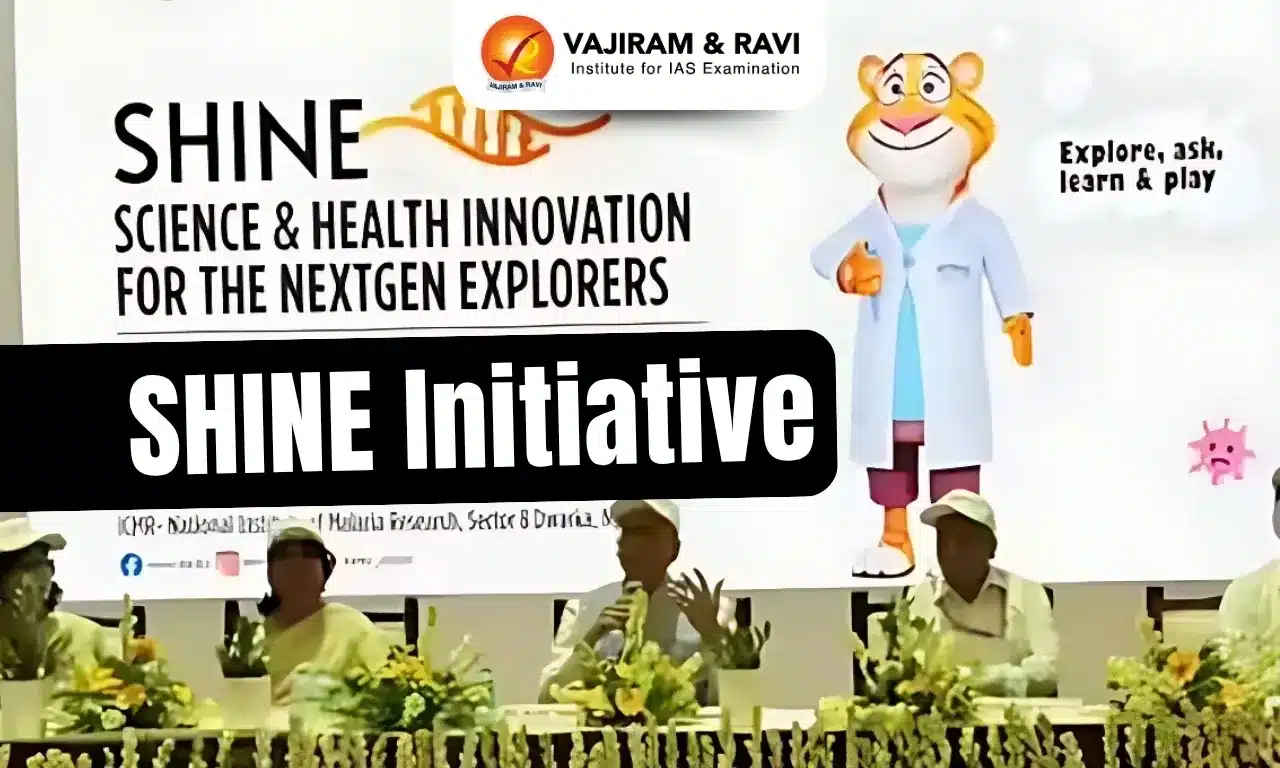
  • SHINE stands for Science, Health and Innovation for Nextgen Explorers which is a nationwide student outreach Program.
  • This is a unique initiative of Indian Council of Medical Research (ICMR) to ignite scientific curiosity, foster innovation and inspire the next generation of health researchers.
  • The initiative aimed to introduce students to the field of health and biomedical research, highlight ICMR’s contributions to improving the nation’s health, and motivate young learners to pursue careers in science and public health,
  • The event drew more than 13,000 students in grades 9-12 from over 300 schools across 39 districts in 16 states and union territories to various ICMR institutes in the country
  • The programme included a range of interactive activities such as guided laboratory tours, research exhibitions, poster walks, video presentations, and live demonstrations of ongoing scientific work.
  • To make the experience more engaging, a mascot named Dr. Curio was introduced as a friendly and relatable guide for the students.

Source: PIB

S.H.I.N.E. Initiative FAQs

Q1: What is the role of ICMR in India?

Ans: Indian Council of Medical Research develops and disseminates guidelines and regulations on a range of public health issues.

Q2: What is meant by biomedical research?

Ans: Biomedical research is the study of human physiology and the treatment or understanding of disease.

FAO Food Price Index

FAO Food Price Index

FAO Food Price Index Latest News

Recently, the United Nations' Food and Agriculture Organization said that world food commodity prices rose in July to their highest in over two years.

About FAO Food Price Index

  • The Food and Agriculture Organization’s (FAO) food price index is a measure of the monthly change in international prices of a basket of food commodities.
  • It consists of the average of five commodity group price indices (cereal, vegetable, dairy, meat and sugar), weighted with the average export shares.
  • Base year: 2014-16

Key Facts about the Food and Agriculture Organization

  • It is a specialized agency of the United Nations that leads international efforts to defeat hunger and improve nutrition and food security.
  • Its goal is to achieve food security for all and make sure that people have regular access to enough high-quality food to lead active, healthy lives.
  • Members: It consists of 195 members – 194 countries and the European Union, FAO works in over 130 countries worldwide.
  • Its sister bodies are the World Food Programme (WFP) and the International Fund for Agricultural Development (IFAD).
  • Reports published by the FAO: The State of the World’s Forests (SOFO), The State of World Fisheries and Aquaculture (SOFIA), The State of Agricultural Commodity Markets (SOCO), The State of Food Security and Nutrition in the World (SOFI).
  • Headquarter: Rome (Italy)

Source: Reuters

FAO Food Price Index FAQs

Q1: What is the food price index based on?

Ans: The FAO food price index is a measure of the monthly change in international prices of a market basket of food commodities.

Q2: Who publishes the food price index?

Ans: Food and Agriculture Organization of the United Nations

MANAS Helpline

MANAS Helpline

MANAS Helpline Latest News

Recently, the Minister of State in the Ministry of Home Affairs informed the success of MANAS Helpline in the Rajya Sabha.

About MANAS Helpline

  • Madak-Padarth Nished Asoochna Kendra (MANAS) Helpline was launched on 18th July 2024 by the Government of India.
  • Objective: It empowers citizens to fight against the drug menace and to function as a secure, citizen-centric platform to enable anonymous reporting of drug trafficking, illicit cultivation, and related offences.

Features of MANAS Helpline

  • It also extends support for counselling and rehabilitation, thereby strengthening the participation of citizens in combating the drug menace.
  • It is developed as a unified, secure and bilingual digital platform, MANAS offers citizens a seamless, confidential and multi-channel interface to report drug-related issues and access rehabilitation resources.
  • Citizens can utilize the MANAS Helpline for:
    • Anonymously report any information related to drug trafficking, storage, manufacturing or cultivation.
    • Seek counselling and rehabilitation guidance through integrated transfer to Ministry of Social Justice & Empowerment (MoSJE) Helpline 14446.
    • Access awareness resources (posters, videos, brochures) via the MANAS web portal for public outreach.
    • Engage in awareness activities, through quizzes, poster-making, and reel-making contests on the MyGov platform, amplifying the Drug-Free Bharat campaign.

Source: PIB

MANAS Helpline FAQs

Q1: What is the vision behind Manas helpline?

Ans: To raise awareness and establish a comprehensive platform for reporting and seeking assistance for drug-related issues.

Q2: What is 1933 Manas?

Ans: MANAS (Madak-Padarth Nished Asoochna Kendra) Helpline- 1933 was launched on 18th July 2024 by the Government.

Human African Trypanosomiasis (HAT)

Human African Trypanosomiasis (HAT)

Human African Trypanosomiasis Latest News

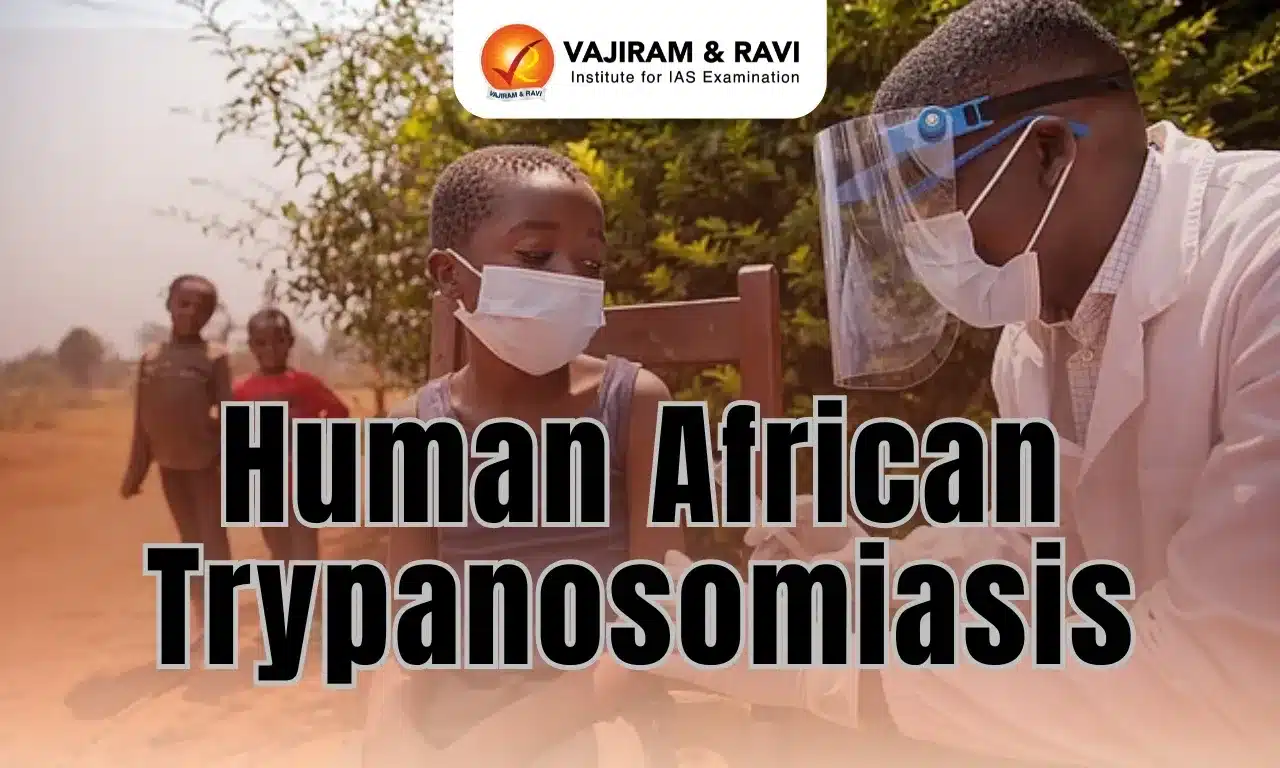
Recently, the World Health Organisation (WHO) certified Kenya as having eliminated human African trypanosomiasis, also known as sleeping sickness.

About Human African Trypanosomiasis

  • It is a parasitic disease transmitted through the bite of infected tsetse flies.
  • It is also known as sleeping sickness and is endemic in sub-Saharan Africa.

Symptoms of Human African Trypanosomiasis

  • It shows initially symptoms such as fever, headaches, and joint pain, but can progress to neurological issues like confusion, disrupted sleep, and behavioural changes.
  • First signs and symptoms emerge a few weeks or months after infection. The disease develops rapidly with multi-organ invasion, including the brain.
  • It takes 2 forms, depending on the subspecies of the infecting parasite:
    • Trypanosoma brucei gambiense: It is found in 24 countries of west and central Africa, currently accounts for 92% of reported cases and causes a chronic illness.
    • A person can be infected for months or even years without major signs or symptoms. When evident symptoms emerge, often the disease is advanced with the central nervous system already affected.
    • Trypanosoma brucei rhodesiense: It is found in 13 countries of eastern and southern Africa, accounts for 8% of reported cases and causes an acute disease.
  • Who is at risk? It is more prevalent amongst rural populations which depend on agriculture, fishing, animal husbandry or hunting are the most exposed.
  • Till today, WHO has validated the elimination of the gambiense form of HAT in seven countries: Togo (2020), Benin (2021), Ivory Coast (2021), Uganda (2022), Equatorial Guinea (2022), Ghana (2023) ,Chad (2024) and Guinea (2025).

Source: News on air

Human African Trypanosomiasis FAQs

Q1: What is another name for human African trypanosomiasis?

Ans: Sleeping sickness

Q2: Does trypanosomiasis have a cure?

Ans: Yes, with early diagnosis and proper treatment, trypanosomiasis is curable.

Heptapleurum assamicum

Heptapleurum assamicum

Heptapleurum assamicum Latest News

Scientists have recently identified a new plant species in Assam’s Dima Hasao and West Karbi Anglong districts — a lush, evergreen shrub now named Heptapleurum assamicum.

About Heptapleurum assamicum

  • It is a new plant species.
  • A lush, evergreen shrub, Heptapleurum assamicum was discovered in Assam’s Dima Hasao and West Karbi Anglong districts.
  • It belongs to the family Araliaceae, which also includes the familiar ornamental “umbrella plant” (H. arboricola).
  • However, this wild Assamese relative carries several distinctive traits: 
    • Its leaflets are narrow and lance-shaped, never more than 1.2 cm wide.
    • Its flowers are a striking purple rather than the greenish-yellow of its ornamental cousin.
    • Its compact inflorescences bear up to 15 flowers per umbel. 
    • The fruit, when ripe, turns a deep reddish-purple and is speckled with orange-red glands — an unusual feature even within the genus.
  • The plant flowers between January and March, with fruits ripening by May. 
  • Its current known population is tiny and highly localised, making it potentially vulnerable to environmental changes.
  • For now, it has been categorised as “Data Deficient” under IUCN criteria.

Source: EM

Heptapleurum assamicum FAQs

Q1: Heptapleurum assamicum, a newly discovered plant species, belongs to which plant family?

Ans: Araliaceae

Q2: In which Indian state was Heptapleurum assamicum discovered?

Ans: Assam

Q3: What is the flower colour of Heptapleurum assamicum?

Ans: Its flowers are a striking purple.

Q4: What is the current IUCN conservation status of Heptapleurum assamicum?

Ans: Data Deficient

Chitons

Chitons

Chitons Latest News

A groundbreaking new study published recently reveals that chitons grow teeth that aren’t just hard; they're harder than stainless steel, zirconium oxide, and even human enamel.

About Chitons

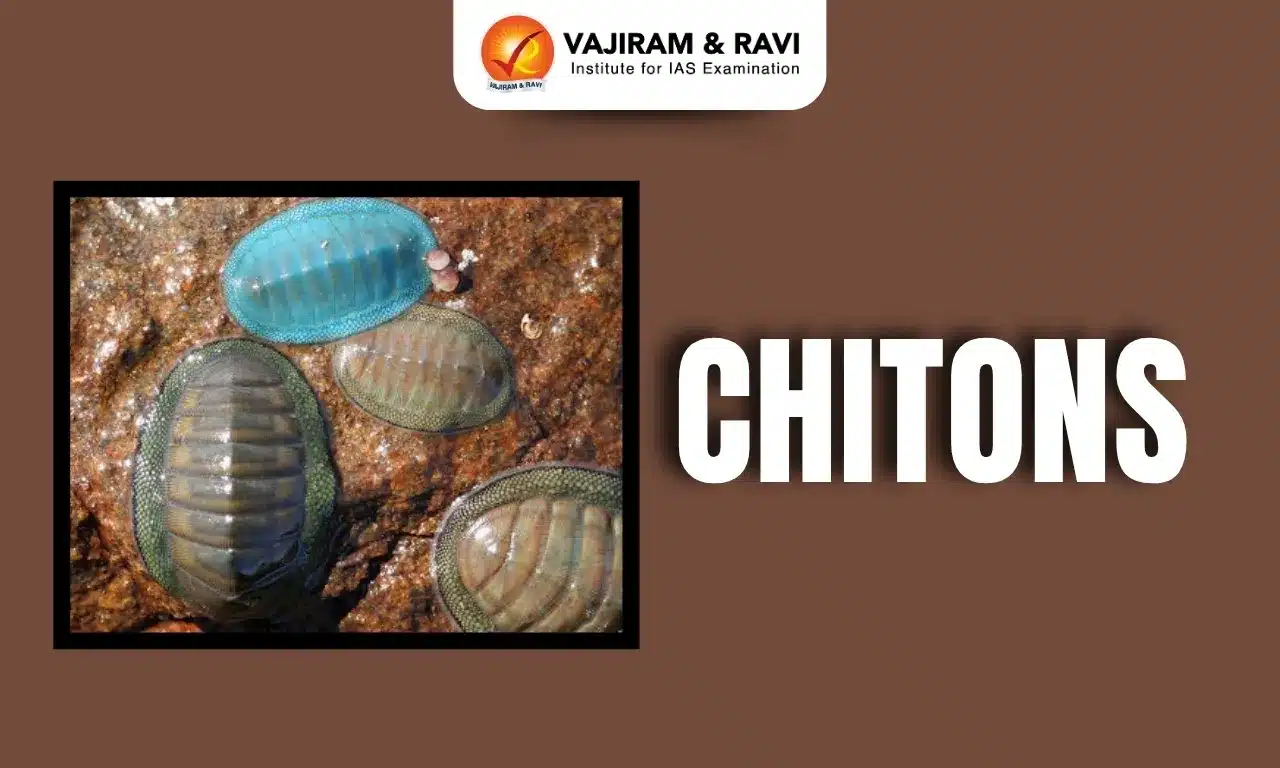
  • They are flattened, bilaterally symmetrical marine invertebrates. 
  • Chitons belong to the phylum Mollusca (along with sea snails, sea slugs, and bivalves).
  • Chitons occur only in marine habitats. They are worldwide in distribution but most abundant in warm regions.
  • The approximately 600 species are usually placed in the class Placophora, Polyplacophora, or Loricata.

Chitons Features

  • Chitons are usually oval in shape. 
  • They vary in appearance and can be found in shades of grey and brown, red, green, and pink.
  • On the dorsal (upper) surface is a row of eight overlapping plates surrounded or covered by a tough girdle. 
  • Chitons use a large, flat foot for creeping along and clinging to rocks; they also have a well-developed radula (filelike structure) with which to scrape algae and other plant food from rocks. 
  • On either side of the foot is a groove containing the gills.
  • About 5 cm (2 inches) is the maximum length of most chitons.
  • Chitons are very flexible and can fit snugly into rock crevices or curl into a ball when detached. 
  • They can also adhere so firmly to rocks that they may be injured when pried loose.
  • Life span typically ranges from a few years to 20 years.
  • Most are nocturnal in habit.

Source: TOI

Chitons FAQs

Q1: Chitons belong to which phylum?

Ans: Chitons belong to the phylum Mollusca.

Q2: What is the typical maximum length of most chitons?

Ans: 5 cm (2 inches)

Q3: The lifespan of chitons typically ranges from how many years?

Ans: Life span of chitons typically ranges from a few years to 20 years.

National Organ And Tissue Transplant Organization (NOTTO)

National Organ And Tissue Transplant Organization

National Organ And Tissue Transplant Organization Latest News

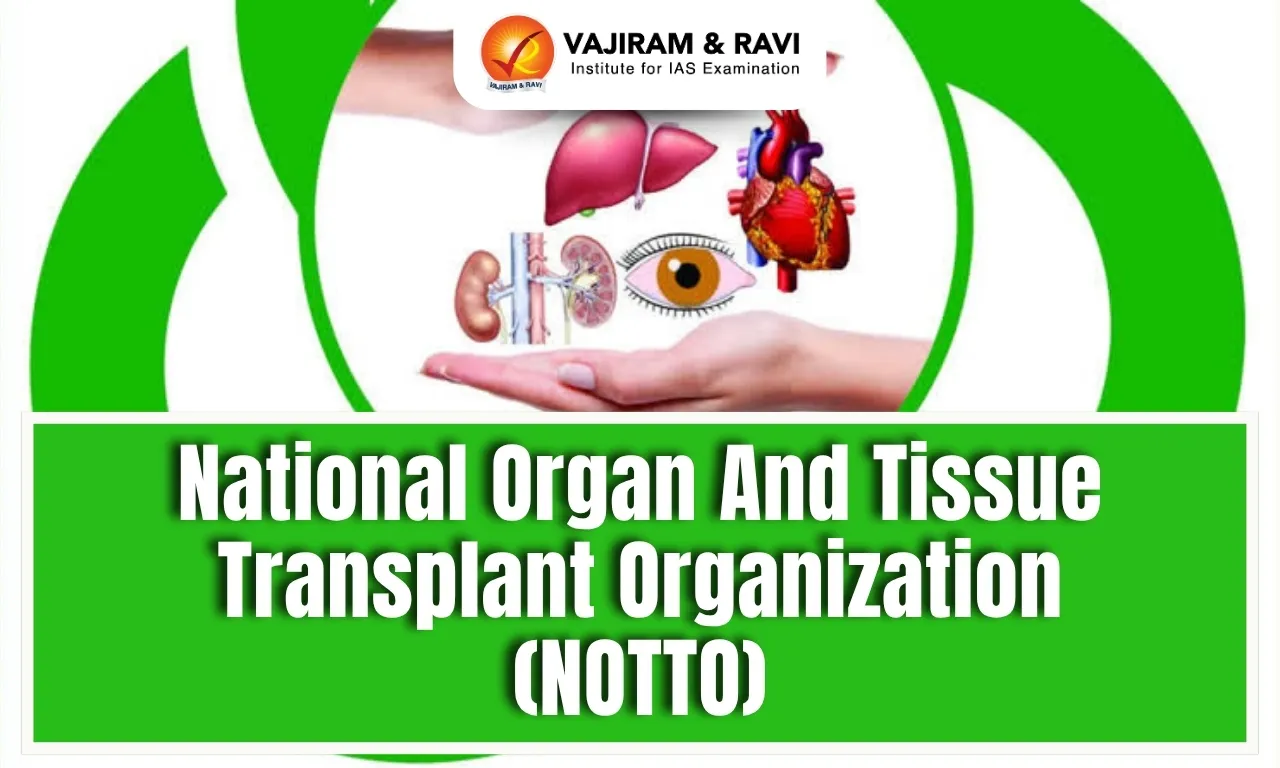
The National Organ & Tissue Transplant Organisation (NOTTO) recently issued a 10-point advisory stating that women patients and relatives of deceased donors awaiting organ transplants will get priority as beneficiaries.

About National Organ And Tissue Transplant Organization 

  • It is a national-level organization set up under the Directorate General of Health Services, Ministry of Health and Family Welfare in New Delhi.
  • The establishment of NOTTO is mandated as per the Transplantation of human Organs and Tissues (Amendment) Act of 2011.
  • It functions as the apex centre for all India activities of coordination and networking for:
    • procurement and distribution of organs and tissues; and 
    • registry of Organs and Tissues Donation and Transplantation in the country
  • It has the following two divisions: 
    • National Human Organ and Tissue Removal and Storage Network
    • National Biomaterial Centre
  • The following activities are undertaken at National Level by NOTTO to facilitate Organ Transplantation in the safest way in the shortest possible time and to collect data and develop and publish National Registry.
    • Lay down policy guidelines and protocols for various functions.
    • Network with similar regional and state-level organizations.
    • All registry data from States and regions would be compiled and published.
    • Creating awareness and promotion of deceased organ donation and transplantation activities.
    • Co-ordination from procurement of organs and tissues to transplantation when organs are allocated outside the region.
    • Dissemination of information to all concerned organizations, hospitals, and individuals.
    • Monitoring of transplantation activities in the regions and States and maintaining a data-bank in this regard.
    • To assist the states in data management, organ transplant surveillance & Organ transplant and Organ Donor registry.
    • Consultancy support on the legal and non-legal aspects of donation and transplantation
    • Coordinate and organize training for various cadres of workers.

Source: TH

National Organ And Tissue Transplant Organization FAQs

Q1: The National Organ and Tissue Transplant Organization (NOTTO) operates under which ministry?

Ans: NOTTO operated under the Directorate General of Health Services, Ministry of Health and Family Welfare.

Q2: The establishment of NOTTO is mandated under which Act?

Ans: The establishment of NOTTO is mandated as per the Transplantation of human Organs and Tissues (Amendment) Act of 2011.

Q3: Which are the two divisions of NOTTO?

Ans: National Human Organ and Tissue Removal and Storage Network and National Biomaterial Centre.

Mississippi River

Mississippi River

Mississippi River Latest News

Two people died when a helicopter crashed into a barge in the Mississippi River near East Alton, Illinois, recently.

About Mississippi River

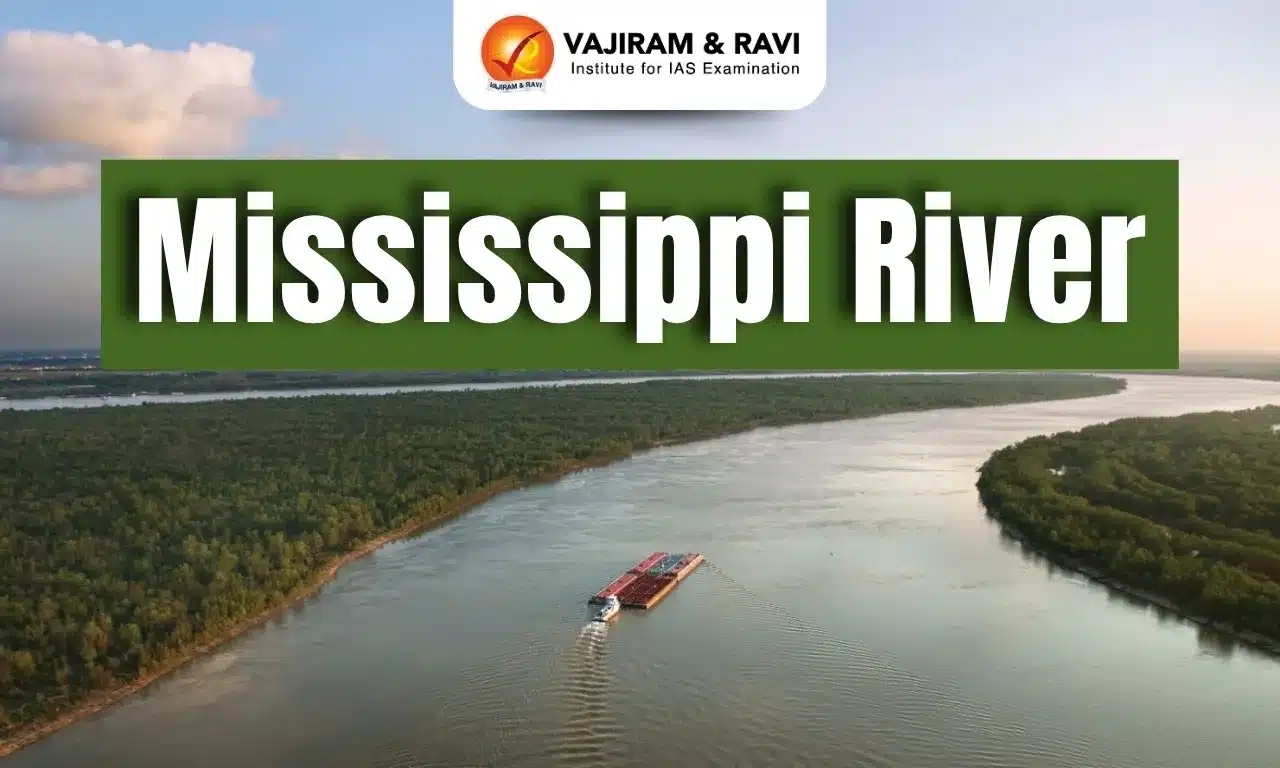
  • It is the longest river in the United States and the second longest in North America. 
  • It starts at Lake Itasca in northern Minnesota and flows south until it reaches the Gulf of Mexico.
  • The major tributaries are the Red, Arkansas, Illinois, Missouri, and Ohio.
  • The Mississippi River alone is more than 2,300 miles (3,700 kilometers) long. 
  • If the length of the Missouri River system is added, the Mississippi-Missouri is the world’s fourth longest river system, following the Nile (4,160 miles/6,693km), the Amazon (4,000 miles/6,436km), and the Yangtze Rivers (3,964 miles/6,378km).
  • The Mississippi River basin drains 1,260,000 square miles, making it the largest drainage basin in terms of area in North America.
  • The basin is home to different ecosystems, including wet forests dominated by cypress trees, brackish and freshwater marshes, sandy beaches, and salt marshes.

Source: BS

Mississippi River FAQs

Q1: Where does the Mississippi River originate?

Ans: It starts at Lake Itasca in northern Minnesota, United States.

Q2: Approximately how long is the Mississippi River alone?

Ans: The Mississippi River alone is more than 2,300 miles (3,700 kilometers) long.

Q3: Which are the major tributaries of Mississippi River?

Ans: The major tributaries of Mississippi River are the Red, Arkansas, Illinois, Missouri, and Ohio.

Parthenium

Heptapleurum assamicum

Parthenium Latest News

As a part of a three-day campaign of Parthenium Free Pobitora, about 5.2 hectares of the Pobitora Wildlife Sanctuary in Assam‘s Morigaon district were cleared of Parthenium, or Congress grass, an invasive weed, by the forest staff recently.

About Parthenium

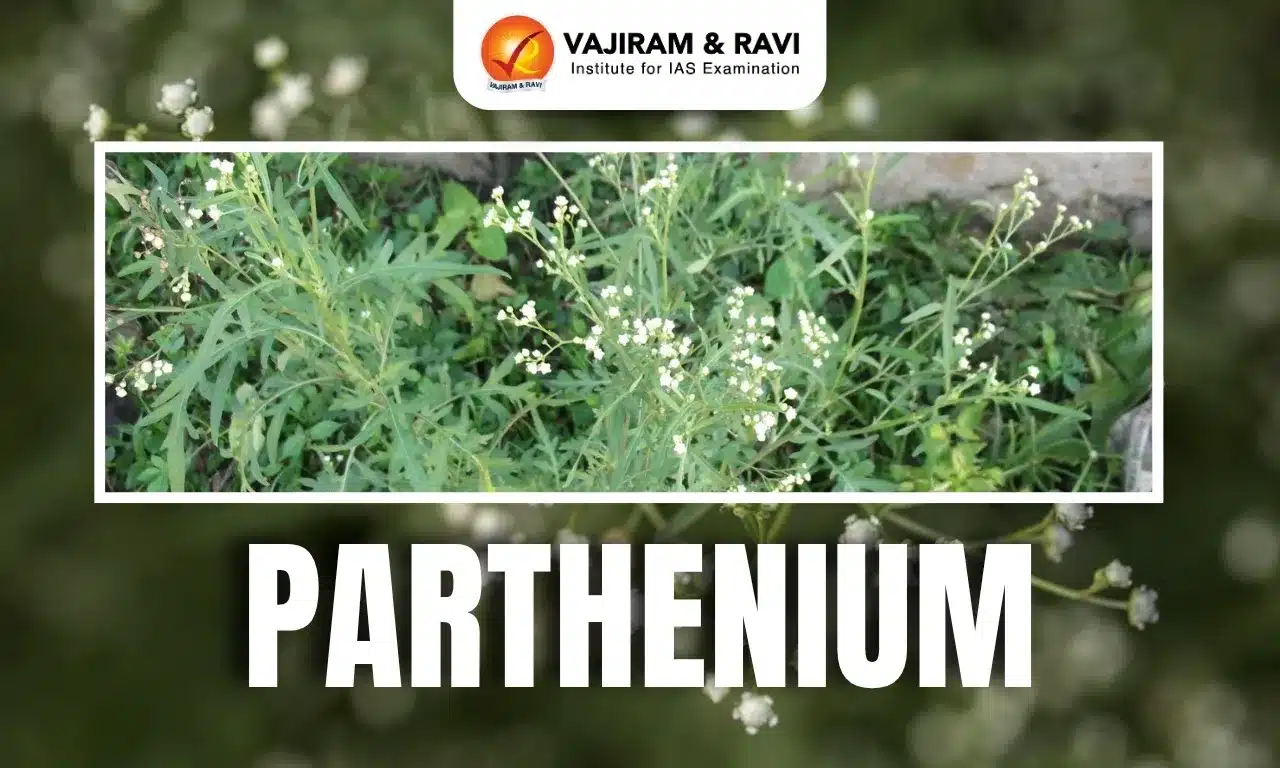
  • Parthenium hysterophorus L., commonly known as carrot weed, white top, or congress grass in India, is an herbaceous, erect, and annual plant belonging to the family Asteracae (compositae).
  • It is a poisonous, pernicious, problematic, allergic, and aggressive weed posing a serious threat to human beings and livestock.
  • In India, this weed has been considered as one of the greatest sources of dermatitis, asthma, nasal-dermal and nasal-bronchial types of diseases.
  • Besides ill effects, it also causes several other problems, like blockage of common pathways, and reduces the aesthetic values of parks, gardens, and residential colonies.
  • It is a nuisance on roadsides and railway tracks, vacant lands, wastelands, industrial areas, and on the sides of open drainage systems and irrigation canals, besides invading agricultural crops, orchards, and forest areas.
  • It is most popularly known as gajar ghas due to its appearance like a carrot plant.
  • The origin of parthenium is considered to be from Mexico, America, Trinidad, and Argentina. 
  • After the noticeable occurrence of parthenium in Pune (Maharashtra) in 1955, it has spread like a wildfire throughout India. 
  • At present parthenium has invaded about 35 million hectares of land in India.
  • It mainly spreads through seeds. 
    • A single plant can produce about 5000 – 25000 seeds.
    • The seeds are very small in size and light in weight.

Key Facts about Pobitora Wildlife Sanctuary

  • It is located in the eastern region of Guwahati, Assam.
  • It was established in 1998 and covers an area of 48.81 square kilometres.
  • The Sanctuary consists of the Rajamayong Reserve Forest and Pobitora Reserve Forest.
  • Flora
    • 72% of Pabitora consists of the wet savannah of Arundo donax, Erianthus ravennae, Phragmites karka, Imperata cylindrica, and Saccharum spp.
    • Water hyacinth (Eichornia crassipes) is a major problem, especially to waterfowl, as it forms thick mats on the water surface.
  • Fauna
    • Pobitora is mainly famous for its great Indian One-horned rhinoceros. 
    • It is known for holding the highest density of Greater One Horned Rhinoceros in the country.
    • Besides rhinoceros, the other animals are leopard, wild boar, Barking deer, wild buffalo, etc. 
    • It is also home to more than 2000 migratory birds and various reptiles.

Source: NEL

Parthenium FAQs

Q1: The origin of Parthenium is believed to be from region?

Ans: The origin of parthenium is considered to be from Mexico, America, Trinidad, and Argentina.

Q2: How many seeds can a single Parthenium hysterophorus plant produce?

Ans: 5000 to 25000 seeds.

Q3: Which disease is commonly caused in humans due to Parthenium exposure?

Ans: In India, Parthenium has been considered as one of the greatest sources of dermatitis, asthma, nasal-dermal and nasal-bronchial types of diseases.

‘Master of Roster’ – SC vs. HC, Judicial Authority, and Limits of Intervention

‘Master of Roster’

‘Master of Roster’ Latest News

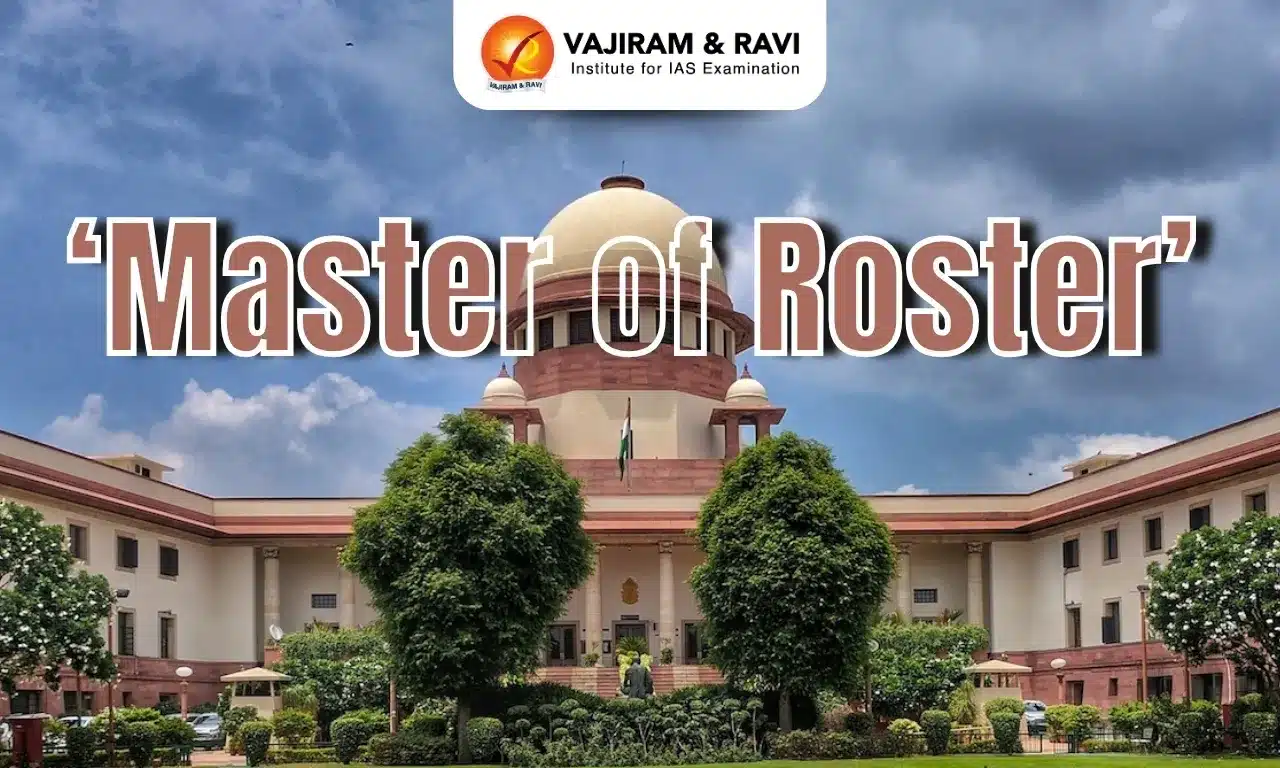
  • The Supreme Court’s (SC) recent censure of an Allahabad High Court (HC) judge for an “absurd” order has reignited debate over whether the apex court can intervene in the internal functioning of High Courts, particularly in the domain of a State HC Chief Justice’s exclusive ‘Master of Roster’ powers. 
  • This raises important constitutional questions on judicial independence, institutional integrity, and the scope of the Supreme Court’s authority under Articles 141 and 142.

Background

  • Incident: Recently, an SC Bench of Justices J.B. Pardiwala and R. Mahadevan directed that Justice Prashant Kumar (Allahabad HC) be paired with a senior judge and not be given a criminal roster till retirement, following an “erroneous” order.
  • Objection: HC lawyers and Chief Justice Arun Bhansali raised concerns over interference with the Chief Justice’s administrative powers.
  • Modification: Following a letter from the Chief Justice of India (CJI) B.R. Gavai, the SC modified its order later, clarifying it did not intend to challenge ‘Master of Roster’ powers.

Key Constitutional and Judicial Principles

  • Master of the Roster principle:
    • Definition: Exclusive authority of a Chief Justice (SC or HC) to constitute benches and allocate cases.
    • Landmark judgments:
      • State of Rajasthan vs. Prakash Chand (1998): Only CJ can decide which judge hears which case.
      • State of Rajasthan vs. Devi Dayal (1959): HC CJ decides single/division bench composition.
      • Mayavaram Financial Corporation (Madras HC, 1991): CJ has inherent powers for judicial business allocation.
  • SC’s hierarchical role:
    • Article 141: SC’s declared law is binding on all courts in India.
    • Article 142: SC can pass any decree/order to ensure “complete justice” beyond ordinary procedure.
    • Tirupati Balaji Developers Case (2004): SC is “elder brother” in judicial administration but has no power of superintendence over HCs.
  • Judicial independence vs. institutional oversight:
    • HCs are independent constitutional bodies, but the integrated judiciary structure allows SC to intervene in rare cases threatening the rule of law.
    • Intervention in HC internal matters is exceptional and often debated as potential overreach.

Issues Raised

  • Scope of SC’s powers: Can SC give administrative directions to a HC CJ on roster allocation?
  • Judicial discipline: Maintaining quality of judgments without undermining HC autonomy.
  • Article 142 usage: Justification for preventive action to avoid repeated judicial errors.
  • Separation of powers within judiciary: Balancing hierarchy with independence.

In-House Mechanism vs. Public Reprimand

  • Formal process: Impeachment (Parliament) for serious misbehaviour/incapacity; in-house inquiry for lesser issues.
  • SC’s move: Public directive in open court rather than confidential administrative procedure.
  • Nature: Not punitive removal; corrective mentoring by pairing with a senior judge and removing from the criminal roster.

Way Forward

  • Clear guidelines for when SC may step into HC administrative functions.
  • Strengthening in-house mechanisms to address judicial conduct without public controversy.
  • Mentorship and training for judges to avoid repeated errors in sensitive matters.

Conclusion

  • While the ‘Master of Roster’ principle protects judicial independence, it is not an absolute barrier to SC intervention when judicial errors threaten the rule of law. 
  • The SC’s Article 142 powers allow exceptional corrective steps, but such actions must be balanced to avoid undermining the autonomy of High Courts.

Source: TH

‘Master of Roster’ FAQs

Q1: What do Articles 141 and 142 empower the Supreme Court to do?

Ans: They allow SC to lay binding law and pass any order for “complete justice,” enabling rare intervention in HC functioning.

Q2: What is the ‘Master of the Roster’ principle?

Ans: It gives the Chief Justice exclusive authority to form benches and allocate cases, ensuring judicial independence.

Q3: Does the Supreme Court have superintendence over High Courts?

Ans: No, it lacks constitutional “superintendence,” except in extraordinary circumstances.

Q4: How does the in-house mechanism differ from a public reprimand?

Ans: In-house is confidential judicial discipline, while public reprimand is open-court corrective action.

Q5: How is balance maintained between judicial independence and oversight?

Ans: By allowing HC autonomy while permitting SC’s limited oversight to protect the rule of law.

Sea of Galilee

Sea of Galilee

Sea of Galilee Latest News

Recently, the Sea of Galilee in Israel has turned red due to the bloom of Botryococcus braunii algae.

About Sea of Galilee

  • Location: It is a large freshwater lake situated in the northeastern part of Israel.
  • It is considered the lowest freshwater lake on the planet and the world’s second-lowest lake after the Dead Sea. 
  • It is situated in Jordan Rift Valley primarily fed by the Jordan River and partly by underground springs.
  • Throughout its history, the Sea of Galilee has been referred to by various names such as the Sea of Kinneret, Lake of Gennesaret, Sea of Ginosar, Sea of Tiberias, Lake of Tiberias, Bahr Tubariya, etc.
  • Bordered by: It is bordered by the Plain of Gennesaret extends in the north to the northwest, and the Plain of Bet Ẓayda (Buteiha) in Syria extends to the northeast. To the west and southwest, the hills of Lower Galilee fall abruptly to the lake’s edge.

What is Botryococcus braunii?

  • It is a species of single-celled green algae found in freshwater or brackish lakes.
  • It is characterized by its ability to produce significant quantities of hydrocarbons and its formation of biofilms that consist of polysaccharides and biopolymers for structural support and protection.

Source: Wion

Sea of Galilee FAQs

Q1: Which country is the Sea of Galilee in?

Ans: Israel

Q2: Is the Sea of Galilee saltwater or freshwater?

Ans: Freshwater lake

How AI is Transforming India’s IT Industry and Workforce

AI in India’s IT Industry

AI in India’s IT Industry Latest News

  • Tata Consultancy Services’ reported freeze on experienced hiring and plans to cut 12,000 jobs have stirred anxiety in India’s $280 billion IT industry, which employs over 5.8 million people. 
  • The developments highlight a period of uncertainty and transformation for the sector, now at a critical crossroads.

AI-Driven Transformation Behind IT Sector Shake-Up

  • While often portrayed as AI “cutting jobs,” the current upheaval in India’s IT sector reflects a deeper, AI-led transformation. 
  • According to industry experts, AI is reshaping software development and IT services by driving unprecedented efficiencies, prompting a rethinking of business models, talent strategies, and the nature of work itself.
    • AI’s ability to boost efficiency across the entire software development lifecycle lies at the core of this change.

AI’s Rising Role in Driving IT Efficiency

  • With cost-optimisation dominating new deals, AI is helping companies showcase efficiency and win investor confidence. 
  • Experts note that AI-powered coding assistants, code generators, and intelligent debuggers are boosting productivity by over 30%. 
  • Its impact is especially strong in testing and maintenance, where AI reduces human error and improves accuracy through data-driven insights, making software testing faster and more reliable.

AI’s Growing Influence on Jobs and Work Structures

  • AI is rapidly integrating into global enterprises, with over $1 trillion expected to be spent on its development in 2025
  • From generative chatbots to intelligent automation, it is reshaping customer service, decision-making, and organisational structures. 
  • Automation and low-code platforms enable fewer employees to accomplish more, impacting hiring trends. 
  • This mirrors cases like Wells Fargo in the U.S., where workforce reductions have been ongoing for years, driven by efficiency gains.

AI Era Opens New Opportunities for Indian IT

  • Global firms face hurdles like outdated infrastructure, poor data quality, and fragmented systems when adopting AI at scale. 
  • With regulations such as the EU’s AI Act requiring responsible and compliant AI, Indian IT companies can step in to clean and organise data, modernise systems, and build compliant solutions. 
  • This positions Indian firms not as AI’s victims, but as key enablers helping global clients adopt it effectively.

TCS Signals Shift Towards an AI-Driven Future

  • With over 6,07,000 employees, TCS’s recent moves serve as a signal to markets, clients, and staff. 
  • For investors, it reflects disciplined cost optimisation and market adaptation; for clients, a commitment to efficient, AI-powered solutions; and for employees, the need for continuous upskilling
  • Industry leaders note that India’s IT era built on large coding teams for legacy systems is ending. 
  • The future will belong to lean, AI-native firms tackling complex challenges in sectors like healthcare, defence, fintech, sustainability, and education, where small teams can outperform massive workforces.

Adapting Skills for the AI Age in Indian IT

  • AI is unlikely to replace roles needing deep technical expertise, creativity, and critical thinking, such as C++ developers, tech architects, UI/UX designers, and robotics specialists. 
  • Experts advise developers to shift towards supervisory and collaborative roles, focusing on strategic, ethical, domain-specific, and security aspects that AI cannot match. 
  • They emphasise that the TCS developments are not signs of decline but a call for India’s tech workforce to adapt, evolve, and excel in an AI-driven future.

Indian Tech Sector Shifts from Scale to Specialisation

  • India’s IT industry remains a global leader, backed by skilled talent, government digitisation efforts, and a thriving startup ecosystem. 
  • While it continues to attract multinational corporations for GCCs, the focus is shifting from sheer scale to specialised expertise and advanced technologies like AI. 
  • This transition offers a chance to shed its traditional image and lead in intelligent automation and digital innovation. 
  • As AI reshapes workflows and expectations, the sector’s core strengths—people, processes, and predictability—face a crucial test.

Source: TH

AI in India’s IT industry FAQs

Q1: Why is AI transforming India’s IT industry?

Ans: AI boosts efficiency, reshapes business models, and drives innovation across software development, testing, maintenance, and enterprise operations.

Q2: How is AI improving IT productivity?

Ans: AI-powered tools like coding assistants and intelligent debuggers increase productivity by over 30% while reducing human error in processes.

Q3: Will AI replace all IT jobs?

Ans: No. Roles requiring creativity, critical thinking, and deep technical expertise like C++ developers or architects remain secure from AI replacement.

Q4: What new opportunities does AI create for Indian IT?

Ans: Indian firms can modernise systems, organise data, and build compliant AI solutions for global clients amid rising AI regulations.

Q5: How is the Indian IT model changing?

Ans: The sector is moving from large-scale legacy coding to specialised, lean, AI-native teams tackling complex, high-impact global challenges.

Factors Behind the Decline of Maoists in India’s Red Corridor

Decline of Maoists in India

Decline of Maoists in India Latest News

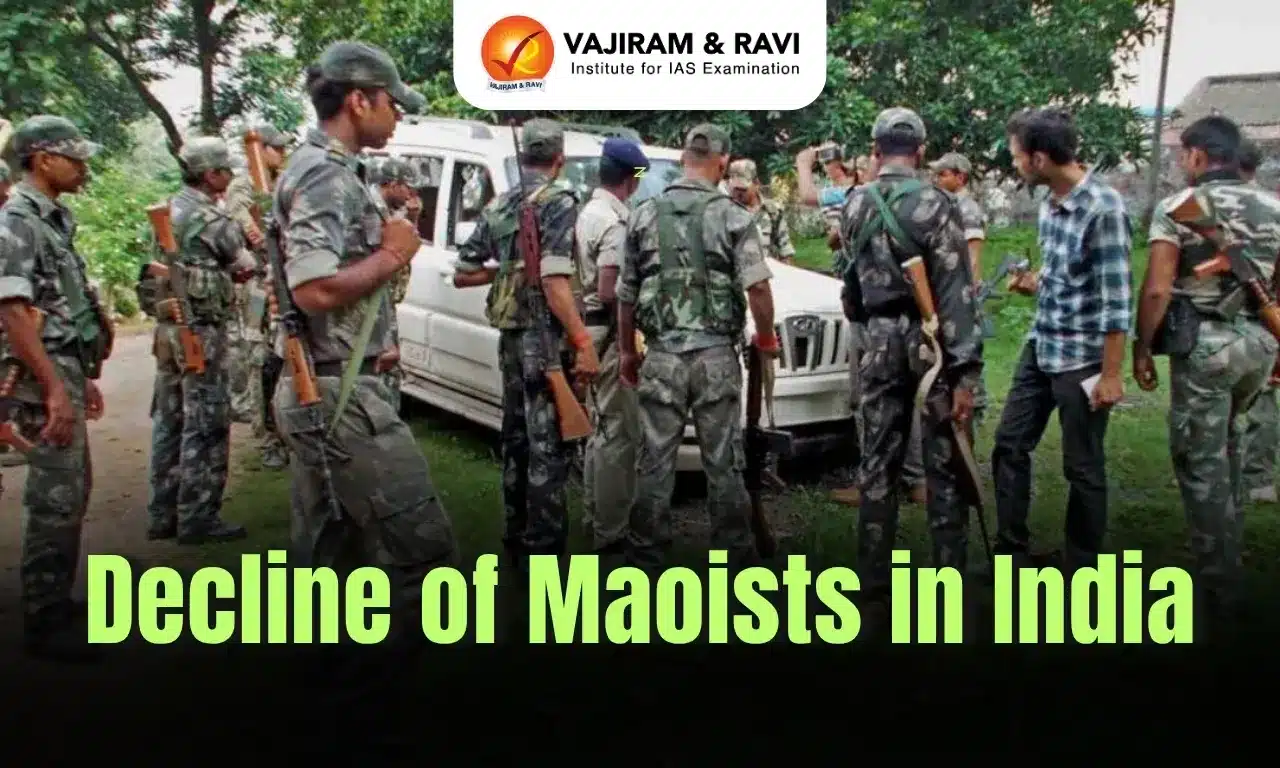
  • Maoist insurgency, once dominant across the Red Corridor, is now limited to 18 districts. 
  • Experts attribute this decline to targeted development initiatives, continuous counterinsurgency efforts, internal divisions, rigid ideology, leadership crises, and loss of local support.

Overview of LWE

  • Left Wing Extremism (LWE), or Naxalism, is among India’s most serious internal security challenges. 
  • Rooted in socio-economic inequalities and guided by Maoist ideology, it has historically targeted security forces, infrastructure, and democratic institutions. 
  • Emerging from the Naxalbari movement in 1967, it spread across the “Red Corridor,” affecting states like Chhattisgarh, Jharkhand, Odisha, Maharashtra, and parts of Andhra Pradesh, Telangana, and others. 
  • While claiming to fight for marginalized tribal communities, Maoists have engaged in armed violence, extortion, infrastructure destruction, and recruitment of civilians, including children.

Decline of Maoist Influence in India

  • Once a formidable internal security threat, the Maoist insurgency has shrunk from nearly 180 districts in the late 2000s to just 18 today. 
  • Incidents of Left-Wing Extremism have fallen by over 50% between 2004–14 and 2014–23, with fatalities dropping nearly 70%. 
  • Naxal violence peaked in 2010 with 1,936 incidents and 1,005 deaths but declined to 374 incidents and 150 deaths by 2024.

Key Reasons Behind the Decline

  • Targeted Development and Security Operations
    • Government-led development schemes, along with sustained counterinsurgency efforts, have weakened Maoist control in their former strongholds. 
    • Landmark security operations, such as the 21-day offensive in Narayanpur, have significantly reduced their operational capacity.
  • Leadership Crisis and Strategic Missteps
    • The resignation of long-time leader Muppala Lakshmana Rao (Ganapathy) in 2018 marked a turning point. 
    • His successor, Basava Raju, relied heavily on military offensives over political outreach, alienating the support base. 
    • Raju’s death in 2025, reportedly due to internal betrayal, deepened the leadership vacuum.
  • Internal Rifts and Political Isolation
    • Internal divisions, highlighted by surrendered members, have fragmented the organisation. 
    • The CPI (Maoist) Politburo is now believed to have only four active members, further eroding decision-making strength.
  • Loss of Public Support
    • In areas like Dandakaranya, Maoists prioritised military preparedness over local development, causing the very communities they claimed to protect to suffer. 
    • Younger tribals and peasants increasingly favour education, jobs, and mainstream integration over armed struggle.

Changing Social Outlook

  • Former insurgents, such as Ginugu Narsimha Reddy, now advocate peaceful solutions. 
  • Initiatives like fish farming in Gumla, Jharkhand, have inspired many to abandon violence, with over 150 families in Basia block joining such ventures. 
  • This shift reflects the waning ideological appeal of Maoism and the rise of alternative livelihoods in once Naxal-affected regions.

Challenges Ahead

  • Critics claim that the persistence of Naxalism is the result of a systemic “protection ecosystem”:
    • political patronage enabled its rise;
    • state inaction allowed entrenchment, and 
    • intellectual advocacy granted moral cover. 
  • Reducing it to a fight for tribal rights concealed its violence, coercion, and extortion, allowing political forces to appear humanitarian while enabling terror.
  • As the Centre targets elimination of the insurgency by 31 March 2026, the real challenge lies in confronting those in politics, academia, and activism who enabled and legitimised Naxalism. 
  • Without this reckoning, security forces may win operational battles, but the war of narratives will remain unresolved.

Source: TH | SM | PIB

Decline of Maoists in India FAQs

Q1: What caused the decline of Maoists in India?

Ans: Targeted development, counterinsurgency operations, leadership crises, internal rifts, and loss of local support weakened the Maoist movement significantly.

Q2: How many districts are currently Maoist-affected?

Ans: The number of affected districts has dropped from nearly 180 in the late 2000s to just 18 in 2024.

Q3: What role did leadership changes play in Maoist decline?

Ans: Leadership crises after Ganapathy’s resignation and Basava Raju’s strategic failures weakened the organisation’s operational strength and local support.

Q4: How has public opinion shifted in Maoist areas?

Ans: Younger generations now prefer education, jobs, and mainstream integration over armed struggle, reducing Maoist ideological appeal and recruitment.

Q5: What is the government’s target for eliminating Maoism?

Ans: The Government of India aims to completely eliminate Maoist insurgency by 31 March 2026 through combined security and development measures.

New Rules Notified for Organ Transplant Allocation

Organ Transplant

Organ Transplant Latest News

  • The Union Government has revised the organ transplant allocation policy, giving priority to women patients and relatives of deceased donors to address gender disparity and boost donations.

Introduction

  • The National Organ & Tissue Transplant Organisation (NOTTO) has issued a new 10-point advisory aimed at improving transparency, equity, and inclusivity in India’s organ transplant system. 
  • A key highlight of the revised allocation criteria is the provision of priority status to women patients and relatives of deceased donors awaiting organ transplants. 
  • This landmark decision is part of a broader effort to address gender imbalances in organ transplant recipients and to encourage more citizens to pledge organ donation.

Organ Transplant Allocation in India

  • Organ allocation in India is governed by guidelines formulated by NOTTO under the Ministry of Health and Family Welfare. The allocation criteria already prioritise recipients based on:
    • Medical urgency (severity of illness)
    • Duration of wait time on the transplant list
    • Matching parameters such as blood group, organ size, and age
    • Special cases, such as children or patients whose living donor had previously donated an organ but now requires a transplant themselves
    • Geographical proximity for optimal organ viability
  • The allocation system ensures that organs are distributed fairly and transparently, with the goal of achieving the best medical outcomes.

New Priority Criteria for Women and Donor Families

  • The revised guidelines introduce “additional points in allocation criteria” for:
    • Women patients on the national waiting list
    • Immediate relatives of deceased donors
  • Rationale
    • Gender Disparity: Historically, women have had lower representation among organ transplant recipients, often due to socio-economic and cultural factors that lead to delayed diagnosis or treatment.
    • Encouraging Donations: By offering priority to donor families, the policy aims to increase deceased organ donations, addressing the chronic shortage of organs in India.

National Registry and Data Compliance

  • NOTTO maintains a digital national registry of both donors and recipients. Hospitals performing transplants must register patients through this system.
  • Key compliance measures:
    • All transplant centres must mandatorily submit data for each donor and recipient to the national registry.
    • Non-compliance could result in legal action against hospitals.

Organ Donation Milestones in India

  • India has seen a remarkable growth in organ donation and transplant numbers:
    • 2023: Launch of Aadhaar-based NOTTO online pledge portal.
    • 2024: Over 3.3 lakh citizens pledged to donate their organs.
    • 2024: A record 18,900 organ transplants were performed, a sharp rise from fewer than 5,000 in 2013.
  • These figures indicate growing public participation and improved medical infrastructure in the organ transplantation ecosystem.

Strengthening Transplant Infrastructure

  • The advisory also calls for:
    • Permanent posts for transplant coordinators in hospitals performing organ retrieval and transplantation.
    • Development of organ retrieval centres in all trauma centres and registration of these facilities with NOTTO.
    • Encouraging medical colleges to develop retrieval facilities in a phased manner.
    • Training emergency responders and ambulance staff to identify potential deceased donors early, especially in cases of road accidents or strokes.

Broader Impact and Future Outlook

  • The new allocation rules mark a significant shift in India’s approach to organ transplantation by integrating social equity considerations into medical prioritisation. 
  • By tackling gender disparity and recognising the contribution of donor families, NOTTO aims to create a more balanced, transparent, and humane system.
  • In the long term, these changes are expected to:
    • Increase deceased organ donations
    • Improve gender balance in transplants
    • Enhance trust in the allocation process
    • Strengthen national transplant capacity

Source: TH

Organ Transplant FAQs

Q1: What is the new priority rule in India’s organ transplant allocation?

Ans: Women patients and relatives of deceased donors will now receive priority in organ allocation.

Q2: Why has priority been given to women in organ transplants?

Ans: The move addresses historical gender disparities among organ transplant recipients.

Q3: How will donor families benefit from the new rules?

Ans: Immediate relatives of deceased organ donors will receive additional priority points in the allocation system.

Q4: What compliance measures must hospitals follow?

Ans: Hospitals must register all donors and recipients in NOTTO’s national registry, with non-compliance risking legal action.

Q5: How many organ transplants were performed in India in 2024?

Ans: India performed over 18,900 organ transplants in 2024, the highest ever in a single year.

Enquire Now