
Chagas Disease Latest News
Considering the enormous human and economic toll Chagas disease inflicts, investment in R&D of medical innovations such as diagnostics, pharmaceuticals, and vaccines remains disproportionately low.
About Chagas Disease
- Chagas disease, also known as American trypanosomiasis, is an inflammatory, infectious disease caused by the protozoan parasite, Trypanosoma cruzi.
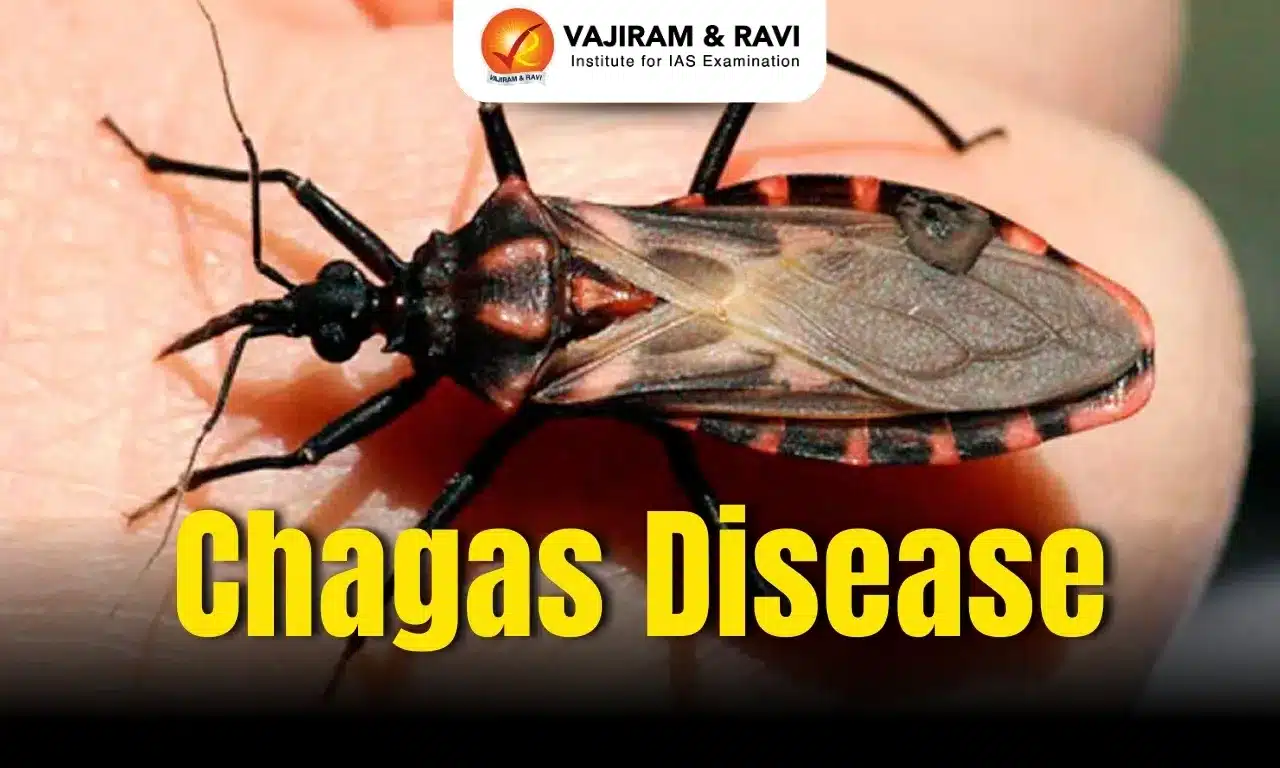
- The most common way people are infected with Chagas is through the blood-sucking triatomine bugs.
- This parasite is found in the feces of the triatomine bug.
- These bugs also are called reduviid. They may also be known as "kissing bugs" because they tend to bite people's faces.
- The parasite can also be transmitted from mother to child during pregnancy or childbirth, through contaminated food and beverages, blood transfusions, organ transplants, or laboratory accidents.
- Chagas disease is common in South America, Central America, and Mexico, the primary home of the triatomine bug.
- Few people have symptoms at first. But over time, parasites can move to your tissues and cause chronic infections, leading to heart and digestive tract damage.
- Left untreated, Chagas disease later can cause serious heart and digestive problems.
- Treatment:
- During the first phase of infection, treatment of Chagas disease aims to kill the parasite.
- Later, it's no longer possible to kill the parasite. Treatment in this later phase is about managing symptoms.
Source: NAT
Chagas Disease FAQs
Q1: Which organism causes Chagas disease?
Ans: It is caused by the protozoan parasite, Trypanosoma cruzi.
Q2: What is the most common mode of transmission of Chagas disease?
Ans: The most common way people are infected with Chagas is through the blood-sucking triatomine bugs.
Q3: Which region is the primary home of the triatomine bug and Chagas disease?
Ans: South America, Central America, and Mexico
