
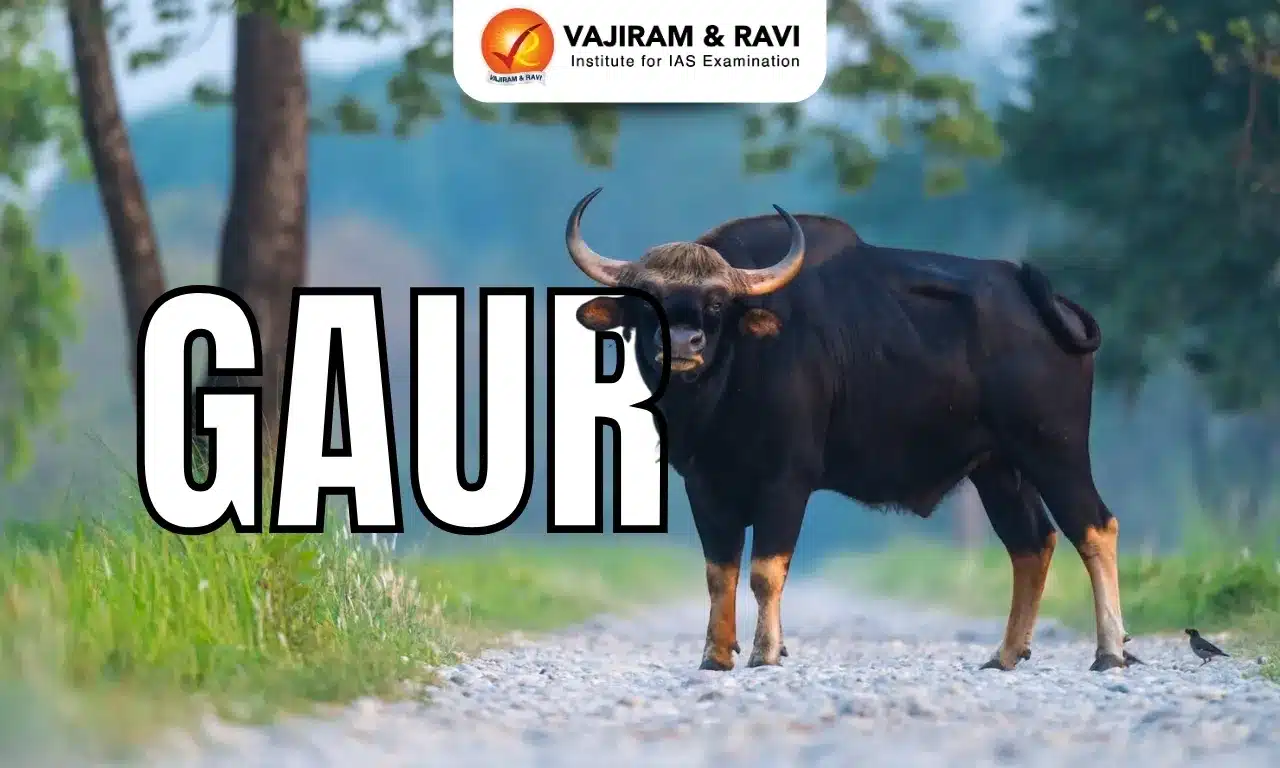
Gaur Latest news
The Palamau Tiger Reserve (PTR), the last stronghold of Gaur (Bos gaurus) in Jharkhand, has registered an alarming decline in the bovid’s population.
About Gaur
- Gaur, also known as Indian Bison, is the largest species among the wild cattle and the Bovidae.
- Distribution: Gaurs are indigenous to the South and Southeast parts of Asia.
- Habitat
- Gaurs are primarily found in evergreen and semi-evergreen forests along with moist deciduous forests with open grasslands.
- They prefer hilly-terrains below an altitude of 1,500-1,800 m with large and undisturbed forest tracts and abundant water.
- Conservation Status of Gaur
- IUCN Red List: Vulnerable
- CITES: Appendix I
- Wild Life Protection Act, 1972: Schedule I
- Ecological Significance: It plays a vital role in maintaining ecological balance in forests besides serving as important prey species for tigers. Being herbivores, they also help shape vegetation dynamics and contribute to seed dispersal.
- Threats: Loss of habitat throughout most of their range. Another serious concern is susceptibility to domestic cattle diseases like rinderpest, hoof, or mouth disease.
Source: DTE
Gaur FAQs
Q1: What is the English name for Gaur?
Ans: Indian Bison
Q2: Which river flows through Palamau Tiger Reserve?
Ans: North Koyal, Auranga and Burha
Q3: In which state is the Palamau Tiger Reserve found?
Ans: Jharkhand, India
