
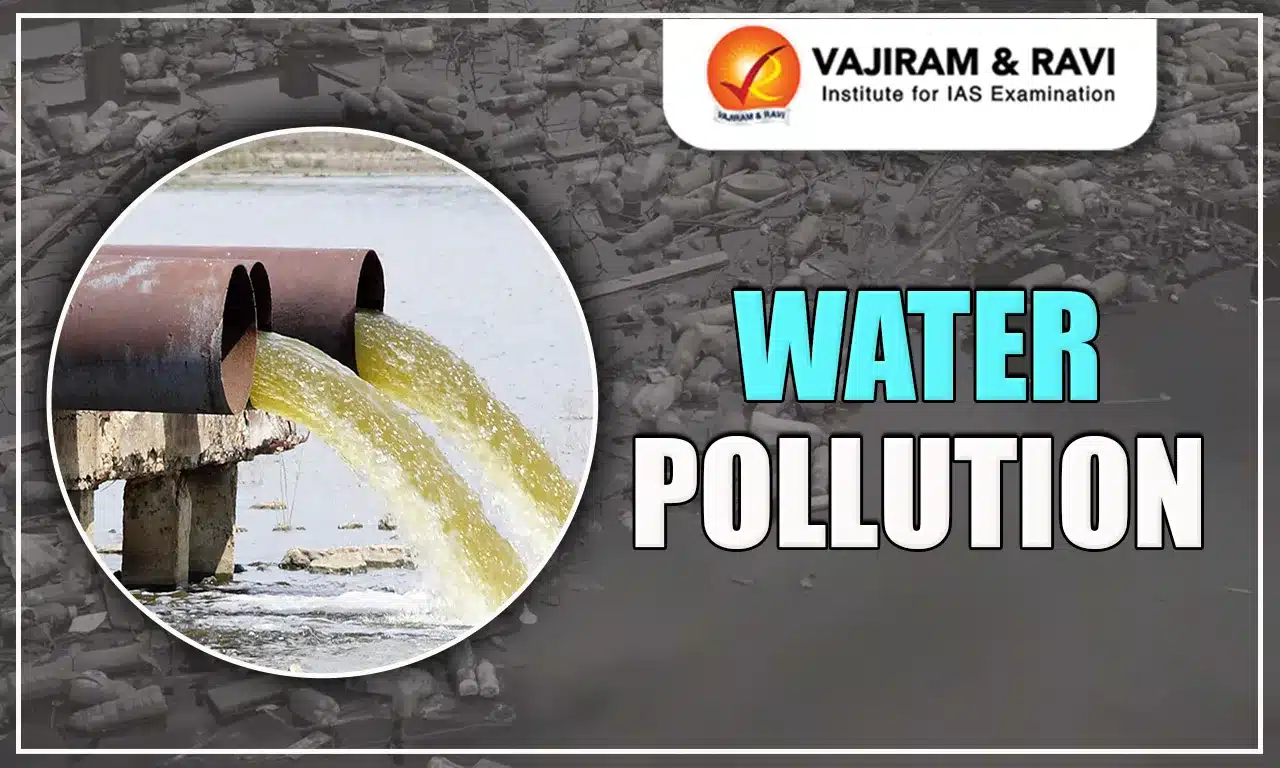
The contamination of water bodies including lakes, rivers, streams or any other water bodies by the discharge of toxic substances directly or even indirectly with the removal of harmful components is referred as Water Pollution. It disrupts the marine ecosystem and pollutes the groundwater which also affects daily activities. The substances that contaminate the water bodies are referred as Water Pollutants which can be effluent discharges, solid wastes or others. Water Pollution is a type of Environmental Pollution.
Water Pollution Sources
Water Pollution can be classified into Point Sources and Non-Point Sources which are briefly discussed below:
Point Sources
- The type of pollution that originates from a single, identifiable source which is easier to monitor and regulate since the origin is specific and traceable.
- For example: Discharge pipe from a factory, effluents from sewage treatment plants, leaking underground storage tanks and outfalls from roadways.
Non-Point Sources
- This source is also referred to as diffuse pollution as it occurs over a wide area and cannot be traced back to a single discharge point. It is usually associated with land-use practices rather than specific discharge points.
- Non-Point Sources are more difficult to monitor and control compared to point sources.
- For example: Runoff from agricultural fields, mining sites, urban areas and construction zones.
Major Non-Point Sources
- Agriculture: Fertilizers, pesticides, animal manure, and eroded soil enter streams during rainfall, polluting water and accelerating erosion.
- Forestry Land Use: Logging and forest clearance increase soil erosion and sediment runoff.
- Urban Land Use: Stormwater drains carry pollutants from cities into rivers, lakes, and bays.
- Mining: Abandoned or active mines can release toxic drainage into water bodies.
- Highways and Bridges: Runoff from roads, highways, and bridges adds oil, heavy metals, and debris to surface waters.
Water Pollution Types
According to various measures, Water Pollution can be classified into different categories as described below:
Based on Origin
- Industrial Pollutants: Carbonates, nitrites, nitrates of heavy metals like mercury, lead, zinc, arsenic, etc.
- Agricultural Pollutants: Fertilizers, pesticides, insecticides, herbicides, synthetic compounds, weeds, plant remains.
- Urban Pollutants: Chemicals from vehicular exhaust, lime, household sewage, garden fertilizers, etc.
- Natural Pollutants: Volcanic dust, sediments from weathering/erosion, landslide debris, decayed organic matter.
Based on Physical and Chemical Characteristics
- Physical Pollutants: Alter taste, turbidity, color, sediment load, dissolved or suspended solids.
- Chemical Pollutants: Compounds like carbonates, chlorides, sulphates, sulphides, nitrates of heavy metals (mercury, lead, cadmium), plus pesticides, herbicides, insecticides.
- Biological Pollutants: Microorganisms such as bacteria, viruses, protozoa, and parasitic worms that contaminate water.
Based on Nature of Degradation
- Degradable Pollutants (Organic Pollutants): Can be broken down by microorganisms or decomposers.
- Examples: Sewage, garbage, plants, animals.
- Non-Degradable Pollutants (Inorganic Pollutants): Persist in the environment, resistant to biological breakdown.
- Examples: Plastics, solid toxic substances, heavy chemical pollutants.
Water Pollution Causes
- The Water Pollution Causes various harmful substances which enter rivers, lakes or any other water bodies through human activities resulting in decreased quality.
- Industries release untreated waste, farms add pesticide- and fertilizer-laden runoff, and cities discharge sewage straight into water bodies.
- Oil spills, plastic dumping, and non-biodegradable waste worsen the problem. Mining, deforestation, and careless disposal of hazardous chemicals also contaminate water sources.
- Water Pollution now only damages aquatic ecosystems and kills wildlife but also causes health risks for people.
- While natural events like volcanic eruptions or soil erosion can pollute water, human actions remain the main cause.
Water Pollution Effects
The Water Pollution Effects on Environment are discussed below:
Health Effects
- Contaminated water is a major cause of waterborne disease including cholera, typhoid, hepatitis A and dysentery.
- Long term exposure to toxic chemicals in polluted water can result in severe health conditions which includes cancer, neurological disorders and reproductive problems.
Environmental Effects
- Polluted water disrupts aquatic ecosystems by affecting reproductive cycles, causing large-scale fish deaths, and altering natural habitats.
- Excessive nutrients from agricultural runoff trigger eutrophication, leading to algal blooms that reduce oxygen levels.
- This creates “dead zones” where aquatic organisms cannot survive, ultimately reducing biodiversity.
Economic Effects
- Water pollution leads to significant economic burdens, such as rising healthcare costs, loss of tourism income, and lower agricultural yields.
- Declining fish populations also reduce catches, causing financial losses in the fishing sector.
- Cleaning and restoring polluted water bodies require heavy financial investments.
Other Effects
- Water pollution often renders freshwater sources unsafe for drinking, irrigation, or industrial purposes.
- This worsens the challenge of water scarcity in many regions.
Treatment of Polluted Water
- Primary Treatment
-
-
- This stage involves physical processes such as the removal of large debris, sedimentation in tanks, and other basic filtration methods to eliminate suspended solids from polluted water.
-
- Secondary Treatment
-
-
- This stage relies on biological processes carried out by microorganisms. In this step, microbes decompose and oxidize the organic matter present in the wastewater, thereby reducing its biochemical oxygen demand (BOD).
-
- Tertiary Treatment
-
- This stage employs physicochemical methods to further purify the water by removing residual turbidity, nutrients, organic matter, heavy metals, and pathogens. Common techniques include chemical oxidation using strong oxidizing agents such as chlorine gas, perchlorate salts, ozone (O₃), or exposure to ultraviolet (UV) radiation.
Measures to Tackle Water Pollution
- Strengthening Environmental Regulations: Effective implementation of laws such as the Water (Prevention and Control of Pollution) Act, 1974 and the Environment Protection Act, 1986. Empowering institutions like the CPCB and SPCBs to ensure compliance and penalize violators.
- Monitoring and Compliance: Regular monitoring of water quality and strict adherence to discharge standards. Use of advanced technologies and data analytics for real-time monitoring and early detection of pollutants.
- Wastewater Treatment: Investment in modern sewage and industrial effluent treatment plants. Adoption of decentralized wastewater treatment systems in urban and rural areas.
- Biotechnological Solutions: Use of engineered microorganisms to degrade harmful pollutants. Examples: Oil Zapper, Oilivorous-S for cleaning oil spills.
- Sustainable Agriculture Practices: Promotion of organic farming, crop rotation, and integrated pest management. Reduction in chemical fertiliser and pesticide use to minimise runoff.
- Industrial Pollution Control: Enforcing zero-liquid discharge (ZLD) norms in polluting industries. Mandatory effluent treatment and reuse of treated water.
- Solid Waste Management: Scientific disposal of municipal solid waste. Encouraging recycling and segregation at source to prevent leaching of pollutants into water bodies.
Public Awareness and Education: Community-level campaigns on water conservation and pollution hazards. Inclusion of water management in school syllabus to build long-term awareness.
Water Pollution FAQs
Q1: What is water pollution?
Ans: Water pollution is the contamination of water bodies by harmful substances, making them unsafe for drinking, agriculture, and aquatic life.
Q2: What are the main causes of water pollution?
Ans: Industrial waste, sewage discharge, agricultural runoff (pesticides/fertilizers), oil spills, and plastic dumping are the major causes.
Q3: What are the types of water pollution?
Ans: It includes surface water pollution, groundwater pollution, chemical contamination, biological pollution, and thermal pollution.
Q4: What are point sources of water pollution?
Ans: Point sources are identifiable origins like factory discharge pipes or sewage outlets directly polluting water bodies.
Q5: What are non-point sources of water pollution?
Ans: Non-point sources are diffuse, like agricultural runoff, urban stormwater, or soil erosion.
