
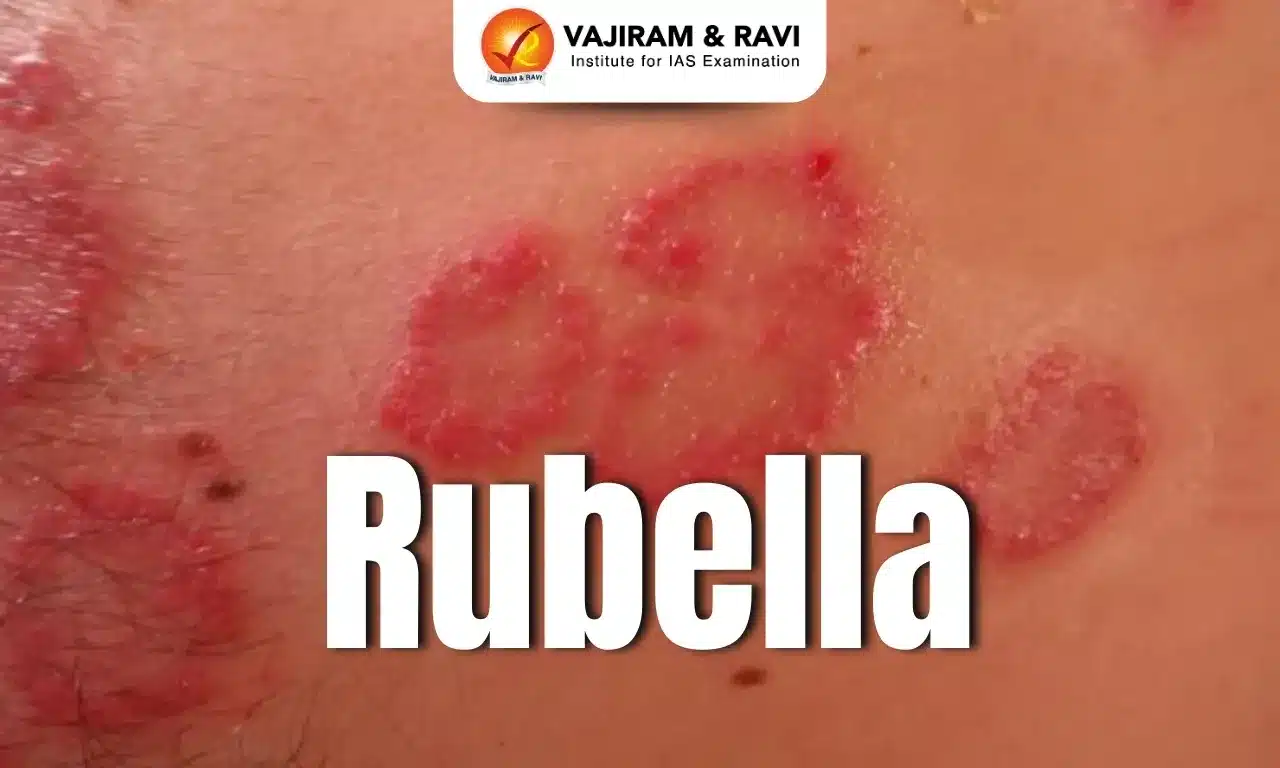
Rubella Latest News
The World Health Organization recently announced Nepal has eliminated rubella as a public health problem.
About Rubella
- It is a highly contagious viral infection best known by its distinctive red rash.
- It's also called German measles or three-day measles.
- Rubella isn't the same as measles, but the two illnesses share some signs and symptoms, such as the red rash.
- Rubella is caused by a different virus than measles, and rubella isn't as infectious or as severe as measles.
- Rubella is caused by the Rubella virus, an enveloped, single-stranded RNA virus, different from the measles virus.
Rubella Transmission
- The Rubella virus spreads from person to person when you cough, sneeze, or touch surfaces with the virus on them.
- It can also spread from a pregnant woman to the fetus.
- You can be contagious with rubella without symptoms.
Rubella Symptoms
- This infection may cause mild or no symptoms in most people.
- The main symptom of rubella is a spotty rash that starts on the face or behind the ears and spreads to the neck and body.
- The rash takes 2 to 3 weeks to appear after getting rubella.
- Rubella can cause serious problems for unborn babies whose mothers become infected during pregnancy.
- When a woman is infected with the rubella virus early in pregnancy, she has a 90% chance of passing the virus on to her fetus.
- This can cause the death of the fetus, or it may cause Congenital Rubella Syndrome (CRS). Infants with CRS may excrete the virus for a year or more.
- Children with CRS can suffer hearing impairments, eye and heart defects, and other lifelong disabilities, including autism, diabetes mellitus, and thyroid dysfunction.
Rubella Prevention
- The measles-mumps-rubella (MMR) vaccine is safe and highly effective in preventing rubella.
- The vaccine provides lifelong protection against rubella.
Rubella Treatment
- There are currently no medications available to treat rubella.
- Mild symptoms can be managed with bed rest and medicines for fever.
Source: WHO
Rubella FAQs
Q1: Rubella, also known as German measles, is caused by which organism?
Ans: Rubella is caused by the Rubella virus.
Q2: Which vaccine provides lifelong protection against rubella?
Ans: Measles-mumps-rubella (MMR) vaccine
Q3: What is the most common symptom of rubella?
Ans: The main symptom of rubella is a spotty rash that starts on the face or behind the ears and spreads to the neck and body.
