
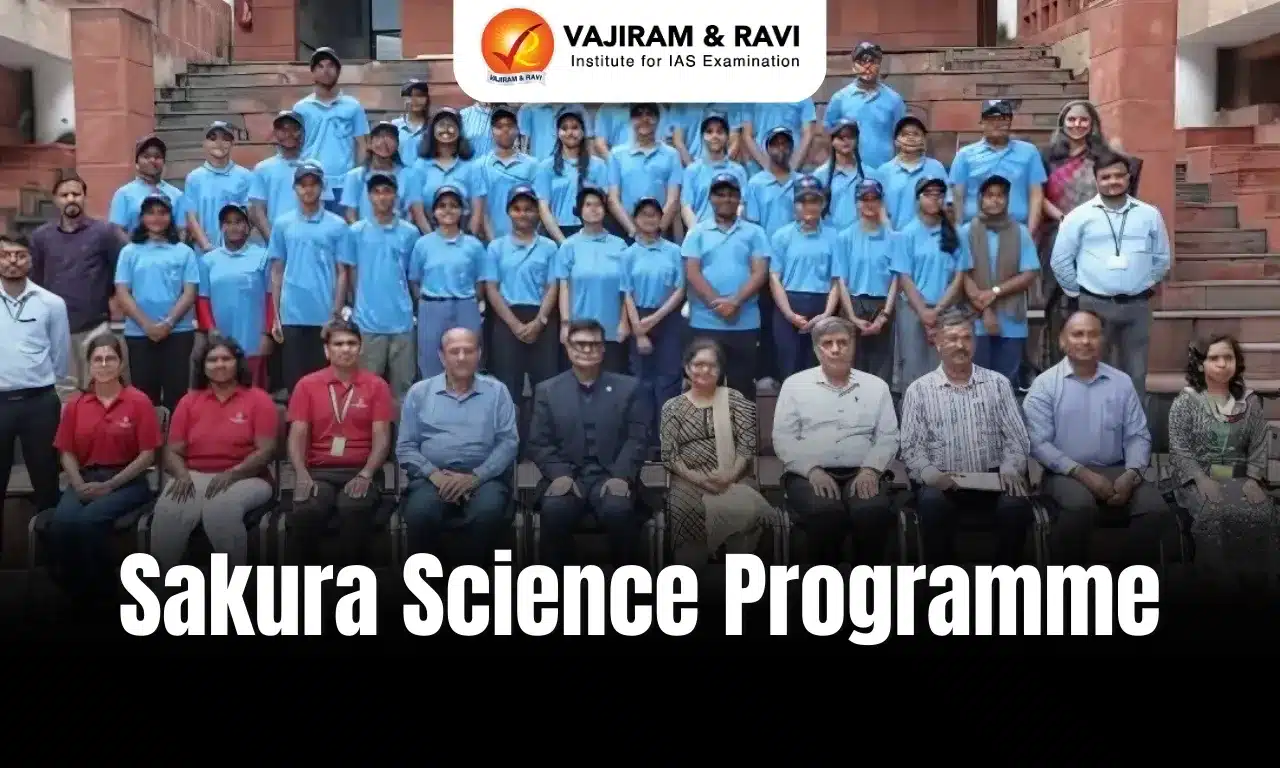
Sakura Science Programme Latest News
A group of thirty-four students from government schools in India are set to visit Japan under the Sakura Science Programme 2025.
About Sakura Science Programme
- It is the prestigious Japan-Asia Youth Exchange Program in Science—better known as the Sakura Science Programme.
- It was launched globally in 2014, aims to expand scientific curiosity amongst youth and encourage international collaboration.
- India joined the Sakura Programme in 2016.
- It is implemented by the Japan Science and Technology Agency (JST).
- The initiative offers young learners a chance to explore cutting-edge science and immerse themselves in Japanese culture.
- Under this programme, students are invited for short-term visits to Japan, providing them with the opportunity to experience Japan’s cutting-edge science and technology as well as its rich culture.
- For the upcoming Sakura Programme 2025, JST has invited participants from six other countries Egypt, Ghana, Kenya, Nigeria, South Africa and Zambia.
Sakura Science Program's Objectives Include
- To support the development of talented human resources from overseas who have the potential to contribute to innovation in science and technology.
- To accelerate international brain circulation.
- To promote continuous collaboration, cooperation and interaction between Japanese educational and research institutes and those overseas.
- To strengthen good relationships between Japan and other countries and regions that can encourage diplomacy in science and technology.
Source: India Today
Sakura Science Programme FAQs
Q1: What is Sakura Exchange?
Ans: Under the framework of Sakura Science Plan, Japan-Asia Youth Science Exchange Program, Japan Science and Technology Agency, we invite young researchers and graduate students from the Asian region.
Q2: Who is eligible for the Sakura science program?
Ans: Applicants must be at least 18 years old on the day of their arrival in Japan, possess exceptional abilities in science and technology, and hold a valid passport.
