
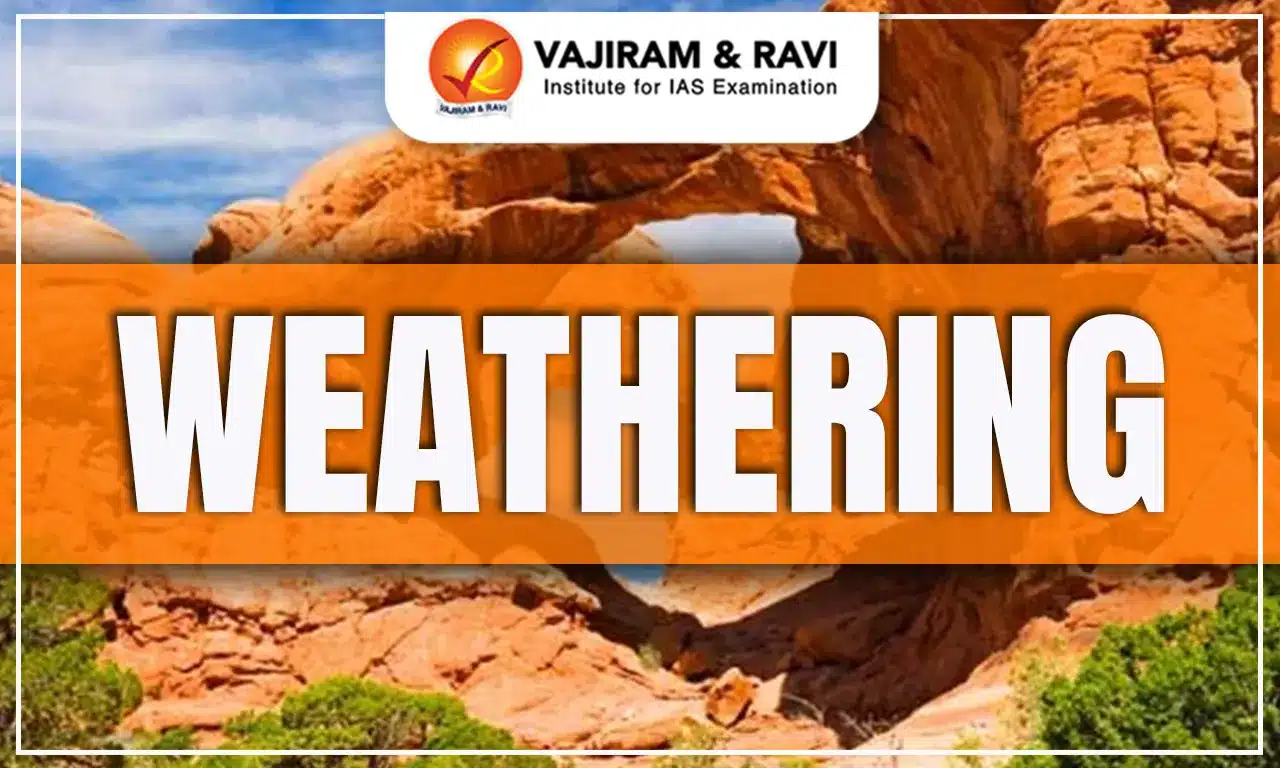
Weathering is the breakdown of rocks, minerals and other materials at or near the Earth’s surface due to natural forces. Unlike erosion, that is the removal and transportation of materials, weathering occurs in the same place. It is caused due to climate that is temperature, rainfall and humidity, topography, biological activity and time. This process is important to the Earth system because it contributes to the formation of soil, carbon balance. Weathering helps in the fertilisation of soil, agriculture practices and landscapes maintenance.
Weathering
Weathering is the process of transforming rocks into soil and sediments. It is the disintegration and decomposition of rocks through mechanical, chemical and biological agents. The process helps in maintaining:
- Geological role: helps shape Earth's surface and creating distinctive landforms.
- Ecological role: releasing minerals for soil fertility and sustaining ecosystems.
Thus, weathering is the link between the solid rocks of the lithosphere and the life-supporting soil of the biosphere.
Weathering Types
The process of weathering can be sub-divided into three types:
1. Physical (Mechanical) Weathering
This type of weathering involves the fragmentation of rocks into smaller particles without altering their chemical composition. It is dominant in arid and cold climates, where temperature fluctuations and freeze-thaw cycles are common.
Processes include:
- Frost Wedging : Water enters cracks, freezes, expands, and breaks rocks apart.
- Thermal Expansion: Heating and cooling cause rock layers to expand and contract, leading to cracking.
- Abrasion: Rocks are worn down by wind-blown sand, moving glaciers, or flowing rivers.
- Exfoliation: Large sheets peel off due to pressure release from overlying rocks.
2. Chemical Weathering
Chemical weathering alters the mineral composition of rocks through reactions with water, oxygen, carbon dioxide, and acids. It is most effective in warm and humid climates.
Processes include:
- Oxidation: Reaction of oxygen with minerals like iron, producing rust.
- Hydrolysis: Reaction of water with minerals, forming new compounds (e.g., feldspar becomes clay).
- Carbonation: Carbon dioxide dissolved in water forms weak carbonic acid that dissolves rocks like limestone.
- Dissolution: Minerals dissolve completely in water (e.g., salts, gypsum).
3. Biological Weathering
This type of weathering is caused by the activities of plants, animals, and microorganisms. Living organisms break down rocks either mechanically or chemically.
Examples include:
- Plant roots penetrating cracks and widening them.
- Lichens and microbes release organic acids that dissolve minerals.
- Burrowing animals (earthworms, rodents) exposing rocks to air and moisture.
Weathering Significance
The process of weathering has the following significance:
- Soil Formation: Weathering is the primary source of soil particles. It releases minerals like potassium, magnesium, and calcium, enriching soil fertility.
- Landform Development: Weathering weakens rock structures, paving the way for erosion and the creation of valleys, cliffs, caves, and plateaus. Unique features such as spires, arches, and mushroom rocks arise from differential weathering.
- Nutrient Cycling: Weathering ensures continuous supply of minerals to ecosystems. Nutrients released enter rivers, lakes, and soils, sustaining life cycles.
- Erosion and Sedimentation: Weathering provides loose material that erosion transports to form deltas, floodplains, sand dunes, and beaches.
- Climate Regulation: Through chemical weathering of silicates, CO₂ is consumed and stored in rocks, reducing greenhouse gas levels and stabilizing Earth’s climate.
Factors Affecting Weathering
There are many factors affecting weathering. These include:
- Climate: Extreme temperature causes physical weathering and high rainfall and humidity cause chemical weathering. Biological weathering is caused due to tropical climate.
- Rock Type and Composition: Hard rocks like granite don't get affected by weathering whereas soft rocks like limestone weather quickly. Rocks that have many joints and fractures disintegrate faster.
- Surface Area: Cracked rocks or smaller fragments of rocks have more surface area exposed that causes faster weathering of rocks.
- Topography: Steep slopes help in physical weathering and erosion and flat regions promote water accumulation and chemical weathering.
- Time: Rocks exposed for a longer time causing a higher degree of rock breakdown.
- Biological Activity: Roots, burrowing animals, and microbes enhance rock disintegration.
- Water Availability: Extremely important for frost action, hydrolysis, carbonation, and dissolution.
Weathering Benefits
The process of weathering has the following benefits:
- Helps create fertile soils essential for agriculture and vegetation.
- The process of weathering helps supply vital minerals for ecosystems.
- Shapes diverse landscapes with ecological and aesthetic value.
- Provides sediments like clay, sand, and gravel for construction and industries.
- Weathered soils act as filters for groundwater.
- Helps regulate atmospheric CO₂ through chemical processes.
Weathering Process Challenges
Weathering Process also possesses the following challenges:
- Weakens rocks, leading to landslides and building deterioration.
- Accelerates soil erosion and desertification when vegetation is removed.
- Contributes to infrastructure damage in regions of intense weathering.
Weathering FAQs
Q1: What do you mean by weathering?
Ans: Weathering is the natural process of breaking down rocks and minerals on Earth’s surface into smaller particles by physical, chemical, or biological means.
Q2: What are the three types of weathering?
Ans: The three types of weathering are Physical (Mechanical), Chemical, and Biological weathering.
Q3: What are the 4 causes of weathering?
Ans: The main causes of weathering are climate (temperature and rainfall), water, biological activity, and time.
Q4: What are the challenges caused due to weathering?
Ans: Weathering causes soil erosion, landslides, loss of fertile soil, and damage to infrastructure and monuments.
Q5: Which rocks get affected most by weathering?
Ans: Soft rocks like limestone, shale, and sandstone are most affected due to their solubility and weak structure.

