Indian Drainage System, Categorisation, River Regime

Indian Drainage System

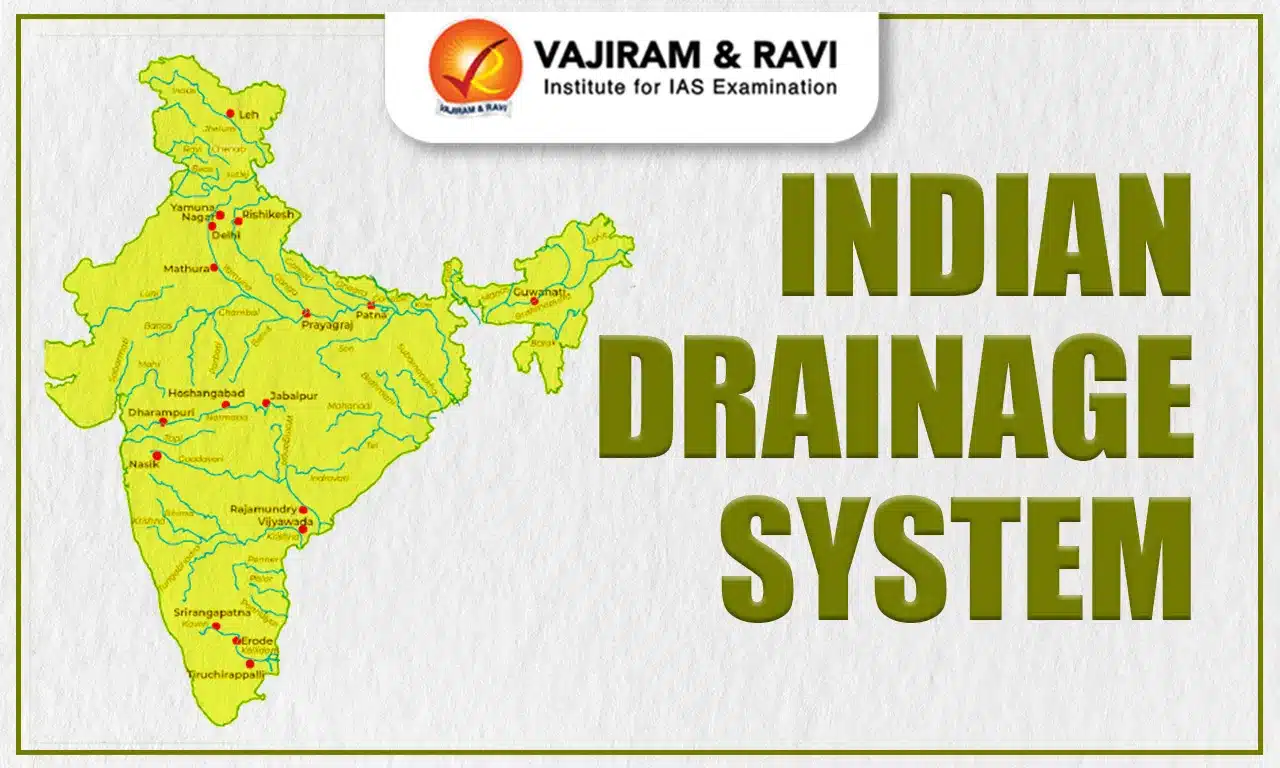
Indian Drainage System consists of a vast network of rivers and streams weaving across its varied landscapes. This system not only shapes the country’s physical geography but also sustains ecosystems and supplies vital resources for agriculture, industry, and daily life. 

Indian Drainage System

The majority of rivers in India drain into the Bay of Bengal, while several others in the western region flow into the Arabian Sea. Certain areas, such as the northern Aravalli region, parts of Ladakh, and the arid zones of the Thar Desert, exhibit inland drainage where water does not reach the sea. Most of India’s major rivers originate from one of four main watersheds: the Himalayas and Karakoram Range, the Chotanagpur Plateau, the Vindhya and Satpura ranges, and the Western Ghats.

Indian Drainage System Categorisation

The Indian Drainage System can be classified into three main categories:

  • Based on the origin of the rivers,
  • Based on the type of drainage, and
  • Based on the river’s orientation to the sea.

Each of these classifications is discussed in detail in the following sections.

Based on Origin of the Rivers

Based on their origin, India’s rivers can be divided into two main groups:

  • Himalayan Rivers (Perennial): These rivers, including the Indus, Ganga, Brahmaputra, and their tributaries, flow throughout the year due to the melting of snow and rainfall in the mountains.
  • Peninsular Rivers (Non-Perennial): Rivers such as the Mahanadi, Godavari, Krishna, Cauvery, Narmada, and Tapi, along with their tributaries, generally depend on seasonal rainfall and tend to dry up during the lean season.

Based on Type of Drainage

Indian Drainage System, or its network of rivers, can be broadly classified into four groups:

  • Himalayan Rivers
  • Deccan Rivers
  • Coastal Rivers that flow directly into the sea
  • Rivers of the Inland Drainage Basin

Based on River’s Orientation to Sea

Based on orientation to the sea, the Indian drainage system can be categorized as follows:

Based on River’s Orientation to Sea

Bay Of Bengal Drainage

Arabian Sea Drainage

Rivers that drain into the Bay of Bengal.

Rivers that drain into the Arabian Sea.

East flowing rivers.

West flowing rivers.

Nearly 77 per cent of the drainage area of the country is oriented towards the Bay of Bengal.

Nearly 23 per cent of the drainage area of the country is oriented towards the Arabian Sea.

The Ganga, the Brahmaputra, the Mahanadi, the Godavari, the Krishna, the Cauvery, the Penneru, the Penneiyar, the Vaigai, etc.

The Indus, the Narmada, the Tapi, the Sabarmati, the Mahi and a large number of swift-flowing western coast rivers descending  from the Sahyadris.

Difference between the Himalayan River System and the Peninsular River System

To better understand the Difference between the Himalayan River System and the Peninsular River System, the following table compares aspects such as origin, catchment area, valley types, drainage patterns, water flow, river stages, meandering behavior, and the formation of deltas and estuaries.

Difference between the Himalayan River System and the Peninsular River System

Feature

Himalayan River System

Peninsular River System

Origin

Originate from the high Himalayan ranges and are collectively known as Himalayan rivers.

Begin in the hills of the Peninsular Plateau and are referred to as Peninsular rivers.

Catchment Area

Possess large basins and extensive catchment areas.

Have relatively smaller basins and catchment areas.

Valleys

Flow through deep, V-shaped valleys or gorges.

Travel through comparatively shallow valleys.

Drainage Type

Exhibit antecedent drainage patterns.

Exhibit consequent drainage patterns.

Water Flow

Perennial, fed by both rainfall and glacier melt.

Primarily seasonal, dependent on rainfall, with peak flow during the monsoon.

Stage

Considered youthful, flowing through the young fold mountains.

Mature rivers, flowing across one of the world’s oldest plateaus.

Meanders

Form meanders and frequently change course upon entering the plains.

Generally straighter courses with limited meandering due to hard rock and non-alluvial terrain.

Deltas & Estuaries

Form large deltas at their mouths; the Ganga-Brahmaputra delta is the largest in the world.

Some rivers, like Narmada and Tapi, form estuaries; others, such as Mahanadi, Godavari, Krishna, and Cauvery, form deltas.

River Regimes

The River Regimes refers to the pattern of its water flow over the course of a year. River flow can vary due to factors such as rainfall, snowmelt, geological features, and changes in the terrain. As a result, different rivers exhibit different flow patterns.

Himalayan rivers, for instance, are perennial because they are sustained by both rainfall and melting glaciers, giving them a glacial regime. In contrast, Peninsular rivers rely mainly on rainfall and are thus subject to seasonal fluctuations, known as a monsoonal regime.

Rivers with a monsoonal regime typically have low water levels from January to May, followed by a sharp rise during the monsoon months of June to September. For example, the Narmada River has minimal discharge for most of the year until August, when it peaks, then drops sharply again in October.

Utilization of River Water in India

River Water in India serves multiple vital purposes:

  • Irrigation: Rivers receive about 45% of the country’s total precipitation. However, due to uneven terrain and flow patterns, not all of this water is usable, and only around 33% of the annual flow is actually available for irrigation.
  • Hydroelectricity: Large rivers in mountainous regions offer significant hydroelectric potential. Peninsular rivers require water storage during the monsoon for power generation, whereas Himalayan rivers maintain substantial flow even in winter. Challenges like narrow valleys, high siltation, seismic activity, and vast alluvial plains complicate the construction of large storage projects.
  • Waterways: India has an extensive network of navigable rivers, with the Ganga, Brahmaputra, and Mahanadi being the most significant for transport.
  • Water Supply: River water supports agriculture and provides drinking water for cities, towns, and industrial use. However, water quantity and quality are declining due to pollution from sewage, industrial effluents, and excessive diversion.

Fishing: Inland fisheries, including rivers, canals, and reservoirs, contribute nearly half of the country’s total fish production. With improved water quality and management, freshwater fish production has considerable potential for growth.

Indian Drainage System FAQs

Q1: What is the Indian drainage system?

Ans: India’s drainage system consists of rivers, streams, and tributaries that drain rainfall and snowmelt into the seas, supporting agriculture, transport, and water resources.

Q2: What is India's largest drainage system?

Ans: The Ganga-Brahmaputra-Meghna river system is India’s largest drainage network, covering northern and eastern regions and supporting millions of people.

Q3: How many types of drainage systems are there in India?

Ans: India has four main types of drainage systems: Himalayan rivers, Peninsular rivers, inland drainage, and coastal drainage.

Q4: Does a drainage system work in India?

Ans: Yes, drainage systems manage flood control, irrigation, water supply, and river navigation, though monsoon floods sometimes overwhelm capacity.

Q5: What are the four types of drainage?

Ans: The four types are: Himalayan rivers, Peninsular rivers, inland drainage, and coastal drainage systems.

UPSC Daily Quiz 1 September 2025

UPSC Daily Quiz

The Daily UPSC Quiz by Vajiram & Ravi is a thoughtfully curated initiative designed to support UPSC aspirants in strengthening their current affairs knowledge and core conceptual understanding. Aligned with the UPSC Syllabus 2025, this daily quiz serves as a revision resource, helping candidates assess their preparation, revise key topics, and stay updated with relevant issues. Whether you are preparing for Prelims or sharpening your revision for Mains, consistent practice with these Daily UPSC Quiz can significantly enhance accuracy, speed, and confidence in solving exam-level questions

[WpProQuiz 58]

UPSC Daily Quiz FAQs

Q1: What is the Daily UPSC Quiz?

Ans: The Daily UPSC Quiz is a set of practice questions based on current affairs, static subjects, and PYQs that help aspirants enhance retention and test conceptual clarity regularly.

Q2: How is the Daily Quiz useful for UPSC preparation?

Ans: Daily quizzes support learning, help in revision, improve time management, and boost accuracy for both UPSC Prelims and Mains through consistent practice.

Q3: Are the quiz questions based on the UPSC syllabus?

Ans: Yes, all questions are aligned with the UPSC Syllabus 2025, covering key areas like Polity, Economy, Environment, History, Geography, and Current Affairs.

Q4: Are solutions and explanations provided with the quiz?

Ans: Yes, each quiz includes detailed explanations and source references to enhance conceptual understanding and enable self-assessment.

Q5: Is the Daily UPSC Quiz suitable for both Prelims and Mains?

Ans: Primarily focused on Prelims (MCQ format), but it also indirectly helps in Mains by strengthening subject knowledge and factual clarity.

Temperature Inversion, Meaning, Types, Significance, Effect

Temperature Inversion

A Temperature Inversion takes place when a layer of warm air settles above cooler air close to the ground, reversing the usual pattern of rising and mixing. This shift prevents vertical circulation in the atmosphere, causing the air to become stagnant. As a result, pollutants remain trapped, often worsening air quality and giving rise to fog, haze, or smog. Studying this process is essential for understanding pollution build-up, local weather behavior, and visibility issues.

Temperature Inversion

Temperature Inversion is a weather phenomenon where a layer of warm air settles above cooler air near the ground, reversing the normal temperature trend. Usually, air cools as it rises, but during an inversion, the cooler air is trapped beneath warmer air. This warm layer acts like a lid, preventing vertical air movement and creating stagnant conditions near the surface.

Temperature Inversions commonly form at night or in the early morning, when the ground loses heat quickly, cooling the air just above it more than the air higher up. In cities, this can trap smoke, dust, and other pollutants, leading to degraded air quality and smog. They can also influence local weather, causing fog, cloud buildup, and shifts in wind patterns.

These inversions are most likely to occur in valleys, along coasts, or during calm, clear nights. While often short-lived, prolonged inversions can have serious environmental and health consequences, particularly in densely populated areas.

Temperature Inversion Types

Temperature Inversions can occur in several ways, depending on the atmospheric conditions:

  • Radiation Inversion: This type forms when the ground cools quickly at night, making the air near the surface colder than the air above. It’s most common on clear, calm nights when heat radiates away from the Earth’s surface.
  • Advection Inversion: This happens when warm air moves horizontally over a cooler surface. Coastal regions often experience this, as warm ocean air drifts inland over cooler land, trapping the cold air beneath.
  • Subsidence Inversion: Occurs when air from higher altitudes sinks and compresses as it descends, warming in the process. This warm layer then caps the cooler air below. Subsidence inversions are common during high-pressure systems and in areas near mountains.
  • Frontal Inversion: This type arises when a warm air mass slides over a cooler air mass at the surface, usually linked with a moving weather front. It creates a stable warm layer over the cooler ground air.

Temperature Inversion Significance

  • Temperature Inversions can lead to the formation of fog, frost, and dew, affecting visibility and daily weather conditions.
  • These inversions trap pollutants near the ground, causing smog and poor air quality, particularly in cities and industrial zones. This can worsen respiratory and heart-related health problems.
  • Radiation inversions may cause frost that harms crops, reducing yields. In some cases, they can even shield crops by limiting frost under specific conditions.
  • Inversions can create turbulence, lower visibility, and alter aircraft performance, posing significant challenges for safe flight operations.
  • By changing temperature distribution near the ground, inversions can impact heating and cooling needs, influencing energy consumption in buildings.
  • Studying inversions is essential for understanding regional climate, especially in valleys or basins where persistent inversions are common.
  • Inversions restrict vertical air movement, trapping heat and smoke close to the ground. This complicates firefighting efforts and worsens air quality near wildfires.

Phenomena Associated with Temperature Inversion

  • Cities such as Los Angeles and Beijing often face smog problems because temperature inversions trap pollutants near the ground, significantly lowering air quality.
  • On calm, clear nights, radiation inversions can cause the cooler air near the surface to mix with moisture, forming thick fog. Valleys like California’s San Joaquin Valley commonly experience this.
  • In farming areas, rapid nighttime cooling during radiation inversions can cause frost, damaging crops. Vineyards in Napa Valley, for instance, are particularly affected.
  • Cities surrounded by mountains, such as Mexico City or Salt Lake City, often endure prolonged inversions that trap pollutants, creating persistent air quality issues.
  • Subsidence inversions can prevent wildfire smoke from dispersing, keeping it near the ground. This phenomenon is observed during wildfire seasons in places like California and Australia.
  • In Arctic and Antarctic regions, cold air can get trapped beneath warmer layers, creating unusually stable atmospheric conditions that influence local weather patterns.
  • Advection inversions, where warm air moves over cooler seas, can lead to dense sea fog, reducing visibility for shipping and coastal activities, such as in the North Sea.

Temperature Inversion Effects

  • Temperature Inversions trap cooler, moisture-laden air near the ground, causing condensation that forms fog, especially on calm, clear nights.
  • Fog, haze, or smog resulting from inversions can drastically lower visibility, impacting transportation and everyday activities.
  • Inversions act like a lid over the lower atmosphere, preventing warm air from rising. This restricts convection and limits cloud formation, leaving clear skies above the inversion.
  • Dust, smoke, and industrial emissions often get trapped near the surface during inversions, deteriorating air quality and creating smog in urban and industrial zones.
  • The cool air under an inversion can cause chilly nights, while restricted mixing with upper layers reduces daytime temperature moderation.
  • Radiation inversions can quickly lower ground temperatures, leading to frost that can harm crops and vegetation.
  • Inversions create stable atmospheric layers, slowing wind speeds and causing prolonged stagnant weather patterns in affected areas.
  • Vertical air movement is limited under inversions, suppressing rainfall and sometimes extending dry spells, contributing to drought conditions.
  • Strong inversions can prevent thunderstorms by blocking warm, moist air from rising. If the inversion breaks, accumulated energy can trigger severe storms suddenly.

Temperature Inversion FAQs

Q1: What is temperature inversion?

Ans: Temperature inversion occurs when the normal decrease of air temperature with height reverses, and warmer air traps cooler air near the surface.

Q2: Why are temperature inversions a problem?

Ans: They trap pollutants, smoke, and dust near the surface, leading to poor air quality, smog formation, and health hazards.

Q3: What is temperature inversion in India?

Ans: In India, it commonly occurs in winter in the Indo-Gangetic plains, trapping cold air, fog, and pollution near the ground.

Q4: What is meant by inverse temperature?

Ans: Inverse temperature is another term for temperature inversion, describing the situation where temperature increases with altitude instead of decreasing.

Q5: What are the 4 steps of temperature inversion?

Ans: Formation of a cold surface layer, Trapping of warm air above, Accumulation of pollutants, Dissipation only after weather changes.

State Human Rights Commission, Objectives, Composition, Functions

State Human Rights Commission

The State Human Rights Commission (SHRC) is a statutory body in India which plays a crucial role in safeguarding, protecting, and promoting human rights at the state level. It works to uphold individual liberties, ensure justice, and promote a culture of dignity and respect, thereby reinforcing the very foundations of democracy. Beyond offering protection to individuals, the SHRC also acts as a guardian against human rights violations and helps bridge the gap between the state and citizens.

State Human Rights Commission (SHRC)

The State Human Rights Commission (SHRC) is a statutory body established under the Protection of Human Rights Act, 1993. Unlike constitutional bodies, it derives its authority from legislation. The SHRC works to safeguard the rights relating to life, liberty, equality, and dignity of individuals, as discussed in the Constitution of India and reinforced by international treaties. The headquarters of the SHRC is determined by the respective State Government through official notification.

What are Human Rights?

According to the United Nations, human rights are inherent to every individual, regardless of race, gender, nationality, ethnicity, language, religion, or any other identity. These rights belong to all people equally and cannot be denied on grounds of discrimination.

Human rights cover a wide range of fundamental freedoms and protections. They include the right to life and liberty, protection from slavery and torture, freedom of opinion and expression, and the right to work and education, among others. Together, they form the foundation of human dignity and equality.

To highlight their universal importance, Human Rights Day is observed globally on 10 December each year, marking the anniversary of the adoption of the Universal Declaration of Human Rights in 1948.

State Human Rights Commission Objectives

  • To strengthen institutional arrangements for addressing human rights issues in a comprehensive and focused manner.
  • To investigate allegations of human rights violations independently of the government, ensuring accountability and reinforcing the government’s commitment to protect rights.
  • To complement and strengthen the existing efforts taken for the protection and promotion of human rights.

State Human Rights Commission Composition

The State Human Right Commission Composition has multi members which consists:

  • A Chairperson, and
  • Two other members

State Human Rights Commission Member Qualifications

The full time State Human Rights Commission Member Qualifications is as follow:

  • A retired Chief Justice or a Judge of a High Court is eligible for the position of Chairperson.
  • A serving or retired Judge of a High Court or a District Judge in the State with a minimum of 7 years experience as a District Judge can be recruited for the position of 1st member.
  • A person having knowledge or practical experience with respect to human rights is eligible for the position of 2nd member.

State Human Rights Commission Member Appointment

The State Human Rights Commission Member Appointment of Chairperson and the members is directly by the Governor on the recommendation of a committee which consists of:

  • The Chief Minister as its head,
  • The Speaker of the Legislative Assembly,
  • The Chairperson of the Legislative Council (if it exists),
  • The Leader of the Opposition in the Legislative Assembly.
  • The Leader of the Opposition in the Legislative Council (if it exists), and
  • The State Home Minister

Term of Members of State Human Rights Commission

  • The Chairperson and members serve for 3 years or until the age of 70 years, whichever comes first.
  • They are eligible for re-appointment.
  • After completing their tenure, they are barred from any further employment under the Central or State Government.

Removal of Members of SHRC

    • Appointing Authority: Governor of the State.
    • Removing Authority: Only the President of India can remove them.
  • Grounds for Removal (same as NHRC):
      • Adjudged insolvent.
      • Engages in paid employment during tenure.
      • Unfit to continue due to infirmity of mind or body.
      • Declared of unsound mind by a competent court.
      • Convicted and sentenced to imprisonment for an offense.
  • Additional Grounds:
    • Proven misbehavior or incapacity.
    • In such cases, the President must refer the matter to the Supreme Court.
    • If the Supreme Court, after inquiry, upholds the charge and advises removal, the President can proceed.

Salaries of Members of SHRC

  • The salaries, allowances, and service conditions of the Chairperson and Members are decided by the State Government.
  • These conditions cannot be altered to their disadvantage after appointment.

State Human Rights Commission Jurisdiction

  • The State Human Rights Commission can inquire into human rights violations related only to subjects in the State List and Concurrent List of the Seventh Schedule.
  • If a case is already under inquiry by the NHRC or any other Statutory Commission, the State Human Rights Commission cannot take it up.

State Human Rights Commission Functions

  • To investigate cases of human rights violations or negligence in preventing such violations by public servants, either on its own (suo motu), on a petition, or through court orders.
  • To intervene in cases pending before courts where human rights violations are alleged.
  • To visit prisons and detention facilities to examine living conditions of inmates and suggest improvements.
  • To evaluate constitutional and legal safeguards meant for the protection of human rights and recommend better implementation measures.
  • To examine factors, including terrorism, that hinder the enjoyment of human rights and suggest remedial actions.
  • To study human rights treaties and international instruments and advise on their effective enforcement.
  • To undertake and encourage research in the field of human rights.
  • To spread awareness about human rights and the safeguard available for their protection.
  • To encourage and assist the efforts of NGOs working in the human rights domain.
  • To perform any additional functions it considers necessary to advance the cause of human rights.

Nature of Functions of SHRC

  • The State Human Rights Commission Functions are primarily advisory in nature.
  • It does not have the authority to punish violators of human rights or to grant relief, including monetary compensation, to victims. 
  • The Commission can only make recommendations, and these are not legally binding on the State Government or any other authority.

State Human Rights Commission Powers

  • The SHRC has the authority to regulate its own procedure.
  • It enjoys all the powers of a Civil Court, and its proceedings carry a judicial character.
  • It may demand information or reports from the State Government or any subordinate authority.
  • The Commission cannot inquire into matters after one year from the date of the alleged human rights violation.
  • In short, cases must be taken up within one year of their occurrence.
  • During or after an inquiry, the Commission may:
    • Recommend compensation or damages to the victim.
    • Recommend prosecution or action against the guilty public servant.
    • Recommend immediate interim relief to the victim.
    • Approach the Supreme Court or the High Court for necessary directions, orders, or writs.

State Human Rights Commission Report

  • The State Human Rights Commission submits its annual or special reports to the concerned State Government. 
  • These reports are then placed before the State Legislature, accompanied by a memorandum outlining the action taken on the Commission’s recommendations and explaining the reasons for any recommendations not accepted.

Issues Addressed by State Human Rights Commission

The State Human Rights Commission (SHRC) addresses a wide range of human rights violations within a State. Some key issues taken up by SHRC include:

  • Arbitrary arrest and detention
  • Custodial torture
  • Child labour and exploitation
  • Violence and discrimination against women and children
  • Extra-judicial killings
  • Sexual violence and abuse
  • Rights of the LGBTQ community
  • Concerns of SCs, STs, disabled persons, and religious minorities
  • Labour rights and the right to work
  • Conflict-induced internal displacement
  • Manual scavenging and related injustices

State Human Rights Commission Challenges

The State Human Rights Commission has faced various challenges which affect the efficiency of the functioning of the committee which includes:

  • Recommendations are not binding, reducing the Commission’s effectiveness.
  • Inadequate funding, staff, and infrastructure hamper efficient functioning.
  • Many citizens are unaware of SHRC’s role, leading to underreporting of violations.
  • Pressure from governments undermines independence and impartiality.
  • Rising complaints with limited capacity result in delays and pendency.
  • Systemic and multi-dimensional violations require expertise often lacking with SHRCs.
  • The existing law has gaps and has not evolved with emerging human rights challenges.

State Human Rights Commission FAQs

Q1: Who is the present state human rights commission?

Ans: Each state has its own chairperson, usually a retired Chief Justice or Judge, appointed by the Governor.

Q2: When was the State Human Rights Commission established?

Ans: State Human Rights Commissions were set up under the Protection of Human Rights Act, 1993, starting in 1995.

Q3: What is the role of the State Human Rights Commission?

Ans: It investigates human rights violations, reviews safeguards, recommends corrective measures, and promotes awareness and protection of fundamental rights.

Q4: How many states have the State Human Rights Commission in 2025?

Ans: As of 2025, around 26 states and Union Territories have established their Human Rights Commissions.

Q5: How to complain in Human Rights Commission?

Ans: Complaints can be filed online, by post, or in person with details of violation, supporting documents, and contact information.

Biomolecules, Classification, Significance, Composition, Structure

Biomolecules

The organic molecules which are essential for the existence of life such as carbohydrates, proteins, lipids and nucleic acids are called Biomolecules. They are essential for life as they form the basis of cellular structure, store energy, regulate metabolic processes, and carry genetic information. Made primarily of carbon, hydrogen, oxygen, and other elements, they serve as the fundamental building blocks that sustain biological functions and processes in all living organisms.

Biomolecules

The sustainability of life and biological processes determined by the organic molecules are referred to as Biomolecules. These are classified into four categories including carbohydrates, proteins, lipids and nucleic acids. Carbohydrates are the primary energy source, fuel for cellular activities. Proteins which are made of amino acids; functions include catalysis, structural support, and cell communication.

Lipids include fats and oils; serve as energy reserves, provide insulation, and form cell membranes. Nucleic acids (DNA & RNA) store and transmit genetic information essential for growth, reproduction, and cellular functions. 

Biomolecules are made of main elements including carbon, hydrogen, oxygen, nitrogen, and phosphorus, formed through covalent bonds into complex structures. Synthesized and broken down via metabolic pathways, showing their dynamic role.

Biomolecules Classification

Biomolecules can be better understood by looking at their categories, building blocks, and functions side by side. The table below provides a clear comparison of the four major biomolecules.

Biomolecules Classification
Biomolecule Composition Function Examples

Carbohydrates

Carbon, Hydrogen, Oxygen (1:2:1 ratio)

Primary energy source, structural components

Glucose, Starch, Cellulose, Glycogen

Proteins

Chains of amino acids (C, H, O, N, sometimes S)

Enzymatic activity, structural support, transport, defense, signaling

Enzymes, Hemoglobin, Keratin, Antibodies

Lipids

C, H, O (less O than carbs)

Energy storage, insulation, membrane structure, signaling

Fats, Oils, Phospholipids, Steroids

Nucleic Acids

C, H, O, N, P

Storage and transmission of genetic information

DNA, RNA

Others (supportive categories)

Varies (depends on type)

Regulation, co-factors, metabolic roles

Vitamins, Minerals, Secondary Metabolites

Biomolecules Significance

Biomolecules are the foundation of life, performing vital roles in the structure, function, and regulation of living organisms. Their significance can be understood through the following aspects:

  • Proteins such as collagen and keratin, along with carbohydrates like cellulose, provide strength and stability to cells, tissues, and entire organisms.
  • Carbohydrates and lipids act as the main energy sources. While carbohydrates provide quick energy, lipids serve as long-term storage reserves.
  • Many proteins act as enzymes, catalyzing biochemical reactions that drive metabolism and sustain life processes.
  • DNA and RNA store, transmit, and regulate genetic information, ensuring accurate development, growth, and reproduction.
  • Molecules like hormones and neurotransmitters, often proteins or lipids, enable communication between cells, tissues, and organs, coordinating vital body functions.
  • Antibodies (proteins) and certain lipids form part of the immune system, defending the body against pathogens.
  • Proteins like hemoglobin transport oxygen, while molecules such as glycogen (a carbohydrate) store energy for later use.

Biomolecules New Developments

  • Tools like AlphaFold 2 (AF2) have revolutionized protein structure prediction which helps in drug discovery and understanding complex biomolecular interactions. Streamlining target identification for diseases like cancer.
  • Proteins, peptides, and nucleic acids are being used to build multifunctional nanomedicines. Applications include drug delivery, cancer therapy, and theranostics (therapy + diagnostics). Molecular dynamics simulations improve their design and performance.
  • Advanced infrared techniques allow imaging biomolecules in living cells. Overcomes water interference challenges in traditional imaging. Enables real-time monitoring of biomolecular dynamics in natural environments.
  • Advances in biomolecule research are driving progress in medicine, biotechnology, and materials science. These innovations support global health solutions and personalized medicine.

Biomolecules Composition

Biomolecules Composition has primarily elements including carbon (C), hydrogen (H), oxygen (O), nitrogen (N), phosphorus (P), and sulfur (S) which combines to the four main types of biomolecules with unique compositions and structures:

  • Carbohydrates
    • Composition: Carbon, hydrogen, and oxygen (in a 1:2:1 ratio).
    • Examples: Glucose (C₆H₁₂O₆), sucrose, cellulose.
  • Proteins
    • Composition: Chains of amino acids containing carbon, hydrogen, oxygen, nitrogen, and sometimes sulfur.
    • Examples: Enzymes, hemoglobin, keratin.
  • Lipids
    • Composition: Carbon, hydrogen, and oxygen (less oxygen than carbohydrates). Some also contain phosphorus (e.g., phospholipids).
    • Examples: Fats, oils, cholesterol.
  • Nucleic Acids
    • Composition: Carbon, hydrogen, oxygen, nitrogen, and phosphorus.
    • Examples: DNA and RNA, which are polymers of nucleotides (comprising a sugar, phosphate group, and nitrogenous base).

Biomolecules Structure

Living organisms are made up of specific chemical compounds that provide structure, energy, and the ability to carry out life processes. These compounds, called biomolecules, are built mainly from six key elements, carbon, hydrogen, oxygen, nitrogen, phosphorus, and sulfur. Depending on how these elements combine, they form four major classes of biomolecules, each with distinct structures and roles essential for sustaining life.

  • Carbohydrates
      • Built from monosaccharides (simple sugars) of C, H, and O.
      • Can form linear chains or ring-shaped cyclic structures.
      • Polysaccharides (e.g., starch, cellulose) = long chains of monosaccharides linked by glycosidic bonds.
      • Example: Glucose has a hexagonal ring structure.
  • Proteins
      • Made of amino acids linked by peptide bonds.
      • Four levels of structure:
        • Primary - amino acid sequence.
        • Secondary - α-helices or β-sheets (hydrogen bonding).
        • Tertiary - 3D folding (hydrogen bonds, ionic bonds, disulfide bridges).
        • Quaternary - multiple polypeptide subunits.
      • Example: Hemoglobin has four subunits (quaternary structure).
  • Lipids
      • Composed of glycerol + fatty acids.
      • Types:
        • Simple lipids: triglycerides.
        • Complex lipids: phospholipids (hydrophilic head + hydrophobic tail).
      • Example: Phospholipids arrange into bilayers in cell membranes.
  • Nucleic Acids
    • Polymers of nucleotides (sugar + phosphate + nitrogen base).
    • DNA: double helix, complementary base pairing (A-T, G-C).
    • RNA: usually single-stranded, with uracil instead of thymine.
    • Example: DNA double helix stabilized by hydrogen bonds between base pairs.

Biomolecules FAQs

Q1: What are the 4 main biomolecules?

Ans: The four main biomolecules are carbohydrates, proteins, lipids, and nucleic acids, essential for structure, energy, storage, and genetic information in living organisms.

Q2: What is the function of the biomolecules?

Ans: Biomolecules provide energy, store genetic information, regulate processes, build structures, and enable communication essential for the survival and functioning of all living organisms.

Q3: Who is the father of biomolecules?

Ans: The title isn’t specific, but Carl Alexander Neuberg is often credited as a pioneer after synthesizing urea, proving organic molecules form naturally.

Q4: What is the most important biomolecule?

Ans: Nucleic acids, especially DNA, are the most important biomolecules since they carry genetic instructions necessary for inheritance, protein synthesis, and regulation of cellular activities.

Q5: What are examples of lipids?

Ans: Examples of lipids include fats, oils, waxes, phospholipids, and steroids. They function in energy storage, insulation, cell membranes, and hormone production.

Types of Bills, Ordinary Bills, Public Bill, Private Bill & More

Types of Bills

The types of bills introduced in the Parliament of India serve a distinct purpose of their own and have its own procedure for passage. The parliament acts as the supreme legislative body and has the power to formulate, amend and repeal laws governing the nation. Having the knowledge about different types of bills is important to gain clarity about the Indian legislative process. In this article, we are going to cover the types of bills, their classification, procedure passage and their importance in the Indian parliamentary democracy. 

Types of Bill in Indian Parliament

  • A parliamentary bill is a proposal for a new law or for amending/repealing an existing law. 
  • Every bill should go through a structured process in its introduction, debate, scrutiny and approval in parliament. 
  • Once a bill is passed in both Houses of Parliament that is the Lok Sabha and the Rajya Sabha, the bill is sent to the President for assent and becomes an Act of Parliament and receives the force of law. 

Types of Bills Classifications in Indian Parliament

The Parliament of India classifies bills into the following types: 

  • Based on person introducing them- Public Bill vs Private Bill 
  • Based on nature of content- Original, Amending, Consolidating, repealing 
  • Based on procedure for passage- Ordinary bill, money bill, finance bill, constitutional amendment bill 

Public Bill vs Private Bill

Public Bill and Private Bill are passed by using the same procedure, however there are a few differences in the bills. These differences are: 

Aspect Public Bill (Government Bill) Private Bill (Private Member’s Bill)

Introduced by

A Minister

Any MP other than a Minister

Represents

Policies and programmes of the government

Views, concerns, or issues raised by individual MPs or constituencies

Drafting Responsibility

Concerned ministry in consultation with Law Ministry

The member introducing the bill

Notice Period

7 days

1 month

Chance of Passage

High, since backed by government

Low, rarely passed

Impact of Rejection

May lead to loss of confidence in government and even resignation

No impact on government’s stability

Purpose

To implement government policies, schemes, or reforms

To highlight issues, suggest reforms, or address gaps in existing law

Types of Bills on the basis of Content 

On the basis of content, the following bills are introduced: 

Ordinary Bills

  • Ordinary bills are the ones that introduce new proposals, ideas and policies. 
  • These bills are introduced in the legislature for the first time as opposed to the bills that are introduced as amendments or modifications to existing laws.  

Amending Bills

  • Amending bills are bills that modify, amend or revise the existing acts. 
  • The bill aims to improve, clarify, correct or update the legal provisions of existing statutes to reflect current needs, remove any errors and rectify inconsistencies. 

Consolidating Bills 

  • Consolidating bills are the ones that bring together the existing laws on specific subjects. 
  • These bills combine and streamline existing or overlapping laws into a single, comprehensive unified law. 
  • Helps to make legal framework easy and reduces redundancy. 

Expiring Laws (Continuance) Bills

  • These bills extend the operation of Acts that are due to expire after a fixed time period.
  • Commonly used for laws related to taxation, emergencies, or temporary circumstances.
  • Prevents legal gaps by ensuring important laws continue to remain in force.
  • Aim: Maintain legal continuity and smooth governance.

Repealing Bills

  • These bills annul or abolish laws that are outdated, irrelevant, or redundant.
  • Helps remove overlap between old and new legislation.
  • Ensures that the legal system stays updated and free from unnecessary clutter.
  • Aim: Streamline the legal framework and improve efficiency.

Validating Bills

  • These bills provide retrospective legal validity to certain past actions or decisions.
  • Used to cure technical or procedural defects in government decisions.
  • Prevents such actions from being challenged in courts.
  • Aim: Ensure legal certainty, stability, and enforceability.

Bills to Replace Ordinances

  • Introduced to replace ordinances issued by the President or Governor during a recess of Parliament/State Assembly.
  • Ordinances are temporary and must be converted into permanent laws through such bills.
  • Ensures that urgent measures taken through ordinances continue with legislative approval.
  • Aim: Uphold parliamentary democracy and continuity of governance.

Constitutional (Amendment) Bills

  • These bills amend, modify, or repeal provisions of the Constitution.
  • Require a special majority for passage (different from ordinary laws).
  • Allow restructuring of institutions, redefining of powers, or addition of new provisions.
  • Aim: Adapt the Constitution to evolving political, social, and economic needs.

Money Bills (Article 110)

  • Concern only with financial matters specified in Article 110.
  • Cover areas like taxation, government borrowing, Consolidated Fund, Contingency Fund, public accounts, and audit of government accounts.
  • Excludes provisions like fines, fees for licenses/services, or local body taxes.
  • Aim: Regulate core financial functions of the Union Government.

Money Bills and Financial Bills

Money Bills and Financial Bills are differentiated on the basis of following manner: 

Money Bills (Article 110)

  • A Money Bill deals exclusively with matters specified under Article 110 of the Constitution.
  • Includes taxation, borrowing of money, custody/withdrawal from the Consolidated Fund of India or Contingency Fund, appropriation of money, declaration of expenditure charged on the Consolidated Fund, and audit of government accounts.
  • Can only be introduced in the Lok Sabha and only on the recommendation of the President.
  • Must be certified by the Speaker of the Lok Sabha before being transmitted to the Rajya Sabha.
  • Cannot amend or reject a Money Bill; it can only give recommendations, which the Lok Sabha may accept or reject.
  • Ensures control of the elected House (Lok Sabha) over matters of public finance.

(b) Ordinary Bills vs. Money Bills – Key Distinctions

  • Introduction:
    • Ordinary Bills: Can be introduced in either Lok Sabha or Rajya Sabha by any MP (Minister or Private Member).
    • Money Bills: Can only be introduced in the Lok Sabha by a Minister with prior Presidential recommendation.
  • Deadlock:
    • Ordinary Bills: Deadlock may occur between the two Houses, resolved through a joint sitting.
    • Money Bills: No possibility of a deadlock; Rajya Sabha has limited powers.
  • Certification:
    • Ordinary Bills: No certification required.
    • Money Bills: Must be certified by the Speaker of the Lok Sabha.
  • Role of Rajya Sabha:
    • Ordinary Bills: Rajya Sabha can amend, reject, or delay up to six months.
    • Money Bills: Rajya Sabha cannot amend/reject; only recommendations (within 14 days).

(c) Financial Bills (Article 117)

  • Financial Bills are a broader category that deal with financial matters but are not confined strictly to Article 110.
  • Types:
    • Financial Bill (I) [Article 117(1)]:
      • Contains matters mentioned in Article 110 plus other general legislation.
      • Requires President’s recommendation for introduction.
      • Can be introduced only in the Lok Sabha.
    • Financial Bill (II) [Article 117(3)]:
      • Deals with expenditure from the Consolidated Fund of India, but does not include matters of a Money Bill.
      • Can be introduced in either House.
      • Does not require Presidential recommendation.
  • Key Note:
    • All Money Bills are Financial Bills.
    • But not all Financial Bills are Money Bills, since Financial Bills (I) and (II) cover a wider scope.

Difference Between Money Bill and Finance Bill

Following are the differences in between Money Bill and Finance Bill: 

Aspect Money Bill Financial Bill

Constitutional Basis

Article 110

Article 117 (1) & (3)

Content

Deals exclusively with matters listed in Article 110: taxation, borrowing, Consolidated Fund, appropriation of money, etc.

Deals with financial matters (revenue & expenditure) but not exclusively confined to Article 110 matters

Types

Only one type

Two types: Financial Bill (I) and Financial Bill (II)

Introduction

Only in Lok Sabha, by a Minister, with President’s recommendation

Financial Bill (I): Only in Lok Sabha, with President’s recommendation; Financial Bill (II): Can be introduced in either House, recommendation not always required

Role of Rajya Sabha

Cannot amend/reject; can only make recommendations (within 14 days)

Has the power to amend/reject like in the case of an Ordinary Bill

Certification

Requires certification by the Speaker of Lok Sabha

No such certification required

Scope

Narrower only matters strictly under Article 110

Broader covers fiscal matters beyond Article 110

Types of Bills Based on Passage Procedure 

Different bills are passed on the basis of different procedure: 

(a) Ordinary Bills: These bills are concerned with any subject other than money matters. Passed by both Houses with a simple majority.

(b) Money Bills: Money Bills are concerned with taxation and public expenditure. Detailed earlier.

(c) Financial Bills: Financial bills are concerned with revenue or expenditure but distinct from Money Bills.

(d) Constitutional Amendment Bills : Constitutional Amendments bills are concerned with changes to the Constitution. Require a special majority and, in some cases, ratification by states.

Types of Bills FAQs

Q1: What are the 4 types of bills?

Ans: The four types of bills in the Indian Parliament are Ordinary Bills, Money Bills, Financial Bills, and Constitutional Amendment Bills.

Q2: How many types of bills are in Indian Parliament?

Ans: Bills in the Indian Parliament are classified mainly into four types based on their passage procedure.

Q3: What is a money bill?

Ans: A Money Bill is a bill that deals exclusively with financial matters like taxation, borrowing, and expenditure from the Consolidated Fund of India, as defined under Article 110.

Q4: What is a public bill?

Ans: A Public Bill, also known as a Government Bill, is introduced by a Minister to reflect and implement government policies and programs.

Q5: How is a bill passed in the Indian Parliament?

Ans: A bill is passed through multiple stages, introduction, committee scrutiny, debate, voting in both Houses (except Money Bills), and finally the President’s assent to become a law.

Maize Cultivation in India, Distribution, Producing States, Importance

Maize Cultivation in India

Maize is known as Indian Corn which holds an important position in the Agriculture Sector of India due to its adaptability to various climates and soils. Cultivated across different regions of the country, it not only contributes to food and fodder security but also serves as a raw material for several industries. Its role extends beyond agricultural productivity, influencing rural employment, trade, and industrial growth.

Maize as a Crop

Maize, often called the queen of cereals for its remarkable genetic yield potential, holds a central place in global agriculture. In India, it ranks as the third most important food crop after rice and wheat, serving as both a staple food and a vital source of animal feed. Beyond its role in sustenance, maize drives a wide range of industries, supplying raw material for starch, oil, protein, alcoholic beverages, sweeteners, pharmaceuticals, cosmetics, textiles, packaging, and even paper.

Maize Cultivation Conditions

Maize is a rainfed Kharif crop grown in semi-arid regions (25-75 cm rainfall). It is unsuitable for areas with >100 cm rainfall. In Tamil Nadu, maize is a Rabi crop sown in Sept–Oct, before winter rains (Nov-Dec).

Maize Cultivation can be grown in a wide soil range of loamy sand to clay loam which is fertile, well-drained loam with high organic matter, neutral pH, good water-holding capacity, rich in nitrogen.

Unsuitable for low-lying fields with poor drainage or high salinity. Commonly grown in intercropping systems with pulses, vegetables, and oilseeds.

Maize Cultivation Distribution

  • Grown year-round across all states for grain, fodder, green cobs, sweet corn, baby corn, and popcorn.
  • Major maize-growing states: Karnataka, Madhya Pradesh, Maharashtra, Andhra Pradesh, Rajasthan, Bihar, and Uttar Pradesh.
  • Non-traditional states like Karnataka and Andhra Pradesh have become leading producers with high productivity.

Maize Producing States in India

  • Karnataka - Leading maize producer; very high yields in southern and central parts.
  • Madhya Pradesh - Significant contributor; mainly grown in central and eastern districts.
  • Maharashtra - Major production in Vidarbha and Marathwada; diverse cultivation practices.
  • Andhra Pradesh - High production, especially in Chittoor and Anantapur districts.
  • Rajasthan - Expanding maize cultivation, especially in arid/semi-arid areas of southwest and southeast.
  • Bihar - Strong producer in the east; key regions include northern and central districts.
  • Uttar Pradesh - Major producer in northern plains; notable districts: Gorakhpur, Kanpur.
  • Peninsular States - Karnataka and Andhra Pradesh stand out in non-traditional areas with high productivity.

Maize Cultivation in India Importance

  • Maize grows well in diverse soils and climates, from hills to plains, making it one of the most dependable crops for Indian farmers.
  • It is consumed directly as food, used in animal and poultry feed, and serves as green fodder for livestock, ensuring nutritional support across sectors.
  • Maize is a raw material for starch, corn oil, alcohol, sweeteners, textiles, pharmaceuticals, and biofuel, linking agriculture to industry.
  • From cultivation to processing and transportation, maize supports millions of livelihoods, especially in rural areas.
  • As a short-duration crop with high yield potential, it provides income stability to small and marginal farmers in both irrigated and rain-fed regions.
  • Poultry, dairy, and livestock industries rely heavily on maize-based feed, promoting rural economic integration.
  • India exports maize to several countries, contributing to foreign exchange earnings.
  • By linking food, industry, and trade, maize strengthens the rural economy and enhances national food security.

Maize Cultivation in India FAQs

Q1: Which state is the largest producer of maize in India?

Ans: Karnataka is the largest producer of maize in India, contributing significantly to the country’s overall maize production.

Q2: Where is maize cultivated in India?

Ans: Maize is cultivated in Karnataka, Madhya Pradesh, Maharashtra, Rajasthan, Bihar, Uttar Pradesh, and Andhra Pradesh.

Q3: In which season maize is grown in India?

Ans: Maize is grown mainly during Kharif season, but it’s also cultivated in Rabi and Summer depending on regional climate conditions.

Q4: What is the yield of maize per acre in India?

Ans: On average, maize yield in India ranges from 25 to 30 quintals per acre, depending on soil, climate, and farming practices.

Q5: Which state is rich in maize?

Ans: Madhya Pradesh is considered rich in maize production, along with Karnataka and Bihar, due to its favorable climate and fertile soil.

Volcanism, Causes, Process, Effects, Distribution, Terminology 

Volcanism

Volcanism is a geological process in which magma, gases and volcanic materials erupt from beneath the Earth’s crust to its surface. Natural forces shape landforms, create new terrains and trigger ecological shifts, volcanism, likewise contributes to generating energy sources, enriching soils and offers clues to Earth’s internal activity. In this article, we are going to cover volcanism, its causes, process and effects. 

Volcanism 

Volcanism refers to processes where magma, gases, and volcanic materials rise from the Earth’s interior to the surface. Driven mainly by tectonic plate movement, it occurs at divergent boundaries, subduction zones, and hotspots. When magma erupts, it appears as lava, which cools to form igneous rocks. Volcanoes are surface expressions of volcanism including shield volcanoes, stratovolcanoes, and cinder cones, each with unique eruption styles.
Eruptions may be explosive, releasing ash, pyroclastic flows, and gases, or effusive, marked by steady lava outpour. Though often destructive causing deaths, property loss, and climatic shifts volcanism also matures soils, provides geothermal energy, and continuously reshapes Earth. Studying it helps predict eruptions, reduce hazards, and strengthen resilience.

Volcanism Important Terminology 

The following terms are important when it comes to terminology: 

  • Magma: Molten rock beneath Earth’s crust.
  • Lava: Magma reaching the surface.
  • Volcano: Landform from accumulated lava, ash, and pyroclasts.
  • Vent: Opening where magma and gases escape.
  • Crater: Bowl-shaped depression at the summit.
  • Caldera: Large depression from magma chamber collapse.
  • Pyroclastic Flow: Fast, hot current of ash, gases, and debris.
  • Tephra: Rock and ash fragments ejected.
  • Volcanic Ash: Fine material (<1 mm) dispersed widely.
  • Hotspot: Magma upwelling away from boundaries (e.g., Hawaii).
  • Fissure: Long crack releasing lava.
  • Pumice: Light, porous volcanic rock.
  • Basalt: Dense, dark volcanic rock from effusive eruptions.
  • Andesite/Rhyolite: Silica-rich volcanic rocks causing explosive activity.
  • Volcanic Dome: Steep mound of viscous lava.
  • Lahar: Mudflow of volcanic ash and water.
  • Plume: Vertical column of volcanic material.
  • Geyser: Periodic eruption of water/steam in volcanic regions.
  • Tuff: Rock from compacted volcanic ash.
  • Volcanic Arc: Chain of volcanoes along subduction zones.

Volcanism Causes

Following are the causes of volcanism: 

  • Tectonic Plates: Divergent ridges (e.g., Iceland) form new crust; convergent zones (Pacific Ring of Fire) drive subduction-related volcanism.
  • Hotspots: Mantle plumes form volcanic islands (Hawaii, Yellowstone).
  • Mantle Convection: Heat-driven movement generates magma.
  • Magma Pressure: Overfilled chambers fracture crust, causing eruptions.
  • Crustal Weaknesses: Faults and fractures act as magma pathways.
  • Volatile Gases: Expanding gases trigger explosive activity.
  • Thermal Anomalies: Radioactive heat fosters magma formation.
  • Asthenosphere Melting: Partial melting from pressure/temperature shifts fuels volcanism.

Volcanism Process

A volcano erupts by the following process: 

  1. Magma Generation: Melting in mantle/crust due to heat, pressure drop, or volatiles.
  2. Magma Accumulation: Rising magma collects in chambers.
  3. Pressure Build-Up: Expanding gases raise chamber pressure.
  4. Crustal Fracturing: Pressure fractures crust, opening paths.
  5. Eruption: Magma erupts as lava, effusive (steady flow) or explosive (violent).
  6. Landform Formation: Volcanoes, domes, calderas, plateaus take shape.
  7. Cooling: Lava solidifies, ash enriches soils.
  8. Post-Volcanic Activity: Geysers, fumaroles, hot springs may persist.

Volcanism Effects

The impact of volcanism are: 

  • Shapes landscapes, alters climate, enriches soils, impacts ecosystems.
  • Destroys property, endangers lives, displaces populations, causes health hazards.
  • Damages infrastructure, but supports tourism, mineral resources, and energy.
  • Geological/Hydrological impact that triggers landslides, tsunamis, and river changes.
  • Holds spiritual value, enables research and hazard prediction.
  • Super-eruptions may alter climate and agriculture worldwide.

Volcanism Distribution 

The volcanoes are divided into the following areas: 

  • Ring of Fire: Most active belt, with 75% of active volcanoes (Japan, Indonesia, US West Coast)
  • Mid-Ocean Ridges: Continuous volcanic activity along ocean ridges (Mid-Atlantic Ridge).
  • Hotspots: Intraplate volcanism forming islands (Hawaii, Iceland, Yellowstone).
  • Continental Boundaries: Tectonic collisions or separations drive volcanism (Himalayan region)
  • Rift Zones: Regions like East African Rift allow magma upwelling

Subduction Zones: Converging plates create explosive volcanoes (Mount Fuji, St. Helens)

Volcanism FAQs

Q1: What is the definition of volcanism?

Ans: Volcanism is the process of magma, gases, and volcanic materials erupting from beneath the Earth’s crust to its surface.

Q2: What are the processes of volcanism?

Ans: The processes include magma generation, accumulation, pressure build-up, crustal fracturing, eruption, landform formation, and post-volcanic activity.

Q3: What are the main causes of volcanism?

Ans: The main causes are tectonic plate movements, hotspots, mantle convection, magma pressure, crustal weaknesses, and volatile gases.

Q4: What are the three types of volcanism?

Ans: The three types are fissure volcanism, central/vent volcanism, and intrusive volcanism.

Q5: What are the effects of volcanoes?

Ans: Volcanoes cause landscape formation, soil fertility, climate change, natural hazards, destruction of life and property, and provide geothermal energy.

Air Mass and Fronts, Types, Classifications, Formation, Importance

Air Mass and Fronts

Air Masses are known as huge bodies of air that have uniform temperature, humidity and pressure, forming around different regions like the polar, tropical, maritime and continental zones. These air bodies travel over different regions and interact with each other and hence affects the weather system. When contracting air masses converge, they form boundaries called fronts. In this article, we are going to cover air masses and fronts, their types, formations and importance. 

Fronts  

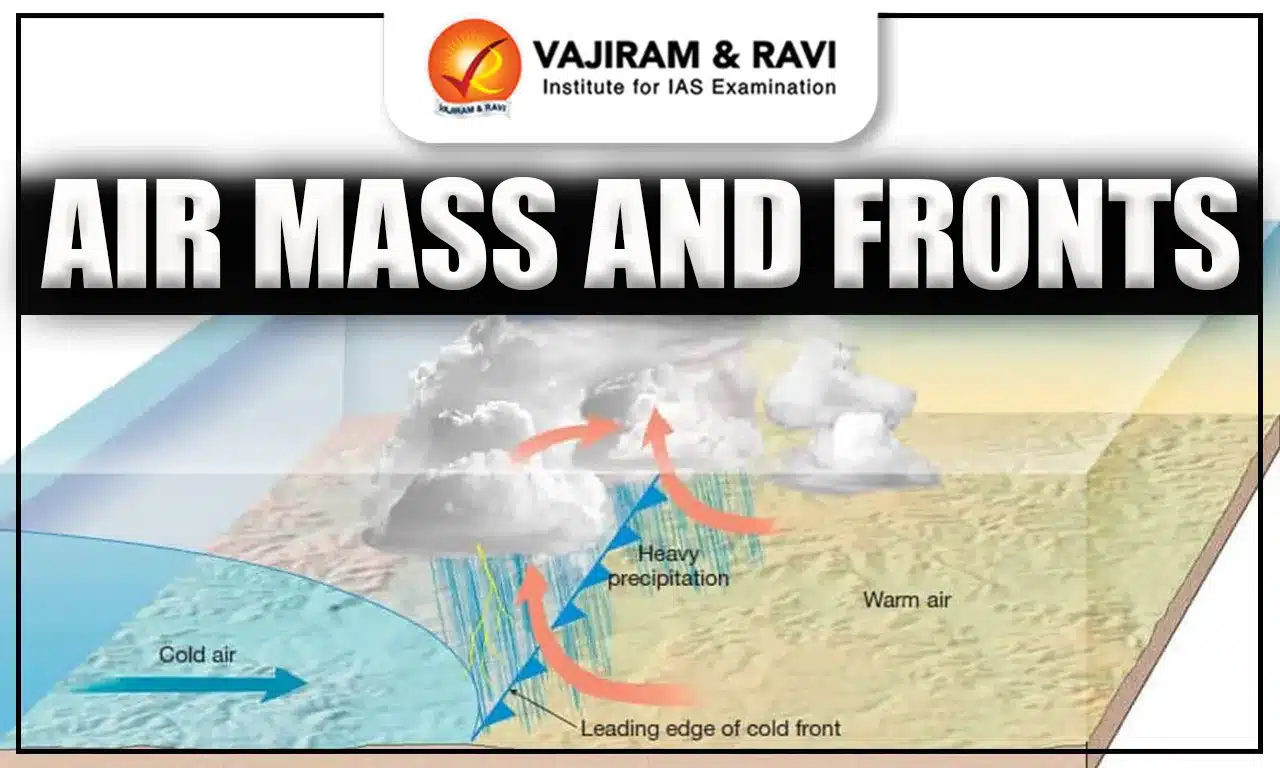
Fronts are of different types depending on the nature and movement of air masses involved. A cold front is formed when colder air replaces warmer air and results in intense rainfall and storms. Whereas, a warm front is formed when warm air advances over cold air and creates widespread but light precipitation. A stationary front occurs when neither air masses advances and causes long-lasting cloudy or rainy conditions. An occluded front is formed when a cold front overtakes a warm front and generates complex and unsettled weather. The interaction between air masses and fronts plays an important role in shaping both regional and global climatic patterns and makes them central to the study of meteorology. 

Types of Air Mass and Fronts

Air Masses and Fronts can be divided into the following types: 

Types of Air Masses

Air masses are classified by temperature and moisture from their source regions:

  • Tropical (T): Warm air masses formed in low latitudes.
  • Polar (P): Cold air masses developed in mid- to high-latitude regions.
  • Arctic (A): Extremely cold air masses originating from polar zones.
  • Continental (c): Dry air masses generated over land.
  • Maritime (m): Moist air masses formed over oceans.

Common combinations include:

  • cT (Continental Tropical): Hot and dry, formed over deserts.
  • mT (Maritime Tropical): Warm and humid, originating from tropical seas.
  • cP (Continental Polar): Cold and dry, from high-latitude landmasses.
  • mP (Maritime Polar): Cold and moist, from colder oceans.

Types of Fronts

Fronts mark the boundaries between two different air masses:

  • Cold Front: Cold air undercuts warm air, bringing storms and cooler conditions.
  • Warm Front: Warm air moves above cold air, causing steady rain and rising temperatures.
  • Stationary Front: Neither air mass advances, resulting in prolonged rain or clouds.
  • Occluded Front: A cold front overtakes a warm front, creating mixed weather events.

Air Mass and Fronts Classifications

Air Mass and fronts can be classified into the following: 

Classification of Air Masses 

Air masses are divided on the basis of their source regions and nature of surface. These classification are: 

By Source Region

  • Polar (P): Cold air masses originating from high-latitude regions.
  • Tropical (T): Warm air masses formed in low-latitude regions.

By Surface Type

  • Continental (c): Dry air masses that develop over landmasses.
  • Maritime (m): Moist air masses that form over oceans or seas.

Combined Classifications

  • cP (Continental Polar): Cold and dry; originates over polar land areas.
  • mP (Maritime Polar): Cold and moist; develops over polar oceans.
  • cT (Continental Tropical): Hot and dry; forms over desert regions.
  • mT (Maritime Tropical): Warm and humid; arises over tropical oceans.

Classification of Fronts 

Fronts are the areas in between two contrasting air masses that interact with each other but do not mix. Fronts can be sub-divided into the following types: 

  • Cold Front: Formed when a cold air mass advances and displaces warm air, often causing thunderstorms or heavy showers.
  • Warm Front: Occurs when warm air overtakes cold air, resulting in prolonged rainfall and a rise in temperature.
  • Stationary Front: Arises when neither air mass dominates, leading to cloudy skies and persistent drizzle or rain.
  • Occluded Front: Develops when a cold front overtakes a warm front, creating complex weather with mixed precipitation.

Air Masses and Fronts Formation

Air masses and fronts are formed on the following basis: 

Formation of Air Masses 

Air masses are formed when large volumes of air form over a uniform surface area for a prolonged period, acquiring the temperature, humidity and pressure characteristics of that area. 

  • Tropical air masses: Warm, formed over hot regions.
  • Polar air masses: Cold, originating in high latitudes.
  • Maritime air masses: Moist, formed over oceans.
  • Continental air masses: Dry, developed over land.

Formation of Fronts

Fronts emerge when air masses with contrasting properties meet.

  • Cold Front: Cold air pushes warm air upwards.
  • Warm Front: Warm air slides over cold air.
  • Stationary Front: Neither air mass advances, remaining static.
  • Occluded Front: Cold front overtakes a warm front, lifting warm air completely.

Air Masses and Fronts Importance

Air masses and fronts are important from the aspect of weather and climate and influence both short-term and long term atmospheric conditions in the following manner: 

  • They determine local temperature and humidity with fronts causing rainfall, storms and snow. 
  • Source regions like the tropical, polar, maritime and continental zones shape long-term climatic features. 
  • Cold fronts bring heavy but short lived rainfall and warm fronts cause steady and long term showers. 
  • Interactions at fronts form thunderstorms, cyclones or tornadoes. 
  • Having the right knowledge helps forecast weather, protect crops and sustain ecological balance. 
  • In essence, air masses and fronts are the building blocks of atmospheric processes, crucial for weather forecasting, disaster preparedness, and climate studies.

Air Mass and Fronts FAQs

Q1: What are air masses and fronts?

Ans: Air masses are large bodies of air with uniform temperature and humidity, while fronts are the boundaries formed when two different air masses meet.

Q2: What is the relationship between air masses and weather fronts?

Ans: Weather fronts occur due to the interaction of contrasting air masses, leading to changes in weather conditions.

Q3: What are the 4 types of fronts?

Ans: The four types of fronts are Cold Front, Warm Front, Stationary Front, and Occluded Front.

Q4: What are the 4 types of air masses?

Ans: The four main types are Continental Polar (cP), Maritime Polar (mP), Continental Tropical (cT), and Maritime Tropical (mT).

Q5: What is a cold front?

Ans: A cold front forms when a cold air mass advances and forces warm air upward, often causing thunderstorms and a drop in temperature.

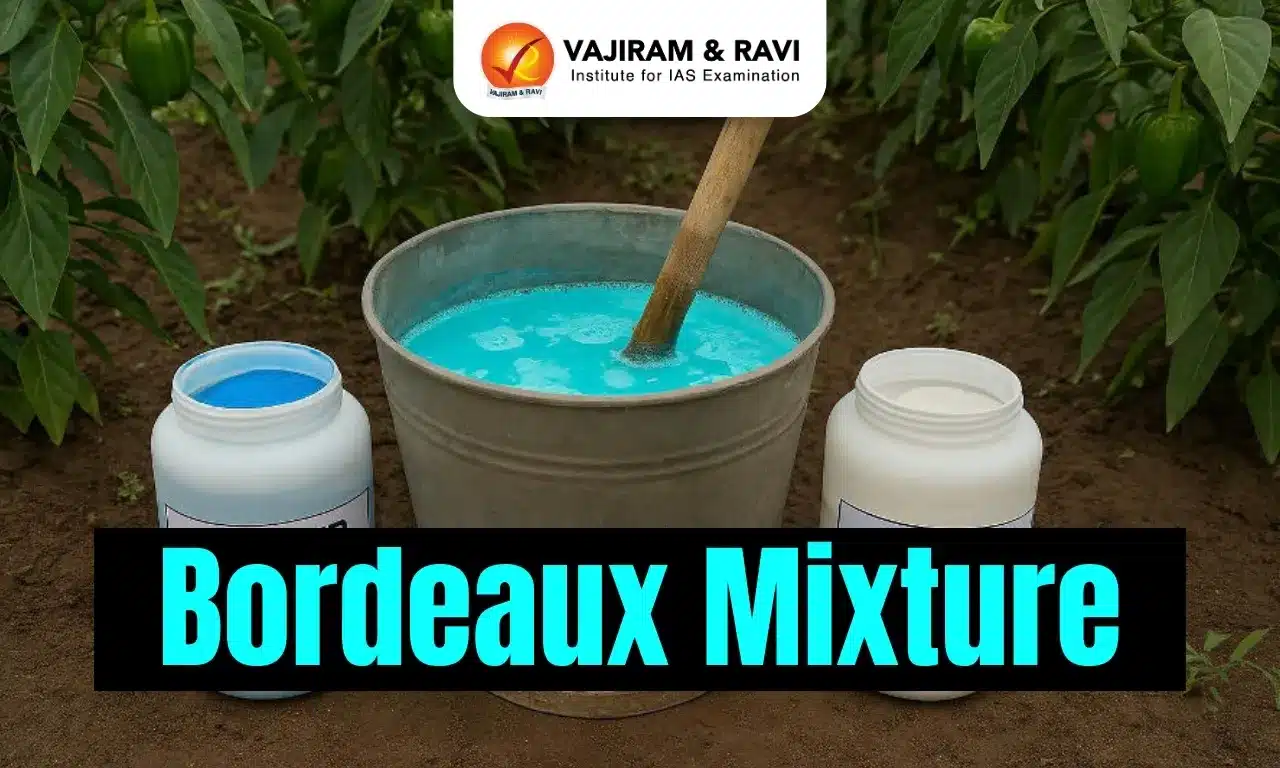
Bordeaux Mixture

Bordeaux Mixture

Bordeaux Mixture Latest News

Planters in the Chikkamagaluru and Hassan districts of Karnataka are gearing up to apply Bordeaux mixture for the third or fourth time this year, following earlier crop damage caused by unseasonal rainfall.

About Bordeaux Mixture

  • Bordeaux mixture is a bactericide and fungicide made by mixing copper sulfate and lime (calcium hydroxide) with water. 
  • Discovered in the late 19th century in France's Bordeaux region, from which it takes its name, Bordeaux mixture has stood the test of time and continues to be a reliable solution for disease management, particularly in organic farming systems.
  • This mixture is especially effective in controlling fungal and bacterial diseases in various crops such as fruits, vegetables, and plantation crops.
  • It has a low aqueous solubility and is not volatile.
  • It persists in rainy weather and can provide long-lasting protection against a variety of diseases.
  • Bordeaux mixture is usually applied after harvest, before rainy weather starts.
  • Additionally, because it contains copper, it has a multi-site mode of action and may be a particularly useful spray in a pesticide resistance management program.
  • However, applying Bordeaux mixture to newly growing leaves, however, can cause injury to the new growth.

Source: TOI

Bordeaux Mixture FAQ's

Q1: What is the mixture of Bordeaux?

Ans: It is made by mixing copper sulfate and lime (calcium hydroxide) with water.

Q2: What property makes Bordeaux mixture effective during rainy weather?

Ans: Low aqueous solubility and persistence.

Q3: Bordeaux mixture is particularly useful in which type of farming system

Ans: Organic farming

Q4: When is Bordeaux mixture usually applied?

Ans: After harvest, before rainy weather.

Mira Stars

Mira Stars

Mira Stars Latest News

Recently, the most precise determination of the expansion rate of the universe was made using cool, giant variable stars ‘Mira’ by the scientists from Inter-University Centre for Astronomy and Astrophysics (IUCAA).

About Mira Stars

  • Mira, also known as Omicron Ceti, is a star that remarkably changes its brightness over time, in a regular pattern.
  • The name, Mira, means "the wonderful" in Latin, and it lived up to that name by becoming the prototype for an entire class of stars known as Mira variables.
  • With the variability first measured by astronomers in the 17th century, Mira was the first known example of a "variable star"—a star that doesn't shine with a constant brightness.
  • Mira variables are a type of giant star that go through regular cycles of expanding and contracting.
  • These cycles cause their brightness to vary in a predictable way, typically over periods ranging from 100 to 1,000 days.
  • These stars are relatively cool, with surface temperatures around 3,000 Kelvin (about half the temperature of the Sun’s surface), and they are in the late stages of their life.
  • One of the most important things about Mira variables is that there is a strong relationship between how bright they are and how long their pulsation cycles last.
  • This relationship allows astronomers to use them as "standard candles."
  • A standard candle is an object in space whose true brightness is known. By comparing how bright the object appears from Earth to how bright it actually is, scientists can calculate how far away it is.
  • This is a key method used to measure distances in the universe, forming part of what astronomers call the "extragalactic distance ladder."

Source: PIB

Mira Stars FAQs

Q1: What type of star is Mira?

Ans: Variable red giant

Q2: What causes Mira's variability?

Ans: They are pulsating due to the entire star expanding and contracting. This produces a change in temperature along with radius, both of which factors cause the variation in luminosity.

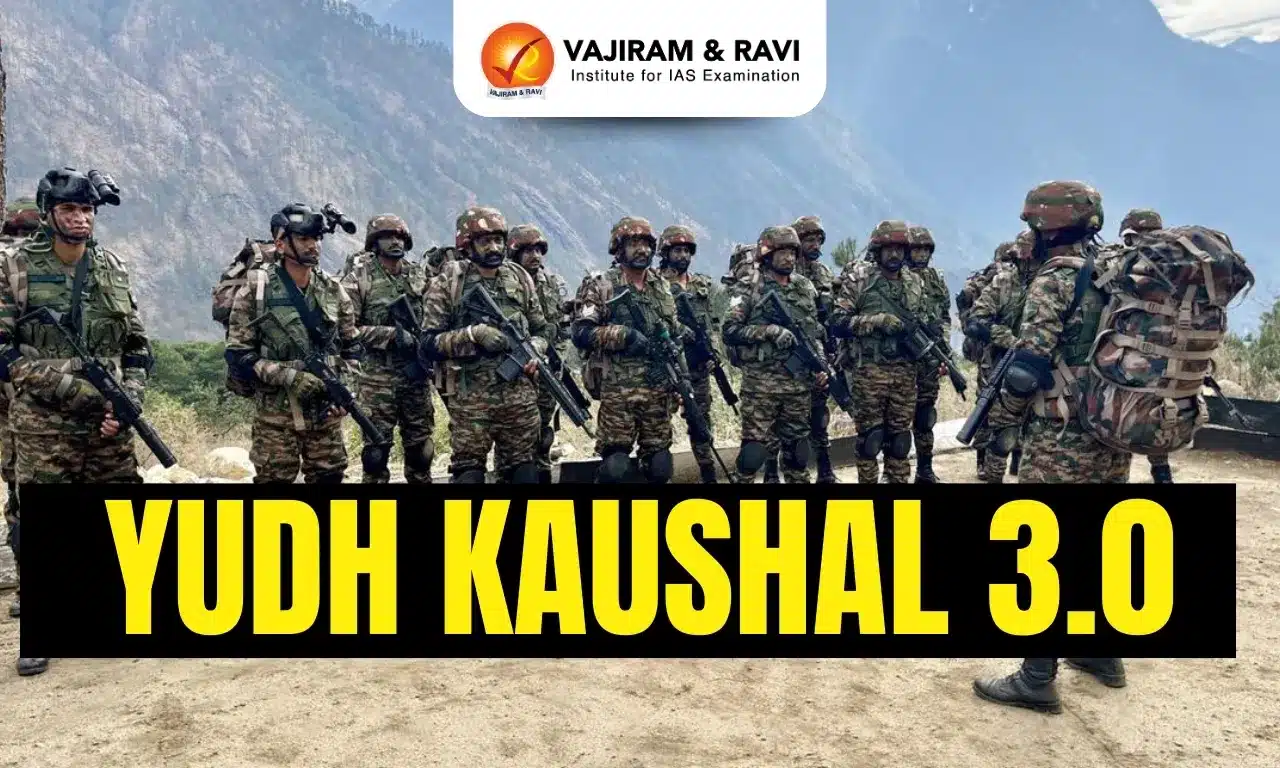
Exercise Yudh Kaushal 3.0

Exercise Yudh Kaushal 3.0

Exercise Yudh Kaushal 3.0 Latest News

The Indian Army recently conducted Exercise Yudh Kaushal 3.0 in the high-altitude Kameng region of Arunachal Pradesh.

About Exercise Yudh Kaushal 3.0

  • It was conducted by the Indian Army in the high-altitude Kameng region of Arunachal Pradesh.
  • The exercise demonstrated an impressive integration of advanced technology, operational innovation, and professional expertise by the troops.
  • The large-scale manoeuvres highlighted the Army’s capability to operate across multi-domain environments, with demonstrations including drone surveillance, real-time target acquisition, precision strikes, air-littoral dominance, and coordinated battlefield operations.
  • A key feature was the operational debut of the newly raised ASHNI platoons, showcasing how next-generation technology, combined with proven tactical experience, can provide a decisive advantage in both current and future conflicts.
  • A unique aspect of Exercise Yudh Kaushal 3.0 was the active involvement of the Indian Civil Defence Industry, reflecting India’s ongoing “Decade of Transformation.”
  • The exercise validated the Army’s readiness to operate in high-altitude, harsh climatic conditions and reaffirmed its commitment to integrating emerging technologies, including unmanned systems, precision weaponry, and multi-domain operational strategies.

Source: TH

Exercise Yudh Kaushal 3.0 FAQs

Q1: Exercise Yudh Kaushal 3.0 was conducted by the Indian Army in which region?

Ans: Kameng region of Arunachal Pradesh

Q2: Which newly raised platoons made their operational debut during Exercise Yudh Kaushal 3.0?

Ans: ASHNI platoons

Q3: Which strategic advantage did the Exercise Yudh Kaushal 3.0 aim to demonstrate?

Ans: Decisive edge in high-altitude warfare through technology integration.

Dhauliganga Hydroelectric Project

Dhauliganga Hydroelectric Project

Dhauliganga Hydroelectric Project Latest News

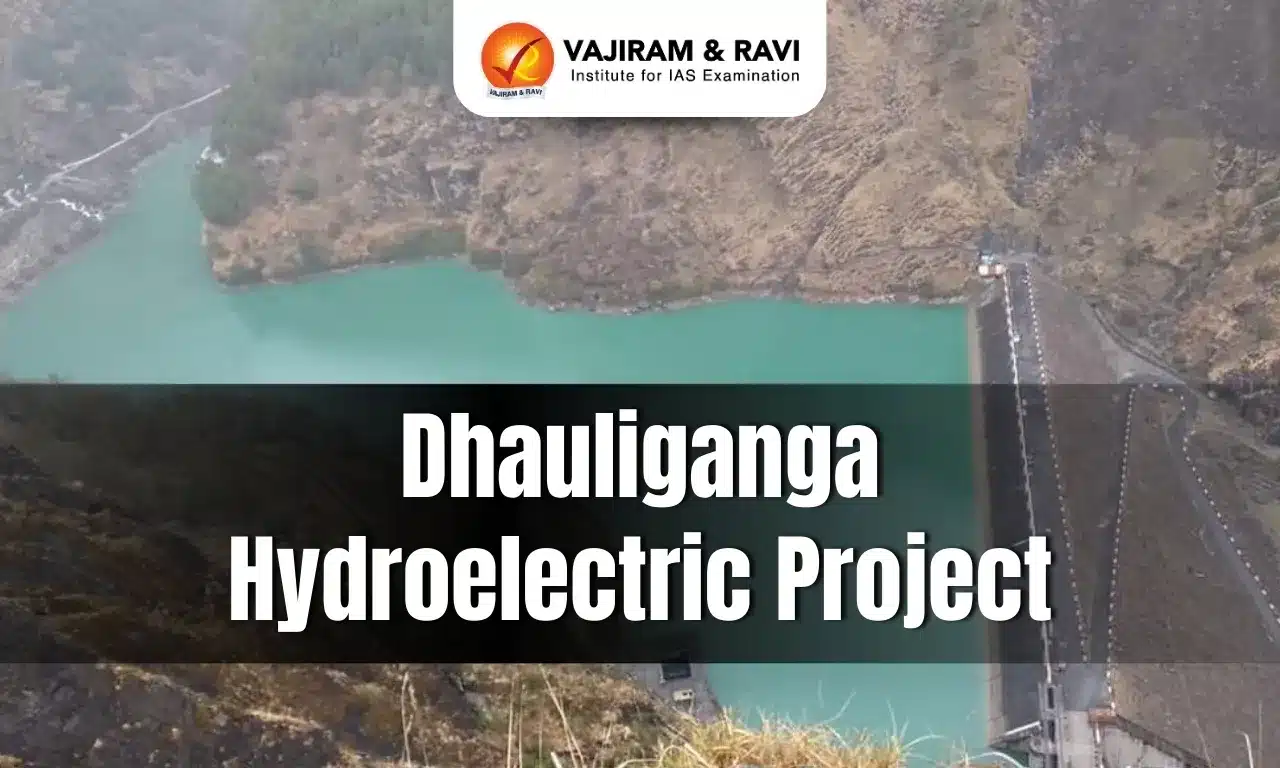
Nineteen workers and officials of the NHPC were rescued after they were trapped inside the tunnel of the 280 MW Dhauliganga hydroelectric project in Pithoragarh's Dharchula area for almost 22 hours recently.

About Dhauliganga Hydroelectric Project

  • It is a 280 MW hydropower project located on the Dhauliganga River near Dharchula in the Pithoragarh district of Uttarakhand. 
    • The Dhauliganga River is one of the prominent tributaries of the Alaknanda River, which is a key component of the Ganga River system. 
  • The project construction commenced in 2000 and subsequently entered into commercial operation in 2005. 
  • The project is currently owned by the National Hydroelectric Power Corporation (NHPC).
  • It is a run-of-river project. 
  • It consists of a concrete-faced rock-fill embankment dam with a height of 56 meters and a length of 315 meters.
  • The hydro reservoir capacity is 6.2 million cubic meters.
  • The gross head and net head of the project are 310 m and 297 m, respectively.

Source: TOI

Dhauliganga Hydroelectric Project FAQs

Q1: The Dhauliganga Hydroelectric Project is located in which state?

Ans: Uttarakhand

Q2: What is the installed capacity of the Dhauliganga Hydroelectric Project?

Ans: 280 MW

Q3: The Dhauliganga River is a tributary of which major river?

Ans: The Dhauliganga River is one of the prominent tributaries of the Alaknanda River.

Q4: When did the Dhauliganga Hydroelectric Project begin commercial operation?

Ans: 2005

Dioscorea balakrishnanii

Dioscorea balakrishnanii

Dioscorea balakrishnanii Latest News

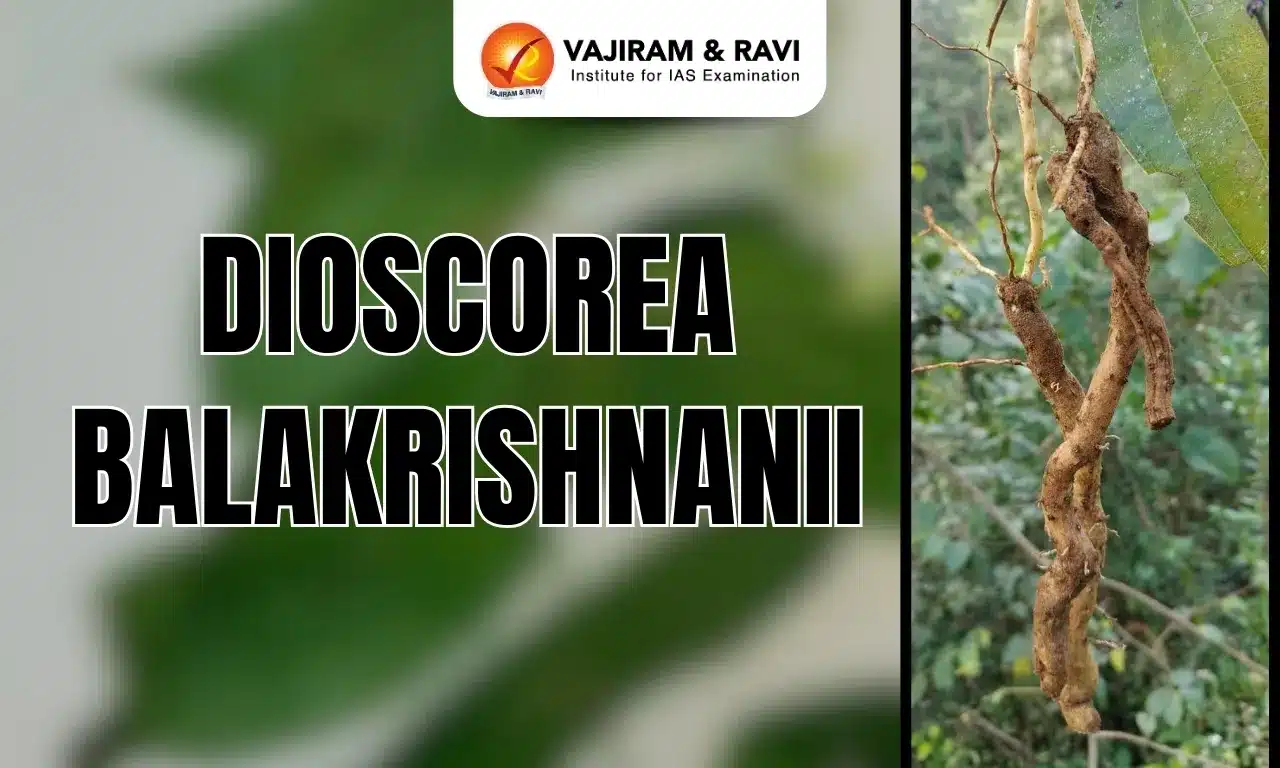
Researchers from Kerala have identified an edible tuber and named it as Dioscorea balakrishnanii.

About Dioscorea balakrishnanii

  • It is an edible tuber found in the Western Ghats region of Wayanad district of Kerala.
  • It is a new species of the genus Dioscorea.
  • This yam species is locally known as ‘chola kizhangu’ among the Kattunayikar tribes of Wayanad. The tubers are edible when cooked and are said to have an excellent flavour
  • Habitat: It is found only in the sholas of evergreen forests.
  • The species holds potential as a tuber variety for food security and cultivation as a food crop with low glycemic index.
  • Since there are male and female varieties, Dioscorea balakrishnanii was continuously observed for the last ten years and the differences in the flowers have been recorded.
  • The Wayanad region of the Western Ghats is rich in unique wild tubers, relatives of the commonly cultivated tubers known as kachil or kavat (purple yam).
  • These belong to the plant family Dioscoreaceae and 23 different forms of more than 14 species.
  • Significance: The discovery of this new tuber is of significance for the conservation of unique ecosystems and unique wild relatives as well as food security and the medicinal sector.

Source: TH

Dioscorea balakrishnanii FAQs

Q1: What is the benefit of yam in the human body?

Ans: Yams offer diverse health benefits thanks to their antioxidant, digestive, energetic, lipid-lowering, estrogenic, anti-inflammatory, hypoglycemic.

Q2: What is Dioscorea also known as?

Ans: Dioscorea species, known as “Yams,” belong to family Dioscoreaceae.

Indian Rosewood

Indian Rosewood

About Indian Rosewood Latest News

According to recent habitat modelling by the Institute of Wood Science and Technology (IWST), Bengaluru, only 17.2% of India’s suitable habitat for Dalbergia latifolia — Indian rosewood — lies within protected areas.

About Indian Rosewood

  • Indian Rosewood i.e Dalbergia sissoo (North Indian rosewood) is often called the “ivory of the forests,”
  • Indian Rosewood is a fast-growing, hardy, deciduous crooked rosewood
  • Distribution: It is native to the foothills of the Himalayas, ranging from Afghanistan in the west to Bihar, India, in the east.
  • Habitat: It is primarily found growing along river banks above 200 m (700 ft) elevation, but can range naturally up to 1,400 m (4,600 ft).
  • It has long, leathery leaves and whitish or pink flowers.
  • Indian rosewood is prized for its rich grain, deep colour, and exceptional durability.
  • It serves as both a premium timber resource for the furniture and handicraft industries and a keystone ecological species.
  • It is commonly used for furniture, musical instruments, decorative items and veneers.
  • Ecological Significance: Rosewood trees improve soil fertility through nitrogen fixation, support bird and insect diversity, and act as long-term carbon sinks.
  • Concerns: Researchers observed that populations are dominated by mature, ageing trees with almost no regeneration in the wild. Seedlings are rare, and in many areas, entirely absent.

Conservation status of Indian Rosewood

  • IUCN: Vulnerable
  • CITES list: Appendix II

Source: TH

Indian Rosewood FAQs

Q1: What is rosewood called in India?

Ans: Sheesham

Q2: What is Indian Rosewood used for?

Ans: It is used for furniture, paneling, ornamental work, ordinance work, agricultural implements, etc.

Great Salt Lake

Great Salt Lake

Great Salt Lake Latest News

As the Great Salt Lake shrinks, scientists are uncovering mysterious groundwater-fed oases hidden beneath its drying lakebed.

About Great Salt Lake

  • It is a saline lake located in northern Utah, United States.
  • It is the largest inland body of salt water in the Western Hemisphere and one of the most saline inland bodies of water in the world.
  • The lake is fed by the Bear, Weber, and Jordan rivers and has no outlet.
  • The lake has fluctuated greatly in size, depending on the rates of evaporation and the flow of the rivers that feed it. 
  • Its surface area has varied from about 6,200 sq.km. at its highest levels in 1873 and the mid-1980s to about 2,300 sq.km. at its lowest level in 2022. 
  • It has a length of 120 km and a maximum width of 45 km. 
  • The lake reaches an average depth of 4.9 m and a maximum depth of 10 m. 
  • Like the Dead Sea, the Great Salt Lake exists within an arid environment and has chemical characteristics similar to that of the oceans. 
  • It has a much greater salinity than the oceans, however, since natural evaporation exceeds the supply of water from the rivers feeding the lake.
  • Surrounded by great stretches of sand, salt land, and marsh, the Great Salt Lake remains eerily isolated from the nearby cities, towns, and other human habitations.
  • The salts are primarily sodium chloride, but there are also sulfates, magnesium, and potassium.

Source: SD

Great Salt Lake FAQ's

Q1: The Great Salt Lake is located in which country?

Ans: United States

Q2: Which rivers feed the Great Salt Lake?

Ans: The lake is fed by the Bear, Weber, and Jordan rivers.

Q3: Why is the Great Salt Lake considered similar to the Dead Sea?

Ans: Both are hypersaline and exist in arid regions.

Daily Editorial Analysis 1 September 2025

Daily Editorial Analysis

India’s Economic Churn and the Nectar of Growth 

Context

  • Civilisations are often tested by moments of crisis, and India has long embraced the philosophy that trial precedes triumph.
  • Much like the mythological churning of the ocean, Samudra Manthan, where turbulence yielded nectar, India’s economic churns have consistently produced renewal.
  • From the 1991 liberalisation born of crisis to the digital surge triggered by the COVID-19 pandemic, adversity has catalysed resilience.
  • Today, against the backdrop of sceptics branding India a dead economy, the data tells a very different story, one of rapid growth, strengthened buffers, and inclusive opportunity.

Features of India’s Economic Growth

  • A Resilient Growth Story

    • The latest GDP numbers reveal an economy on firm footing. Real GDP surged by 7.8% in Q1 FY 2025-26, the strongest in five quarters, with growth spread broadly across sectors: manufacturing at 7.7%, construction at 7.6%, and services at an impressive 9.3%.
    • Nominal GDP rose by 8.8%, driven by consumption, investment, and reforms in logistics that reduce costs and improve efficiency.
    • India has now emerged as the world’s fourth-largest economy and remains the fastest-growing major one, surpassing even the United States and China in growth rates.
    • On its current trajectory, India is poised to overtake Germany before the decade ends, claiming the position of the world’s third-largest economy in market exchange terms.
    • Recognition has followed. S&P Global’s recent upgrade of India’s sovereign rating, the first in 18 years, underscores fiscal discipline, monetary credibility, and sustained growth.
    • The upgrade not only lowers borrowing costs but also directly rebuts narratives of stagnation.
  • Growth With Inclusion

    • Between 2013-14 and 2022-23, nearly 25 crore Indians moved out of multidimensional poverty.
    • This transformation rests on wide-scale delivery of essential services: universal bank accounts, clean cooking fuel, health coverage, tap water, and direct benefit transfers.
    • Together, these interventions empower households to make independent economic choices.
    • Unlike authoritarian sprints, India’s democratic model emphasises consensus-building, competitive federalism, and reliable last-mile delivery through its digital public infrastructure.
    • It is a marathoner’s economy, steady, enduring, and designed to last.

Crucial Factors Deriving India’s Economic Growth

  • Energy Security as Growth Enabler

    • As the third-largest energy consumer and the fourth-largest refiner and LNG importer, India has built substantial refining capacity of 5.2 million barrels per day, with plans to expand further by decade’s end.
    • With energy demand expected to double by 2047, India’s role will be pivotal to global energy stability, accounting for nearly a quarter of incremental global demand.
    • Government reforms have expanded exploration acreage, unlocked previously restricted basins, and introduced transparent bidding through the Open Acreage Licensing Policy.
    • Pricing reforms, particularly for natural gas, have further encouraged investment, while measures such as premium incentives for deepwater projects highlight the balance between security and innovation.
  • Transitioning to a Green Future

    • Ethanol blending has risen from 1.5% in 2014 to 20% today, generating massive foreign exchange savings while directly benefiting farmers.
    • The rollout of compressed biogas plants, a blending mandate, and investments in green hydrogen showcase India’s ambition to lead in the clean energy transition.
    • Criticism of India’s purchase of Russian crude overlooks both legality and necessity. Russian oil, unlike Iranian or Venezuelan crude, is not under outright sanctions but governed by a price cap regime intended to ensure global supply.
    • India has complied with these rules, stabilising global oil markets and preventing shocks that could have driven prices above $200 per barrel.
    • Far from profiteering, India’s long-standing refining and export practices have kept supply chains stable, even serving European markets.
    • Domestically, subsidies, tax cuts, and mandatory supply quotas shielded Indian consumers from price volatility, reflecting the state’s responsibility to its citizens.

Industrial and Digital Transformation

  • With strong support through production-linked incentives and logistics upgrades under the Pradhan Mantri Gati Shakti initiative, sectors like semiconductors, defence, electronics, and renewable energy are scaling rapidly.
  • The recent approval of four new semiconductor projects under the India Semiconductor Mission, combined with Japan’s renewed investment commitments, signals intent to create resilient technology supply chains.
  • The digital economy multiplies these gains. With world-leading digital payment systems such as UPI and a thriving startup ecosystem, India is exporting not just goods but solutions.
  • The fusion of digital rails with physical infrastructure creates compounding effects: lower friction, higher productivity, greater formalisation, and sustained cycles of investment and consumption.

Conclusion

  • Independent forecasts predict that by 2038, India could emerge as the world’s second-largest economy in purchasing power parity terms, with a GDP surpassing $34 trillion.
  • Achieving this trajectory requires sustained reforms, strong human capital, and abundant, clean energy for all.
  • History shows that India’s moments of doubt have always been followed by breakthroughs, the Green Revolution, the IT revolution, and the digital revolution.

India’s Economic Churn and the Nectar of Growth FAQs

Q1. What philosophy has historically guided India’s response to economic crises?
Ans. India has long believed that trial precedes triumph, turning crises into opportunities for renewal, such as in 1991 and during the COVID-19 pandemic.

Q2. How has India’s GDP performed in Q1 FY 2025-26?
Ans. India’s real GDP grew by 7.8%, the highest in five quarters, with broad-based growth across manufacturing, construction, and services.

Q3. What role does energy security play in India’s economic growth?
Ans. Energy security underpins growth by ensuring reliable supply, expanding refining capacity, and attracting investment through exploration and pricing reforms.

Q4. How is India progressing in its green energy transition?
Ans. India has expanded ethanol blending to 20%, launched biogas plants, and invested in green hydrogen, while also saving foreign exchange and supporting farmers.

Q5. What is India’s long-term economic trajectory according to projections?
Ans. Independent forecasts suggest that by 2038, India could become the world’s second-largest economy in PPP terms, with GDP exceeding $34 trillion.

Source: The Hindu


Giving Wings to India’s Youth

Context

  • India’s economic trajectory in the twenty-first century has been closely tied to its Shram Shakti, or labour power.
  • Over the past decade, under the leadership of Prime Minister Narendra Modi, the country has not only risen from the world’s tenth largest economy in 2014 to the fourth largest today, but has also witnessed profound shifts in employment, social security, and youth empowerment.
  • The narrative of India’s growth is therefore inseparable from the role of its workforce, and the policies designed to harness its demographic dividend.

Employment Growth and Formalisation

  • A striking feature of India’s economic performance in recent years is the simultaneous rise in employment opportunities.
  • According to RBI-KLEMS data, the decade preceding 2014 produced just 2.9 crore jobs, while the subsequent decade generated more than 17 crores.
  • This expansion of employment has been coupled with accelerated formalisation.
  • Evidence from the Employees’ Provident Fund Organisation (EPFO) shows that more workers are being drawn into the formal sector, thereby gaining access to structured protections and benefits.
  • The quality of this transformation, however, goes beyond job creation alone.

Expanding Social Security

  • In 2015, only 19% of Indians were covered under at least one protection scheme.
  • By 2025, that number had risen to 64.3%, amounting to 94 crore
  • This expansion makes India the second-largest social security system in the world, a development the International Labour Organization has acknowledged as among the fastest global expansions of its kind.
  • Such an achievement underscores a deliberate policy effort to align economic growth with social welfare, ensuring that gains in productivity and employment translate into protection and dignity for workers.

Harnessing the Demographic Dividend

  • India’s demographic profile is both an opportunity and a challenge.
  • With 65% of its population under the age of 35, India possesses a unique advantage at a time when many Western countries face ageing populations.
  • This Yuva Shakti, or youth power, has long been recognised as India’s greatest strength, yet its potential remained underutilised.
  • The path to realising this dividend lies in making the youth employable, integrating them into the formal economy, equipping them with financial literacy, and ensuring that robust social protections are in place.
  • As India pursues the vision of Viksit Bharat by 2047, the transition from possibility to prosperity will depend on how effectively it channels this demographic advantage.

The Pradhan Mantri Viksit Bharat Rozgar Yojana

  • Announced in the Union Budget of 2024–25 and reaffirmed in the Prime Minister’s Independence Day address, this programme marks the most ambitious employment initiative in India’s history.
  • With an outlay of ₹1 lakh crore, it aims to create over 3.5 crore jobs in just two years.
  • Part A provides first-time employees with up to ₹15,000 in direct financial support, while Part B offers employers up to ₹3,000 per new hire per month.
  • This design lowers barriers for young workers while reducing hiring risks for enterprises.
  • Furthermore, by integrating Direct Benefit Transfers and mandating social security enrolment from day one, the scheme promotes transparency, formalisation, and long-term labour market resilience.
  • Equally notable is the scheme’s targeted emphasis on manufacturing, aligning with initiatives such as Make in India, the National Manufacturing Mission, and the Production-Linked Incentive scheme.
  • By strengthening both workers and businesses, it recognises that employment generation is a shared responsibility between state, market, and society.

Employment as Nation-Building

  • Beyond numbers and policy design, the Pradhan Mantri Viksit Bharat Rozgar Yojana symbolises a broader shift in India’s development model.
  • Employment is framed as central to nation-building, a foundation of dignity and equality that ensures no aspiration remains unsupported and no youth remains without opportunity.
  • In this vision, a self-reliant Bharat is one where every individual has access to meaningful work, where labour is formalised and secure, and where social protection systems are robust enough to absorb global shocks.

Conclusion

  • India’s growth story is increasingly one of inclusive development, an intertwining of economic expansion, employment generation, and social security.
  • The rise from the world’s tenth to the fourth largest economy within a decade demonstrates the strength of India’s labour force, while the expansion of social protection highlights a commitment to equity and welfare.
  • With the launch of the Pradhan Mantri Viksit Bharat Rozgar Yojana, the government has set the stage for a structural transformation of the labour market, bridging the gap between aspiration and opportunity.
  • As India stands at the cusp of 2047, the vision of Viksit Bharat will depend on how effectively it converts its demographic dividend into lasting national prosperity.

Giving Wings to India’s Youth FAQs

Q1. What role has labour power (Shram Shakti) played in India’s growth story?
Ans. It has driven both economic expansion and social transformation, linking growth with dignity, equality, and nation-building.

Q2. How has India’s employment landscape changed in the past decade?
Ans. Over 17 crore jobs were created, compared to only 2.9 crore in the previous decade, alongside faster formalisation.

Q3. Why is the expansion of social security significant?
Ans. Coverage rose from 19% in 2015 to 64.3% in 2025, making India the world’s second-largest social security system.

Q4. What is unique about the Pradhan Mantri Viksit Bharat Rozgar Yojana?
Ans. It provides dual incentives to both workers and employers while integrating beneficiaries into formal jobs and social security.

Q5. How is employment linked to the vision of Viksit Bharat 2047?
Ans. Employment is seen as the foundation of prosperity, ensuring youth empowerment, dignity of work, and inclusive national development.

Source: The Hindu

Daily Editorial Analysis 1 September 2025 FAQs

Q1: What is editorial analysis?

Ans: Editorial analysis is the critical examination and interpretation of newspaper editorials to extract key insights, arguments, and perspectives relevant to UPSC preparation.

Q2: What is an editorial analyst?

Ans: An editorial analyst is someone who studies and breaks down editorials to highlight their relevance, structure, and usefulness for competitive exams like the UPSC.

Q3: What is an editorial for UPSC?

Ans: For UPSC, an editorial refers to opinion-based articles in reputed newspapers that provide analysis on current affairs, governance, policy, and socio-economic issues.

Q4: What are the sources of UPSC Editorial Analysis?

Ans: Key sources include editorials from The Hindu and Indian Express.

Q5: Can Editorial Analysis help in Mains Answer Writing?

Ans: Yes, editorial analysis enhances content quality, analytical depth, and structure in Mains answer writing.

Blue Sea Dragon

Blue Sea Dragon

Blue Sea Dragon Latest News

Recently, several beaches in Spain were forced to shut down after an unusual invasion of blue sea dragons.

About Blue Sea Dragon

  • The blue dragon (Glaucus atlanticus) is a type of mollusk known as a nudibranch.
  • They also are known as blue sea slugs, blue angels, and sea swallows
  • Distribution: It can be found drifting on the surface of the Atlantic, Pacific and Indian oceans in temperate and tropical waters.
  • They are hermaphrodites, meaning they have both male and female reproductive organs.

Diet of Blue Sea Dragon

  • They feed on venomous siphonophores such as the Portuguese man-o-war and bluebottle, which also occur in ocean surface waters.
  • When a blue sea dragon consumes its venomous prey, it doesn’t just digest the toxins. Instead, through a complex biological process, it transports the stinging cells or nematocysts from its digestive system to specialised finger-like projections called cerata on its back and sides.
  • They incorporate these cells into multiple finger-like structures protruding from their body which provides them with a potent form of protection from predators.
  • The slug isn’t venomous all on its own, however, it stores the stinging nematocysts created by the creatures on which it feeds.

How does the Blue Sea Dragon Affect Humans?

  • Its sting can cause problems, especially to children and elderly.
  • One sting from this little creature can lead to nausea, pain, vomiting, acute allergic contact dermatitis, and post-inflammatory hyperpigmentation.

Source: IE

Blue Sea Dragon FAQs

Q1: How venomous is the blue sea dragon?

Ans: The blue dragon stores the man o' war's stinging nematocysts within its finger-like appendages, making itself equally venomous to predators.

Q2: What is an example of a hermaphrodite?

Ans: Earthworms, flatworms, mollusks, and fish(rarely) are all examples of each member who can act as both a man and a woman.

India’s Fertiliser Shortage 2025: Causes, Supply Issues and Policy Lessons

India’s fertiliser shortage 2025

India’s Fertiliser Shortage 2025 Latest News

  • India witnessed an excellent southwest monsoon this year, with June–August rainfall 6.1% above the historical average and well-distributed across regions. 
  • Rainfall exceeded norms in June (8.9%), July (4.8%), and August (5.5%), while May also recorded 106.4% above-normal rain. 
  • Out of 36 meteorological subdivisions, 33 received normal rainfall, with deficiencies seen only in Bihar, Assam, Meghalaya, and Arunachal Pradesh. 
  • The timely and evenly spread rains have spurred higher kharif sowing: rice acreage rose 7.6% to 420.4 lakh hectares, while maize cultivation jumped 11.7% to 93.3 lakh hectares. 
  • This, in turn, has boosted fertiliser sales as higher crop acreages drove demand for essential fertilizers.

Fertiliser Sales Surge with Good Monsoon

  • Between April–July 2025 and the same period in 2024, most fertilisers — including urea, single super phosphate (SSP), muriate of potash (MOP), and complex blends — recorded double-digit growth in sales.

Dip in DAP Sales, Rise of Alternatives

  • The only exception was diammonium phosphate (DAP), whose sales fell by 12.8%. 
  • This decline continues a trend from recent years, driven by supply shortages. 
  • Farmers have increasingly substituted DAP with other phosphorus-rich fertilisers such as SSP and the complex 20:20:0:13.

20:20:0:13 Emerges as a Major Player

  • With 20% phosphorus content — less than DAP’s 46% but more than SSP’s 16% — 20:20:0:13 has emerged as a popular choice. 
    • The ratio 20:20:0:13 is commonly used to represent the composition of a specific type of fertilizer, known as Ammonium Phosphate Sulphate (APS).
    • APS provides 20% Nitrogen (N), 20% Phosphorus pentoxide (P₂O₅), and 13% Sulphur (S), with no potassium (K).
  • Its sales reached a record 69.7 lakh tonnes in 2024–25, making it India’s third-largest selling fertiliser after urea (387.7 lt) and DAP (92.8 lt).

Rising Demand vs. Limited Supply

  • Despite a surge in fertiliser demand during the good monsoon, supply has not kept pace. 
  • Domestic urea production in April–July 2025 fell to 93.6 lt from 102.1 lt the previous year, while DAP output remained flat at 13.7 lt. 
  • Production rose modestly for NPKS complexes (35 lt to 37.4 lt) and SSP (17.1 lt to 19.1 lt), but imports of urea and DAP also declined, worsening the gap.

Sharp Stock Depletion

  • Government data show steep declines in fertiliser stocks as of August 1, 2025. 
  • Urea stocks dropped to 37.2 lt from 86.4 lt a year earlier. 
  • DAP (13.9 lt vs 15.8 lt), complexes (35 lt vs 47 lt), and MOP (6.3 lt vs 8 lt) also saw lower inventories. 
  • Only SSP stocks saw a marginal rise to 20.7 lt.

Peak Season Shortages

  • The supply crunch hit hardest during July–August, peak consumption months for kharif crops. 
  • Farmers need phosphatic fertilisers like DAP at sowing for root growth, while urea is applied in split doses later.
  • Reports of farmers queuing for hours to secure urea bags highlighted the shortages. 
  • Industry experts noted that fear-driven pre-stocking worsened the situation, amplifying the actual shortage during the critical sowing season.

Policy Lessons for Fertiliser Management

  • The government appears to have underestimated fertiliser demand this kharif, particularly for rice and maize, which are nitrogen-intensive crops requiring multiple urea applications. 
  • In contrast, soyabean and pulses, which need little urea, saw reduced acreage this season. 
  • With kharif consumption peaking, the focus now shifts to ensuring adequate fertiliser supplies for the rabi season, supported by strong water availability in reservoirs and aquifers. 
  • Falling imports of urea and DAP since 2023–24, largely due to Chinese supply curbs, may ease with the recent thaw in India–China ties. 
  • Experts suggest moderating usage by substituting some urea with ammonium sulphate and restricting DAP primarily to rice and wheat, while promoting complexes for other crops to ensure sustainability.

Source: IE | ET

India’s Fertiliser Shortage 2025 FAQs

Q1: What caused India’s fertiliser shortage in 2025?

Ans: A surge in demand after good monsoon rains and higher crop acreages, coupled with stagnant domestic output and reduced imports, led to the shortage.

Q2: Which fertilisers recorded the highest sales in 2025?

Ans: Urea remained the top-seller, followed by diammonium phosphate (DAP) and ammonium phosphate sulphate (20:20:0:13), which saw record demand due to DAP shortages.

Q3: Why has DAP sales declined in India?

Ans: Supply shortages and rising prices have pushed farmers to substitute DAP with alternatives like single super phosphate (SSP) and complex fertilisers such as 20:20:0:13.

Q4: How did supply shortages impact farmers?

Ans: Farmers faced long queues and pre-stocking pressures during kharif sowing, especially for urea and DAP, amplifying the sense of scarcity in July–August 2025.

Q5: What policy lessons emerge from this crisis?

Ans: The government needs advance planning, better imports, and promoting alternatives like ammonium sulphate to moderate urea/DAP consumption and ensure stable supplies.

India’s Federal Design and the Debate on J&K Statehood Formation

Statehood Formation

Statehood Formation Latest News

  • The Supreme Court’s directive on restoring Jammu and Kashmir’s statehood has revived debate on India’s federal design and the balance between Union authority and State autonomy.

Introduction

  • The question of Jammu and Kashmir’s statehood has reignited the debate on India’s federal design. 
  • The Supreme Court, while upholding the abrogation of Article 370 in December 2023, directed the Union Government to restore statehood and conduct Assembly elections. 
  • Although elections were held in October 2024, no roadmap for restoration has been announced. 
  • This delay raises larger concerns about the constitutional balance between India’s federal spirit and the Union’s authority.

Constitutional Framework for State Formation

  • The Indian Constitution outlines three processes for creating States: admission, establishment, and formation.
    • Admission: Political units like Jammu and Kashmir joined India through the Instrument of Accession in 1947.
    • Establishment: New territories like Goa and Sikkim were admitted following acquisition under international law.
    • Formation: Most common, this involves reorganising existing States under Article 3. Parliament may alter boundaries, merge, divide, or rename States.
  • However, while Parliament can reorganise States, it cannot permanently downgrade a State into a Union Territory. This principle underscores the federal foundation of India.

The Federal Character of India

  • India’s Constitution establishes a Union of States rather than a traditional federation. 
  • The term “Union” was chosen deliberately to ensure indivisibility, reflecting strong central authority alongside federal features.
  • Key aspects of India’s federal design include:
    • Indivisibility of the Union: States cannot secede, ensuring unity.
    • Bicameralism with Rajya Sabha: A permanent Upper House ensures continuous State representation at the Union level.
    • Basic Structure Doctrine: Federalism has been recognised as part of the Constitution’s basic structure, making it immune from dilution.
  • Thus, federalism in India balances diversity with unity, providing space for States while keeping the Union intact.

J&K and the Federal Debate

  • The 2019 Jammu and Kashmir Reorganisation Act converted the State into two Union Territories, J&K and Ladakh. 
  • While this was upheld as constitutional in 2023, the Court mandated eventual restoration of J&K’s statehood.
  • Critics argue that the delay undermines federalism by extending Union dominance through the Lieutenant Governor, restricting the powers of elected representatives. 
  • Proponents, however, argue that given J&K’s sensitive security situation, Union control remains essential until stability deepens.

Importance of Restoring Statehood

  • Restoration of statehood carries deep constitutional and political significance:
    • Federal Integrity: Reaffirming India’s commitment to shared governance between the Union and States.
    • Democratic Rights: Empowering the elected Assembly ensures people’s representation and accountability.
    • Balancing Power: Curtailing the excessive influence of the Lieutenant Governor aligns governance with democratic federalism.
    • Judicial Mandate: Compliance with the Supreme Court’s directive strengthens constitutional trust.
    • Political Stability: Restoring statehood could reduce alienation in the region and reinforce faith in India’s federal compact.

The Larger Federal Design Challenge

  • India’s federalism is often described as “quasi-federal,” combining strong central authority with regional autonomy. 
  • While this has enabled national unity, it has also led to tensions, especially when Union powers are exercised extensively, such as in J&K.
  • The debate underscores a fundamental question: how should India balance national security concerns with federal principles? The answer lies in respecting constitutional commitments while pragmatically addressing ground realities.

Source : TH

Statehood Formation

Q1: What does India’s federal design mean?

Ans: It refers to India’s unique system where the Union holds strong central authority while States enjoy constitutionally guaranteed powers.

Q2: Can Parliament convert a State into a Union Territory permanently?

Ans: No, under Article 3, Parliament can reorganise States but cannot downgrade a State into a Union Territory permanently.

Q3: Why is restoring J&K’s statehood important for federalism?

Ans: It reaffirms India’s federal principles, empowers elected representatives, and reduces central overreach.

Q4: What role does the Rajya Sabha play in India’s federal design?

Ans: As a permanent House, it ensures continuous State representation at the national level, protecting federal balance.

Q5: How did J&K originally join India?

Ans: Through the Instrument of Accession in 1947, signed by Maharaja Hari Singh under the Indian Independence Act, 1947.

Green Credit Programme (GCP) – Revised Rules for Tree Plantation

Green Credit Programme

Green Credit Programme (GCP) Latest News

  • The Union Environment Ministry has recently notified a new methodology for awarding green credits under the Green Credit Programme (GCP). 
  • This replaces the earlier methodology, with significant changes in eligibility, time frame, and use of credits.

Overview of the Green Credit Programme (GCP)

  • Launched: In November 2023, at the UN Climate Conference (COP28, Dubai) by the Prime Minister of India.
  • Objective: To promote voluntary environmental protection actions such as tree plantation, water conservation, waste management, etc.
  • Mechanism: Under GCP, the environment ministry seeks ‘voluntary actions’ from companies, individuals, or groups for environmental protection activities, and awards credits in return.

Key Changes in Rules

  • Awarding of credits:
    • Earlier system: The earlier benchmark awarded green credit subject to a minimum density of 1,100 trees per hectare, within two years of plantation.  It is criticized for not focusing on survival, and quality and density of canopy. 
    • New methodology: 
      • Those who have invested in tree plantation activities will earn green credits on completion of a minimum of five years of restoration activities on degraded forest land.
      • The green credit shall be calculated based on the vegetation status, including the change in the canopy density (after achieving a minimum canopy density of 40%) and the number of surviving trees.
  • Tradability of credits:
    • Earlier system: Market-based trading of credits.
    • New methodology: The credit for tree plantation will be non-tradable and non-transferable, except in the case of transfer between the holding company and its subsidiary companies.
  • Permissible uses of green credits:
    • Those involved in tree plantation under GCP will still be allowed a one-time exchange of green credit for compensatory afforestation obligations, 
      • To meet corporate social responsibility requirements or 
      • For other legal tree planting obligations. 
    • The credit will cease after exchanging it for compliance with legal obligations.
    • The credit for tree plantation may be used for reporting under environmental, social, and governance (ESG) leadership indicators.

Rationale Behind Changes

  • Focus on quality and survival:
    • Moves away from just counting trees per hectare.
    • Emphasizes long-term health of plantations (minimum 5 years).
    • Addresses criticism of government afforestation drives that focus on quantity over survival and canopy quality.
  • Focus on credibility:
    • So far, 57,986 hectares of degraded forest land have been registered under GCP, as per government data. 
    • Revised rules expected to improve credibility and long-term sustainability.

Conclusion

  • The revised Green Credit Programme marks a shift from tokenistic tree-plantation drives to sustainable ecological restoration with a focus on quality, survival, and canopy growth. 
  • Going forward, this approach can strengthen India’s climate resilience, improve biodiversity, and enhance corporate accountability in environmental stewardship.

Source: IE

Green Credit Programme (GCP) FAQs

Q1: Why has the Union Environment Ministry revised the methodology of awarding green credits under the Green Credit Programme (GCP)?

Ans: To ensure focus on long-term tree survival and canopy density rather than short-term plantation targets.

Q2: What are the key conditions for awarding green credits for tree plantation under the new rules of GCP (2025)?

Ans: Credits will be awarded after 5 years, based on a minimum canopy density of 40% and verified tree survival.

Q3: How does the revised GCP address the criticism of earlier afforestation and plantation initiatives in India?

Ans: By shifting from a tree-count benchmark (1,100 per hectare) to quality indicators like canopy density and growth.

Q4: What is the significance of restricting green credits under GCP as non-tradable and non-transferable?

Ans: It prevents commercial speculation, while allowing use mainly for CSR, legal obligations, or ESG reporting.

Q5: In what way can the GCP contribute to India’s climate commitments and sustainability goals?

Ans: By incentivising voluntary ecological restoration on degraded lands, enhancing carbon sequestration and biodiversity.

PM Modi–Xi Jinping Tianjin Summit 2025: Key Outcomes and Strategic Shifts

PM Modi Xi Jinping Meeting 2025

PM Modi Xi Jinping Meeting 2025 Latest News

  • PM Modi met Chinese President Xi Jinping on the sidelines of the SCO Summit 2025 in Tianjin
  • Both leaders welcomed the positive momentum since their October 2024 meeting in Kazan and reaffirmed that India and China are development partners, not rivals. 
  • They agreed that bilateral differences should not escalate into disputes and emphasized the need for stable relations based on mutual respect, interest, and sensitivity.

PM Modi–Xi Jinping Meeting in Tianjin: Key Highlights

  • PM Modi and Chinese President Xi Jinping held wide-ranging talks in Tianjin, marking Modi’s first visit to China in seven years. 
  • The meeting came soon after the US imposed 50% tariffs on Indian goods due to India’s purchase of Russian oil. 
  • Both leaders reviewed bilateral ties and global challenges, seeking to expand cooperation while managing differences.

Border Issues

  • PM Modi underlined that peace and stability along the border are essential for advancing relations, likening it to an “insurance policy” for bilateral ties. 
  • He reiterated India’s unchanged stance on Taiwan. 
  • Both sides acknowledged recent steps to rebuild trust after the Galwan Valley clashes of 2020.

Upgrading Strategic Relations

  • President Xi proposed four suggestions: strengthen strategic communication, deepen trust, expand cooperation, ensure mutual benefit, and enhance multilateral cooperation
  • PM Modi responded positively, signalling intent to upgrade ties.

Cross-Border Terrorism

  • The Prime Minister raised the issue of cross-border terrorism, stressing that both India and China have suffered from the threat. 
  • He urged mutual support to combat terrorism effectively.

Trade and Economic Cooperation

  • Both leaders acknowledged their economies’ stabilising role in global trade and agreed to expand bilateral investment while addressing the trade deficit
  • The ongoing discussions on balancing trade, involving governments, businesses, and institutions. 
  • Modi and Xi also discussed ways to boost people-to-people ties.

Global Order and Multilateralism

  • The two leaders shared concerns over the functioning of global bodies like the WTO and UN. 
  • Modi emphasised that India and China, both pursuing strategic autonomy, should not let relations be defined through the lens of a third country
  • Xi called for cooperation between India and China as leading Global South economies to uphold multilateralism and a multipolar world.

Connectivity and Regional Cooperation

  • The leaders discussed connectivity projects with Myanmar, with Modi highlighting their importance for India’s ties with Southeast Asia. 
  • Modi also invited Xi to the 2026 BRICS Summit in India, which Xi welcomed while expressing support for India’s BRICS leadership.

Partners, Not Rivals

  • The two leaders agreed that domestic development goals remain their priority. 
  • They stressed that cooperation benefits the 2.8 billion people of both nations and is essential for an Asian century and a multipolar world order.

Analysis: India’s Diplomatic Rebalancing Amid Trump’s Turbulence

  • Recently, India has launched a major diplomatic effort to rebalance its great-power relations, driven by the disruptions of US President Donald Trump’s policies. 
  • PM Modi’s back-to-back visits to Tokyo and Tianjin highlight this recalibration, deepening ties with Japan while cautiously re-engaging with China.

Tokyo: Strengthening Partnership with Japan

  • In Tokyo, Modi signed agreements to expand cooperation in commerce, technology, security, and human resources. 
  • This builds on the strong India–Japan partnership, vital in the face of regional instability and Trump’s erratic pressure on US allies.

Tianjin: Resetting Ties with China

  • In Tianjin, Modi and Xi Jinping agreed to consolidate commitments after years of tension, addressing boundary issues, lifting economic restrictions, and seeking common ground on regional and global challenges. 
  • This marks a step toward stabilising ties after the Galwan clash.

Trump’s Role in the Shift

  • Trump’s tariff hikes on Indian goods and personal attacks on Modi, driven by resentment over India’s refusal to endorse him for a Nobel Prize, have destabilised India–US ties. 
  • His unilateral trade demands and humiliation of allies like Japan, South Korea, and Australia forced Asian nations, including India, to rethink their strategies and reduce tensions with China.

India’s Strategic Autonomy

  • Delhi has avoided public confrontation with Trump but quietly resisted pressure, reaffirming the importance of US ties while broadening relations with China, Japan, Europe, and Russia. 
  • India’s Foreign Office underscored its emphasis on “strategic autonomy,” ensuring it is not seen as aligning too closely with either Washington or Beijing.

Conclusion

  • China, facing relentless US pressure, is diversifying its partnerships with Russia, Europe, and Asian allies, while keeping a cautious door open for US engagement. 
  • India, from a different position, is moving along a similar path—seeking balanced ties, avoiding overdependence, and leveraging multipolarity to safeguard its long-term security and prosperity.

Source: IE | MEA | ET

PM Modi Xi Jinping Meeting 2025 FAQs

Q1: What was the key message of Modi and Xi’s 2025 meeting?

Ans: Both leaders agreed India and China are “partners, not rivals,” emphasising stable ties, border peace, and cooperation for a multipolar Asia and world.

Q2: What role did border issues play in the talks?

Ans: PM Modi stressed peace and tranquillity at the border as an “insurance policy” for stronger relations, while both sides acknowledged progress since Galwan 2020.

Q3: How did India raise cross-border terrorism?

Ans: PM Modi highlighted terrorism as a shared challenge and called for mutual support, with China signalling understanding during the SCO summit discussions.

Q4: What was discussed on trade and economy?

Ans: Leaders agreed to expand bilateral trade and investment, narrow the trade deficit, and strengthen people-to-people ties while stabilising global trade.

Q5: How does this meeting fit into India’s larger diplomacy?

Ans: With US tariffs straining ties, India is rebalancing its great-power relations by strengthening partnerships with Japan and cautiously resetting ties with China.

Koya Tribe

Koya Tribe

Koya Tribe Latest News

The Supreme Court recently issued notice on a plea by Koya tribe members challenging Telangana HC’s order on the ST status of Lambadi, Sugali & Banjara communities, citing the impact on reservation benefits.

About Koya Tribe

  • The Koya are one of the few multi-racial and multi-lingual tribal communities in India.
  • They live in the forests, plains, and valleys on both sides of the Godavari River, in the states of Andhra Pradesh, Telangana, Chhattisgarh, and Odisha. 
  • According to the 2011 census, the total population of these tribes in India is 7,38,629.
  • The Koyas call themselves as "Koithur"
  • They are said to have migrated to central India from their original home in Bastar, northern India.

Koya Tribe Language

  • Koyas speaks the Koya language, also known as koya basha, and is a member of the Dravidian language family. It is closely related to Gondi and has been strongly influenced by Telugu.
  • Most Koyas speak either Gondi or Telugu, in addition to Koyi.

Koya Tribe Occupation

  • Traditionally, they were pastoralists and shifting cultivators, but nowadays, they have taken to settled cultivation supplemented by animal husbandry and seasonal forest collections.
  • They grow Jowar, Ragi, Bajra, and other millets. 

Koya Tribe Society and Culture

  • All Koya belong to one of five sub-divisions called gotrams. Every Koya is born into a clan, and he cannot leave it.
  • The Koyas have a patrilineal and patrilocal family. The family is called “Kutum”. The nuclear family is the predominant type.
  • Monogamy is prevalent among the Koyas.
  • The Koya usually live in villages located near dependable water sources. 
  • Villages vary in size from three to more than sixty houses.
  • The chief of every Koya village is called “Peda’.
  • The Koya practice their own ethnic religion, but also worship a number of Hindu gods and goddesses.
  • Many Koya deities are female, the most important being the “mother earth.”
  • They maintain community funds and grain banks at the village level to help the needy families and provide food security.
  • Koyas either bury or cremate the dead. They erect menhirs in memory of the dead.
  • Their main festivals are Vijji Pandum (seeds charming festival) and KondalaKolupu (festival to appease Hill deities).
  • Koyas perform a robust, colourful dance called Permakok (Bison horn dance) during festivals and marriage ceremonies.

Source:  LB

Koya Tribe FAQs

Q1: The Koya tribe primarily inhabits the regions along which river?

Ans: Godavari River

Q2: What do the Koya people call themselves?

Ans: Koithur

Q3: According to the 2011 Census, what is the population of the Koya tribe in India?

Ans: 7,38,629

Q4: What type of dance is performed by the Koya tribe during festivals and marriage ceremonies?

Ans: Koyas perform a robust, colourful dance called Permakok.

Ramon Magsaysay Award 2025

Ramon Magsaysay Award

Ramon Magsaysay Award Latest News

Recently, the Ramon Magsaysay Award, 2025 has been announced for ‘Educate Girls’, an Indian organisation that works to educate unprivileged girls across the country.

About Ramon Magsaysay Award

  • It is Asia’s premier prize and highest honor, celebrates greatness of spirit and transformative leadership in Asia.
  • The Awardees, annually selected by the RMAF board of trustees, are presented with a certificate and a medallion with an embossed image of Ramon Magsaysay facing right in profile.
  • From 1958 to 2008, the Award was given in six categories annually:
    • Government Service: To recognize outstanding service in the public interest in any branch of government, including the executive, judicial, legislative, or military;
    • Public Service: To recognize outstanding service for the public good by a private citizen;
    • Community Leadership: To recognize leadership of a community toward helping the disadvantaged have fuller opportunities and a better life;
    • Journalism, Literature, and Creative Communication Arts: To recognize effective writing, publishing, or photography or the use of radio, television, cinema, or the performing arts as a power for the public good;
    • Peace and International Understanding: To recognize contributions to the advancement of friendship, tolerance, peace, and solidarity as the foundations for sustainable development within and across countries.
    • Emergent Leadership: To recognize an individual, forty years of age or younger, for outstanding work on issues of social change in his or her community, but whose leadership may not yet be broadly recognized outside of this community.
  • The category of Emergent Leadership was inaugurated in 2000 and is supported by a grant from the Ford Foundation.
  • Starting in 2009, the Ramon Magsaysay Award is no longer being given in fixed Award categories, except for Emergent Leadership.
  • The winners are presented with a certificate and a medallion with an embossed image of Ramon Magsaysay.
  • It is presented in formal ceremonies in Manila, Philippines on August 31st, the birth anniversary of the much-esteemed Philippine President whose ideals inspired the Award’s creation in 1957.

Source: TH

Ramon Magsaysay Award FAQs

Q1: What is the Ramon Magsaysay Award for?

Ans: It is an annual award established to perpetuate former Philippine President Ramon Magsaysay's example of integrity in governance, courageous service to the people, and pragmatic idealism within a democratic society.

Q2: How many Indians get the Ramon Magsaysay Award?

Ans: Magsaysay Award winners in India are - Mother Teresa, Arun Shourie, Maheshweta Devi, Kiran Bedi, Ravish Kumar, Arvind Kejriwal, Sonam Wagnchuk, Anshu Gupta.

Enquire Now