
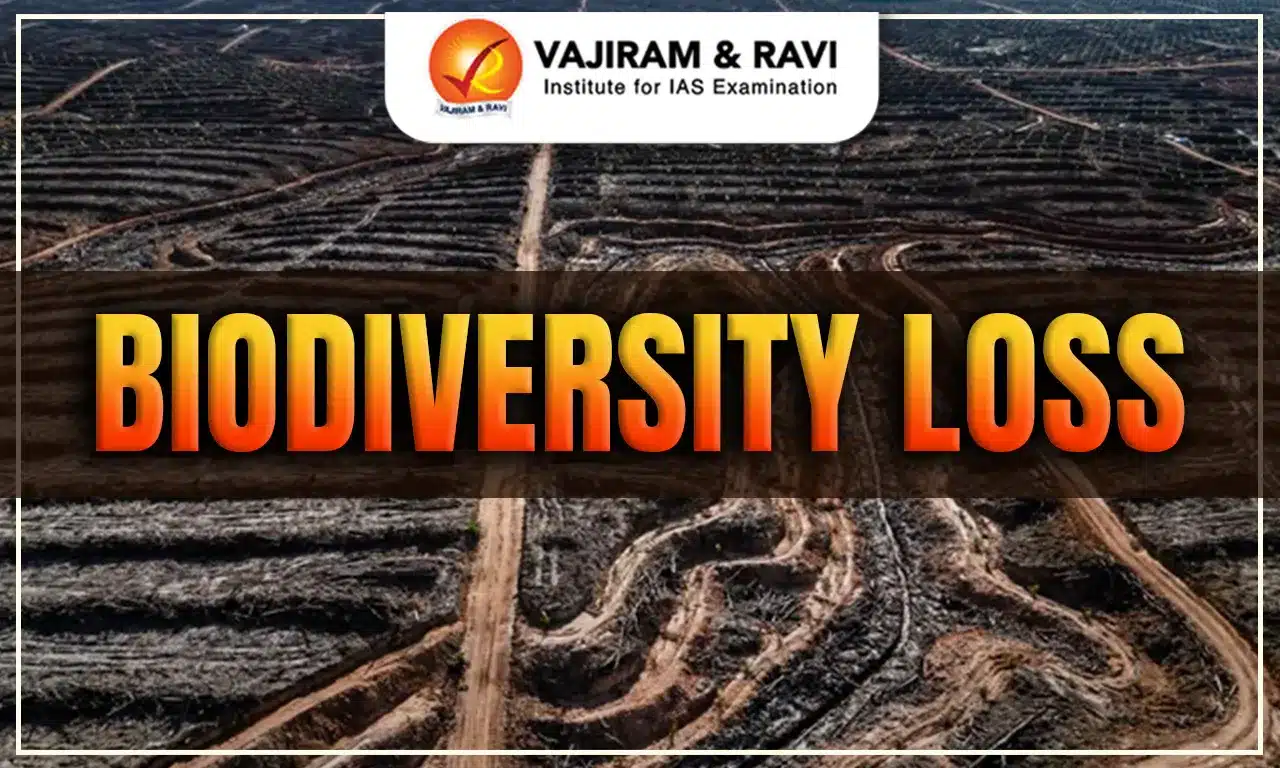
Biodiversity Loss is the most alarming environmental concern of our time as it impacts the stability of the ecosystem, well-being of human beings and the balance of the planet as a whole. This loss reduces the availability of important ecosystem services, endangered global food security, weak human health, unstable economy and cultural values to nature. In this article, we are going to cover biodiversity loss, its causes, the consequences and other related issues.
Biodiversity Loss in India
Biodiversity Loss in India means the reduction or disappearances of many types of life forms like particular species, an ecosystem, a geographic region in India. It leads to the decline in richness and variety of living organisms that together make up the Earth’s ecosystem. For example, rhinoceros are under the threat of extinction due to the factors of biodiversity loss.
Biodiversity Loss Causes
Causes of Biodiversity Loss is not only due to a single entity but due to several natural and human-driven activities contributing to the decline in biodiversity. These causes include:
- Habitat Destruction: This happens when human activities drastically modify or eliminate natural landscapes. Deforestation, urban expansion, mining, industrial projects, and overpopulation have destroyed ecosystems all over the world. For example, in the Chotanagpur plateau, elephant corridors have been destroyed due to excessive mining, leading to fragmentation of habitats.
- Invasive Species: The introduction of alien species threatens native organisms as they compete for food, water, and shelter, often altering ecosystem balance. Species like Lantana camara and water hyacinth in Assam’s wetlands are invasive, choking out local flora and fauna.
- Climate Change: Rapid, human-induced climate change alters weather patterns, ocean chemistry, and habitat conditions, forcing species to adapt too quickly or perish. For example, ocean acidification is directly linked to coral bleaching, destroying fragile marine ecosystems.
- Overexploitation of Resources: Overhunting, poaching, overfishing, and excessive harvesting of natural resources have led to the decline of many species. The removal of apex predators, in particular, causes ripple effects that destabilize entire ecosystems.
- Pollution: From industrial discharge to agricultural runoff, pollution has long-lasting negative effects on biodiversity. Marine and freshwater ecosystems suffer particularly, with chemical and thermal pollution killing sensitive species. For instance, the discharge of hot coolant water from thermal power plants raises sea temperatures, disrupting marine life.
Biodiversity Loss Consequences
The loss of biodiversity has many impacts and consequences on both animal, ecosystem and human life. These consequences include:
- Ecological Costs: Loss of species disturbs the ecosystem, reduces resilience to climate change, increases pollution, and increases extinction. According to the IUCN Red List, over 784 species have disappeared in the last 500 years.
- Economic Costs: Ecosystem services such as pollination, nutrient cycling, and water purification would need artificial substitutes if biodiversity is lost, costing trillions of dollars globally.
- Reduced Food Security: Agricultural systems depend on diverse species to withstand pests, diseases, and climate challenges. Declining biodiversity reduces the adaptability of crops and livestock, threatening long-term food supply.
- Health Risks and Diseases: As biodiversity reduces, human exposure to new pathogens increases. Loss of balanced ecosystems can fuel the spread of vector-borne diseases like malaria and dengue.
- Loss of Livelihoods: Millions of people depend on biodiversity for survival. Farmers, fishermen, and forest dwellers lose their means of living when ecosystems collapse. For instance, overfishing and ocean acidification threaten the existence of coastal communities.
Biodiversity Conservation
Biodiversity Conservation refers to protecting, preserving and sustainability in managing the biological wealth of the planet. Conservation of biodiversity includes restoring degraded habitats and adopting practices for species survival despite any human pressures. The biodiversity conservation practices includes:
- In-Situ Conservation: Protects species in their natural habitats through national parks, wildlife sanctuaries, and biosphere reserves.
- Ex-Situ Conservation: Safeguards species outside their natural habitats through methods like zoos, botanical gardens, gene banks, and seed vaults.
These practices are important for sustaining ecosystems and securing the survival of countless species.
Biodiversity Loss Examples
Following are a few examples of biodiversity loss all across the planet:
- Extinction of the Dodo Bird (Mauritius): Wiped out in the 17th century due to hunting and habitat destruction.
- Passenger Pigeon (North America): Once billions in number, declared extinct in 1914 from overhunting.
- Cheetah in India: Declared extinct in 1952 due to hunting and habitat loss (currently under reintroduction project).
- Chinese River Dolphin (Baiji): Functionally extinct in 2006 due to pollution and overfishing.
- Amazon Rainforest Deforestation: Large-scale loss of species due to agriculture and logging.
- Coral Bleaching in Great Barrier Reef (Australia): Rising sea temperatures leading to mass coral death.
- Polar Bears (Arctic): Habitat loss from melting sea ice due to global warming.
- Atlantic Cod Collapse (North Atlantic): Overfishing caused fisheries to collapse in the 1990s.
- Rhino Poaching (Africa & India): Driven by illegal trade in horns, leading to drastic population decline.
- Decline of Vultures in India: Caused by diclofenac poisoning, disrupting ecological balance.
The Sixth Mass Extinction
Human activities, combined with climate change, are accelerating extinction rates to levels far above natural patterns. Scientists warn that the current pace of extinction is so high that the modern era is now referred to as the “Sixth Mass Extinction.” Plants, animals, and even microorganisms are vanishing or seeing their habitats drastically shrink due to anthropogenic pressures.
| Also Check Other Posts | |
| Climate Change | Coastal Regulation Zone |
| Global Plastic Treaty | Nitrogen Cycle |
| Carbon Cycle | |
Biodiversity Loss FAQs
Q1: What is the biodiversity loss?
Ans: Biodiversity loss refers to the decline or complete disappearance of species, genetic diversity, and ecosystems due to human activities and natural factors.
Q2: What are the five major effects of biodiversity loss?
Ans: The five major effects are ecosystem imbalance, loss of food security, decline in ecosystem services, spread of diseases, and economic loss for communities.
Q3: How can loss of biodiversity be prevented?
Ans: Biodiversity loss can be prevented through conservation strategies like afforestation, wildlife protection laws, sustainable resource use, pollution control, and protected areas.
Q4: What are the impacts of Biodiversity Loss?
Ans: The impacts include species extinction, reduced agricultural productivity, loss of livelihoods, climate change vulnerability, and disruption of ecological balance.
Q5: What are the causes of Biodiversity Loss?
Ans: The main causes are habitat destruction, overexploitation, pollution, climate change, and introduction of invasive species.

