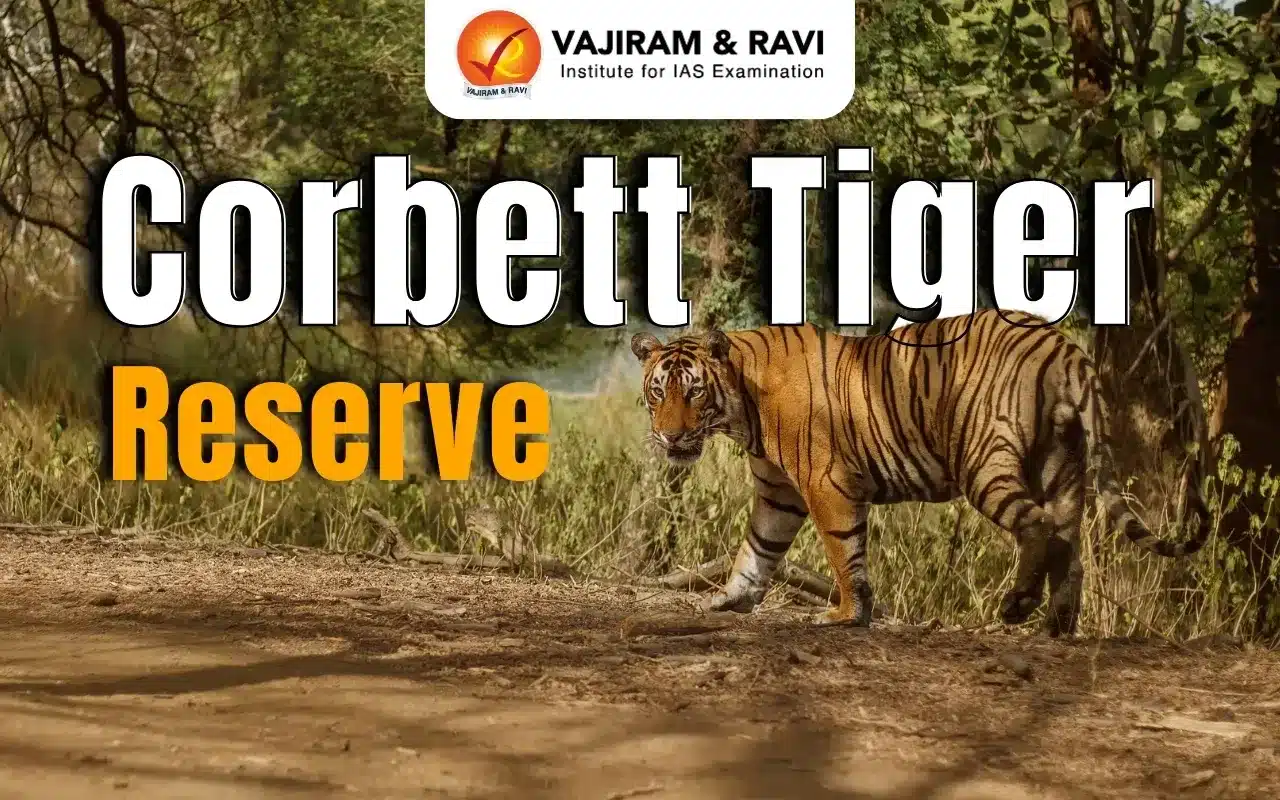
Corbett Tiger Reserve

Corbett Tiger Reserve

Corbett Tiger Reserve Latest News

A special annual survey undertaken by the forest department of Uttarakhand to estimate the number of tigers in the Ramnagar division, adjoining Corbett Tiger Reserve, has shown a sharp jump over three years.

About Corbett Tiger Reserve

  • It is located on the foothills of the Himalayas in Uttarakhand.
  • It was originally established as Hailey National Park in 1936.
  • It is not only the first national park in India, but also the first to come under the Project Tiger initiative.
  • Terrain: The terrain is undulating with several valleys. The rivers Ramganga, Pallaen, and Sonanadi flow through the valleys.
  • It is spread over the Bhabar and lower Shivalik regions with a deep-water table.
  • The tract is porous with boulders and sand deposits.
  • Vegetation: North Indian tropical moist deciduous forests and tropical dry deciduous forests:
  • In general, the vegetation comprises sal and mixed forests, interspersed with grass lands and riparian vegetation.
  • The grasslands are locally known as ‘Chaur’, which are an outcome of abandoned settlements or past clearings.
  • Flora: Evergreen Sal and its combined trees, the Sheesham, and the Kanju are found extensively on the ridges.
  • Fauna: Tigers and elephants, leopards, sambar, hog deer, spotted deer etc.

Source: IE

Corbett Tiger Reserve FAQs

Q1: In which state is Corbett Tiger Reserve?

Ans: Uttarakhand

Q2: Which river flows through Corbett Tiger Reserve?

Ans: Ramganga River

Key Facts about Beas River

Beas River

Beas River Latest News

The recent unprecedented rainfall in its catchment areas, the Beas river in Himachal Pradesh recorded its highest-ever inflow of water. 

About Beas River

  • It was known as Vipas in the past, meaning the “Unfettered” river.
  • It is a river in Himachal Pradesh and Punjab states, northwestern India.
  • It is one of the five rivers that give Punjab (“Five Rivers”) its name.
  • Origin: It rises 4,361 metres (14,308 ft.) above sea-level on the southern face of Rohtang Pass in Kullu at Beas Kund.
  • Course: It traverses 470 kilometres before joining Sutlej at Harike, Punjab. 
  • Major Tributaries: The major tributaries of the Beas River are Bain, Banganga, Luni, and Uhal, along with Banner, Chakki, Gaj, Harla, Mamuni, Parvati, Patlikuhlal, Sainj, Suketi, and Tirthan.
  • The Beas forms the world-famous valleys of Kullu and Kangra.
  • The Beas catchment is under the influence of western disturbances that bring snowfall to the upper sub-catchment during winter and the monsoon provides around 70% of the annual rainfall during June - September.
  • Dams: The Pong Dam, also known as the Beas Dam, is an earth-fill embankment dam constructed on the river Beas in the Kangra district of Himachal Pradesh.

Source: IE

Beas River FAQs

Q1: What is another name for the Beas River?

Ans: Vipas

Q2: Which dam is built on the Beas River?

Ans: The Pong Dam

Blood Moon

Blood Moon

Blood Moon Latest News

Millions of people across Asia and Europe are expected to witness a total lunar eclipse that will turn the moon blood red.

About Blood Moon

  • A blood moon is the dramatic red glow of the moon during a total lunar eclipse.

Occurrence of Blood Moon

  • A blood moon occurs when Earth comes directly between the Sun and the moon.
  • A process called Rayleigh scattering causes the moon to appear red instead of dark.
  • This happens because shorter-wavelength light (blue) is scattered, while longer-wavelength red light passes through the Earth’s atmosphere, making the moon appear red.
  • During totality, “the entire Moon falls within the darkest part of Earth’s shadow, called the umbra.
  • When the Moon is within the umbra, it appears red-orange.” This colour shift is what earns the event its nickname, the “blood moon.
  • Depending on external factors such as atmospheric conditions and light pollution, the moon, during a blood moon phase, may appear red, orange, or copper-coloured.

What is Rayleigh Scattering?

  • It was explained by the British Nobel laureate John William Strutt (Lord Rayleigh) in the 19th century.
  • When light interacts with particles smaller than its wavelength, the intensity of the scattered light is inversely proportional to its wavelength.
  • This is the reason the earth sky appears blue: it has the shortest wavelength in visible light.

Source: IE

Blood Moon FAQs

Q1: What is blood moon?

Ans: A blood moon occurs when Earth comes directly between the Sun and the moon.

Q2: What is the total lunar eclipse?

Ans: Blood moons, which often refer to total lunar eclipses, happen when the full moon comes into complete alignment with the Earth and sun.

Kapas Kisan App

Kapas Kisan App

Kapas Kisan App Latest News

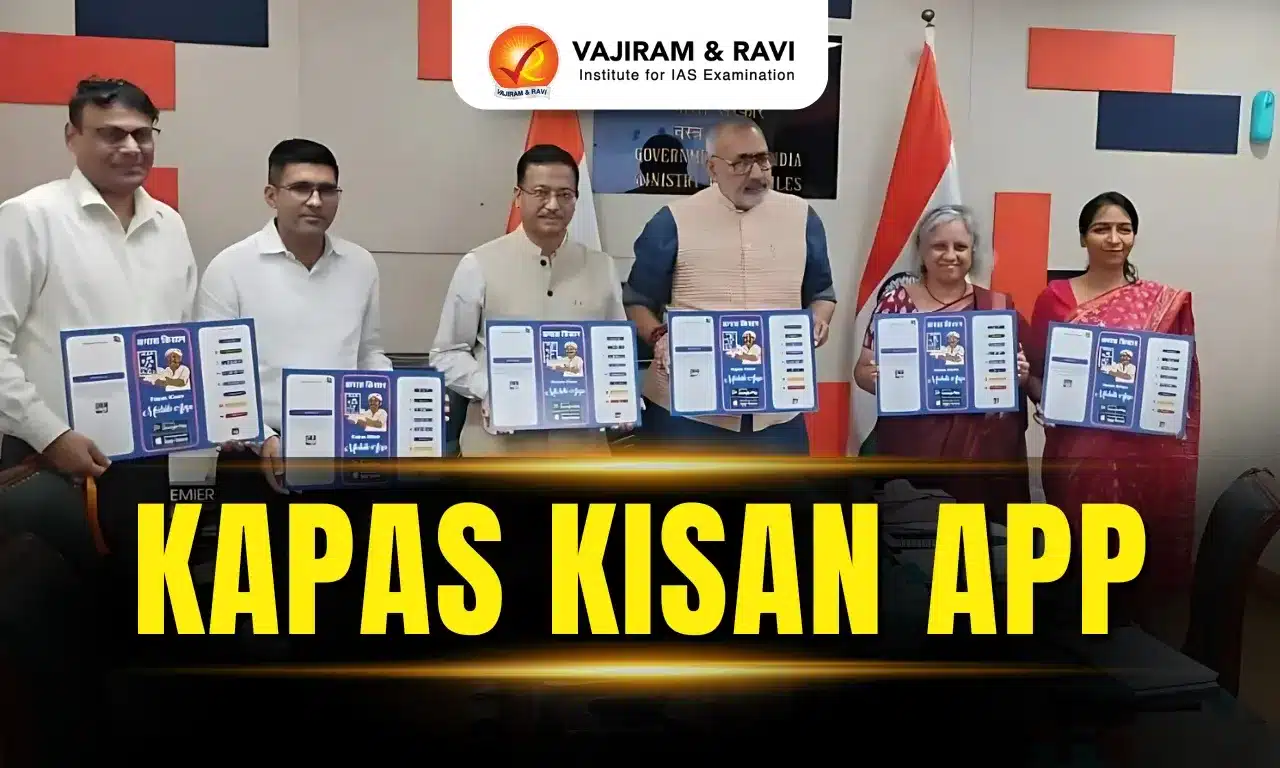
Recently, the Union Minister of Textiles launched a new mobile application Kapas Kisan app.

About Kapas Kisan App

  • It is developed by the Cotton Corporation of India (CCI), under the Ministry of Textiles,

Features of Kapas Kisan App

  • It facilitates seamless procurement of cotton from Farmers under the Minimum Support Price scheme.
  • It empowers farmers with self-registration, slot booking and payment tracking.
  • It provides facility of payment tracking by farmers - bringing greater transparency, convenience and speed to the cotton procurement process.
  • It allows farmers to securely register themselves for selling cotton under MSP
  • Digital scheduling at designated procurement centres to reduce waiting time and crowding, Real-time status updates on quality assessment, accepted quantities, payment processing User-friendly interface with support for multiple Indian languages.

Advantages of Kapas Kisan App

  • Protect cotton farmers against any distress sales through assured MSP procurement,
  • Reduce manual paperwork and save time at procurement centres.
  • Enhances transparency and improves planning by allowing farmers to choose convenient time slots.

 Source: PIB

Kapas Kisan App FAQs

Q1: Where is the headquarter of Cotton Corporation of India?

Ans: Navi Mumbai

Q2: What is the role of Cotton Corporation of India?

Ans: To help the cotton farmers by ensuring them remunerative price for their produce and thereby protect their economic interest.

Wangchu Hydroelectric Project

Wangchhu Hydroelectric Project

Wangchu Hydroelectric Project Latest News

Adani Power recently said it has inked a pact with Bhutan's state-owned utility Druk Green Power to set up a 570 MW hydro project entailing an investment of Rs 6,000 crore in the Himalayan Kingdom.

About Wangchu Hydroelectric Project

  • It is a 570 MW hydro power project. 
  • It is a run-of-river project planned on Wangchu river/basin in Chukha District, Bhutan. 
    • The Wangchu River (also called Raidāk River in India), is a significant tributary of the Brahmaputra River.
  • It is the first hydroelectric project to be taken up under an MoU that was signed in May 2025 between the Adani Group and Druk Green Power Corp. Ltd. (DGPC), Bhutan's state-owned generation utility for jointly developing 5,000 MW of hydropower in Bhutan.
  • This project will involve an investment of ₹6,000 crore. It is targeted to commence in 2026 and be completed within five years.
  • The project is expected to generate 2,478.93 GWh of electricity.
  • The hydro power project consists of 4 turbines, each with 142.5MW nameplate capacity.
  • The project has 4 electric generators that will be installed at the project site.
  • Wangchu Project will meet Bhutan's electricity demand during winters. Power generated in the summer season will be exported to India.

Source: NDTV

Wangchu Hydroelectric Project FAQs

Q1: The Wangchu Hydroelectric Project is located in which country?

Ans: Bhutan

Q2: The Wangchu River is known as which river in India?

Ans: Raidak River

Q3: The Wangchu River is a tributary of which river?

Ans: Brahmaputra

Vishwamitri River

Vishwamitri River

Vishwamitri River Latest News

Following heavy overnight rainfall in the catchment area of the Vishwamitri River — the Vadodara Municipal Corporation (VMC) recently opened all 62 gates of Ajwa Reservoir to release 6,600 cusecs of water downstream to create a cushion in the reservoir.

About Vishwamitri River

  • It is a small non-perennial river, about 200 km in length, located in Gujarat.
  • Course
    • It originates from the western and southern slopes of the Pavagadh hills in eastern Gujarat
    • The river flows westward, through Gujarat’s third-largest city, Vadodara, after which it meets the two tributaries of Dhadar and Jambuva before draining into the Arabian Sea via the Gulf of Khambhat.
  • The highly meandering, sinuous river has a unique ecosystem bearing a plethora of beautiful ravines right from its beginning till its end.
  • Porcupines, the common Indian civet, the jungle cat, cobras, pythons, the checkered keelback, and the Bengal monitor are some of the species found in the ravines on the banks of this river. 
  • Vishwamitri is also where the protected and vulnerable species of the Indian crocodile (Crocodylus palustris), also known as the mugger, resides.
    • A survey by the Gujarat Forest Department in 2020 found that there were an estimated 300 muggers in the river within Vadodara’s limits.
  • Historically, the river has been central to Vadodara's development, with human settlements along its banks dating back to 1000 B.C. 

Key Facts about Mugger Crocodiles

  • It is one of the 24 extant species of crocodilians found globally.
  • The crocodile’s common name comes from magar, which translates loosely to “water monster” in the Hindi and Urdu languages.
  • Distribution
    • The mugger’s geographic range extends from extreme southeastern Iran eastward to Bangladesh and from Nepal and northern India south to Sri Lanka.
    • In India it is found in 15 Indian states, with the largest populations in the middle Ganges (Bihar-Jharkhand) and Chambal (Madhya Pradesh, Gujarat and Rajasthan) basins.
  • Habitat: It is native to freshwater and inhabits marshes, lakes, rivers and artificial ponds.
  • Conservation Status:
    • IUCN: Vulnerable
    • CITES: Appendix I.

Source: IE

Vishwamitri River FAQs

Q1: The Vishwamitri River is located in which Indian state?

Ans: Gujarat

Q2: From which hills does the Vishwamitri River originate?

Ans: Pavagadh Hills

Q3: Through which major city does the Vishwamitri River flow?

Ans: Vadodara

Q4: Into which sea does the Vishwamitri River drain?

Ans: Arabian Sea

Flamingo Missile

Flamingo Missile

Flamingo Missile Latest News

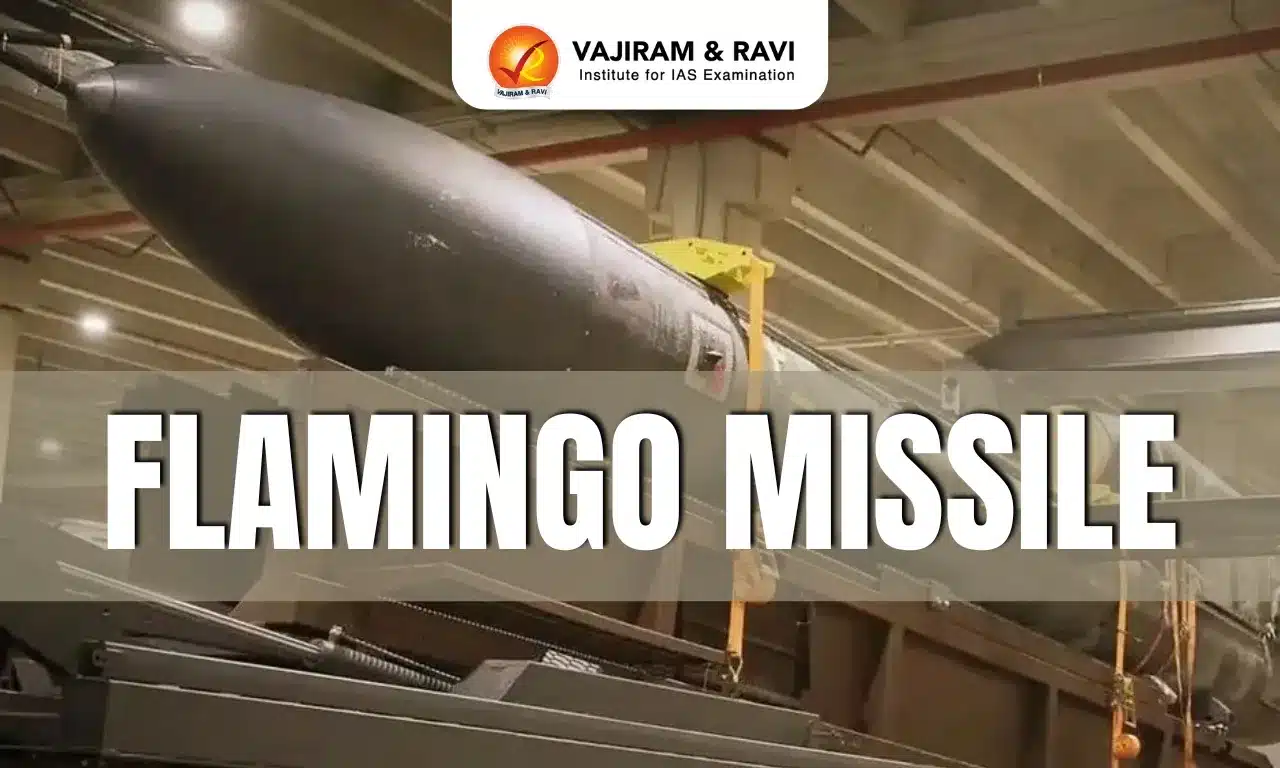
Ukraine recently unveiled a new cruise missile named Flamingo.

About Flamingo Missile

  • The FP-5 “Flamingo” missile is a long-range cruise missile.
  • It was developed by Ukraine's Fire Point defense company.

Flamingo Missile Features

  • With a claimed range of 3,000 kilometres, a 1,150-kilogram warhead, and a maximum takeoff weight of 6,000 kg, the Flamingo is among the world’s largest and longest-range ground-launched cruise-missile systems.
  • It has a wingspan of about six meters.
  • This makes the Flamingo the first indigenously produced “heavy” missile system in Ukraine’s arsenal. 
  • It employs a turbofan engine.
  • It has a speed of up to 900 km/h and navigation based on an inertial system and GPS.
  • The missile’s high terminal velocity, in combination with its heavy weight, means that the warhead penetrates deeper into the target before exploding, which significantly increases the destructive power.
  • The missile is also designed to be resistant to electronic warfare systems, likely using a secure GPS module with CRPA antennas.

Source: ECO

Flamingo Missile FAQs

Q1: The Flamingo is which type of missile?

Ans: The Flamingo missile is a long-range cruise missile.

Q2: The FP-5 “Flamingo” missile has been developed by which country?

Ans: Ukraine

Q3: What is the maximum range of the Flamingo missile?

Ans: 3,000 km

Q4: What is the warhead weight of the Flamingo missile?

Ans: 1,150 kg

Angikaar 2025 Campaign

Angikaar 2025 Campaign

Angikaar 2025 Campaign Latest News

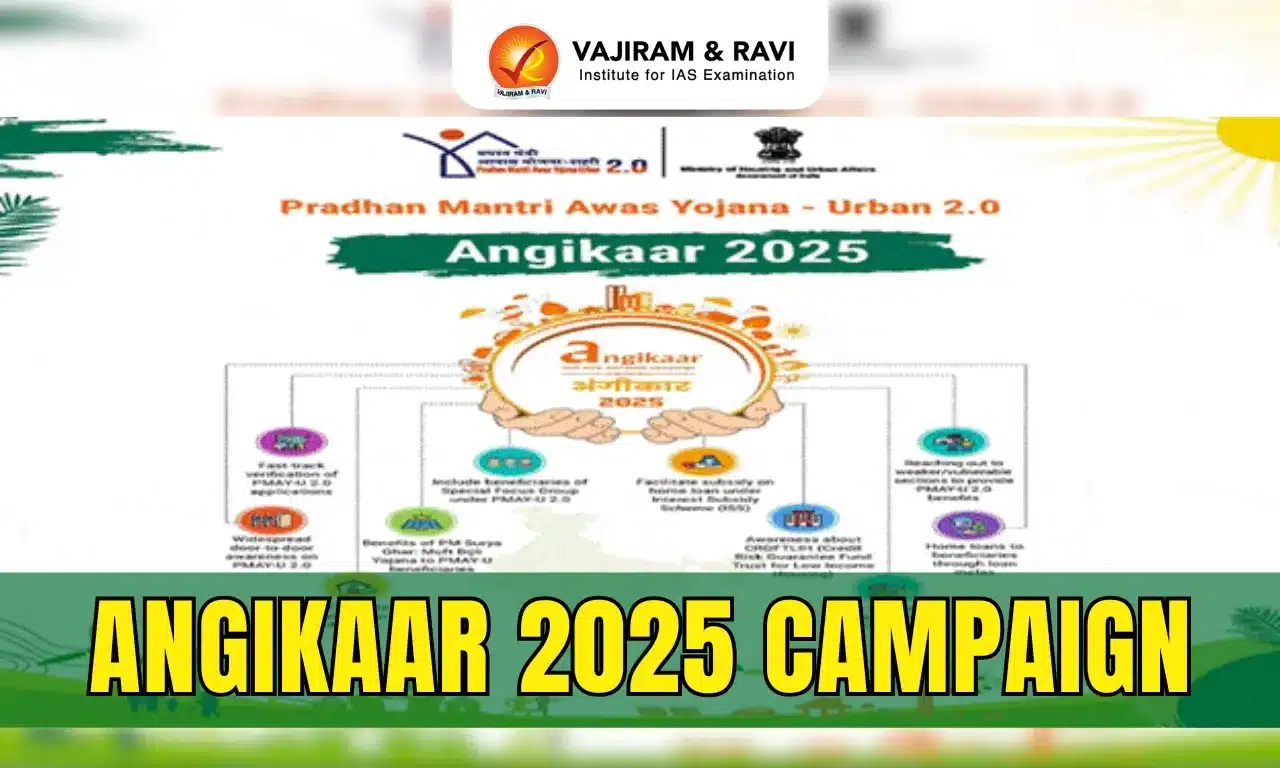
Recently, the union Minister for Housing and Urban Affairs has launched the Angikaar 2025 campaign under Pradhan Mantri Awas Yojana – Urban 2.0.

About Angikaar 2025 Campaign

  • It is a last-mile outreach campaign to create awareness about Pradhan Mantri Awas Yojana - Urban 2.0 (PMAY-U 2.0).
  • It will accelerate the implementation of PMAY-U 2.0 by creating widespread awareness about the scheme across the country.
  • It is also designed to fast-track verification of applications under the scheme and expedite the completion of already sanctioned houses under PMAY-U.
  • Duration: It will run for a period of two months across 5,000+ Urban Local Bodies (ULBs) in the country.
  • Focus: It mainly focuses on vulnerable sections of society to provide benefits of the housing scheme.
  • It involves door-to-door awareness activity and other outreach mediums and community mobilisation. 

Key facts about Pradhan Mantri Awas Yojana - Urban 2.0

  • It is one of the major flagship programmes being implemented by Government of India to provide all-weather pucca houses to all Eligibility beneficiaries in the urban areas. 
  • The Government assistance under PMAY-U 2.0 will be upto 2.50 lakh per unit.

Source: News On Air

Angikaar 2025 Campaign FAQs

Q1: What is Pradhan Mantri Awas Yojana?

Ans: It is a credit-linked subsidy scheme by the Government of India to facilitate access to affordable housing for the low and moderate-income residents of the country.

Q2: Who is eligible for Pradhan Mantri Awas Yojana?

Ans: Families belonging to EWS/LIG/MIG category, living in urban areas, having no pucca house/Flat anywhere in the country are eligible.

Taiwan Strait

Taiwan Strait

Taiwan Strait Latest News

China's military recently said its forces had followed and warned a Canadian and an Australian warship, which were sailing through the sensitive Taiwan Strait, in a move it criticised as a provocation.

About Taiwan Strait

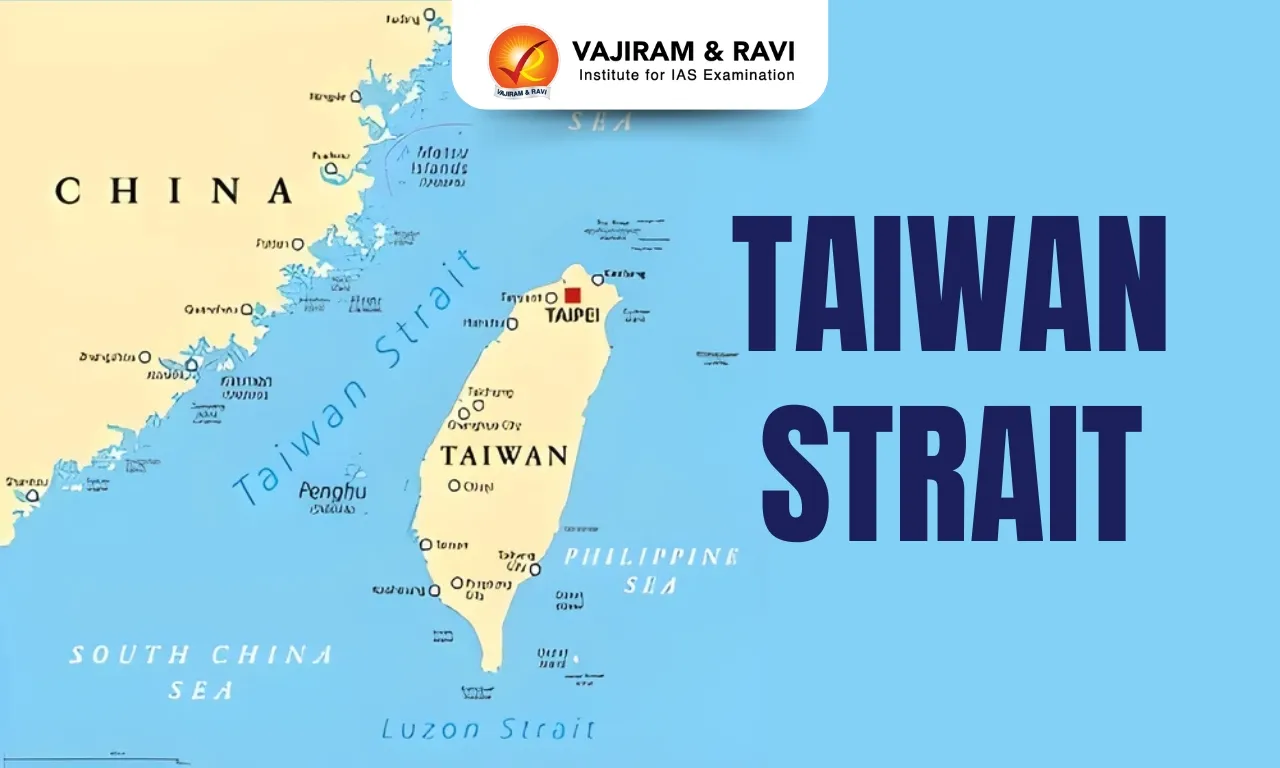
  • Taiwan Strait, also called Formosa Strait, separates continental Asia and the island of Taiwan.
  • It extends from the South China Sea in the southwest to the East China Sea in the northeast.
  • It runs between the coast of the Fujian (Fukien) Province and the island of Taiwan.
  • It has an average width of 180 km, while its narrowest part is 130 km wide.
  • It sits on Asia’s continental shelf that runs along the entire stretch of the strait. 
  • It is relatively shallow. It has an average depth of about 490 ft and a minimum depth of 82 ft.
  • Ports: The chief ports are Amoy in mainland China and Kao-hsiung in Taiwan. 
  • Rivers: Several rivers, including the Jiulong and Min rivers from China’s Fujian Province, drain into the Taiwan Strait. 
  • Islands
    • Kinmen and Matsu are two of the largest and most significant islands in the strait located off the Fujian coast of China. 
    • The biggest islands along the Taiwan side include Penghu (or Pescadores), Xiamen, and Pingtan.
    • The Xiamen and Pingtan Islands are administered by the People’s Republic of China, while the other three islands: Penghu (or Pescadores), Kinmen, and Matsu are under the administration of the Republic of China (Taiwan).
    • Penghu (or Pescadores) Island is the largest and most populous island in the Taiwan Strait.
  • It serves as a busy navigational waterway, on which millions of tons of cargo are ferried annually.
  • The strait is also one of the most important fishing grounds in China, and more than a hundred economically important fish species are found here.

Source: REUT

Taiwan Strait FAQs

Q1: The Taiwan Strait connects which two seas?

Ans: East China Sea and South China Sea

Q2: The Taiwan Strait separates Taiwan from which country?

Ans: China

Q3: What is the average width of the Taiwan Strait?

Ans: 180 km

Q4: Which rivers drain into the Taiwan Strait?

Ans: Several rivers, including the Jiulong and Min rivers from China’s Fujian Province, drain into the Taiwan Strait.

CoWIN Portal

CoWIN Portal

CoWIN Portal Latest News

The CoWIN portal, where the Union and State governments had together recorded over two billion vaccination doses for COVID-19, has been down since early August, a weeks-long outage that has locked many residents in India out of their vaccination certificates.

About CoWIN Portal

  • The COVID Vaccine Intelligence Network (CoWIN) portal was launched on January 16, 2021, as a digital platform for the administration of COVID-19 vaccination in India.
  • Citizens can locate nearby vaccination centers, check slot availability, and book appointments online. 
  • It also provides access to vaccination certificates and updates on vaccination drives.
  • The CoWIN platform is owned by the Ministry of Health and Family Welfare and was earlier the platform used for conducting Pulse Polio and other crucial immunisation programmes across the country. 
    • The same platform has been expanded for doling out Covid-19 vaccines and the Ministry of Electronics and IT, along with the National Informatics Center are handling the backend and the tech infrastructure for it.
  • This platform assists the program managers across all levels through automated session allocation for pre-registered beneficiaries, their verification, and for generating a digital certificate upon successful completion of the vaccine schedule.
  • The system allows for creation of users (admins, supervisors, vaccinators), registration of beneficiaries (bulk upload and individual registration), facilities/planning unit and session sites followed by planning and scheduling sessions, and implementation of the vaccination process. 
  • The CoWIN system on a real-time basis will track not only the beneficiaries but also the vaccines at the national, state and the district levels. 
  • This will allow the system to monitor the utilization, wastage, and coverage of COVID-19 vaccination at National, State, District and Sub-District level.
  • The key features of the CoWIN platform are
    • Blended registration- Beneficiaries can register online or on-site (walk-in) at the Vaccination Centre
    • Beneficiaries can book online appointments based on convenience of time and choice of location
    • Track Vaccination Schedule 
    • Instant Digital vaccination Certificate with certificate correction utility 
    • Multilingual portal with 12 languages.
    • Mobile application for their ease of use for vaccinator 
    • Vaccine Stock Management 
    • Publishing of Vaccine Schedules in advance
    • Real-Time Dashboards (x) tracking of Adverse Event Following Immunization (AEFI). 
    • Digital Covid-19 vaccination Certificate tracking 
    • Facility-wise coverage.

Source: TH

CoWIN Portal FAQs

Q1: The CoWIN portal was primarily launched for which purpose?

Ans: Digital administration of COVID-19 vaccination.

Q2: The CoWIN platform is owned by which ministry?

Ans: Ministry of Health and Family Welfare

Q3: What type of certificate is generated by CoWIN after successful vaccination?

Ans: Digital Vaccination Certificate

Representation in the Rajya Sabha/Upper House of the Parliament

Rajya Sabha

Rajya Sabha Latest News

  • The Union Law and Justice Ministry recently rejected the Election Commission’s (EC) proposal for a presidential order to stagger the terms of Jammu and Kashmir’s (J&K) four Rajya Sabha seats
  • This has left the Union Territory (UT) without representation in the Upper House since 2021.

Background

  • Vacancy of seats: J&K’s four Rajya Sabha seats became vacant in 2021 when MPs completed their terms during President’s Rule.
  • Elections 2024: Despite Assembly elections being held in Sept–Oct 2024, Rajya Sabha elections are yet to be conducted.
  • Political concern: The current Chief Minister of the UT of J&K has raised questions about the delay.

EC’s Proposal

  • Proposal: A presidential order to curtail the terms of some of the Rajya Sabha seats of J&K.
  • Objective: Ensure staggered retirement of J&K’s Rajya Sabha members, preventing simultaneous vacancy.
  • Reference: A similar presidential order was issued in 1952 after the first Rajya Sabha election to create a staggered cycle.
  • Article 83: Provides that one-third of Rajya Sabha members retire every two years, ensuring continuity. It is a permanent House as opposed to the Lok Sabha that has a fixed five-year term.
  • Disturbance in cycle: In J&K (since the 1990s) and in Delhi (post-1991 NCT of Delhi Act), terms have become concurrent due to President’s Rule or institutional changes.

Law Ministry’s Response

  • Reason for rejection: No provision in current law to issue such an order.
  • Past precedents: Orders were issued only in 1952 and 1956 under the Representation of the People Act (RPA), 1951 and subsequent Seventh Constitutional Amendment (1956).
  • Legal position: According to Section 154 of the RPA 1951, the term of Rajya Sabha members is six years. Presidential orders for staggering were permitted only at the first constitution (1952) and after the 1956 amendment.
  • Implication: Any new order requires a statutory amendment to the RPA, 1951 and must cover all affected states/UTs, not only J&K.

Current Status

  • No representation: J&K has had no Rajya Sabha MPs for four years.
  • National impact:
    • J&K had no vote in the 2022 Presidential and Vice-Presidential elections.
    • It will also remain unrepresented in the Vice-President election (Sept 9, 2025).
  • Pending action: Uncertainty remains over when the EC will schedule Rajya Sabha elections for J&K.

Conclusion

  • A clear legislative amendment to the Representation of the People Act, 1951 can ensure staggered Rajya Sabha representation for all affected states and UTs, safeguarding federal continuity
  • Restoring J&K’s voice in the Upper House will not only uphold democratic legitimacy but also strengthen its integration into India’s parliamentary framework.

Source: IE

Rajya Sabha FAQs

Q1: Why has Jammu & Kashmir remained unrepresented in the Rajya Sabha since 2021?

Ans: J&K’s four Rajya Sabha seats fell vacant during President’s Rule in 2021, and elections have not been conducted despite Assembly polls in 2024.

Q2: What proposal did the Election Commission make to address the Rajya Sabha vacancy issue in J&K?

Ans: The EC proposed a presidential order to stagger the terms of J&K’s Rajya Sabha seats, preventing all from becoming vacant simultaneously.

Q3: Why did the Union Law and Justice Ministry reject the Election Commission’s request?

Ans: The Ministry stated there is no legal provision under the Representation of the People Act, 1951, to issue such an order now; it was only allowed in 1952 and 1956.

Q4: What constitutional and legal provisions govern the continuity of the Rajya Sabha?

Ans: Article 83 mandates one-third retirement every two years; Section 154 of the RPA, 1951 sets six-year terms, with initial staggering done by presidential orders in 1952 and 1956.

Q5: What are the implications of J&K’s lack of Rajya Sabha representation?

Ans: It creates a democratic deficit, as J&K could not participate in the 2022 Presidential and Vice-Presidential elections.

India’s Foreign Policy Shift: SCO Summit, U.S. Tensions, and Strategic Autonomy

India Foreign Policy Shift

India Foreign Policy Shift Latest News

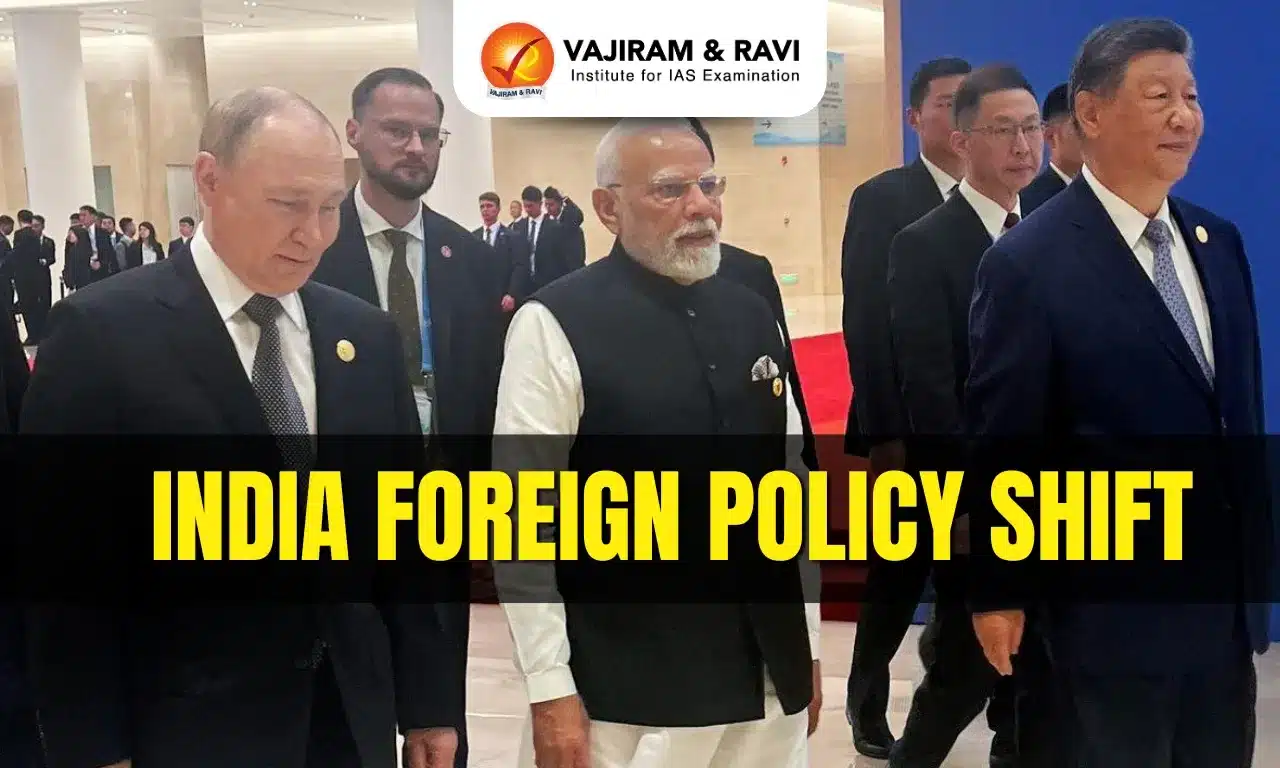
  • Modi began attended the SCO summit in Tianjin, where a photo with Chinese President Xi Jinping and Russian President Vladimir Putin drew global attention. 
  • It seemed to upset U.S. President Donald Trump, who made sarcastic remarks while the U.S. increased tariffs to 50%, imposed sanctions on India’s Russian oil imports, and urged the EU to do the same. 
  • Despite the tensions, Modi and Trump struck a conciliatory tone recently.

Power Play at the Tianjin SCO Summit

  • The 10-nation SCO summit in Tianjin showcased China’s growing influence, with leaders from Turkey, Nepal, Maldives, Azerbaijan, Armenia, Indonesia, and Malaysia in attendance. 
  • The focus then shifted to Beijing, where President Xi Jinping and President Vladimir Putin led a grand military parade marking 80 years since World War II’s end, joined by North Korea’s Kim Jong Un and others. 
  • The summit’s declarations criticized “coercive, unilateral” economic measures, targeting U.S. tariffs and European sanctions.
  • China promoted a “Global Governance Initiative,” while PM Modi called for “civilisational dialogue” among SCO members. 

Modi–Xi Bilateral: Steps Toward Normalisation

  • PM Modi’s first China visit since 2018, and first direct meeting with President Xi since the 2020 Galwan clashes, marked a cautious thaw in ties. 
  • Xi called India and China “partners, not rivals,” while India softened its earlier stance of linking broader ties strictly to border normalisation. 
  • Both sides agreed that Special Representatives — Chinese Foreign Minister Wang Yi and India’s NSA Ajit Doval — would continue talks on the boundary issue. 
  • Besides revival of flights, visa facilitation and the Kailash Manasarovar Yatra, they agreed to resolve the trade issues between them.

U.S. Reaction to India’s SCO Engagements

  • In Washington, images of the Tianjin “troika” with Modi, Xi, and Putin — alongside other leaders from Russia, China, North Korea, Iran, and Pakistan — were viewed as India drifting away from the West
  • Former U.S. President Donald Trump posted that America had “lost India and Russia to deepest, darkest China,” while Trade Adviser Peter Navarro criticized India for aligning with Russia and China. 
  • Some even dubbed the Ukraine conflict “Modi’s war,” a claim India’s MEA rejected. 
  • Despite tensions over tariffs, visas, and trade, Trump later softened his stance, calling India–U.S. ties a “special relationship” and praising his friendship with Modi, who in turn welcomed Trump’s positive remarks.

The Road Ahead for India’s Foreign Policy

  • Despite perceptions of India swinging between East and West, its approach continues to reflect its long-standing policy of strategic autonomy and balance
  • PM Modi’s China visit for the SCO, following the Xi-Modi meeting in Kazan in 2024, was aimed at normalising ties after years of tension, though the Modi-Xi-Putin interaction carried limited weight without a revival of formal RIC talks. 
  • India–U.S. ties remain strained over tariffs, Russian oil imports, and market access, but military cooperation and official exchanges continue. 
  • The upcoming UNGA visit by External Affairs Minister Jaishankar and discussions on the Quad summit, with Trump expected in India later this year, will be key in shaping the trajectory of India–U.S. relations.

Source: TH

India Foreign Policy Shift FAQs

Q1: What was significant about Modi’s participation in the SCO summit?

Ans: At Tianjin, Modi engaged with Xi and Putin, supporting “civilisational dialogue,” while SCO declarations criticized unilateral measures, signaling India’s balancing role.

Q2: What progress came from the Modi–Xi bilateral meeting?

Ans: It marked the first direct meeting since Galwan 2020. Both agreed to border talks, revive flights, facilitate visas, and address trade issues.

Q3: How did the U.S. react to India’s SCO participation?

Ans: Washington saw India aligning with China and Russia. Trump called it “losing India,” though he later praised India–U.S. ties as “special.”

Q4: What challenges define current India–U.S. relations?

Ans: Key tensions involve U.S. tariffs, sanctions on Russian oil imports, and demands for India to open agricultural and dairy sectors to American trade.

Q5: What lies ahead for India’s foreign policy?

Ans: India continues its policy of strategic autonomy. Talks at the UNGA, Quad summit planning, and Trump’s expected India visit will shape future ties.

Spending on Children’s Education in India: Gender Gaps and State Variations

Gender Gap in Education Expenditure India

Gender Gap in Education Expenditure India Latest News

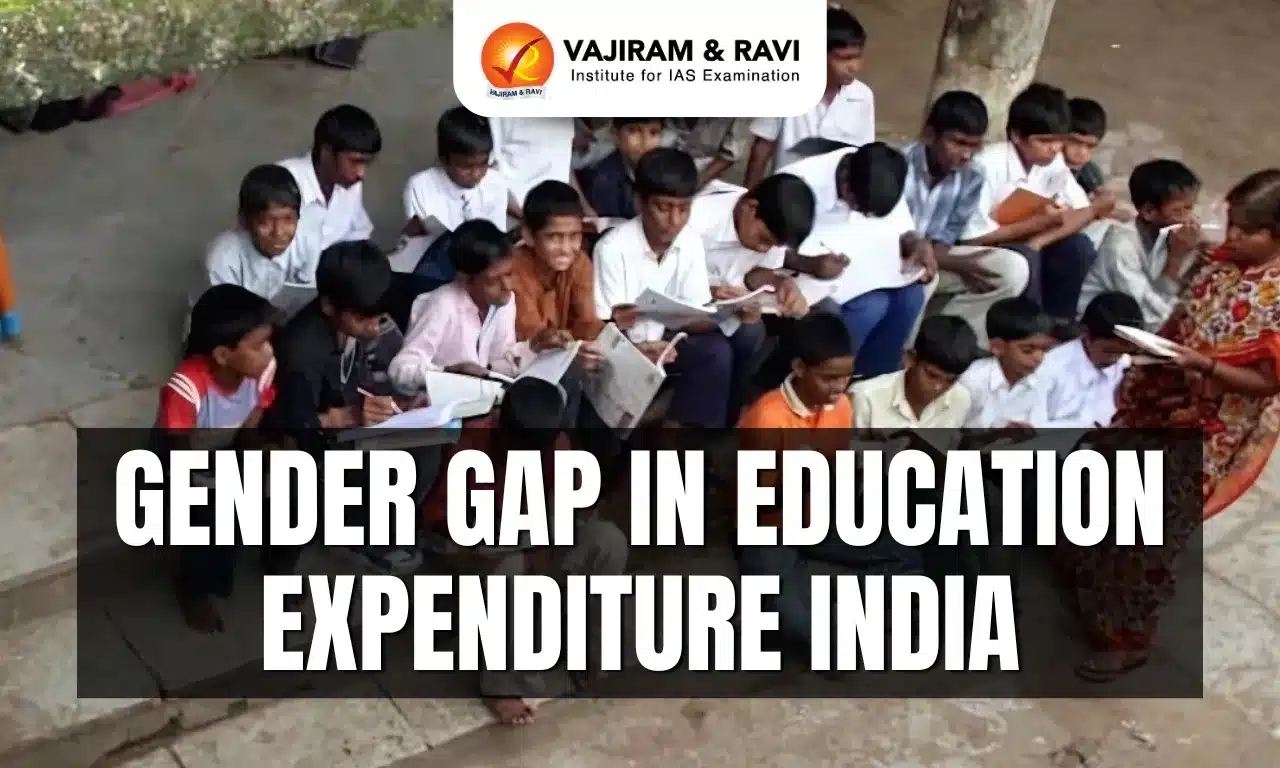
  • Despite a recent drop in the World Economic Forum’s gender gap rankings, partly due to the education category, India has increased girls’ school enrolment, with girls now forming 48% of the student population and slightly higher participation in higher education than men. 
  • However, National Sample Survey data reveal a persisting gender gap: families spend significantly less on daughters’ education compared to sons, highlighting unequal investment despite improved enrolment.

Gender Gaps in Education Expenditure in India

  • The Comprehensive Modular Survey on Education (NSS 80th round, April–June) reveals consistent gender disparities in spending on children’s education across India. 
  • The survey shows that families spend less on girls than boys at every stage of schooling, from pre-primary to higher secondary, in both rural and urban areas. 
  • In rural India, households spend about ₹1,373 (18%) more on boys, while in urban India, girls receive ₹2,791 less on average. 
  • By higher secondary school, urban families spend nearly 30% more on boys’ education. 
  • Considering course fees alone, the gap widens further, with boys receiving 21.5% more spending nationwide. 
  • Enrollment patterns reflect this bias: 58.4% of girls study in government schools compared to 34% of boys in private unaided schools, highlighting unequal access to costlier private education. 
  • The disparity extends to tuition classes as well, with 22% more spent on boys’ tuition at the higher secondary level.

State-Level Gaps in School Enrolment

  • Gender disparities in school enrolment vary widely across India. 
  • In Delhi, 65% of girls attend government schools compared to 54% of boys, while 38.8% of boys attend private schools against 26.6% of girls. 
  • Similar gaps of over 10 percentage points are seen in Madhya Pradesh, Rajasthan, and Punjab
  • In Gujarat, the divide is sharper in urban areas but narrower in rural regions. 
  • In contrast, Tamil Nadu and Kerala show near-equal ratios for boys and girls across government and private schools, while several northeastern States send more girls to private schools than boys.

Differences in Education Expenditure

  • Spending patterns also differ by State, especially at higher classes. 
  • In Telangana, Tamil Nadu, and West Bengal, families spend far more on boys at the higher secondary level, despite spending more on girls at the secondary level. 
  • For instance, in Tamil Nadu, average secondary-level spending is ₹23,796 for girls and ₹22,593 for boys, but at the higher secondary level, it jumps to ₹35,973 for boys versus just ₹19,412 for girls. 
  • Dropouts and subsidies for girls partly explain this reversal.

States Spending More on Girls

  • Some States show the opposite trend. 
  • In Andhra Pradesh, Himachal Pradesh, and Kerala, families spend more on girls in higher secondary education, particularly in urban areas where higher transport costs are linked to parental concerns about girls’ safety.

Private Tuition Expenditure Gaps

  • Private coaching costs reveal further inequalities. 
  • In Himachal Pradesh, families spend ₹9,813 per boy in higher secondary tuition, compared to just ₹1,550 per girl. 
  • Significant tuition-related gender gaps are also seen in Bihar, Jharkhand, Rajasthan, and Tamil Nadu, underscoring how education spending priorities differ across regions.

Reasons Behind Gender Gaps in Education Expenditure

  • Societal Preferences and Gender Bias
    • Deep-rooted cultural norms often prioritize sons’ education over daughters, as boys are seen as future breadwinners.
    • Daughters are frequently expected to marry early, reducing perceived returns on investing heavily in their education.
  • Type of Schools Chosen
    • Families disproportionately send boys to private unaided schools, which charge higher fees, while girls are more likely to attend government schools.
    • This directly reduces average per-student expenditure on girls.
  • Dropouts Among Girls
    • Higher dropout rates among girls, especially after secondary school, mean families spend less on their higher secondary education.
    • Safety concerns, early marriage, and household responsibilities are key drivers of dropout.
  • Access to Private Tuitions
    • Although boys and girls enroll in tuition classes at similar rates, families spend significantly more on boys’ coaching, especially at higher classes.
    • This reflects a belief that competitive exams and higher education are more important for boys’ futures.
  • Economic Considerations and Subsidies
    • Government schemes often subsidize girls’ fees, uniforms, and transport, lowering the reported expenditure on them.

Source: TH

Gender Gap in Education Expenditure India FAQs

Q1: What does the NSS survey reveal about education expenditure in India?

Ans: The NSS 80th round shows families spend consistently less on girls’ education than boys at all schooling levels, in both rural and urban areas.

Q2: How wide is the rural-urban gap in education spending on girls?

Ans: In rural areas, families spend ₹1,373 more on boys, while in urban India, the per-student expenditure on girls is ₹2,791 less than boys.

Q3: Which states show the largest enrolment gender gaps?

Ans: Delhi, Madhya Pradesh, Rajasthan, and Punjab display enrolment gaps of over 10 percentage points between boys and girls in private vs government schools.

Q4: How does education spending vary by class level?

Ans: Spending often favors boys at higher secondary levels. In Tamil Nadu, for example, boys receive ₹35,973 against ₹19,412 for girls at this stage.

Q5: What explains persistent gender gaps in education expenditure?

Ans: Cultural norms, higher dropout rates among girls, school type, unequal tuition spending, and government subsidies collectively drive unequal investment in daughters’ education.

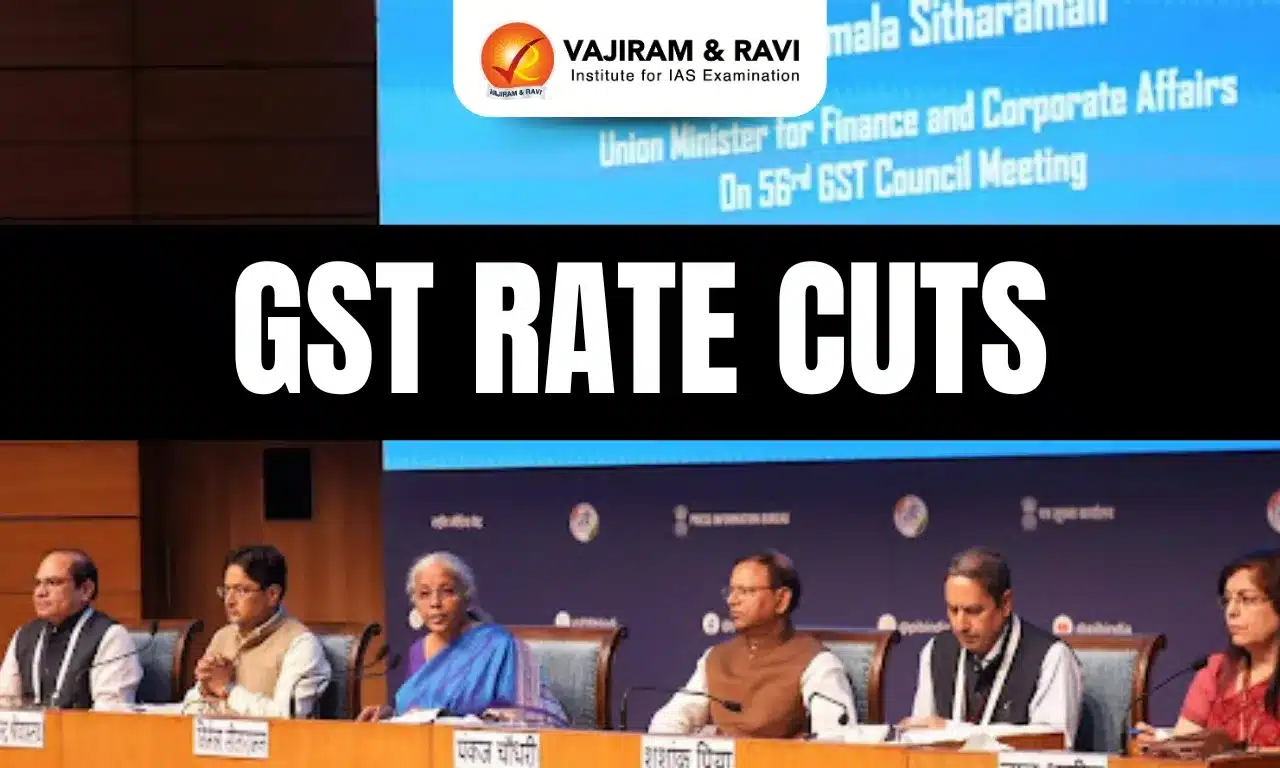
GST Rate Cuts 2025: Impact on Economy and Revenue

GST Rate Cuts

GST Rate Cuts Latest News

  • The GST Council has implemented major GST rate cuts in 2025, reducing slabs and taxes on over 90% of items to boost consumption and simplify India’s indirect tax system.

Introduction

  • The Government of India has undertaken one of the most significant overhauls of the Goods and Services Tax (GST) regime since its introduction in 2017. 
  • In September 2025, the GST Council announced major rate rationalisation, reducing the number of slabs and cutting taxes on a wide range of items. 
  • This reform, projected as a "next-generation" step, is expected to spur demand, ease compliance, and stimulate growth at a time when India faces external shocks such as steep U.S. tariffs on Indian exports. 
  • However, it also raises questions on revenue sustainability and uneven sectoral impacts.

GST Rationalisation: A Long-Pending Reform

  • The idea of simplifying GST has been under discussion for years. Initially, GST featured multiple rates: 0%, 5%, 12%, 18%, and 28%, along with compensation cess. 
  • Critics argued that this complicated structure undermined the “one nation, one tax” principle. 
  • In 2021, a Group of Ministers (GoM) was formed to suggest rationalisation, but progress was slow until the Union government revived the proposal in 2025.
  • The reforms introduced now reduce the slabs to 0%, 5%, 18%, and 40%, with the compensation cess retained only temporarily for tobacco products. 
  • Over 91% of items that underwent rate changes witnessed cuts, signalling a clear pro-consumer approach.

Key Changes Announced

  • Wider Tax Reductions: Of 453 items reviewed, 413 saw rate cuts, particularly shifting goods from the 12% to the 5% slab.
  • Luxury Items: While 17 goods moved from 28% to 40%, the effective tax incidence on items like luxury cars fell, since the cess was subsumed.
  • Healthcare and Renewable Energy: Rates on medical products and renewable energy components dropped from 12% to 5%, benefiting patients and clean energy expansion.
  • Construction Materials: Cement moved from 28% to 18%, providing relief to the real estate sector.
  • Automobiles: Cars and non-luxury two-wheelers moved from 28% to 18%, boosting the auto sector.

Need for the Reforms

  • Two factors added urgency to these changes:
  • End of Compensation Cess: With cess repayment to States nearing completion, the government sought a new rate structure to prevent “sin goods” like tobacco from becoming artificially cheap.
  • U.S. Tariffs Impact: With 50% tariffs imposed by the U.S. on Indian imports, India anticipated stress on exports and private investment. By rationalising GST, the government aimed to boost domestic consumption to offset external shocks.

Beneficiary Sectors

  • Healthcare: Cheaper medical devices and equipment promise direct consumer benefits.
  • Renewable Energy: Lower tax on solar, wind, and related equipment supports India’s 2030 clean energy targets.
  • Real Estate and Construction: Lower GST on cement and slabs reduces costs, likely stimulating housing demand.
  • Consumer Goods and Appliances: Reduced costs could accelerate sales during the festive season.
  • Automobile Sector: Car manufacturers expect a stronger demand revival.

Concerns and Criticisms

  • Despite widespread approval, some sectors expressed concerns:
    • Textiles: Although raw material rates fell, garments priced above Rs. 2,500 attract 18% GST, burdening premium segments.
    • Insurance: While life and health insurance gained exemptions, the removal of input tax credits could raise insurer costs.
    • Aviation: Airlines opposed higher GST on non-economy seats, citing cost escalation.
    • MSMEs: Labour-intensive sectors fear rising costs due to increased GST on labour charges from 12% to 18%.
    • Oil Industry: The inverted duty structure in edible oils remains unresolved.

Revenue Implications

  • The Centre estimated a revenue shortfall of Rs. 48,000 crore in 2023-24 due to GST cuts, though State Bank of India research suggested a much lower impact of around Rs. 3,700 crore. 
  • Opposition-ruled States demanded a new cess on items in the 40% slab to compensate for losses, but this was rejected by the Council. The ultimate impact will depend on how higher consumption offsets rate cuts.

Future Outlook

  • The reforms position India towards a simpler GST architecture, potentially improving compliance and reducing litigation. 
  • While short-term fiscal challenges exist, long-term gains could emerge through stronger demand, private investment, and the formalisation of the economy. 
  • The GST rationalisation also complements India’s broader economic reforms agenda and may help cushion the economy against global uncertainties.

Source: TH

GST Rate Cuts FAQs

Q1: What are the new GST slabs after rationalisation?

Ans: The new slabs are 0%, 5%, 18%, and 40%, with the compensation cess retained only on tobacco until year-end.

Q2: Which sectors benefit the most from GST cuts?

Ans: Healthcare, renewable energy, real estate, automobiles, and consumer appliances are the biggest beneficiaries.

Q3: Why were the GST rate cuts implemented now?

Ans: The reforms were timed with the end of compensation cess and to cushion the impact of U.S. tariffs on Indian exports.

Q4: What is the estimated revenue loss from GST cuts?

Ans: The Centre estimates ₹48,000 crore, while SBI research pegs it at around ₹3,700 crore.

Q5: Which sectors have expressed concerns about the GST changes?

Ans: Textiles, insurance, aviation, edible oil producers, and MSMEs have raised concerns over higher costs or unresolved anomalies.

Enquire Now