
Fully Literate State in India Latest News
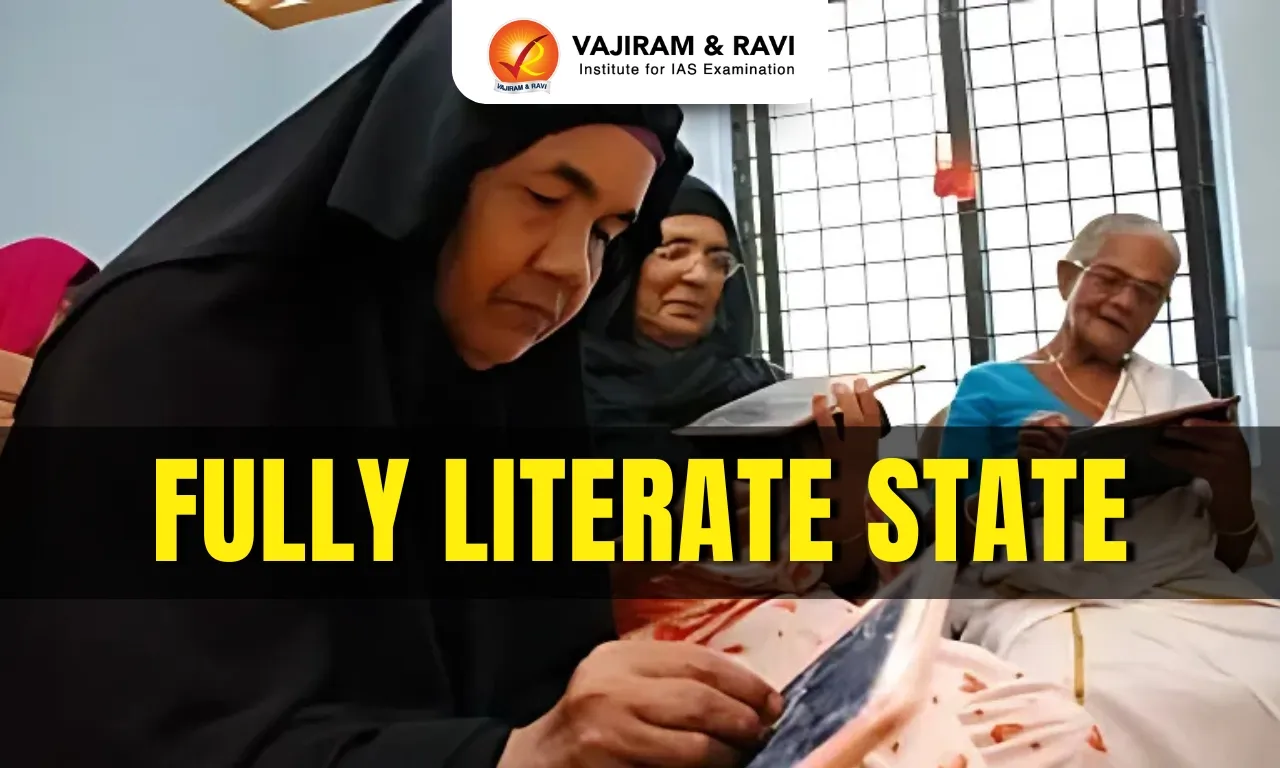
- Himachal Pradesh has been declared ‘fully literate’, joining Goa, Ladakh, Mizoram, and Tripura. However, ‘fully literate’ does not imply 100% literacy.
- It means the state has achieved a literacy rate above 95%, with Himachal recording 99.3%.
- Other states also fall in this category, though none have absolute universal literacy.
Defining Literacy and Full Literacy in India
- The Ministry of Education defines literacy as the ability to read, write, and compute with comprehension, including skills like digital and financial literacy.
- A State/UT is considered ‘fully literate’ when it achieves 95% literacy.
- These definitions were issued in August 2023 for the ULLAS programme, launched in 2022 to promote adult education for those above 15.
- Aimed at achieving 100% literacy by 2030, ULLAS aligns with the UN’s Sustainable Development Goals and India’s National Education Policy 2020.
ULLAS Programme
- ULLAS (Understanding Lifelong Learning for All in Society) is a national adult education initiative launched in 2022 by the Ministry of Education.
- It targets individuals aged 15 and above who missed formal schooling, aiming to equip them with reading, writing, numeracy, digital skills, and financial literacy.
- The programme aligns with the National Education Policy 2020 and the UN Sustainable Development Goal of achieving 100% literacy by 2030.
How Literacy is Attained under ULLAS
- Under the ULLAS programme, adults are taught basic reading, writing, and arithmetic (up to Class 3 level), along with practical skills like reading time, using calendars, handling money, writing cheques, and making safe digital transactions.
- Training is delivered via a mobile app or offline by students and community volunteers.
- Learners then take the Functional Literacy Numeracy Assessment Test (FLNAT), a 150-mark test in their chosen language.
- Successful candidates are certified by the National Institute of Open Schooling (NIOS) as having achieved foundational literacy and numeracy.
Process of Becoming a ‘Fully Literate’ State
- To achieve the ‘fully literate’ tag, states first identify adults lacking literacy through door-to-door surveys or data records.
- These individuals are trained under the ULLAS programme and tested through the Functional Literacy Numeracy Assessment Test (FLNAT).
- States where the number of illiterate adults is relatively small — due to already high literacy levels or smaller populations — achieve the milestone more quickly.
- For example, according to the 2011 Census, Goa, Himachal Pradesh, Mizoram, and Tripura already had literacy rates well above the national average of 74%.
Measuring Literacy in India
- In the 2011 Census, literacy was defined as the ability to read and write with understanding in any language for those aged seven and above.
- The literacy rate stood at 80.9% for men and 64.6% for women, while adult literacy (15+) was 69.3%.
- Subsequent surveys have tracked progress. The NSS 71st round (2014) reported 71% adult literacy nationally, with Mizoram at 96%, Goa at 90%, Himachal at 83%, and Tripura at 86%.
- The PLFS 2023-24 estimated a national literacy rate of 77.5%, with Mizoram (98.2%), Goa (93.6%), Tripura (93.7%), and Himachal (88.8%) among the top performers.
- However, 22.3% of Indians aged 15+ were still not literate, with the highest levels in Bihar (33.1%), Andhra Pradesh (31.5%), and Madhya Pradesh (28.9%).
Fully Literate State FAQs
Q1: What does ‘fully literate state’ mean?
Ans: A state is declared fully literate when it achieves over 95% literacy, though not necessarily 100%. Himachal Pradesh reached 99.3% literacy in 2025.
Q2: What is the ULLAS programme?
Ans: ULLAS, launched in 2022, is an adult literacy scheme for individuals above 15, offering basic literacy, numeracy, and skills like digital and financial literacy.
Q3: How is literacy attained under ULLAS?
Ans: Adults are trained in reading, writing, arithmetic, and practical skills, then tested via FLNAT. Successful learners are certified by the National Institute of Open Schooling.
Q4: How do states become fully literate?
Ans: States identify illiterate adults through surveys, provide ULLAS training, and conduct FLNAT. States with higher baseline literacy or smaller populations achieve this milestone faster.
Q5: How has literacy been measured in India?
Ans: Census 2011 defined literacy as the ability to read and write with understanding. Later NSS and PLFS surveys tracked progress, with PLFS 2023-24 estimating 77.5% literacy nationally.
