
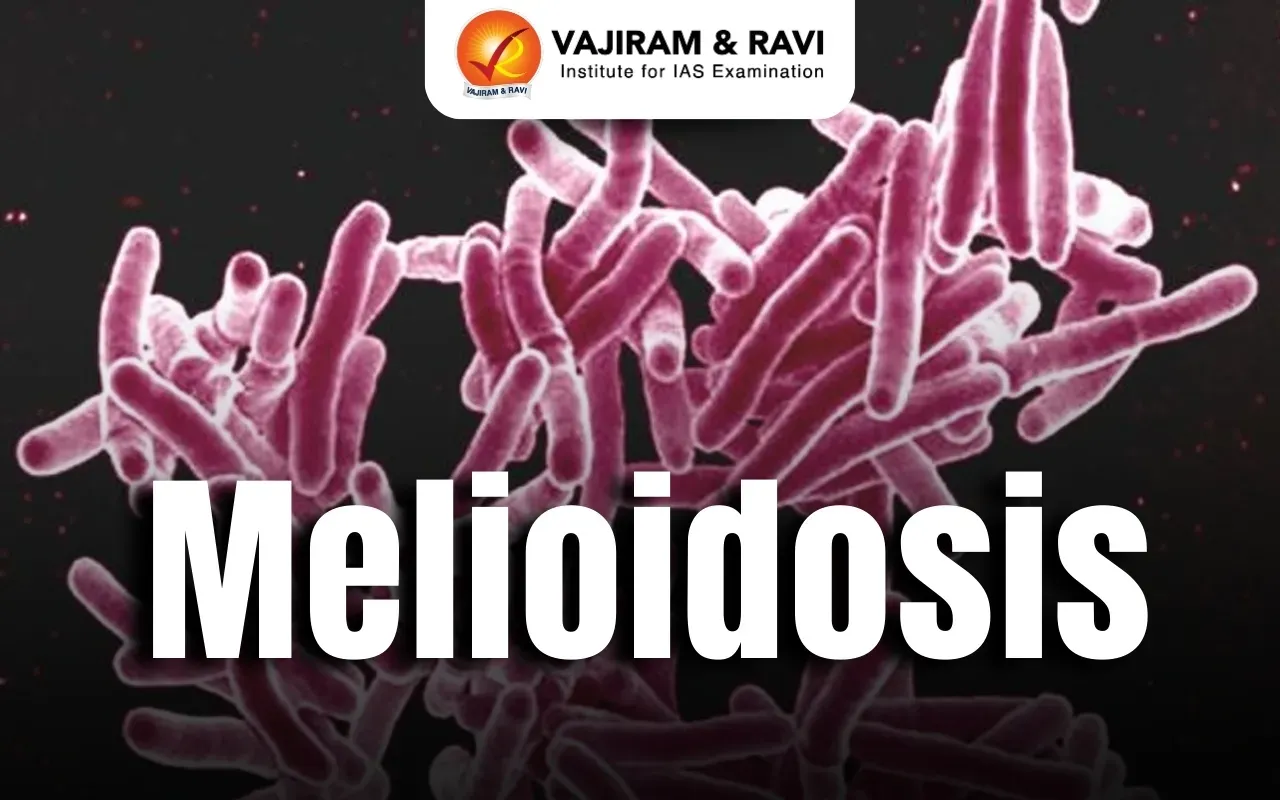
Melioidosis Latest News
Recently, health authorities have confirmed melioidosis in a patient from Turakapalem village in Andhra Pradesh.
About Melioidosis
- It is caused by an infectious disease caused by the environmental Gram-negative bacterium Burkholderia pseudomallei.
- It is seasonal, with 75–85% of cases occurring during the rainy season.
- It has a high case fatality rate (CFR) ranging from 16% to 50% in known endemic regions.
- It is an infectious disease endemic in Southeast Asia, northern Australia, much of the Indian subcontinent, southern China, Hong Kong, and Taiwan.
- It is common in people living with: Diabetes, Alcohol use disorder, Chronic kidney disease Chronic lung disease (like cystic fibrosis or COPD).
- Symptoms: Fever, headache, trouble breathing and Stomach or chest pain etc.
Transmission of Melioidosis
- Touching contaminated soil with the hands or feet, especially if there are small cuts in the skin.
- Drinking contaminated water that has not been chlorinated
- Breathing in contaminated dust or water droplets
- Exposure to severe weather events such as tropical monsoon storms, cyclones, hurricanes and typhoons.
- Treatment: At present, there is no vaccine available for melioidosis.
Source: DTE
Melioidosis FAQs
Q1: What is another name for melioidosis?
Ans: Whitmore's disease
Q2: Is melioidosis transmitted human to human?
Ans: It's very rare for people to get the disease from another person.
