
Murikooti Pacha Latest News
Researchers at the Jawaharlal Nehru Tropical Botanic Garden & Research Institute (JNTBGRI), Palode, have tapped into the wound-healing properties of the red ivy plant, known locally as “murikooti pacha”.
About Murikooti Pacha
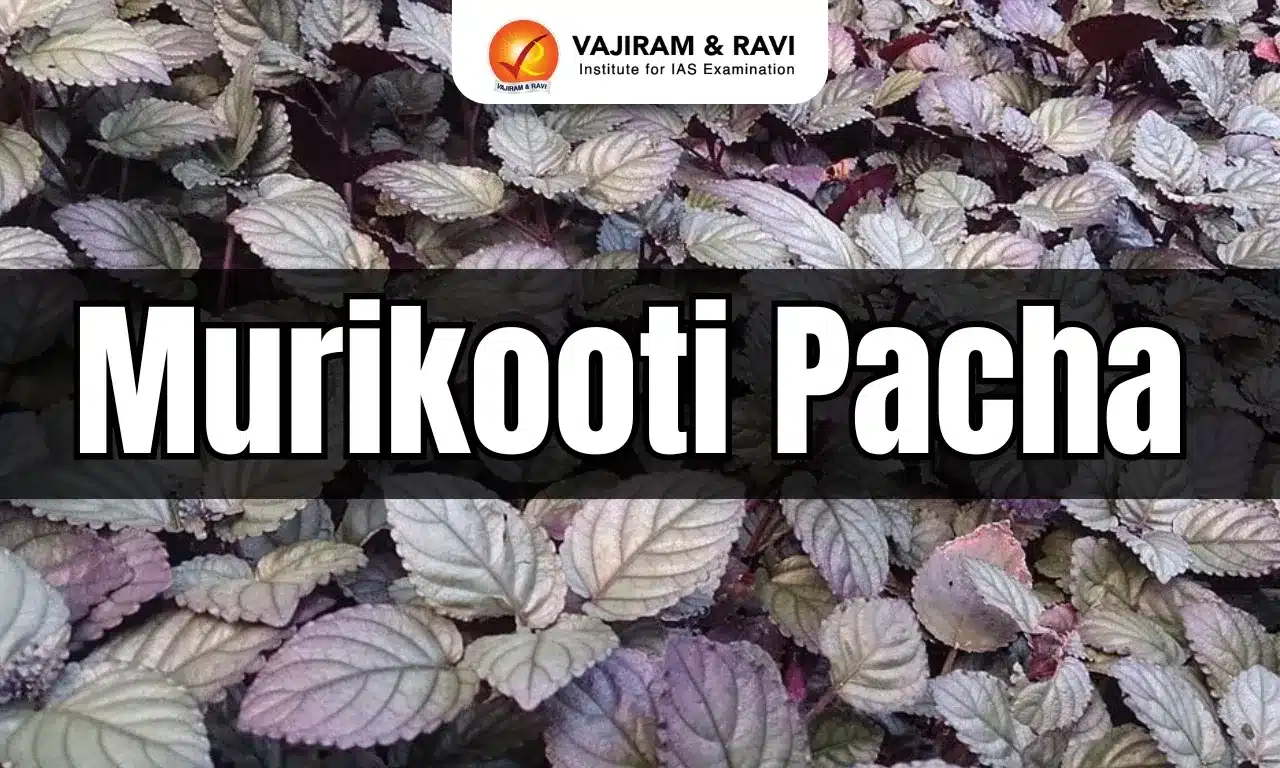
- Murikooti Pacha or Red Ivy plant (Strobilanthes alternate), belongs to the Acanthaceae family.
- Other names: Red Flame Ivy, Purple Waffle Plant.
Habitat & Distribution of Murikooti Pacha
- It is native to tropical Asia, particularly Java.
- It is widely cultivated in India, Indonesia, China, and Japan.
- It thrives in moist, shaded environments and is commonly found in gardens and as ground cover.
Applications of Murikooti Pacha
- Traditional practitioners use its leaf paste applied to fresh wounds, cuts, ulcers, and inflamed areas to promote healing and reduce inflammation.
- Also its leaf extracts are used traditionally to treat anemia, gallstones, prolonged menstruation, hemorrhoids, and diabetes.
Key Features of Wound-Healing Pad
- The key ingredient in the multi-layered wound pad developed by the scientists is the acteoside molecule derived from the red ivy plant, which has high efficacy even at lower concentrations of 0.2%.
- It has been designed with a specially engineered electro-spun nanofiber layer, made from biodegradable and non-toxic polymers and is incredibly thin.
- Acteoside is a natural compound found in many plants and its pharmacological activities and therapeutic potential is well-known. This is the first time acteoside has been linked to the red ivy plant.
- Along with acteoside, it also incorporates the antibiotic neomycin sulfate, blended with FDA-approved polymers.
Source: TH
Murikooti Pacha FAQ's
Q1: What is the use of murikootti for skin?
Ans: It is used as a folklore medicine for wound healing.
Q2: What is the main cause of anemia?
Ans: Iron deficiency, blood loss, or damaged red blood cells to issues with red blood cell production.
