
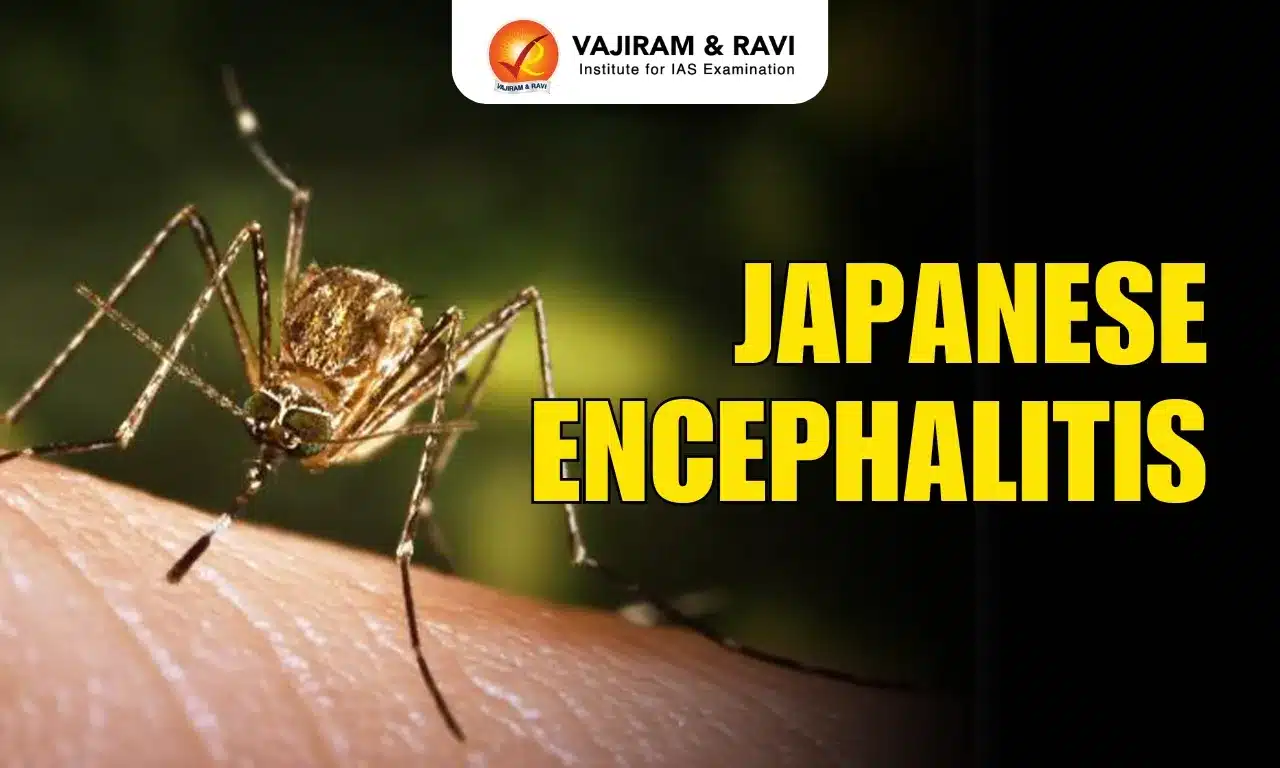
Japanese Encephalitis Latest News
Researchers have found that waning immunity against infections of the Japanese encephalitis virus (JEV) can predispose individuals to more severe dengue.
About Japanese Encephalitis
- It is a viral zoonotic disease caused by the Japanese Encephalitis(B) virus.
- Japanese encephalitis virus (JEV) is a flavivirus related to dengue, yellow fever and West Nile viruses.
Transmission of Japanese Encephalitis
- The virus is transmitted to humans by the infected Culex mosquito of the Vishnui group.
- There is no human-to-human transmission of the virus.
- It is most common in rural areas of Asia, particularly during monsoon seasons when mosquito breeding is prevalent.
- Both Japanese encephalitis virus and dengue virus belong to the same genus, Orthoflavivirus.
Symptoms of Japanese Encephalitis
- It affects the brain, leading to symptoms like fever, headache, vomiting, and neurological signs such as confusion, seizures, and paralysis.
- While many infected individuals may show mild or no symptoms, severe cases can lead to permanent brain damage or death.
Prevention and Treatment for Japanese Encephalitis
- Vaccination is the most effective prevention strategy, particularly in endemic regions.
- There is no antiviral treatment for patients with JE. Treatment is supportive and includes stabilization and relief of symptoms.
- According to the Government of India’s guidelines, two doses of the vaccine have been a part of the Universal Immunisation Programme since 2013.
Source: TH
Japanese Encephalitis FAQs
Q1: Who is most at risk for encephalitis?
Ans: People who have HIV/AIDS, take immune-suppressing medicines are at increased risk of encephalitis.
Q2: What is the cause of Japanese encephalitis?
Ans: Japanese encephalitis is caused by a virus that is found in Asia and the western Pacific.
