
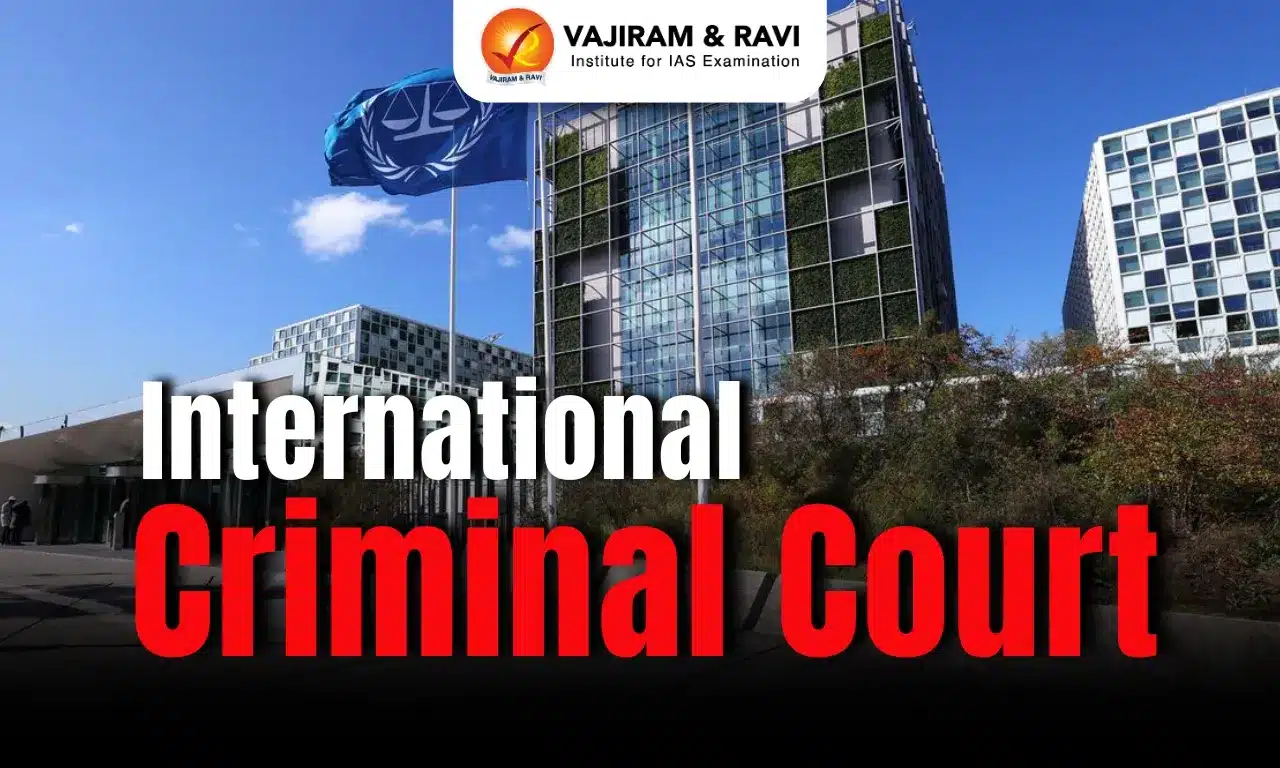
International Criminal Court Latest News
Recently, the military-led West African nations of Burkina Faso, Mali and Niger announced their withdrawal from the International Criminal Court.
About International Criminal Court
- It was established by an international agreement, the Rome Statute, on 17 July 1998.
- The Rome Statute sets out the Court’s jurisdiction, structures, and functions.
- The Statute entered into force on 1 July 2002.
- It is the only permanent international criminal tribunal.
- Mandate: ICC investigates and, where warranted, tries individuals charged with the gravest crimes of concern to the international community: genocide, war crimes, crimes against humanity, and the crime of aggression.
- Members: There are 125 member countries, (China, India, Israel, Russia, and the United Statee are not ICC parties).
- Funding: The Court is funded by contributions from the States Parties and by voluntary contributions from Governments, international organizations, individuals, corporations, and other entities.
Composition of International Criminal Court
- Judges: The court has eighteen judges, each from a different member country, elected to non-renewable nine-year terms.
- The Presidency: Consists of three judges (the President and two Vice-Presidents) elected from among the judges. It represents the Court to the outside world and helps with the organization of the work of the judges.
- Office of the Prosecutor (OTP): OTP is responsible for receiving referrals and any substantiated information on crimes within the jurisdiction of the Court. OTP examines these referrals and information, conducts investigations, and conducts prosecutions before the Court.
- Registry: It provides administrative and operational support to the Chambers and the Office of the Prosecutor.
Jurisdiction of International Criminal Court
- Unlike the International Court of Justice (ICJ), which hears disputes between states, the ICC handles prosecutions of individuals.
- The ICC is only competent to hear a case if:
- The country where the offence was committed is a party to the Rome Statute; or
- The perpetrator’s country of origin is a party to the Rome Statute.
- The ICC may only exercise its jurisdiction if the national court is unable or unwilling to do so.
- The ICC only has jurisdiction over offences committed after the Statute’s entry into force on 1 July 2002.
Source: TH
International Criminal Court FAQs
Q1: Where is the International Criminal Court headquarter?
Ans: Hague, Netherlands
Q2: Which treaty established the ICC?
Ans: Rome Statute
