
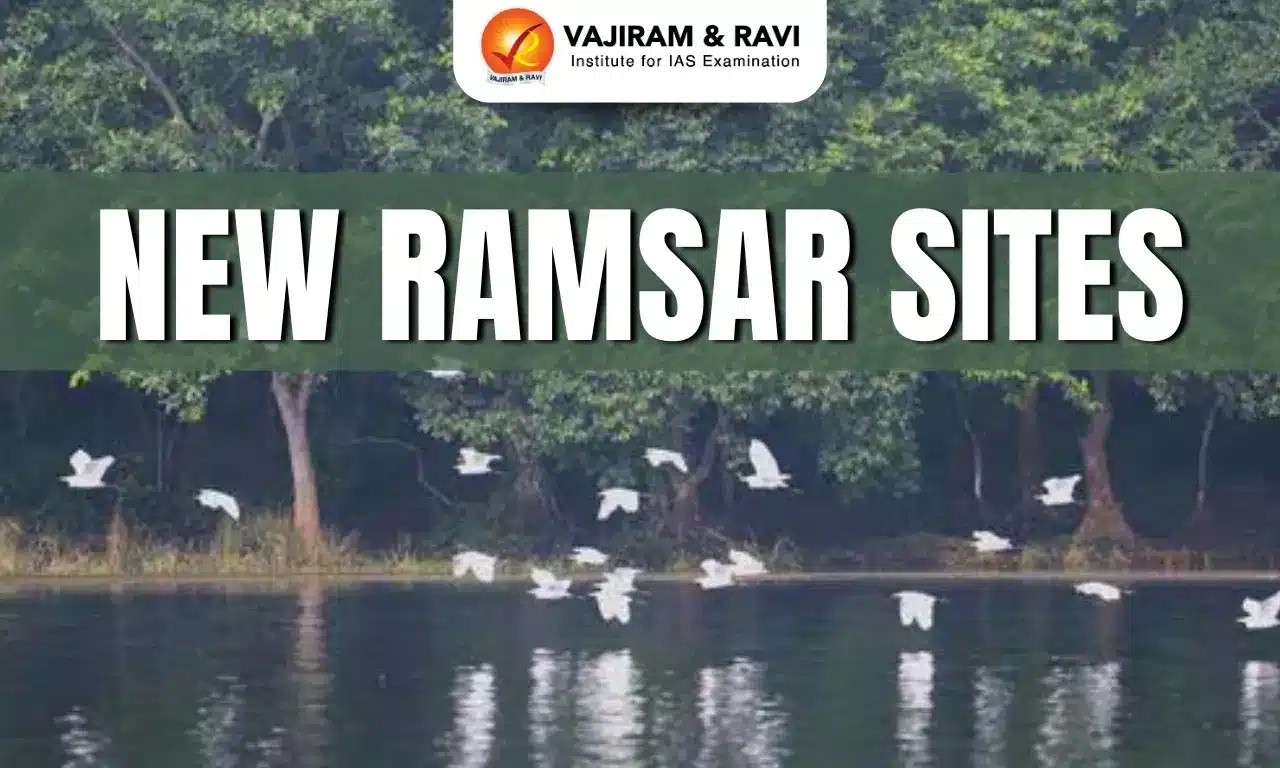
New Ramsar Sites Latest News
Recently, two wetlands from Bihar — Gokul Jalashaya in Buxar and Udaipur Jheel in West Champaran — have received the Ramsar tag.
About Gokul Jalashaya
- Location: It is located in Buxar, Bihar
- It is an oxbow lake located on the southern edge of the Ganga (Ganges) River.
- The flood pulses of the Ganges influence land use and land cover in the wetland, exposing marshes and agricultural areas during the dry months and increasing inundation after monsoons.
- It acts as a buffer for nearby villages during flooding events,.
- Fauna: In total, over 50 bird species are found in the site and its surroundings; in the pre-monsoon season, exposed marshland and shrubs provide food and breeding habitats.
- Local communities rely on the wetland for fishing, farming and irrigation.
About Udaipur Jheel
- It is located in West Champaran, Bihar.
- It is also an oxbow lake, bordered to the north and west by the dense forest of Udaipur Wildlife Sanctuary.
- Flora: Over 280 plant species are found in the wetland, including Alysicarpus roxburghianus, a perennial herb endemic to India.
- The wetland is an important wintering ground for around 35 migratory bird species, including the vulnerable common pochard (Aythya ferina).
- Threats: The wetland faces threats from illegal fishing and intensive agriculture, particularly the use of chemical fertilizers and pesticides.
Source: HT
New Ramsar Sites FAQs
Q1: What is the largest Ramsar Site in India?
Ans: Sundarbans Wetland.
Q2: Which state has the highest number of Ramsar Sites in India?
Ans: Tamil Nadu
