
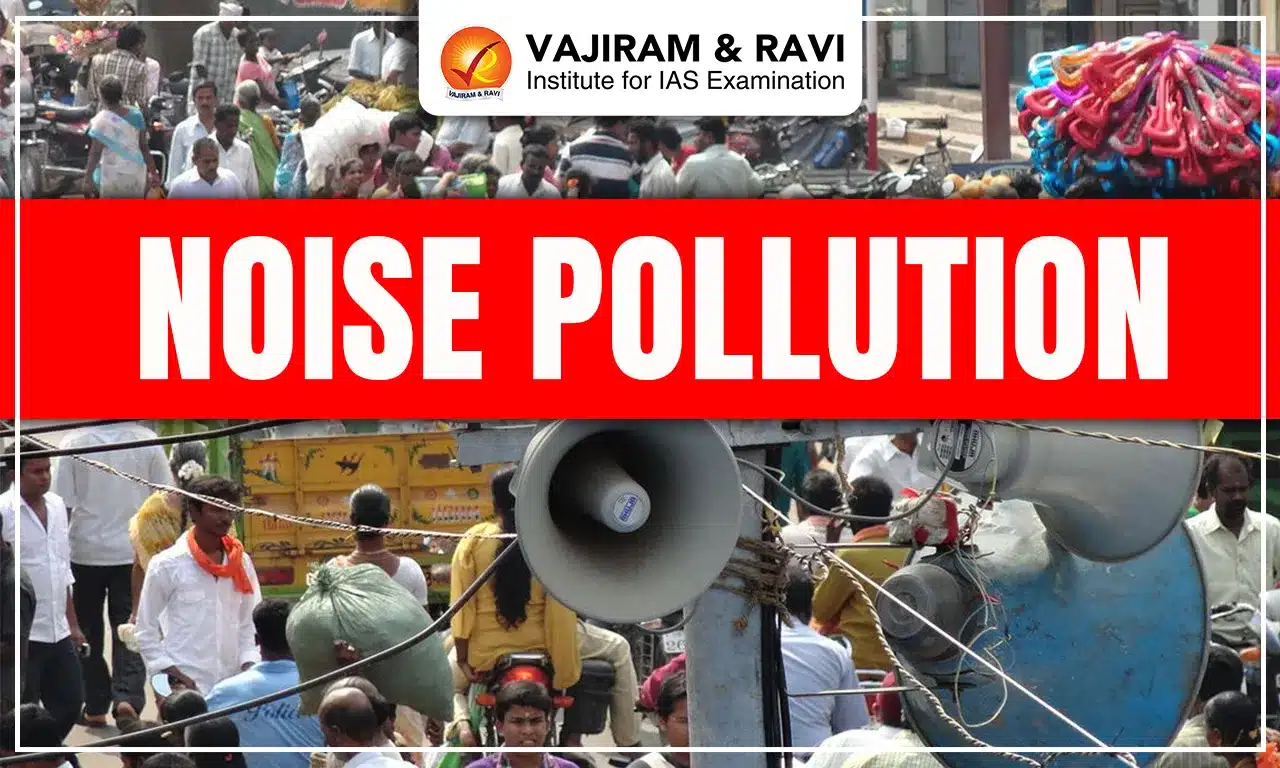
Noise pollution has emerged as a growing environmental concern in India as well as globally. It refers to the excessive and unwanted sound that disrupts normal life and causes harmful effects on human health, environment, and economy. According to the Noise Pollution (Regulation and Control) Rules, 2000, noise above 55 decibels (dB) during the day and 45 dB at night is harmful to human health. In India, with rapid urbanization, industrial growth, and increasing traffic, noise pollution has become one of the most pressing urban environmental issues.
Noise Pollution in India
India is among the world’s most affected countries in terms of urban noise levels. The Central Pollution Control Board (CPCB), under the Noise Pollution (Regulation and Control) Rules, 2000, sets permissible noise limits for different zones such as industrial, commercial, residential, and silence zones. However, major Indian cities like Delhi, Mumbai, Kolkata, and Bengaluru regularly exceed these limits. For example, the CPCB 2023 survey recorded average noise levels in Delhi ranging from 65-75 dB during the day, well above the permissible limit of 55 dB for residential areas.
Noise Pollution Sources
Noise pollution arises from a wide range of human and industrial activities. The major causes include:
- Vehicular Traffic: Heavy use of cars, motorcycles, buses, and trucks. In cities like Delhi and Mumbai, traffic noise is the largest contributor.
- Industrial Activities: Factories, construction sites, and power plants generate continuous high-decibel noise.
- Urbanization and Construction: Roadwork, metro rail construction, flyovers, and housing projects significantly add to city noise.
- Social and Cultural Activities: Use of loudspeakers in marriages, religious events, festivals, and political rallies.
- Air Traffic: Airports near cities increase noise exposure for nearby residents. For example, areas around IGI Airport, Delhi experience noise levels above 70 dB.
Noise Pollution Impact
The Noise Pollution impacts the Human Beings as well as the wildlife and environment adversely. Below we have discussed the impact of noise pollution:
- Impact of Noise Pollution on Health
Excessive noise exposure has serious health effects. WHO identifies noise pollution as the second biggest environmental cause of health problems after air pollution in Europe. In India, similar concerns are rising.
- Hearing Loss: Long exposure above 85 dB can lead to permanent hearing damage.
- Sleep Disturbances: Night-time noise disrupts rest and reduces productivity.
- Cardiovascular Diseases: High noise levels increase risk of hypertension, stress, and heart attacks.
- Mental Health Issues: Anxiety, irritability, depression, and reduced concentration.
- Child Development Issues: Studies show children exposed to noise near airports have lower reading comprehension and memory.
- Environmental and Social Impact of Noise Pollution
Noise pollution not only affects humans but also impacts the environment and animals.
- Wildlife Disturbance: Animals in forests and urban areas face stress and habitat disturbance. Bird communication gets disrupted, affecting breeding.
- Marine Noise Pollution: Increasing ship traffic and industrial activity harm whales and dolphins that rely on sound for communication.
- Social Impact: Reduced quality of life in urban areas, increased complaints in residential colonies, and decline in property values in high-noise areas.
Permissible Noise Levels in India (CPCB)
According to the data released by CPCB, The Noise Pollution (Regulation and Control) Rules, 2000, the permissible limit for the Noise Levels based on the zones and areas is tabulated below:
| Permissible Noise Levels in India (CPCB) | ||
| Zone/ Area | Daytime Limit (6 am-10 pm) | Night-time Limit (10 pm-6 am) |
|
Industrial |
75 dB |
70 dB |
|
Commercial |
65 dB |
55 dB |
|
Residential |
55 dB |
45 dB |
|
Silence Zone |
50 dB |
40 dB |
Global Scenario of Noise Pollution
Noise is a worldwide challenge. According to WHO’s 2018 report, around 1.6 million healthy life years are lost annually in Western Europe due to environmental noise. The European Environment Agency (EEA) noted that more than 100 million people in Europe are exposed to harmful noise levels above 55 dB. In the United States, the EPA estimates that nearly 30 million workers are exposed to hazardous noise levels at workplaces.
Noise Pollution in Indian Cities
As per the latest data released by the CPCB Annual Report 2017 under “Status of Ambient Noise Level in India 2017”, the approximate level of Noise in major cities of the Indian States are listed below:
| Noise Pollution in Indian Cities | |||
| City | Average Day Noise (dB) | Permissible Limit (dB) | Status |
|
Delhi |
70-75 |
55 |
Above Limit |
|
Mumbai |
68-72 |
55 |
Above Limit |
|
Kolkata |
65-70 |
55 |
Above Limit |
|
Bengaluru |
66-71 |
55 |
Above Limit |
|
Lucknow |
64-70 |
55 |
Above Limit |
Noise Pollution Legal Framework and Regulations
The Indian government and the Supreme Court of India has taken several steps to address noise pollution:
- Noise Pollution (Regulation and Control) Rules, 2000 under the Environment Protection Act, 1986.
- Motor Vehicles Act, 1988 to regulate use of horns and silencers.
- Factories Act, 1948 for worker safety against occupational noise.
- Role of National Green Tribunal (NGT) in hearing cases and imposing penalties on violators.
- Supreme Court Judgments restricting use of loudspeakers and firecrackers beyond permissible limits.
- Noise Monitoring Network: CPCB launched a National Ambient Noise Monitoring Network (NANMN) in 2011 covering 35 cities.
- Silence Zone Enforcement: Strict regulations around hospitals, schools, and courts.
- Smart City Mission: Integration of noise mapping for sustainable urban planning.
- Public Awareness Campaigns: Use of “No Horn” campaigns in metro cities.
Preventive Measures for Noise Pollution
Solutions require both policy action and public participation.
- Promotion of electric vehicles and improved public transport.
- Use of sound barriers and green belts along highways.
- Strict enforcement of permissible decibel limits in residential areas.
- Adoption of silent generators and machines in industries.
- Awareness campaigns to reduce honking and loudspeaker usage.
- Urban planning to create noise buffer zones.
Challenges in Controlling Noise Pollution
Despite existing regulations, several challenges hinder effective control of noise pollution:
- Non-Compliance: Many individuals and organizations flout noise norms, especially during festivals and public events.
- Lack of Awareness: Public awareness about the health impacts of noise pollution is limited.
- Inadequate Enforcement: Enforcement agencies often lack the resources and manpower to monitor and control noise pollution effectively.
- Technological Limitations: Limited use of modern technology for real-time monitoring and data collection.
Way Forward:
To effectively address noise pollution, the following reforms are proposed:
- Strengthening Enforcement: Enhance the capacity of enforcement agencies through training and provision of resources.
- Public Awareness Programs: Launch nationwide campaigns to educate the public about the harmful effects of noise pollution.
- Technological Integration: Implement real-time noise monitoring systems and mobile applications for public reporting.
- Policy Revisions: Regularly update noise pollution norms to keep pace with urbanization and technological advancements.
Public and Institutional Responses to Noise Pollution
Various public and institutional responses have been initiated to combat noise pollution:
- Judicial Interventions: Courts have actively intervened in noise pollution cases, issuing directives for stricter enforcement of noise regulations.
- NGOs and Civil Society: Organizations like Awaaz Foundation and Legal Initiative for Forest and Environment (LIFE) have been at the forefront, filing Public Interest Litigations (PILs) and conducting awareness campaigns.
- Local Authorities: Municipal corporations and local bodies have been empowered to take direct action against noise pollution under the amended Noise Pollution Rules.
Constitutional Framework and Case Laws Related to Noise Pollution
The Constitution of India provides a framework for addressing noise pollution:
- Article 21: Guarantees the right to life and personal liberty, which includes the right to live in a pollution-free environment.
- Article 51A: Enjoins every citizen to protect and improve the natural environment.
Case Laws:
- In Re: Noise Pollution (2005): The Supreme Court recognized noise pollution as a violation of the right to life under Article 21 and directed the enforcement of noise regulations.
- Forum for Prevention of Environment and Sound Pollution v. Union of India (2005): The Court issued directions for controlling noise pollution, including restrictions on the use of loudspeakers and firecrackers.
- Balwant Singh v. Commissioner of Police (2015): The Court emphasized the need for strict enforcement of noise pollution norms and held that the right to peaceful enjoyment of life is a fundamental right under Article 21.
Noise Standard for Fire Crackers
According to the CPCB protocol the Noise Standards for Fire Crackers were released in 2006 under the Environment (Protection) Act, 1986. These standards are-
- Prohibition in manufacturing and sale of fire-crackers generating noise above 125 dB at 4 meters distance from the point of bursting.
- For the individual fire cracker constituting series, the above mentioned limit is reduced by 5 log10 (N) dB, here N= number of crackers joined together.
- The Department of Explosives is responsible for the implementation of the rules.
Noise Pollution UPSC
Noise pollution is no longer just an urban nuisance; it is a public health crisis. With rising urbanization and industrialization, India needs urgent interventions to curb noise levels. Strict enforcement of CPCB rules, adoption of green infrastructure, use of technology for monitoring, and public cooperation are essential. Addressing this challenge will help India ensure a healthier, more sustainable, and peaceful future.
| Also Check Other Posts | |
| Coastal Regulation Zone | Global Plastic Treaty |
| Nitrogen Cycle | Carbon Cycle |
Noise Pollution FAQs
Q1: What Are The Causes Of Noise Pollution?
Ans: Causes of Noise Pollution include Vehicular Traffic, Industrial Activities, Construction Work, Loudspeakers, and Air Traffic.
Q2: What Are The Noise Pollution Limits In India?
Ans: CPCB sets Noise Limits at 55 dB Day and 45 dB Night for Residential Areas under Noise Pollution Rules, 2000.
Q3: What Are The Measures To Control Noise Pollution?
Ans: Measures include Electric Vehicles, Sound Barriers, Silent Machines, Noise Buffer Zones, and Public Awareness.
Q4: What Are The Provisions On Noise Pollution In India?
Ans: Noise Pollution is regulated by Environment Protection Act, 1986, Noise Rules, 2000, Motor Vehicles Act, and Supreme Court Judgments.
Q5: What Are The Fire Cracker Noise Standards By CPCB?
Ans: CPCB Fire Cracker Standards restrict Noise Level to 125 dB at 4 Meters; Series Crackers have reduced limits.
