
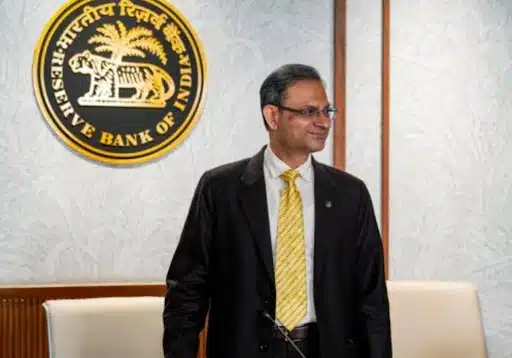
RBI Repo Rate Latest News
- The RBI’s Monetary Policy Committee (MPC) kept the repo rate unchanged at 5.5% with a ‘neutral’ stance on October 1, 2025, after already cutting rates by 100 bps this year.
- With retail inflation projected to average 2.6% in 2025-26, well below the 4% target, the RBI has space for future cuts but chose to “keep its powder dry.”
- Instead of relying only on rate changes, the RBI unveiled 22 structural measures to spur growth through regulatory easing and reforms.
- Economists noted the central bank’s message: growth support can extend beyond interest rates, with a focus on long-term stability and resilience.
RBI Monetary Policy October 2025: Growth Focus with Stability
- Repo rate unchanged at 5.5% with a neutral stance.
- A neutral stance implies that the central bank neither seeks to stimulate the economy nor tighten liquidity, balancing efforts to control inflation without impeding growth.
- RBI balances growth momentum with financial stability.
- Inflation projected well below target, creating policy space for future easing.
Stronger Growth Ahead
- GDP growth forecast revised up to 6.8% for FY 2025-26 (from 6.5%).
- Drivers: strong consumption, rising investments, government spending, good monsoon, GST 2.0, and better credit flow.
- Quarterly projections: Q1 – 7.8%, Q2 – 7.0%, Q3 – 6.4%, Q4 – 6.2%.
- FY 2026-27 growth estimated at 6.6%, assuming stability and normal monsoon.
- Consumer optimism remains high in both urban and rural households.
Global Agencies Reaffirm Growth
- Agencies highlight resilience amid global uncertainties:
- IMF – 6.4% (FY26)
- Fitch – 6.9% (FY26), 6.3% (FY27)
- S&P Global – 6.5% (FY26)
- UN – 6.3% (FY26), 6.4% (FY27)
- OECD – 6.7% (FY26)
- Confidence reinforced by structural reforms, strong domestic demand, and vibrant services sector.
Prices Stay Stable
- CPI inflation forecast cut to 2.6% for FY 2025-26 (earlier 3.1%).
- Inflation fell to 1.6% in July 2025, an 8-year low.
- Driven by 9-month food price decline (-10.5%) and milder summer temperatures.
- GST rationalisation (Sept 2025) reduced consumer prices for 11.4% of the CPI basket.
Global Demand Steady
- Current account deficit narrowed to 0.2% of GDP in Q1 FY 2025-26 (from 0.9% a year ago).
- Supported by services exports and record remittances (US$35.3 billion).
- Merchandise exports up 2.5%, imports up 2.1% (Apr–Aug 2025).
- Gross FDI inflows at US$ 37.7 billion; net inflows at US$ 10.8 billion.
- Major contributors: Singapore, US, Mauritius, UAE, Netherlands.
Why RBI Kept Repo Rate Unchanged
- During recent MPC meet, the RBI adopted a neutral stance — recognising strong domestic momentum, low inflation, and reforms as positives, but staying vigilant about external risks.
- Stability is prioritised for now, while keeping options open for future rate action if needed.
External Headwinds: Global Uncertainty
- Trade tensions and tariffs with the US may hurt external demand.
- Geopolitical risks and volatility in global financial markets remain downside risks.
- These global shocks could spill over into India’s trade flows and capital markets, warranting caution.
Domestic Tailwinds: Growth Drivers
- GDP Growth Upgrade: RBI revised FY26 projection to 6.8% from 6.5%, citing reforms and strong demand.
- Reform Push: GST rationalisation and structural reforms announced in August are expected to cushion external shocks.
- Agriculture & Rural Boost: Above-normal monsoon, kharif sowing, and reservoir levels support farm output and rural demand.
- Urban Consumption: Buoyancy in services sector and stable jobs lift consumption.
- Investments Rising: Capacity utilisation, conducive financial conditions, and improving domestic demand will aid fixed investment.
Inflation: Well Within Comfort Zone
- CPI Inflation Revised Down: FY26 forecast cut to 2.6% from 3.1%, driven by falling food prices and GST rationalisation.
- Food Inflation Stable: Good harvest prospects and stable supply keep food prices in check.
- Impact of GST Reforms: Lower CPI prices for multiple items reduce headline inflation.
- Inflation trajectory firmly within the 2–6% RBI comfort zone, opening space for growth support later if needed.
Growth vs Risks: The Balancing Act
- Upside Surprise: Q1 FY26 GDP grew 7.8%, fastest in five quarters.
- Caution Ahead: Q3 growth expected to slow due to trade frictions and tariffs.
- MPC highlights that while domestic drivers are resilient, external vulnerabilities remain significant.
Rationale for Holding Rates
- Wait-and-Watch Approach: Earlier frontloaded monetary easing and fiscal measures are still working through the system.
- Policy Flexibility: Keeping repo steady ensures the RBI retains room to cut if external shocks worsen.
- Borrower Impact: Lending rates linked to repo remain unchanged; MCLR loans may adjust with banks’ cost of funds.
RBI Repo Rate FAQs
Q1: Why did RBI keep the repo rate unchanged at 5.5% in October 2025?
Ans: RBI maintained the rate citing low inflation, strong domestic demand, and external risks, preferring structural reforms to stimulate growth.
Q2: What GDP growth forecast has RBI made for FY 2025-26?
Ans: The RBI revised India’s GDP growth forecast to 6.8%, up from 6.5%, supported by strong consumption, investments, and policy reforms.
Q3: How has inflation influenced RBI’s policy decision?
Ans: CPI inflation was projected at 2.6%, well below the 4% target, giving RBI room to support growth while keeping rates steady.
Q4: What reforms did RBI announce along with the policy?
Ans: RBI unveiled 22 regulatory easing measures, including allowing banks to finance acquisitions and easing risk weights on infrastructure lending.
Q5: What global risks influenced RBI’s decision to hold rates?
Ans: Ongoing trade tensions, tariff uncertainties with the US, and global financial volatility pushed RBI to adopt a cautious stance.
