
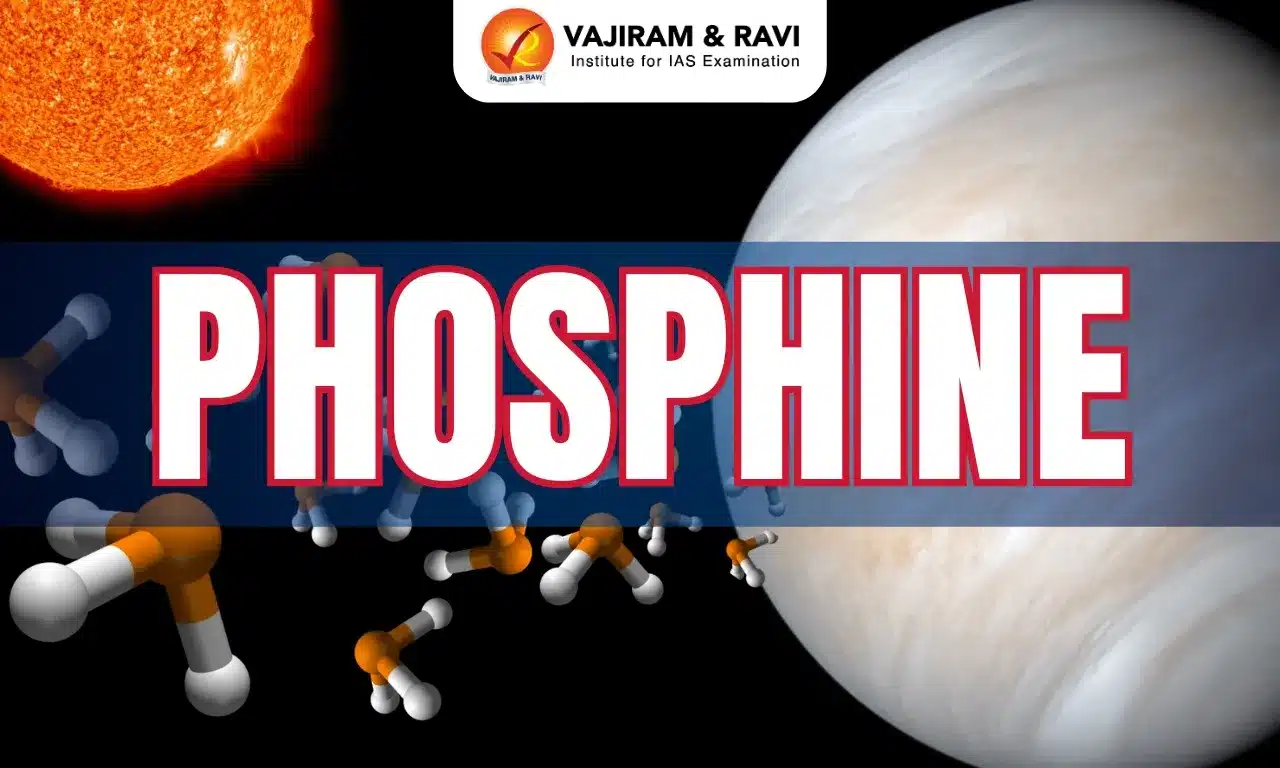
Phosphine Latest News
Recently, astronomers using the James Webb Space Telescope have detected phosphine (PH3) in the atmosphere of brown dwarf Wolf 1130C.
About Phosphine
- It is a chemical compound made of one phosphorus atom and three hydrogen atoms.
- Formation: Phosphine on Earth is developed naturally by bacteria that live in very low-oxygen environments.
- To produce phosphine, Earth bacteria take up phosphate from minerals or biological material and add hydrogen.
- It is also found in the atmospheres of Jupiter and Saturn.
- It is also called hydrogen phosphide.
- Uses of Phosphine: It is used in semiconductor and plastics industries, in the production of a flame retardant, and as a pesticide in stored grain.
Properties of Phosphine
- It is a colourless, flammable, extremely toxic gas with a disagreeable garlic like odour.
- It is slightly soluble in water.
- It is formed by the action of a strong base or hot water on white phosphorus or by the reaction of water with calcium phosphide (Ca3P2).
- It is structurally similar to ammonia (NH3), but phosphine is a much poorer solvent than ammonia and is much less soluble in water.
Source: SN
Phosphine FAQs
Q1: Why is phosphine highly toxic?
Ans: Phosphine is highly toxic because it disrupts cellular respiration, leading to cellular damage and potentially fatal outcomes
Q2: What is phosphine used for?
Ans: Phosphine is used as a fumigant for stored grains and as a reducing agent in chemical synthesis.
