
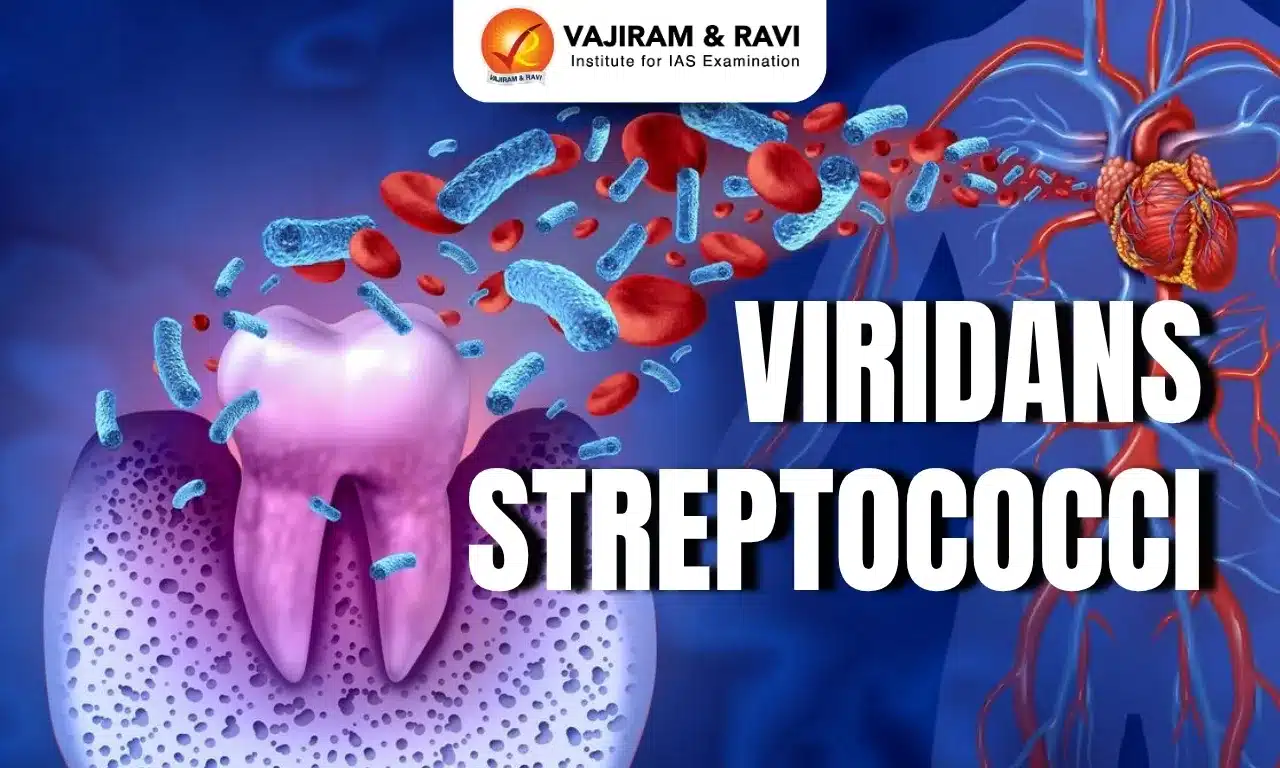
Viridans Streptococci Latest News
The new study, by a research team at Tampere University in Finland, examined coronary arteries from 121 sudden-death autopsies and found Viridans streptococci were the most frequent species, present in about 42% of both autopsy and surgical cases.
About Viridans Streptococci
- It is a group of common oral bacteria.
- It can form sticky bacterial layers called biofilms deep inside atherosclerotic plaques, remaining hidden from the immune system until the moment of rupture.
- Viridans streptococci are commensals in the gastrointestinal, respiratory and female genital tracts and are most prevalent in the oral cavity.
- It is a group of gram-positive cocci that are commonly associated with infective endocarditis (IE) and typically colonize previously damaged cardiac tissue.
- Viridans Streptococcal Biofilm Evades Immune Detection and Contributes to Inflammation.
- Importantly, the bacterial clusters were often arranged in biofilms, protective layers that allow bacteria to survive unnoticed by the body’s immune system.
How do Oral Bacteria Trigger Heart Attacks?
- The biofilm formed by this bacteria remains hidden, parts of it can break loose. Once released, the bacteria trigger inflammation in the artery wall.
- This weakens the fibrous “cap” covering the fatty plaque, making it more likely to rupture.
- Plaque rupture is a critical event that leads to clot formation and, ultimately, a heart attack.
Source: TH
Viridans streptococci FAQs
Q1: What is a common antibiotic used to treat Viridans Streptococci infections?
Ans: Penicillin.
Q2: What is a significant disease association of Viridans Streptococci?
Ans: Viridans Streptococci are a common cause of endocarditis, particularly in individuals with pre-existing heart conditions
