
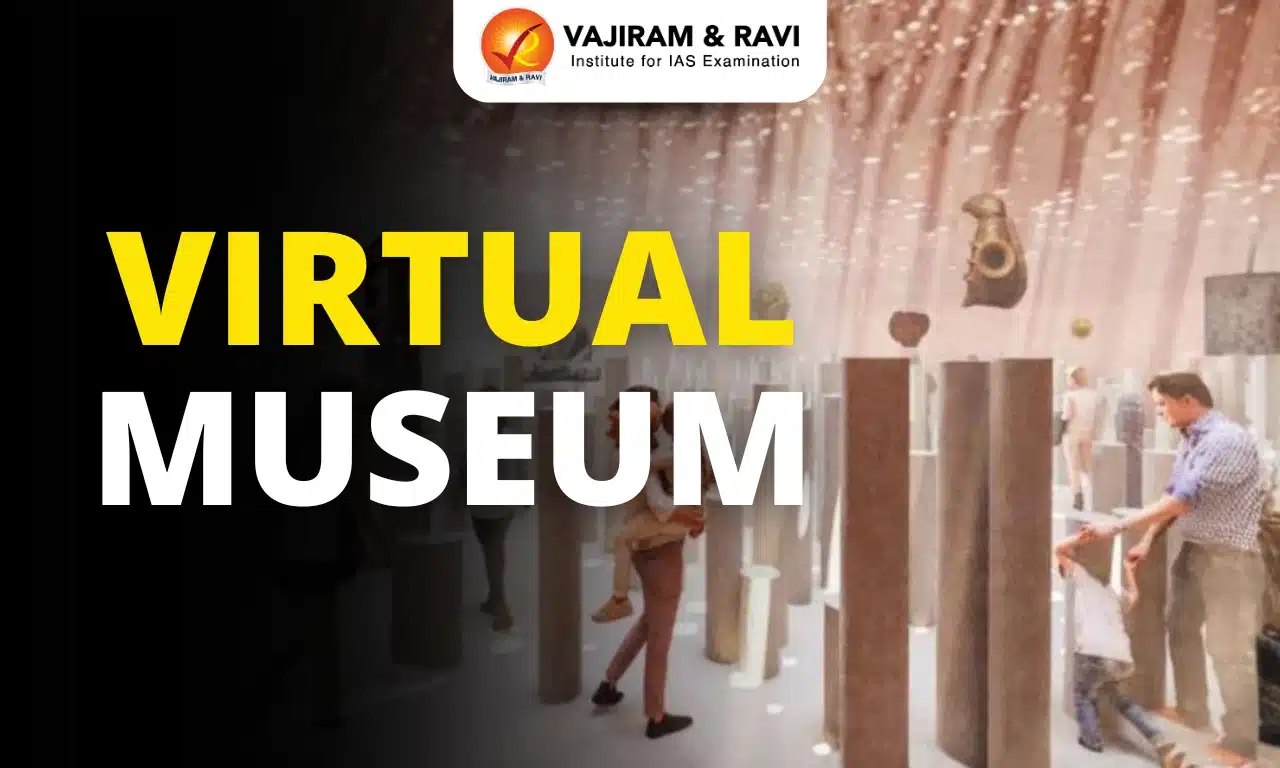
Virtual Museum Latest News
- UNESCO has launched the Virtual Museum of Stolen Cultural Objects — a digital platform unveiled recently at the MONDIACULT conference — to reconnect communities with cultural treasures lost to theft and colonialism.
- Emphasising that each stolen artifact represents a loss of identity, the initiative aims to raise awareness and aid recovery efforts against the illicit trade of heritage items.
MONDIACULT
- MONDIACULT is the acronym for the UNESCO World Conference on Cultural Policies and Sustainable Development.
- It's the world's largest ministerial forum on cultural policy, bringing together UNESCO's 194 Member States to define the global agenda for culture.
- MONDIACULT's history is marked by two key UNESCO conferences in Mexico City:
- 1982: The first conference expanded the definition of culture to include a society's total "distinctive features" and established culture as a fundamental part of development.
- 2022: Revived 40 years later, this conference declared culture a global public good and human right.
- Its outcome, the Mexico Declaration, mandated the conference be held every four years and called for a stand-alone goal for culture in the UN's post-2030 development agenda.
MONDIACULT 2025
- MONDIACULT 2025 conference was held in Barcelona, Spain.
- Six Themes: Cultural rights, Digital technologies in the culture sector, Culture and education, Economy of culture, Culture and climate action, and Culture, heritage, and crisis.
- Two Focus Areas: Culture for peace and Artificial intelligence and culture.
UNESCO’s Virtual Museum: A Digital Home for the World’s Stolen Treasures
- The Virtual Museum of Stolen Cultural Objects currently showcases nearly 240 missing artifacts from 46 countries.
- Designed to “gradually empty itself” as items are recovered and repatriated, the platform reflects UNESCO’s vision of restoring heritage to its rightful communities.
- Due to the rarity of original images, AI-generated 3D reconstructions allow users to explore spinnable digital versions of lost objects.
- The museum’s interactive design enables global audiences to access exhibits via personal devices or conference installations.
- The project is financially backed by Saudi Arabia and developed in partnership with INTERPOL, reinforcing international cooperation in the fight against illicit cultural trafficking.
Design Rooted in Symbolism
- Conceived by Pritzker Prize-winning architect Francis Kéré, the website’s structure resembles a baobab tree—a powerful African symbol of endurance and wisdom.
- Clicking on the tree branches leads to different sections:
- Stolen Cultural Objects Gallery
- Auditorium
- Return and Restitution Room
- Visitors can explore artifacts by name, function, material, or colour, alongside testimonies and maps showing where each item was stolen.
Platform for Restitution and Dialogue
- UNESCO envisions the museum as both a symbolic and functional space—hosting exhibitions on successful restitutions, sharing best practices, and highlighting the human cost of cultural loss.
- It also seeks to foster collaboration among governments, museums, law enforcement, and civil society.
India’s Lost Deities in UNESCO’s Virtual Museum
- Among the artifacts displayed in UNESCO’s Virtual Museum are two ninth-century sandstone sculptures from the Mahadev Temple in Pali, Chhattisgarh.
- The first depicts Shiva as Nataraja, performing his cosmic dance symbolising knowledge’s triumph over ignorance, with his bull Nandi looking on.
- The second portrays Brahma, the creator, seated in lalitasana with sacred emblems — the rosary and Vedas — and a goose symbolising wisdom at his feet.
- Together, they represent the Hindu balance of creation and dissolution, reflecting how temple art once embodied India’s deep philosophical traditions.
Virtual Repatriation: A New Dimension in UNESCO’s Heritage Preservation Effort
- Since its founding in 1945, UNESCO’s mission has expanded from rebuilding Europe’s war-torn schools and museums to promoting education, science, culture, and communication worldwide.
- Today, with 194 member states, it also prioritises AI governance and heritage protection, reflecting the evolving nature of cultural preservation in a digital era.
Repatriation as Moral Redress
- Historians describe repatriation — returning cultural objects to their homelands — as a form of atonement for colonial exploitation.
- They note, however, that Western Museum elites often resist it, citing fears of poor infrastructure or corruption in source countries — a view critics condemn as a lingering colonial attitude.
Digital Repatriation: Promise and Practicality
- Virtual repatriation can address the logistical and political challenges of physically returning artifacts.
- By digitising cultural objects, countries can reconnect with their lost heritage without facing transport or ownership disputes.
- However, critics like Robin Boast and Jim Enote argue in their paper “Virtual Repatriation: It’s Neither Virtual nor Repatriation” (2012) that using the term for digital projects risks diluting the concept of ownership and return.
- They caution that online exhibitions — while valuable for access and dialogue — should not replace genuine restitution to source communities.
A Balancing Act for the Future
- The debate highlights the tension between technological innovation and ethical restitution.
- While virtual repatriation expands access and awareness, it also forces the world to reconsider what true cultural ownership and justice mean in the digital age.
Virtual Museum FAQs
Q1: What is UNESCO’s Virtual Museum of Stolen Cultural Objects?
Ans: It’s a digital platform showcasing stolen artifacts from 46 countries, aimed at awareness, restitution, and reconnecting communities with their lost heritage.
Q2: Who designed the museum’s symbolic structure?
Ans: Architect Francis Kéré designed it as a baobab tree, symbolising endurance and wisdom, housing digital galleries and interactive restitution rooms.
Q3: What Indian artifacts are featured in the museum?
Ans: Two ninth-century sandstone sculptures from Chhattisgarh’s Mahadev Temple — Shiva as Nataraja and Brahma — representing creation and dissolution in Hindu philosophy.
Q4: What is meant by virtual repatriation?
Ans: It’s the digital return of cultural objects through virtual reconstruction, offering access and recognition without physical transfer of ownership.
Q5: Why is virtual repatriation debated among scholars?
Ans: Critics argue it blurs the meaning of true ownership and restitution, warning that digital returns may replace genuine repatriation efforts.
