Gulf of Kutch

Gulf of Kutch

Gulf of Kutch Latest News

According to a recent report, the long-term survival of dugongs in the Gulf of Kutch and the Andaman and Nicobar Islands is highly uncertain or challenging.

About Gulf of Kutch

  • It is an inlet of the Arabian Sea.
  • It is located along the west coast of India, in the Jamnagar district of Gujarat.
  • It divides Kutch and the Kathiawar peninsula regions of Gujarat.
  • It stretches for 99 miles and is famous for the coral reefs surrounding the 32 islands. 
  • A unique feature of this region is the tidal range, which generates fast currents of about 2.5 m per second. 
  • It is a region with the highest potential of tidal energy generation. 
  • It is rimmed with mudflats, and many small islands rise from its waters. 
  • The Gulf of Kutch, occupying an area of 7300 sq.km. is biologically one of the most productive and diversified habitats along the west coast of India. 
  • The southern shore has numerous islands and inlets which harbor vast areas of mangroves and coral reefs with living corals. 
  • The northern shore with numerous shoals and creeks also sustains large stretches of mangroves.
  • The western extremity of the Gulf consists of a vast complex of marshland criss-crossed by innumerous creeks. 
  • Marine National Park is situated on the southern shore of the Gulf of Kutch.  It is the 1st National Marine Park of India. 

Key Facts about Dugong

  • Dugongs are the only herbivorous mammals found in India’s marine ecosystems.
  • It is known as the sea cow but resembles a cross between a seal and a whale, and is distributed through the Indo-Pacific region.
  • Distribution
    • Dugongs range across 37 Indo-Pacific countries but have disappeared from many parts of their former range.
    • They are found along the Indian coastline, primarily inhabiting warm waters around the Andaman and Nicobar Islands, the Gulf of Mannar, Palk Bay, and the Gulf of Kutch. 
  • Habitat: Due to their dependence on seagrass beds for habitat and food, dugongs are restricted to shallow waters, where they spend the day feeding on seagrasses of the genera Cymodocea, Halophila, Thalassia, and Halodule.
  • The dugong is a long-lived species, able to live up to 70 years.
  • Conservation status:
    • IUCN Status: Vulnerable

Source: DTE

Gulf of Kutch FAQs

Q1: The Gulf of Kutch is located in which Indian state?

Ans: Gujarat

Q2: The Gulf of Kutch separates which two regions of Gujarat?

Ans: Kutch and Kathiawar

Q3: Which sea does the Gulf of Kutch form an inlet of?

Ans: Arabian Sea

Markanda River

Markanda River

Markanda River Latest News

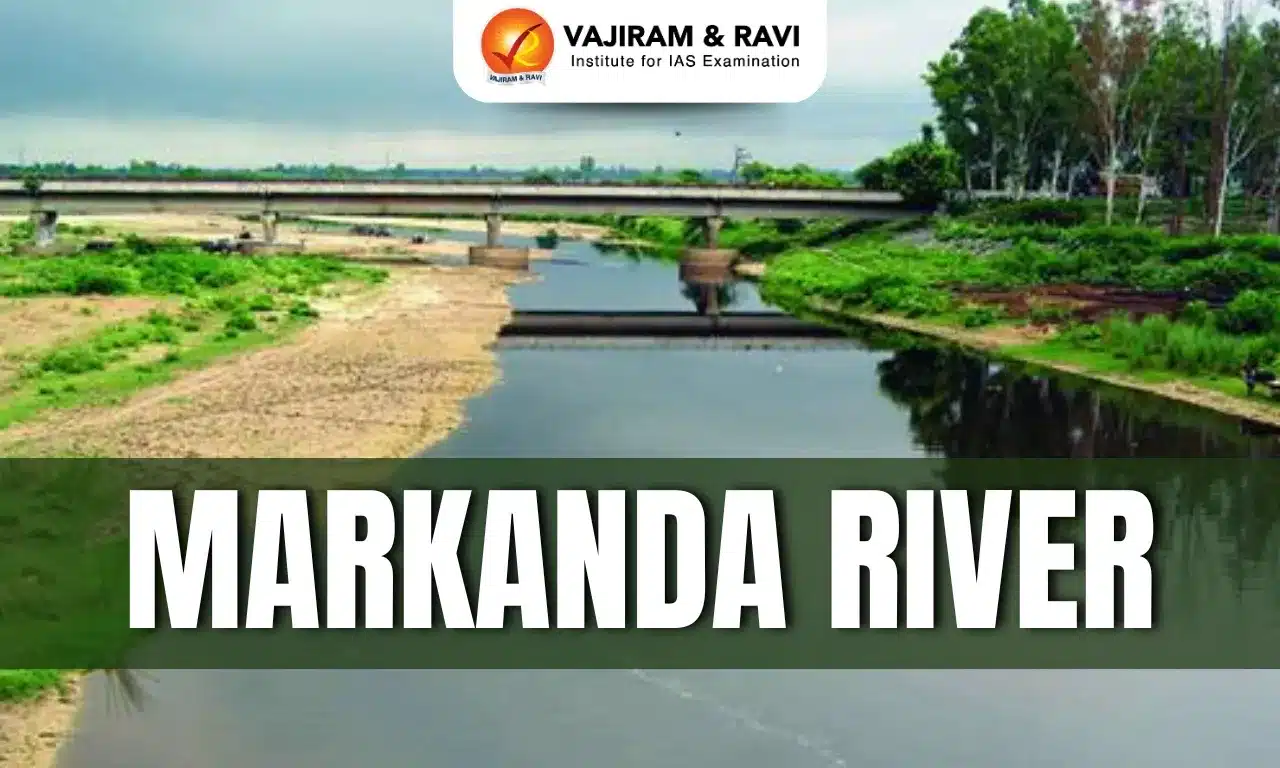
The National Green Tribunal (NGT) recently directed the State Pollution Control Boards of Himachal and Haryana and the Sirmaur deputy commissioner to file detailed reports on the status of water pollution caused by industries in the Markanda River in the Sirmaur district of Himachal Pradesh.

About Markanda River

  • It is a tributary of the Ghaggar River.
  • It was historically known as Aruna and is linked to the mythological Saraswati River.
  • Course:  
    • It originates from the lower Shiwalik hills in the Nahan area of Sirmaur district, Himachal Pradesh. 
    • It flows through Kala Amb, entering at Bikram Bag and exiting at Sadhora Bridge. 
    • The river then enters Haryana, covering 130 km before joining the Ghaggar River at Ismailabad.
  • It is a rain-fed river and has extremely low flow in the winter and summer months but rises suddenly in the monsoon.
  • The Markandeshwar Temple, dedicated to Maharshi Markandeya, stands on its banks.
  • Tributaries: The Markanda River Basin consists of several small seasonal streams, mainly from the Shivalik Hills, which contribute to its flow during the monsoon.
    • Begna River
    • Nakati River
    • Ran River
    • Salani Nallah
    • Roon Nallah
    • Sukdoh Nallah

Source: TOI

Markanda River FAQs

Q1: The Markanda River is a tributary of which river?

Ans: Ghaggar River

Q2: From which region does the Markanda River originate?

Ans: It originates from the lower Shiwalik hills in the Nahan area of Sirmaur district, Himachal Pradesh.

Q3: Which famous temple is located on the banks of the Markanda River?

Ans: Markandeshwar Temple

Mount Lewotobi

Mount Lewotobi

Mount Lewotobi Latest News

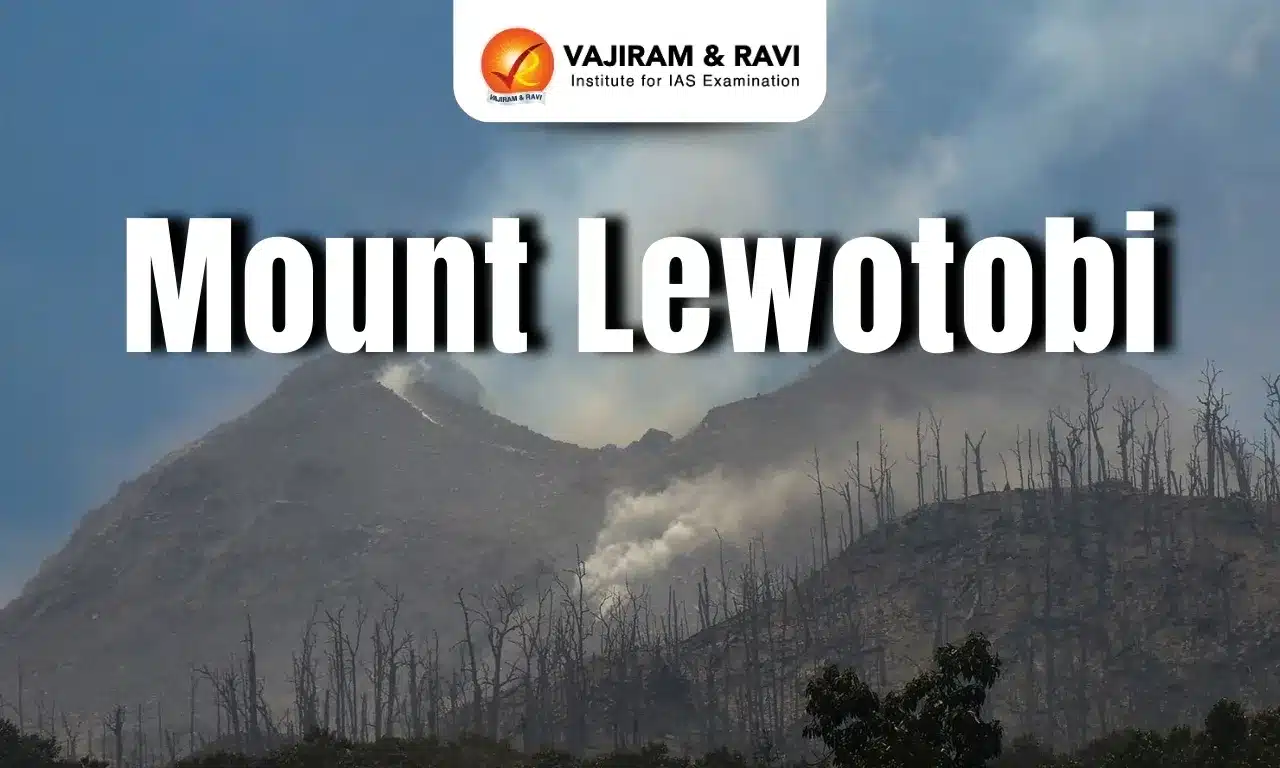
Indonesia’s Mount Lewotobi Laki-laki erupted recently, shooting volcanic ash 10 kilometres (6.21 miles) into the sky.

About Mount Lewotobi

  • It is a twin-peaked active volcano located on the tourist island of Flores in eastern Indonesia.
  • It is situated along the famous ‘Ring of Fire’ in the Pacific region.
  • It is one of the most frequently active volcanoes in the region. 
  • It has two peaks arranged on a NW-SE line separated by 2 km and a 1232 m high saddle. This gave the twin volcano its name, Lewotobi, “husband and wife”.
  • The two peaks correspond to the Lewotobi Lakilaki (man) and Lewotobi Perempuan (woman) stratovolcanoes. 
    • Lewotobi Lakilaki (1584 m) has a summit crater of 400 m diameter open to the north. Lewotobi Perampuan (1703 m)’s crater is 700 m wide.
    • Lewotobi Lakilaki has been frequently active during the 19th and 20th centuries, while the taller and broader Lewotobi Perempuan has erupted only twice in historical time.
  • Small lava domes have grown during the 20th century in the summit craters of both volcanoes.

Source: TP

Mount Lewotobi FAQs

Q1: Where is Mount Lewotobi located?

Ans: Flores Island, eastern Indonesia.

Q2: What type of volcano is Mount Lewotobi?

Ans: Twin-peaked active stratovolcano.

Q3: Why is Mount Lewotobi referred to as a “husband and wife” volcano?

Ans: It has two peaks known as Lewotobi Lakilaki (man) and Lewotobi Perempuan (woman).

Gastroenteritis

Gastroenteritis

Gastroenteritis Latest News

A recent study on the impact of the indigenous rotavirus vaccine in India found marked reductions in rotavirus-based gastroenteritis in sites across the country.

About Gastroenteritis

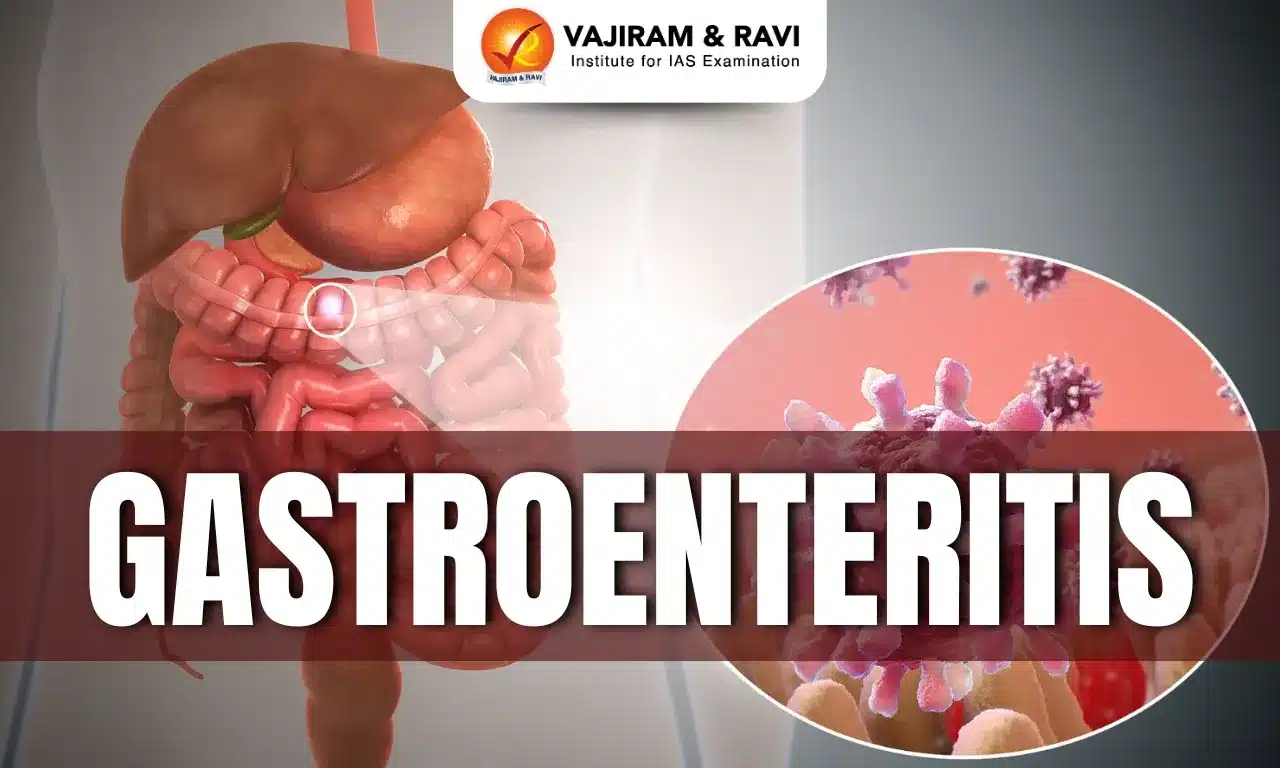
  • Gastroenteritis is an inflammation of the lining of the stomach and intestines. 
  • It is usually not serious in healthy people, but it can sometimes lead to dehydration or cause severe symptoms.
  • What causes gastroenteritis? There can be many different causes of gastroenteritis:
    • Viruses
    • Bacteria
    • Parasites
    • Chemicals
    • Reactions to certain medicines and food
  • Viral gastroenteritis is the most common type. It can be caused by many different viruses, including noroviruses and rotaviruses.
  • When gastroenteritis is caused by consuming foods or drinks contaminated with viruses, bacteria, parasites, or chemicals, this is called food poisoning.
  • The viruses, bacteria, and parasites that cause gastroenteritis can also spread from person to person.
  • The symptoms of gastroenteritis include:
    • Diarrhea
    • Pain or cramping in your abdomen (belly)
    • Nausea
    • Vomiting
    • Sometimes fever
  • Treatment:
    • Usually, people with gastroenteritis get better on their own, with rest and plenty of fluids and electrolytes.
    • Your provider may suggest that you take a probiotic
    • Studies suggest that some probiotics may help shorten a case of diarrhea.
    • People with more severe symptoms may need medicines to control nausea or vomiting. 
    • Providers may also give other medicines for certain types of gastroenteritis, such as antibiotics for some bacterial types and antiparasitic medicines for some parasitic types.

Source: TH  

Gastroenteritis FAQs

Q1: What is gastroenteritis?

Ans: It is an inflammation of the lining of the stomach and intestines.

Q2: Which is the most common type of gastroenteritis?

Ans: Viral gastroenteritis

Q3: Which viruses are commonly responsible for viral gastroenteritis?

Ans: Noroviruses and rotaviruses.

International Union for the Protection of New Varieties of Plants (UPOV)

International Union for the Protection of New Varieties of Plants

International Union for the Protection of New Varieties of Plants (UPOV) Latest News

The report released by GRAIN documented how a growing number of FTAs compel countries to adopt plant variety protection standards set by the 1991 UPOV Convention.

About International Union for the Protection of New Varieties of Plants (UPOV)

  • UPOV is an intergovernmental organization established in 1961 to provide an effective system of plant variety protection. 
  • It administers the UPOV Convention, which provides a legal framework for plant variety protection implemented by its members.
  • Purpose: Under this framework, breeders of new plant varieties are granted an intellectual property right known as the breeder’s right, which incentivizes innovation in plant breeding.
  • The UPOV Convention entered into force in 1968 and was revised in 1972, 1978 and 1991, each time strengthening plant breeders’ rights.
  • Member countries: 80 members have become members of UPOV. (India is not a member of this organization)
  • Headquarter: Geneva (Switzerland).

Governance of International Union for the Protection of New Varieties of Plants (UPOV)

  • The UPOV member countries hold annual meetings of the UPOV Council, a permanent body under the UPOV Convention.
  • Other UPOV bodies include the Consultative Committee, the Administrative and Legal Committee, and the Technical Committee

Source: DTE

International Union for the Protection of New Varieties of Plants (UPOV) FAQs

Q1: Where is the headquarters of UPOV located?

Ans: Geneva, Switzerland

Q2: What is the purpose of the UPOV Convention?

Ans: To encourage the development of new plant varieties by granting breeders' rights.

State Mining Readiness Index

State Mining Readiness Index

State Mining Readiness Index Latest News

Recently, the Ministry of Mines released the State Mining Readiness Index (SMRI).

About State Mining Readiness Index

  • It serves as a tool for benchmarking State performance and encouraging healthy competition, accelerating the pace of mining reforms and sustainable resource management across India.
  • Published by: Ministry of Mines
  • The index evaluates States on parameters like: auction performance, early mine operationalisation, focus on exploration, and sustainable mining practices related to non-coal minerals.
  • These indicators aim to capture the overall readiness and efficiency of States in facilitating mining activity and implementing reforms.
  • Under the SMRI framework, States have been divided into three categories based on their mineral endowment:
    • Category A - States rich in mineral resources
    • Category B - States with moderate mineral resources
    • Category C - States with limited mineral resources

State Rankings of SMRI 2025

  • Category A: Madhya Pradesh, Rajasthan, and Gujarat secured the top three positions.
  • Category B: Goa, Uttar Pradesh, and Assam ranked in the top three.
  • Category C: Punjab, Uttarakhand, and Tripura achieved the top three ranks.

Source: BS

State Mining Readiness Index FAQs

Q1: Who released the State Mining Readiness Index (SMRI)?

Ans: Ministry of Mines, Government of India

Q2: - Which states topped the rankings in Category A of the SMRI 2025?

Ans: Madhya Pradesh, Rajasthan, Gujarat

Kolam Tribes

Kolam Tribe

Kolam Tribe Latest News

Recently, a pilot bamboo plantation project was initiated to restore traditional livelihoods of Kolam tribal people in Adilabad district of Telangana.

About Kolam Tribe

  • Kolam tribes, also known as Kolamboli, Kulme and Kolmi, occupy a major portion of Madhya Pradesh.
  • These tribal groups are reckoned as scheduled tribes and apart from Madhya Pradesh they reside in some parts of Maharashtra and Andhra Pradesh.
  • They are listed as Particularly Vulnerable Tribal Group (PVTG).
  • History:
    • Around the twelfth century, the Kolam served as priests for the Gond, representing some of their important gods.
    • It is generally accepted that the Kolam descended from the original population in the area.
    • Since they now live near the Gond, they have adopted much of the Gond lifestyle. 

Society and Tradition of Kolam Tribe

  • The Kolam people are divided into different clans, like Chal Deve, Pach Deve, Saha Deve, and Sat Deve.
  • Marriages between the same clans are not permissible.
  • The Kolams use the name of their clans as their surnames.
  • Their society is patrilineal, meaning that the line of descent is traced through the males.
  • Occupation: The Kolam are mainly farmers and forest workers. In times past, they used shifting cultivation on the hill slopes.
  • Language: They speak a Dravidian language called Kolami, and nearly all of the adults also speak Marathi, Telugu, or Gondi.
  • For writing they uses the famous Devnagari script.
  • The Kolam people celebrate different rituals that include Matya or Churaghali, Bai-Baki, Sati, Jaitur Pooja, Waghai Pooja etc.

Source: TH

Kolam Tribe FAQs

Q1: Where is the Kolam tribe mainly found?

Ans: Maharashtra and Madhya Pradesh

Q2: What is the primary occupation of the Kolam tribe?

Ans: Agriculture

South Atlantic Anomaly (SAA)

South Atlantic Anomaly (SAA)

South Atlantic Anomaly Latest News

A giant dent in Earth's magnetic field, called the South Atlantic Anomaly, is continuing to expand, according to the latest data from a trio of satellites monitoring our world.

About South Atlantic Anomaly

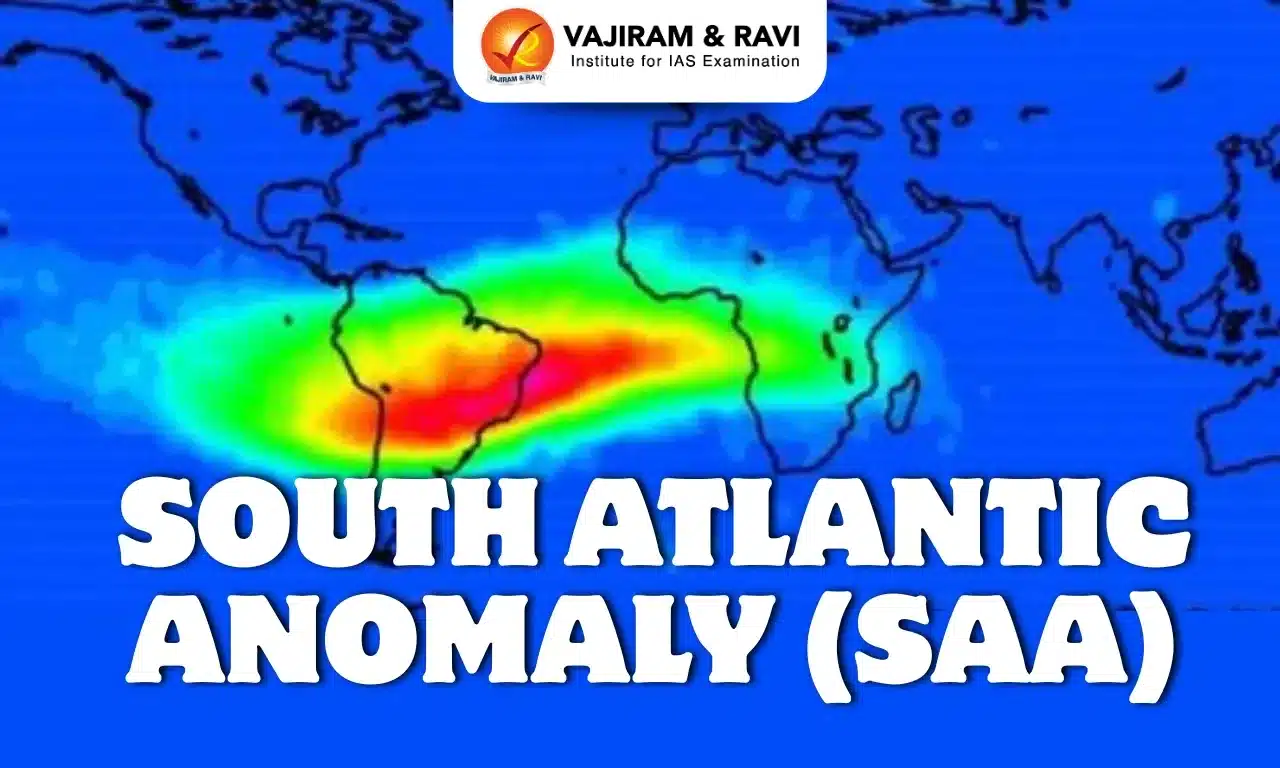
  • It is a unique location on Earth where the magnetic field is weaker than normal. 
  • It is southeast of South America and southwest of Africa. In this area, the planet's magnetic field dips down.
  • It was first identified in the 19th century.
  • Why does it occur?
    • Earth’s magnetic field acts like a protective shield around the planet, repelling and trapping charged particles from the Sun.
    • SAA exists because the Earth’s inner Van Allen radiation belt comes closest to the planet’s surface, causing an increased flux of energetic particles.
    • This leads to the penetration of solar energetic particles deep into Earth’s atmosphere, posing severe problems for airplanes and ships’ positioning systems as well as spacecraft electronic systems.

What are the Van Allen Radiation Belts?

  • The Van Allen radiation belt is a zone of energetic charged particles, most of which originate from the solar wind. 
  • The particles are captured by and held around a planet by that planet’s magnetic field.
  • It surrounds Earth, containing a nearly impenetrable barrier that prevents the fastest, most energetic electrons from reaching Earth.
  • The outer belt is made up of billions of high-energy particles that originate from the Sun and become trapped in Earth’s magnetic field, an area known as the magnetosphere.
  • The inner belt results from interactions of cosmic rays with Earth’s atmosphere.
  • The Van Allen belts are most intense over the Equator and are effectively absent above the poles.

Source :SA

South Atlantic Anomaly FAQs

Q1: What is the South Atlantic Anomaly (SAA)?

Ans: A region where the Earth’s magnetic field is weaker than normal.

Q2: Where is the South Atlantic Anomaly located?

Ans: Southeast of South America and southwest of Africa.

Q3: Why does the South Atlantic Anomaly occur?

Ans: Because the Earth’s inner Van Allen radiation belt comes closest to the Earth’s surface in this region.

Q4: What are the Van Allen radiation belts mainly composed of?

Ans: Energetic charged particles captured by Earth’s magnetic field.

Green Crackers

Green Crackers

Green Crackers Latest News

Recently, the Supreme Court has permitted only green crackers to be sold in Delhi-NCR region.

About Green Crackers

  • Green crackers are fireworks developed by the government’s Council of Scientific and Industrial Research-National Environmental Engineering Research Institute (CSIR-NEERI). 
  • Green crackers were developed after the Supreme Court banned conventional firecrackers in 2017.
  • Three types of green crackers have been developed – SWAS (Safe Water Releasable), STAR (Safe Thermite Cracker), and SAFAL (Safe Minimal Aluminium),

Features of Green Crackers

  • They are made by reducing the size of the shells, eliminating ash, using fewer raw materials, and adding dust-suppressing additives.
  • There are two main categories of green crackers: improved crackers that modify existing formulations to cut emissions; and new formulation crackers that replace polluting ingredients altogether.
  • Metals, which form part of particulate matter, are either minimized or eliminated to reduce toxicity.
  • Chemical composition of Green Crackers
    • Green crackers, on the other hand, exclude barium compounds, and have drastically-reduced aluminium and sulphur content.
    • They rely on cleaner oxidisers and formulations that limit the release of harmful particulates.
    • Conventional firecrackers use chemicals such as barium, sulphur, potassium nitrate, and aluminium, which produce bright colours and loud noises. They also release heavy metals and toxic gases into the air.

Advantage of Green Crackers

  • They produce brightness and sound comparable to conventional firecrackers (around 100 to120 dB) and reduce particulate matter (PM), SO2, and NO2 emissions by at least 30 per cent.

Identification of green crackers

  • Genuine green crackers can be identified through two mandatory features introduced by CSIR-NEERI which include  the official Green Fireworks logo printed on the packaging, and
  • a unique QR code that can be scanned using the ‘CSIR-NEERI Green QR Code’ mobile app.
  • Scanning the code provides details about the manufacturer, formulation, and NEERI certification status of the product.

Source: IE

Green Crackers FAQs

Q1: What are Green Crackers?

Ans: Environmentally friendly crackers designed to reduce pollution

Q2: Why were Green Crackers developed?

Ans: To reduce air and noise pollution during festivals

Codex Committee on Spices and Culinary Herbs

Codex Committee on Spices and Culinary Herbs

Codex Committee on Spices and Culinary Herbs Latest News

Recently, the 8th Session of the Codex Committee on Spices and Culinary Herbs (CCSCH8) concluded successfully in Guwahati.

About Codex Committee on Spices and Culinary Herbs

  • It is one of the subsidiary bodies under Codex Alimentarius Commission (CAC).
  • It is an exclusive committee for spices and culinary herbs to elaborate standards in harmonization with worldwide standards.
  • The committee was established in July 2013 by the CAC at its 36th meeting held at Rome. India is the host country and the Spices Board, Kochi acts as the secretariat for CCSCH.

Mandates of Codex Committee on Spices and Culinary Herbs

  • To elaborate worldwide standards for spices and culinary herbs in their dried and dehydrated state in whole, ground, and cracked or crushed form;
  • To consult, as necessary, with other international organizations in the standards development process to avoid duplication.

Key Facts about Codex Alimentarius Commission

  • It is the international food standards-setting body.
  • It was established jointly by the Food and Agriculture Organization (FAO) and the World Health Organization (WHO) in May 1963.
  • Objective: Protecting consumer’s health and ensuring fair practices in the food trade.
  • Headquarters: Rome.
  • Member Countries: Currently the CAC has 189 Codex Members made up of 188 Member Countries and 1 Member Organization (The European Union). 
  • India became a member of CAC in 1964.
  • The Commission meets in regular session once a year, alternating between Geneva and Rome.
  • Funding: It is funded through the regular budgets of WHO and FAO.

Source: PIB

Codex Committee on Spices and Culinary Herbs FAQs

Q1: Where is the Secretariat of the Codex Committee on Spices and Culinary Herbs located?

Ans: Kochi

Q2: What is the significance of the Codex Alimentarius Commission?

Ans: It sets global food standards

Daily Editorial Analysis 18 October 2025

Daily Editorial Analysis

The Next Steps for Afghanistan After the New Delhi Visit

Context

  • The visit of Afghanistan’s Acting Foreign Minister Amir Khan Muttaqi marks only the start of renewed India-Afghanistan engagement.
  • India must now pursue gradual, pragmatic cooperation aimed at stabilising Afghanistan while reinforcing its image as a major humanitarian actor.
  • Such engagement also serves India’s security interests and could, if approached constructively, contribute to regional stability — even benefiting Pakistan, provided it is willing to cooperate.
  • This article highlights the next steps India must take following the visit of Afghanistan’s Acting Foreign Minister Amir Khan Muttaqi to New Delhi.
  • It examines how India can play a decisive role in stabilising Afghanistan through cooperation in counter-terrorism, counter-narcotics, water management, education, and governance.

India’s Role in Stabilising Afghanistan’s Fight Against Terror and Drugs

  • The joint statement between India and the Taliban government, which angered Pakistan, reaffirmed Kabul’s condemnation of the Pahalgam terror attack and its pledge not to allow Afghan soil to be used against India.
  • The UN Security Council’s monitoring report praised the Taliban’s fight against the Islamic State-Khorasan (IS-K) but questioned its capacity to fully contain it, as supreme leader Mullah Haibatullah continues to govern from Kandahar.
  • The report also revealed that while the Tehreek-e-Taliban Pakistan (TTP) receives funds from within Afghanistan, the Taliban hesitate to act against it for fear of driving it closer to IS-K.
  • Pakistan’s accusations, therefore, are more propaganda than genuine concern.
  • India can play a constructive role by helping Afghanistan strengthen its successful drug eradication efforts through crop substitution and farmer support schemes.
  • With rising drug cultivation and meth production, and large narcotic seizures along Indian borders, cooperation through India’s Narcotics Control Bureau to train Afghan officials would be crucial.
  • This approach would replace brute force with sustainable solutions, aiding both counter-narcotics and regional stability.

Water Cooperation: The Key to Kabul’s Recovery and Regional Stability

  • Kabul faces an acute water crisis and could become the first city in the world to run completely dry by 2030.
  • Years of conflict have crippled infrastructure and delayed essential projects.
  • India’s renewed offer to construct the Shahtoot Dam on the Kabul River can help address this crisis but has raised concerns in Pakistan, which has reported a 16% reduction in river flows.
  • Since the Kabul River is part of the Indus system, it should be included in a new water-sharing treaty that ensures fair distribution and mutual benefit.
  • Such cooperation would not only support Afghanistan’s recovery but also promote stability in a water-stressed region.

Empowering Afghanistan Through Education and Skill Development

  • Women’s education remains one of Afghanistan’s most pressing challenges, with moderate Taliban leaders like Abdul Baqi Haqqani—who supported it—replaced by hardliners such as Mawlawi Habibullah Agha.
  • Reversing this regressive stance is essential both for Afghanistan’s progress and for shaping India’s constructive engagement.
  • India’s offer of 1,000 e-scholarships through the Indian Council for Cultural Relations is a positive step but far from sufficient.
  • The initiative should be expanded by allowing major Afghan colleges access to online education with relaxed foreign exchange norms.
  • Educational and skill development efforts must also align with India’s planned investments in sectors like mining to build local capacity, reduce dependency on foreign workers, and generate sustainable employment within Afghanistan.

India’s Long-Term Goal: A Stable and Friendly Afghanistan

  • Achieving lasting stability in Afghanistan requires a coordinated “whole-of-government” approach, where all Indian ministries — including finance, water, and power — work towards a unified goal of maintaining a friendly and secure neighbour.
  • The National Security Council Secretariat must be strengthened to ensure policy coherence and continuity across governments, following the principle of maintaining a clear and consistent strategic aim.
  • However, regional stability faces a major obstacle: Pakistan’s military, which seeks to dominate the Taliban, has little interest in Afghanistan’s stabilisation.
  • In contrast, ordinary Pakistanis, especially Pashtuns with cross-border family and trade links, would benefit from peace, with potential trade revenues estimated at $10 billion.
  • Ultimately, systemic political change in Pakistan — moving away from military control toward genuine democracy — is crucial, as true democratic governance remains the most reliable path to regional peace and stability.

The Next Steps for Afghanistan After the New Delhi Visit FAQs

Q1. What was the significance of Afghanistan’s Acting Foreign Minister’s visit to New Delhi?

Ans. The visit marked the start of renewed India-Afghanistan engagement aimed at stabilising Afghanistan and reinforcing India’s global humanitarian and strategic credibility.

Q2. How can India assist Afghanistan in combating drugs and terrorism?

Ans. By supporting crop substitution programmes, training Afghan officials through the Narcotics Control Bureau, and promoting sustainable, non-coercive anti-narcotics strategies for regional stability.

Q3. Why is water cooperation between India, Afghanistan, and Pakistan essential?

Ans. Kabul’s severe water crisis and the Shahtoot Dam project highlight the need for a new Indus-based treaty ensuring fair water-sharing and regional stability.

Q4. What role does education play in India’s engagement with Afghanistan?

Ans. Expanding e-scholarships and online education, especially for women, can empower Afghans, develop local skills, and reduce dependence on foreign workers.

Q5. What long-term strategy should guide India’s Afghanistan policy?

Ans. A unified, whole-of-government approach ensuring continuity across administrations can maintain a friendly Afghanistan and promote democracy-driven regional peace.

Source: TH


India–US Trade Deal - Balancing Strategic Gains and Economic Sovereignty

Context

  • The India–US trade deal negotiations have entered a crucial phase, with media reports suggesting the possibility of finalisation during the meeting between the Indian Prime Minister and US President at the ASEAN Summit in Kuala Lumpur (October 26–28).
  • As both nations approach the deal’s “endgame”, India must safeguard its long-term economic interests and strategic autonomy.

Background

  • The trade negotiations aim to address tariff and non-tariff barriers impacting bilateral trade.
  • The US seeks greater access to India’s markets, particularly in digital services, agriculture, and intellectual property.
  • India aims to secure tariff concessions and expand exports while protecting domestic industries and policy space.

Key Issues and Considerations

  • Written agreement before announcement

    • India must ensure that all commitments are documented before public announcements.
    • Past instances show the US has altered terms unilaterally post-negotiation — India must guard against such last-minute changes.
  • Avoiding last-minute US demands

    • Historically, the US has introduced new conditions during final negotiation rounds at GATT/WTO.
    • India should resist such pressures even at the cost of delayed finalisation and consult all relevant ministries and stakeholders.
    • New demands can be deferred to a “Phase II” of negotiations for later discussion.
  • Reducing overdependence on US markets

    • Over-reliance on one export destination can make India economically vulnerable.
    • India must ensure the trade deal does not deepen dependence on the US or support US efforts to isolate China through “supply chain resilience” clauses.
    • Safeguarding India’s autonomy in trade partnerships and participation in global value chains is essential.
  • Assessing the cost of concessions

    • India must evaluate how the deal alters its existing rights and obligations.
    • US trade deals with Japan, EU, and Vietnam show that partner nations often -
      • Reduce tariffs on industrial and agricultural goods.
      • Offer major concessions, while the US reciprocates marginally (e.g., reducing 50% tariffs to 15–20%).
    • India must avoid an asymmetric agreement that undermines its developmental and industrial policy space.
  • Protecting red lines - Farmers, fishermen and digital sovereignty:
    • Though assurance on protecting farmers’ and fishermen’s interests is significant, negotiators must also uphold red lines in digital economy and intellectual property rights (IPR).
    • The digital sector holds immense potential for India’s Atmanirbhar Bharat vision and future economic growth.

US Interests in the Digital Economy and the Threat of Non-Discriminatory Clause

  • The core of US interests:
    • First, prevent India from imposing taxes on digital players headquartered in the US.
    • Second, prevent India from leveraging its data advantage and creating domestic digital champions, including through sharing anonymised government data exclusively with Indian domestic entities.
    • Third, prevent India from effectively regulating the digital sector.
  • Threat: A clause stating “both countries agree to grant non-discriminatory treatment to digital services” could -
    • Restrict India’s ability to promote homegrown digital platforms (e.g., Arattai).
    • Undermine data sovereignty and domestic innovation.
    • Prevent India from taxing US digital giants like Google, Meta, or Amazon.
    • Dilute India’s Atmanirbhar and Swadeshi policy objectives.

Challenges for India

  • Power asymmetry in political and economic leverage favours the US.
  • India’s non-confrontational approach limits its bargaining strength.
  • Securing a mutually beneficial agreement under these conditions would be a diplomatic achievement.

Way Forward

  • Maintain strategic autonomy: Avoid clauses that constrain India’s independent trade or digital policies.
  • Insist on reciprocity: Ensure fair tariff reductions and market access from the US side.
  • Protect core sectors: Uphold red lines in agriculture, fisheries, and the digital economy.
  • Enhance diversification: Reduce export dependence on any single market to strengthen resilience.
  • Be prepared to walk away: As Chanakya advised, when treaty benefits are unfairly distributed, non-agreement is preferable to an unequal one.

Conclusion

  • The India–US trade negotiations represent both an economic opportunity and a strategic test for India.
  • While cooperation with the US can strengthen trade diversification and global integration, India must vigilantly protect its sovereignty in the digital domain, agriculture, and trade policy space.
  • Walking away from a one-sided agreement would not signify weakness but strategic prudence — aligning with India’s long-term vision of Atmanirbhar Bharat and sustainable global engagement.

 India–US Trade Deal FAQs

Q1. Why must India insist on a written agreement before the public announcement of the India–US trade deal?

Ans. To prevent unilateral last-minute changes by the US, ensuring transparency and protection of India’s negotiated interests.

Q2. How can overdependence on the US market threaten India’s long-term trade security?

Ans. It can make India economically vulnerable and subject to political or tariff-based coercion, reducing strategic autonomy.

Q3. Why is the digital economy emerging as a crucial red line in India–US trade negotiations?

Ans. Because US demands on non-discriminatory treatment could undermine India’s data sovereignty, digital taxation, etc.

Q4. In what ways do asymmetries in economic and political power affect India’s bargaining capacity?

Ans. They limit India’s ability to secure reciprocal concessions, often leading to skewed agreements favouring stronger partners.

Q5. What guiding principle should India follow to protect its national interest?

Ans. India should be ready to walk away from the deal, upholding Chanakya’s wisdom that an unfair treaty is worse than no agreement at all.

Source: IE

Daily Editorial Analysis 18 October 2025 FAQs

Q1: What is editorial analysis?

Ans: Editorial analysis is the critical examination and interpretation of newspaper editorials to extract key insights, arguments, and perspectives relevant to UPSC preparation.

Q2: What is an editorial analyst?

Ans: An editorial analyst is someone who studies and breaks down editorials to highlight their relevance, structure, and usefulness for competitive exams like the UPSC.

Q3: What is an editorial for UPSC?

Ans: For UPSC, an editorial refers to opinion-based articles in reputed newspapers that provide analysis on current affairs, governance, policy, and socio-economic issues.

Q4: What are the sources of UPSC Editorial Analysis?

Ans: Key sources include editorials from The Hindu and Indian Express.

Q5: Can Editorial Analysis help in Mains Answer Writing?

Ans: Yes, editorial analysis enhances content quality, analytical depth, and structure in Mains answer writing.

FAO Honours Sundarbans’ Sustainable Aquaculture Model

Sustainable Aquaculture

Sustainable Aquaculture Latest News

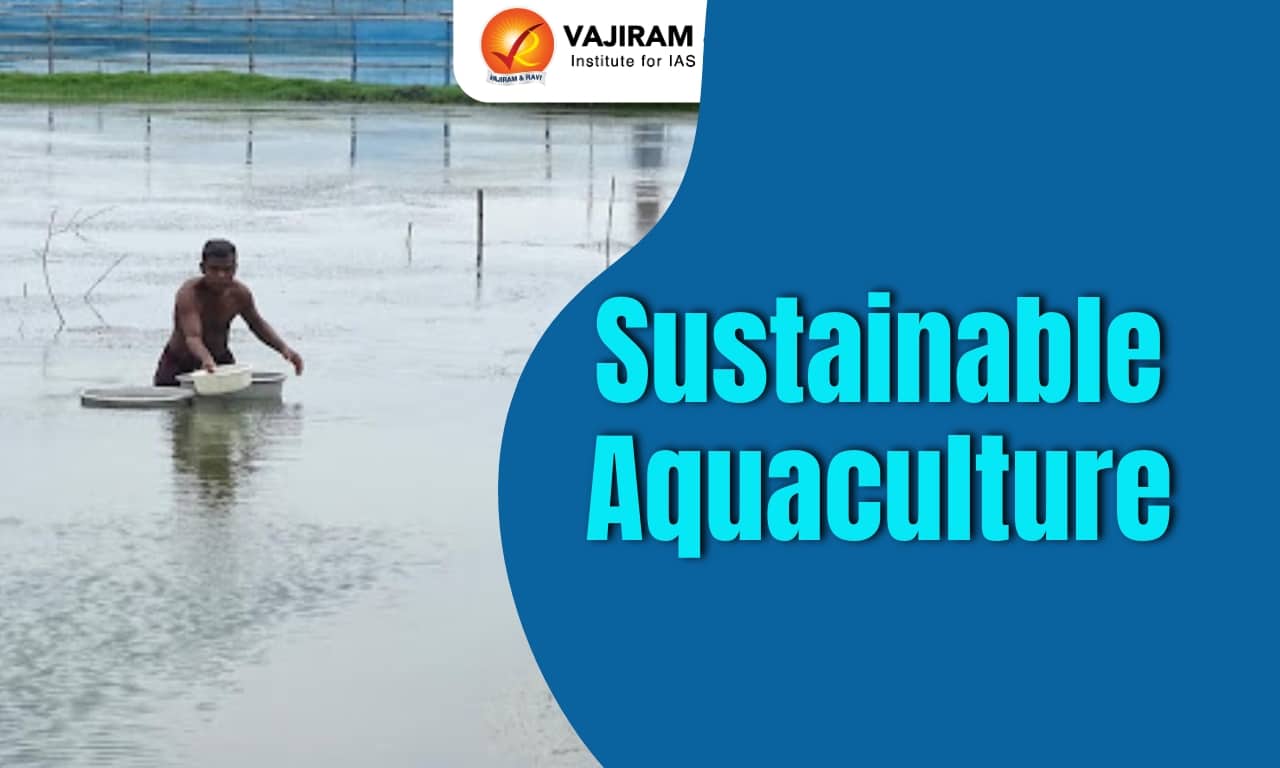
  • The Sundarbans’ Sustainable Aquaculture in Mangrove Ecosystems (SAIME) model has received Global Technical Recognition from the UN’s Food and Agriculture Organisation.

The Sundarbans: A Fragile Ecosystem of Global Importance

  • The Sundarbans, spanning India and Bangladesh, is the world’s largest mangrove delta and a UNESCO World Heritage Site. 
  • The Indian portion, located primarily in West Bengal, covers nearly 9,630 square kilometres and supports millions of people who depend on fishing, aquaculture, honey collection, and agriculture for their livelihoods.
  • However, this region is increasingly threatened by climate change, rising sea levels, soil salinity, and land-use change
  • Frequent cyclones like Amphan and Yaas, coupled with unregulated aquaculture and deforestation, have severely impacted both biodiversity and human livelihoods. 
  • In this context, the integration of mangrove conservation with sustainable economic activities has emerged as a key model for resilience and adaptation.

Sustainable Aquaculture in Mangrove Ecosystems: A Climate-Resilient Model

  • The Sustainable Aquaculture in Mangrove Ecosystems (SAIME) initiative, developed by the Nature Environment and Wildlife Society (NEWS), represents a pioneering approach to balancing livelihood needs with ecological conservation. 
  • Implemented in the Sundarbans region of North and South 24 Parganas districts, the project has demonstrated that sustainable shrimp farming can coexist with mangrove restoration.
  • Under this model, aquaculture ponds maintain 5%-30% mangrove coverage, ensuring that biodiversity, carbon sequestration, and coastal protection are integrated into shrimp farming practices. 
  • The mangrove litter also serves as natural fodder, replacing expensive chemical feed and thus reducing production costs significantly.
  • After years of implementation across 29.84 hectares by 42 fish farmers, the average net profit per farmer increased by over 100%, highlighting the model’s financial viability. 

FAO’s Global Recognition of the Sundarbans Model

  • On October 15, 2025, during its 80th Anniversary and World Food Forum held in Rome, the Food and Agriculture Organisation of the United Nations conferred Global Technical Recognition on the SAIME model.
  • The recognition highlights how a community-based, nature-integrated model can contribute to climate resilience, sustainable food systems, and biodiversity conservation

Balancing Livelihoods with Mangrove Conservation

  • The Sundarbans have seen rapid land-use transformation over recent decades, with unregulated shrimp monoculture leading to widespread mangrove destruction. 
  • The SAIME model was conceptualised as a counter-narrative to exploitative aquaculture practices, promoting an ecosystem-based and community-driven framework.
  • The project involves community participation at every stage, from pond management to mangrove plantation, ensuring that conservation efforts are locally owned and socially inclusive
  • Farmers are trained in Good Aquaculture Practices (GAPs), including maintaining water quality, using organic inputs, and avoiding antibiotics or synthetic feed.
  • This integrated approach has multiple benefits:
    • Environmental: Mangroves act as natural buffers against cyclones and tidal surges, reducing coastal erosion and supporting marine biodiversity.
    • Economic: Reduced input costs and improved yields have doubled farmer income.
    • Social: Community participation fosters environmental stewardship and local empowerment.
    • Climate: Enhanced mangrove coverage aids in carbon sequestration, supporting India’s broader climate action commitments under the Paris Agreement.

Broader Significance for India’s Blue Economy

  • India’s coastal regions are highly vulnerable to climate risks, and unsustainable aquaculture has often undermined long-term ecological balance. 
  • The SAIME model aligns closely with the Government of India’s Blue Economy Policy, which seeks to integrate marine resource sustainability with economic development.
  • It also resonates with the Sustainable Development Goals (SDGs), particularly:
    • SDG 1 (No Poverty) - through livelihood diversification;
    • SDG 13 (Climate Action) - via carbon sequestration and coastal resilience;
    • SDG 14 (Life Below Water) - promoting sustainable use of marine resources; and
    • SDG 15 (Life on Land) - through mangrove restoration and habitat protection.
  • Experts suggest that similar models could be replicated in Andhra Pradesh, Odisha, and Kerala, where shrimp farming is economically significant but ecologically challenging.

Way Forward

  • The FAO’s recognition of the Sundarbans aquaculture model underscores the need to scale up community-based, climate-resilient aquaculture systems across India’s coastal belts. Policymakers can leverage this model to:
    • Integrate mangrove conservation into all aquaculture policies.
    • Incentivise farmers adopting sustainable practices through carbon credit mechanisms.
    • Promote training and capacity-building among coastal communities.
  • Such initiatives can help India transition toward a low-carbon, biodiversity-friendly, and inclusive blue economy, aligning economic growth with environmental stewardship.

Source: TH

Sustainable Aquaculture FAQs

Q1: What is the SAIME model?

Ans: The Sustainable Aquaculture in Mangrove Ecosystems (SAIME) model integrates mangrove conservation with aquaculture to ensure sustainable livelihoods and coastal resilience.

Q2: Which organisation developed the SAIME model?

Ans: The Nature Environment and Wildlife Society (NEWS) developed the SAIME model in West Bengal’s Sundarbans.

Q3: What recognition did SAIME receive from FAO?

Ans: The FAO conferred Global Technical Recognition on the SAIME model during its 80th Anniversary and World Food Forum in Rome.

Q4: How has the SAIME model benefited local farmers?

Ans: Farmers under SAIME saw over a 100% increase in net profits due to lower production costs and improved ecological conditions.

Q5: How does the SAIME model contribute to climate action?

Ans: By promoting mangrove restoration, chemical-free aquaculture, and carbon sequestration, SAIME supports India’s climate resilience and sustainability goals.

Record CO₂ Rise in 2024 Marks New Climate Alarm: WMO Report

CO2 Rise

CO2 Rise Latest News

  • According to the World Meteorological Organization (WMO), the global atmospheric concentration of carbon dioxide (CO₂) rose by a record 3.5 parts per million (ppm) between 2023 and 2024, reaching 423.9 ppm, the highest level ever recorded. This increase far exceeds the average annual rise seen during 2011–2020.
  • The year 2024 also became the warmest year on record, with global temperatures 1.55°C above pre-industrial levels — the first time the 1.5°C threshold was breached for an entire year. 
  • The data highlights the failure of the Paris Agreement framework to curb emissions effectively and signals a worsening climate crisis with potentially irreversible impacts if warming continues.

Record Surge in CO₂ Concentrations: Understanding the Trends and Implications

  • According to the WMO, the CO₂ concentration in the atmosphere reached 423.9 ppm in 2024, marking a record annual increase of 3.5 ppm — the highest since measurements began in 1957.
  • This level is now 152% higher than pre-industrial levels (278.3 ppm). 
  • Despite global efforts to curb emissions, CO₂ concentrations have risen continuously for over 40 years without a single year of decline.
  • The rate of increase has tripled, from 0.8 ppm per year in the 1960s to 2.4 ppm between 2011–2020, before the current unprecedented spike.

Natural vs. Man-Made CO₂ Emissions

  • CO₂ is released through both natural and human activities.
  • Natural sources: respiration, wildfires, volcanic eruptions, and decomposition.
  • Human sources: burning of fossil fuels, industrial emissions, and deforestation.
  • While natural processes absorb almost all the CO₂ they emit through photosynthesis and oceanic absorption, only half of human-induced emissions are absorbed. 
  • The remaining half accumulates in the atmosphere, intensifying the greenhouse effect.

CO₂’s Role Among Greenhouse Gases

  • CO₂ is the most abundant GHG, accounting for over 90% of accumulated GHGs in the atmosphere. 
  • However, it is less potent than other gases like methane (CH₄) and nitrous oxide (N₂O):
    • Methane: ~25 times more heat-trapping capacity than CO₂, but lasts 12–14 years.
    • Nitrous oxide: ~270 times more potent than CO₂, remains 100–120 years.
    • CO₂: persists for hundreds to thousands of years, making its effect cumulative and long-lasting.

Contribution to Global Warming

  • CO₂ is responsible for about 66% of total global warming since pre-industrial times, and about 79% of warming in the past decade.
  • Its persistence in the atmosphere ensures that even small increases have long-term climate impacts, reinforcing the urgent need for deep emission cuts to prevent irreversible warming.

Why CO₂ Levels Rose Sharply in 2024: Natural and Human Factors Combined

  • The record 3.5 ppm rise in CO₂ levels between 2023 and 2024 was not caused solely by human emissions, according to the World Meteorological Organization (WMO). 
  • Variations in the natural carbon cycle also played a major role.
  • In 2024, both oceans and land-based carbon sinks absorbed less CO₂ than usual, while widespread forest fires released additional carbon into the atmosphere.
  • Global warming itself is weakening natural absorption systems:
    • Warmer oceans absorb less CO₂ due to reduced solubility.
    • Extreme droughts dry out forests and grasslands, limiting their ability to absorb carbon.
  • These feedback effects — reduced absorption and increased emissions — reinforce one another, worsening the CO₂ imbalance and accelerating atmospheric buildup.

Methane and Nitrous Oxide Levels Rise in 2024, Though at a Slower Pace

  • In 2024, atmospheric concentrations of methane (CH₄) and nitrous oxide (N₂O) continued to increase, though below the decade’s average growth rate, according to WMO data.
    • Methane (CH₄): Rose by 8 parts per billion (ppb) to 1,942 ppb, compared to the decadal average increase of 10.6 ppb per year.
    • Nitrous oxide (N₂O): Increased by 1 ppb to 338 ppb, slightly lower than the average annual rise of 1.07 ppb in the last decade.
  • Cumulatively, CH₄ contributes about 16% and N₂O about 6% of total global warming since pre-industrial times, with the remaining share arising from CO₂ and other greenhouse gases.

Rising Greenhouse Gases Highlight Growing Climate Crisis and Policy Failures

  • The WMO Greenhouse Gas Bulletin underscores the worsening challenge of curbing greenhouse gas (GHG) accumulation, as both human activities and destabilised natural systems now drive atmospheric increases.
  • Natural processes that once absorbed carbon — such as forests and oceans — are becoming less effective under global warming, amplifying gas buildup. 
  • Meanwhile, human-controlled emissions continue to rise despite international commitments.
  • Even after a decade of the Paris Agreement, global emissions remain high, and the 2030 reduction targets are unlikely to be met. 
  • With global temperatures surpassing 1.5°C in 2024, the data reveal a deepening climate crisis and the failure of existing frameworks to reverse the trend.

Source: IE

CO2 Rise FAQs

Q1: What did the WMO report reveal about CO₂ levels in 2024?

Ans: The WMO reported a record 3.5 ppm rise, taking CO₂ concentration to 423.9 ppm — the highest since monitoring began in 1957.

Q2: Why did CO₂ levels increase so sharply?

Ans: Reduced absorption by oceans and forests, widespread wildfires, and feedback effects from global warming contributed to the record rise.

Q3: How much has CO₂ increased since pre-industrial times?

Ans: The 2024 concentration of 423.9 ppm is about 152% higher than pre-industrial levels, reflecting sustained human-induced emissions and weakening natural sinks.

Q4: What about other greenhouse gases?

Ans: Methane and nitrous oxide levels also rose in 2024, though at a slower pace — contributing 16% and 6% of total warming respectively.

Q5: What challenges does this trend highlight?

Ans: The WMO warns that natural systems are destabilising, and global policies, including the Paris Agreement, have failed to slow greenhouse gas accumulation.

FSSAI Bans Misleading ‘ORS’ Labels on Sugary Beverages

ORS

ORS Ban Latest News

  • Following a Hyderabad-based paediatrician’s campaign, the Food Safety and Standards Authority of India (FSSAI) has barred food companies from using the term ‘Oral Rehydration Salts’ (ORS) on products that do not meet World Health Organisation (WHO) formulation standards.
  • The recent order also revokes all previous permissions allowing brands to use ‘ORS’ with disclaimers. 
  • This move targets sugar-rich beverages falsely marketed as ORS, ensuring that only scientifically compliant rehydration products can carry the label.

Oral Rehydration Salts

  • Oral Rehydration Salts (ORS) is a scientifically formulated mixture of electrolytes and glucose designed to prevent and treat dehydration, especially from diarrhoea, vomiting, or heat-related illness. 
  • It helps restore the body’s lost fluids and salts effectively.

Composition (WHO-Recommended Formula)

  • According to the World Health Organisation (WHO), one litre of ORS solution should contain:
    • Sodium chloride: 2.6 g
    • Potassium chloride: 1.5 g
    • Sodium citrate: 2.9 g
    • Dextrose (anhydrous glucose): 13.5 g
    • Total osmolarity: 245 mOsm/L
  • This precise ratio enables optimal absorption of water and electrolytes through the intestines.

Mechanism

  • ORS works by utilizing glucose-mediated sodium absorption in the intestinal wall, which helps draw water back into the bloodstream, quickly reversing dehydration.

Uses

  • Treatment of dehydration caused by diarrhoea, cholera, and vomiting.
  • Used in heat exhaustion or severe fluid loss from illness or exertion.
  • Essential in child healthcare programs and emergency relief operations worldwide.

Advantages

  • Low-cost, easy-to-administer, and life-saving.
  • Can be prepared and used safely at home.
  • Recommended by WHO and UNICEF as the first-line treatment for dehydration.

FSSAI’s Clarification on Misleading Labelling

  • Recently, FSSAI affirmed that using ‘ORS’ in any product name — including fruit-based or ready-to-drink beverages — violates the Food Safety and Standards Act, 2006.
  • It said such labelling “misleads consumers” through false and deceptive claims and breaches multiple provisions under food labelling regulations.

Background: A Doctor’s Decade-Long Campaign for Consumer Safety

  • The order follows a ten-year campaign by Hyderabad-based paediatrician Dr. Sivaranjani Santosh, who exposed misleading marketing of sugary drinks sold as ORS.
  • In 2022, she filed a Public Interest Litigation (PIL) before the Telangana High Court, challenging these deceptive practices for not meeting WHO-prescribed electrolyte and glucose standards.

Food Safety and Standards Act, 2006: Ensuring Safe and Wholesome Food in India

  • The Food Safety and Standards Act, 2006 is a comprehensive law that consolidated all existing food-related legislations in India and established the Food Safety and Standards Authority of India (FSSAI).
  • Its primary goal is to ensure that all food available in the country is safe, hygienic, and of good quality, based on scientific standards governing manufacturing, storage, distribution, sale, and import.

Key Functions and Provisions

  • Consolidation of Food Laws - The Act merged multiple food regulations under one umbrella, creating a uniform framework for food safety management across the country.
  • Establishment of FSSAI - It created the Food Safety and Standards Authority of India (FSSAI) as a statutory body to: Set and enforce food standards; Oversee licensing and registration of food businesses; Ensure scientific development in food safety regulation.
  • Single Point of Control - The Act replaced India’s multi-departmental food regulation system with a single-line authority, empowering FSSAI and state food safety authorities for enforcement and oversight.
  • Standard Setting - FSSAI sets science-based standards for: Additives, contaminants, and pesticide residues; Nutritional requirements and safety limits; Labelling, packaging, and hygiene norms.
  • Licensing and Registration - All food business operators (FBOs) must be licensed or registered under FSSAI based on their scale and type of operation to ensure traceability and accountability.
  • Enforcement Mechanisms - The Act provides FSSAI and state authorities with powers to: Inspect, sample, and test food items; Seize and recall unsafe products; Impose penalties and prosecute violators.
  • Consumer Protection - The law safeguards consumers through: Compensation for injury or death caused by unsafe food; Penalties for misleading advertisements or adulteration.

Enforcement and Penalties

  • Violations can lead to fines, imprisonment, license suspension, or product confiscation.
  • A dedicated adjudication and appeals system, including a Food Safety Appellate Tribunal, handles disputes and appeals efficiently.

Source: TH | UNICEF | FSSAI

ORS FAQs

Q1: What did the FSSAI order on ORS state?

Ans: FSSAI barred food companies from using the term ‘ORS’ unless their formulations meet WHO standards, revoking earlier permissions allowing use with disclaimers.

Q2: Why was this directive issued?

Ans: It followed a Hyderabad paediatrician’s PIL exposing sugar-rich drinks falsely marketed as ORS, misleading consumers and violating food safety regulations.

Q3: What is the WHO-recommended ORS composition?

Ans: The WHO-approved formula includes sodium chloride, potassium chloride, sodium citrate, and dextrose in precise proportions to ensure effective hydration.

Q4: What does the Food Safety and Standards Act, 2006 ensure?

Ans: The Act consolidates food laws, establishes FSSAI, and ensures safe, science-based food standards through licensing, enforcement, and consumer protection mechanisms.

Q5: How did Dr. Sivaranjani Santosh react to the FSSAI order?

Ans: She hailed it as a victory for consumer rights after eight years of legal efforts and advocacy against deceptive marketing of sugary drinks.

Enquire Now