Gender Development Index (GDI), Definition, Purpose, Importance

Gender Development Index

The Gender Development Index is an important metric for assessing gender equality within nations, offering a gender-sensitive dimension to traditional human development measures. Introduced in the United Nations Development Programme’s (UNDP) Human Development Report in 1995 alongside the Gender Empowerment Measure (GEM), the GDI was developed to complement the Human Development Index (HDI) and provide a more nuanced understanding of development through the lens of gender. While conventional indicators like GDP or per-capita income focus solely on economic output, the GDI focuses on disparities between men and women in health, education, and living standards.

Gender Development Index Definition and Purpose

The GDI is a distribution-sensitive measure that considers the impact of existing gender gaps on human development in the three main components of the HDI: health, knowledge, and living standards. Being distribution-sensitive means that the GDI does not merely reflect average well-being or wealth in a country but also examines how these benefits are distributed between men and women. Essentially, it quantifies how far a nation has progressed in closing the gender gap and highlights areas where women lag behind their male counterparts.

Read About: Balance of Payments

GDI as a Gender-Sensitive HDI Extension

Also known as a gender-sensitive extension of the HDI, the GDI adjusts the HDI to account for inequalities between men and women. It incorporates an “inequality aversion” penalty, which reduces the HDI score in proportion to the degree of gender disparity observed in life expectancy, educational attainment, and per-capita income. Life expectancy data, for instance, typically predicts that women live longer than men by approximately five years, and the GDI accounts for this difference alongside economic disparities. Income is measured based on actual earnings rather than general economic output, making the measure more reflective of real-life gender gaps.

It is important to note that the GDI cannot function independently. It requires the HDI score for calculation. The difference between a country’s HDI and GDI provides a clearer picture of the gender gaps present in that nation. The GDI is calculated as the ratio of female to male HDI, expressed as a percentage, which directly measures the extent of gender inequality across the three core dimensions of human development.

Gender Development Index Core Dimensions and Calculation

The GDI checks gender differences in three fundamental areas:

  1. Health: Measured through life expectancy at birth, assessing the gap between male and female longevity.
  2. Knowledge: Assessed via adult literacy rates and combined school enrollment at primary, secondary, and tertiary levels, highlighting disparities in educational opportunities.
  3. Standard of Living: Measured using estimated earned income, capturing differences in economic well-being between men and women.

By calculating female and male HDI separately using the same methodology, the GDI provides a direct measure of how women’s achievements compare with those of men. Countries are then categorized based on the absolute divergence from gender parity, considering both disparities that favor men and, in rarer cases, those that favor women. Currently, the GDI is computed for 167 countries, providing a comprehensive global view of gender equality in human development.

GDI Importance and Policy Implications

The GDI serves as an important tool for policymakers, helping identify areas where gender disparities are most pronounced and guiding the formulation of targeted interventions. It reflects how much women need to catch up with men in each dimension of human development, informing policy measures aimed at promoting equality in health, education, and economic participation. By highlighting the gender gap, the GDI encourages governments to focus not just on overall development but on equitable development that benefits all members of society.

Countries that rank high on the GDI exhibit relatively low gender inequality, whereas countries with low GDI rankings often face significant challenges in promoting gender parity. For instance, in the 2017 GDI rankings, the United States stood at 24th out of 189 countries, indicating progress but also highlighting the ongoing need for improvements in gender equality across various sectors.

Gender Development Index UPSC 

The Gender Development Index is a vital instrument for understanding and addressing gender disparities in human development. By examining differences in health, education, and economic status between men and women, it provides a clearer picture of how gender affects overall development. The GDI is not just a measurement tool, it is a guide for shaping policies and programs that aim to make sure equitable opportunities for women and men, fostering inclusive growth and sustainable development. Recognizing and addressing the gaps identified by the GDI is important for building societies where gender equality is not only an ideal but a measurable reality.

Also Check Other Posts
Care Economy Mutual Funds
Alternative Investment Funds GDP Deflator

Gender Development Index FAQs

Q1: What is the rank of India in the Gender Development Index?

Ans: India's rank in the Global Gender Gap Index 2025 is 131st out of 148 countries, with a gender parity score of 64.1%.

Q2: What is the Gender Development Index of India in 2025?

Ans: India's gender parity score in the Global Gender Gap Index 2025 is 64.1%.

Q3: What is the Gender Development Index?

Ans: The Gender Development Index (GDI) is a metric that adjusts the Human Development Index (HDI) for gender disparities in health, education, and income.

Q4: Who releases the National Gender Index in India?

Ans: The National Gender Index in India is released by the Ministry of Women and Child Development.

Q5: Who topped the Global Gender Gap Index in 2025?

Ans: Iceland topped the Global Gender Gap Index in 2025, closing 92.6% of its gender gap.

Public Goods and Private Goods, Types, Examples, Significance

Public Goods and Private Goods

In economics, goods are classified based on two key characteristics: excludability and rivalrousness. Excludability refers to whether individuals can be prevented from consuming a good, while rivalrousness determines whether one person’s consumption reduces the availability of the good for others. Understanding these characteristics helps economists and policymakers categorize goods and design appropriate policies. Broadly, goods are divided into four categories: private goods, public goods, common resources, and club goods. Among these, public goods are particularly important for aspirants preparing for the IAS exam, as they form an important part of the UPSC syllabus. 

Public Goods and Private Goods

Classifying goods into public, private, common, and club goods allows economists and policymakers to understand consumption patterns, allocation challenges, and potential market failures. Public goods, with their non-rivalrous and non-excludable nature, require particular attention due to issues like the free-rider problem, which can hinder efficient provision. Private goods, by contrast, operate smoothly in competitive markets. Common resources necessitate careful management to avoid overuse, while club goods demonstrate how controlled access can balance scarcity and availability. Understanding these categories is important not only for economic theory but also for practical governance, especially in areas such as infrastructure, education, natural resource management, and social welfare programs.

Read About: Types of Market Structures

Public Goods Definition and Characteristics

A public good is a commodity or service that is available for everyone to use, and one person’s consumption does not reduce its availability to others. These goods are non-excludable (individuals cannot be easily prevented from using them) and non-rivalrous (consumption by one does not diminish availability for others). Public goods are typically provided by the government to benefit society as a whole.

Examples of public goods include education, infrastructure, lighthouses, flood control systems, knowledge, fresh air, national security, and official statistics. It is important to differentiate public goods from common goods, which are non-excludable but rivalrous in nature, such as timber, coal, and fisheries. While public goods serve the population collectively without reducing availability, common goods can be overused, leading to scarcity.

Free-Rider Problem

One key challenge with public goods is the free-rider problem. Because public goods are non-excludable, individuals can consume them without paying, which may result in underfunding or overuse. The free-rider problem represents a burden on shared resources and can occur in both small and large communities. This problem often justifies government intervention to provide and maintain public goods.

Private Goods Definition and Features

A private good is a product that must be purchased for consumption and is rivalrous in nature, meaning that one person’s consumption prevents another from consuming the same unit. Private goods are excludable, as individuals who do not pay cannot access them.

Examples include food, clothing, and personal electronics. Private goods generally do not face the free-rider problem, as their consumption is restricted to paying consumers. Companies produce private goods for profit, and market mechanisms such as pricing and competition determine their distribution.

Read About: Laws of Demand and Supply

Common Resources Open but Rivalrous

Common resources are goods that are accessible to everyone but are rivalrous, meaning consumption by one person reduces availability for others. These resources are prone to overuse due to their open-access nature. Common resources include forests, fisheries, water, minerals, oil, and farmland. Because they are shared and limited, these resources often require regulation or collective management to prevent depletion, a phenomenon known as the “tragedy of the commons.”

Club Goods 

Club goods are goods that are excludable but non-rivalrous up to a certain point. Their consumption can be restricted to prevent overuse and preserve value. Examples include subscription-based services, cinemas, private roads, and gated community amenities. By limiting access, club goods avoid the overconsumption problem faced by common resources while providing controlled benefits to their members.

Differences Between Public and Private Goods

Public and private goods differ primarily in terms of excludability and rivalrousness:

Feature Public Goods Private Goods

Rivalry

Non-rivalrous: One person’s consumption does not reduce availability for others

Rivalrous: One person’s consumption reduces availability for others

Excludability

Non-excludable: Impossible or costly to prevent non-payers from consuming

Excludable: Non-payers are prevented from consuming

These distinctions have important implications for policy, production, and market regulation. Public goods often require government provision to ensure access for all, whereas private goods are efficiently allocated through market mechanisms. Common resources need regulation to prevent depletion, and club goods use access restrictions to maintain value.

Also Check Other Posts
Care Economy Mutual Funds
Alternative Investment Funds GDP Deflator

Public Goods and Private Goods FAQs

Q1: What is the difference between public goods and private goods?

Ans: Public goods are non-excludable and non-rivalrous, whereas private goods are excludable and rivalrous.

Q2: What are public goods with examples?

Ans: Public goods are goods available for everyone without reducing availability for others, e.g., national defense, lighthouses, street lighting.

Q3: What is the main difference between private and public?

Ans: Private goods require payment and consumption by one person reduces availability for others; public goods are free for all and consumption does not limit others.

Q4: Which is an example of private goods or services?

Ans: Food, clothing, smartphones, or personal vehicles are examples of private goods.

Q5: What is the best example of a public good?

Ans: National defense is the best example of a public good.

UPSC Daily Quiz 25 October 2025

UPSC Daily Quiz

The Daily UPSC Quiz by Vajiram & Ravi is a thoughtfully curated initiative designed to support UPSC aspirants in strengthening their current affairs knowledge and core conceptual understanding. Aligned with the UPSC Syllabus 2025, this daily quiz serves as a revision resource, helping candidates assess their preparation, revise key topics, and stay updated with relevant issues. Whether you are preparing for Prelims or sharpening your revision for Mains, consistent practice with these Daily UPSC Quiz can significantly enhance accuracy, speed, and confidence in solving exam-level questions.

[WpProQuiz 5]  

UPSC Daily Quiz FAQs

Q1: What is the Daily UPSC Quiz?

Ans: The Daily UPSC Quiz is a set of practice questions based on current affairs, static subjects, and PYQs that help aspirants enhance retention and test conceptual clarity regularly.

Q2: How is the Daily Quiz useful for UPSC preparation?

Ans: Daily quizzes support learning, help in revision, improve time management, and boost accuracy for both UPSC Prelims and Mains through consistent practice.

Q3: Are the quiz questions based on the UPSC syllabus?

Ans: Yes, all questions are aligned with the UPSC Syllabus 2025, covering key areas like Polity, Economy, Environment, History, Geography, and Current Affairs.

Q4: Are solutions and explanations provided with the quiz?

Ans: Yes, each quiz includes detailed explanations and source references to enhance conceptual understanding and enable self-assessment.

Q5: Is the Daily UPSC Quiz suitable for both Prelims and Mains?

Ans: Primarily focused on Prelims (MCQ format), but it also indirectly helps in Mains by strengthening subject knowledge and factual clarity.

Types of Market Structures, Monopoly, Oligopoly, Monopolistic

Types of Market Structures

Market structures provide a framework for analyzing the degree of competition in different markets. They are shaped by several factors, including the nature of goods or services, the number of buyers and sellers, the ease of entry and exit, and economies of scale. Although these structures serve primarily as theoretical constructs, they are essential for understanding how markets function and for assessing the behavior of firms and consumers. Broadly, four fundamental types of market structures are identified: perfect competition, monopoly, oligopoly, and monopolistic competition, each with distinct characteristics and implications. 

Types of Market Structures

While market structures are traditionally categorized into four types: perfect competition, monopoly, oligopoly, and monopolistic competition, real-world markets often exhibit overlapping features, blurring these distinctions. Many markets feature numerous buyers and sellers offering differentiated products, with firms possessing varying degrees of pricing power. Understanding these structures is crucial for policymakers, businesses, and consumers alike, as it informs regulatory decisions, competitive strategies, and market behavior. Insight into market structures enables authorities to foster competition, encourage innovation, and improve overall economic efficiency, while guiding firms in strategic planning and helping consumers make informed choices in the marketplace.

Read About: Balance of Payments

Perfect Competition Characteristics and Implications

A perfectly competitive market represents an idealized scenario where a large number of firms sell identical products, and both buyers and sellers have complete knowledge of market conditions. In such markets, prices and output levels tend to adjust naturally to maintain equilibrium, while the demand curve faced by each individual firm is perfectly elastic, indicating that firms are price takers. Real-world examples are rare, but certain financial markets and segments of online commerce approximate the principles of perfect competition.

Important characteristics of perfect competition include:

  • A large number of buyers and sellers, ensuring that no single participant can influence market prices.
  • Freedom of entry and exit, with no significant barriers preventing firms from entering or leaving the market.
  • Homogeneous products, meaning all sellers offer identical goods.
  • Small-sized firms with no substantial market power, making them price takers rather than price setters.

Monopoly Characteristics, Impacts, and Regulation

A monopoly exists when a single firm dominates the market, often due to statutory rights, government ownership, or unique control over resources. In a monopoly, consumers lose the ability to influence prices, as market forces are effectively overridden by the dominant firm. Monopolies can generate super-normal profits and often attract regulatory scrutiny to prevent abuse of power.

Characteristics of monopolies include:

  • Presence of a single seller controlling the entire market.
  • Price-setting power, allowing the firm to determine market prices.
  • High potential for super-normal profits.
  • Government intervention and regulation to prevent exploitation of consumers.

Read About: Laws of Demand and Supply

Oligopoly Dynamics, Strategies, and Market Influence

Oligopoly arises in markets where a small number of large firms dominate, with duopolies representing the simplest form. Firms in an oligopolistic market possess substantial knowledge about competitors and can anticipate responses to strategic moves such as price changes, product launches, or marketing campaigns. Oligopolistic markets often feature differentiated products, significant barriers to entry, and the ability of firms to influence prices.

Important characteristics of oligopoly include:

  • A few large firms control the majority of market supply.
  • Buyers outnumber sellers, creating a market where firms wield substantial influence.
  • Firms may compete aggressively or collude strategically to maximize profits.
  • Important entry barriers restrict new competitors, making market entry challenging.
  • Consumers typically act as price takers to the extent that prices are influenced by a few dominant firms.

Monopolistic Competition Differentiation and Consumer Choice

Monopolistic competition is a market structure in which numerous firms sell similar but slightly differentiated products. This structure more closely mirrors real-world markets than perfect competition or pure monopoly. Product differentiation allows firms to exercise some control over pricing in the short term, while consumers benefit from a range of choices and perceive differences among products.

Characteristics of monopolistic competition include:

  • A large number of buyers and sellers, fostering competition.
  • Products are similar but not identical, giving firms a degree of pricing power.
  • Low barriers to entry and exit, enabling new firms to participate relatively easily.
  • Consumers exercise choice based on product preferences, brand loyalty, and perceived quality.
Also Check Other Posts
Care Economy Mutual Funds
Alternative Investment Funds GDP Deflator

Types of Market Structures FAQs

Q1: What are the 4 types of market structures?

Ans: Perfect competition, monopoly, monopolistic competition, and oligopoly.

Q2: What are the 4 main types of economics?

Ans: Microeconomics, macroeconomics, positive economics, and normative economics.

Q3: What is monopoly, monopolistic competition, and oligopoly?

Ans: Monopoly: Single seller dominates the market; Monopolistic competition: Many sellers with differentiated products; Oligopoly: Few large sellers dominate the market.

Q4: Is Coca-Cola an oligopoly or monopolistic competition?

Ans: Coca-Cola operates in an oligopoly, competing with a few major global beverage companies.

Q5: What are the 4 types of monopolies?

Ans: Natural monopoly, legal or statutory monopoly, government monopoly, and technological monopoly.

Difference Between State and Union Territory, Important Concepts

Difference Between State and Union Territory

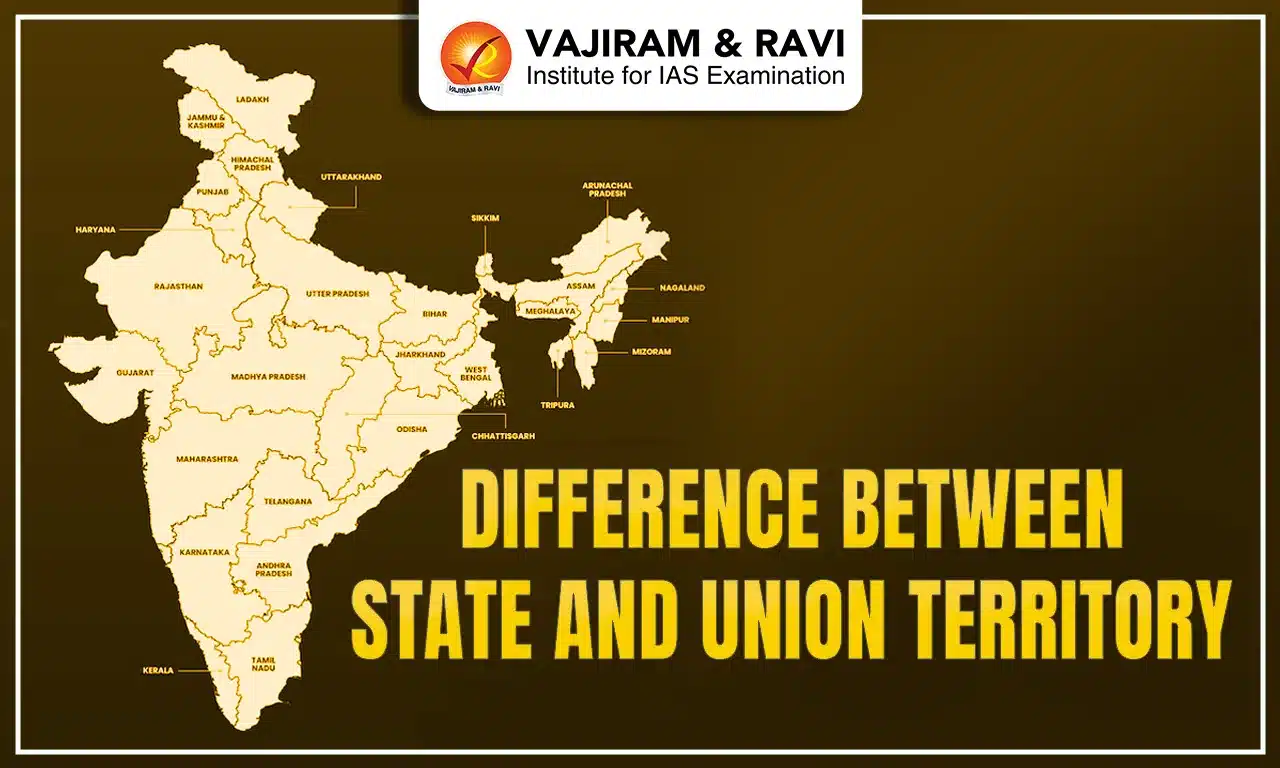
The section on States and Union Territories in the Indian Constitution lays out the organizational structure of India’s political subdivisions. It defines the division of the country into states and union territories, their modes of governance, and the constitutional mechanisms through which new states or union territories can be created, altered, or administered. India is explicitly described as a “Union of States”, highlighting its federal character, while retaining a strong central authority. Parliament possesses the exclusive power to establish new states, admit territories into the Union, or alter existing state boundaries, names, or territories. 

Difference Between State and Union Territories

The Constitution of India provides a robust framework for the organization and administration of its states and union territories. By describing India as a “Union of States”, it balances federal principles with central supremacy. Articles 1-4, along with the First and Fourth Schedules, outline the powers of Parliament to admit, form, or reorganize states and territories without requiring constitutional amendments.

India’s federal character is unique in that it allows Parliament to alter state boundaries or create new states independently, unlike federations such as the USA, where state consent is necessary. Over time, a series of commissions and legislative actions, from the Dhar Commission to the Fazl Ali Commission and the States Reorganization Act (1956), have shaped India’s modern administrative map, responding to administrative efficiency, linguistic diversity, and regional demands. The distinction between states and union territories reflects the degree of autonomy, legislative powers, and administrative control, highlighting the adaptive and dynamic nature of India’s territorial and political structure. Post-1956, India has witnessed significant transformations in its political map, reflecting its commitment to administrative efficiency, linguistic recognition, and democratic governance. Thus, India continues to function as “an indestructible union of destructible states”, with a system that allows for flexibility in territorial administration, while ensuring unity and sovereignty of the Union.

States and Union Territories Governing Constitutional Provisions

  • Article 1: Name and Territory of the Union
    • Article 1 declares India, also known as Bharat, to be a Union of States. It further classifies the territory of India into three categories:
    • Territories of the States – As of 2020, India has 28 states.
    • Union Territories specified in the First Schedule – India has 8 UTs as of 2020.
    • Acquired territories – Areas that may be acquired by the Union in the future.
  • Administration:
    • States: Members of the federal system, sharing power with the Union.
    • Union Territories (UTs): Administered directly by the Central Government.
    • Acquired Territories: Also under direct administration by the Centre.
  • Article 2: Admission or Establishment of New States
    • Article 2 empowers Parliament to undertake two distinct actions:
    • Admission of existing states into the Union.
    • Establishment of new states that did not previously exist.
    • This provision primarily concerns states not already part of the Union of India.
  • Schedule 1 lists all states and their territorial jurisdictions, serving as a reference for India’s official administrative divisions.
  • Article 3: Formation of New States and Alteration of Boundaries
    • Article 3 empowers Parliament to undertake internal territorial adjustments, including:
    • Forming a new state by separating a territory from an existing state, uniting parts of two or more states, or merging territories with parts of states.
    • Increasing or decreasing the area of a state.
    • Altering the name or boundaries of a state.
  • Conditions under Article 3:
    • Prior Sanction of the President: Any bill proposing such changes must first receive the President’s recommendation.
  • Consultation with the State Legislature: The President must seek the views of the affected state legislature within a specified timeframe. However, Parliament may disregard the views of the state legislature and proceed with the changes.
  • For union territories, Parliament can act without consulting the legislature.
  • Thus, the Constitution does not guarantee the territorial integrity of states, making India an “indestructible union of destructible states”, in contrast to the United States, described as “an indestructible union of indestructible states.”
  • Article 4: Amendment of Schedules
    • Laws passed under Articles 2 and 3 for admitting, forming, or altering states do not require a constitutional amendment under Article 368. They can be passed through a simple majority in Parliament.

States and Union Territories Important Concepts

  1. Union of States vs. Federation of States:
    • India is a Union of States, not a federation formed by agreement among the states, unlike the USA.
    • States cannot secede from the Union.
  2. Territorial Integrity:
    • Parliament may alter state boundaries or form new states without the consent of the states involved.
    • This emphasizes the supremacy of the Union.
  3. Cession of Territory:
    • The Supreme Court clarified that Parliament’s powers under Article 3 do not extend to ceding Indian territory to foreign nations.
    • Such a cession requires a constitutional amendment under Article 368.
    • Example: The 100th Constitutional Amendment (2015) dealt with the transfer of enclaves between India and Bangladesh.
  4. Boundary Disputes:
    • Disputes with foreign countries not involving cession can be resolved through executive action without a constitutional amendment.
    • Example: The 1969 settlement of a boundary dispute with a neighboring country.
  5. Territory of India:
    • A broader term including states, union territories, and any future acquired territories.
    • The Union of India includes only the states.

Committees on State Reorganization

  1. Dhar Commission (1948):
    • Set up by President Rajendra Prasad in June 1948 as the Linguistic Provinces Commission.
    • Members: SK Dhar, Jagat Narain Lal, and Panna Lall.
    • Report submitted in December 1948.
    • Recommended reorganization based on administrative convenience rather than linguistic lines.
    • Focused on Madras, Bombay, Central Provinces, and Berar, prioritizing geographical, financial, and administrative factors.
  2. JVP Committee (1948–49):
    • Members: Jawaharlal Nehru, Vallabhbhai Patel, Pattabhi Sitaramayya.
    • Tasked to examine Dhar Commission proposals.
    • Report submitted in April 1949.
    • Rejected language as a criterion for reorganization.
  3. Andhra State (1953):
    • First linguistic state in India.
    • Formed by separating Telugu-speaking areas from Madras State.
  4. Fazl Ali Commission (1953–55):
    • Members: Fazl Ali (Chairman), K.M. Panikkar, H.N. Kunzru.
    • Accepted language as a basis for reorganization, but rejected the one-language-one-state principle.
    • Recommendations implemented via the States Reorganization Act (1956) and the 7th Constitutional Amendment, creating 14 states and 6 UTs on 1 November 1956.

Difference Between States and Union Territories  

States and Union Territories have the following differences: 

Feature States Union Territories

Autonomy

High; share powers with the Centre

Low; under direct control of the Centre

Administrative Setup

Relatively uniform

Varied, no uniformity

Head

Governor

Administrator/Lt. Governor/Chief Commissioner

Lawmaking

Parliament cannot legislate on state subjects except in extraordinary circumstances

Parliament can legislate on any subject, including state list subjects

Formation of States and UTs Post-1956

States and Territories in 1956:

  • States: Andhra Pradesh, Assam, Bihar, Bombay, Jammu & Kashmir, Kerala, Madhya Pradesh, Madras, Mysore, Orissa, Punjab, Rajasthan, Uttar Pradesh, West Bengal.
  • UTs: Andaman & Nicobar Islands, Delhi, Himachal Pradesh, Laccadive, Minicoy & Amindivi Islands, Manipur, Tripura.

States and UTs Created After 1956:

Year States / UTs Created

1960

Maharashtra and Gujarat (bifurcation)

1961

Dadra & Nagar Haveli (10th Amendment)

1962

Goa, Daman & Diu (12th Amendment); Puducherry (French transfer)

1963

Nagaland

1966

Chandigarh, Punjab, Haryana

1971

Himachal Pradesh

1987

Mizoram, Arunachal Pradesh, Goa

2000

Chhattisgarh, Uttarakhand, Jharkhand

2014

Telangana

2019

2 UTs: Jammu & Kashmir and Ladakh

2020

Merger of Dadra & Nagar Haveli and Daman & Diu

Difference Between State and Union Territory FAQs

Q1: What is the difference between a Union Territory and a State?

Ans: States have their own governments and legislative powers, whereas Union Territories are directly administered by the Central Government.

Q2: Why is Delhi a Union Territory and not a State?

Ans: Delhi is a Union Territory with a legislative assembly because it is the national capital, allowing the Central Government overriding powers.

Q3: What is the difference between Union and State?

Ans: A Union refers to the entire country under central authority, while a State is a constituent unit with its own government within the Union.

Q4: Why is a territory called a Union Territory?

Ans: Union Territories are territories administered directly by the Union (Central) Government, unlike states that have full legislative autonomy.

Q5: Why is India divided into States and Union Territories?

Ans: India is divided this way to balance regional autonomy with central control, ensuring administrative efficiency, effective governance, and national integration.

Duty-Free Tariff Preference (DFTP) Scheme

Duty-Free Tariff Preference (DFTP) Scheme

Duty-Free Tariff Preference (DFTP) Scheme Latest News

Recently, the World Trade Organization credits India’s Duty-Free Tariff Preference (DFTP) scheme for boosting exports from the poorest nation.

About Duty-Free Tariff Preference (DFTP) Scheme

  • It was initiated in 2008 and offers Least Developed Countries (LDCs) preferential access to the Indian market.
  • The DFTP scheme aims to boost LDCs' economic growth, diversify exports, and strengthen trade relations.
  • Objective: The objective of the scheme for LDCs is grant of tariff preferences on the exports of the Least Developed Countries on imports to India.

Key Features of India’s DFTP Scheme

  • Duty-Free Access to Indian Market:  Under the DFTP scheme, products from LDCs are eligible for duty-free access to the Indian market.
  • Eligible Countries: It is available to all LDCs recognized by the United Nations. India offers this preferential access to around 48 countries classified as LDCs, including countries in Africa, Asia, and the Pacific.
  • Eligible Products: A wide range of products from LDCs can benefit from the DFTP scheme. These include:
    • Agricultural products: Fruits, vegetables, spices, and grains.
    • Textiles and garments: Clothing, fabrics, and textiles made in LDCs.
    • Handicrafts and traditional goods: Handwoven textiles, jewelry, and locally produced crafts.
    • Leather goods: Leather garments, bags, and accessories.
    • Minerals and metals: Products like gold, diamonds, and other raw materials.

Source: LM

Duty-Free Tariff Preference (DFTP) Scheme FAQs

Q1: When was the DFTP Scheme introduced by India?

Ans: 2008

Q2: What is the primary objective of the Duty-Free Tariff Preference (DFTP) Scheme?

Ans: To provide duty-free access to products from Least Developed Countries (LDCs).

Kopi Luwak

Kopi Luwak

Kopi Luwak Latest News

A recent study revealed that civet-processed Robusta coffee, known as Kopi Luwak, differs significantly from naturally harvested Robusta beans in its fatty acid composition and total fat content, providing new scientific insight into the unique aroma and flavour that make it famous.

About Kopi Luwak

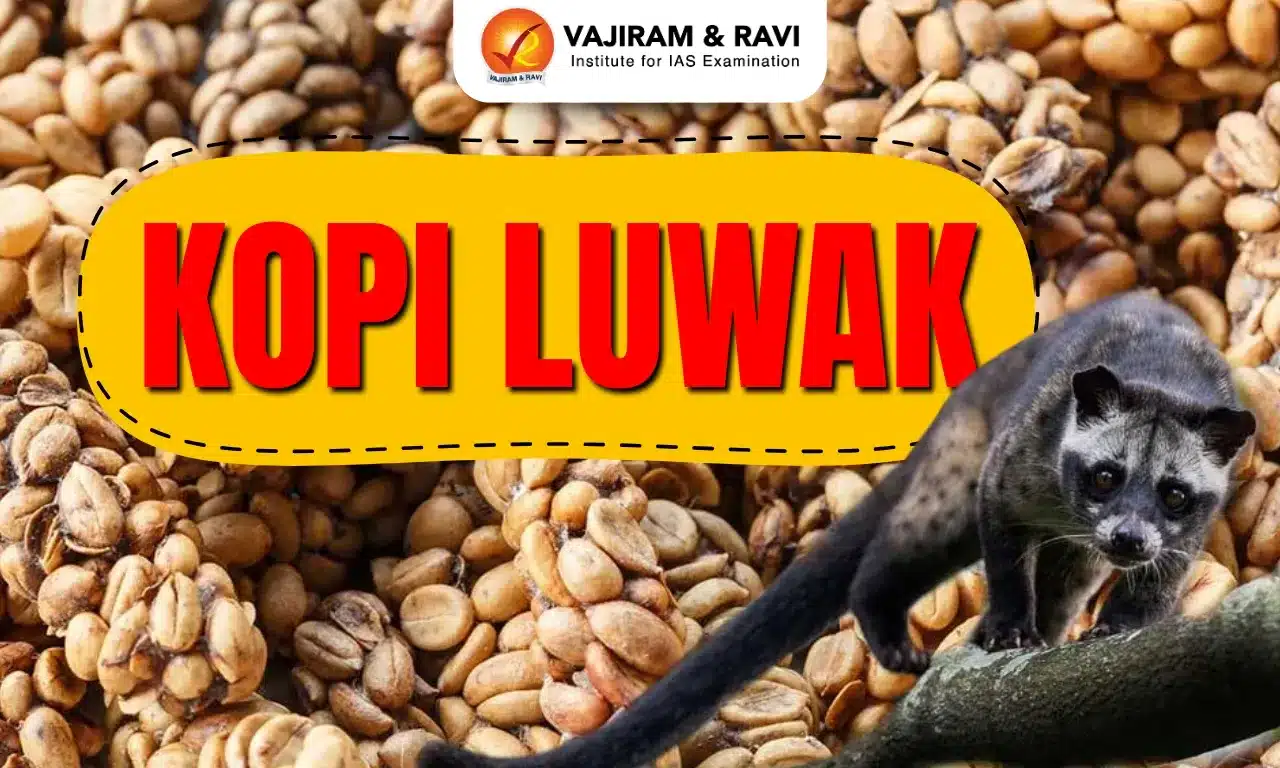
  • Kopi Luwak, also known as Civet Coffee, is one of the world’s most expensive and exclusive coffees. 
  • It’s made from beans that have been partially digested and excreted by the Asian Palm Civet.
  • After the civet eats ripe coffee cherries, the beans are excreted, collected, washed, dried, and then roasted to produce coffee with a unique, smooth, and silky texture.
    • The beans’ fermentation process results in a coffee with distinctive flavor notes of chocolate, caramel, and nuts, accompanied by low acidity. 
    • The distinct flavour may derive from the animal’s gut and digestive fluids. 
    • Gastric juices and enzymes from the civet’s stomach increase the level of citric acid in the beans, resulting in a coffee with a lemony tanginess and a more delicate aroma.
  • This rare coffee is highly sought after and is considered a luxury item.
  • However, the production of Kopi Luwak has sparked ethical concerns. 
  • Civets are sometimes kept in small cages and are force-fed coffee cherries, leading to calls for more ethical and sustainable production methods. 
  • Despite these concerns, Kopi Luwak remains a highly prized delicacy, and can cost more than US$1,300 per kilogram.

Key Facts about Asian Palm Civet

  • The Asian Palm Civet, also known as the Toddy Cat or Common Palm Civet, is a small, nocturnal mammal that is found throughout South and Southeast Asia, including India, Sri Lanka, Indonesia, and the Philippines. 
  • It is a member of the Viverridae family, which also includes other civet and mongoose species.
  • Scientific Name: Paradoxurus hermaphroditus.
  • Features:
    • It has a long, slender body, short legs, and a pointed snout. 
    • It weighs between 2 to 5 kg and measures around 53 to 71 cm in length, including the tail.
    • Its fur is brownish-gray with black spots, and it has a white mask-like marking around its eyes. 
    • It is a nocturnal animal and feeds on a variety of prey, including insects, small mammals, and fruits.
    • They are also known for their strong sense of smell and excellent climbing skills, allowing them to easily climb trees and forage for food.
    • They are not very social animals. 
  • Conservation Status:
    • IUCN Red List: Least Concern

Source: TH

Kopi Luwak FAQs

Q1: What is Kopi Luwak commonly known as?

Ans: Civet Coffee

Q2: Kopi Luwak is made from coffee beans that have been partially digested and excreted by which animal?

Ans: Asian Palm Civet

Q3: Which ethical issue is most commonly associated with Kopi Luwak production?

Ans: Captive civets being force-fed coffee cherries in poor conditions.

Q4: What is the approximate market price of Kopi Luwak coffee?

Ans: More than US$1,300 per kilogram.

Q5: What gives Kopi Luwak its smooth and silky texture?

Ans: Natural fermentation during digestion.

Project Arunank

Project Arunank

Project Arunank Latest News

Recently, the Project Arunank of the Border Roads Organisation (BRO) marked its 18th Raising Day. 

About Project Arunank

  • It has been implemented since 2008 by the Border Roads Organization (BRO) in Arunachal Pradesh.      
  • The name of the Project has been conceived from the name of the State of Arunachal Pradesh.
  • Objective: To provide vital connectivity to remote valleys & forward areas of Arunachal Pradesh while meeting the operational requirements of the Armed Forces.
  • It has adopted innovative and sustainable technologies such as Steel Slag, Cut-and-Cover Tunnels, Geo Cells, Plastic Sheets, GGBFS Concrete and Gabion Walls, enhancing the durability and environmental sustainability of road infrastructure in the region.
  • Achievements of Project Arunank
    • It has completed the 278 km Hapoli-Sarli-Huri Road, blacktopped for the first time since Independence, connecting one of the remotest regions of Kurung Kumey district.
    • It played a critical role in developing communication systems for socio-economic and strategic growth in the region.

Key Facts about Border Roads Organization

  • It is a road construction executive force in India that provides support to the Indian Armed Forces.
  • It works under the Ministry of Defence.
  • Establishment: It was formed on 7 May 1960 to secure India’s borders and develop infrastructure in remote areas of the north and north-east states of the country.
  • It develops and maintains road networks in India’s border areas and friendly neighboring countries.

Source: DD News

Project Arunank FAQs

Q1: What is Project Arunank?

Ans: A project under the Border Roads Organisation (BRO) to develop critical infrastructure

Q2: Which organization is responsible for executing Project Arunank?

Ans: Border Roads Organisation (BRO)

Network Survey Vehicle

Network Survey Vehicle

 Network Survey Vehicle Latest News

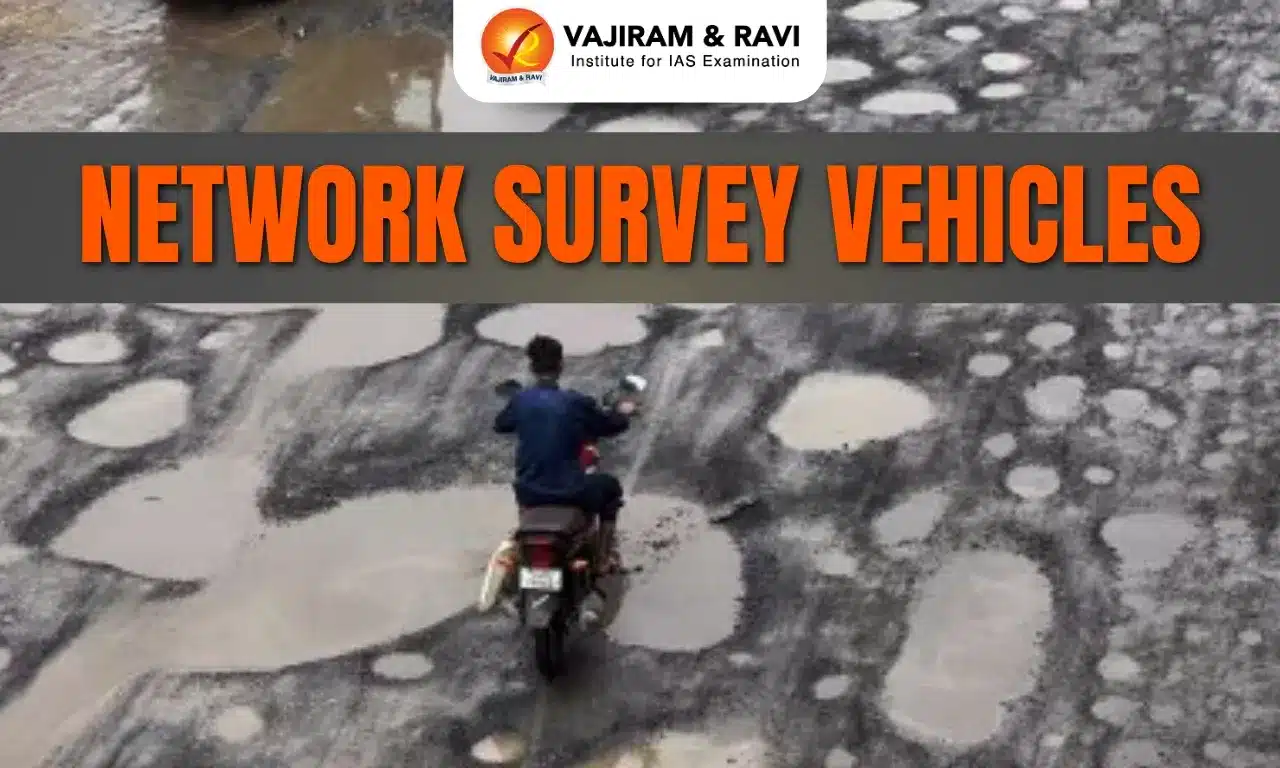
Recently, the National Highway Authority of India (NHAI) has announced that it will deploy Network Survey Vehicles (NSVs) in 23 states.

About Network Survey Vehicle

  • It is a specialized infrastructure management tool comprising vehicles equipped with advanced sensors and data acquisition systems.
  • These vehicles systematically collect data on road inventory and condition of National Highways.

Working of Network Survey Vehicle

  • It is usually a specialised van or SUV equipped with multiple sensors and instruments.
  • It consists of Laser, Global Positioning System (GPS), Video image processing tools, High-resolution cameras, Inertial Measurement Units (IMU), and DMI (Distance Measuring Indicator).
  • The survey will capture 13 types of defects, including crack measurement, ravelling, patch area, potholes, edge break, roughness, rutting, lane marking, etc.
  • It will also cover details like carriageway type, road type, pavement and shoulder width, topography, median details, right of way, utilities, land use, etc.
  • The data will be collected for all projects involving 2/4/6 and 8 lanes with NSV before the start of work and thereafter at regular intervals of six months.
  • Data collected through NSV survey will be uploaded on NHAI’s ‘AI’ based portal Data Lake, where it will be analysed to transform data into knowledge and subsequent actionable insights.

Source: IE

Network Survey Vehicle FAQs

Q1: What is a Network Survey Vehicle (NSV)?

Ans: A vehicle equipped with advanced technology to collect road data

Q2: What is the primary purpose of a Network Survey Vehicle?

Ans: To collect data on road conditions, infrastructure, and assets.

Mahe- Anti-Submarine Warfare Shallow Water Craft

Mahe- Anti-Submarine Warfare Shallow Water Craft

Mahe- Anti-Submarine Warfare Shallow Water Craft Latest News

Recently, the Mahe -Anti-Submarine Warfare Shallow Water Craft (ASW SWC) was delivered to the Indian Navy.

About Mahe- Anti-Submarine Warfare Shallow Water Craft

  • It is the first of eight Anti-Submarine Warfare Shallow Water Crafts (ASW SWC).
  • Built by: It was built by Cochin Shipyard Limited (CSL) Kochi.
  • It was named after the historic port town in the Union Territory of Puducherry, symbolises India's rich maritime heritage.
  • The warship has been designed and constructed as per the classification rules of Det Norske Veritas (DNV). 

Features of Mahe Anti-Submarine Warfare Shallow Water Craft

  • Capacity: It has a displacement of around 1,100 tons.
  • It carries torpedoes, multi-functional anti-submarine rockets, and sophisticated radar and sonar systems that allow it to detect underwater threats with precision.
  • The ship can also perform underwater surveillance, lay naval mines if required, and take part in smaller-scale coastal operations known as Low Intensity Maritime Operations.
  • Significance: It will significantly augment the Indian Navy's ASW capability, enhancing maritime security in the littorals.

Source: PIB

Mahe- Anti-Submarine Warfare Shallow Water Craft FAQs

Q1: What is the primary purpose of Mahe-class Anti-Submarine Warfare Shallow Water Crafts?

Ans: To undertake anti-submarine operations in coastal waters

Q2: What is the maximum speed of the Mahe-class Anti-Submarine Warfare Shallow Water Crafts?

Ans: 25 knots

Leachate

Leachate

Leachate Latest News

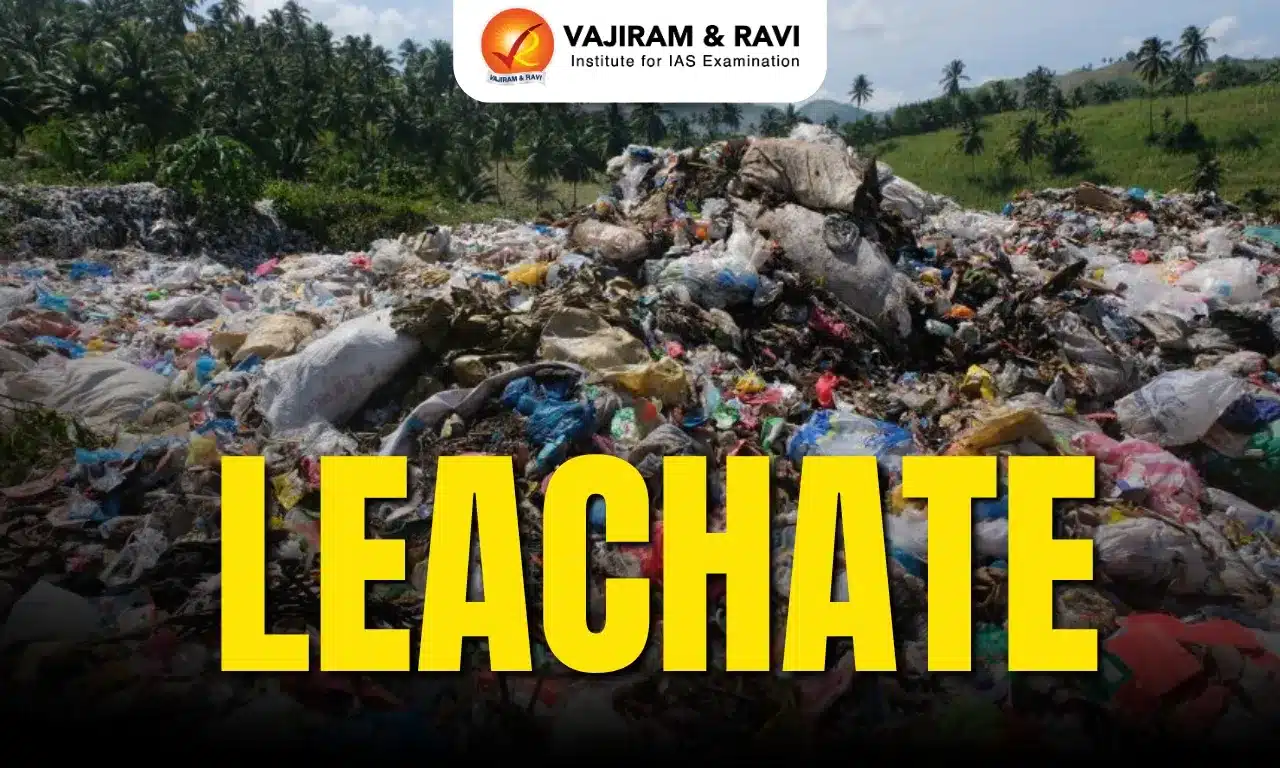
Environmentalists, wildlife activists, and locals recently sought immediate intervention by the Union Environment Ministry into the recurring illegal discharge of highly toxic, untreated leachate into the Aravalis.

About Leachate

  • Leachate is a highly toxic and contaminated liquid usually generated from municipal landfills. 
  • This toxic liquid accumulates at the bottom of the landfill. 
  • Landfill leachate water forms through waste decomposition, water infiltration, and chemical reactions within a landfill.
  • The composition of leachate varies depending on the type of waste in the landfill, the landfill’s age, and environmental conditions such as rainfall and temperature. 
  • In general, leachate generally contains a mix of organic pollutants, inorganic compounds, heavy metals, and microbial contaminants.
  • The chemical composition of leachate makes it dangerous; It can contaminate the environment and pose serious health risks if not properly managed.
  • Leachate management is critical to landfill operations due to its potential to spread pollution and contaminate virgin groundwater sources. 
  • Strict environmental regulations mandate proper leachate collection and disposal to prevent environmental degradation.

Source: TH

Leachate FAQs

Q1: What is leachate?

Ans: A highly toxic liquid generated from municipal landfills

Q2: Where does leachate typically accumulate in a landfill?

Ans: At the bottom of the landfill.

Q3: Why is leachate considered dangerous to the environment?

Ans: It can contaminate groundwater and pose health risks.

International Convention against Doping in Sport

International Convention against Doping in Sport

International Convention against Doping in Sport Latest News

India has been re-elected as the Vice-Chairperson of the Bureau for the Asia-Pacific (Group IV) at the 10th Session of the Conference of Parties (COP10) to the International Convention against Doping in Sport.

About International Convention against Doping in Sport

  • It is a multilateral treaty by which States agree to adopt national and international measures to prevent and eliminate doping in sport.
  • The Convention was adopted during the 33rd session of UNESCO’s General Conference (19 October 2005) and entered into force on 1 February 2007.
  • Members: It consists of 192 States Parties, making it UNESCO’s second most ratified treaty.
  • Aim: The Convention aims to harmonize anti-doping legislation, guidelines, regulations, and rules internationally in order to provide a level and safe playing environment for all athletes.
  • Governance: The Conference of Parties (COP) is the sovereign body of the Convention, meeting in ordinary session biennially.
  • It has overall responsibility for its implementation and evolution.

Features of International Convention against Doping in Sport

  • The convention allows governments to formally recognize the World Anti-Doping Agency (WADA) and the Code. 
  • It works under a positive implementation approach, providing guidance, financial support, skill-training and capacity-building to empower States Parties aiming to enhance their implementation of the Convention.
  • It also provides a global forum for public and private stakeholders of the sport integrity ecosystem.
  • Funding mechanism: Anti-Doping Fund was formed to create awareness about doping.

Source: PIB

International Convention against Doping in Sport FAQs

Q1: What is the primary objective of the International Convention against Doping in Sport?

Ans: To eliminate doping in sport.

Q2: Which organization is responsible for promoting the International Convention against Doping in Sport?

Ans: United Nations Educational, Scientific and Cultural Organization

Pseudorhombus bahudaensis

Pseudorhombus bahudaensis

Pseudorhombus bahudaensis Latest News

A team of researchers from the Estuarine Biology Regional Centre of the Zoological Survey of India recently discovered a new fish species named Pseudorhombus bahudaensis in the Bahuda estuary in Odisha.

About Pseudorhombus bahudaensis

  • It is a new species of flounder fish.
  • It was discovered in the Bahuda estuary in Odisha.
  • It bears close resemblance to Pseudorhombus arsius, commonly known as the Gangetic largetooth flounder.
  • Scientists believe the species may be widespread across the Indo-Pacific region.

What is a Flounder?

  • Flounder is not a specific fish but rather a group of fish, specifically flatfish, that encompass different species and different families, though they all belong to the order Pleuronectiformes. 
  • They are bottom-dwelling fish, where they lie on their wide, flat bodies and have both eyes on one side of their heads (either the left or right, depending on the species).
  • Flounder are a migratory species, mainly living in inshore water to a depth of around 50 m, and can move between saltwater and freshwater environments.

Source: NIE

Pseudorhombus bahudaensis FAQs

Q1: What is Pseudorhombus bahudaensis, recently discovered?

Ans: It is a new species of flounder fish.

Q2: Pseudorhombus bahudaensis was discovered in which location?

Ans: It was discovered in the Bahuda estuary in Odisha.

Q3: Pseudorhombus bahudaensis closely resembles which of the following species?

Ans: It bears close resemblance to Pseudorhombus arsius, commonly known as the Gangetic largetooth flounder.

Q4: What is a Flounder?

Ans: Flounder is not a specific fish but rather a group of fish, specifically flatfish.

Daily Editorial Analysis 25 October 2025

Daily Editorial Analysis

The Mirage of Port-Led Development in Great Nicobar

Context

  • The proposal to build a major transshipment port at Galathea Bay in Great Nicobar has been heralded as a symbol of India’s maritime resurgence.
  • Supporters claim it will transform the country into a regional hub for trade and security, reducing dependence on foreign ports such as Colombo and Singapore.
  • Behind this vision lies a powerful appeal to national ambition and strategic pride. Yet beneath the rhetoric of progress and self-reliance, the project rests on fragile economic foundations and faces formidable geographical and logistical challenges.
  • Its promise of prosperity and influence, when examined closely, begins to dissolve into illusion.

Critique of Great Nicobar Project

  • Overstated Advantages and Structural Flaws

    • The rationale behind the Great Nicobar port rests on the assumption that new infrastructure automatically attracts maritime traffic.
    • This assumption has already been disproven by India’s own experience with Vallarpadam Port in Kerala, which failed to draw transshipment business despite significant investment.
    • Successful hubs depend on far more than capacity, they thrive on network connectivity, feeder links, stable cargo bases, and long-term carrier loyalty.
    • These factors develop over years of commercial integration and cannot be built overnight.
    • Galathea Bay lacks nearly all of these preconditions. It has no industrial hinterland, no urban or logistics base, and no nearby manufacturing zone to generate cargo.
    • Every container would need to be shipped in and out, creating dependence on costly feeder services that do not yet exist.
    • Geography further compounds the problem. The site lies about 1,200 kilometres from the Indian mainland, too remote to sustain efficient or profitable operations.
  • Strategic Ambiguities and Misplaced Priorities

    • Supporters have often sought refuge in the argument of strategic necessity.
    • Establishing a strong presence in Great Nicobar, they suggest, would enhance India’s surveillance capacity and strengthen its deterrence posture in the eastern Indian Ocean.
    • Yet India already maintains an active naval base there, INS Baaz, which fulfils precisely these objectives.
    • The addition of a commercial port adds little to military readiness while introducing a range of logistical and environmental complications.
    • If strategic expansion is the real goal, it should be pursued openly and through dedicated defence channels rather than masked as a commercial enterprise.
    • The blending of military and economic justifications risks diluting both, turning strategy into rhetoric and development into pretext.
  • The Myth of a Seamless Maritime Arc

    • Another central claim envisions Great Nicobar forming part of a triad of new ports, alongside Vizhinjam in Kerala and Vadhavan in Maharashtra, that together would create a “seamless maritime arc.”
    • This vision collapses under scrutiny. Each of these ports occupies a distinct commercial environment.
    • Vizhinjam benefits from its proximity to international shipping lanes and may plausibly attract some traffic from Colombo through improved efficiency.
    • Vadhavan, situated near industrial hubs on the western coast, has a natural economic hinterland.
    • Great Nicobar, by contrast, is cut off from industrial corridors and shipping networks, with no organic cargo base to sustain continuous operations.
    • Treating it as the keystone of an integrated maritime system ignores the geographical and economic realities that determine how ports actually function.

A Cautionary Lesson in Misplaced Ambition

  • The Great Nicobar project exemplifies how grand visions of national transformation can falter when detached from economic and logistical reality.
  • Its geographic isolation, lack of connectivity, and fragile commercial logic make it ill-suited to the role envisioned for it.
  • A world-class terminal with few takers will generate neither development nor influence; it will instead serve as a monument to misplaced ambition.
  • Infrastructure, no matter how modern, cannot substitute for an ecosystem of trade networks, industry linkages, and operational efficiency.

Conclusion

  • The vision of Great Nicobar as a gateway to India’s maritime dominance rests on a seductive but unsound logic.
  • Building capacity does not guarantee connectivity; strategic ambition cannot override structural geography.
  • Sustainable maritime growth demands coordination between infrastructure, industry, and environment, not isolated projects driven by symbolism.
  • The Great Nicobar port, far from representing progress, risks becoming a cautionary tale of how development divorced from context can undermine the very goals it seeks to achieve.

The Mirage of Port-Led Development in Great Nicobar FAQs

 Q1. What is the main argument against building the Great Nicobar port?
Ans. The main argument is that the port’s economic and logistical foundations are weak, making its promised benefits of trade and strategic influence unrealistic.

Q2. Why is Galathea Bay considered unsuitable for a major transshipment hub?
Ans. Galathea Bay is geographically isolated, lacks an industrial hinterland, and would face high operating costs due to its remoteness from major trade routes.

Q3. How does the Great Nicobar project blur the line between economic and strategic goals?
Ans. It presents a commercial port as a way to enhance national security, even though India’s existing naval base already fulfills that role.

Q4. What lesson can be learned from the failures of other Indian ports like Vallarpadam and Krishnapatnam?
Ans. These examples show that infrastructure alone cannot attract shipping traffic without strong trade networks, carrier commitments, and cost efficiency.

Q5. What is the broader message about development planning?
Ans. True progress requires aligning ambition with economic reality, environmental awareness, and logistical feasibility.

Source: The Hindu


Respect the Health Rights of India’s Children 

Context

  • The deaths of twenty-five children in Madhya Pradesh due to contaminated cough syrup have cast a long shadow over India’s healthcare system.
  • More than a tragedy, the incident is a mirror reflecting the deep cracks in the nation’s regulatory and ethical framework governing paediatric medicines.
  • While public outrage has focused on the culpability of one doctor and the meagre ₹2.54 commission that allegedly cost young lives, the true issue lies far deeper, in India’s systemic neglect of child-specific pharmaceutical oversight.

Systemic Gaps in Regulation and Children as “Therapeutic Orphans”

  • Systemic Gaps in Regulation

    • Despite the Union Health Ministry’s ban on certain cough syrups for children under four, the circulation of contaminated formulations exposes failures at multiple levels of governance.
    • The Central Drugs Standard Control Organisation (CDSCO) and state drug regulators share overlapping jurisdictions that often result in diluted accountability.
    • The tragedy underscores the urgent need to strengthen coordination, transparency, and enforcement within these institutions to prevent such incidents from recurring.
  • Children as Therapeutic Orphans

    • Children have historically been treated as therapeutic orphans, a term coined by Harry Shirkey to describe their marginalisation in pharmaceutical research.
    • Unlike adults, children’s bodies process drugs differently, yet clinical trials rarely include paediatric subjects due to ethical and logistical barriers.
    • Consequently, paediatric dosages are often extrapolated from adult data, leading to risks of overdose and toxicity.
    • The absence of dedicated paediatric drug development and testing makes tragedies like the recent one tragically predictable.

Legal and Policy Framework: Gaps and Opportunities

  • India boasts a wide array of child-focused policies, from the National Policy for Children (1974) to the India Newborn Action Plan (2014), but these primarily focus on labour protection and sexual abuse, not pharmacological safety.
  • In contrast, international frameworks such as the European Union’s Paediatric Use Marketing Authorisation (PUMA) and the United States’ Best Pharmaceuticals for Children Act (BPCA) provide clear guidelines and incentives for paediatric drug research.
  • India, however, operates only on general guidelines, with no statutory framework to govern paediatric medicines. This regulatory vacuum leaves millions of Indian children exposed to untested, substandard, or mis prescribed drugs.

The Economics of Health and the Need for Essential Medicines

  • Unsafe medicines exacerbate the economic vulnerabilities of poor families, who often rely on cheap over-the-counter (OTC) drugs due to inadequate healthcare access.
  • The essential medicines concept, introduced by the World Health Organization (WHO), aims to ensure availability, affordability, and quality of critical drugs.
  • However, India’s Essential Medicines List for Children (EMLc) remains outdated and inconsistently implemented.
  • A systematic revision based on Indian epidemiological and genetic data is urgently needed to safeguard children’s right to health and prevent health-induced poverty among vulnerable families.

The Way Forward: Towards a Holistic Framework

  • A truly protective system must rest on three pillars: regulation, research, and awareness.
  • Regulation: Strict pharmacovigilance mechanisms and zero-tolerance policies against counterfeit or contaminated drugs are essential.
  • Research: Paediatric pharmacology must be grounded in India-specific data, recognizing that global findings cannot simply be transplanted into the Indian context.
  • Awareness: Continuous education for caregivers, pharmacists, and healthcare workers, along with clear labelling and dosage protocols, is crucial for safe medicine use.
  • These measures together can build a robust and transparent paediatric drug safety infrastructure capable of protecting India’s children.

Conclusion

  • The deaths of these 25 children are not isolated misfortunes but symptoms of a structural failure.
  • As India aspires to be the pharmacy of the Global South, it bears an ethical and legal responsibility to ensure the safety of the medicines it manufactures, both for its own children and for those abroad.
  • To neglect paediatric pharmacovigilance is to betray the constitutional promise of Article 39(f), the duty to secure for every child the opportunity to grow in health, safety, and dignity.
  • The nation owes its children not just grief, but governance, not just sorrow, but systemic reform. Only then can India truly claim to protect the most vulnerable among its citizens.

Respect the Health Rights of India’s Children FAQs

 Q1. What incident prompted the discussion on paediatric drug safety in India?
Ans. The discussion was prompted by the deaths of 25 children in Madhya Pradesh after consuming contaminated cough syrup.

Q2. Why are children called “therapeutic orphans”?
Ans. Children are called “therapeutic orphans” because most medicines are tested on adults, leaving children without proper research on safe dosages and effects.

Q3. What major weakness does India’s drug regulation system have?
Ans. India’s drug regulation system suffers from overlapping responsibilities between central and state agencies, which leads to poor accountability and enforcement.

Q4. How do international policies differ from India’s approach to paediatric drugs?
Ans. International policies like the EU’s PUMA and the US’s BPCA provide clear guidelines and incentives for paediatric drug research, whereas India lacks a specific legal framework.

Q5. What three pillars are essential for protecting children’s medicine safety?
Ans. The three essential pillars are regulation, research, and awareness.

Source: The Hindu


Attracting Indian-Origin Scientists - The Promise and Pitfalls of India’s New Research Scheme

Context

  • The Government of India is considering a new scheme to attract Indian-origin researchers and faculty in STEM (Science, Technology, Engineering, and Mathematics) fields to return and work in Indian institutions.
  • The initiative aims to capitalize on restrictive research policies in the US under the Trump administration and strengthen India’s domestic research ecosystem.

Background - Harnessing NRI Talent

  • India has earlier attempted to involve NRI scientists through short-term collaborations, but such programs were largely unsuccessful.
  • The new plan envisions long-term engagement, offering positions in premier research institutions (IITs, research institutes) and substantial set-up grants for research infrastructure.
  • Globally, many countries are creating similar pull factors to attract researchers from the US.

Opportunities - A Win-Win Proposition

  • The scheme could bring highly skilled scientific talent back to India.
  • It would help strengthen domestic research capacity, build global linkages, and instill pride among the diaspora in contributing to nation-building.
  • The program could potentially reduce India’s “brain drain” and create a “brain gain” effect.

Challenges and Concerns

  • Bureaucratic and institutional barriers

    • Cumbersome procurement rules, tendering processes, and delays in fund disbursement often discourage research productivity.
    • Administrative red tape forces scientists to spend more time on paperwork than on actual research.
    • Hiring procedures for technical staff are highly restrictive and multilayered.
  • Institutional culture and adjustment

    • Returnee scientists may struggle to adapt to the existing organizational culture of Indian institutions.
    • Differences in work ethics, research environment, and salary structures could lead to professional dissatisfaction.
  • Quality of life issues

    • Poor urban infrastructure, pollution, housing difficulties, and educational challenges for children can act as major deterrents.
    • Many research institutions are in polluted metros, worsening the attractiveness of relocation.
  • Impact on existing faculty

    • Preferential treatment for returnees (higher pay, better labs, grants) may cause resentment among existing staff, leading to institutional disharmony.

Comparative Perspective - Learning from China’s Example

  • China’s “Thousand Talents Plan” successfully attracted overseas researchers with lavish funding, housing, and simplified visas.
  • India differs in -
    • Scale and quality of institutions: China has many globally ranked universities.
    • R&D spending: China invests 2.7% of GDP, while India invests only 0.65%.
  • However, resentment among native scientists against preferential treatment of returnees has emerged even in China.

Way Forward

  • Increase R&D spending: India must significantly raise its investment in research and innovation.
  • Ease of doing research: Simplify procurement, funding, and hiring procedures — creating a “single-window” system for research facilitation.
  • Strengthen universities: Expand focus beyond elite institutes (IITs, IISc) to state and central universities to build a broader base of scientific manpower.
  • Improve infrastructure and quality of life: Ensure livable conditions—housing, schooling, air quality—for returnee scientists.
  • Institutional equity: Design schemes that integrate returnees without alienating existing staff, maintaining morale and collaboration.

Conclusion

  • The proposed scheme to attract Indian-origin researchers is well-intentioned and timely, aiming to turn global academic challenges into India’s opportunity.
  • However, without systemic reforms in research funding, administration, and institutional culture, it risks becoming another symbolic initiative.
  • For India to truly become a scientific and technological powerhouse, it must create conditions where both resident and returning scientists can thrive — ensuring that our own “sea turtles” find a nurturing ocean at home.

 Attracting Indian-Origin Scientists FAQs

Q1. What is the Government of India’s proposed scheme to attract Indian-origin scientists and faculty in STEM fields?

Ans. The scheme aims to provide incentives to encourage Indian-origin researchers to return and strengthen India’s domestic research ecosystem.

Q2. What major administrative challenges could hinder the success of this scheme?

Ans. Bureaucratic red tape in fund disbursement, complex procurement rules, and rigid hiring procedures.

Q3. How might the preferential treatment of returning researchers affect existing institutional staff?

Ans. It could create resentment and demoralization among existing faculty due to perceived inequality in privileges and opportunities.

Q4. What lessons can India learn from China’s “Thousand Talents Plan”?

Ans. India can emulate China’s strong funding support and simplified visa processes but must also avoid creating resentment among local scientists.

Q5. What long-term reforms are essential for India to become a global scientific and technological powerhouse?

Ans. Increased R&D spending, ease-of-doing-research reforms, strengthening universities, and improving living conditions for scientists are vital.

Source: IE

Daily Editorial Analysis 25 October 2025 FAQs

Q1: What is editorial analysis?

Ans: Editorial analysis is the critical examination and interpretation of newspaper editorials to extract key insights, arguments, and perspectives relevant to UPSC preparation.

Q2: What is an editorial analyst?

Ans: An editorial analyst is someone who studies and breaks down editorials to highlight their relevance, structure, and usefulness for competitive exams like the UPSC.

Q3: What is an editorial for UPSC?

Ans: For UPSC, an editorial refers to opinion-based articles in reputed newspapers that provide analysis on current affairs, governance, policy, and socio-economic issues.

Q4: What are the sources of UPSC Editorial Analysis?

Ans: Key sources include editorials from The Hindu and Indian Express.

Q5: Can Editorial Analysis help in Mains Answer Writing?

Ans: Yes, editorial analysis enhances content quality, analytical depth, and structure in Mains answer writing.

Notice to Air Mission (NOTAM)

Notice to Air Mission (NOTAM)

Notice to Airmen (NOTAM) Latest News

India recently issued a Notice to Airmen (NOTAM) for a large-scale tri-services military exercise, “Ex Trishul,” to be conducted along the Pakistan border.

About Notice to Airmen (NOTAM)

  • Notice to Airmen, also known as Notice to Air Mission, is a notice containing information concerning the establishment, condition, or change in any aeronautical facility, service, procedure, or hazard, the timely knowledge of which is essential to personnel concerned with flight operations.
  • In short, a NOTAM is a notification from an official body alerting airspace users to hazards along their route, both in the air and on the ground.
  • NOTAMs update pilots about changes in airspace, airports, and equipment that affect aircraft operations. 
  • NOTAMs are issued by national aviation authorities for a number of reasons, such as:
    • Hazards such as air-shows, parachute jumps, and glider or micro-light flying;
    • Flights by important people such as heads of state;
    • Closed runways, taxiways, etc;
    • Unserviceable radio navigational aids;
    • Military exercises with resulting airspace restrictions;
    • Unserviceable lights on tall obstructions;
    • Temporary erection of obstacles near airfields (e.g. cranes).
  • For reasons of conciseness and precision, NOTAMs are encoded, although the code is usually sufficiently self-evident to allow the user to identify a hazard.
  • NOTAMs are communicated by the issuing agency using the fastest available means to all addressees for whom the information is assessed as being of direct operational significance, and who would not otherwise have at least seven days’ prior notification.
  • NOTAMs are typically accessible through online platforms, electronic flight planning tools, and aviation weather services, allowing pilots to conveniently access up-to-date information and make informed decisions regarding their flight activities.
  • Pilots who do not review NOTAMs before flight put themselves (and others) in danger.

Source: MC

Notice to Airmen (NOTAM) FAQs

Q1: What does the acronym NOTAM stand for?

Ans: Notice to Airmen or Notice to Air Mission

Q2: What is the primary purpose of a NOTAM?

Ans: To alert airspace users about hazards and operational changes.

Q3: Who issues NOTAMs?

Ans: National aviation authorities

Q4: Why are NOTAMs encoded?

Ans: For reasons of conciseness and precision, NOTAMs are encoded.

National Unity Day

National Unity Day

National Unity Day Latest News

Prime Minister Narendra Modi will lead the celebrations of National Unity Day at the Statue of Unity in Gujarat’s Narmada Valley on October 31.

About National Unity Day

  • National Unity Day, or Rashtriya Ekta Diwas, is observed on October 31st every year.
  • This significant day commemorates the birth anniversary of Sardar Vallabhbhai Patel, a pivotal figure in India's struggle for independence and the first Deputy Prime Minister and Home Minister of India. 
  • It was introduced by the Government of India in 2014. 
  • Renowned for his exceptional leadership and unyielding commitment to national integration, Sardar Vallabhbhai Patel is fondly remembered as the "Iron Man of India."
  • National Unity Day serves as a reminder of his efforts to unite the diverse princely states into a single nation and fosters a spirit of solidarity among the people of India.
  • This year marks the 150th birth anniversary of Vallabhbhai Patel.
  • One of the key highlights of the day is the Run for Unity, a nationwide marathon held to honor Sardar Vallabhbhai Patel’s vision of a united India. 

Key Facts about Sardar Vallabhbhai Patel

  • He was born on 31st October 1875 in Nadiad, Gujarat. 
  • A successful lawyer by profession, his life encountered a turning point when Mahatma Gandhi chose him as his deputy commander to lead the Kheda Satyagraha in 1918. 
  • Patel led the Satyagraha movement in Nagpur in 1923 against the British law of banning the hoisting of the Indian flag.
  • In 1924, he was elected President of the Ahmedabad Municipal Board
    • Taking charge, he revamped the drainage, sanitation, cleanliness, and water distribution systems of Ahmedabad. 
  • He became increasingly involved with the struggle for independence. 
  • It was his role in the Bardoli Satyagraha of 1928 that elevated him to a new pinnacle of national glory. It was here that he earned the title of ‘Sardar’.
  • At the time of Independence, India consisted of 17 British Indian provinces, and the Princely States-comprising about two-fifths of the geographic territory of the country-numbered more than 560. 
  • Sardar Vallabhbhai Patel stepped in to ensure the accession of the princely states and integrate them into the Union of India.
  • He was appointed as the first Deputy Prime Minister and Home Minister of India from 1947 to 1950. He also took charge of the Information and Broadcasting Ministry.

Source: ET

National Unity Day FAQs

Q1: When is National Unity Day (Rashtriya Ekta Diwas) observed in India?

Ans: October 31

Q2: National Unity Day commemorates the birth anniversary of which prominent Indian leader?

Ans: Sardar Vallabhbhai Patel

Q3: In which year was National Unity Day first introduced by the Government of India?

Ans: It was introduced by the Government of India in 2014.

Q4: What event is commonly organized across India to mark National Unity Day?

Ans: One of the key highlights of the day is the Run for Unity, a nationwide marathon.

India’s Judicial Delay: 8.8 Lakh Execution Petitions Still Pending in Courts

Execution Petitions

Execution Petitions Latest News

  • In a recent order, the Supreme Court expressed strong concern over massive delays in implementing court decrees, calling the situation “highly disappointing.”
  • A bench of Justices JB Pardiwala and Pankaj Mithal noted that over 8.82 lakh execution petitions are pending across India’s district courts. 
  • The judges observed that justice loses meaning when enforcement takes years, terming the situation a “travesty of justice.”
  • The court’s remarks underline a long-standing problem in India’s judicial system — winning a case often doesn’t guarantee timely relief, as procedural delays cripple enforcement of decrees.

Understanding Execution Petitions

  • After a civil case ends, the court issues a decree outlining the rights and obligations of both parties. 
  • However, winning the case is only half the battle — enforcing that decree is the real challenge.
  • An execution petition is a legal application filed by the winning party to enforce the court’s judgment — such as compelling payment, vacating a property, or implementing another directive. 
  • It is the stage where litigants “reap the fruits of the decree.”
  • Due to the huge backlog of cases, many successful litigants face prolonged delays in this phase, often fighting a second round of litigation just to receive what the court already granted. As per the law experts, this erodes public trust in the judiciary.

Execution Petitions Remain Stuck in Courts

  • According to National Judicial Data Grid (NJDG) data, while a civil suit in India takes around 4.9 years to conclude, an execution petition adds nearly 4 more years — meaning litigants wait almost a decade for justice. 
  • Nearly half (47.2%) of pending petitions were filed before 2020.

Key Reasons for Delay

  • Unavailability of lawyers accounts for 38.9% of delays.
  • Court stays on proceedings cause another 17%, and awaiting documents adds 12%.
  • These delays reflect a mix of procedural complexity and systemic inefficiency.
    • Under the Civil Procedure Code, even after winning, the decree-holder must issue notice to the losing party, who can raise objections
    • Each objection leads to hearings and adjournments, stretching cases for years.
  • Experts say there’s little information on what types of executions—like property sales or simple monetary recoveries—face the longest delays, making reforms harder to target.
  • States such as Maharashtra and Tamil Nadu show particularly high pendency, suggesting local factors like judicial capacity, infrastructure, and case volume significantly influence delays.

Supreme Court’s Interventions to Speed Up Execution of Decrees

  • The Supreme Court has repeatedly stepped in to tackle chronic delays in enforcing court orders.
  • In 2021, a three-judge bench led by then CJI SA Bobde issued 14 mandatory directions to all trial courts, including a six-month deadline for disposing of execution petitions.
  • With delays continuing, a March 2025 judgment in a long-pending property dispute prompted renewed scrutiny. 
  • Justices JB Pardiwala and Pankaj Mithal used the case to launch a nationwide review of execution petition pendency.
  • The bench ordered all High Courts to gather data from district courts on pending execution cases and ensure their disposal within six months.
  • Quoting a 1998 ruling, the judges highlighted the plight of litigants who, even after winning, “must again traverse the procedural maze” to receive justice — a grim reflection of India’s slow enforcement system.

What the Supreme Court’s Data Review Revealed

  • While 3.38 lakh petitions were disposed of in the six months after the March order, a staggering 8.82 lakh execution petitions still remain pending across India’s district courts.

High Courts with the Highest Pendency

  • Bombay High Court (Maharashtra, Goa, Dadra & Nagar Haveli, Daman & Diu): Over 3.4 lakh pending petitions — the highest in the country.
  • Madras High Court (Tamil Nadu & Puducherry): Around 86,000 pending petitions.
  • Kerala High Court (Kerala & Lakshadweep): Nearly 83,000 pending petitions.
  • The figures underscore the scale and persistence of procedural delays in enforcing court decrees, despite repeated judicial directives to expedite them.

What Lies Ahead: Supreme Court’s Next Steps

  • The Supreme Court has granted all High Courts an additional six months to ensure faster disposal of pending execution petitions through their respective district courts.
  • The apex court will review the progress on April 10, 2026, signalling that it intends to maintain close supervision of High Courts until the backlog in execution petitions is significantly reduced.

Source: IE | TH

Execution Petitions FAQs

Q1: What is an execution petition in Indian courts?

Ans: An execution petition is filed by a winning party to enforce a court decree, ensuring they actually receive the relief or property awarded to them.

Q2: How many execution petitions are pending in India?

Ans: As of October 2025, over 8.82 lakh execution petitions remain pending across India’s district courts, highlighting severe enforcement delays.

Q3: What are the main reasons for delay in execution petitions?

Ans: Delays occur due to absent lawyers, court stays, missing documents, and lengthy procedures allowing objections from losing parties.

Q4: Which states have the highest execution petition pendency?

Ans: Maharashtra, Tamil Nadu, and Kerala top the list, indicating significant regional disparities in court capacity and case management.

Q5: What steps has the Supreme Court taken to resolve this issue?

Ans: The Supreme Court ordered all High Courts to ensure faster case disposal and set a six-month deadline to clear pending petitions.

Network Survey Vehicles to Scan 20,000 km of National Highways for Cracks and Safety Issues

Network Survey Vehicles

Network Survey Vehicles Latest News

  • The National Highways Authority of India (NHAI) will deploy Network Survey Vehicles (NSVs) across 23 states, covering 20,933 km of National Highways to assess and improve road quality.
  • These specialised vehicles will gather detailed data on road and pavement conditions, detecting cracks, potholes, ruts, and surface patches to ensure highways meet safety and quality standards.
  • The move comes amid rising criticism of poorly maintained highways contributing to accidents and fatalities. 
  • Since 2019, NHAI has required NSV surveys before granting completion certificates for new road projects.
  • All collected data will be processed, analysed, and uploaded to the Road Asset Management System (RAMS) — a centralised digital platform developed by the Ministry of Road Transport and Highways (MoRTH) for planning, budgeting, and life-cycle maintenance of India’s national highway network.

NHAI’s Expanding Highway Network: Progress and Persistent Challenges

  • The National Highways Authority of India (NHAI) has made remarkable progress in expanding and modernising India’s road infrastructure, though issues of safety, design, and enforcement continue to persist.

Significant Progress in Expansion and Quality

  • Rapid network expansion: India’s national highway network has grown by about 60% in a decade, from 91,287 km in 2014 to 146,195 km in early 2025. The length of multi-lane highways has more than doubled in this period.
  • Faster construction pace: Construction speed has improved dramatically — 33 km per day in 2023–24, with a record 37 km per day in 2020–21.
  • Flagship projects: Under the Bharatmala Pariyojana, NHAI is developing economic corridors and expressways, with thousands of kilometres already completed or under construction.
  • Stronger maintenance mechanisms: Both MoRTH and NHAI are prioritising performance-based maintenance contracts for older highway stretches, ensuring accountability and consistent upkeep across the network.
  • Technological innovation: NHAI is adopting drones, GPS, 3D mapping, and satellite monitoring for project tracking, quality control, and environmental compliance.

Persistent Challenges

  • Safety and design flaws: Despite expansion, poor road design and construction defects — such as improper crash barriers, lack of signage, and uneven carriageways — continue to cause accidents. Potholes and unfinished stretches have also contributed to fatalities.
  • Accidents during construction: In 2022 alone, ongoing construction activities were linked to over 9,000 road fatalities, highlighting the need for strict safety protocols in active zones.
  • User dissatisfaction: Surveys reveal gaps in road quality, safety features, and traffic management, even on newly built expressways, affecting public satisfaction.
  • Weak enforcement: Although road safety laws have been strengthened, inconsistent enforcement — particularly against traffic violations — undermines safety gains from improved infrastructure.

How Network Survey Vehicles Detect and Record Highway Defects

  • Network Survey Vehicles (NSVs) are specialised vans or SUVs fitted with advanced tools like lasers, GPS, high-resolution cameras, video processors, Inertial Measurement Units (IMU), and Distance Measuring Indicators (DMI).
  • These vehicles use 3D laser-based imaging and 360-degree cameras to automatically capture road surface defects such as cracks, potholes, and unevenness without human intervention.
  • NHAI will deploy NSVs on all 2/4/6/8-lane highway projects before construction begins and then conduct follow-up surveys every six months. 
  • The collected data will guide pavement maintenance, asset management, and infrastructure planning decisions, ensuring timely repairs and better road safety.

Private Firms to Conduct NHAI’s Highway Survey

  • The National Highways Authority of India (NHAI) has invited bids from qualified private companies to carry out the nationwide NSV-based highway inspection.
  • As per the Terms of Reference (TOR), the survey will assess 13 types of road defects, including cracks, potholes, rutting, roughness, patch areas, edge breaks, and lane marking quality.
  • In addition to defect detection, NSVs will record details such as carriageway and pavement type, road width, shoulder dimensions, topography, medians, land use, and utility locations, enabling a complete digital profile of India’s national highways.

NHAI to Survey 20,933 km of Highways Across 23 States

  • Out of India’s 1.46 lakh km national highway network, the National Highways Authority of India (NHAI) manages over 50,000 km. 
  • Of this, 20,933 km — covering 91,280 km of lane length — has been earmarked for a detailed Network Survey Vehicle (NSV)-based inspection.
  • The survey is divided into five zones:
    • North (2,687 km): Delhi, Haryana, Punjab, Himachal Pradesh, Uttarakhand, Jammu & Kashmir
    • West (3,915 km): Rajasthan, Gujarat
    • Centre (4,616 km): Maharashtra, Madhya Pradesh
    • South (4,537 km): Andhra Pradesh, Tamil Nadu, Telangana, Karnataka, Kerala
    • East (5,179 km): Assam, Bihar, Jharkhand, Meghalaya, Odisha, Uttar Pradesh, West Bengal
  • To ensure transparency and efficiency, no bidder will be awarded more than one package.

Source: IE | PIB

Network Survey Vehicles FAQs

Q1: What is NHAI’s new highway survey initiative?

Ans: NHAI will use Network Survey Vehicles to examine 20,933 km of highways for cracks, potholes, and other defects to improve road quality and safety.

Q2: What are Network Survey Vehicles (NSVs)?

Ans: NSVs are high-tech vehicles equipped with lasers, GPS, and 3D imaging systems that automatically detect road surface defects without human intervention.

Q3: How often will NHAI conduct NSV-based surveys?

Ans: NHAI will perform NSV surveys before project initiation and at six-month intervals to monitor pavement health and ensure long-term maintenance.

Q4: Which states will the NHAI survey cover?

Ans: The 23-state survey covers major regions including Delhi, Maharashtra, Tamil Nadu, Gujarat, Bihar, Assam, and West Bengal, across five geographic packages.

Q5: Who will carry out NHAI’s survey?

Ans: Qualified private firms will be selected through competitive bidding to collect, process, and upload data on the Road Asset Management System (RAMS).

Gyan Bharatam Mission – India’s Push to Preserve Heritage

Gyan Bharatam Mission

Gyan Bharatam Mission Latest News

  • The Gyan Bharatam Mission, launched by the Ministry of Culture, is set to sign MoUs with around 50 institutions across India to conserve, digitise, and promote the country’s vast repository of ancient manuscripts.

Background

  • India is home to one of the richest manuscript traditions in the world, with millions of ancient documents in diverse languages such as Sanskrit, Pali, Prakrit, Tamil, Persian, and Arabic. 
  • These manuscripts embody the intellectual and spiritual heritage of India’s civilisational history, spanning literature, philosophy, medicine, astronomy, mathematics, law, and governance. 
  • However, many of these invaluable records remain scattered across libraries, monasteries, and private collections, facing the constant threat of decay due to environmental and preservation challenges.
  • Recognising the need for a coordinated national effort to conserve and digitise this vast legacy, the Government of India launched the Gyan Bharatam Mission, a flagship initiative of the Ministry of Culture

About the Gyan Bharatam Mission

  • The Gyan Bharatam Mission aims to identify, document, conserve, digitise, and promote India’s manuscript heritage through a systematic and technology-driven approach. 
  • The mission’s core mandate is to create a National Digital Repository (NDR), a centralised digital platform to make manuscripts accessible to scholars and the public across the world.
  • The NDR will serve as India’s largest knowledge archive, hosting digital copies of manuscripts sourced from universities, monasteries, libraries, and research institutes. 
  • It also seeks to connect India’s rich knowledge traditions with contemporary academic research, encouraging comparative studies and interdisciplinary collaborations.

Institutional Collaboration and MoUs

  • The Gyan Bharatam Mission will sign Memorandums of Understanding (MoUs) with around 20 institutes on October 25, 2025, for the conservation, upkeep, and digitisation of manuscripts. 
  • According to the Ministry of Culture, 30 more institutes will sign similar agreements in the following days.
  • These partnerships reflect the mission’s pan-India reach, covering both regional and national repositories.

Cluster and Independent Centre Framework

  • To streamline execution, the participating institutions have been categorised as Cluster Centres and Independent Centres:
    • Cluster Centres: These institutions will manage manuscript-related activities for themselves and up to 20 partner centres, ensuring collaboration and uniform standards of preservation and documentation.
    • Independent Centres: These will focus exclusively on their own collections, handling conservation, digitisation, and cataloguing independently.
  • The Gyan Bharatam Mission will provide technical guidance, funding, and monitoring, ensuring adherence to standard protocols for conservation and digitisation.
  • Each centre will establish a dedicated “Gyan Bharatam Cell”, comprising experts in linguistics, conservation, digitisation, and research. These cells will act as the nodal communication and implementation teams within their respective institutions.

Funding and Financial Oversight

  • The mission’s financial structure is designed for transparency and accountability. Funds will be released in two instalments:
    • First Instalment (70%) - Disbursed after approval of the annual budget and work plan.
    • Second Instalment (30%) - Released upon submission of progress reports, utilisation certificates, quality verification, and approval by third-party auditors.
  • This phased funding ensures that each participating institution meets its conservation and digitisation milestones with measurable results.

Focus Areas and Key Activities

  • The Gyan Bharatam Mission has identified six thematic verticals for its partner institutions:
    • Survey and Cataloguing - Identifying and recording manuscript holdings across India.
    • Conservation and Capacity Building - Training personnel in manuscript restoration and preventive care.
    • Technology and Digitisation - Using high-resolution scanners and AI-assisted tools to preserve texts digitally.
    • Linguistics and Translation - Promoting the study and translation of rare texts into contemporary languages.
    • Research and Publication - Facilitating academic work based on digitised materials.
    • Outreach and Public Awareness - Encouraging public participation in preserving India’s intellectual legacy.
  • By integrating these verticals, the mission aims to balance preservation with access, ensuring that ancient knowledge systems are not lost to time but revived for modern scholarship.

Broader Significance and Global Context

  • The Gyan Bharatam Mission aligns with India’s broader goal of “Reclaiming India’s Knowledge Legacy”, as highlighted during the first-ever international conference on manuscripts held by the Culture Ministry in 2025.
  • Globally, the initiative reflects India’s commitment to protecting intangible cultural heritage in line with UNESCO’s Memory of the World Programme
  • It also strengthens India’s soft power by showcasing its civilisational wisdom and promoting cross-cultural academic collaboration.
  • Moreover, the creation of the National Digital Repository will complement the government’s Digital India initiative, bridging technology with culture and scholarship.

Source: TH

Gyan Bharatam Mission FAQs

Q1: What is the Gyan Bharatam Mission?

Ans: It is a Ministry of Culture initiative to conserve, digitise, and promote India’s vast manuscript heritage.

Q2: How many institutes are signing MoUs under the mission?

Ans: About 20 institutes will sign MoUs initially, followed by 30 more in the coming days.

Q3: What is the National Digital Repository (NDR)?

Ans: It is a digital platform being developed to share India’s manuscript heritage globally.

Q4: How will funds be released to partner institutes?

Ans: In two installments, 70% initially and 30% after verified progress reports and quality checks.

Q5: What are the key focus areas of the mission?

Ans: Survey, conservation, digitisation, translation, research, and public outreach.

Enquire Now