
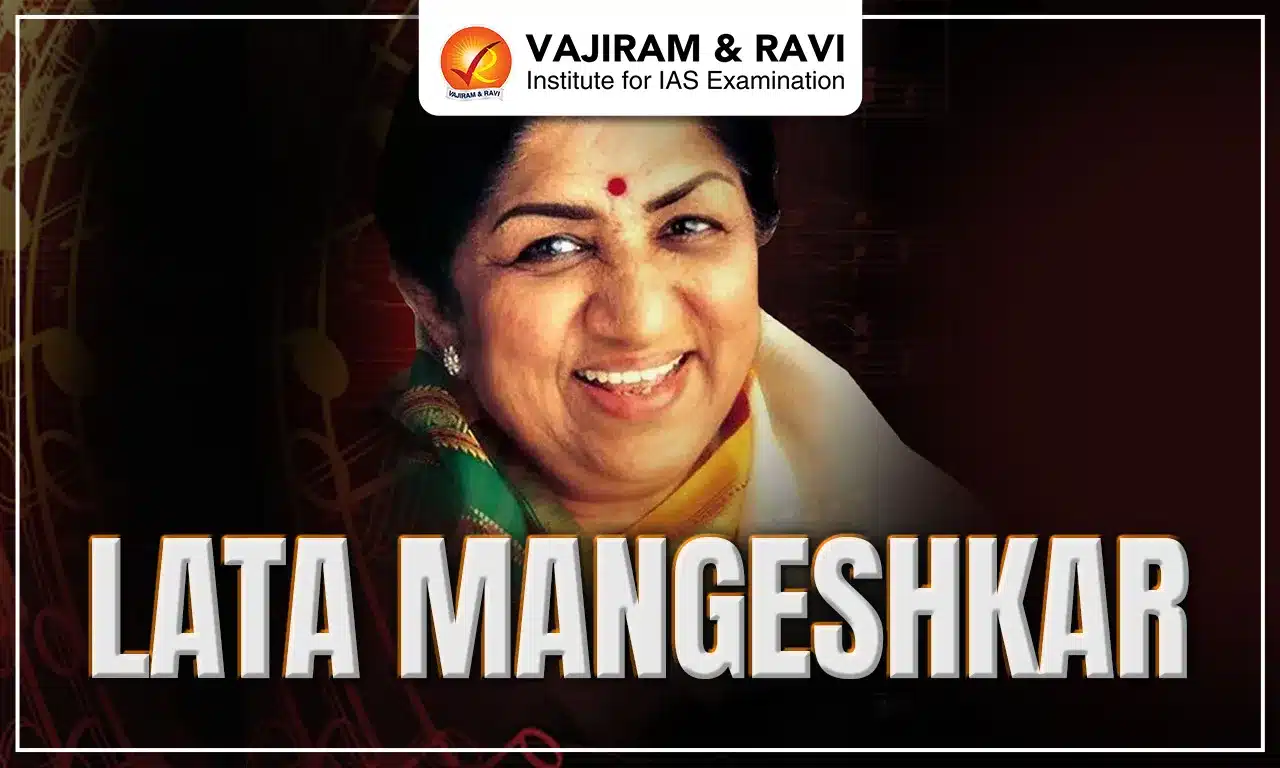
Lata Mangeshkar, widely known as the “Nightingale of India,” remains one of the most celebrated playback singers in the world. Her mesmerizing voice, emotional depth, and unmatched versatility transformed Indian music across generations. With a career spanning nearly eight decades, she became the defining voice of Indian cinema, earning admiration from audiences, musicians, and leaders alike. Lata Mangeshkar’s songs continue to symbolize India’s cultural identity and musical excellence.
Lata Mangeshkar
Born into a family deeply rooted in music, Lata Mangeshkar began singing at the age of five. Her father’s theatrical background provided her early exposure to performing arts. After moving to Mumbai, she struggled initially due to her accent and high-pitched voice, but persistence and training helped her refine her craft.
By the 1950s, she had emerged as Bollywood’s leading playback singer. Despite competition and industry challenges, she maintained her dominance through discipline, vocal control, and adaptability to changing musical trends. Her life story remains an inspiration to aspiring artists in India and abroad.
Lata Mangeshkar Early Life
Lata Mangeshkar was born on 28 September 1929 in Indore, Madhya Pradesh, to Pandit Deenanath Mangeshkar, a classical singer and theatre actor, and Shevanti Mangeshkar. Trained initially by her father in Hindustani classical music, she developed her unique tone and emotional range at a very young age. Following her father’s death in 1942, she took charge of supporting her family through music, marking the beginning of her remarkable journey in playback singing.
Lata Mangeshkar Musical Journey
Lata Mangeshkar’s first Hindi film song, “Mata Ek Sapoot Ki Duniya Badal De Tu” (1943), marked her entry into the hindi film industry. Her breakthrough came with “Aayega Aanewala” from Mahal (1949), composed by Khemchand Prakash, which made her a household name. She went on to sing for leading composers like S.D. Burman, Shankar-Jaikishan, Madan Mohan, Laxmikant-Pyarelal, and A.R. Rahman.
Her voice became synonymous with leading actresses such as Madhubala, Nargis, Waheeda Rehman, Hema Malini, and Sridevi. Over her illustrious career, Lata Mangeshkar recorded songs in more than 36 Indian languages and a few foreign languages, amassing an estimated not less than 30,000 recordings, as per Guinness World Records (1974).
Lata Mangeshkar’s Contribution to Indian Cinema
Lata Mangeshkar’s contribution to Indian cinema is unparalleled. She defined the golden era of Bollywood music from the 1950s to the 1980s. Her voice carried the emotions of love, sorrow, patriotism, and devotion, bringing characters to life through song.
Her patriotic song “Ae Mere Watan Ke Logon” (1963), composed by C. Ramchandra, moved Prime Minister Jawaharlal Nehru to tears and became a timeless symbol of national pride. She lent her voice to several classics such as “Lag Ja Gale,” “Tere Bina Zindagi Se,” “Ajeeb Dastan Hai Yeh,” and “Pyar Kiya To Darna Kya.”
Her collaboration with music directors like R.D. Burman and Madan Mohan created some of the most iconic melodies in Indian cinema, shaping its emotional and cultural landscape.
Lata Mangeshkar Awards and Recognitions
Lata Mangeshkar’s contribution to music has been acknowledged with numerous national and international honors. She received the Bharat Ratna (2001), India’s highest civilian award, recognizing her lifetime dedication to Indian music. Other notable awards include:
- Padma Bhushan (1969) and Padma Vibhushan (1999)
- Dadasaheb Phalke Award (1989) for outstanding contribution to Indian cinema
- National Film Awards (several times) for Best Female Playback Singer
- Filmfare Awards (several times) including Lifetime Achievement
- Legion of Honour (2007) from the French government
In 1974, Lata Mangeshkar became the first Indian to perform at the Royal Albert Hall in London, marking India’s growing influence on the global music stage.
Lata Mangeshkar Musical Style
Lata Mangeshkar’s voice stood out for its clarity, range, and emotive expression. Her ability to adapt to different genres- classical, devotional, romantic, and patriotic, reflected her mastery over the craft. After moving to Mumbai in 1945, she took Hindustani classical music lessons from Ustad Aman Ali Khan, a prominent exponent of the Bhendi Bazaar gharana.
Her diction, breath control, and emotional expression were unparalleled. Lata’s singing not only influenced generations of artists like Asha Bhosle, Alka Yagnik, Shreya Ghoshal, and Sunidhi Chauhan, but also inspired musicians across South Asia. She remains a benchmark for musical excellence in playback singing.
Lata Mangeshkar Social Contributions
Beyond music, Lata Mangeshkar was deeply involved in philanthropy. She established the Lata Mangeshkar Medical Foundation in Pune, providing healthcare to the underprivileged. She also contributed to disaster relief funds, including the Prime Minister’s National Relief Fund and initiatives supporting artists during the COVID-19 pandemic.
Her humility and dedication to social causes reflected her belief that art must serve humanity. Despite her immense fame, she remained grounded, often avoiding public events and maintaining a simple lifestyle dedicated to music and service.
Lata Mangeshkar’s Role in Nation Building
Lata Mangeshkar’s songs carried themes of patriotism, unity, and hope, strengthening India’s emotional fabric after independence. Songs like “Ae Mere Watan Ke Logon” and “Vande Mataram” became anthems of collective national spirit.
She also represented India globally, performing at international events and promoting Indian culture. Her artistry bridged linguistic and regional divides, making her voice a unifying symbol of India’s diversity.
Her close association with leaders such as Jawaharlal Nehru, Lal Bahadur Shastri, and Atal Bihari Vajpayee reflected her role as both a cultural and moral icon of post-independence India.
Lata Mangeshkar’s Legacy
Lata Mangeshkar’s voice became India’s emotional chronicle, from independence to modernization. Her songs continue to define the country’s musical identity, shaping emotional connections across generations. She remains a timeless figure whose music transcends time, geography, and language. Her contribution not only elevated Indian cinema but also represented the power of art in uniting a diverse nation. The Government of India and various international bodies continue to celebrate her work through retrospectives, awards, and digital archives.
Lata Mangeshkar UPSC
Following her passing on 6 February 2022, India declared a two-day national mourning, with the national flag flown at half-mast. Her final rites at Shivaji Park, Mumbai, were attended by Prime Minister Narendra Modi and several dignitaries.
In her memory, the “Lata Deenanath Mangeshkar Award” was instituted in 2022 to recognize excellence in public service and national contribution. Her name was also immortalized with the Lata Mangeshkar Chowk in Ayodhya, honoring her everlasting impact.
Lata Mangeshkar FAQs
Q1: Who was Lata Mangeshkar?
Ans: Lata Mangeshkar was India’s most celebrated playback singer, known as the “Nightingale of India,” with over 25,000 recorded songs.
Q2: When was Lata Mangeshkar born?
Ans: She was born on 28 September 1929 in Indore, Madhya Pradesh, into a family of musicians.
Q3: What was Lata Mangeshkar’s first Hindi film song?
Ans: Her first Hindi film song was “Mata Ek Sapoot Ki Duniya Badal De Tu” (1943) in the film Gajaabhaau.
Q4: Which awards did Lata Mangeshkar receive?
Ans: She received the Bharat Ratna (2001), Padma Vibhushan (1999), and Dadasaheb Phalke Award (1989), among others.
Q5: When did Lata Mangeshkar pass away?
Ans: She passed away on 6 February 2022 in Mumbai due to health complications, marking the end of an era in Indian music.
