Doctrine of Severability

Doctrine of Severability

Doctrine of Severability Latest News

The Supreme Court clarified that the Doctrine of Severability is applicable in Suits for Specific Performance, but only in exceptional cases.

About Doctrine of Severability

  • It is a fundamental legal principle that plays a crucial role in addressing the constitutionality of laws when some provisions are inconsistent with the Fundamental Rights guaranteed by the Constitution. 
  • In such cases, only the conflicting or repugnant part of the law will be considered void by the courts, not the entire statute. 
  • In simpler terms, if a specific part of a law violates the Constitution but can be separated from the rest of the law without affecting its functionality, only that problematic part will be removed, not the entire law.
  • Another aspect of the doctrine of severability is that if a law combines good and bad provisions using words like ‘and’ or ‘or,’ and the enforcement of the good provision does not depend on the bad one, they are considered severable. 
  • The good provision will be upheld and enforced even if the bad one cannot or does not exist. 
  • On the other hand, if there’s a provision that can be used for both legal and illegal purposes, it is invalid and cannot be allowed even for legal purposes.
  • The court will declare the entire Act as void if the valid and invalid portions are so intertwined that they cannot be separated. 
  • It is also called the doctrine of separability.

Landmark Cases on Doctrine of Severability

  • A.K Gopalan vs State of Madras: The court held that if the preventive detention provision (section 14) was removed, the rest of the Act would remain valid and effective. The violative part was separable from the valid part.
  • Minerva Mills vs Union of India: The court struck down section 4 of 55 of the 42nd Amendment Act, 1976, as it exceeded the amending power of Parliament. However, the remaining provisions of the Act were upheld and considered valid.
  • Kihoto Hollohan vs Zachillhu: The court declared paragraph 7 of the Tenth Schedule (inserted by the 52nd Amendment Act of 1985) unconstitutional. However, the rest of the Tenth Schedule, excluding paragraph 7, was upheld and considered constitutional.

Source: VERD

Doctrine of Severability FAQs

Q1: Under the Doctrine of Severability, which portion of a law is declared void?

Ans: Provisions which are inconsistent with the Fundamental Rights guaranteed by the Constitution.

Q2: The Doctrine of Severability is also known as:

Ans: Doctrine of Separability

Q3: If the valid part of a law can operate independently, what does the court do?

Ans: Saves the valid portion.
Alfvén Waves

Alfvén Waves

Alfvén Waves Latest News

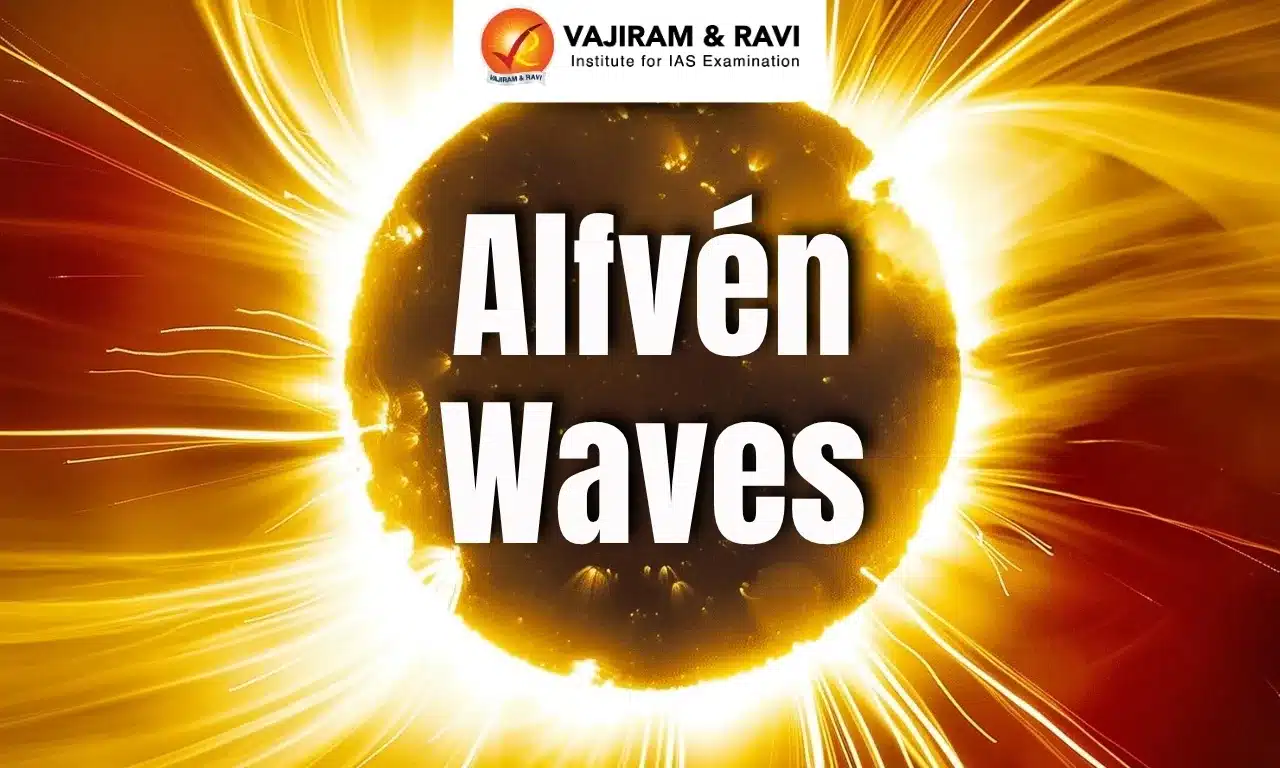
Researchers have made a major advance in solar physics by capturing the first direct evidence of small-scale torsional Alfvén waves in the Sun’s outer atmosphere, known as the corona.

About Alfvén Waves

  • Alfven waves are low-frequency, transverse electromagnetic waves that propagate along the Sun’s magnetic field lines.
  • It occurs in a plasma (or conducting fluid), resulting from the interaction of the magnetic fields and electric currents within it.
    • These waves were first proposed in 1942 by Nobel Prize-winning physicist Hannes Alfvén, are magnetic fluctuations that transfer energy through plasma.
  • Larger and more sporadic Alfven waves linked to solar flares have been detected before.
  • What Researchers have found?
    • The breakthrough was made possible by the unique capabilities of the Daniel K. Inouye Solar Telescope’s Cryogenic Near Infrared Spectropolarimeter (Cryo-NIRSP).
    • This is the first time the subtle, ever-present twisting waves, thought to be powerful enough to heat the corona, have been directly confirmed.
    • The study suggests that Alfven waves may account for at least half of the energy needed to heat the corona.

Source: IE

Alfvén Waves FAQs

Q1: Who predicted the existence of Alfvén Waves?

Ans: Hannes Alfvén

Q2: What is the primary characteristic of Alfvén Waves?

Ans: They are low-frequency waves that propagate through plasmas.

Exercise Milan

Exercise Milan

Exercise MILAN Latest News

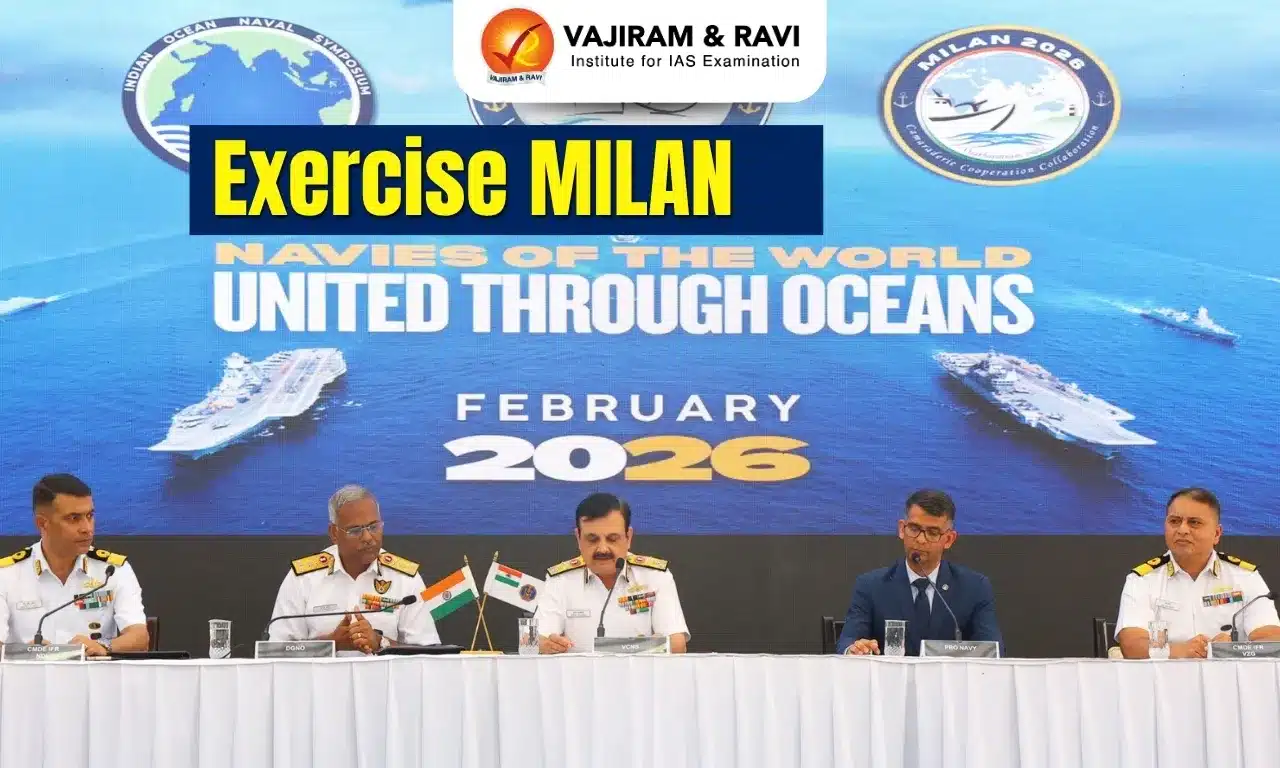
India will host three major international maritime events in Feb 2026 at Visakhapatnam, namely, the International Fleet Review (IFR) 2026, Exercise MILAN 2026, and Indian Ocean Naval Symposium (IONS) Conclave of Chiefs.

About Exercise MILAN

  • It is a biennial multilateral naval exercise which began in 1995.
  • It has since significantly expanded in scope and scale to become the largest exercise held by India.
  • It was started with the participation of only four countries, viz Indonesia, Singapore, Sri Lanka and Thailand, in the 1995 edition, the exercise has since transitioned leaps and bounds in terms of number of participants and complexity of exercises.
  • Originally conceived in consonance with India’s ‘Look East Policy, and later expanded in ensuing years with the Government of India’s ‘Act East Policy’ and Security And Growth for All in the Region (SAGAR) initiative.

Key Features of MILAN 2026

  • Dual-Phase: Exercise MILAN’s Sea and Harbour Phases will focus on interoperability, maritime domain awareness, anti-submarine warfare, air defence, and search-and-rescue operations.
  • International City Parade: It will feature contingents from participating navies, Indian Army, and Indian Air Force marching through Visakhapatnam’s iconic beachfront, the RK Beach, showcasing maritime diplomacy directly to citizens.

Source: PIB

Exercise MILAN FAQs

Q1: When was Exercise MILAN first initiated?

Ans: 1995

Q2: What is Exercise MILAN?

Ans: A multilateral naval exercise hosted by the Indian Navy.

Leprosy

What is Leprosy?

Leprosy Latest News

Recently, the Maharashtra government has officially declared leprosy a “notifiable disease.”

About Leprosy

  • Leprosy is an infectious disease caused by a type of bacteria called Mycobacterium leprae.
  • It is also known as Hansen’s disease.
  • It primarily affects the skin, peripheral nerves, eyes and other organs.
  • It is a neglected tropical disease (NTD) which still occurs in more than 120 countries, with around 200 000 new cases reported every year. 
  • It was declared notifiable in 2005 uniformly under the National Leprosy Eradication Programme (NLEP), Union Ministry of Health and Family Welfare.

Transmission of Leprosy

  • The disease is transmitted through droplets from the nose and mouth of an untreated case of leprosy, containing the causative agent, following prolonged, close contact. 
  • The disease does not spread through casual contact (like shaking hands or hugging, sharing meals or sitting next to each other). 
  • The patient stops transmitting the disease upon initiation of treatment.

Symptoms of Leprosy

  • It usually takes about 3 to 5 years for symptoms to appear after you come into contact with the bacteria that cause leprosy.
  • The main symptom of leprosy is disfiguring skin sores, lumps, or bumps that don’t go away after several weeks or months.
  • In some cases, body parts may lose their sense of touch and pain, increasing the likelihood of injuries such as cuts and burns.

Treatment of Leprosy

  • Leprosy is a curable disease. 
  • The currently recommended treatment regimen consists of three medicines (dapsone, rifampicin and clofazimine) and is referred to as multi-drug therapy (MDT).

Source: IE

Leprosy FAQs

Q1: What is the causative agent of leprosy?

Ans: Mycobacterium leprae

Q2: Which of the following is a characteristic feature of leprosy?

Ans: It causes nerve damage and skin lesions.

Sambhar Lake

Sambhar Lake

Sambhar Lake Latest News

Sambhar Lake is witnessing an extraordinary influx of migratory birds this winter — a rise of nearly 40% compared to last year.

About Sambhar Lake

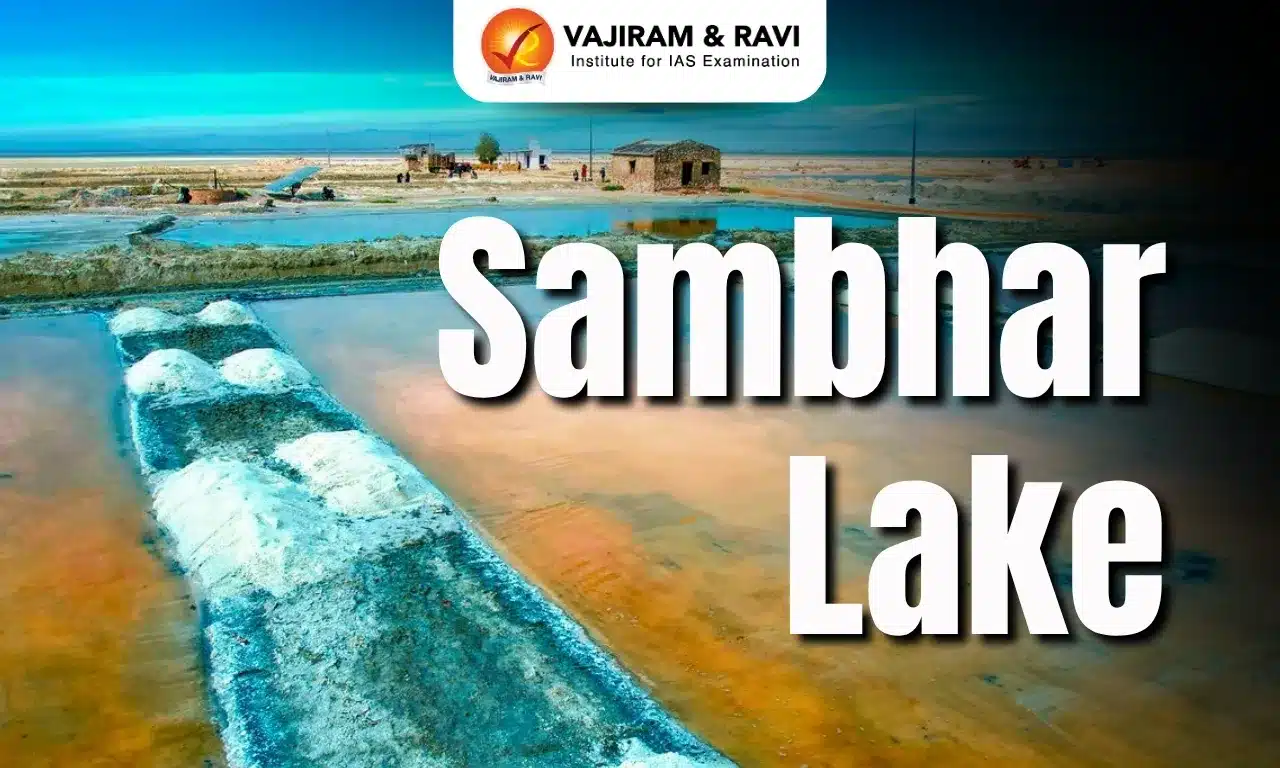
  • Location: It is the largest saltwater lake located in the districts of Nagaur and Jaipur in Rajasthan.
  • This saline wetland is elliptical in shape, with a length of 35.5 km and a breadth varying between 3 km and 11 km.
  • It covers an area in excess of 200 sq.km., surrounded on all sides by the Aravalli hills.
  • The water from two major ephemeral streams, namely Mendha and Runpangarh, along with numerous rivulets and surface runoff feed the lake.
  • It was designated as a Ramsar site in the year 1990.
  • Salt Production: It is known for the production of brine/salt and also houses one of the largest salt manufacturing units in the country. 
  • Several migrating birds visit the waterbody during the winter. 
  • Fauna: It is the most important wintering area for flamingoes (both Phoniconaias minor and Phoenicopterus roseus) in India outside the Rann of Kachchh.
  • Other migratory species like pelicans, common shelduck, redshank, and common sandpiper, black-winged stilt, Kentish plover, and Ringed plover, Ruff, and Sociable lapwing are also found here.

Source: TOI

Sambhar Lake FAQs

Q1: Where is Sambhar Lake located?

Ans: Rajasthan

Q2: What is a notable characteristic of Sambhar Lake?

Ans: It's a saltwater lake with high salinity

Stabilimenta

Stabilimenta

Stabilimenta Latest News

A new study has revealed that the mysterious silk decorations in some spider webs known as stabilimenta may be sophisticated tuning devices that enhance the spider’s ability to locate its next meal by controlling how vibrations travel through the web.

About Stabilimenta

  • Stabilimenta are highly UV-reflective distinctive silk structures found in multiple spider species’ webs. 
  • These “decorations” may look like zig-zagging threads spanning the gap between two adjacent “spokes,” or threads arranged in a circular “platform” around the web center.
  • The purpose of stabilimenta within the web is unclear
    • They could help collect water, regulate a spider’s body temperature, or even deter predatory wasps or birds to help the arachnids collect more insects. 
    • They also may help the spiders pinpoint where their prey is located by helping vibrations move throughout the web.
  • Not all spiders use stabilimenta, and members of the same species may decorate their webs in different ways.

Source: TH

Stabilimenta FAQs

Q1: What is Stabilimenta?

Ans: Distinctive silk structures found in spider webs.

Q2: What is the primary characteristic of Stabilimenta in spider webs?

Ans: They are highly reflective to ultraviolet (UV) light.

Q3: Which shape can stabilimenta take in spider webs?

Ans: Zigzag or circular

Mahuadanr Wolf Sanctuary

Mahuadanr Wolf Sanctuary

Mahuadanr Wolf Sanctuary Latest News

Hidden deep within the undulating hills of Latehar district in Jharkhand, the Mahuadanr Wolf Sanctuary remains one of India’s most intriguing yet lesser-known wildlife destinations.

About Mahuadanr Wolf Sanctuary

  • It is located in the Latehar district of Jharkhand.
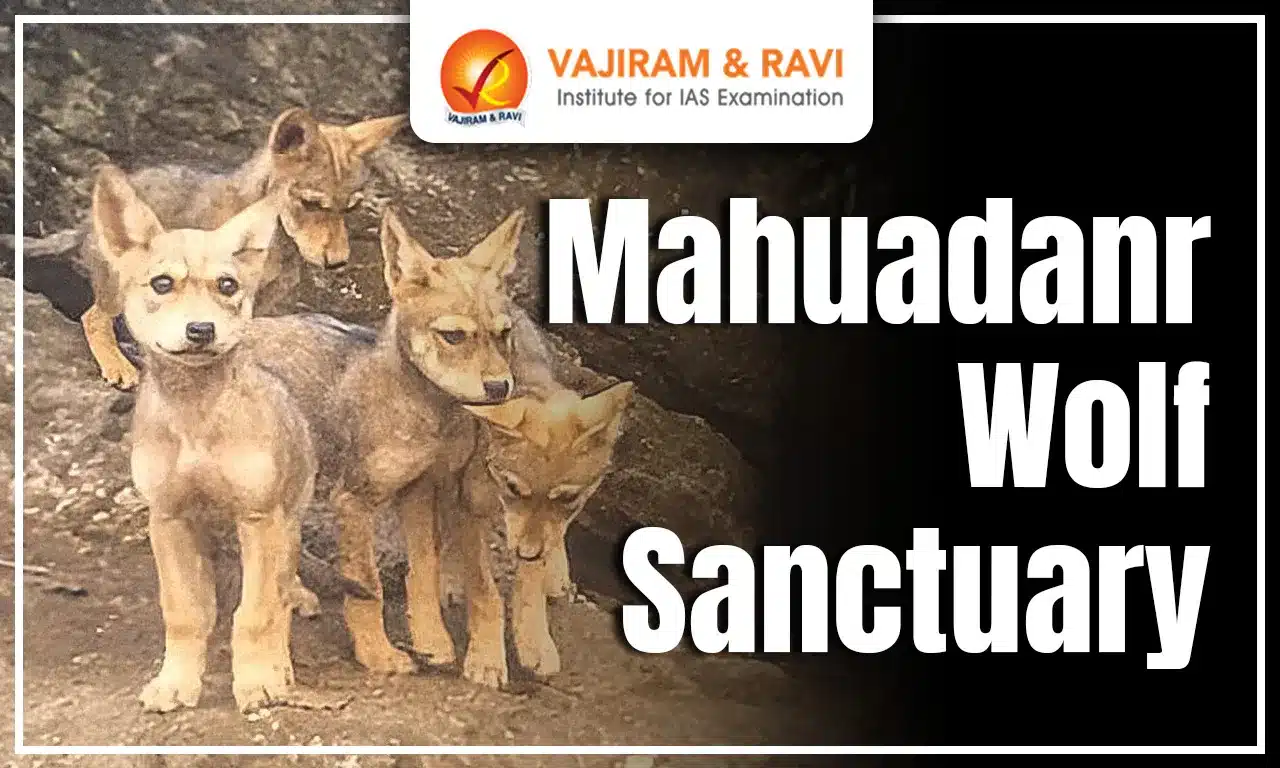
  • It is India’s first and only wolf sanctuary, dedicated to the conservation of the Indian grey wolf (Canis lupus pallipes).
  • The sanctuary, spread over approximately 63 square kilometers, was declared in 1976.
  • It is an integral part of the Palamau Tiger Reserve.
  • It is nestled within a landscape dominated by tribal communities, more than 80 percent of whom follow “Sarna Dharma”, a nature-worshipping religion that venerates forests, rivers, and natural elements.
  • The Mahuadanr landscape is a stunning mosaic of sal forests, rocky plateaus, scrublands, and small river valleys, all vital for the survival of wolves that prefer open and semi-arid habitats for denning and hunting. 
  • The Chechari or Mahuadanr Valley forms the core of this ecosystem. 
  • The sanctuary is drained by the Burha river. The river meets the Aksi River and drains into North Koel near Kujrum. 
  • It is also home to other species like leopards, sloth bears, hyenas, jackals, wild boars, and spotted deer.

Key Facts about Indian Grey Wolf

  • It is one of the smallest wolves in the world. 
  • It is a subspecies of the grey wolf found across Southwest Asia and the Indian subcontinent.
  • It inhabits scrublands, grasslands, and semi-arid agroecosystems and thrives in warmer temperatures.
  • Unlike other wolf subspecies, it lives in smaller packs and is less vocal, being primarily nocturnal and hunting from dusk to dawn.
  • Conservation Status:
    • IUCN Red List: Endangered (the Indian population estimated between 2,000–3,000 individuals).

Source: TOI

Mahuadanr Wolf Sanctuary FAQs

Q1: Mahuadanr Wolf Sanctuary is located in which Indian state?

Ans: Jharkhand

Q2: Mahuadanr Wolf Sanctuary was established in which year?

Ans: 1976

Q3: Mahuadanr Wolf Sanctuary is India’s first and only sanctuary dedicated to which animal?

Ans: Indian grey wolf (Canis lupus pallipes)

Q4: Mahuadanr Wolf Sanctuary is an integral part of which tiger reserve?

Ans: Palamau Tiger Reserve

Bhavani Island

Bhavani Island

Bhavani Island Latest News

Back-to-back floods at the Prakasam Barrage across the Krishna River have become a bane for the tourism department, which has once again been forced to close Bhavani Island and suspend boat operations, severely impacting tourism revenue.

About Bhavani Island

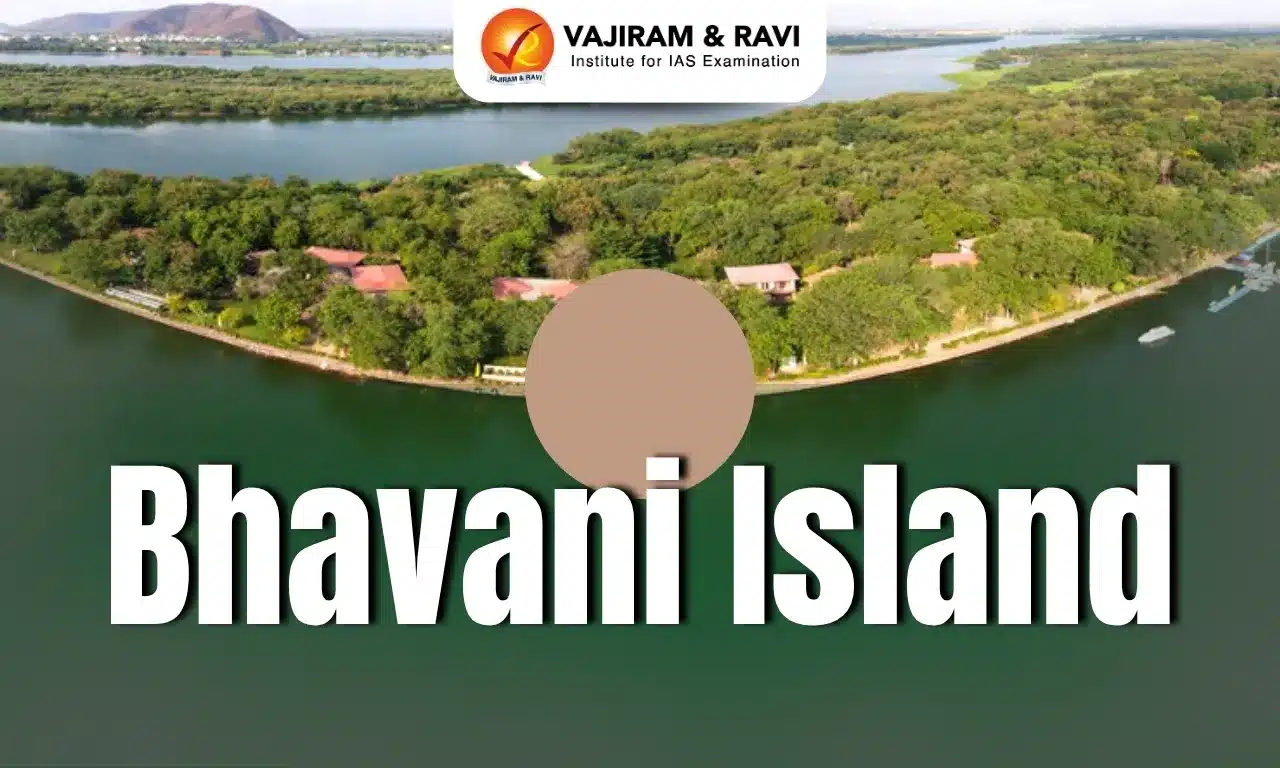
  • It is a river island situated near Vijayawada on the Krishna River in Andhra Pradesh.
  • Spread over an area of 133 acres, it is one of the largest river islands in India. 
  • The island has extensive forest coverage, shimmering ponds and rolling meadows.
  • Initially known more for its natural beauty and abundance of flora and fauna, the island has transformed into a well-equipped tourist spot. 

Key Facts about Krishna River

  • It is a river of south-central India. 
  • One of India’s longest rivers, it has a total length of about 1,400 km.
  • Course
    • The river rises in western Maharashtra state in the Western Ghats range near the town of Mahabaleshwar, not far from the coast of the Arabian Sea. 
    • Krishnabai Temple in Mahabaleshwar is considered to be the starting point of the Krishna River.
    • It passes through the Indian states of Maharashtra, Karnataka, Telangana, and Andhra Pradesh and meets the Bay of Bengal at Hamasaladeevi in Andhra Pradesh, on the east coast.
  • The Krishna River Basin extends over an area of about 258,948 sq. km, which is nearly 8 percent of the total geographical area of the country. 
  • It has the second largest river basin in peninsular India (after the Godavari).
  • It is bounded by the Balaghat range on the north, by the Eastern Ghats on the south and the east, and by the Western Ghats on the west.
  • The principal tributaries joining Krishna are the Ghataprabha, the Malaprabha, the Bhima, the Tungabhadra, and the Musi.
  • The major dams on the Krishna are the Lal Bahadur Shastri Dam (also known as Almatti Dam), the Nagarjuna Sagar, the Srisailam Dam, the Dhom Dam, the Narayanpur Dam, and the Jurala Dam.

Source: TOI

Bhavani Island FAQs

Q1: Bhavani Island is located on which river?

Ans: Krishna River

Q2: Bhavani Island is situated near which city?

Ans: Vijayawada

Q3: In which Indian state is Bhavani Island located?

Ans: Andhra Pradesh

Q4: What is the approximate area of Bhavani Island?

Ans: 133 acres

Dhvani Missile

Dhvani Missile

Dhvani Missile Latest News

India's Defence Research and Development Organisation (DRDO) is on the verge of a historic breakthrough with the upcoming test of Dhvani, a cutting-edge hypersonic missile that promises to catapult the nation into an elite club of military superpowers.

About Dhvani Missile

  • It is an  hypersonic missile being developed by India’s Defence Research and Development Organisation (DRDO).
  • The Dhvani is being developed as a Hypersonic Glide Vehicle (HGV), a revolutionary weapon system that combines blistering speed with unprecedented maneuverability. 
    • Unlike conventional cruise missiles that follow predictable flight paths, the Dhvani will be launched to extreme altitudes before gliding toward its target at hypersonic speeds
    • This unique capability makes it nearly impossible to detect and even harder to intercept, rendering most existing missile defense systems obsolete.
    • It will be capable of striking both land-based and maritime targets with pinpoint precision.
  • It can fly at speeds exceeding Mach 5 or 6, nearly 7,400 km per hour.
  • It has estimated ranges between 6,000 to 10,000 kilometers.
  • What sets Dhvani apart is its sophisticated design. 
    • The missile features a blended wing-body configuration measuring approximately 9 meters in length and 2.5 meters in width. 
    • Its advanced heat protection system, utilizing ultra-high-temperature ceramic composites, can withstand temperatures between 2,000-3,000°C generated during atmospheric reentry.
    • The stealth-optimized geometry, including angled surfaces and smooth contours, dramatically reduces its radar cross-section, making it virtually invisible to enemy tracking systems.

Source: WION

Dhvani Missile FAQs

Q1: The Dhvani missile is being developed by which Indian organization?

Ans: Defence Research and Development Organisation (DRDO).

Q2: The Dhvani missile is classified as which type of weapon system?

Ans: Hypersonic Glide Vehicle (HGV)

Q3: What is the maximum estimated speed of the Dhvani missile?

Ans: It can fly at speeds exceeding Mach 5 or 6, nearly 7,400 km per hour.

Q4: What is the estimated range of the Dhvani missile?

Ans: It has estimated ranges between 6,000 to 10,000 kilometers.

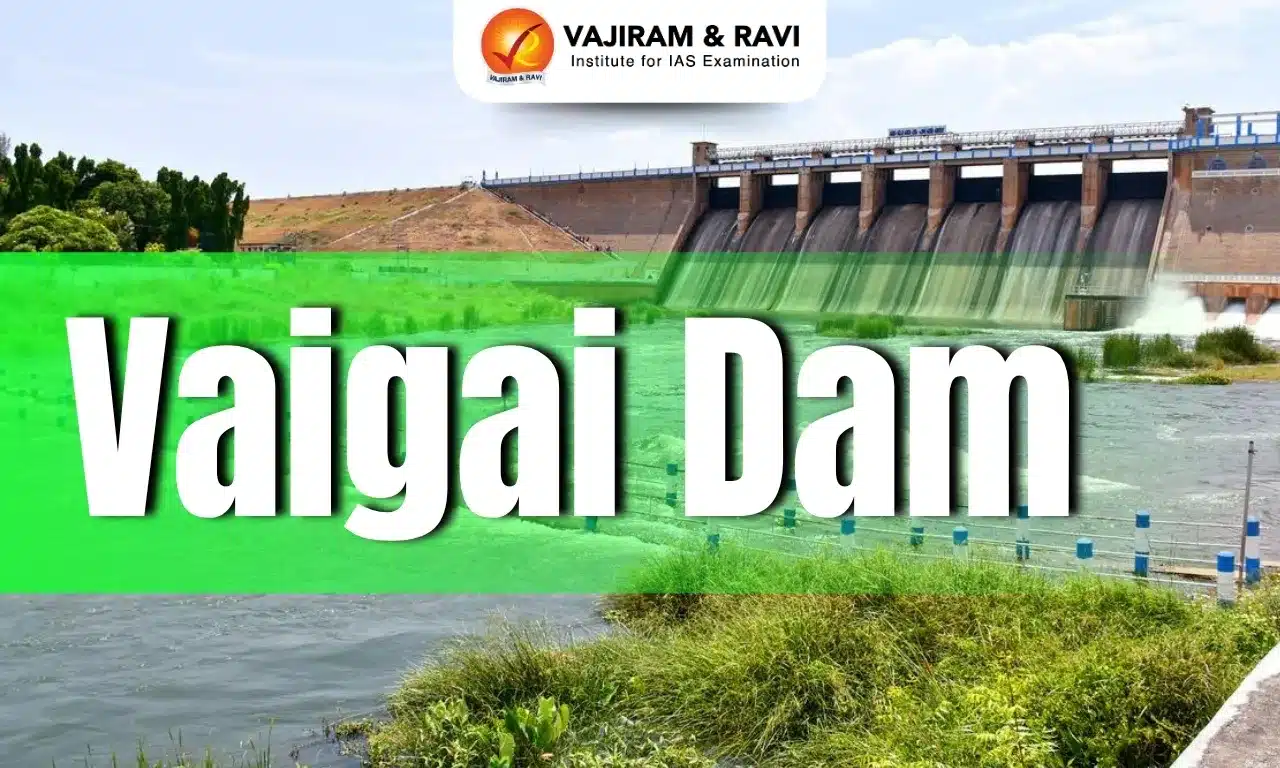
Vaigai Dam

Vaigai Dam

Vaigai Dam Latest News

The timely onset of the northeast monsoon and water release from the Vaigai dam have invigorated Madurai's farming community, prompting a rapid and widespread launch of paddy cultivation across the district's double-crop regions.

About Vaigai Dam

  • It was built in the year 1959 across the Vaigai River. 
  • The dam measures 111 ft in height and the total storage capacity is 6,143 mcft.
  • The dam has been the lifeline of the agricultural lands in the districts of Madurai and Dindigul. It also provides drinking water to Madurai and Andipatti. 
  • The dam also has a hydropower station that generates 6 megawatts of electricity.
  • Near the dam, the Government of Tamil Nadu has constructed an Agricultural Research Station to research on a wide variety of crops including cereals and pulses.
  • There is a small beautiful garden on both sides of the Vaigai Dam called Little Brindavan that is connected by a small bridge. 

Key Facts about Vaigai River

  • It is a river in Tamil Nadu.
  • It is considered to be one of the most sacred and ancient rivers in India, as it is mentioned in several Tamil literary and religious texts, such as the Silappatikaram, the Thiruvilayadal Puranam, and the Thirumurugatruppadai
  • Course:
    • It originates from the Varusanadu and Megamalai hills of the Western Ghats. 
    • It travels through the Pandya Nadu region of Tamil Nadu generally in the south-east direction and rarely causes floods.
    • It drains into the Palk Strait near the Pamban Bridge in Ramanathapuram district.
  • Length: It is 258 kilometres long.
  • It drains an area of 7,741 sq.km, which entirely lies in the state of Tamil Nadu.
  • Vaigai gets major feed from the Periyar Dam in Kerala. Water from the Periyar River in Kerala is diverted into the Vaigai River in Tamil Nadu via a tunnel through the Western Ghats.
  • Tributaries: Its main tributaries are Suruliyaru, Mullaiyaru, Varaganadhi, Manjalaru, Kottagudi, Kridhumaal, and Upparu.
  • It is the major river in the fabled city of Madurai, the capital of the ancient and prosperous Pandya kingdom located in southern Tamil Nadu.

Source: TOI

Vaigai Dam FAQs

Q1: Vaigai Dam is built across which river?

Ans: Vaigai River

Q2: Vaigai Dam is located in which state?

Ans: Tamil Nadu

Q3: Vaigai Dam mainly benefits the agricultural lands of which districts?

Ans: Madurai and Dindigul

Q4: The hydropower station at Vaigai Dam generates how much electricity?

Ans: 6 MW

Enquire Now