
Heavy Metals Latest News
Heavy metals are polluting the Cauvery River and its fish, researchers from Tamil Nadu have reported.
About Heavy Metals
- The term ‘heavy metal' refers to any metallic chemical element that has a relatively high density and is toxic or poisonous at low concentrations.
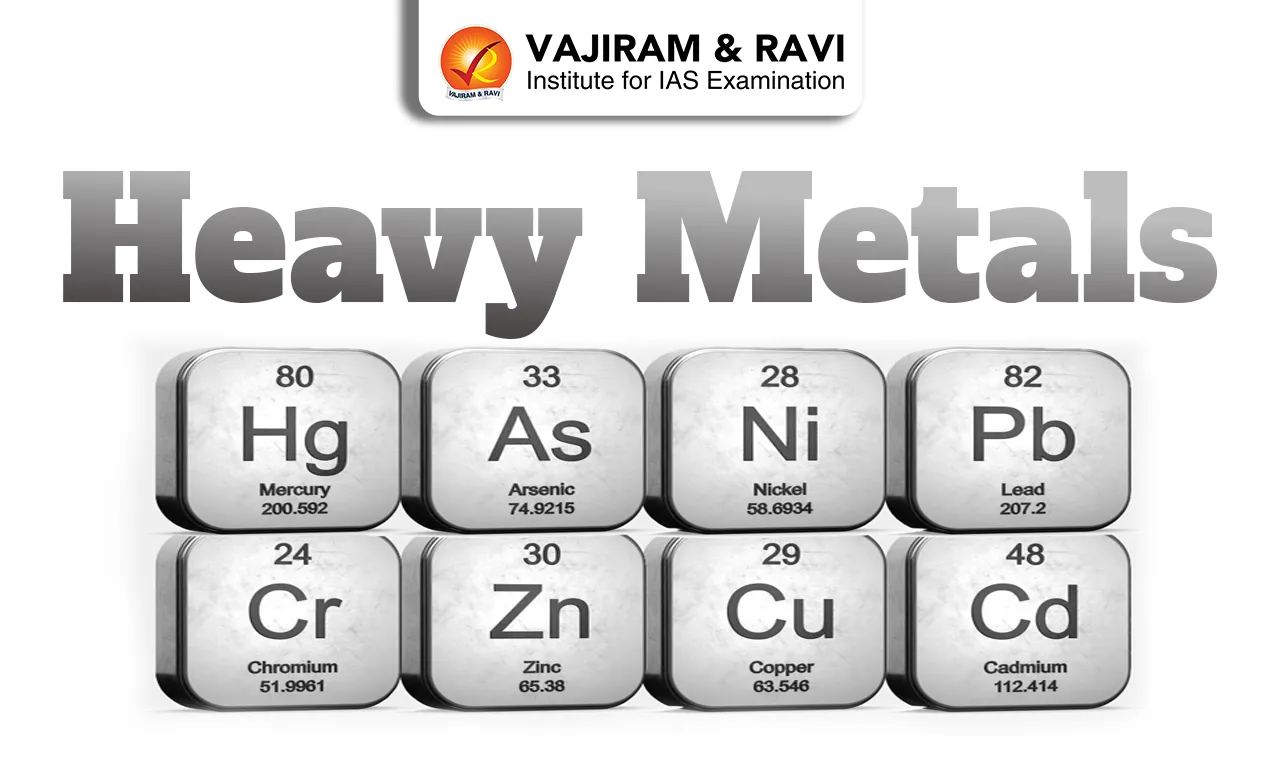
- Examples of heavy metals include mercury (Hg), cadmium (Cd), arsenic (As), chromium (Cr), thallium (Tl), and lead (Pb).
- Heavy metals are natural components of the Earth's crust. They cannot be degraded or destroyed.
- To a small extent they enter our bodies via food, drinking water, and air.
- As trace elements, some heavy metals (e.g. copper, selenium, and zinc) are essential to maintain the metabolism of the human body.
- However, at higher concentrations they can lead to poisoning.
- Heavy metal poisoning could result, for instance, from drinking-water contamination (e.g. lead pipes), high ambient air concentrations near emission sources, or intake via the food chain.
- Heavy metals are dangerous because they tend to bioaccumulate.
- Bioaccumulation means an increase in the concentration of a chemical in a biological organism over time, compared to the chemical's concentration in the environment.
- Compounds accumulate in living things any time they are taken up and stored faster than they are broken down (metabolized) or excreted.
- Heavy metals can enter a water supply by industrial and consumer waste, or even from acidic rain breaking down soils and releasing heavy metals into streams, lakes, rivers, and groundwater.
- Mercury, lead, and cadmium are of greatest concern because of their ability to travel long distances in the atmosphere.
Source: TH
Heavy Metals FAQs
Q1: What are heavy metals?
Ans: The term ‘heavy metal' refers to any metallic chemical element that has a relatively high density and is toxic or poisonous at low concentrations.
Q2: Why are heavy metals considered dangerous to living organisms?
Ans: Because they tend to bioaccumulate and are toxic even at low concentrations.
Q3: How do heavy metals enter the human body?
Ans: Through food, drinking water, and air.
Q4: What are the main sources of heavy metal contamination in water?
Ans: Industrial and consumer waste, and acidic rain breaking down soils and releasing heavy metals into water bodies.

