
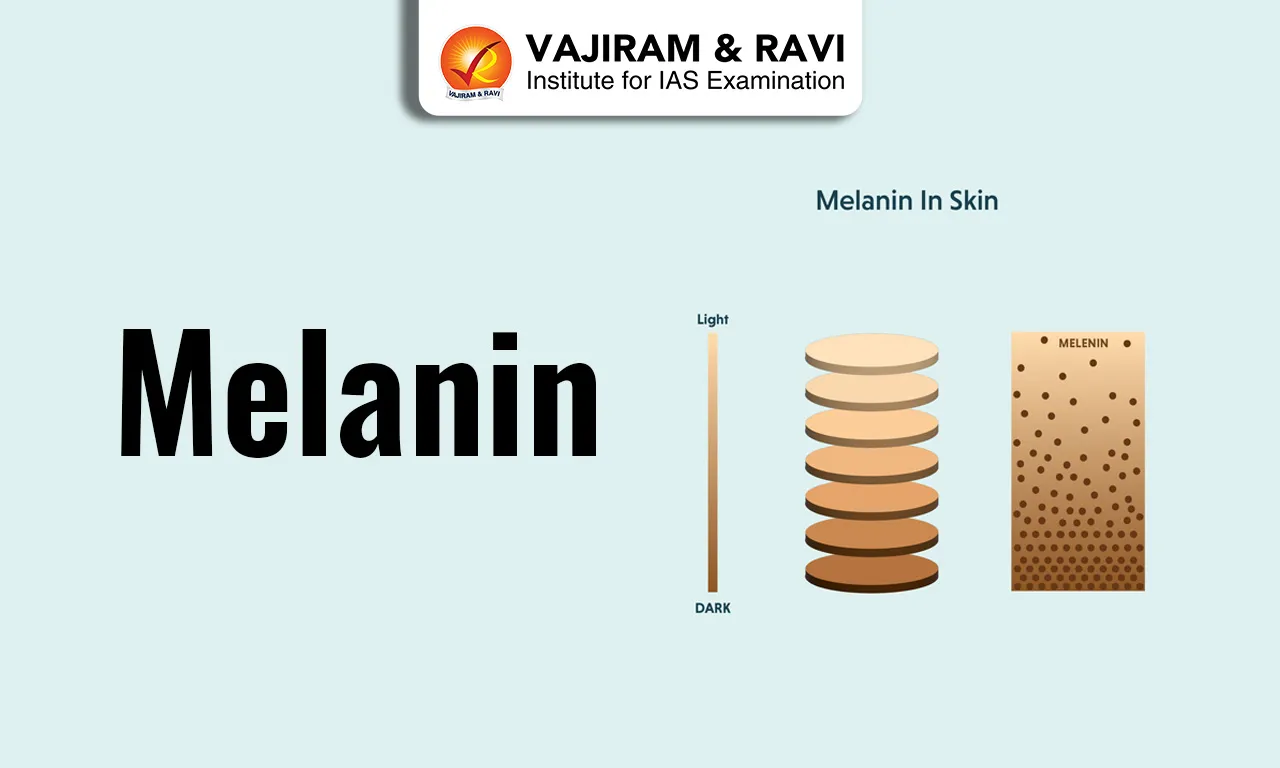
Melanin Latest News
Melanin tells the tale of how our ancestors survived from the Sun's heavy UV rays 50000 years back.
About Melanin
- Melanin is a natural pigment found in most living organisms.
- It is present in human and animal skin to varying degrees, and is responsible for your unique eye, hair and skin color.
- Melanin is produced within special structures called melanosomes. Melanosomes are found inside melanin-producing pigment cells called melanocytes.
Types of Melanin
- Eumelanin: It is responsible for brown and black shades of hair, skin, and eyes.
- Pheomelanin: It produces red or yellow hues — more common in people with red hair or lighter skin.
- Neuromelanin: It is found in the brain, and develops from the oxidation of dopamine (a feel good chemical) and noradrenaline (a fight-or-flight hormone)
Melanin-Related Skin Conditions
- Vitiligo: It is a condition where the skin loses its pigment-producing cells, leading to white patches.
- Albinism: It is a genetic mutation that prevents melanin production, resulting in pale skin, hair, and eyes.
- Hyperpigmentation: Excess melanin causes darker spots or patches, often due to sun exposure or hormones.
Role of Melanin
- Biological Shield: It acts as a biological shield, absorbing harmful ultraviolet rays and thereby protecting the skin from potential skin cancers like melanoma, and various carcinomas
- Camouflage and Survival: It helps animals to blend in with their environment via camouflage. This ability is very crucial for both predator and prey.
- Thermoregulation: It also helps in thermoregulation, controlling heat loss and generation through mechanisms like sweating.
Source: TH
Melanin FAQs
Q1: What is the primary function of melanin in the human body?
Ans: To protect the skin from UV radiation.
Q2: Where is melanin produced in the skin?
Ans: It is produced in Melanocytes.

