ReALCRaft Portal

ReALCRaft Portal

ReALCRaft Portal Latest News

Recently, the government notified rules for “Sustainable Harnessing of Fisheries in the Exclusive Economic Zone” and an Access Pass required for mechanized and large-sized motorized vessels can be obtained through the online ReALCRaft portal.

About ReALCRaft Portal

  • The Registration And Licensing of Fishing Craft (ReALCRaft) portal is developed as a national online platform under open source technology. 
  • It is developed by the Department of Fisheries, Ministry of Fisheries, Animal Husbandry & Dairying.
  • It provides web-based, citizen-centric services to marine fishers and coastal States/UTs for the registration and licensing of fishing vessels, transfer of ownership, and related processes.
  • Objectives:  To develop a modern, comprehensive and transparent vessel data management system in the country with the aim to enhance security features and to bring efficiency, transparency, accountability and reliability in services.

Features of ReALCRaft Portal

  • Integration with state-specific payment gateway (Bank /treasury),
  • Integration with security agencies to record the movements and track the vessels.
  • Upstream integration with insurance agencies, subsidy schemems for eDBT.
  • Integration with ISRO facilitates real-time communication with fishermen at sea.
  • Integration & data sharing with Govt. Agencies/ Security Agencies
  • It is also being integrated with Marine Products Export Development Authority (MPEDA) and the Export Inspection Council (EIC) for issuance of Fish Catch and Health Certificates.

Source: PIB

ReALCRaft Portal FAQs

Q1: What is the primary objective of the ReALCRaft Portal?

Ans: To provide online services for vessel registration and licensing.

Q2: Which department launched the ReALCRaft Portal?

Ans: Department of Fisheries
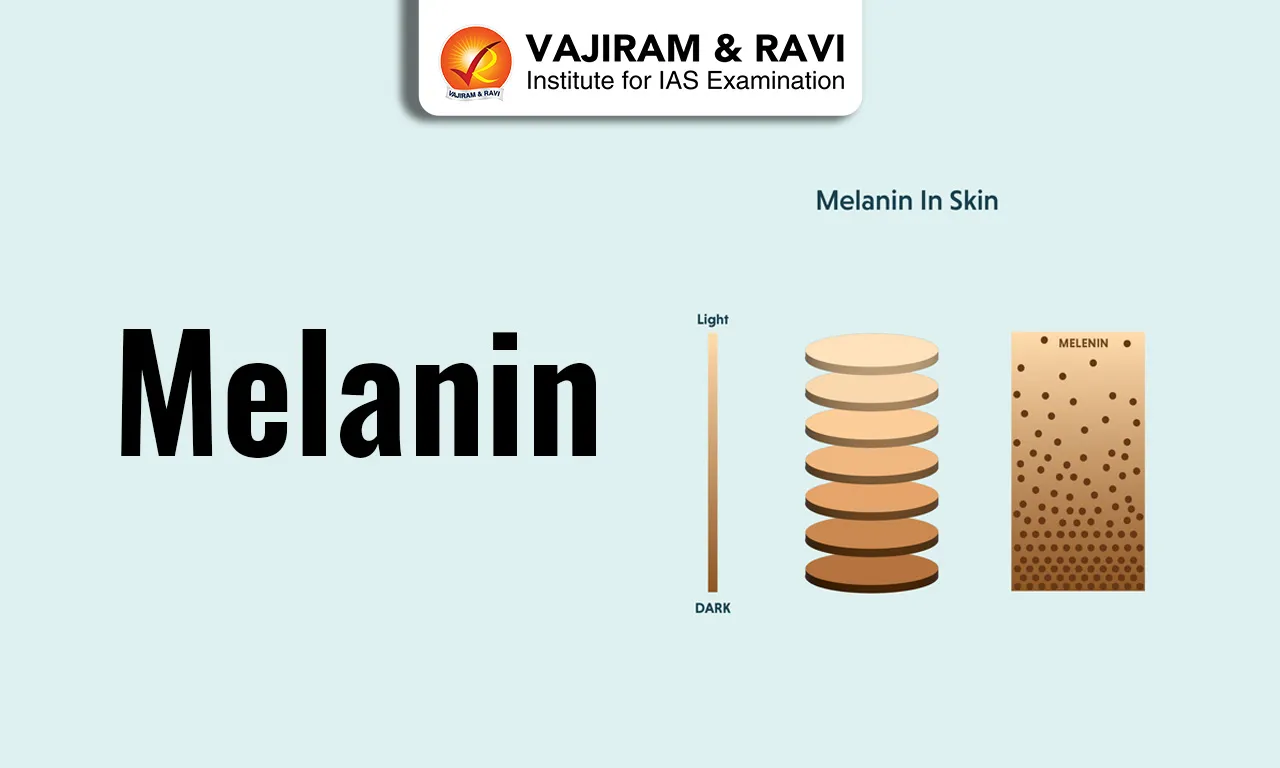
Melanin

Melanin

Melanin Latest News

Melanin tells the tale of how our ancestors survived from the Sun's heavy UV rays 50000 years back.

About Melanin

  • Melanin is a natural pigment found in most living organisms. 
  • It is present in human and animal skin to varying degrees, and is responsible for your unique eye, hair and skin color.
  • Melanin is produced within special structures called melanosomes. Melanosomes are found inside melanin-producing pigment cells called melanocytes.

Types of Melanin

  • Eumelanin: It is responsible for brown and black shades of hair, skin, and eyes.
  • Pheomelanin: It produces red or yellow hues — more common in people with red hair or lighter skin.
  • Neuromelanin: It is found in the brain, and develops from the oxidation of dopamine (a feel good chemical) and noradrenaline (a fight-or-flight hormone)

Melanin-Related Skin Conditions

  • Vitiligo: It is a condition where the skin loses its pigment-producing cells, leading to white patches.
  • Albinism:  It is a genetic mutation that prevents melanin production, resulting in pale skin, hair, and eyes.
  • Hyperpigmentation: Excess melanin causes darker spots or patches, often due to sun exposure or hormones.

Role of Melanin

  • Biological Shield: It acts as a biological shield, absorbing harmful ultraviolet rays and thereby protecting the skin from potential skin cancers like melanoma, and various carcinomas
  • Camouflage and Survival: It helps animals to blend in with their environment via camouflage. This ability is very crucial for both predator and prey.
  • Thermoregulation:  It also helps in thermoregulation, controlling heat loss and generation through mechanisms like sweating.

Source: TH

Melanin FAQs

Q1: What is the primary function of melanin in the human body?

Ans: To protect the skin from UV radiation.

Q2: Where is melanin produced in the skin?

Ans: It is produced in Melanocytes.

Key Facts about Peru

Key Facts about Peru

Peru Latest News

Recently, the 9th round of India-Peru trade agreement was successfully concluded in Peru.

About Peru

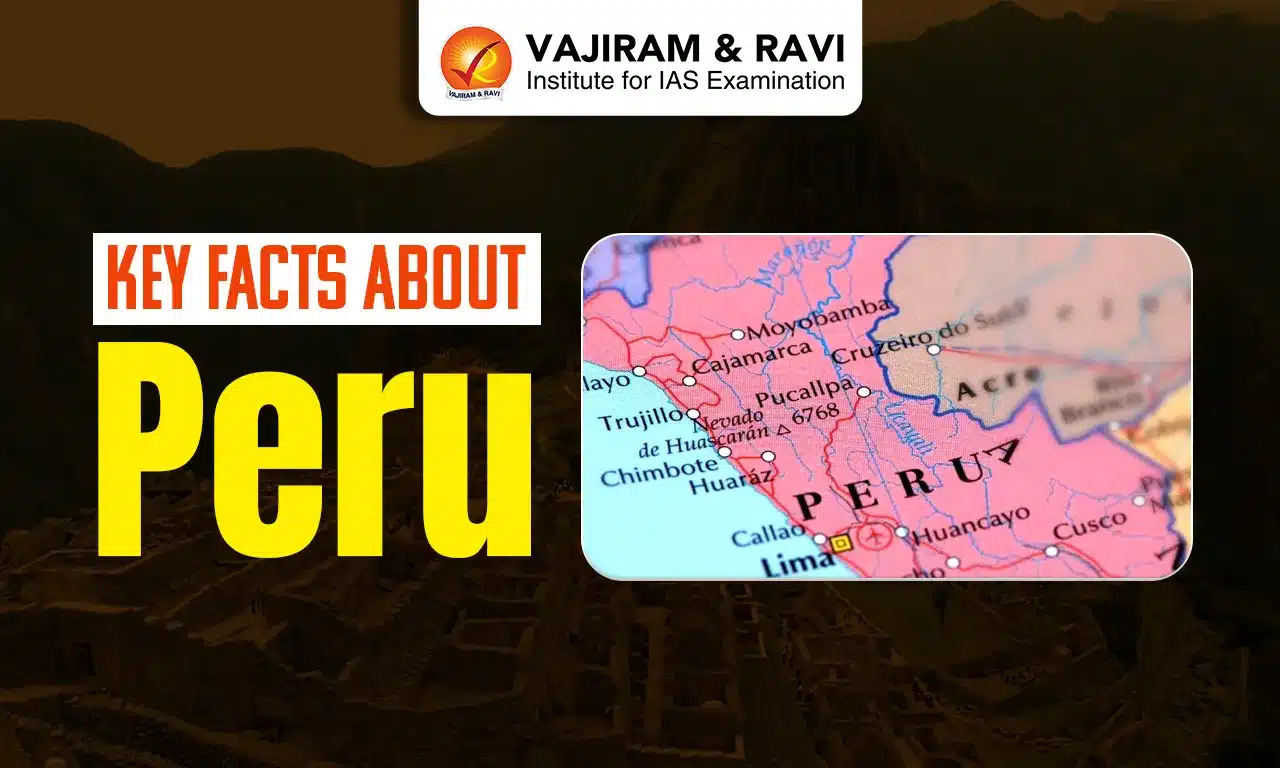
  • Location: It is situated just to the south of the Equator in South America.
  • It is the third largest country in South America, after Brazil and Argentina.
  • Bordering Countries: Ecuador (North), Brazil (East), Bolivia (Southeast) and Chile (South)
  • Bordering Ocean: Its western border lies along the Pacific Ocean. 
  • Capital City: Lima

Geographical Features of Peru

  • It is characterized by three major regions: the Costa, Sierra, and Amazonia.
    • The Costa is an arid coastal strip along the Pacific Ocean.
    • The Sierra consists of the Andes Mountains, which run through the center of the country.
    • The Andes are divided into three main ranges: the Cordilleras Occidental, Central, and Oriental. 
  • Highest Peak: Mount Huascarán (6,768 m)
  • Rivers: Amazon, Ucayali, Madre de Dios
  • Lakes: Lake Titicaca (world’s highest navigable lake), which Peru shares with Bolivia.
  • Climate: It varies from tropical in east to dry desert in west; temperate to frigid in the Andes.
  • Natural Resources: Copper, silver, Gold, Petroleum, timber, Iron ore, coal, Phosphate, potash, natural gas.

Source: PIB

Peru FAQs

Q1: What is the capital of Peru?

Ans: Lima

Q2: What is the currency of Peru?

Ans: Sol

Q3: What is the name of the Peruvian festival celebrated on June 24th?

Ans: Inti Raymi

Deendayal Antyodaya Yojana – National Rural Livelihoods Mission

Deendayal Antyodaya Yojana - National Rural Livelihoods Mission

Deendayal Antyodaya Yojana - National Rural Livelihoods Mission Latest News

Ethiopian delegates expressed their intention to apply the lessons learned from the Deendayal Antyodaya Yojana - National Rural Livelihoods Mission (DAY-NRLM) their Productive Safety Net Program.

About Deendayal Antyodaya Yojana - National Rural Livelihoods Mission

  • It is a flagship poverty alleviation program implemented by the Ministry of Rural Development, Government of India.
  • It aims at mobilizing rural poor households into Self Help Groups (SHGs) and continuously nurturing and supporting them to take economic activities till they attain an appreciable increase in income over a period of time.
  • Objectives 
    • Access to formal credit;
    • Support for diversification and strengthening of livelihoods; and
    • Access to entitlements and public services.
  • Background
    • National Rural Livelihood Mission (NRLM) was launched in 2010  by restructuring the erstwhile Swarnajayanti Grameen Swarojgar Yojana (SGSY).
    • In 2016, it was renamed Deendayal Antyodaya Yojana – National Rural Livelihood Mission (DAYNRLM).
  • Funding: The central and state governments jointly fund this centrally sponsored scheme.

Four core components of Deendayal Antyodaya Yojana - National Rural Livelihoods Mission

  • Social mobilization and promotion and strengthening of self-managed and financially sustainable community institutions of the rural poor women;
  • Financial inclusion;
  • Sustainable livelihoods; and
  • Social inclusion, social development and access to entitlements through convergence

Source: NDTV

Deendayal Antyodaya Yojana - National Rural Livelihoods Mission FAQs

Q1: What is the primary objective of Deendayal Antyodaya Yojana - National Rural Livelihoods Mission (DAY-NRLM)?

Ans: To reduce poverty by promoting diversified and gainful self-employment for rural households.

Q2: What is the name of the platform that connects Self-Help Groups (SHGs) with banks?

Ans: Aajeevika

Lichen

Lichen

Lichen Latest News

Researchers recently discovered four new lichen species, enhancing biodiversity understanding in the Western Ghats.

Why in News?

  • The newly identified species – Parmotrema sahyadricum (discovered from Wayanad), Solenopsora rhizomorpha (from Eravikulam and Mathikettanshola National Parks), Buelloa ghattensis (Mathikettanshola National Park) and Pyxine janakiae (Mathikettanshola National Park) – have been published in international scientific journals. 
  • The work that started in 2022 resulted in these discoveries. 
  • The team also recorded more than 50 species of lichens, which are new reports to the Kerala part of the Western Ghats.

About Lichen

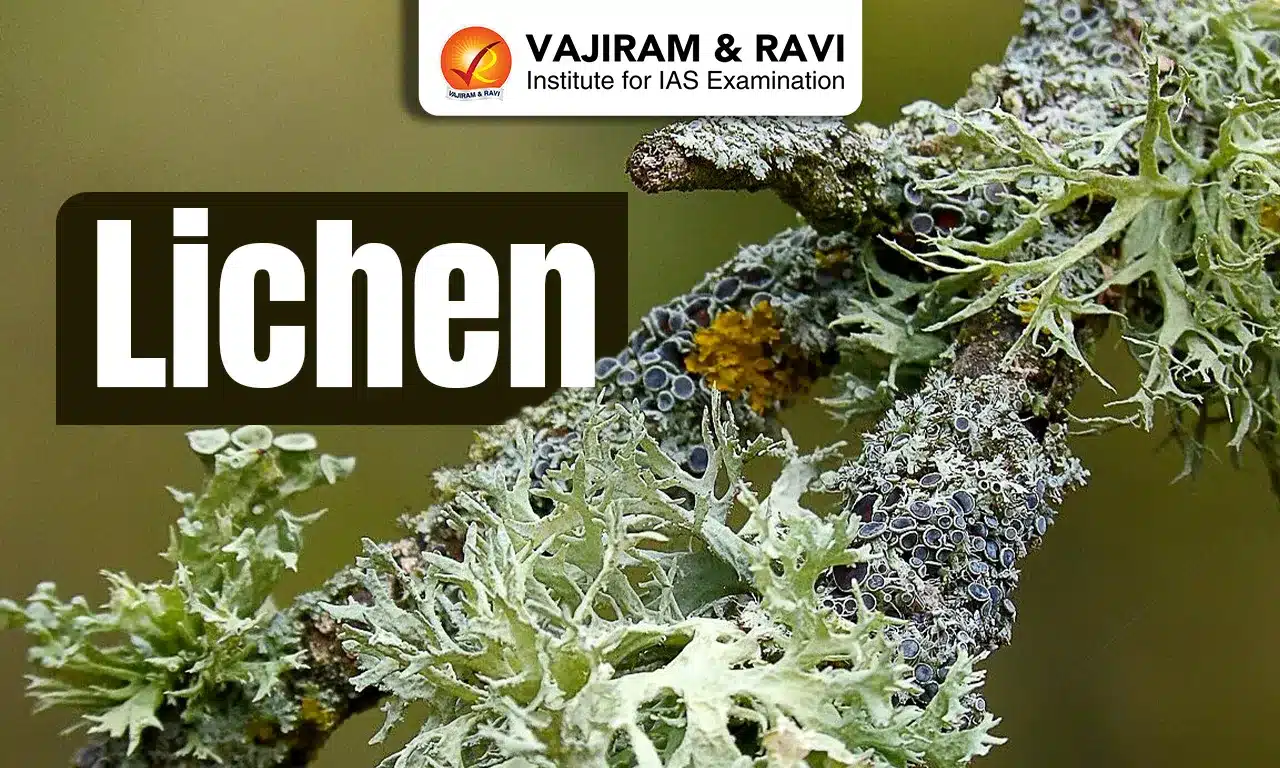
  • A lichen is a symbiosis between different organisms — a fungus and an algae or cyanobacterium.
  • The basis of their relationship is the mutual benefit that they provide each other. 
  • The photosynthetic algae or cyanobacteria form simple carbohydrates that, when excreted, are absorbed by fungi cells and transformed into a different carbohydrate. 
  • They also produce vitamins that the fungi need. 
  • Fungi contribute to the symbiosis by absorbing water vapour from the air and by providing much-needed shade for the light-sensitive algae beneath.
  • The composite body of a lichen is called a thallus (plural thalli); the body is anchored to its substrate by hairlike growths called rhizines.
  • Lichens are found worldwide and occur in a variety of environmental conditions. 
  • A diverse group of organisms, they can colonize a wide range of surfaces and are frequently found on tree bark, exposed rock, and as a part of biological soil crust.

Benefits that Lichen Give to Nature

  • They are a keystone species in many ecosystems.
  • They serve as a food source and habitat for many animals, such as deer, birds, and rodents.
  • They provide nesting materials for birds.
  • They protect trees and rocks from extreme elements such as rain, wind, and snow.
  • Pioneers of Colonization: 
    • Lichens are considered as primary colonisers.
    • These invade bare areas and contribute to soil formation by breaking down rock minerals both physically and chemically and thus creating conditions for other species such as mosses and liverworts to follow.

Source: TH

Lichen FAQs

Q1: A lichen is a symbiotic association between which organisms?

Ans: A lichen is a symbiosis between different organisms — a fungus and an algae or cyanobacterium.

Q2: In lichens, what is the role of algae or cyanobacteria?

Ans: Perform photosynthesis and provide food.

Q3: In lichens, what is the role of fungi?

Ans: Absorb water vapour and provide shade to algae.

Q4: Why are lichens considered keystone species in many ecosystems?

Ans: They provide food, habitat, and nesting material to various organisms.

Rhesus Macaque

Rhesus Macaque

Rhesus Macaque Latest News

Recently, the standing committee of the National Board for Wildlife (SC-NBWL) has recommended reinstating Rhesus Macaque species of monkeys under Schedule II of the Wildlife (Protection) Act, 1972.

About Rhesus Macaque

  • The Rhesus macaque (Macaca mulatta) is a species of Old World monkey.
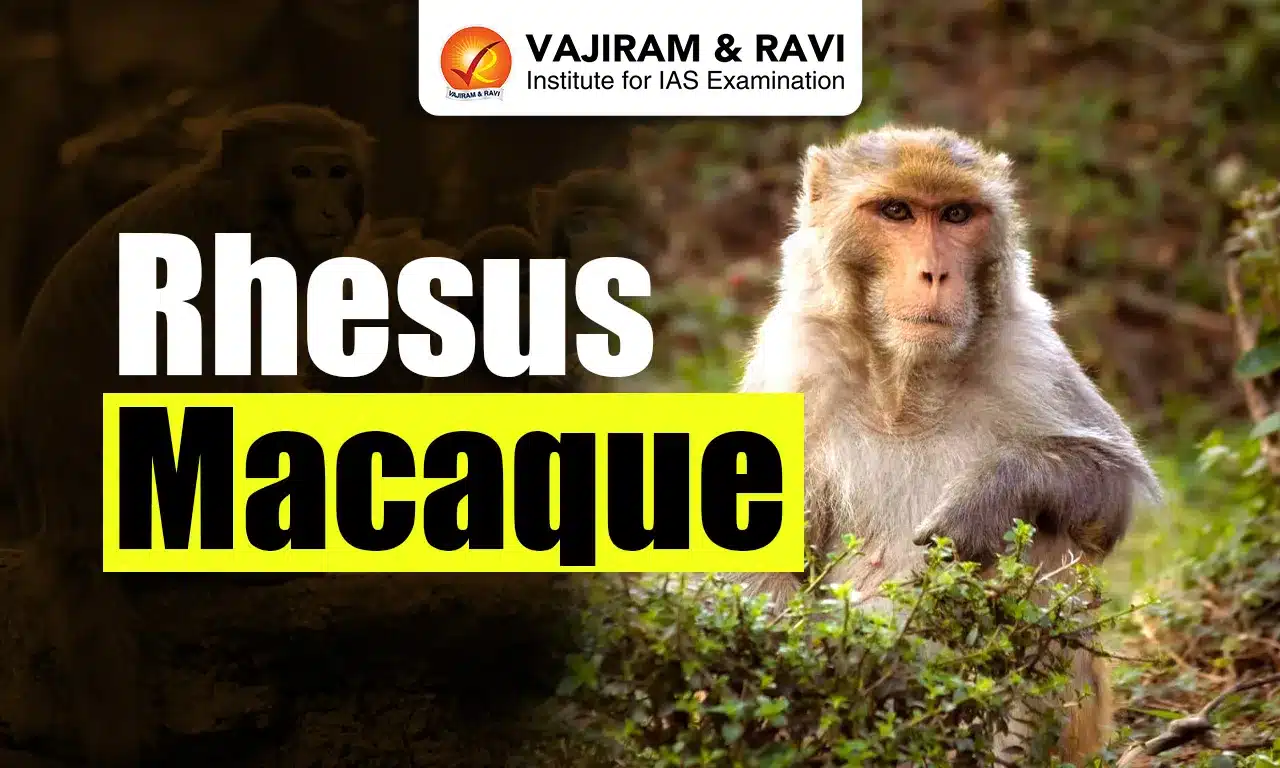
  • Appearance: Rhesus macaques are familiar brown primates with red faces and rears. They have close-cropped hair on their heads, which accentuates their very expressive faces.
  • Distribution: They are native to India, Bangladesh, Pakistan, Nepal, Myanmar, Thailand, Afghanistan, Vietnam, southern China, and some neighboring areas.
  • Habitat: They may be found in forests, mangroves, scrub, grasslands, and mountainous regions.
  • They also adapt well to human presence and form larger troops in human-dominated landscapes than in forests.
  • Diet: Rhesus macaques are omnivorous animals, eating seeds, roots, bark, fruits, and cereals.

Characteristics of Rhesus Macaques

  • Social groups: They live in large groups, often led by a dominant male.
  • Lifestyle: These are social, diurnal, and both terrestrial and arboreal animals. 
  • Communication: They use vocalizations, facial expressions, and body language.

Conservation Status of Rhesus Macaques

  • IUCN: Least Concern
  • Wildlife Protection Act of 1972: Schedule II 

Source: IE

Rhesus Macaque FAQs

Q1: What is the diet of the Rhesus Macaque?

Ans: Omnivorous

Q2: What is the conservation status of the Rhesus Macaque?

Ans: Least Concern

Batten Disease

Batten Disease

Batten Disease Latest News

Researchers recently have found that male and female brains show different responses as the Batten Disease progresses and have found a model of the disease that could transform future treatments.

About Batten Disease

  • It is a very rare genetic disorder that affects the brain and nervous system. 
  • Batten disease is a congenital, progressive, and terminal neurological disease. 
  • Symptoms sometimes begin in infancy and sometimes later in childhood, after apparently normal early development. 
  • Occasionally it may start in adulthood. 
  • In individuals suffering from Batten disease, nervous system function steadily declines, causing a wide variety of neurologic problems, including loss of vision and seizures.
  • The life expectancy of a child born with Batten disease can vary, depending on the form of the disease and the age of onset. 
  • Some children die in early childhood, while others may be able to live into their teens or twenties.

What Causes Batten Disease?

  • Batten disease is actually a family of related disorders also known as neuronal ceroid lipofuscinoses. 
  • It can be caused by genetic mutations in any of more than a dozen known genes, collectively referred to as CLN genes (CLN1, CLN2, etc).
  • There are 13 known forms of Batten disease (CLN1 through CLN14). 
  • Each form is classified by the specific version of the CLN (ceroid lipofuscinosis, neuronal) gene that causes it, with each numbered subtype referring to a different gene that causes its own respective form of the disease. 
  • The most common type of Batten disease is CLN3.

Batten Disease Symptoms

  • Most forms of Batten disease cause vision loss, seizures, delayed developmental milestones, behavioral and learning problems, and loss of language and motor skills.
  • Some children with infantile Batten disease also develop microcephaly.
  • Vision loss is often the first symptom and can rapidly progress. 
  • Parents also often notice clumsiness and stumbling in older children due to a loss of motor coordination. 
  • Eventually, children with Batten disease become blind, unable to walk, talk, or swallow, and confined to a wheelchair or bed.

Batten Disease Treatment 

  • Currently, there is no treatment to reverse the effects of Batten disease. 
  • But some medications can help improve symptoms like seizures. 
  • Some people with Batten disease get physical or occupational therapy to help them function.

Source: MED

Batten Disease FAQs

Q1: Batten disease primarily affects which part of the human body?

Ans: Brain and nervous system

Q2: What is the cause of Batten disease?

Ans: It can be caused by genetic mutations in any of more than a dozen known genes, collectively referred to as CLN genes (CLN1, CLN2, etc).

Q3: At what age can Batten disease symptoms begin?

Ans: In infancy, childhood, or occasionally adulthood.

Q4: Is Batten disease curable?

Ans: There is no cure; treatment focuses on symptom management.

Christmas Island

Christmas Island

Christmas Island Latest News

Google plans to build a large artificial intelligence data centre on Australia's remote Indian Ocean outpost of Christmas Island after signing a cloud deal with the Department of Defence earlier this year.

About Christmas Island

  • It is an island in the Indian Ocean.
  • It lies about 360 km south of the island of Java and 1,400 km northwest of Australia.
  • It is administered as an external territory of Australia. 
  • The island is the summit of an oceanic mountain whose highest point on the island is Murray Hill, rising to 1,184 feet (361 metres) in the western part of the island. 
  • The main settlement and chief port is at Flying Fish Cove on the northeastern part of the island.
  • History:
    • Although Europeans sighted Christmas Island in 1615, it was named for the day of its rediscovery in 1643.
    • The discovery of phosphate on the island in 1887 led to the UK annexing it the following year. 
    • In 1900 Christmas Island was incorporated in the British crown colony of the Straits Settlements with its capital at Singapore. 
    • During World War II the island was occupied by the Japanese. 
    • In 1958 the island became an Australian territory.
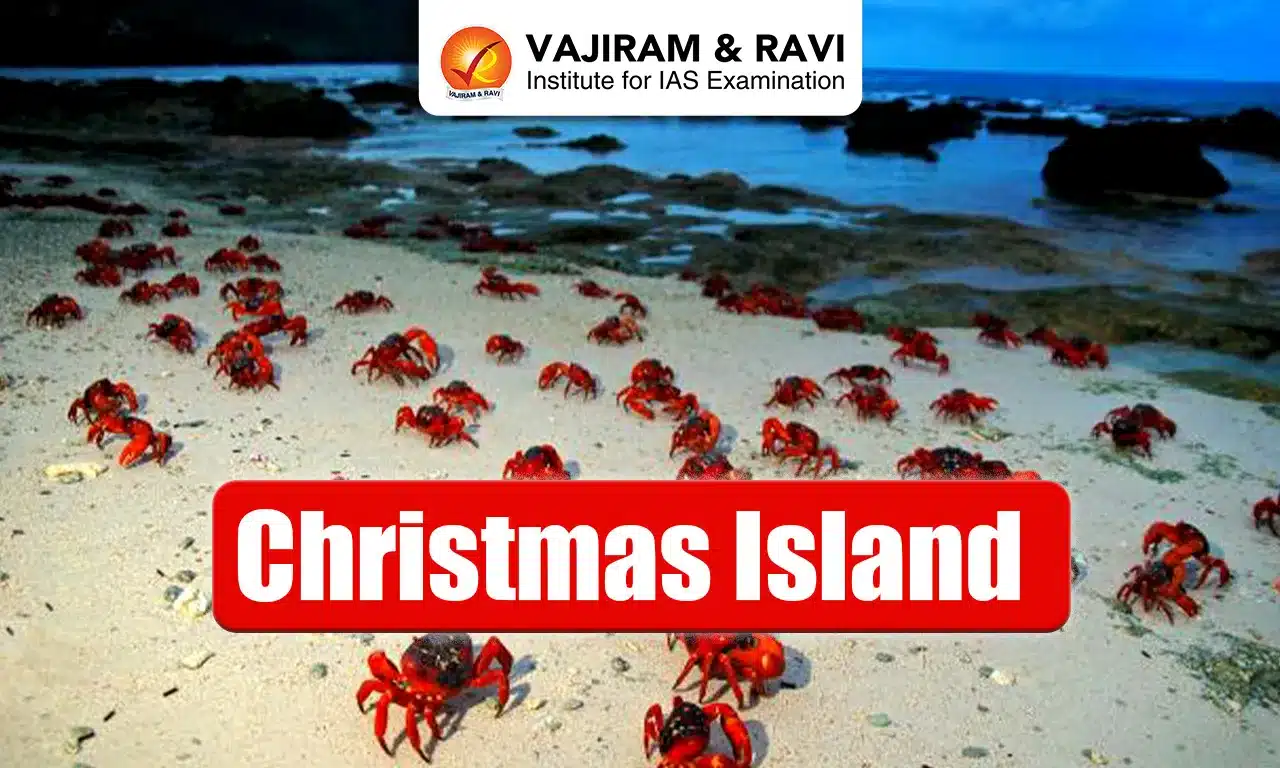
  • Tropical rainforest covers most of Christmas Island, and fauna includes large numbers of seabirds, small reptiles, land crabs, and insects.
  • One of the island’s best-known animal residents is the Christmas Island red crab (Gecarcoidea natalis), whose spectacular annual emergence and migration draws large numbers of tourists.
  • The population includes many ethnic Chinese, a small number of people of European ancestry, and Malay labourers recruited mainly from Malaysia, Singapore, and the Cocos (Keeling) Islands.
  • Economy
    • The territory’s economy was long based almost entirely on the mining and extraction of phosphate.
    • With the recoverable reserves of phosphate nearly exhausted, efforts were turned toward developing tourism.
    • Small-scale subsistence cropping and fishing are practiced, but most food is imported.

Source: REUT

Christmas Island FAQs

Q1: Christmas Island is located in which ocean?

Ans: Indian Ocean

Q2: Which country administers Christmas Island as an external territory?

Ans: Australia

Q3: What is the highest point on Christmas Island?

Ans: Murray Hill

Q4: Which valuable natural resource led to the annexation of Christmas Island by the UK in 1888?

Ans: Phosphate

Nugu Wildlife Sanctuary

Nugu Wildlife Sanctuary

Nugu Wildlife Sanctuary Latest News

A farmer was recently killed in a tiger attack near Nugu Wildlife Sanctuary in Mysuru.

About Nugu Wildlife Sanctuary

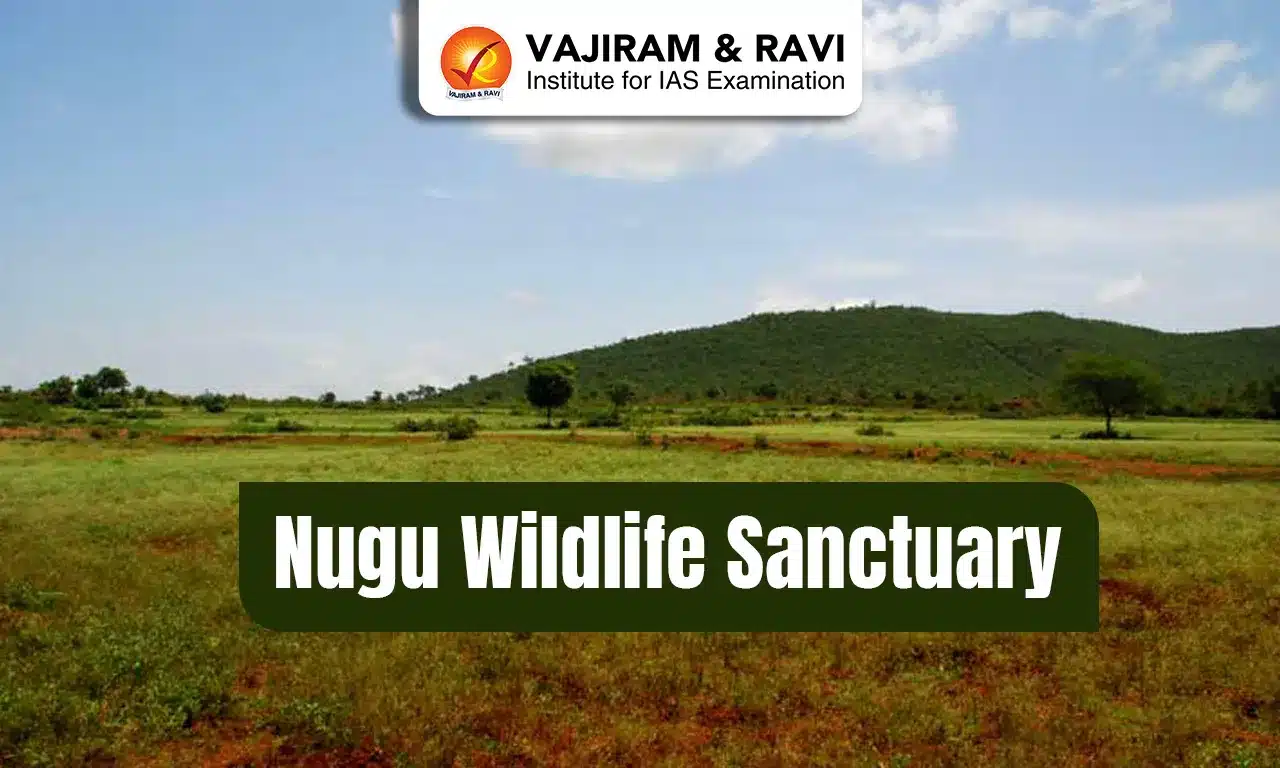
  • It is situated in the Mysuru district, Karnataka.
  • It lies north of Bandipur National Park.
  • It covers about 30 sq.km., and the northern part of the sanctuary is occupied by the Nugu Reservoir.
    • Nugu Dam is built across the Nugu River, a tributary of the Cauvery.
  • In the year 1974, Nugu was declared as a Wildlife Sanctuary, and later, during the year 2003-2004, the area of Nugu Wildlife Sanctuary was added to the Nilgiri Biosphere Reserve. 
  • Rainfall: The area receives rainfall from both southwest and northeast monsoons. The average amount of rainfall received in this area is 1000 mm.
  • Vegetation: Most of the vegetation in the forests is dry deciduous interspersed with patches of plantations.
  • Flora: Some of the tree species found in this region include Dipterocarpus indicus, Calophyllum tomentosum, and Hopea parviflora.
  • Fauna:
    • The sanctuary supports a diverse range of fauna, including elephants, tigers, leopards, wild dogs, striped hyenas, sloth bears, gaurs, sambhars, chitals, and four-horned antelopes.
    • It is also home to two important riverine wildlife species: the smooth-coated otter and the marsh crocodile, emphasizing its rich biodiversity.
    • The area is also rich in avifauna with birds like peafowl, India rind dove, Grey Jungle Fowl, Brahminy kite, Grey headed fish eagle, etc.

Source: NIE

Nugu Wildlife Sanctuary FAQ's

Q1: Nugu Wildlife Sanctuary is located in which Indian state?

Ans: Karnataka

Q2: Nugu Wildlife Sanctuary lies to the north of which major protected area?

Ans: Bandipur National Park

Q3: The Nugu River is a tributary of which major river system?

Ans: Cauvery

Koraga Tribe

Koraga Tribe

Koraga Tribe Latest News

A groundbreaking genomic study led by researchers from Mangalore University and Yenepoya (Deemed-to-be University) has identified a distinct ancestral source in the Koraga tribe that may date back to the Indus Valley Civilisation.

About Koraga Tribe

  • The Koraga is an indigenous tribal community that is basically found mainly in the Dakshina Kannada, Udupi districts of Karnataka and the Kasaragod district of Kerala state.
  • The Koragas are classified as a Particularly Vulnerable Tribal Group (PVTG).
  • As per the 2011 census, their total population is 1582, in which 778 were males and 804 females.
  • Language: People communicate either in their language, known as Koraga Bhasha, or in Tulu.
  • Culture and Economy:
    • The Koragas mainly depend on agriculture and forest resources for their livelihoods. 
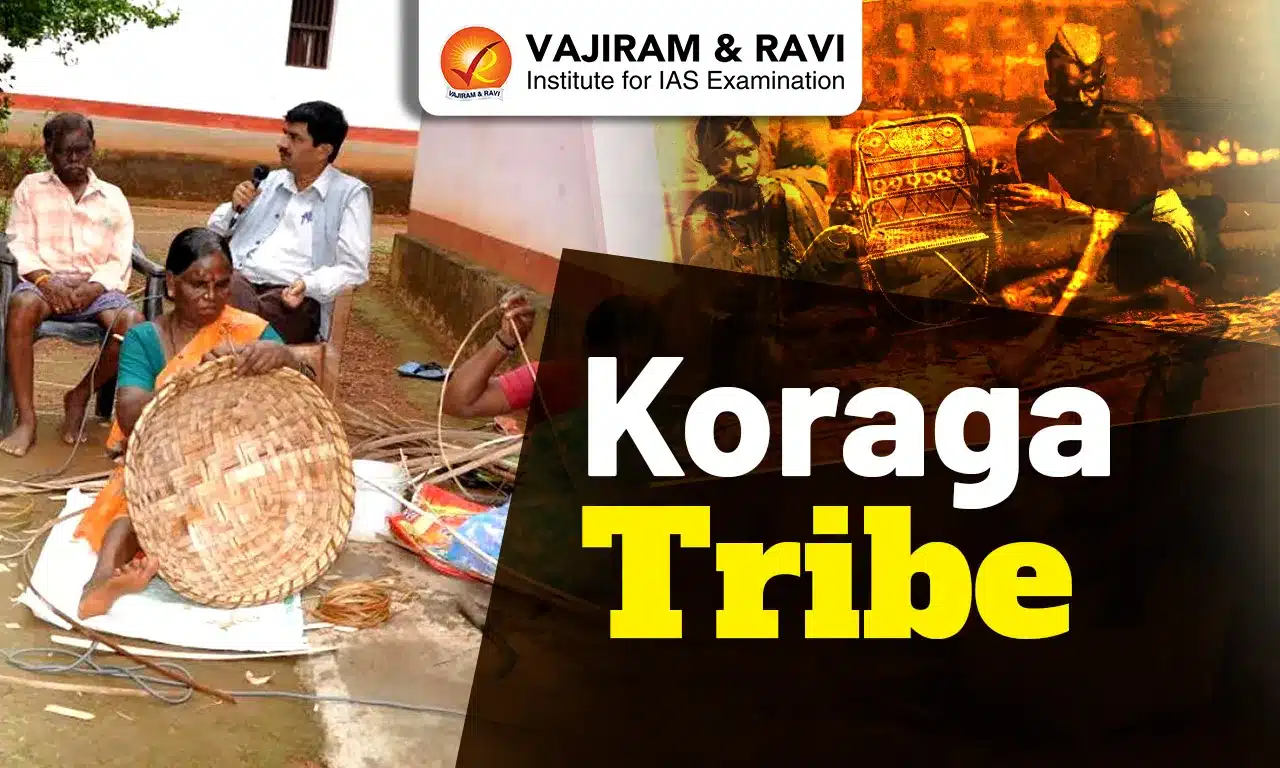
    • They are known for their traditional crafts, such as basket-making, and actively participate in folk dances and rituals that reflect their rich cultural heritage. 
    • The Koraga community follows a matrilineal family system and a unique clan structure called "bali," which plays an important role in their social organization. 
    • Koragas are led by the most senior person in the village, often known as Mooppan. He ensures the well-being of the members of the community. 
    • Drumming and traditional music are integral to their rituals and community celebrations.
    • Dholu and Voote (Drum and Flute) were two important musical instruments of the Koragas.
    • The rhythmic drum-beating, especially with the "dholu," is a significant aspect of their cultural identity, used in various ceremonies and gatherings.
  • Religious Beliefs: 
    • The Koragas follow Hinduism but have distinct tribal religious beliefs and practices. 
    • They worship spirits known as "Bhutas" and believe in the power of magic and rituals to ward off evil.

Source: NIE

Koraga Tribe FAQs

Q1: The Koraga tribe is predominantly found in which states?

Ans: Karnataka and Kerala

Q2: Which all languages are spoken by the Koraga people?

Ans: Koraga people communicate either in their language, known as Koraga Bhasha, or in Tulu.

Q3: The Koraga community follows which type of family system?

Ans: The Koraga community follows a matrilineal family system.

Q4: What is the name of the clan system followed by the Koraga tribe?

Ans: Bali

Enquire Now