Kuki-Zo Groups Renew Demand for Union Territory Status

Demand for Union Territory Status

Demand for Union Territory Status Latest News

  • The long-standing Kuki-Zo insurgency issue in Manipur has resurfaced.
  • Recently, the Kuki National Organisation (KNO) and the United People’s Front (UPF) — umbrella groups of Kuki-Zo insurgents under the Suspension of Operations (SoO) pact — held talks with the Union Ministry of Home Affairs (MHA).
  • The core demand remains the creation of a Union Territory (UT) with a legislative assembly for Kuki-Zo inhabited areas, citing the impossibility of coexistence within Manipur’s administrative structure after the 2023 ethnic violence.

Background

  • Suspension of Operations (SoO) pact:
    • Initial signing: 2008 between the MHA, Manipur Government, and Kuki insurgent groups.
    • Objective: To maintain peace and allow dialogue for a political settlement.
    • Status: Periodically renewed, and renegotiated and reinstated (on September 4, 2025) with new terms ensuring -
      • Verification of cadres and deportation of foreign nationals.
      • Relocation of insurgent camps.
      • Inclusion of a new clause — “negotiated political settlement within the Constitution of India.”
      • Reaffirmation of Manipur’s territorial integrity.
  • Ethnic violence (May 2023):
    • Triggered between Kuki-Zo tribals and Meiteis over land and identity issues.
    • Resulted in approximately 250 deaths and over 60,000 displaced persons.
    • This led to the Manipur Government refusing to extend the SoO pact (in February 2024), accusing Kuki groups of violating ground rules and instigating violence.

Key Developments

  • Demands by Kuki-Zo groups:
    • Creation of a UT with Legislature for Kuki-Zo areas.
    • Protection of traditional tribal land rights and authority of village chiefs.
    • Simplification of land registration and succession procedures, currently centred in Imphal.
    • Recognition of historical autonomy of Kuki-Zo hills.
  • Centre’s response:
    • A.K. Mishra, North East Advisor to MHA, represented the Government, reiterating Centre’s sensitivity to Kuki-Zo grievances.
  • But creation of new Union Territories is not current policy.
    • Emphasised consultations with all communities in Manipur for a negotiated political solution.
  • Other issues discussed:
    • Land, forests, customs, and development in tribal areas.
    • Confidence-building measures and governance reforms.

Historical Context and Constitutional Argument

  • Pre-Independence autonomy:
    • Kuki-Zo hills were not under the Manipur State Durbar before 1947.
    • Under British rule, these were “Excluded Areas” (Government of India Act, 1935), administered by the British Political Agent, not the Meitei King.
    • Traditional chiefs managed land, justice, and administration independently.
  • Post-merger integration (1949):
    • Manipur’s merger with India led to centralised governance, ignoring tribal land tenure systems.
    • Compensation was paid to the Meitei King but not to Kuki-Zo chiefs.
    • The SoO groups argue that creating a UT within India would restore pre-independence autonomy, not promote secessionism.
  • Constitutional arguments:
    • The Constitution allows Parliament to create UTs under Article 3, which gives the central government the power to directly administer these regions. 
    • Arguments include - 
      • Providing direct central government control for strategic importance (e.g., Andaman and Nicobar Islands).
      • Preserving cultural distinctiveness (e.g., Puducherry, Daman and Diu). 
      • Ensuring better political and administrative management in areas with unique challenges (e.g., Delhi, Chandigarh), and 
      • Providing special care for backward or tribal areas that are not yet ready for full statehood. 

Way Forward

  • Inclusive dialogue: Continued engagement with both hill and valley communities to ensure lasting peace.
  • Administrative reforms: Decentralised governance models like Autonomous District Councils (ADCs) could balance tribal autonomy and state integrity.
  • Developmental focus: Prioritise infrastructure, education, and livelihood in tribal areas to reduce alienation.
  • Land tenure reforms: Legal protection of customary land ownership while integrating it within constitutional frameworks.
  • Confidence building: Ensure security, rehabilitation, and justice for victims of ethnic violence to rebuild trust.

Conclusion

  • The renewed Kuki-Zo demand for a UT with legislature underscores the deep-rooted ethnic and governance fault lines in Manipur. 
  • While the Centre remains firm on preserving territorial integrity, sustainable peace in Manipur will depend on balancing tribal aspirations with the unity and federal structure of India.

Source: TH

Demand for Union Territory Status FAQs

Q1: What is the core demand of the Kuki-Zo insurgent groups in their recent talks with the MHA?

Ans: The Kuki-Zo insurgent groups demanded the creation of a Union Territory with a legislative assembly for Kuki-Zo inhabited areas.

Q2: What are the key features and recent changes in the Suspension of Operations (SoO) pact?

Ans: The renegotiated SoO pact reaffirmed Manipur’s territorial integrity, introduced a clause for a “negotiated political settlement within the Constitution”.

Q3: What historical justification are cited by Kuki-Zo groups for their demand for separate UT status?

Ans: The groups claim that Kuki-Zo Hills were historically “Excluded Areas” under the Government of India Act, 1935.

Q4: What is the Centre’s position regarding the Kuki-Zo demand for a Union Territory?

Ans: The MHA emphasized sensitivity to Kuki-Zo grievances but stated that current policy does not support the creation of new UTs.

Q5: What is the way forward for achieving sustainable peace and governance in Manipur’s hill and valley regions?

Ans: A multi-stakeholder dialogue, strengthening of Autonomous District Councils, development-focused governance, etc.

India’s AI Governance Guidelines: Framework for Responsible AI Regulation

AI Governance

AI Governance Latest News

  • The Ministry of Electronics and Information Technology (MeitY) released the India AI Governance Guidelines recently, detailing how Artificial Intelligence will be regulated and promoted in the country. 
  • The document outlines India’s framework for responsible AI use across sectors. Its release is part of the government’s broader preparations for the AI Impact Summit 2026, which India will host in New Delhi.

Purpose of the AI Governance Guidelines

  • The new AI Governance Guidelines aim to create a clear and consistent framework for regulating Artificial Intelligence in India, now the second-largest user of tools like ChatGPT after the U.S.
  • Their goal is to use AI for inclusive growth and global competitiveness while managing risks to individuals and society. 
  • The document aligns India with international efforts that focus on identifying AI risks, defining accountability, and promoting safety research.
  • The guidelines were finalised by a MeitY committee led by Prof. Balaraman Ravindran of IIT Madras’ Centre for Responsible AI (CeRAI), following earlier drafts by a government advisory group.

Key Recommendations of India’s AI Governance Guidelines

  • Guiding Principles - The guidelines are based on values like people-centricity, fairness, accountability, and transparency in AI systems. They aim to ensure AI serves citizens safely and responsibly.
  • Coordination Across Government Bodies - A new AI Governance Group is proposed to connect ministries, regulators, and standard-setting agencies. This group will regularly review laws, suggest reforms, issue standards, and promote access to AI safety tools.
  • Role of Sectoral Regulators - The framework recommends active participation from agencies such as the RBI (for finance), NITI Aayog, and the Bureau of Indian Standards to align industry-specific AI practices with national policy.
  • Infrastructure and Accessibility - Unlike many global frameworks, India’s plan stresses AI infrastructure development — urging states to expand data access, computing resources, and promote AI adoption.
  • Focus on Indian Context - The guidelines call for: Legal updates on copyright and AI-generated content; Building AI models for Indian languages using locally relevant datasets to ensure cultural inclusiveness and diversity in AI applications.

Private Sector Responsibilities

  • Companies are advised to:
    • Follow Indian laws and voluntary AI frameworks.
    • Publish transparency reports.
    • Provide grievance redress systems.
    • Use techno-legal solutions to manage AI-related risks.
  • The AI Safety Institute (AISI), under the IndiaAI Mission, will guide safety and compliance efforts.

Alignment of AI Guidelines with Government Plans

  • The government continues to take a light-touch approach to regulating AI, except in the case of deepfakes. 
  • The guidelines stress “content authentication”, and MeitY has proposed rules requiring social media platforms to label AI-generated images and videos.
  • Several recommendations align with existing government efforts:
    • The IndiaAI Mission is already buying GPUs to create a shared computing facility for startups and researchers.
    • The plan to integrate AI with Digital Public Infrastructure (DPI), like Aadhaar, is underway — with UIDAI forming a committee to explore AI-based improvements.
  • While the framework guides AI governance, the government will act swiftly if urgent regulation is needed, even by enacting a stricter law.

Source: TH | LM

AI Governance FAQs

Q1: What are the India AI Governance Guidelines?

Ans: A framework by MeitY to regulate and promote responsible AI use, ensuring fairness, accountability, and transparency across sectors.

Q2: Who led the AI guidelines committee?

Ans: The committee was headed by Prof. Balaraman Ravindran from IIT Madras’ Centre for Responsible AI (CeRAI).

Q3: What principles guide the AI framework?

Ans: People-centricity, fairness, accountability, and transparency form the core values ensuring safe and ethical AI deployment.

Q4: How does the policy involve the private sector?

Ans: It urges companies to follow laws, publish transparency reports, manage AI risks, and adopt voluntary compliance frameworks.

Q5: How is India addressing AI risks like deepfakes?

Ans: The government plans content authentication rules requiring platforms to label AI-generated media, ensuring user awareness and safety.

India’s New Framework on Forest Tribe Relocation Explained

India’s Approach to Forest Tribe Relocation

Forest Tribe Relocation Latest News

  • The Union Ministry of Tribal Affairs has drafted a new policy framework detailing procedures for relocating forest-dwelling communities from tiger reserves. 
  • The framework seeks to harmonise wildlife conservation with tribal rights by ensuring that any relocation under existing laws—such as the Wildlife Protection Act, 1972, and the Forest Rights Act, 2006—is voluntary, transparent, and based on informed consent.

Framework for Community-Centred Conservation and Relocation

  • The Tribal Affairs Ministry has prepared a policy brief titled Reconciling Conservation and Community Rights: A Policy Framework for Relocation and Co-existence in India’s Tiger Reserves
  • It aims to balance wildlife conservation with the rights of forest-dwelling communities.

Joint National Framework

  • The policy calls for a National Framework for Community-Centred Conservation and Relocation, to be jointly managed by the Environment and Tribal Affairs Ministries. 
  • It will set clear procedures, timelines, and accountability for all relocation efforts.

National Database and Audits

  • A National Database on Conservation-Community Interface (NDCCI) will track details of relocations, compensation, and community welfare after relocation.
  • Annual independent audits by approved agencies will review compliance with the Forest Rights Act (FRA), the Wildlife Protection Act (WPA), and human rights norms.

Consent and Rights Protection

  • The framework requires verifiable consent from both Gram Sabhas and individual households before any area is declared a tiger reserve.
  • It ensures that communities have the option to stay in their traditional forest homes under the FRA unless relocation is ecologically necessary.

Core Principle

  • The policy stresses that relocation must be voluntary, scientifically justified, and respectful of people’s rights and dignity, promoting cooperation between conservation and community interests.

Relocation of Forest Tribes Only as Last Resort

  • The policy brief says that forest-dwelling communities should be relocated from tiger reserves only when absolutely necessary. 
  • Before any move, their rights under the Forest Rights Act, 2006, must be recognised. 
  • It also allows these communities to continue living inside tiger reserves and take part in protecting and managing the forest and its wildlife.

Why the Policy Brief Was Released Now

  • The Ministry of Tribal Affairs prepared this policy brief after growing concerns about how the Forest Rights Act (FRA) is being ignored in tiger reserves and protected areas.

Concerns Over Non-Implementation of FRA

  • State governments and Gram Sabhas inside tiger reserves complained that the rights of forest-dwelling communities under the FRA were not being recognised.
  • In response, the Tribal Affairs Ministry sent the policy brief to the Environment Ministry, urging better coordination.

Trigger: NTCA’s 2024 Relocation Directive

  • A June 2024 directive from the National Tiger Conservation Authority (NTCA) asked states to prioritise village relocations from tiger reserves.
  • This caused widespread protests from Gram Sabhas and tribal groups, who then appealed to the National Commission for Scheduled Tribes (NCST) and the Union government to withdraw the order.

Background: Long-Standing Relocation Policy

  • Relocation of villages for tiger conservation began in 1973 and is governed by both the Wildlife Protection Act (WPA), 1972, and the Forest Rights Act (FRA), 2006.
  • While the WPA empowers forest departments to create space for tigers, the FRA requires that the rights of forest-dwellers be settled first—allowing them to stay or relocate voluntarily with compensation.

Issues in Implementation

  • Relocation packages offer ₹15 lakh per family, but many tribes claim they are pressured to move or denied basic services if they choose to stay.
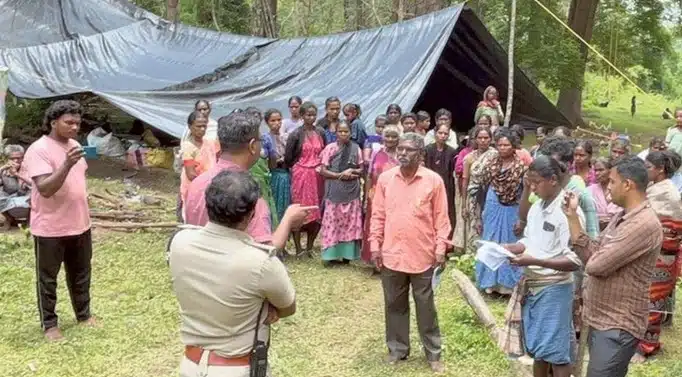
  • Conflicts like the one involving the Jenu Kuruba tribe in Karnataka’s Nagarhole National Park show ongoing disputes over unrecognised land rights.

Current Status

  • According to government data (August 2025), since January 2022, about 5,166 families from 56 villages in seven states have been relocated.
  • However, 64,801 families across 591 villages still live within the core areas of tiger reserves, highlighting the scale and sensitivity of the issue.

Why the New Policy Brief Is Important

  • Although laws already say that village relocations from tiger reserves must be voluntary and done only when coexistence isn’t possible, poor implementation has created problems.
  • The Tribal Affairs Ministry’s new policy brief highlights these gaps and calls for better monitoring of relocation efforts. 
  • It proposes involving Tribal Affairs officials and independent experts to ensure that relocations follow the law, protect community rights, and remain truly voluntary.

Source: TH

Forest Tribe Relocation FAQs

Q1: What is the new forest tribe relocation framework?

Ans: It is a policy by the Tribal Affairs Ministry ensuring voluntary, transparent, and rights-based relocation of forest communities from tiger reserves.

Q2: What laws guide the relocation process?

Ans: Relocation follows the Wildlife Protection Act, 1972, and the Forest Rights Act, 2006, emphasising consent, fairness, and ecological justification.

Q3: Why was the new policy brief released?

Ans: It was issued after complaints about non-implementation of the Forest Rights Act and protests against forced relocations from tiger reserves.

Q4: What is the role of local communities in conservation?

Ans: Communities can stay in their traditional homes and help manage biodiversity, ensuring coexistence with wildlife.

Q5: How many families have been relocated so far?

Ans: Since January 2022, over 5,000 families from 56 villages across seven states have been relocated from tiger reserve areas.

India Joins Global Tropical Forest Fund as Observer Ahead of COP30

Tropical Forest

Tropical Forest Latest News

  • India has joined the Brazil-led Tropical Forest Forever Facility (TFFF) as an observer ahead of COP30, reaffirming its commitment to equitable climate action and forest conservation.

About the Tropical Forest Forever Facility

  • The TFFF is a new global initiative designed to reward countries financially for preserving tropical forests, a vital component in global efforts to mitigate climate change.
    • The fund provides $4 per hectare of protected forest area annually, creating a performance-based incentive model for conservation.
    • It is structured as a budget-neutral financing mechanism, meaning that it does not rely on new taxes or continuous donor grants.
    • The mechanism operates through the Tropical Forest Investment Fund (TFIF), which channels sponsor contributions into sustainable investments, avoiding sectors linked to deforestation such as fossil fuels, coal, and peat industries.
    • Returns generated by the TFIF investments are used to repay investors while simultaneously rewarding participating countries for forest protection.
  • The initiative represents a market-based approach to climate finance, combining conservation incentives with investment-driven sustainability.

India’s Role and Climate Commitments

  • India’s participation in the TFFF as an observer underscores its proactive engagement in global climate governance. 
  • In its national statement at the COP30 Summit, India reaffirmed that its climate actions are guided by the principles of Equity and Common but Differentiated Responsibilities and Respective Capabilities (CBDR-RC) under the UNFCCC and Paris Agreement frameworks.
  • Key highlights of India’s climate achievements include:
    • 36% reduction in emission intensity of GDP (2005-2020) - surpassing earlier targets ahead of schedule.
    • Over 50% non-fossil fuel-based installed power capacity, fulfilling India’s revised 2030 Nationally Determined Contribution (NDC) five years early.
    • Expansion of forest and tree cover resulted in an additional carbon sink of 2.29 billion tonnes of CO₂ equivalent between 2005 and 2021.
    • Becoming the world’s third-largest renewable energy producer, with nearly 200 GW of installed renewable capacity.
  • India’s flagship initiatives like the International Solar Alliance (ISA), bringing together over 120 countries, and the Coalition for Disaster Resilient Infrastructure (CDRI) reflect its leadership in global climate cooperation, particularly among developing nations.

Key Announcements at the COP30 Leaders’ Summit

  • The COP30 Summit in Belém, hosted by Brazilian President Luiz Inácio Lula da Silva, saw world leaders converge to review progress since the 2015 Paris Agreement and chart a roadmap for the next decade of climate action.
  • Major Announcements:
    • Brazil pledged $1 billion to the TFFF, with Indonesia committing another $1 billion, Colombia contributing $250 million, and Norway announcing $3 billion over a decade.
    • France, China, and the UAE expressed strong support for the initiative, though without financial commitments yet.
    • President Lula launched the Belém Commitment, urging nations to quadruple the use of sustainable fuels by 2035, and proposed “debt-for-climate swaps” to aid developing countries.
    • The Summit also highlighted the need for alignment of NDCs with the global 1.5°C temperature goal, under the “Roadmap to Mission 1.5°C” established at COP28 in Dubai.

India’s Call for Equitable Climate Finance

  • India’s statement at COP30 strongly emphasised the need for predictable, adequate, and concessional climate finance from developed countries to support developing nations in achieving ambitious climate targets.
    • India highlighted that global ambition remains inadequate, even a decade after the Paris Agreement.
    • It called upon developed nations to accelerate emission reductions and fulfil their long-standing financial commitments, including the promised $100 billion annual climate finance goal.
    • India reaffirmed that affordable finance, technology transfer, and capacity-building are crucial to enable developing nations to transition towards sustainable growth.
    • India also reiterated its commitment to multilateralism and to safeguarding the Paris Agreement architecture, stressing that the next decade must be defined not only by targets but by implementation, resilience, and shared responsibility.

Significance of India’s Observer Role

  • By joining the TFFF as an observer, India gains a strategic position in shaping the framework’s implementation while sharing its experience in forest conservation and green growth.
  • The observer status enables India to:
    • Participate in policy discussions on financing mechanisms for forest conservation.
    • Share best practices from its successful afforestation and clean energy programmes.
    • Influence the design of equitable financing models that reflect the needs of the Global South.
  • The move also complements India’s ongoing efforts to enhance its carbon sink capacity, promote community-led forest management, and strengthen climate-resilient ecosystems.

Source: TH | PIB

Tropical Forest FAQs

Q1: What is the Tropical Forest Forever Facility (TFFF)?

Ans: The TFFF is a global fund that financially rewards countries for preserving tropical forests, offering $4 per hectare annually.

Q2: Why has India joined the TFFF as an observer?

Ans: India joined the TFFF to support collective forest conservation efforts while upholding principles of equitable climate action.

Q3: What are India’s recent achievements in climate action?

Ans: India has reduced emission intensity by 36%, achieved 50% non-fossil capacity, and created a 2.29 billion tonne CO₂ sink.

Q4: Who are the major contributors to the TFFF?

Ans: Brazil, Indonesia, Norway, and Colombia are key contributors, with others like France and China expressing support.

Q5: What was India’s message at COP30?

Ans: India urged developed nations to accelerate emission cuts and provide predictable climate finance to developing countries.

Enquire Now