DRISHTI System

DRISHTI System

DRISHTI System Latest News

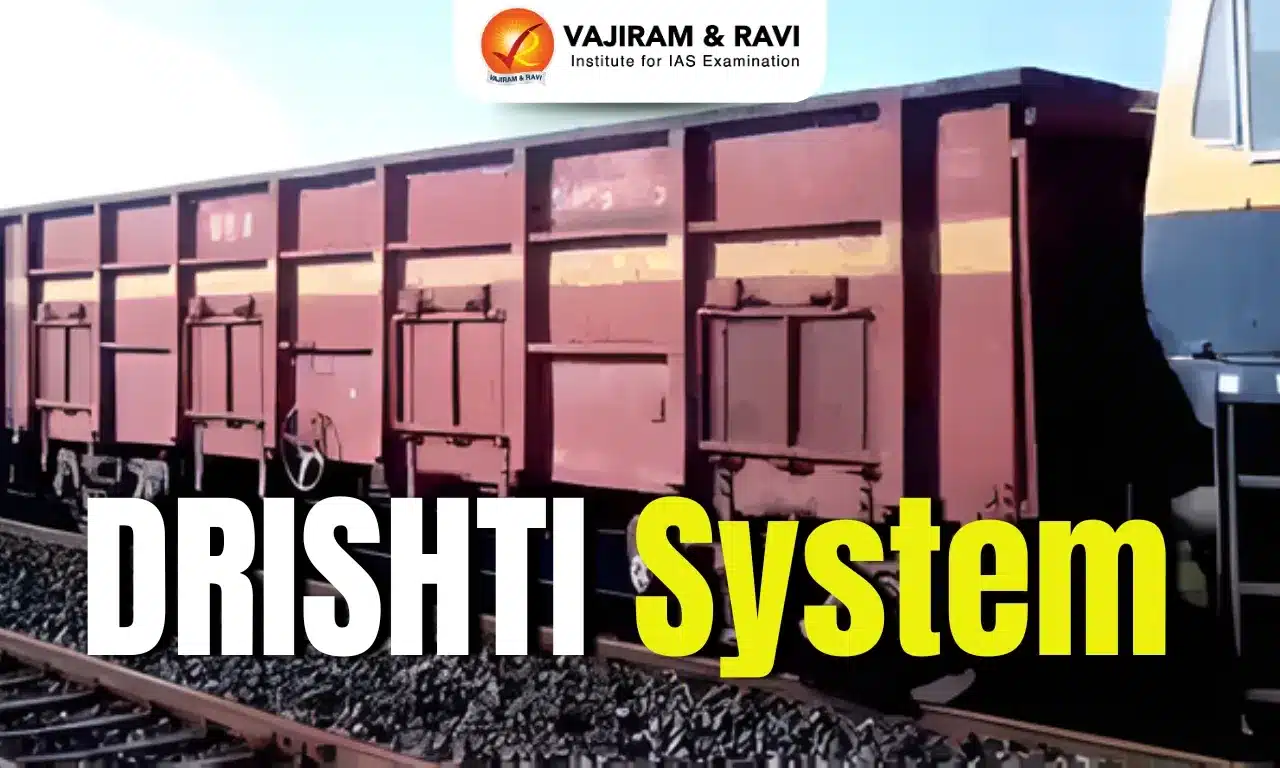
The Indian Railways is planning to install a new AI-based Locking Monitoring System called – ‘DRISHTI’.·

About DRISHTI System

  • It is an AI-Based Freight Wagon Locking Monitoring System.
  • The Northeast Frontier Railway (NFR) joined hands with the Indian Institute of Technology Guwahati Technology Innovation and Development Foundation (IITG TIDF) to develop the system.
  • The DRISHTI system aims to tackle operational challenges in identifying unlocked or tampered doors on moving freight wagons — a persistent safety and security issue in rail logistics. 
  • The new AI-based solution is designed to provide real-time monitoring, detect anomalies in door locking mechanisms, and automatically generate alerts without disrupting train movement. 
  • It uses AI-powered cameras and sensors strategically installed to capture and analyse door positions and locking conditions. 
  • It uses advanced computer vision and machine learning technology for the detection purposes.
  • DRISHTI is expected to improve freight security, enhance wagon sealing integrity, and reduce dependency on manual inspection processes. 
  • Plans are underway to further refine and scale the system for wider adoption across NFR’s freight corridors after successful completion of ongoing trials.

Source: IE

DRISHTI System FAQs

Q1: What is the DRISHTI system?

Ans: AI-based Freight Wagon Locking Monitoring.

Q2: The DRISHTI system was developed in collaboration with which institution?

Ans: IIT Guwahati Technology Innovation and Development Foundation (IITG TIDF)

Q3: What key issue does the DRISHTI system aim to address?

Ans: Unlocked or tampered freight wagon doors.

Q4: How does the DRISHTI system monitor freight wagons?

Ans: Using AI-powered cameras and sensors.
Rare Earth Hypothesis

Rare Earth Hypothesis

Rare Earth Hypothesis Latest News

New insights from exoplanet studies revive and reshape the debate over the Rare Earth Hypothesis

About Rare Earth Hypothesis

  • The Rare Earth hypothesis posits that the emergence of complex life on planets outside Earth is highly unlikely due to a unique combination of specific conditions required for such life to thrive. 
  • Proposed by paleontologist Peter Ward and astronomer Donald Brownlee in 2000, the hypothesis suggests that while microbial life may be abundant throughout the universe, the prerequisites for complex organisms are exceedingly rare. 
  • Key factors influencing the probability of complex life include the planet's location within its galaxy, the type and distance of its star, geological characteristics like size and tectonic activity, and the presence of a large moon.
  • This perspective contrasts sharply with the principle of mediocrity, which suggests that Earth is just one of many planets capable of supporting complex life.
  • The Rare Earth hypothesis provides insight into the Fermi paradox—highlighting why, despite the vastness of the universe, intelligent life has yet to make contact with humanity. 
  • By analyzing the requirements for both astronomical and biological conditions, the hypothesis concludes that the chance of finding another planet with complex life is minimal. 
  • If validated, this view could reposition Earth from being a typical planet to one characterized as extraordinarily special in the context of the universe.

Source: TH

Rare Earth Hypothesis FAQs

Q1: Who proposed the Rare Earth Hypothesis?

Ans: Peter Ward and Donald Brownlee

Q2: What is the main idea of the Rare Earth Hypothesis?

Ans: The emergence of complex life is extremely rare due to unique planetary conditions.

Q3: According to the Rare Earth Hypothesis, what kind of life is believed to be abundant in the universe?

Ans: Microbial life

Q4: What does the Rare Earth Hypothesis imply about Earth’s position in the universe?

Ans: Earth is extraordinarily special and possibly unique.

Himalayan Black Bear

Himalayan Black Bear

Himalayan Black Bear Latest News

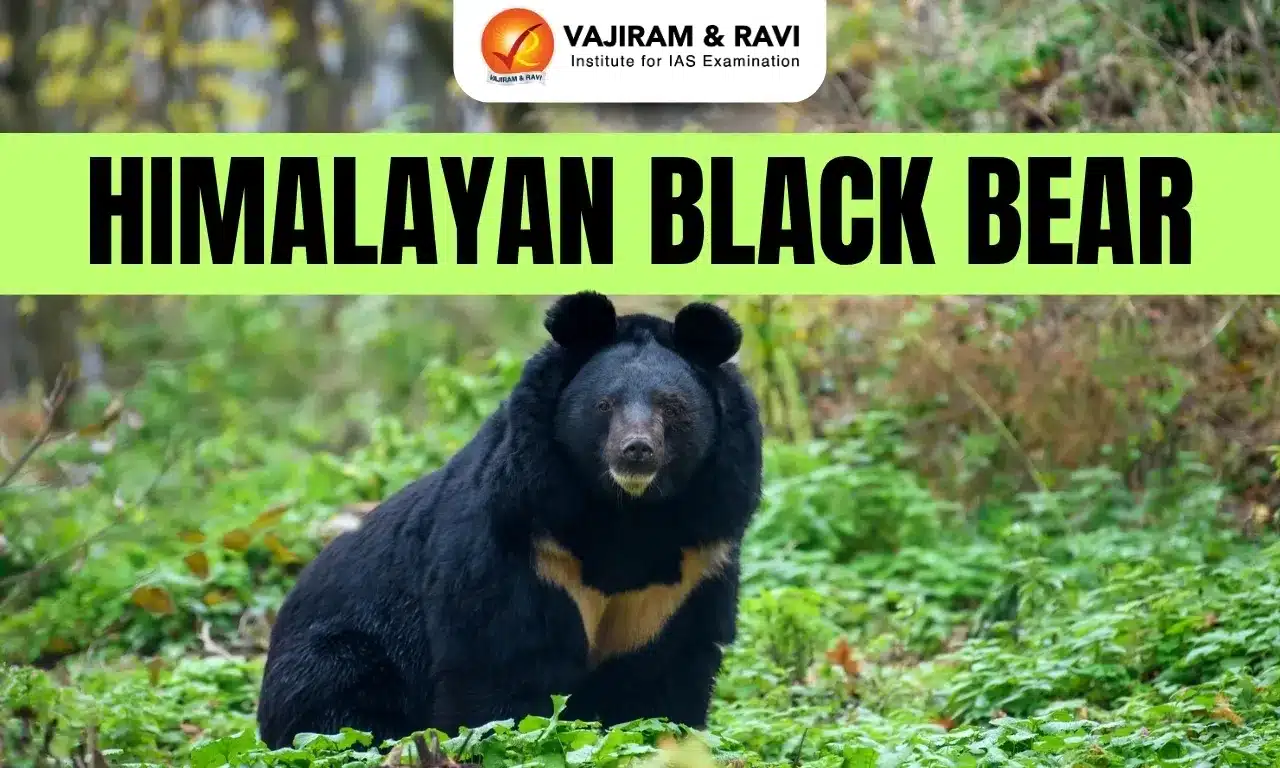
Recently, wildlife experts in Uttarakhand raised concern that Himalayan Black bears (Ursus thibetanus laniger) are turning aggressive as erratic weather disrupts their hibernation patterns.

About Himalayan Black Bear

  • It is a subspecies of the Asian black bear.
  • It is a large forest-dwelling bear of the Himalayas, also called Asiatic black bear or Moon bear.

Distribution of Himalayan Black Bear

  • They are mainly found  in the Himalayas, in Tibet, India, Nepal, Pakistan, and China.
  • In India, they are found throughout the Himalayas, from Jammu & Kashmir to Arunachal Pradesh, and in hilly regions of other north- eastern states.
  • Habitat: It prefers heavily forested, broadleaved, and coniferous forests as habitat.

Characteristics of Himalayan Black Bear

  • Appearance: It has soft and shiny hair, with a white V patch on their chest. 
  • Life span: 25 to 30 years in the wild.
  • Diet: They are omnivorous creatures Their diet consists of acorns, nuts, fruit, honey, roots, and various insects such as termites and beetle larvae.
  • Behaviour: It is naturally diurnal but many are largely nocturnal in order to avoid contact with humans.
  • Conservation Status: IUCN: Vulnerable

Source: NIE

Himalayan Black Bear FAQs

Q1: What is the conservation status of the Himalayan Black Bear?

Ans: Vulnerable

Q2: What is distinctive about the Himalayan Black Bear's appearance?

Ans: It has a white V patch on its chest.

Key Facts about Oman

Key Facts about Oman

Oman Latest News

Recently, Oman has secured a seat on the International Coordinating  Council of UNESCO’s Man and the Biosphere (MAB) Programme.

About Oman

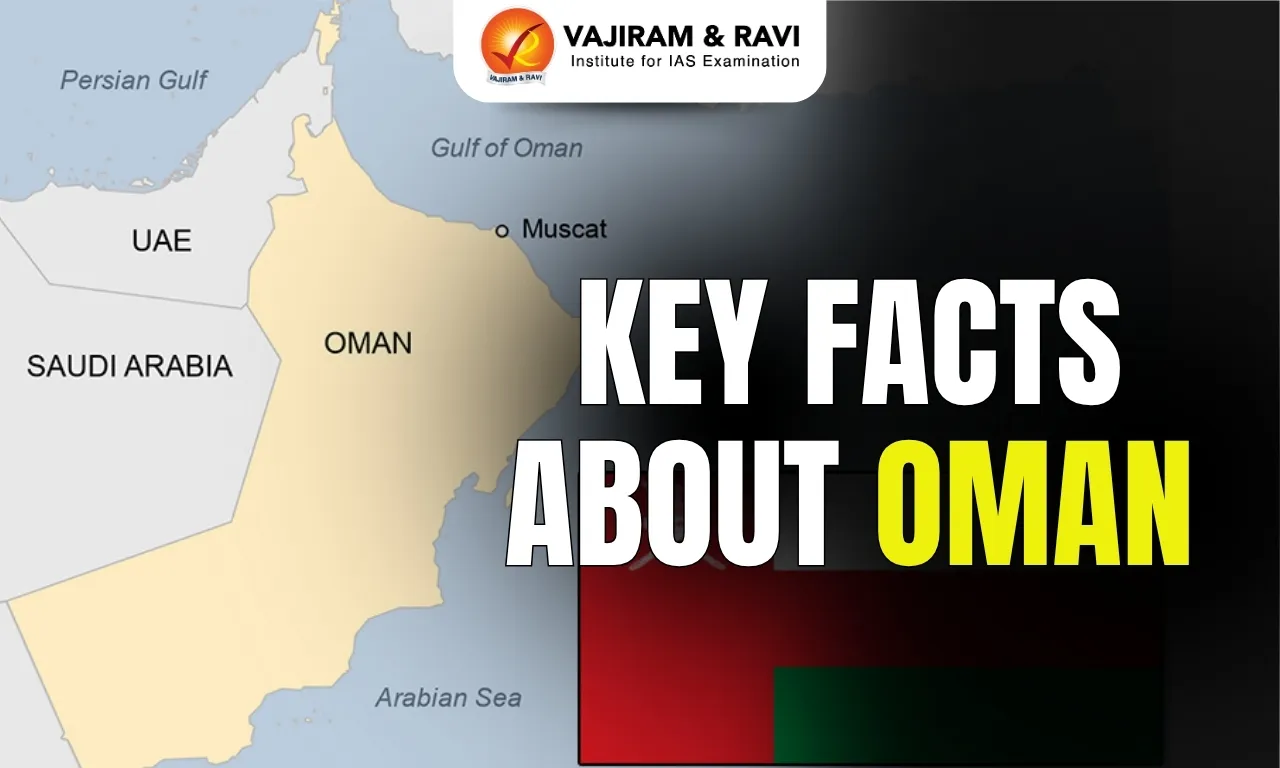
  • Location: It is located in the Arabian Peninsula of Western Asia.
  • Bordering Countries: It shares a north western border with the United Arab Emirates (UAE); a western border with Saudi Arabia and Yemen.
  • Maritime Boundaries: It shares coastline borders with the Arabian Sea in the south and east along with the Gulf of Oman in the northeast.
  • It is strategically situated at the mouth of the Persian Gulf in the south eastern part of the Arabian Peninsula. 
  • Capital City: Muscat

Geographical Features of Oman

  • Highest Point: Mount Shams, the country's highest point at 9,777 feet.
  • Climate: It consists of dry desert; hot, humid along coast; hot, dry interior; strong southwest summer monsoon (May to September) in far south.
  • Ports: The Port of Salalah is the largest port in Oman.
  • Desert: The Rub' al-Khali desert, shared with Saudi Arabia and Yemen.
  • Natural Resources: Petroleum, copper, asbestos, some marble, limestone, chromium, gypsum, natural gas.
  • It also has offshore territories such as Maşīrah Island and Al-Ḩallāniyyah Island.

Source: TOI

Key Facts about Oman FAQs

Q1: What is the capital of Oman?

Ans: Muscat

Q2: What is the official language of Oman?

Ans: Arabic

Pilibhit Tiger Reserve

Pilibhit Tiger Reserve

Pilibhit Tiger Reserve Latest News

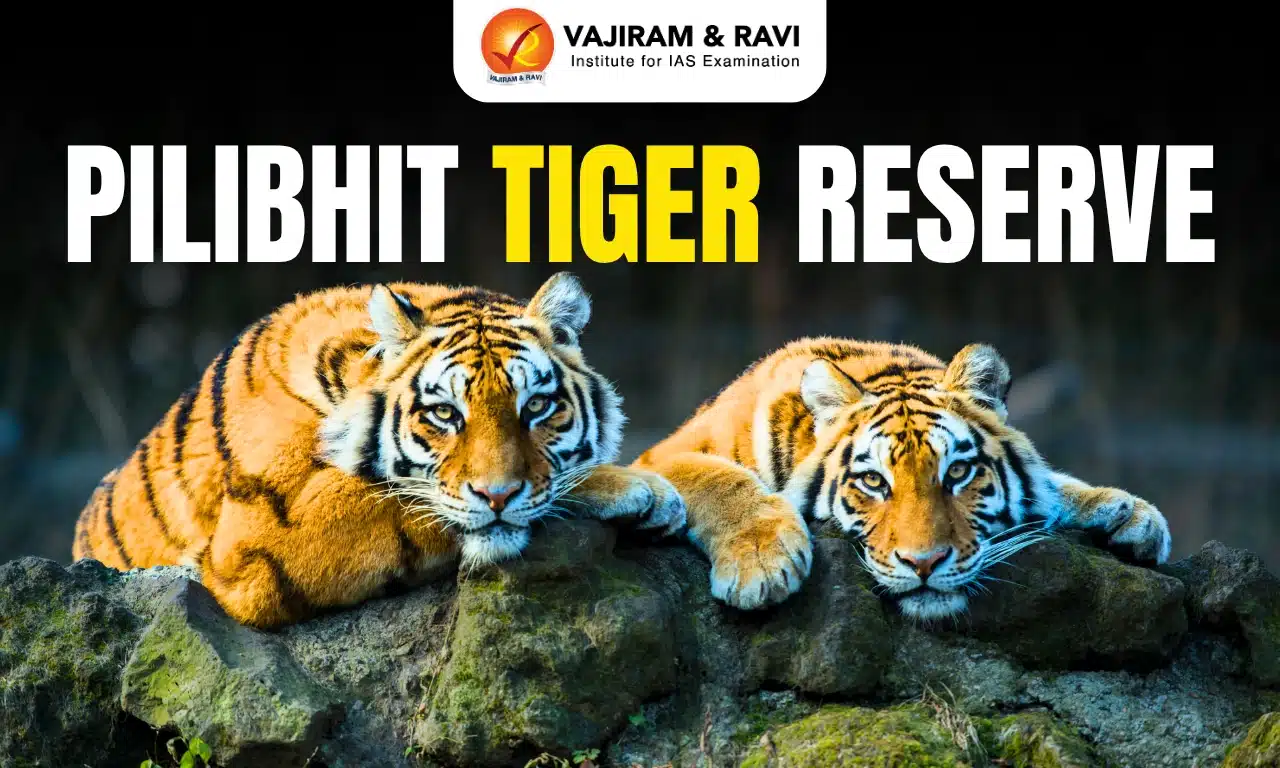
A 45-year-old farmer was recently killed in a suspected tiger attack near the Barahi range of Pilibhit Tiger Reserve.

About Pilibhit Tiger Reserve

  • It is situated in the Pilibhit district and Shahjahanpur district of Uttar Pradesh, forming part of the Terai Arc Landscape, in the upper Gangetic Plain Biogeographic Province. 
  • It lies along the India-Nepal border in the foothills of the Himalayas.
  • The total area of the reserve is 730 sq.km., inclusive of a 602 sq.km. core zone.
  • Rivers: The river Gomti originates from the PTR, which is also the catchment of several others like Sharda, Chuka, and Mala Khannot.
  • Habitat: The habitat is characterized by dense sal forests and tall alluvial grasslands, savannahs, and impenetrable swamps, maintained by periodic flooding from rivers. 
  • The Sharda Sagar Dam, extending up to a length of 22 km, is on the boundary of the reserve.
  • It has a dry and hot climate, which brings a combination of dry teak forest and Vindhya Mountain soils.
  • Vegetation: Tropical Moist Deciduous Forests, Tropical Dry Deciduous Forests, Seasonal Swamp Forests and Tropical Semi-evergreen Forests are the major forest types found in the reserve.
  • Flora:
    • The sal woodland is very dense with good natural regeneration, amounting to almost 76% of the reserve area.
    • The forest patches are interspersed with grass meadows with several species like Sacchrum, Sclerostachya, Imperata, Themeda, Bothriochloa, Vetiveria, Apluda, Dichanthium, Digitaria and Cyperus.
  • Fauna
    • It is home to a myriad of wild animals, including the endangered tiger, swamp deer, Bengal florican, hog deer, leopard, etc.
    • The rich bird life in Pilibhit includes species like Swamp Francolin, Great Hornbill, Bengal Florican, Lesser Florican, Black Francolin, Jungle Bush Quail, Red Junglefowl, Asian Openbill, etc.

Source: PTI

Pilibhit Tiger Reserve FAQs

Q1: Pilibhit Tiger Reserve is located in which Indian state?

Ans: Uttar Pradesh

Q2: Pilibhit Tiger Reserve forms part of which ecological landscape?

Ans: Terai Arc Landscape

Q3: The Pilibhit Tiger Reserve lies along which international border?

Ans: It lies along the India-Nepal border.

Q4: Which dam forms the boundary of the Pilibhit Tiger Reserve?

Ans: Sharda Sagar Dam

Vanadium

Vanadium

Vanadium Latest News

Recently, the union Minister for Power inaugurated India’s first MWh-scale Vanadium Redox Flow Battery (VRFB) system at NTPC’s NETRA (Noida).

About Vanadium

It is a chemical element with the symbol “V” and atomic number 23.

Properties of Vanadium

  • It is a silver-gray, ductile, and malleable metallic element.
  • It is harder than most metals and exhibits good corrosion resistance against alkalis and acids.

Occurrence of Vanadium

  • It is found combined in various minerals, coal, and petroleum, vanadium is the 22nd most abundant element in Earth’s crust. 
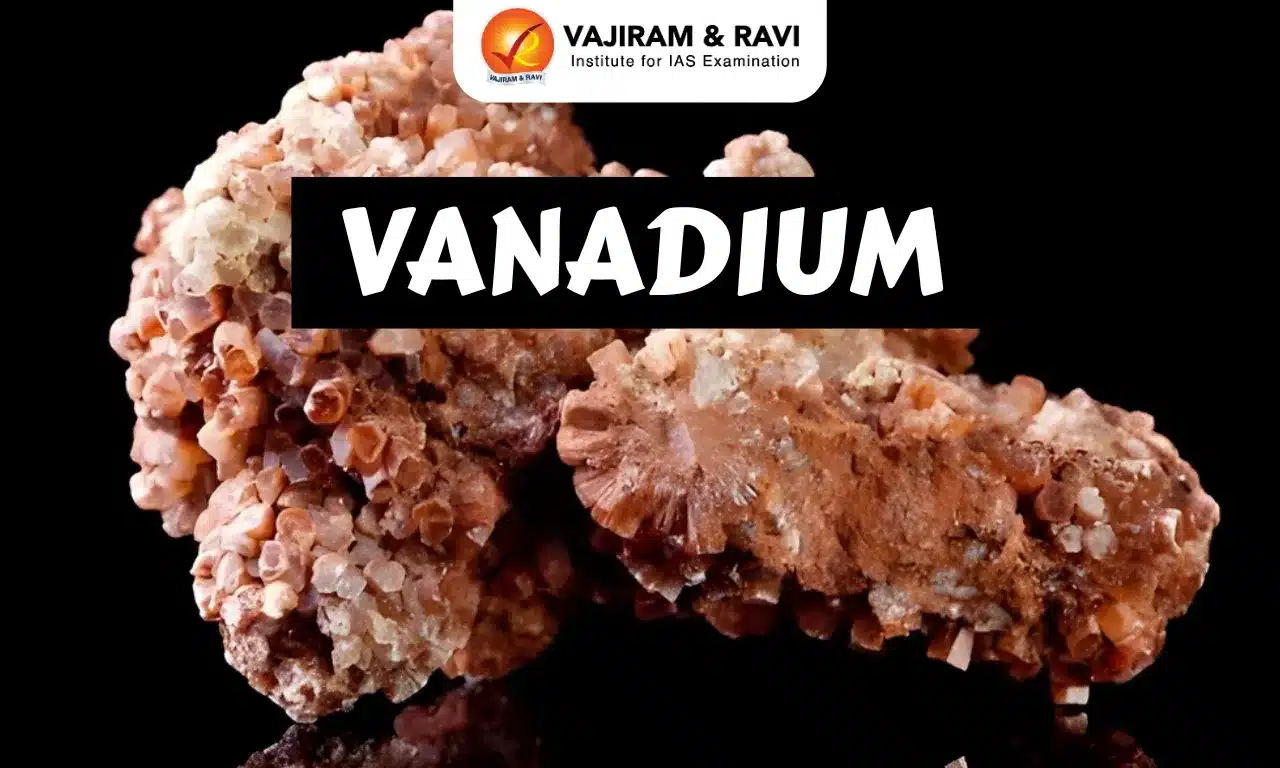
  • It is found in over 60 different minerals, including vanadinite, carnotite, roscoelite and patronite.
  • The largest resources of vanadium minerals are found in South Africa and Russia.
  • Leading Producers: China, Russia and South Africa,

Applications of Vanadium

  • It is used as an alloying element in steel and other metals.
  • In Vanadium Flow Batteries (VFBs), vanadium is used to create a reliable, safe and stable solution for the storage of renewable energy. 
  • Chemical Catalysts: Vanadium compounds are used as catalysts in various chemical reactions, such as the production of sulfuric acid.
  • Nuclear Applications: Vanadium is used in some nuclear reactors as a structural material and neutron moderator.
  • Medical Field: In the medical sphere, vanadium is used to treat a number of ailments, including diabetes, heart disease and high cholesterol.

Source: DD News

Vanadium FAQs

Q1: What is the atomic number of Vanadium?

Ans: 23

Q2: What is the natural state of Vanadium?

Ans: Solid

Vitamin D

Vitamin D

Vitamin D Latest News

Personalized vitamin D dosing, guided by regular blood monitoring, significantly reduced recurrent heart attacks by 52% in a recent trial.

About Vitamin D

  • Vitamin D (also referred to as calciferol) is a fat-soluble vitamin that is naturally present in a few foods, added to others, and available as a dietary supplement.
  • It is also produced endogenously when ultraviolet (UV) rays from sunlight strike the skin and trigger vitamin D synthesis.
  • During periods of sunlight, vitamin D is stored in fat and then released when sunlight is not available.
  • Very few foods have vitamin D naturally. The foods with the most are fatty fish (like salmon and tuna), liver, mushrooms, eggs, and fish oils. 
  • Kids don’t eat these foods a lot. That’s why food companies often “fortify” milk, yogurt, baby formula, juice, cereal, and other foods with added vitamin D.
  • The amount of vitamin D you need each day depends on your age.

Why is Vitamin D So Important?

  • Vitamin D promotes calcium absorption and helps maintain adequate levels of calcium and phosphorus in the blood, which is necessary for healthy bones and teeth.
  • Without sufficient vitamin D, bones can become thin, brittle, or misshapen.
  • Vitamin D has other roles in the body, including reduction of inflammation as well as modulation of such processes as cell growth, neuromuscular and immune function, and glucose metabolism.

Vitamin D Deficiency

  • A lack of vitamin D can lead to bone diseases such as osteoporosis or rickets. Osteoporosis is a disease in which your bones become weak and are likely to fracture (break).
  • With chronic and/or severe vitamin D deficiency, a decline in calcium and phosphorus absorption by your intestines leads to hypocalcemia (low calcium levels in your blood). 
  • This leads to secondary hyperparathyroidism (overactive parathyroid glands attempting to keep blood calcium levels normal).
  • Both hypocalcemia and hyperparathyroidism, if severe, can cause symptoms, including muscle weakness and cramps, fatigue, and depression.
  • Anyone can have vitamin D deficiency, including infants, children and adults.
  • Vitamin D deficiency may be more common in people with higher skin melanin content (darker skin) and who wear clothing with extensive skin coverage, particularly in Middle Eastern countries.

Source: TOI

Vitamin D FAQs

Q1: Vitamin D belongs to which group of vitamins?

Ans: Fat-soluble vitamins.

Q2: How is Vitamin D produced in the human body?

Ans: By the skin when exposed to ultraviolet rays of sunlight.

Q3: Which mineral’s absorption is promoted by Vitamin D?

Ans: Calcium

Q4: Which disease is caused by Vitamin D deficiency in children?

Ans: Rickets

Export Promotion Mission

Export Promotion Mission

Export Promotion Mission Latest News

Recently, the union cabinet has approved the Export Promotion Mission (EPM) which was announced in the Union Budget 2025–26.

About Export Promotion Mission

It is a flagship initiative to strengthen India’s export competitiveness, particularly for MSMEs, first-time exporters, and labour-intensive sectors

Features of Export Promotion Mission

  • It will provide a comprehensive, flexible, and digitally driven framework for export promotion.
  • Time Period and Funding: Rs.25,060 crore for FY 2025–26 to FY 2030–31.
  • It marks a strategic shift from multiple fragmented schemes to a single, outcome-based, and adaptive mechanism.
  • Collaborative framework: It involves the Department of Commerce, Ministry of MSME, Ministry of Finance, and other key stakeholders.
  • It consolidates key export support schemes such as the Interest Equalisation Scheme (IES) and Market Access Initiative (MAI), aligning them with contemporary trade needs.
  • Under EPM, priority support will be extended to sectors impacted by recent global tariff escalations, such as textiles, leather, gems & jewellery, engineering goods, and marine products.
  • Implementing Agency: The Directorate General of Foreign Trade (DGFT)

Sub-schemes Under Export Promotion Mission

  • NIRYAT PROTSAHAN: It focuses on improving access to affordable trade finance for MSMEs through a range of instruments such as interest subvention, export factoring, collateral guarantees etc.
  • NIRYAT DISHA: It focuses on non-financial enablers that enhance market readiness and competitiveness such as export quality and compliance support, assistance for international branding, packaging,export warehousing and logistics etc.

Source: PIB

Export Promotion Mission FAQs

Q1: What is the time period for the Export Promotion Mission?

Ans: FY 2025-26 to FY 2030-31

Q2: What is the primary objective of the Export Promotion Mission?

Ans: To strengthen India's export competitiveness

Motor Neuron Diseases (MNDs)

Motor Neuron Diseases

Motor Neuron Disease Latest News

Scientists recently developed a breakthrough therapy that clears toxic proteins from nerve cells—a discovery that could transform the treatment of motor neuron disease (MND).

About Motor Neuron Disease

  • It is a rare condition that progressively damages parts of the nervous system.
  • This leads to muscle weakness, often with visible wasting.
  • MND is also called amyotrophic lateral sclerosis (ALS) and Lou Gehrig’s disease.

Motor Neuron Disease Cause

  • MND happens when specialist nerve cells in the brain and spinal cord, called motor neurones, stop working properly and die prematurely. This is known as neurodegeneration.
  • Motor neurons instruct the muscles to move by passing on signals from the brain. 
  • They play a role in both conscious and automatic movements, such as swallowing and breathing.
  • As MND progresses, it can become more difficult to do some or all of these activities.
  • Messages can no longer travel between your brain and muscles. This causes your muscles to become weaker and weaker. This eventually causes paralysis.
  • Generally, MND is believed to be caused by a combination of environmental, lifestyle, and genetic factors.
  • 20% of cases are linked to genetic causes. Half of genetic cases will be in people who have a family history of MND. 
  • Adults of any age can get motor neurone disease (MND), but it usually affects people over the age of 50.

Motor Neuron Disease Symptoms

  • The symptoms of MND start gradually over weeks and months.
  • They tend to appear on one side of the body first and get progressively worse.
  • MND often begins with weakness of the muscles in the hands, feet, or voice, although it can start in different areas of the body and progress in different patterns and at different rates.
  • People with MND become increasingly disabled.
  • Average life expectancy after diagnosis is one to five years, with 10 percent of people with MND living 10 years or more.

Motor Neuron Disease Treatment

There’s no cure for MND, but treatment can help reduce the impact the symptoms have on your life.

Source: MED

Motor Neuron Disease FAQs

Q1: What part of the body does Motor Neuron Disease primarily affect?

Ans: Nervous system

Q2: What happens to motor neurons in people with Motor Neuron Disease?

Ans: They stop functioning and die prematurely.

Q3: What is the function of motor neurons in the human body?

Ans: Motor neurons instruct the muscles to move by passing on signals from the brain.

Q4: What is the average age group most affected by MND?

Ans: Above 50 years.

Enquire Now