
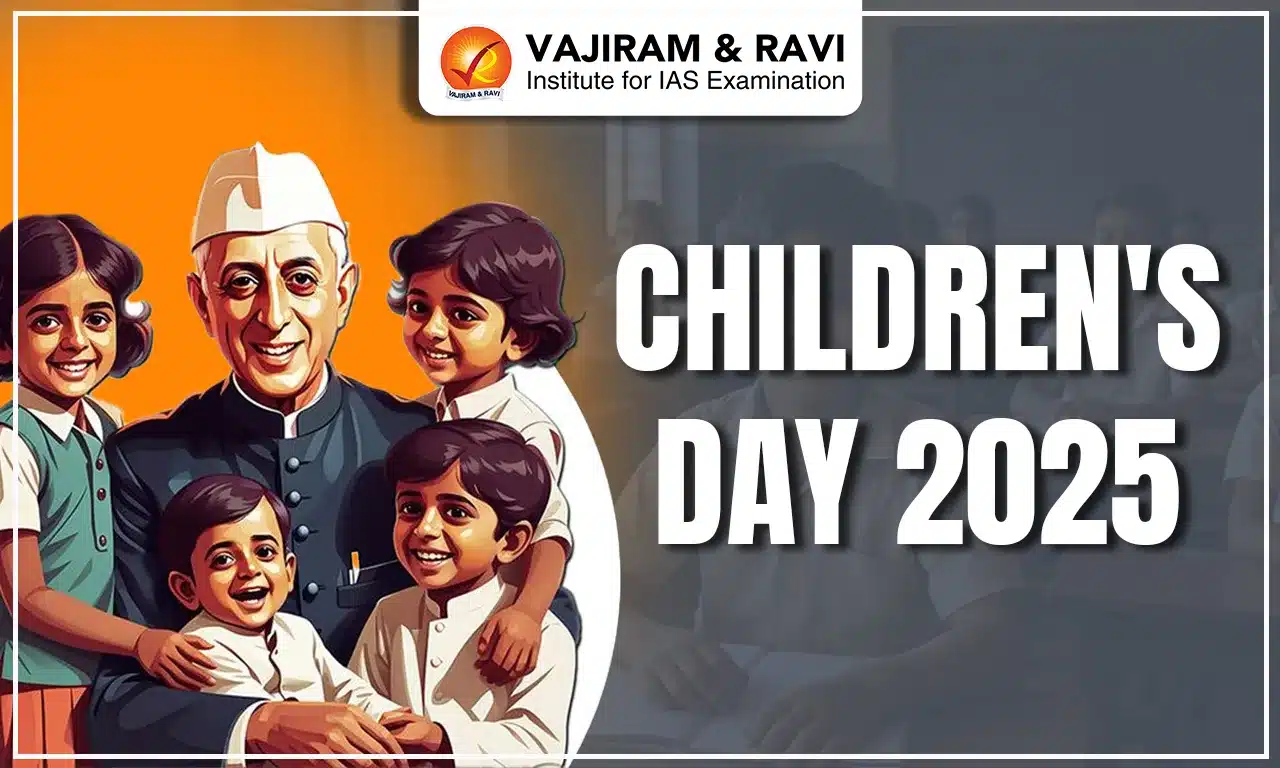
Children’s Day in India is celebrated every year on November 14 to honor the birth anniversary of Pandit Jawaharlal Nehru, the first Prime Minister of India. He was known for his deep affection and care for children and believed that the future of a nation lies in their education and proper upbringing. The day is dedicated to promoting the rights, education, and welfare of children, emphasizing the need to ensure a happy and secure childhood for all.
Children's Day 2025
Children’s Day has a long history rooted in post-independence India. Before 1959, India observed Children’s Day on November 20, following the Universal Children’s Day declared by the United Nations. However, after Pandit Jawaharlal Nehru’s death in 1964, the date was shifted to November 14, his birthday, as a tribute to his immense love and commitment toward children’s welfare. Since then, the day has been celebrated across the nation with enthusiasm and educational activities in schools and institutions.
Children’s Day 2025 Theme
Although the official theme for Children’s Day 2025 has been announced by the Government of India as- “For Every Child, Every Right”. In previous years, themes such as “Better Future for Every Child” and “Equality and Inclusion” have encouraged awareness of child rights and holistic development. The theme for 2025 will continue this focus, promoting child-centered policies and actions across the country.
Pandit Jawaharlal Nehru
Pandit Jawaharlal Nehru (1889-1964) was one of the key architects of modern India. Apart from being India’s first Prime Minister, he was a visionary leader who emphasized scientific thinking, industrial growth, and education. Nehru believed that children are the foundation of a nation’s progress, often calling them “buds of the garden of life.” Because of his warm affection toward young minds, children fondly called him ‘Chacha Nehru’. His ideals continue to inspire India’s efforts in education and child development even today.
Nehru’s Vision for Education
Pandit Nehru believed that education was the key to national development. He envisioned education not only as a tool for academic growth but also for moral and emotional development. Nehru’s focus on scientific temper and rational thinking continues to shape India’s educational philosophy today. His ideas led to the establishment of institutions such as:
- Indian Institutes of Technology (IITs)
- All India Institute of Medical Sciences (AIIMS)
- University Grants Commission (UGC)
- National Institutes of Technology (NITs)
Children's Day 2025 Celebrations Across India
Children’s Day 2025 will be celebrated with great enthusiasm in schools, NGOs, and government institutions. Some common activities include:
- Cultural programs, song and dance performances by students
- Drawing, essay writing, and speech competitions on Nehru’s life and child rights
- Distribution of sweets, gifts, and educational materials
- Special addresses by teachers and leaders highlighting the importance of child welfare
- Community and NGO programs focused on underprivileged children
- Many organizations also take this opportunity to launch new educational or health initiatives for children, reinforcing the day’s purpose beyond celebration.
Children's Day 2025 Significance
Children’s Day holds immense significance as it reminds society of its responsibility towards ensuring the rights, safety, and education of every child. The celebration promotes awareness about issues like child labor, lack of education, malnutrition, and discrimination. It also highlights the importance of providing equal opportunities for all children, regardless of their background. By honoring Nehru’s vision, the day emphasizes the message that nurturing children today leads to a stronger, more progressive India tomorrow.
Children's Day 2025 Government Initiatives
The Indian government has implemented several schemes to ensure the welfare and development of children. Key initiatives include:
- Integrated Child Development Services (ICDS): Provides nutrition, health care, and preschool education.
- Mid-Day Meal Scheme: Ensures nutritious food for schoolchildren to promote attendance and health.
- Right to Education Act (RTE), 2009: Guarantees free and compulsory education for children aged 6 to 14 years.
- Beti Bachao Beti Padhao: Promotes the education and empowerment of girl children.
- National Child Labour Project (NCLP): Works to rescue and rehabilitate child laborers.
- PM POSHAN Abhiyaan: Strengthens child nutrition and food security across schools.
Children’s Rights in India
Children’s rights are legally and constitutionally protected in India. These legal frameworks uphold children’s right to safety, education, and dignity. Key provisions include:
- Article 21A- Right to free and compulsory education for all children between 6-14 years.
- Article 24- Prohibition of child labor in hazardous employment.
- Article 39(e) & (f)- Protection from exploitation and promotion of healthy development.
- Article 45- Directive to provide early childhood care and education.
- The Juvenile Justice (Care and Protection of Children) Act, 2015- Ensures care and protection for children in need.
- The Protection of Children from Sexual Offences (POCSO) Act, 2012- Safeguards children from abuse and exploitation.
Children's Day 2025 Challenges
Despite progress, India still faces challenges in ensuring children’s welfare:
- Child Labor: Many children are still engaged in informal and unsafe work sectors.
- Malnutrition: Over one-third of children under five suffer from stunted growth (NFHS-5, 2021).
- Dropout Rates: Economic hardship and gender bias affect school attendance in several states.
- Child Abuse and Exploitation: Cases of violence and abuse remain a concern despite existing laws.
- Access to Healthcare: Rural and marginalized children face limited access to quality healthcare and vaccination.
Way Forward:
To address these challenges, a multi-dimensional approach is needed.
- Strengthen Implementation: Ensure existing child protection and education schemes are effectively implemented.
- Community Participation: Involve parents, teachers, and local leaders in spreading awareness.
- Digital Education Access: Expand technology-based learning to bridge urban-rural divides.
- Health and Nutrition Programs: Regular health check-ups, balanced meals, and mental health support for children.
- Skill Development: Promote vocational and life skill programs to prepare youth for future employment.
Children's Day 2025 Recent Developments
In recent years, several developments have strengthened child welfare in India:
- Launch of the PM eVidya program for digital learning under the National Education Policy 2020.
- Saksham Anganwadi and Poshan 2.0 launched to enhance nutrition and health services.
- Expansion of National Digital Library for Children and Adolescents (NDLCA).
- Child Helpline 1098 has been upgraded for faster response to emergencies.
- The government and UNICEF jointly celebrating World Children’s Day with innovative campaigns for inclusion, mental health, and digital safety.
Importance of Education in Child Development
Education plays a vital role in shaping a child’s personality, moral values, and social understanding. It helps children become self-reliant and informed citizens. By promoting inclusive education, India ensures that no child is left behind due to poverty, gender, or disability. The integration of modern technologies and creative learning methods under the National Education Policy (NEP) 2020 aims to provide holistic education and fulfill Nehru’s dream of an enlightened youth.
Children’s Day UPSC
While Children’s Day is celebrated with cultural programs and fun activities, its real essence lies in taking collective action for children’s welfare. It is a reminder to families, educators, and policymakers that children must be protected from exploitation and given equal access to opportunities. Beyond sweets and songs, the day calls for strengthening educational systems, addressing inequalities, and building a future where every child thrives with dignity and happiness.
Children’s Day 2025 is not just a celebration but a reflection of India’s commitment to its youngest citizens. It reminds society that children are the future torchbearers of peace, progress, and prosperity. As we honor the memory of Pandit Jawaharlal Nehru, we must reaffirm our pledge to create a world where every child enjoys education, health, and happiness. By investing in children today, we build a stronger, more compassionate India tomorrow.
Children’s Day 2025 FAQs
Q1: When is Children’s Day celebrated in India?
Ans: Children’s Day is celebrated every year on November 14 to mark the birth anniversary of Pandit Jawaharlal Nehru.
Q2: Why is Jawaharlal Nehru called Chacha Nehru?
Ans: Children affectionately called him “Chacha Nehru” because of his warm affection, kindness, and deep concern for their welfare and education.
Q3: What is the main purpose of celebrating Children’s Day?
Ans: The day promotes awareness about children’s rights, education, and well-being, and reminds everyone of their responsibility towards child welfare.
Q4: How is Children’s Day celebrated in schools?
Ans: Schools organize cultural programs, games, speeches, and competitions, while teachers often perform or distribute gifts to make the day special.
Q5: What is the message of Children’s Day 2025?
Ans: Children’s Day 2025 emphasizes child empowerment, equality, and education, encouraging society to nurture young minds for a better future.
