Palar River

Palar River

Palar River Latest News

A 60-year-old woman was washed away in a flash flood in the Palar river near Katpadi town in Vellore, Tamil Nadu, recently.

About Palar River

  • It is a river in southern India. 
  • Course:
    • It originates from the Nandidurg hills in the Kolar district of Karnataka, flowing as an underground stream (Guptagamini) before emerging near Bethamangala town.
    • It flows 93 km in Karnataka, 33 km in Andhra Pradesh, and 222 km in Tamil Nadu before finally reaching its confluence in the Bay of Bengal at Vayalur, about 100 km south of Chennai.
  • The total area of the Palar River Basin is 17,633.19 sq.km.
  • The river has seven tributaries, with the Cheyyar River and Ponnai River being the most significant.
  • The cities of Ramanaickenpet, Vaniyambadi, Ambur, Vellore, Melvisharam, Arcot, Walajapet (Anaicut), Kanchipuram, and Chingleput are located on the banks of Palar River.
  • Many ancient temples, such as the Kolaramma Temple and Someswara Temple in Kolar and the Kanchipuram temples, are situated along its banks, making the river sacred and culturally significant.
  • The Arcot Dam, built on the river in Tamil Nadu, is historically significant and is one of the oldest irrigation dams in the region.

Source: TH

Palar River FAQs

Q1: The Palar River originates in which Indian state?

Ans: Karnataka

Q2: The Palar River finally drains into which water body?

Ans: Bay of Bengal

Q3: Which are major tributaries of the Palar River?

Ans: The river has seven tributaries, with the Cheyyar River and Ponnai River being the most significant.

Strait of Hormuz

Strait of Hormuz

Strait of Hormuz Latest News

Iran seized a Marshall Islands-flagged oil tanker as it travelled through the narrow Strait of Hormuz recently, turning the ship into Iranian territorial waters in the first such interdiction in months in the strategic waterway.

About Strait of Hormuz

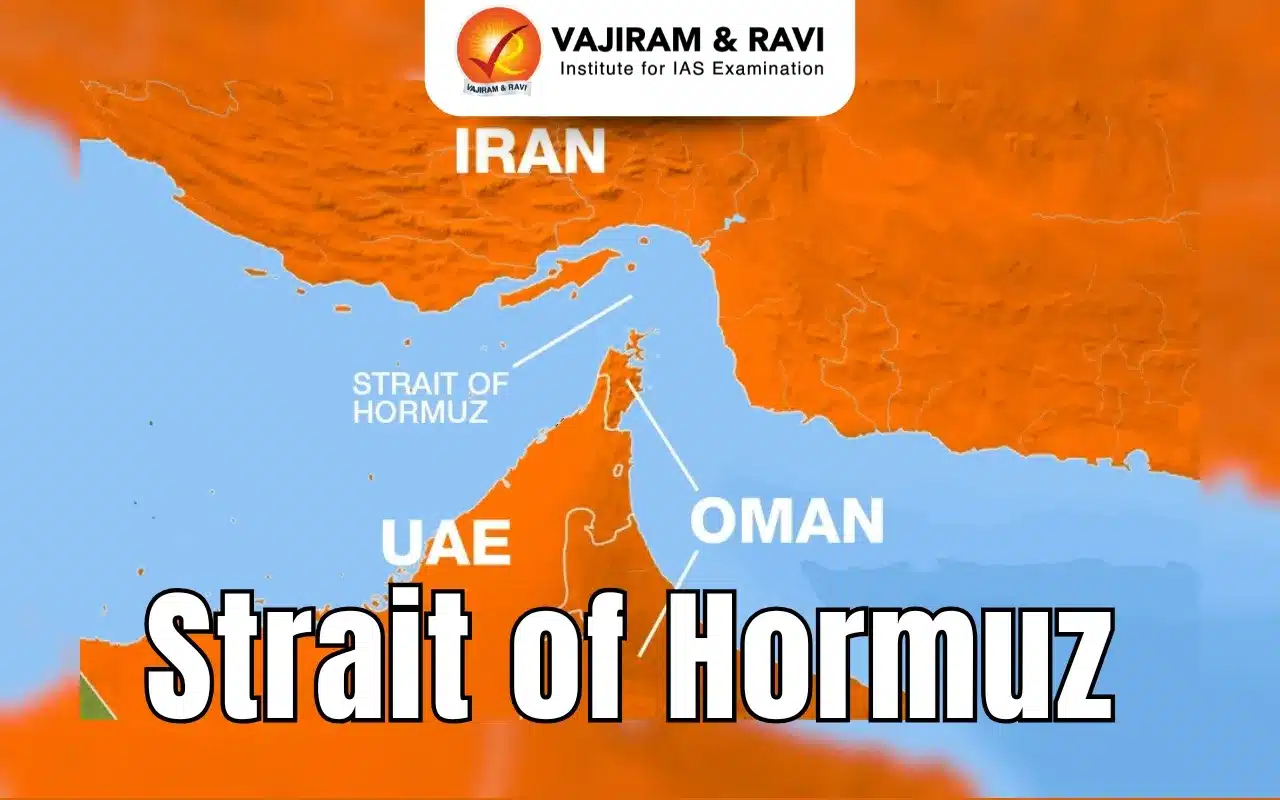
  • It is a narrow waterway between Iran and the Arabian Peninsula, specifically the United Arab Emirates, and Musandam (Oman).
  • The Gulf of Oman is on the strait’s east, while the Persian Gulf is on the west. 
  • It is the only sea channel linking the oil-rich Persian Gulf (west) with the Gulf of Oman and the Arabian Sea (southeast).
  • Iran is located on the north coast, while the UAE is on the south coast. 
  • The strait is 167 kilometers long.
  • At its narrowest point, the Strait of Hormuz is only 29 nautical miles wide (54 km). 
  • The strait consists of 2-mile-wide navigable channels (3 km) for inbound and outbound shipping as well as a 2-mile-wide buffer zone.
  • Some of the islands located in the Strait of Hormuz are Hengam, Hormuz, and Qishm. 
  • The Strait of Hormuz is considered one of the world’s most economically important choke points.
  • About 30% of the world’s liquefied gas and 25% of oil pass through the Strait of Hormuz.

Source: TH

Strait of Hormuz FAQs

Q1: The Strait of Hormuz connects the Persian Gulf with which water body?

Ans: Arabian Sea via the Gulf of Oman.

Q2: Iran is located on which side of the Strait of Hormuz?

Ans: North

Q3: The Strait of Hormuz is approximately how long?

Ans: The strait is 167 kilometers long.

RuTAG Initiative

RuTAG Initiative

RuTAG Initiative Latest News

Recently, the Principal Scientific Adviser (PSA) to the Government of India chaired the second annual review meeting of the Rural Technology Action Group (RuTAG) 2.0 initiative.

About RuTAG Initiative

  • The Rural Technology Action Group (RuTAG) is an initiative of the Office of the Principal Scientific Adviser (OPSA) which was launched in 2004.
  • It was conceptualized as a mechanism to provide a higher level of Science &Technology intervention and support for rural areas.
  • Under this initiative, the interventions are designed to be primarily demand-driven, focusing on bridging technology gaps at the grassroots level, upgrading technology, and providing training and demonstrations through innovative projects.

Objectives of RuTAG Initiative

  • Connecting Stakeholders: Collaborating with stakeholders Non-Government Organizations, Self Help Groups, Community Organizations, and Start-ups to identify sector-specific technology needs.
  • Demand-driven technologies: Developeing technologies based on socio-economic data coherent with national/regional priorities.
  • Prototype Validation: ValidatIng developed prototypes and explored commercialization with scalability aspects.
  • Commercialization: Commercializing the potentially validated technologies for national/global markets.

What is RuTAG 2.0?

  • It was launched by the Office of the PSA in April 2023.
  • Focus: With a focus on commercialization and broader dissemination of developed technologies as products, ensuring wider accessibility and socio-economic impact.
  • It will emphasize translating innovation into market-ready products reflecting its commitment to driving transformative changes in rural areas and empowering communities for sustainable development.

Source: PIB

RuTAG Initiative FAQs

Q1: What is the primary objective of the RuTAG Initiative?

Ans: To provide science and technology support for rural areas.

Q2: What is the goal of the RuTAG Smart Village Centre?

Ans: To provide technological solutions for rural challenges.

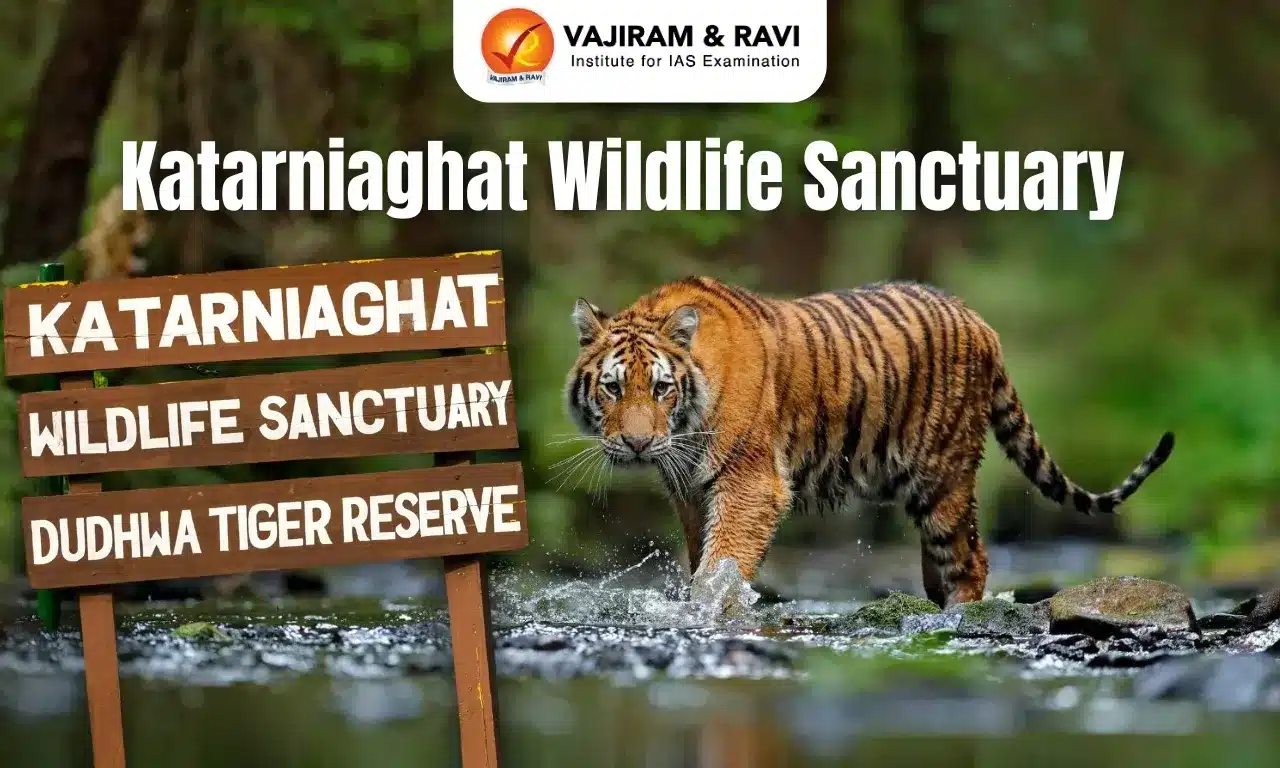
Katarniaghat Wildlife Sanctuary

Katarniaghat Wildlife Sanctuary (KWS)

Katarniaghat Wildlife Sanctuary Latest News

A 55-year-old farmer was mauled to death by a leopard in a field adjoining a forest area here under the Kakraha Range of the Katarniaghat Wildlife Sanctuary recently.

About Katarniaghat Wildlife Sanctuary

  • It is situated in the Upper Gangetic plain, falling in the Terai of the Bahraich district of Uttar Pradesh.
  • In 1987, it was brought under the purview of the ‘Project Tiger’, and together with the Kishanpur Wildlife Sanctuary and the Dudhwa National Park, it forms the Dudhwa Tiger Reserve.
  • The total area of the sanctuary is 400.09 sq.km.
  • Sharing an international border with Nepal, this sanctuary was established to protect its Gharial (Gavialis gangeticus) population. 
  • It provides strategic connectivity between the tiger habitats of Dudhwa and Kishanpur in India and the Bardia National Park in Nepal. 
  • Vegetation: Katarniyaghat's vegetation consists of grasslands, mixed deciduous forests, and moist deciduous forests with sal trees. 
  • Flora: It is predominantly Sal Forest with its associate tree species like Terminalia alata (Asna), Lagerstroemia parviflora (Asidha), Adina cordifonia (Haldu), Mitragyna parpiflora (Faldu), Gamelina arborea (Gahmhar), etc.
  • Fauna:
    • It is home to a number of endangered species, including the gharial, tiger, rhino, Gangetic dolphin, Swamp deer, Hispid hare, Bengal florican, the White-backed and Long-billed vultures.
    • The Gairwa River, which flows in the KWS area, is declared a sanctuary for Mugger and Gharial. It is also home to rare turtles, freshwater fish, and a host of aquatic life.
    • It is among the few places in India where freshwater dolphins, also known as Gangetic dolphins, are found in their natural habitat.

Source: PTI

Katarniaghat Wildlife Sanctuary FAQs

Q1: Katarniaghat Wildlife Sanctuary is located in which Indian state?

Ans: Uttar Pradesh

Q2: Katarniaghat Wildlife Sanctuary lies in which geographical region?

Ans: Upper Gangetic Plain (Terai region).

Q3: Katarniaghat Wildlife Sanctuary forms part of which tiger reserve?

Ans: Dudhwa Tiger Reserve

Sickle Cell Disease

Sickle Cell Disease

Sickle Cell Disease Latest News

A decade-long study by a Gurugram hospital has found success in curing Sickle Cell Disease among children through bone marrow (stem cell) transplantation, placing India among the leading nations in advanced paediatric transplant outcomes.

About Sickle Cell Disease

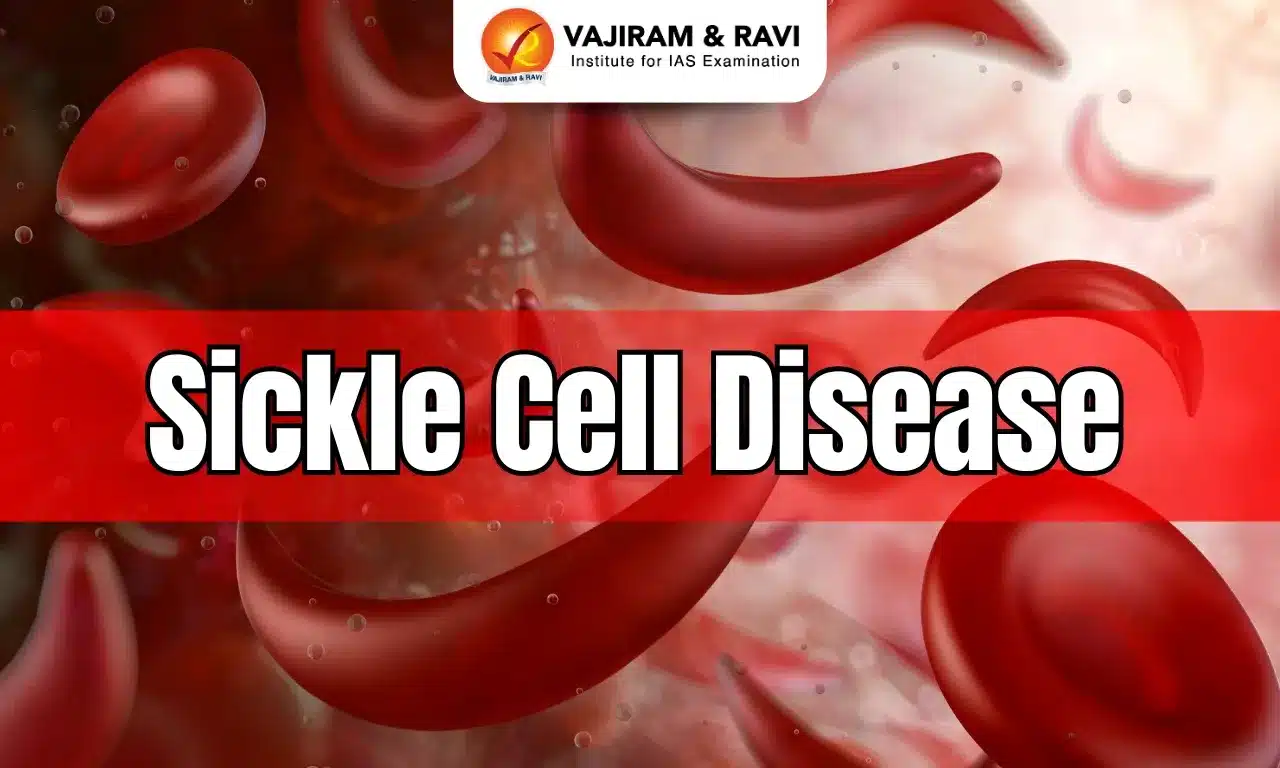
  • It is a group of inherited blood cell disorders that affect hemoglobin, the protein that carries oxygen through the body.
  • SCD can cause episodes of severe pain and lead to life-threatening complications. 
  • The most common and severe type of SCD is sickle cell anemia.
  • How Does it Affect Blood Flow?
    • Normally, RBCs are disc-shaped and flexible enough to move easily through the blood vessels.
    • People with SCD have atypical hemoglobin molecules called hemoglobin S, which can distort RBCs into a sickle, or crescent, shape.
    • When RBCs sickle, they do not bend or move easily and can block blood flow to the rest of the body.
    • SCD interferes with the delivery of oxygen to the tissues.
  • What causes it?
    • The cause of SCD is a defective gene, called a sickle cell gene.
    • A person will be born with SCD only if two genes are inheritedone from the mother and one from the father.
  • Symptoms:
    • Early stage: Extreme tiredness or fussiness from anemia, painfully swollen hands and feet, and jaundice.
    • Later stage: Severe pain, anemia, organ damage, and infections.
  • Treatments:
    • A bone marrow transplant (stem cell transplant) can cure SCD.
    • However, there are treatments that can help relieve symptoms, lessen complications, and prolong life.
    • Gene therapy is also being explored as another potential cure.
    • The UK recently became the first country to approve gene therapy treatment for SCD.

Source: NDTV

Sickle Cell Disease FAQs

Q1: Sickle Cell Disease primarily affects which component of blood?

Ans: Hemoglobin in red blood cells.

Q2: What is the most common and severe form of Sickle Cell Disease (SCD)?

Ans: The most common and severe type of SCD is sickle cell anemia.

Q3: What shape do red blood cells take in individuals with Sickle Cell Disease (SCD)?

Ans: People with SCD have atypical hemoglobin molecules called hemoglobin S, which can distort RBCs into a sickle, or crescent, shape.

Uturuncu Volcano

Uturuncu Volcano

Uturuncu Volcano Latest News

A team recently mapped the inside of Bolivia’s Uturuncu volcano and found that its strange surface motions come from hot fluids and gases moving below the crater, not rising magma ready to erupt.

About Uturuncu Volcano

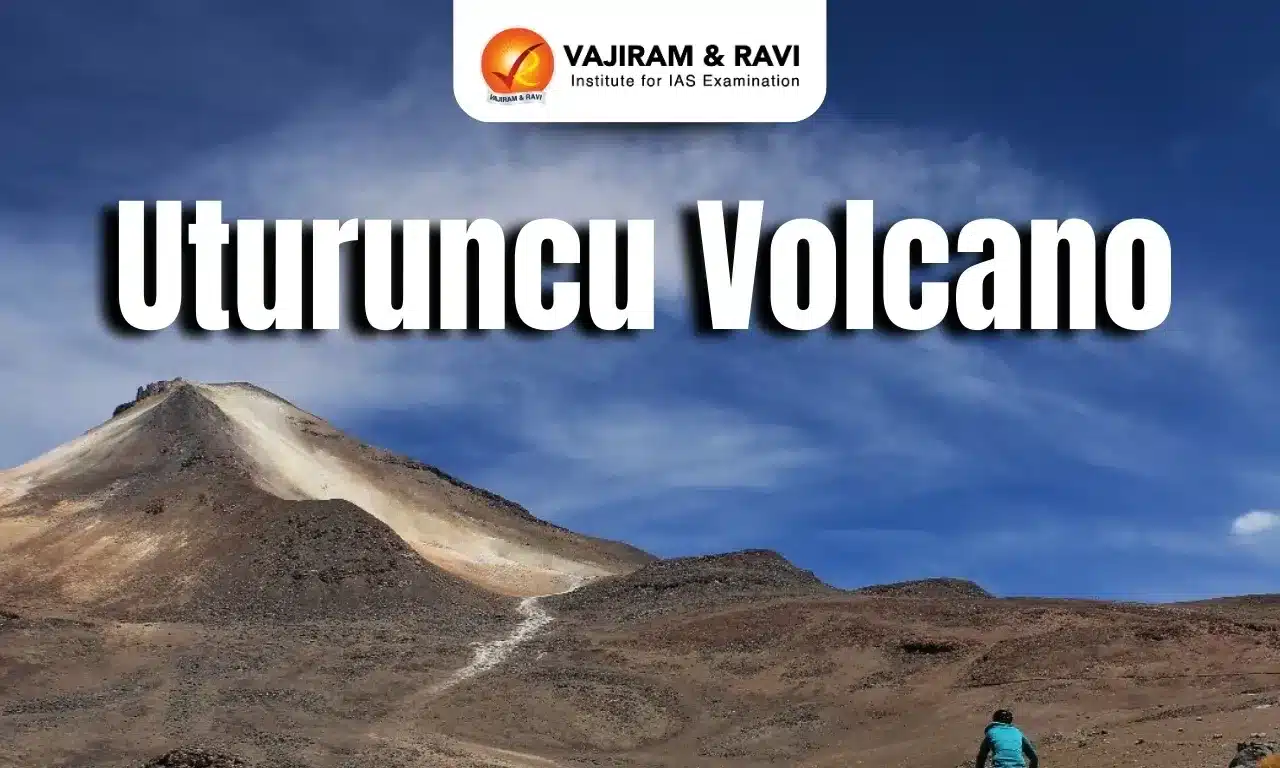
  • It is a large dormant volcano located in southwestern Bolivia, within the Andes Mountains.
  • It is a stratovolcano dominated by dacitic lava domes and flows.
  • Elevation: About 6,008 meters (19,711 feet) above sea level — it is the tallest mountain in the southern part of Bolivia.
  • Uturuncu last erupted 250,000 years ago, yet is seismically active and lies at the centre of a 70 km diameter uplifted region. 
  • Beneath Uturuncu at a depth of about 10 to 20 kilometers lies a vast reservoir of magma called the Altiplano-Puna Magma Body. 
    • Spanning roughly 200 kilometers, it is the biggest known active magma body in the planet’s crust.
  • The volcano displays a distinct "sombrero" shape, with the center rising and the surrounding areas sinking.
  • Uturuncu is known as a “zombie” volcano because of its ongoing but non-eruptive activity.
    • The “zombie”-like unrest of Uturuncu is due to the movement of liquid and gas beneath the crater, with a low likelihood of an imminent eruption.
  • The volcano currently experiences hundreds of small earthquakes per year.

Source: EARTH

Uturuncu Volcano FAQs

Q1: Uturuncu Volcano is located in which country?

Ans: Bolivia

Q2: Uturuncu is best described as which type of volcano?

Ans: It is a stratovolcano.

Q3: What is the name of the massive magma reservoir beneath Uturuncu?

Ans: Altiplano-Puna Magma Body

Q4: Why is Uturuncu referred to as a “zombie” volcano?

Ans: It shows ongoing unrest without an imminent eruption.

Ambaji Marble

Ambaji Marble

Ambaji Marble Latest News

Recently, the Ambaji Marble has been awarded the Geographical Indication (GI) tag for its high-quality white stone.

About Ambaji Marble

  • It is named after the town of Ambaji in the state of Gujarat, where it is predominantly quarried. 
  • It is a type of marble known for its milky white colour, durability and natural beauty.

Features of Ambaji Marble

  • Appearance: It is characterized by its pristine white color, which often features subtle gray or beige veining.
    • The veins can vary in intensity and they occur naturally due to the presence of minerals and impurities during the marble formation process.
  • Durability: It has very long-lasting shine and durability
  • Applications of Ambaji Marble: It has been used in the construction of Ambaji temple and many other religious places, memorials and grand buildings.

Key Facts about Marble

  • It is a metamorphic rock that forms when limestone is subjected to the heat and pressure of metamorphism.
  • Composition: It is composed primarily of the mineral calcite (CaCO3) and usually contains other minerals, such as clay minerals, micas, quartz, pyrite, iron oxides, and graphite.

Formation of Marble

  • Under the conditions of metamorphism, the calcite in the limestone recrystallizes to form a rock that is a mass of interlocking calcite crystals.
  • A related rock, dolomitic marble, is produced when dolostone is subjected to heat and pressure.
  • The transformation of limestone into marble usually occurs at convergent plate boundaries, where large areas of Earth’s crustare exposed to the heat and pressure of regional metamorphism.
  • Some marble also forms by contact metamorphism when a hot magma body heats adjacent limestone or dolostone.

Source: TH

Ambaji Marble FAQs

Q1: Where is Ambaji Marble primarily found?

Ans: Gujarat

Q2: What is the primary composition of Ambaji Marble?

Ans: Calcium carbonate

Hepatitis A

Hepatitis A

Hepatitis A Latest News

Recently, public health experts opined that Hepatitis A deserves a place in India’s universal immunisation programme  due to its multiple outbreaks across many states in India.

About Hepatitis A

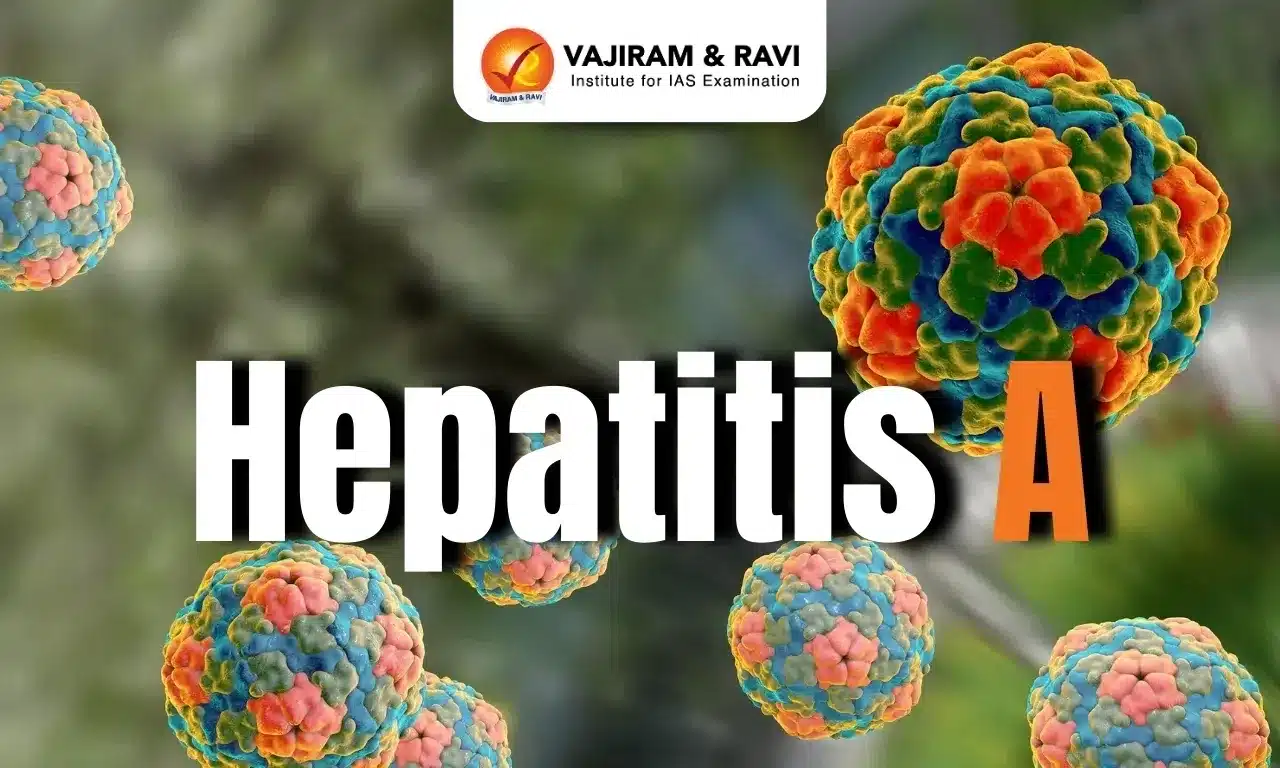
  • Hepatitis A is an inflammation of the liver caused by the hepatitis A virus (HAV). 
  • It occurs throughout the world.
  • It is especially common in countries in Latin America, Africa, the Middle East, Asia, the Caribbean, and the Western Pacific.
  • Unlike hepatitis B and C, hepatitis A does not cause chronic liver disease but it can cause mild to severe symptoms and rarely fulminant hepatitis (acute liver failure).
  • Symptoms: Fever, malaise, loss of appetite, Nausea, diarrhoea, abdominal discomfort, Dark urine and jaundice.

Transmission of Hepatitis A

  • It is transmitted primarily by the faecal-oral route; that is when an uninfected person ingests food or water that has been contaminated with the faeces of an infected person. 
  • The virus can also be transmitted through close physical contact with an infectious person.

Treatment for Hepatitis A

  • There is no specific antiviral treatment for hepatitis A.
  • Its treatment mainly focuses on supportive care to relieve symptoms and ensure adequate hydration and nutrition.

Source: TH

Hepatitis A FAQs

Q1: What is the primary cause of Hepatitis A?

Ans: Hepatitis A virus (HAV)

Q2: Which of the following is a common mode of transmission for Hepatitis A?

Ans: Contaminated food and water

Enquire Now