
Sickle Cell Disease Latest News
A decade-long study by a Gurugram hospital has found success in curing Sickle Cell Disease among children through bone marrow (stem cell) transplantation, placing India among the leading nations in advanced paediatric transplant outcomes.
About Sickle Cell Disease
- It is a group of inherited blood cell disorders that affect hemoglobin, the protein that carries oxygen through the body.
- SCD can cause episodes of severe pain and lead to life-threatening complications.
- The most common and severe type of SCD is sickle cell anemia.
- How Does it Affect Blood Flow?
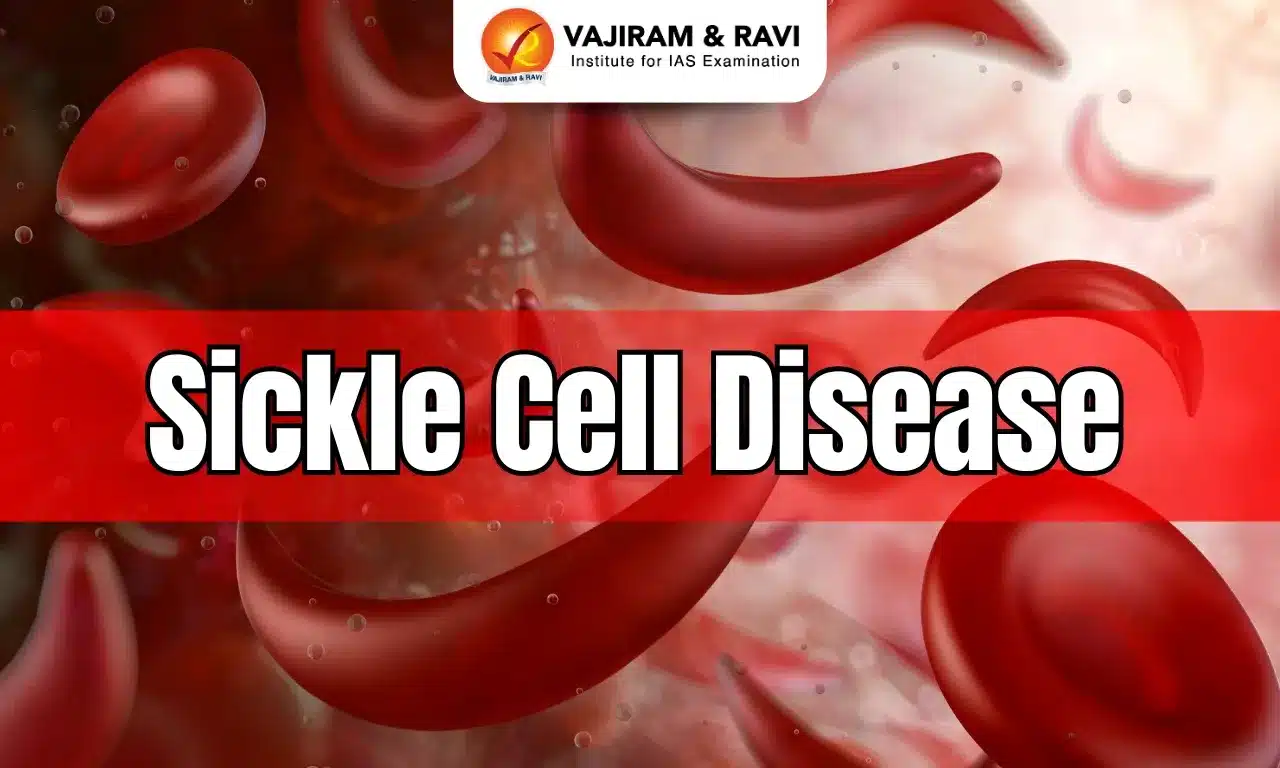
- Normally, RBCs are disc-shaped and flexible enough to move easily through the blood vessels.
- People with SCD have atypical hemoglobin molecules called hemoglobin S, which can distort RBCs into a sickle, or crescent, shape.
- When RBCs sickle, they do not bend or move easily and can block blood flow to the rest of the body.
- SCD interferes with the delivery of oxygen to the tissues.
- What causes it?
- The cause of SCD is a defective gene, called a sickle cell gene.
- A person will be born with SCD only if two genes are inherited—one from the mother and one from the father.
- Symptoms:
- Early stage: Extreme tiredness or fussiness from anemia, painfully swollen hands and feet, and jaundice.
- Later stage: Severe pain, anemia, organ damage, and infections.
- Treatments:
- A bone marrow transplant (stem cell transplant) can cure SCD.
- However, there are treatments that can help relieve symptoms, lessen complications, and prolong life.
- Gene therapy is also being explored as another potential cure.
- The UK recently became the first country to approve gene therapy treatment for SCD.
Source: NDTV
Sickle Cell Disease FAQs
Q1: Sickle Cell Disease primarily affects which component of blood?
Ans: Hemoglobin in red blood cells.
Q2: What is the most common and severe form of Sickle Cell Disease (SCD)?
Ans: The most common and severe type of SCD is sickle cell anemia.
Q3: What shape do red blood cells take in individuals with Sickle Cell Disease (SCD)?
Ans: People with SCD have atypical hemoglobin molecules called hemoglobin S, which can distort RBCs into a sickle, or crescent, shape.
