Palar River

Palar River

Palar River Latest News

A 60-year-old woman was washed away in a flash flood in the Palar river near Katpadi town in Vellore, Tamil Nadu, recently.

About Palar River

  • It is a river in southern India. 
  • Course:
    • It originates from the Nandidurg hills in the Kolar district of Karnataka, flowing as an underground stream (Guptagamini) before emerging near Bethamangala town.
    • It flows 93 km in Karnataka, 33 km in Andhra Pradesh, and 222 km in Tamil Nadu before finally reaching its confluence in the Bay of Bengal at Vayalur, about 100 km south of Chennai.
  • The total area of the Palar River Basin is 17,633.19 sq.km.
  • The river has seven tributaries, with the Cheyyar River and Ponnai River being the most significant.
  • The cities of Ramanaickenpet, Vaniyambadi, Ambur, Vellore, Melvisharam, Arcot, Walajapet (Anaicut), Kanchipuram, and Chingleput are located on the banks of Palar River.
  • Many ancient temples, such as the Kolaramma Temple and Someswara Temple in Kolar and the Kanchipuram temples, are situated along its banks, making the river sacred and culturally significant.
  • The Arcot Dam, built on the river in Tamil Nadu, is historically significant and is one of the oldest irrigation dams in the region.

Source: TH

Palar River FAQs

Q1: The Palar River originates in which Indian state?

Ans: Karnataka

Q2: The Palar River finally drains into which water body?

Ans: Bay of Bengal

Q3: Which are major tributaries of the Palar River?

Ans: The river has seven tributaries, with the Cheyyar River and Ponnai River being the most significant.


Strait of Hormuz

Strait of Hormuz

Strait of Hormuz Latest News

Iran seized a Marshall Islands-flagged oil tanker as it travelled through the narrow Strait of Hormuz recently, turning the ship into Iranian territorial waters in the first such interdiction in months in the strategic waterway.

About Strait of Hormuz

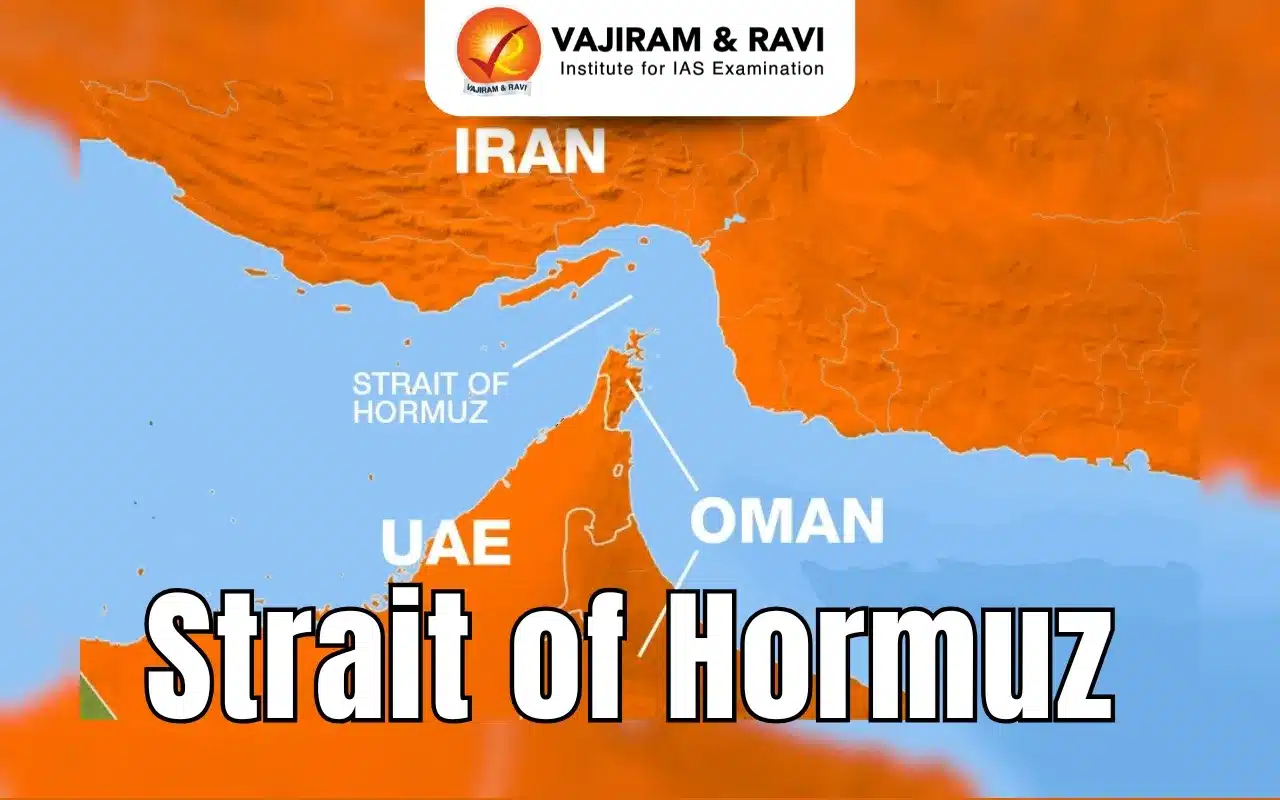
  • It is a narrow waterway between Iran and the Arabian Peninsula, specifically the United Arab Emirates, and Musandam (Oman).
  • The Gulf of Oman is on the strait’s east, while the Persian Gulf is on the west. 
  • It is the only sea channel linking the oil-rich Persian Gulf (west) with the Gulf of Oman and the Arabian Sea (southeast).
  • Iran is located on the north coast, while the UAE is on the south coast. 
  • The strait is 167 kilometers long.
  • At its narrowest point, the Strait of Hormuz is only 29 nautical miles wide (54 km). 
  • The strait consists of 2-mile-wide navigable channels (3 km) for inbound and outbound shipping as well as a 2-mile-wide buffer zone.
  • Some of the islands located in the Strait of Hormuz are Hengam, Hormuz, and Qishm. 
  • The Strait of Hormuz is considered one of the world’s most economically important choke points.
  • About 30% of the world’s liquefied gas and 25% of oil pass through the Strait of Hormuz.

Source: TH

Strait of Hormuz FAQs

Q1: The Strait of Hormuz connects the Persian Gulf with which water body?

Ans: Arabian Sea via the Gulf of Oman.

Q2: Iran is located on which side of the Strait of Hormuz?

Ans: North

Q3: The Strait of Hormuz is approximately how long?

Ans: The strait is 167 kilometers long.

RBI Trade Relief Measures: Moratorium, Extended Credit Tenor & Support for Exporters

RBI Trade Relief Measures

RBI Trade Relief Measures Latest News

  • The RBI has introduced immediate trade relief measures to help exporters struggling with debt servicing amid global trade disruptions. 
  • These include a loan moratorium, longer export credit tenors, and relaxed asset classification norms, applicable to banks, NBFCs, cooperative banks, and all-India financial institutions.
  • The announcement follows signals from the US about reducing high tariffs on India. 
  • Key exporting sectors such as chemicals, plastics, rubber, leather, apparel, footwear, iron and steel products, and electrical machinery are covered under RBI’s relief framework.

RBI Unveils Relief Package for Tariff-Hit Exporters

  • The RBI announced a series of trade relief measures to ease working capital stress, enhance borrowing access, and defer repayments for exporters affected by global trade disruptions. 
  • These measures, effective immediately, cover 20 tariff-hit export sectors including chemicals, plastics, textiles, leather, metals, machinery, vehicles, footwear, and fisheries.
  • These steps aim to ease compliance pressures for exporters facing global trade disruptions.

Loan Moratorium to Ease Debt Burden

  • The RBI has announced a moratorium on term loan repayments and interest recovery for working capital loans due between September 1 and December 31, 2025. 
  • During this period, interest will accrue only on a simple interest basis, with no compounding.
  • Accrued interest will be converted into a funded interest term loan, repayable between April and September 2026. 
  • For working capital loans, lenders may revise drawing power or reassess limits to support affected borrowers.

Improved Access to Working Capital

  • The RBI has increased the maximum repayment period for pre-shipment and post-shipment export credit from 270 days to 450 days for loans disbursed up to March 31, 2026.
  • For packing credit availed before August 31, 2025, where shipments could not occur, lenders may permit repayment through legitimate alternative sources, including domestic sales or proceeds from substitute export orders.

Safeguards for Asset Quality

  • The RBI announced that any moratorium or deferment granted will not count toward days past due.
  • With this, it ensured that borrowers’ accounts are not downgraded under Income Recognition, Asset Classification and Provisioning (IRACP) norms. 
  • These relief actions — including revised drawing power — will not be treated as restructuring, and Credit Information Companies must ensure borrowers’ credit histories remain unaffected.
  • Only exporters with standard asset classification as of August 31, 2025, are eligible.
  • Relief measures will require 5% provisioning on such loans, though analysts say this is unlikely to significantly impact profitability.
  • Lenders must adopt a formal policy defining eligibility and publicly disclose criteria.

Relaxations Under FEMA for Export Realisation

  • The RBI extended the deadline for realising export proceeds from 9 to 15 months.
  • It also increased the shipment period against advance payments from 1 to 3 years, easing compliance pressures for exporters facing delays.

Recent Government Measures to Boost Export Ecosystem

  • The government has extended key timelines to ease pressures on exporters: 
    • the period for realisation and repatriation of export proceeds has been increased from 9 to 15 months;
    • the shipment window for goods against advance payments has been extended from 1 to 3 years.
  • In addition, the Union Cabinet approved two major initiatives worth ₹45,060 crore to strengthen India’s export ecosystem. 
  • These include: 
  • Industry leaders say these measures will particularly benefit MSMEs facing tariff-related disruptions, enhance market access, ease liquidity constraints, and address longstanding challenges in logistics, credit availability, and export infrastructure.

Source: TH | IE | LM

RBI Trade Relief Measures FAQs

Q1: What are the key RBI trade relief measures announced in 2025?

Ans: RBI introduced a loan moratorium, extended export credit tenor to 450 days, relaxed asset classification norms, and eased FEMA rules to support tariff-hit exporters.

Q2: Which sectors benefit from RBI’s trade relief package?

Ans: Twenty sectors, including chemicals, plastics, textiles, leather, footwear, metals, machinery, vehicles, and fisheries, are eligible for relief due to global tariff disruptions.

Q3: How does the RBI moratorium help exporters?

Ans: Exporters can defer loan and interest payments from September to December 2025, with simple interest charged and repayment scheduled between April and September 2026.

Q4: What changes did the RBI make to export credit norms?

Ans: RBI extended pre- and post-shipment credit repayment from 270 to 450 days and allowed liquidation of packing credit through legitimate alternative sources.

Q5: What government measures complement RBI’s relief steps?

Ans: The government extended export realisation timelines, expanded shipment windows, and approved ₹45,060 crore initiatives including CGSE and the Export Promotion Mission to boost liquidity.

Why Germany’s Economy Is Stagnating and the Reforms Needed for Recovery

Germany Economic Stagnation

Germany Economic Stagnation Latest News

  • Germany, the world’s third-largest economy with a $5 trillion GDP, is experiencing near-zero growth this year, with output expected to rise only 0.2%
  • This stagnation follows two consecutive years of recession, marking a prolonged period of weak economic performance. 
  • These findings come from the annual report of the German Council of Economic Experts, an independent body established in 1963 to assess the country’s macroeconomic trends.

Germany’s Return as the “Sick Man of Europe”

  • Germany is again being labelled the “sick man of Europe,” with chronic stagnation requiring long-term structural reforms. 
  • The economy has grown only 0.1% since 2019, far below the US and euro area. Forecasts remain bleak, with potential growth expected at just 0.4% per year.

New Economic Challenges: From Worker Shortages to Rising Labor Costs

  • Unlike the early 2000s, Germany now faces worker shortages, not job scarcity.
    • 20 million workers will retire in the next decade, while only 12.5 million will enter the labor force.
    • Aging populations mean fewer hours worked and higher labor costs.
    • Unit labor costs have risen due to sluggish productivity and higher wages.
  • Employment stability measures like short-time work hinder structural change by discouraging worker mobility into more productive sectors.

Manufacturing Decline and High Energy Costs

  • Germany’s manufacturing sector—once the engine of growth—has been declining since 2018.
  • Key factors:
    • Loss of competitiveness
    • Weak foreign demand
    • Rising trade fragmentation
    • Threat of US tariffs
    • Competition from China
  • Energy-intensive industries have suffered from persistently high energy costs, making Germany less attractive for emerging sectors like AI and data centers.

Dependence on Legacy Industries and Weak Capital Markets

  • Germany’s strength in automotive, chemicals, and mechanical engineering has created over-reliance on legacy “mid-tech” sectors. 
  • This limits diversification into high-tech fields like IT and biotechnology.
  • Capital markets remain shallow:
    • Heavy dependence on banks
    • Insufficient venture capital, especially for scale-ups
    • Lack of large institutional investors willing to back European funds
  • This pushes promising start-ups to relocate to the US.

Germany’s Economy Falling Behind Europe and the World

  • Germany is no longer leading the euro area; instead, it is lagging behind both European and global growth averages. 
  • The German Council of Economic Experts attributes the slowdown to a combination of cyclical weaknesses, structural challenges, and major geopolitical shifts that have disrupted the traditional German export-driven model.

Geopolitical Shifts Undermining Germany’s Economic Model

  • A key disruption has been the change in US leadership and America’s reduced willingness to provide economic and security guarantees to allies like Germany. 
  • This has forced Berlin and other European countries to reconsider their security frameworks and allocate more resources to defence and trade resilience.
  • Fragmentation within the European Single Market has also prevented EU nations from crafting strong collective responses to global challenges, weakening competitiveness.

Domestic Challenges Intensifying the Slowdown

  • Germany faces internal pressures as well:
    • Declining industrial competitiveness
    • Rapid demographic ageing
    • Weak implementation of Chancellor Friedrich Merz’s fiscal package despite ambitious promises for infrastructure and defence investments

Policy Recommendations to Boost Growth

  • The German Council of Experts suggests four key steps:
    • Better targeted fiscal spending to increase productive investment.
    • Stronger European economic integration, removing barriers to a true single market for goods and services.
    • Corporate tax cuts to incentivise business investment.
    • Reducing wealth inequality, including a state-subsidised long-term investment account to improve financial security, especially for older citizens.
  • If Germany fails to revive growth soon, India — with a GDP nearing $4 trillion — may surpass it to become the world’s third-largest economy.

Source: IE | IMF

Germany Economic Stagnation FAQs

Q1: Why is Germany’s economy considered the ‘sick man of Europe’ again?

Ans: Germany has seen near-zero growth since 2019, faces aging workforce pressures, rising labour costs, and declining competitiveness, leading to prolonged economic stagnation.

Q2: What structural challenges are slowing Germany’s growth?

Ans: Labour shortages, demographic ageing, high energy prices, manufacturing decline, and dependence on mid-tech industries are key structural issues weakening economic performance.

Q3: How do high energy costs affect Germany’s economy?

Ans: Elevated energy prices have reduced industrial output, discouraged new investments, and made Germany less attractive for energy-intensive sectors like AI and data centres.

Q4: Why are weak capital markets a barrier to innovation in Germany?

Ans: Germany relies heavily on bank financing, lacks large venture capital funds, and sees startups move to the US for deeper markets and better exit opportunities.

Q5: What reforms could help revive Germany’s economic growth?

Ans: Experts recommend targeted fiscal investments, deeper EU market integration, corporate tax cuts, stronger capital markets, and policies addressing labour shortages through childcare, migration, and flexible retirement.

Belem Health Action Plan Launched at COP30 – Explained

COP30

COP30 Latest News

  • At COP30 in Belem, global philanthropies pledged $300 million and launched the Belem Health Action Plan to tackle the growing health impacts of climate change through integrated adaptation measures.

Introduction

  • The intersection of climate change and public health took centre stage at the 30th UN Climate Conference (COP30) in Belem, Brazil, as global leaders, philanthropies, and health experts launched the Belem Health Action Plan (BHAP)
  • The plan aims to strengthen health systems to withstand the escalating effects of climate change.
  • Accompanying this initiative, a coalition of more than 35 major philanthropic organisations, including Bloomberg Philanthropies, Gates Foundation, Rockefeller Foundation, and IKEA Foundation, announced a $300 million commitment under the Climate and Health Funders Coalition to address the dual crisis of climate and health.
  • It is the first coordinated global effort to channel adaptation finance specifically towards climate-linked health outcomes, placing human well-being at the core of climate action.

Background: The Health Cost of Climate Change

  • Climate change has emerged as the gravest health threat of the 21st century, worsening air pollution, intensifying heatwaves, and driving the spread of infectious diseases. 
  • The 2025 Lancet Countdown Report on Health and Climate Change has become a key reference for the initiative. According to the report:
    • Heat-related deaths have surged by 23% since the 1990s, now reaching 546,000 deaths annually.
    • Over 154,000 deaths were linked to wildfire smoke exposure in 2024 alone.
    • The global dengue transmission potential has risen by 49% since the 1950s.
  • Experts warn that every country is now facing health impacts from climate change, with 3.3 billion people globally at heightened risk, especially those in low- and middle-income nations where health infrastructure remains fragile.

Launch of the Belem Health Action Plan

  • The BHAP was launched by 80 countries and organisations at COP30, building on findings from the Lancet Countdown report. 
  • It seeks to integrate climate adaptation with public health strategies, making health systems more resilient, equitable, and climate-ready.
  • Core Focus Areas of the BHAP
    • Building Climate-Resilient Health Systems: Strengthening surveillance, early warning, and response systems to handle heatwaves, floods, vector-borne diseases, and air pollution.
    • Investing in Research and Innovation: Supporting research into climate-sensitive diseases and developing adaptive technologies for healthcare delivery.
    • Health Equity and Justice: Ensuring vulnerable communities, such as children, women, outdoor workers, and low-income groups, receive targeted support.
    • Capacity Building: Enhancing healthcare workforce training to manage climate-related emergencies.
    • Integrated Policy Frameworks: Aligning climate, health, and development policies across countries for coordinated action.
  • The Plan also calls for “shifting funding and power to communities most affected by climate change,” ensuring that adaptation resources directly benefit those on the frontlines.

Philanthropic Commitment

  • The Climate and Health Funders Coalition, comprising over 35 leading philanthropic entities, pledged an initial $300 million to implement the Belem Health Action Plan and accelerate climate-health solutions. The inaugural funding will focus on:
    • Extreme heat mitigation and development of early warning systems.
    • Reducing air pollution, particularly from urban and industrial emissions.
    • Combating climate-sensitive infectious diseases such as malaria, dengue, and cholera.
    • Integrating climate and health data systems to enable better risk forecasting and resource allocation.

Addressing the Adaptation Finance Gap

  • A recurring theme at COP30 was the severe adaptation finance gap
  • According to the UN Adaptation Gap Report 2025, developing countries will require $310-365 billion annually by 2035 to adapt effectively to climate change. 
  • Yet, current funding flows hover around $40 billion per year, far below what is needed.
  • In India’s case, the 2023 National Communication to the UNFCCC estimated that the country will need $643 billion by 2030 to meet its adaptation goals. 
  • India has already spent $146 billion in 2021-22, representing 5.6% of GDP, up from 3.7% in 2015-16, underscoring its commitment to climate adaptation.
  • The BHAP and the accompanying philanthropic pledge are designed to narrow this gap, particularly by directing funds towards health-related adaptation, which has traditionally received limited attention.

Global Impact and Collaborative Framework

  • The BHAP underscores the principle that “protecting the environment is protecting people’s health.” 
  • It introduces a multi-sectoral approach where health ministries, climate departments, and global agencies collaborate to:
    • Mainstream health into climate policies.
    • Foster cross-country sharing of data and best practices.
    • Develop global standards for measuring health impacts of climate change.
  • By prioritising health in climate discussions, COP30 has expanded the definition of climate adaptation, from protecting ecosystems to safeguarding human life and well-being.

Source: IE | DowntoEarth

COP30 FAQs

Q1: What is the Belem Health Action Plan?

Ans: It is a global framework launched at COP30 to strengthen health systems and promote health equity amid climate change impacts.

Q2: How much funding was announced for climate-health action at COP30?

Ans: Over $300 million was pledged by the Climate and Health Funders Coalition comprising 35 global philanthropies.

Q3: What are the main focus areas of the Belem Health Action Plan?

Ans: Key areas include climate-resilient health systems, research, health equity, and early warning systems for climate-related health threats.

Q4: Why is climate change considered a public health crisis?

Ans: Rising temperatures, air pollution, and extreme weather are increasing disease spread, malnutrition, and heat-related deaths globally.

Q5: How does the Belem Health Action Plan address global inequality?

Ans: It prioritises low- and middle-income countries and vulnerable communities disproportionately affected by climate change.

RuTAG Initiative

RuTAG Initiative

RuTAG Initiative Latest News

Recently, the Principal Scientific Adviser (PSA) to the Government of India chaired the second annual review meeting of the Rural Technology Action Group (RuTAG) 2.0 initiative.

About RuTAG Initiative

  • The Rural Technology Action Group (RuTAG) is an initiative of the Office of the Principal Scientific Adviser (OPSA) which was launched in 2004.
  • It was conceptualized as a mechanism to provide a higher level of Science &Technology intervention and support for rural areas.
  • Under this initiative, the interventions are designed to be primarily demand-driven, focusing on bridging technology gaps at the grassroots level, upgrading technology, and providing training and demonstrations through innovative projects.

Objectives of RuTAG Initiative

  • Connecting Stakeholders: Collaborating with stakeholders Non-Government Organizations, Self Help Groups, Community Organizations, and Start-ups to identify sector-specific technology needs.
  • Demand-driven technologies: Developeing technologies based on socio-economic data coherent with national/regional priorities.
  • Prototype Validation: ValidatIng developed prototypes and explored commercialization with scalability aspects.
  • Commercialization: Commercializing the potentially validated technologies for national/global markets.

What is RuTAG 2.0?

  • It was launched by the Office of the PSA in April 2023.
  • Focus: With a focus on commercialization and broader dissemination of developed technologies as products, ensuring wider accessibility and socio-economic impact.
  • It will emphasize translating innovation into market-ready products reflecting its commitment to driving transformative changes in rural areas and empowering communities for sustainable development.

Source: PIB

RuTAG Initiative FAQs

Q1: What is the primary objective of the RuTAG Initiative?

Ans: To provide science and technology support for rural areas.

Q2: What is the goal of the RuTAG Smart Village Centre?

Ans: To provide technological solutions for rural challenges.

Katarniaghat Wildlife Sanctuary

Katarniaghat Wildlife Sanctuary (KWS)

Katarniaghat Wildlife Sanctuary Latest News

A 55-year-old farmer was mauled to death by a leopard in a field adjoining a forest area here under the Kakraha Range of the Katarniaghat Wildlife Sanctuary recently.

About Katarniaghat Wildlife Sanctuary

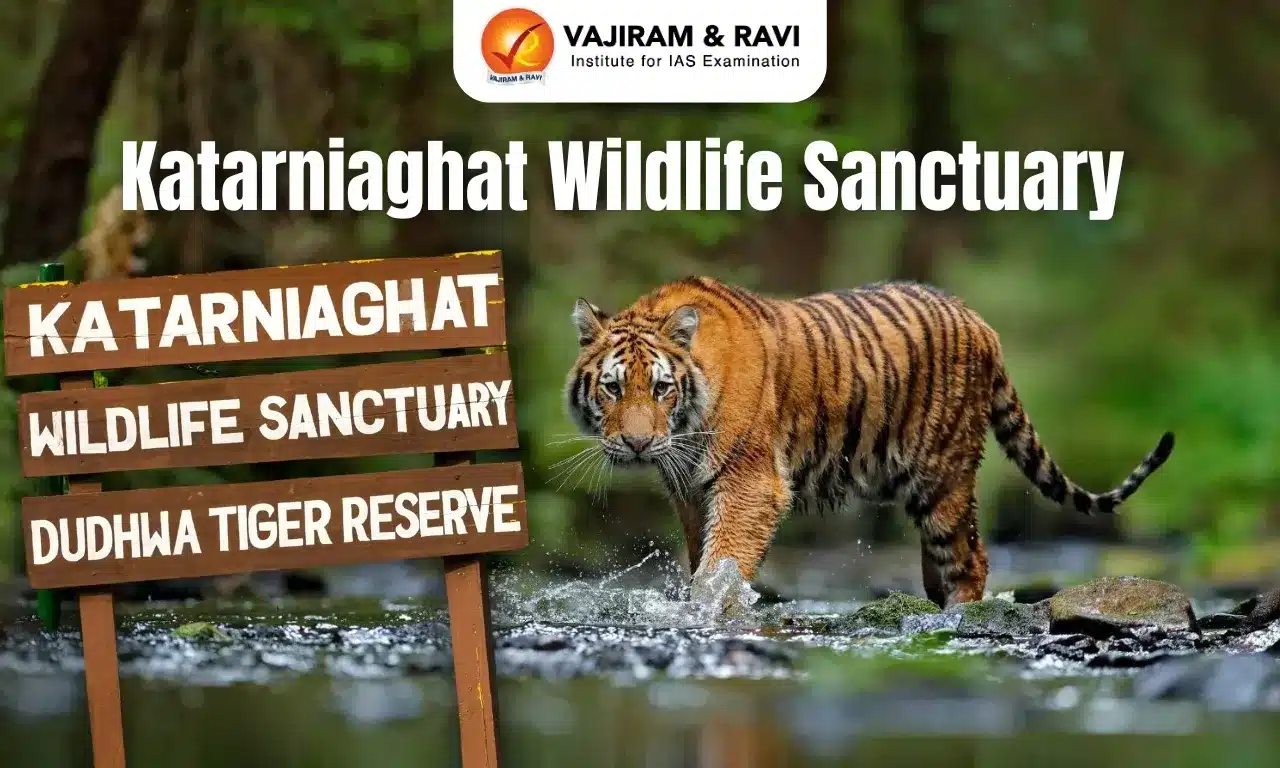
  • It is situated in the Upper Gangetic plain, falling in the Terai of the Bahraich district of Uttar Pradesh.
  • In 1987, it was brought under the purview of the ‘Project Tiger’, and together with the Kishanpur Wildlife Sanctuary and the Dudhwa National Park, it forms the Dudhwa Tiger Reserve.
  • The total area of the sanctuary is 400.09 sq.km.
  • Sharing an international border with Nepal, this sanctuary was established to protect its Gharial (Gavialis gangeticus) population. 
  • It provides strategic connectivity between the tiger habitats of Dudhwa and Kishanpur in India and the Bardia National Park in Nepal. 
  • Vegetation: Katarniyaghat's vegetation consists of grasslands, mixed deciduous forests, and moist deciduous forests with sal trees. 
  • Flora: It is predominantly Sal Forest with its associate tree species like Terminalia alata (Asna), Lagerstroemia parviflora (Asidha), Adina cordifonia (Haldu), Mitragyna parpiflora (Faldu), Gamelina arborea (Gahmhar), etc.
  • Fauna:
    • It is home to a number of endangered species, including the gharial, tiger, rhino, Gangetic dolphin, Swamp deer, Hispid hare, Bengal florican, the White-backed and Long-billed vultures.
    • The Gairwa River, which flows in the KWS area, is declared a sanctuary for Mugger and Gharial. It is also home to rare turtles, freshwater fish, and a host of aquatic life.
    • It is among the few places in India where freshwater dolphins, also known as Gangetic dolphins, are found in their natural habitat.

Source: PTI

Katarniaghat Wildlife Sanctuary FAQs

Q1: Katarniaghat Wildlife Sanctuary is located in which Indian state?

Ans: Uttar Pradesh

Q2: Katarniaghat Wildlife Sanctuary lies in which geographical region?

Ans: Upper Gangetic Plain (Terai region).

Q3: Katarniaghat Wildlife Sanctuary forms part of which tiger reserve?

Ans: Dudhwa Tiger Reserve

Sickle Cell Disease

Sickle Cell Disease

Sickle Cell Disease Latest News

A decade-long study by a Gurugram hospital has found success in curing Sickle Cell Disease among children through bone marrow (stem cell) transplantation, placing India among the leading nations in advanced paediatric transplant outcomes.

About Sickle Cell Disease

  • It is a group of inherited blood cell disorders that affect hemoglobin, the protein that carries oxygen through the body.
  • SCD can cause episodes of severe pain and lead to life-threatening complications. 
  • The most common and severe type of SCD is sickle cell anemia.
  • How Does it Affect Blood Flow?
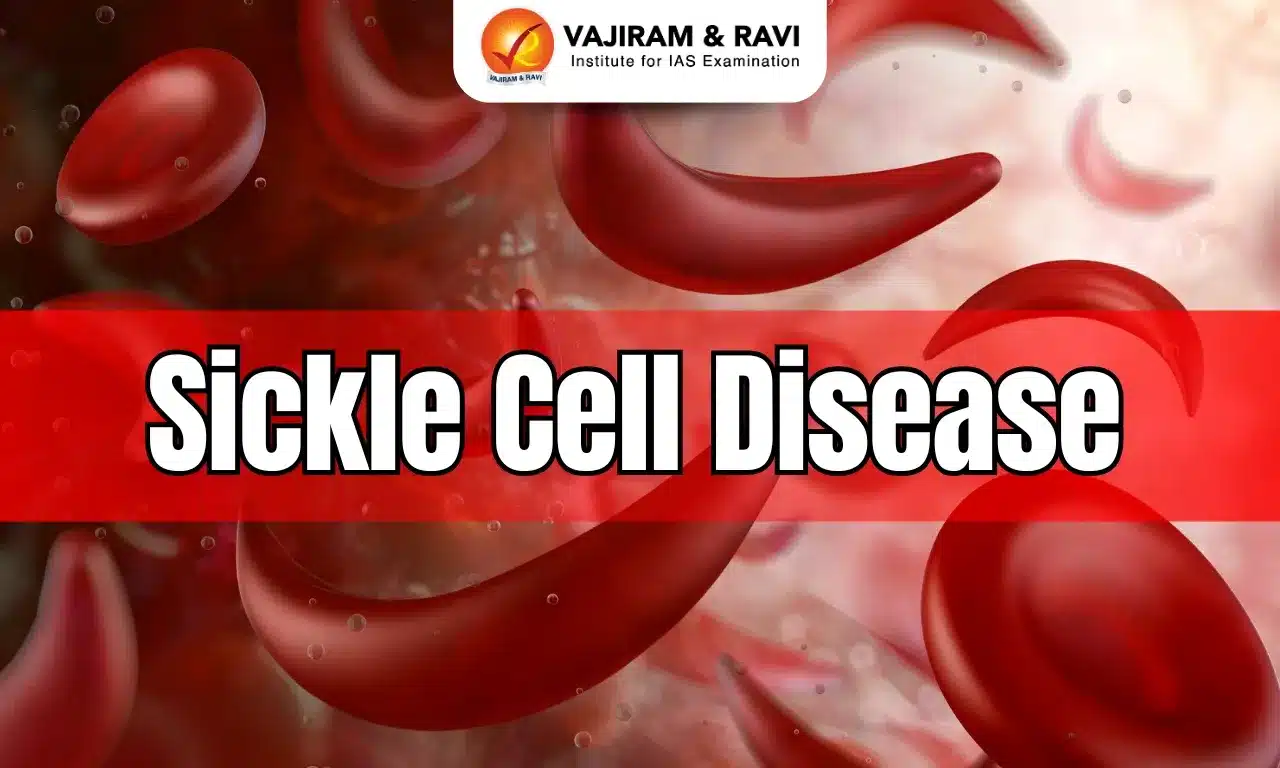
    • Normally, RBCs are disc-shaped and flexible enough to move easily through the blood vessels.
    • People with SCD have atypical hemoglobin molecules called hemoglobin S, which can distort RBCs into a sickle, or crescent, shape.
    • When RBCs sickle, they do not bend or move easily and can block blood flow to the rest of the body.
    • SCD interferes with the delivery of oxygen to the tissues.
  • What causes it?
    • The cause of SCD is a defective gene, called a sickle cell gene.
    • A person will be born with SCD only if two genes are inheritedone from the mother and one from the father.
  • Symptoms:
    • Early stage: Extreme tiredness or fussiness from anemia, painfully swollen hands and feet, and jaundice.
    • Later stage: Severe pain, anemia, organ damage, and infections.
  • Treatments:
    • A bone marrow transplant (stem cell transplant) can cure SCD.
    • However, there are treatments that can help relieve symptoms, lessen complications, and prolong life.
    • Gene therapy is also being explored as another potential cure.
    • The UK recently became the first country to approve gene therapy treatment for SCD.

Source: NDTV

Sickle Cell Disease FAQs

Q1: Sickle Cell Disease primarily affects which component of blood?

Ans: Hemoglobin in red blood cells.

Q2: What is the most common and severe form of Sickle Cell Disease (SCD)?

Ans: The most common and severe type of SCD is sickle cell anemia.

Q3: What shape do red blood cells take in individuals with Sickle Cell Disease (SCD)?

Ans: People with SCD have atypical hemoglobin molecules called hemoglobin S, which can distort RBCs into a sickle, or crescent, shape.

Uturuncu Volcano

Uturuncu Volcano

Uturuncu Volcano Latest News

A team recently mapped the inside of Bolivia’s Uturuncu volcano and found that its strange surface motions come from hot fluids and gases moving below the crater, not rising magma ready to erupt.

About Uturuncu Volcano

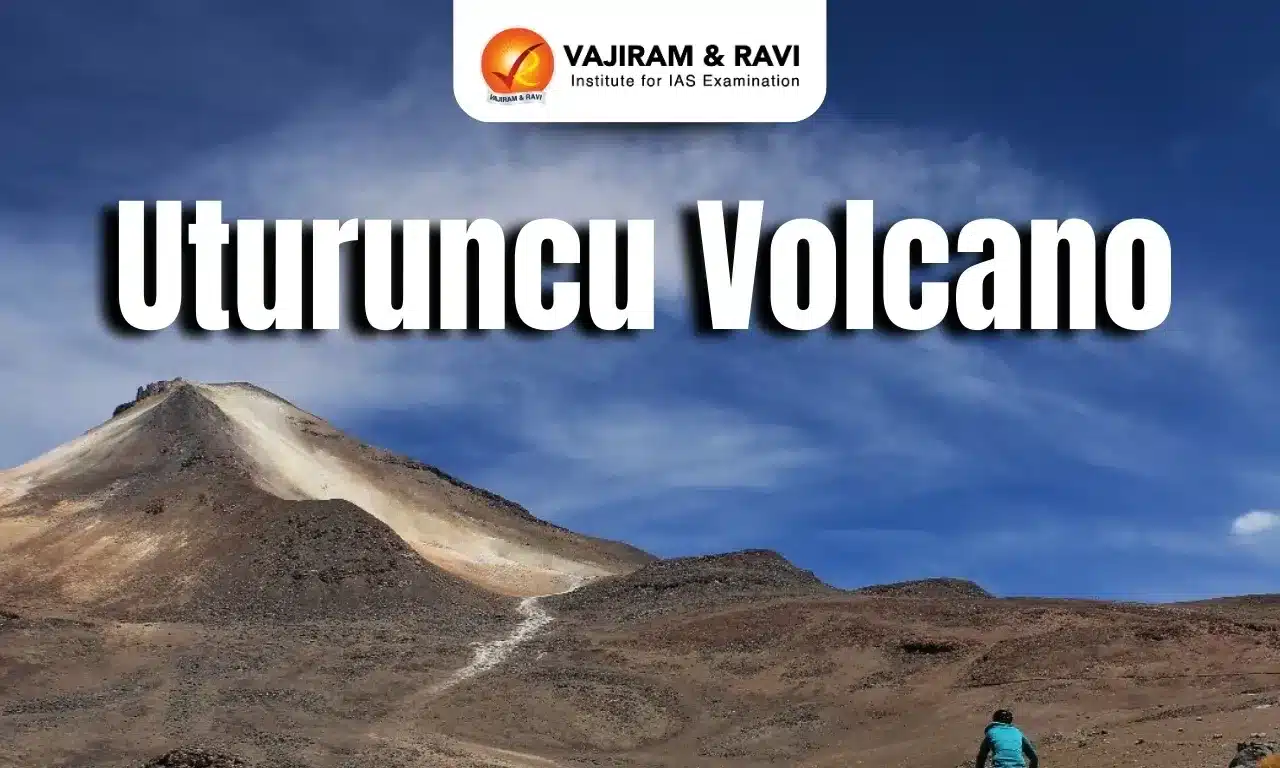
  • It is a large dormant volcano located in southwestern Bolivia, within the Andes Mountains.
  • It is a stratovolcano dominated by dacitic lava domes and flows.
  • Elevation: About 6,008 meters (19,711 feet) above sea level — it is the tallest mountain in the southern part of Bolivia.
  • Uturuncu last erupted 250,000 years ago, yet is seismically active and lies at the centre of a 70 km diameter uplifted region. 
  • Beneath Uturuncu at a depth of about 10 to 20 kilometers lies a vast reservoir of magma called the Altiplano-Puna Magma Body. 
    • Spanning roughly 200 kilometers, it is the biggest known active magma body in the planet’s crust.
  • The volcano displays a distinct "sombrero" shape, with the center rising and the surrounding areas sinking.
  • Uturuncu is known as a “zombie” volcano because of its ongoing but non-eruptive activity.
    • The “zombie”-like unrest of Uturuncu is due to the movement of liquid and gas beneath the crater, with a low likelihood of an imminent eruption.
  • The volcano currently experiences hundreds of small earthquakes per year.

Source: EARTH

Uturuncu Volcano FAQs

Q1: Uturuncu Volcano is located in which country?

Ans: Bolivia

Q2: Uturuncu is best described as which type of volcano?

Ans: It is a stratovolcano.

Q3: What is the name of the massive magma reservoir beneath Uturuncu?

Ans: Altiplano-Puna Magma Body

Q4: Why is Uturuncu referred to as a “zombie” volcano?

Ans: It shows ongoing unrest without an imminent eruption.

Ambaji Marble

Ambaji Marble

Ambaji Marble Latest News

Recently, the Ambaji Marble has been awarded the Geographical Indication (GI) tag for its high-quality white stone.

About Ambaji Marble

  • It is named after the town of Ambaji in the state of Gujarat, where it is predominantly quarried. 
  • It is a type of marble known for its milky white colour, durability and natural beauty.

Features of Ambaji Marble

  • Appearance: It is characterized by its pristine white color, which often features subtle gray or beige veining.
    • The veins can vary in intensity and they occur naturally due to the presence of minerals and impurities during the marble formation process.
  • Durability: It has very long-lasting shine and durability
  • Applications of Ambaji Marble: It has been used in the construction of Ambaji temple and many other religious places, memorials and grand buildings.

Key Facts about Marble

  • It is a metamorphic rock that forms when limestone is subjected to the heat and pressure of metamorphism.
  • Composition: It is composed primarily of the mineral calcite (CaCO3) and usually contains other minerals, such as clay minerals, micas, quartz, pyrite, iron oxides, and graphite.

Formation of Marble

  • Under the conditions of metamorphism, the calcite in the limestone recrystallizes to form a rock that is a mass of interlocking calcite crystals.
  • A related rock, dolomitic marble, is produced when dolostone is subjected to heat and pressure.
  • The transformation of limestone into marble usually occurs at convergent plate boundaries, where large areas of Earth’s crustare exposed to the heat and pressure of regional metamorphism.
  • Some marble also forms by contact metamorphism when a hot magma body heats adjacent limestone or dolostone.

Source: TH

Ambaji Marble FAQs

Q1: Where is Ambaji Marble primarily found?

Ans: Gujarat

Q2: What is the primary composition of Ambaji Marble?

Ans: Calcium carbonate

Hepatitis A

Hepatitis A

Hepatitis A Latest News

Recently, public health experts opined that Hepatitis A deserves a place in India’s universal immunisation programme  due to its multiple outbreaks across many states in India.

About Hepatitis A

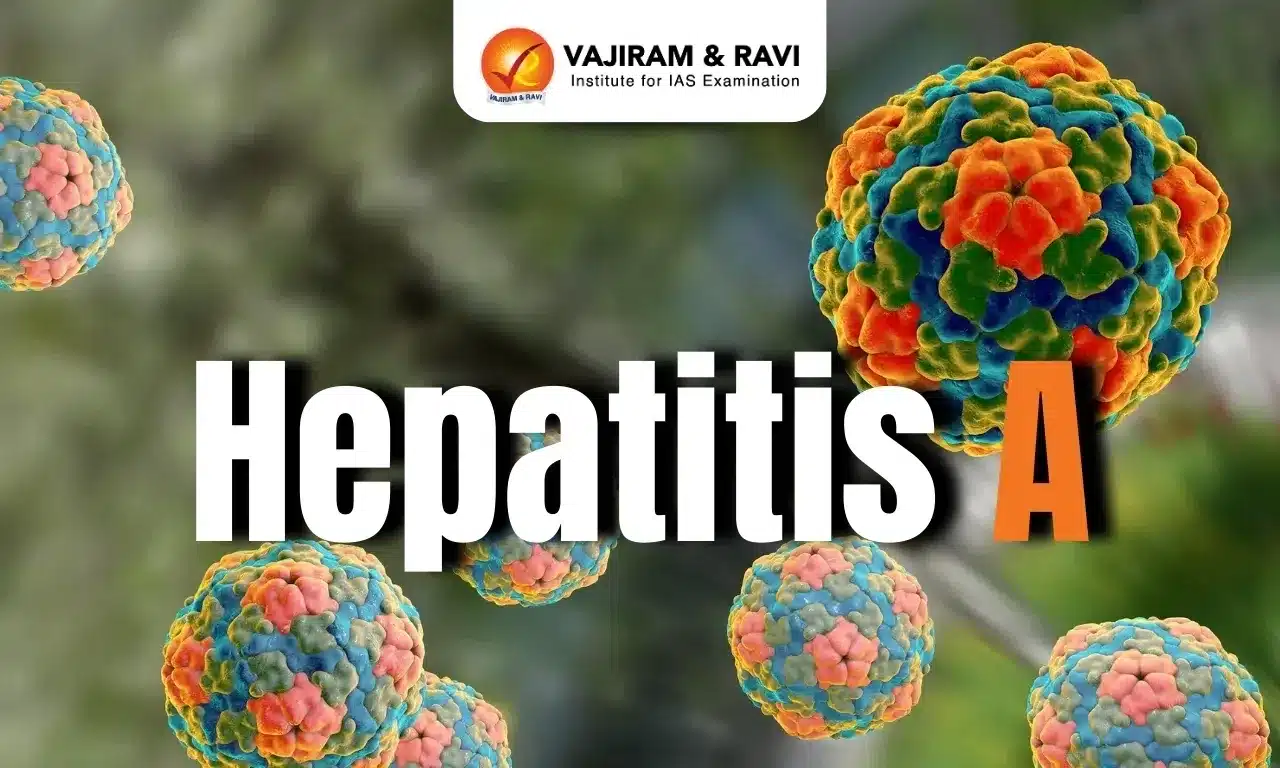
  • Hepatitis A is an inflammation of the liver caused by the hepatitis A virus (HAV). 
  • It occurs throughout the world.
  • It is especially common in countries in Latin America, Africa, the Middle East, Asia, the Caribbean, and the Western Pacific.
  • Unlike hepatitis B and C, hepatitis A does not cause chronic liver disease but it can cause mild to severe symptoms and rarely fulminant hepatitis (acute liver failure).
  • Symptoms: Fever, malaise, loss of appetite, Nausea, diarrhoea, abdominal discomfort, Dark urine and jaundice.

Transmission of Hepatitis A

  • It is transmitted primarily by the faecal-oral route; that is when an uninfected person ingests food or water that has been contaminated with the faeces of an infected person. 
  • The virus can also be transmitted through close physical contact with an infectious person.

Treatment for Hepatitis A

  • There is no specific antiviral treatment for hepatitis A.
  • Its treatment mainly focuses on supportive care to relieve symptoms and ensure adequate hydration and nutrition.

Source: TH

Hepatitis A FAQs

Q1: What is the primary cause of Hepatitis A?

Ans: Hepatitis A virus (HAV)

Q2: Which of the following is a common mode of transmission for Hepatitis A?

Ans: Contaminated food and water

Enquire Now