

India’s EV Push Amid Chinese Export Restrictions on HREEs

India’s EV Push

India’s EV Push Latest News

  • China—holding over 90% of global rare earth processing—has imposed curbs on exports of key heavy rare earth elements (HREEs) critical for EV motors, threatening global EV supply chains. 
  • In response, Indian start-ups like Simple Energy and Chara Technologies are developing rare-earth-free or rare-earth-light electric motors.
  • This marks a crucial step toward Atmanirbhar Bharat, de-risking supply chains, and strengthening India’s EV ecosystem.

Background - China’s Rare Earth Export Controls

  • Export curbs on 7 HREEs (April 2025): Samarium, gadolinium, terbium, dysprosium, lutetium, scandium, yttrium.
  • Expansion of export curbs (October 2025): Holmium, erbium, thulium, europium, ytterbium along with related magnets and materials.
  • Reason behind curbs: These restrictions emerged amidst a prolonged US–China trade war, creating strategic vulnerabilities for global EV firms.
  • Indian imports: India imported 2,270 tonnes of rare earths in 2023–24 (23% rise since 2019–20), with 65% reliance on China.

Indigenous Technological Responses in India

  • Simple Energy
    • Key innovation: Developed and homologated a heavy rare-earth-free Permanent Magnet Synchronous Motor (PMSM).
    • Eliminated restricted HREEs by:
      • Using optimised compound magnets (iron, neodymium, boron, praseodymium, holmium).
      • Employing proprietary algorithms for real-time heat, torque and magnetic field management.
    • Performance: Almost 99.5% equivalence to conventional PMSM motors.
    • Handling Chinese restrictions: Holmium was later added to the restricted list. The company has already developed holmium-free magnets and has buffer stock.
    • Market presence: All current EVs use restricted-HREE-free motors. 1,050 units sold in October 2025 (highest ever, recording 215% YoY growth).
  • Chara Technologies: 
    • Key innovations: Developed India’s first EV-grade Magnet-Free Synchronous Reluctance Motor (SynRM), eliminating all magnet requirements.
    • Overcame traditional SynRM limitation (low-speed industrial application) by creating 
      • High-speed, variable-speed EV-compatible motor.
      • Comparable torque and power to rare-earth-based PMSM motors, with only a slight increase in size — about 16% larger.
    • Deployment: Currently used in agricultural and industrial machinery, with expected entry into the three-wheeler segment.

Strategic Significance for India

  • Supply chain security: Reduces dependence on China’s volatile supply of rare earths. Mitigates risks for India’s rapidly growing EV and electronics industries.
  • Atmanirbhar Bharat and technological sovereignty: Boosts indigenous R&D, IP creation, and local manufacturing capabilities.
  • Geopolitical cushioning: Provides strategic resilience in the face of global critical mineral weaponisation.
  • Industry momentum: Ola Electric, TVS Motor and others are also exploring rare-earth-free motors (e.g., ferrite motor approved recently).

Challenges

  • Technical and manufacturing challenges: Matching compactness, efficiency, and performance of rare-earth PMSM motors (especially for SynRM). Scaling production while reducing size and weight.
  • Cost and supply stability: Availability of alternative magnet compositions must be sustainable and cost-effective. Global rare earth volatility continues to pose uncertainty.
  • Market adoption: Original equipment manufacturers’ (OEM) willingness to shift from established PMSM technologies to new indigenous designs.
  • Raw material ecosystem: India still lacks a robust domestic rare earth mining, processing, and refining ecosystem.

Way Forward

  • Strengthening critical mineral security: Accelerate exploration under the National Mineral Exploration Policy. Build processing/refining capacity through PPPs and global partnerships.
  • R&D and innovation support: Incentivise indigenous EV component technology under PLI schemes, R&D grants, and Start-up India.
  • Creating a local magnet and material ecosystem: Encourage production of ferrite, non-rare-earth magnets, and alternative alloys.
  • Scaling manufacturing: Support commercialisation via demand aggregation, state EV policies, and fleet adoption.
  • Strategic global collaboration: Tie-ups with Japan, Australia, US for technology and mineral supply diversification.

Conclusion

  • India’s indigenous EV motor innovations represent a significant step towards technological self-reliance and supply chain resilience amid China’s tightening rare earth export controls. 
  • These innovations are reducing India’s vulnerability, strengthening its EV ecosystem, and aligning with national goals of Atmanirbhar Bharat, energy security, and sustainable mobility. 
  • Continued investment in R&D, critical mineral sourcing, and industrial scaling will be essential to sustain this momentum.

Source: IE

India’s EV Push FAQs

Q1: What is the significance of India’s development of rare-earth-free EV motors?

Ans: It enhances India’s supply chain security, reduces dependence on China, and strengthens technological self-reliance in the EV sector.

Q2: How Simple Energy’s technological innovation addresses challenges posed by restricted heavy rare earth elements?

Ans: It replaces restricted HREE magnets with optimized compounds and proprietary algorithms, achieving near-identical performance without using banned materials.

Q3: What is the role of synchronous reluctance motors (SynRM) in promoting indigenous EV manufacturing?

Ans: Chara Technologies’ SynRM enables a fully magnet-free, India-sourced motor technology that reduces foreign dependence.

Q4: How do Chinese export controls on rare earths impact India’s EV industry?

Ans: They create supply chain vulnerabilities for EV manufacturers reliant on rare earth magnets.

Q5: Why is India sourcing all materials domestically for Chara’s magnet-free EV motors?

Ans: It advances Atmanirbhar Bharat, enhances technological sovereignty, and reduces geopolitical risks.
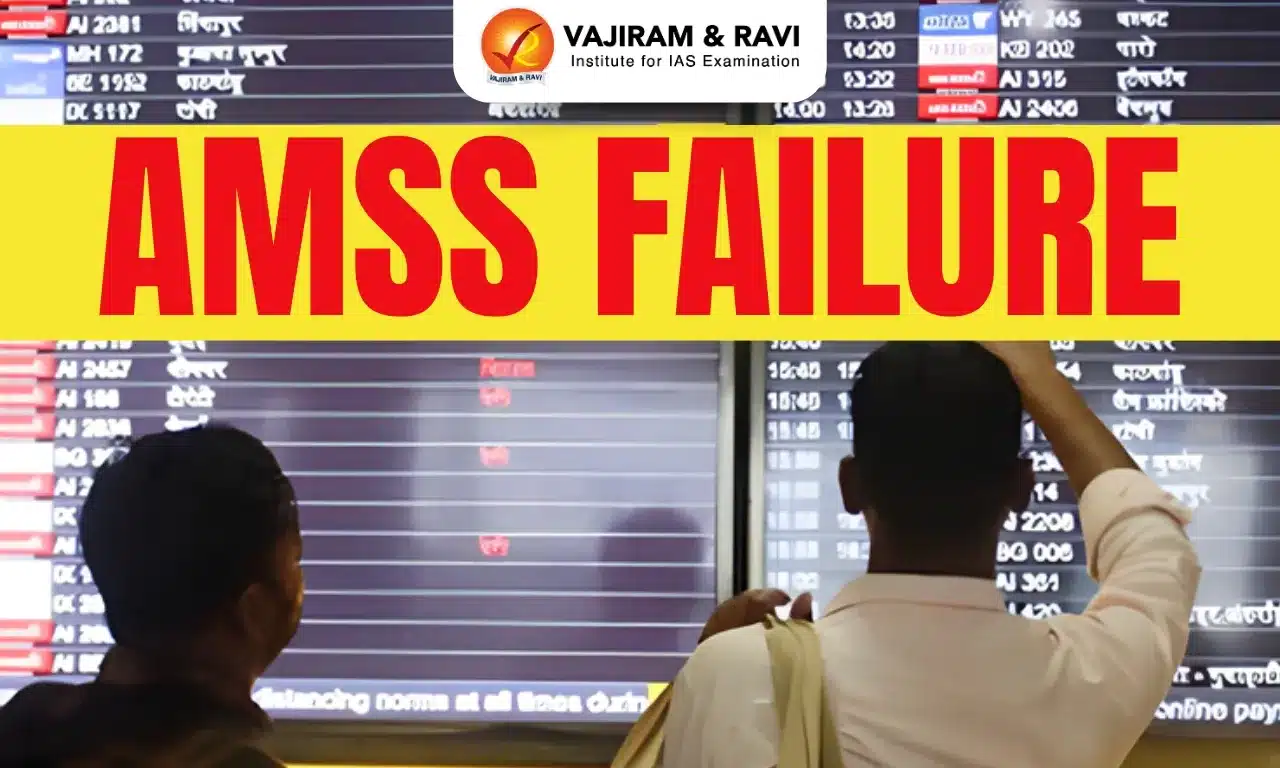

Delhi Airport AMSS Failure: Why the System Crashed and How India Plans to Upgrade ATC

AMSS Failure

AMSS Failure Latest News

  • Recently, air traffic operations at Delhi’s IGI Airport were disrupted due to a technical failure in the Automatic Message Switching System (AMSS). The outage lasted for more than 24 hours before the system was restored. 
  • Following the incident, the Civil Aviation Ministry has reportedly directed the Airports Authority of India to upgrade the system.

AMSS Failure Disrupted Delhi’s Air Traffic Operations

  • The Air Traffic Controllers’ Guild highlighted that the AMSS failure forced controllers to manually manage over 2,500 aircraft movements daily, including 1,500 scheduled flights and 1,000 overflights across Indian airspace. 
  • Since ATC automation depends on the Flight Data Processing System (FDPS) — which is fed by the AMSS — the outage meant critical data such as flight plans could not be accessed.

AMSS and Air Traffic Management

  • AMSS is the core communication backbone for Air Traffic Control (ATC) centres in Delhi, Mumbai, Chennai and Kolkata. 
  • It automatically receives, stores and forwards all aeronautical messages through Aeronautical Fixed Telecommunications Network (AFTN) and Aeronautical Message Handling System (AMHS) networks.
    • AFTN and AMHS are two systems for transmitting vital aeronautical information, with AMHS being the modern, more advanced successor to AFTN.
  • These include:
    • Flight plans
    • Departure and arrival messages
    • Delay and cancellation updates
    • Meteorological data
    • NOTAMs
    • Coordination messages between ATCs and airlines
  • It integrates inputs from airlines, ATC units, meteorological offices and AAI stations, converts multiple message formats into a unified one, and routes them appropriately.

Why the AMSS is Vulnerable: Old Architecture & Integration Gaps

  • Delhi’s AMSS, supplied by a Spanish firm, operates on legacy server architecture with old message-switching software, partly patched but outdated. 
  • Key vulnerabilities include:
    • Database/server overload during peak traffic
    • Poor synchronisation between primary and standby systems
    • Integration issues with automation, AIS, and network routers
    • Network faults causing message flow bottlenecks
    • Limited local technical expertise available to maintain the legacy system

What Triggered the Delhi Breakdown

  • According to officials, Delhi’s failure occurred due to:
    • Synchronisation failure between primary and standby servers
    • Delayed system switchover
    • Corrupted message queues, preventing message retrieval and routing.
  • These resulted in the inability to transmit or receive flight plans and NOTAMs, forcing ATCOs into complete manual mode.

Need for Modernisation

  • Experts emphasise that India urgently needs to migrate to a modern, cloud-supported AMHS/ATS integrated system with robust redundancy, real-time synchronisation and trained technical support. 
  • The current setup is inadequate for India’s rapidly growing air traffic load.

Parliamentary Panel Flags Degrading ATC Automation Systems

  • The Parliamentary Standing Committee’s 380th Report (August 2025) warns that automation systems at major airports like Delhi and Mumbai are showing serious performance degradation, including system slowness, data processing delays, and outdated functionalities.
  • The report notes that Indian ATC systems lack several advanced features available in global systems such as Eurocontrol and the FAA, including:
    • AI-enabled conflict detection
    • Predictive analytics for traffic flow
    • Real-time, seamless data sharing across units and with aircraft
    • Integrated, modern decision-support tools
  • This technological gap reduces operational efficiency and restricts airspace capacity.
  • Due to missing automation features, Air Traffic Controllers must manually compensate for system weaknesses, adding significant cognitive strain on already overburdened Air Traffic Controllers (ATCOs).
  • The lack of updated tools increases the risk of human error, potentially jeopardising safety and limiting the effective management of fast-growing air traffic volumes.

India Plans Major Upgrades to Modernise Air Traffic Management

  • The Ministry of Civil Aviation has outlined several AAI initiatives to modernise air traffic systems. 
  • These include installing a new nationwide AMHS to replace outdated AMHS/AMSS platforms and deploying Automatic Dependent Surveillance–Broadcast (ADS-B) ground stations at 21 airports, with installations completed at 15 additional sites.
  • According to an AAI note updated in August 2025, India is planning a major upgrade of its air traffic management system. 
  • This includes new automation tools, better technology, and a shift from ground-based to satellite-based navigation to match global standards.

Source: TH | IE | FI

AMSS Failure FAQs

Q1: What caused the major disruption at Delhi Airport’s ATC?

Ans: A failure in the Automatic Message Switching System halted flight data transmission, forcing controllers to manually manage over 2,500 daily aircraft movements.

Q2: Why is AMSS critical for air traffic management?

Ans: AMSS handles flight plans, NOTAMs, weather updates, and operational messages using AFTN and AMHS networks, making it the backbone of ATC communication.

Q3: What led to the AMSS breakdown?

Ans: A synchronisation failure between primary and standby servers, delayed switchover, corrupted message queues, and legacy software triggered the system collapse.

Q4: What concerns did the parliamentary panel raise?

Ans: The panel noted degrading automation, slow data processing, lack of AI tools, poor integration, and rising strain on ATCOs due to outdated systems.

Q5: How is India planning to modernise air traffic systems?

Ans: AAI will deploy a nationwide AMHS, expand ADS-B stations, upgrade automation tools, and shift from ground-based to satellite-based navigation to match global standards.

Rising GNSS Spoofing Threat: Why Delhi’s Airspace Faced Navigation Disruptions

GNSS Spoofing

GNSS Spoofing Latest News

  • In early November, several aircraft flying over Delhi experienced GNSS (Global Navigation Satellite System) spoofing, where satellite navigation signals were manipulated without warning. Such incidents are uncommon outside border or conflict areas. 
    • GNSS is a general term for satellite-based systems that provide positioning, navigation, and timing (PNT) services on a global scale.
    • E.g., - Russia's GLONASS, Europe's Galileo, China's BeiDou etc.
  • Following the disruption, the government ordered an investigation led by the National Security Council Secretariat (NSCS) under National Security Adviser Ajit Doval.

GNSS Spoofing Near Delhi: A New and Unusual Safety Threat

  • Aircraft flying near Delhi recently faced GNSS spoofing, where fake satellite signals give wrong navigation data. Pilots reported incorrect aircraft positions and false terrain warnings. 
    • An Air India pilot said he faced spoofing on all six days he flew in early November. These signals were detected within 60 nautical miles of Delhi.
  • Because navigation systems became unreliable, air traffic controllers had to give manual guidance to pilots. 
  • GNSS spoofing is usually seen only in war zones or border areas, such as West Asia, eastern Russia, and India’s borders with Pakistan and Myanmar. 
  • It had never been reported before over a major inland city like Delhi. It should be noted that VIP movements do not cause spoofing; they only involve GNSS jamming, not false signals.
  • No NOTAM (warning notice) was issued to explain the interference. 
    • A NOTAM, or Notice to Airmen, is a notification issued by aviation authorities to alert pilots and other aviation personnel of potential hazards or changes that could affect flight safety.
  • The National Security Council Secretariat under Ajit Doval has launched an investigation. 

About GNSS Spoofing

  • Modern aircraft depend heavily on GNSS/GPS signals for navigation, timing, terrain awareness, and communication. 
  • When these signals are faked or altered, aircraft systems may show:
    • Wrong positions
    • False terrain or runway warnings
    • Incorrect braking cues
    • Errors in communication and surveillance systems
  • Spoofing usually doesn’t immediately endanger a flight because aircraft have backup systems, like the Inertial Reference System, which works for up to five hours even if GPS fails. 
  • However, spoofing still affects safety by confusing pilots, creating false alerts, and increasing workload — especially when no NOTAMs warn them in advance.
  • Even after the aircraft leaves the spoofed zone, some systems may not reset properly and may continue showing false alerts or navigation errors. This makes the situation harder to manage.

How Spoofing Became a Global Aviation Problem

  • According to a 2024 OPS Group report:
    • GPS spoofing grew sharply after September 2023.
    • By January 2024, around 300 flights per day were affected.
    • By August 2024, spoofing hit 1,500 flights daily.
    • In one month (July 15–August 15, 2024), 41,000 flights worldwide experienced spoofing.
  • The Delhi region ranked among the top 10 global hotspots, reporting 316 spoofing events during the same period.

India’s Exposure to Spoofing Events

  • Government data shows 465 GPS interference and spoofing incidents in India’s border areas — mainly Amritsar and Jammu — between November 2023 and February 2025, roughly one event per day.
  • Delhi saw several spoofing events despite being far from conflict zones.

Actors Behind GPS Spoofing

  • Primary actors include:
    • Military units using spoofing to mislead enemy drones and GPS-guided weapons in conflict zones.
    • There are also claims of deliberate targeting of civilian aircraft, particularly in regions around Russia.

Global Aviation Leaders Call for Stronger Protection

  • Experts urged all nations and agencies to protect civilian flights and airports, reminding that international law bans targeting civil aviation. 
  • They stressed the need for urgent global action against spoofing and jamming threats.

IATA’s Multi-Layered Strategy to Tackle GNSS Spoofing

  • At the ICAO Assembly, IATA proposed a comprehensive plan to address the growing risk of spoofing:
    • Standardised reporting for all GNSS interference events
    • Stronger cross-border cooperation and real-time information sharing
    • Regulation and enforcement on the sale and use of jamming devices
    • Better spectrum management at national and global levels
    • Advanced detection systems to identify interference early
    • More resilient GNSS receivers, with anti-jamming and anti-spoofing technology built into aircraft systems.
  • These steps aim to build a global shield against spoofing and protect aviation safety.

Why India Needs Faster Response and Transparency

  • Repeated spoofing incidents around Delhi, Mumbai, and Kolkata have raised serious safety concerns in India. 
  • Delayed communication and limited transparency make it difficult for airlines and pilots to take timely decisions. 
  • This undermines trust among flight crews and passengers and highlights the urgent need for clear reporting protocols, faster alerts, and stronger technical safeguards.

Source: TH | TI | IT

GNSS Spoofing FAQs

Q1: What triggered concerns about GNSS spoofing in Delhi?

Ans: In early November, aircraft near Delhi received fake GNSS signals causing incorrect navigation and terrain warnings, prompting manual ATC guidance and a government investigation.

Q2: Why is GNSS spoofing dangerous for aircraft?

Ans: Spoofed signals create false alerts, wrong positions, and confusion in the cockpit. Backup systems keep flights safe, but pilot workload and error risk increase significantly.

Q3: How widespread has spoofing become globally?

Ans: OPS Group reported spoofing growing from 300 flights daily in early 2024 to 1,500 by August. Between July-August 2024, 41,000 flights were affected globally.

Q4: Who are the main actors behind GPS spoofing?

Ans: Spoofing is mainly carried out by military units targeting enemy drones and weapons. Some regions also face allegations of spoofing directed at civilian aircraft.

Q5: What solutions has IATA proposed to tackle spoofing?

Ans: IATA recommends standardised reporting, cross-border coordination, regulation of jamming devices, better spectrum management, advanced detection systems, and resilient anti-spoofing GNSS receivers.

India’s Progress in Tackling Tuberculosis – Explained

India’s Progress in Tackling Tuberculosis - Explained

Tuberculosis Latest News

  • The WHO Global TB Report 2025 highlighted that India’s TB incidence has declined by 21% since 2015.

Background

  • The World Health Organisation Global Tuberculosis Report 2025 has reaffirmed that tuberculosis (TB) continues to be among the world’s deadliest infectious diseases, claiming over 1.2 million lives and affecting 10.7 million people globally in 2024
  • While India remains the largest contributor to the global TB burden, the country has made significant strides in reducing incidence, with a 21% decline between 2015 and 2024, nearly double the global average rate of decline.
  • However, despite these achievements, India has missed its self-imposed target of eliminating TB by 2025, underscoring persistent challenges such as drug-resistant strains, healthcare gaps, and social stigma.

Global and National Burden of Tuberculosis

  • According to the WHO report, 87% of the world’s TB cases are concentrated in just 30 countries, with India (25%) leading the list, followed by Indonesia (10%), the Philippines (6.8%), China (6.5%), and Pakistan (6.3%).
  • India’s estimated TB incidence rate fell from 237 per lakh population in 2015 to 187 per lakh in 2024, marking a commendable improvement in detection and treatment coverage. 
  • The Union Health Ministry reported that India’s treatment coverage now stands at 92%, outpacing most high-burden countries.
  • States such as Uttar Pradesh, Maharashtra, Bihar, and Madhya Pradesh account for the highest number of TB cases, while Delhi records the highest infection prevalence rate.

Government Initiatives and Policy Framework

  • India’s TB elimination efforts are anchored in the National Tuberculosis Elimination Programme (NTEP), launched in 2020 after rebranding the earlier Revised National TB Control Programme (RNTCP)
  • The NTEP set an ambitious goal to eliminate TB by 2025, five years ahead of the global target of 2030. Key interventions under the NTEP include:
    • Expanded Diagnostic Infrastructure - India has established 9,391 rapid molecular testing laboratories and 107 culture and drug susceptibility testing labs, forming the largest TB diagnostic network in the world.
    • Use of Technology and AI - Over 500 AI-enabled portable X-ray units have been deployed nationwide to enhance community screening, with 1,500 more units planned for delivery.
    • Decentralised TB Care through Ayushman Arogya Mandirs - Around 1.78 lakh primary health centres provide TB services closer to communities, improving accessibility.
    • Nutritional Support under Ni-kshay Poshan Yojana - Monthly Direct Benefit Transfer (DBT) to TB patients has been doubled from Rs. 500 to Rs. 1,000, supporting better treatment adherence and recovery.
    • Community and ASHA Worker Engagement - Accredited Social Health Activists (ASHAs) have been trained to identify early TB symptoms and ensure treatment compliance.

Persistent Challenges in TB Elimination

  • Drug-Resistant Tuberculosis
    • India has one of the highest burdens of multi-drug-resistant TB (MDR-TB) in the world, making treatment longer, more expensive, and less effective. 
    • Drug resistance continues to threaten the country’s progress in curbing overall TB cases.
  • Healthcare Infrastructure and Workforce Gaps
    • Rural and remote areas continue to face shortages of trained personnel, diagnostic delays, and weak referral systems, affecting timely detection and treatment.
  • Supply Chain and Drug Stockouts
    • Periodic disruptions in the anti-TB drug supply chain have led to stockouts in several states, forcing patients to skip doses, a critical risk factor for developing drug resistance. 
    • Although authorities have denied widespread shortages, regional inconsistencies persist.
  • Funding and Research Deficits
    • Globally, only $5.9 billion was available for TB control in 2024, just a quarter of the $22 billion annual target set for 2027. 
    • Research funding remains limited at $1.2 billion (24% of the target). These shortfalls directly impact the rollout of new diagnostics, drugs, and vaccines.
  • Social Stigma and Awareness Gaps
    • Deep-rooted stigma and discrimination discourage patients from seeking diagnosis and adhering to treatment, particularly among women and marginalised groups.

Global Efforts and India’s Role

  • The WHO highlighted that globally, TB incidence fell by 2% between 2023 and 2024, and deaths decreased by 3%. Since 2000, timely diagnosis and treatment have saved 83 million lives.
  • India’s accelerated decline in TB incidence, nearly twice the global average, demonstrates strong national ownership and effective public health strategies. 
  • The government’s expansion of the “Ni-kshay Mitra” initiative, under which individuals and organisations adopt TB patients to provide nutritional and social support, has also gained momentum.
  • However, to meet the global End TB Strategy, India must sustain annual declines of 10-12%, supported by greater investment, innovation, and intersectoral collaboration.

Way Forward

  • Experts emphasise the need for a multi-pronged strategy focusing on:
    • Universal access to diagnosis and treatment, especially for marginalised communities.
    • Integration of TB care with primary health services to ensure continuity.
    • Scaling up digital surveillance and AI-based diagnostic tools.
    • Increased domestic and global funding for TB research and vaccine development.
    • Public awareness and destigmatisation campaigns to encourage early treatment.

Source : TH

Tuberculosis FAQs

Q1: What is India’s current TB incidence rate?

Ans: India’s TB incidence has declined by 21%, from 237 per lakh in 2015 to 187 per lakh in 2024.

Q2: What is the target year for India’s TB elimination?

Ans: India aimed to eliminate TB by 2025, five years ahead of the global goal of 2030, but is likely to miss this deadline.

Q3: What are the main causes of TB elimination delays in India?

Ans: Key challenges include drug-resistant TB, funding shortfalls, weak infrastructure, and social stigma.

Q4: What is the Ni-kshay Poshan Yojana?

Ans: It is a government scheme providing Rs. 1,000 monthly nutritional support to TB patients through Direct Benefit Transfer.

Q5: How much has global TB funding reached compared to the target?

Ans: Only $5.9 billion was available in 2024, just over one-fourth of the $22 billion annual target set for 2027.

Enquire Now