Ammonium Nitrate

Ammonium Nitrate

Ammonium Nitrate Latest News

Ammonium nitrate, one of the substances responsible for the Delhi explosion recently, was used in five deadly blasts in the Mumbai city in the past after being mixed with other products.

About Ammonium Nitrate

  • Ammonium nitrate (NH4NO3) is a crystal-like white solid which is made in large industrial quantities. 
  • It is a salt of ammonia and nitric acid.
  • It is commonly used in agriculture as a high-nitrogen fertilizer, and it has also been used as an oxidizing agent in explosives.
  • It has a melting point of 170°C. 
  • It is highly soluble in water; heating of the water solution decomposes the salt to nitrous oxide (laughing gas). 
  • It is one of the base ingredients used in the manufacture of commercial explosives. It is the main component of slurry explosives used for mining.  

What Makes Ammonium Nitrate So Explosive?

  • Ammonium nitrate is not an explosive by itself. 
  • Other ingredients like fuel, etc., have to be added to make it an explosive. 
  • For such explosive mixtures to explode, initiators like detonators are required. 

Legal Controls on Ammonium Nitrate in India

  • Under rules introduced in 2012 and updated in 2021, any mixture containing over 45% ammonium nitrate is legally classified as an explosive.
  • A District Magistrate may permit possession of up to 30 metric tonnes, while larger quantities need approval from the Petroleum and Explosives Safety Organisation (PESO). 
  • PESO issues licences for the manufacture, storage, transport, and use of large quantities of ammonium nitrate.

Source: TOI

Ammonium Nitrate FAQs

Q1: What is the chemical formula of ammonium nitrate?

Ans: NH4NO3

Q2: What is the physical appearance of ammonium nitrate?

Ans: It is a crystal-like white solid.

Q3: What are the major uses of ammonium nitrate?

Ans: It is commonly used in agriculture as a high-nitrogen fertilizer, and it has also been used as an oxidizing agent in explosives.

Foraminifera

Foraminifera

Foraminifera Latest News

A global review of tiny sea animals called foraminifera has identified 57 new living species.

About Foraminifera

  • Foraminifera, or forams for short, are single-celled organisms that live in the open ocean, along the coasts, and in estuaries. 
  • Most have shells for protection and either float in the water column (planktonic) or live on the sea floor (benthic). 
  • Of the approximately 8,000 species living today, only about 40 species are planktonic, thus the vast majority of foraminifera live on the sea floor.
  • They live in a number of different habitats at the sea bottom and most ‘crawl around’ using their pseudopodia. 
  • They are generally less than 500 microns (½ mm) in size, though some tropical species can grow to 20 cm. 
  • Because they don’t have a wall around their cell membranes, they are extremely flexible and can change shape.
  • What does “foraminifera” mean?
    • The shells have hundreds of tiny holes called foramen, the Latin word for window. 
    • The organism pushes extensions of its cytoplasm called pseudopodia (or false feet) through these holes to gather food.
  • What Do They Eat?
    • Foraminifera eat detritus on the sea floor and anything smaller than them: diatoms, bacteria, algae, and even small animals such as tiny copepods.
  • How Do They Build Their Shells?
    • Forams are unusual among single-celled organisms because they build shells made of calcium carbonate (calcareous) or from tiny grains of sand stuck together (agglutinate). 
    • Despite their small size and relatively simple biology, forams build complex shells, consisting at their simplest of one chamber (like a vase or tube) to many chambers that coil in elaborate ways.

Source: PHYS

Foraminifera FAQs

Q1: What is Foraminifera?

Ans: Foraminifera are single-celled organisms that live in the open ocean, along the coasts, and in estuaries.

Q2: What is the usual size of most foraminifera?

Ans: They are generally less than 500 microns (½ mm) in size.

Q3: Why are foraminifera extremely flexible?

Ans: They lack a wall around their cell membrane.

Q4: How do foraminifera build their shells?

Ans: They build shells made of calcium carbonate (calcareous) or from tiny grains of sand stuck together (agglutinate).

Gulf Cooperation Council

Gulf Cooperation Council

Gulf Cooperation Council Latest News

Recently, the Gulf Cooperation Council has approved a landmark one-stop travel system designed to streamline movement across member states. 

About Gulf Cooperation Council

  • It is a regional political and economic alliance established in 1981.
  • Member countries: It comprises Bahrain, Kuwait, Oman, Qatar, Saudi Arabia, and the United Arab Emirates (UAE).
  • Objective: To foster economic, security, cultural, and social cooperation among its members.
  • Background: It was formed in response to escalating regional tensions, particularly the Iranian Revolution (1979) and the Iran-Iraq War (1980–1988).
  • Headquarters: Riyadh, Saudi Arabia.

Organizational Structure of the Gulf Cooperation Council

  • Supreme council
    • It is the highest authority of the GCC, composed of the heads of the member states.
    • Its presidency rotates alphabetically according to the names of the countries.
    • It convenes in a regular session annually.
  • Ministerial council
    • It is composed of foreign ministers or their representatives from member states.
    • It proposes policies and implements decisions of the Supreme Council.
  • Secretariat general: Its responsibilities include preparing studies to enhance cooperation, coordination, and integration in joint Gulf projects and initiatives.

What is a One-stop Travel System?

  • It is part of the GCC’s ambitious push to eliminate redundant travel procedures and foster stronger cooperation between member states. 
  • It will allow Gulf citizens to complete all travel procedures including immigration, customs and security checks at a single checkpoint.

 Source: News On Air

Gulf Cooperation Council FAQs

Q1: What is the primary objective of GCC?

Ans: o promote economic integration among member states.

Q2: When was the GCC established?

Ans: 1981

Siliguri Corridor

Siliguri Corridor

Siliguri Corridor Latest News

Amid shifting regional dynamics following the change of regime in Bangladesh and concerns over China’s growing presence near the vulnerable Siliguri corridor, the Indian Army has reinforced its eastern frontier by establishing three new garrison locations.

About Siliguri Corridor

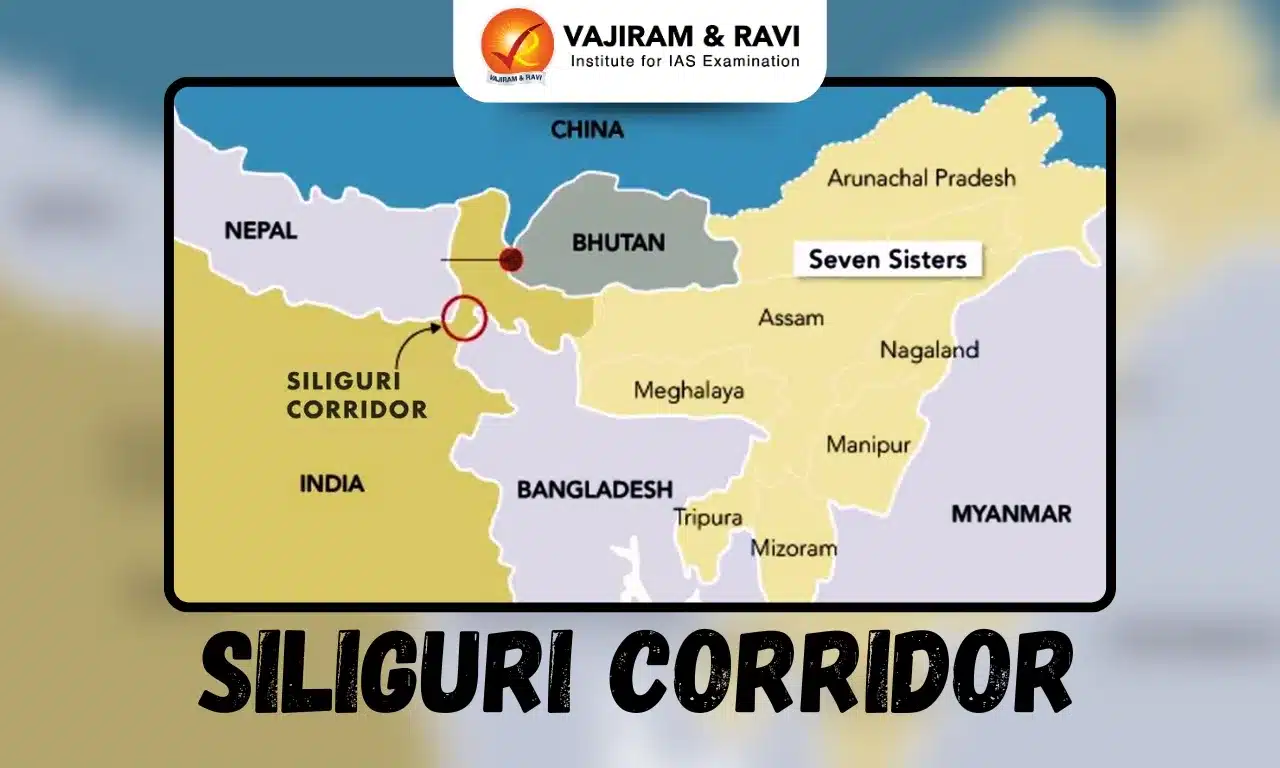
  • It is a narrow stretch of land in West Bengal that connects India’s mainland to its northeastern states.
  • It is around 170 km long and 60 km in width, with its narrowest section being just 20-22 km.
  • Overall, it is 12,200 sq.km. in area.
  • This corridor shares its border with Nepal, Bhutan, and Bangladesh and is only 130 km away from China’s Chumbi Valley.
  • Its geographical fragility and criticality have earned it the nickname “Chicken’s Neck” in strategic and military circles.
  • It is the only land link between our Northeast region and the rest of the country.
  • Any disruption in this corridor — be it from military conflict, natural disaster, or internal unrest — would sever India’s northeastern states from the rest of the country.

Source: TH

Siliguri Corridor FAQs

Q1: Which Indian state contains the Siliguri Corridor?

Ans: West Bengal

Q2: The Siliguri Corridor connects mainland India to which region?

Ans: Northeast India

Q3: What is the narrowest width of the Siliguri Corridor?

Ans: 20–22 km

Q4: Approximately how far is the Siliguri Corridor from China’s Chumbi Valley?

Ans: 130 km

Caracal

Caracal

Caracal Latest News

In a groundbreaking discovery, the elusive Asiatic Caracal has been spotted at Ramgarh in Jaisalmer in Rajasthan.

About Caracal

  • It is an elusive medium-sized wild cat species.
  • Scientific Name: Caracal caracal.
  • It is often referred to as the desert lyn;, however, they are more closely related to the African golden cat and the Serval.
  • In India, it is called siya gosh, a Persian name that translates as ‘black Ear’.

Caracal Distribution

  • It is native to Africa, Central Asia, the Middle East, northwestern India and arid areas of Pakistan.
  • Their numbers in India have dwindled to an estimated 50, primarily in Rajasthan and Gujarat.

Caracal Habitat

  • It can be found in many environments, such as semi-deserts, savannahs, shrublands, steppes, forests, and woodlands. 
  • It prefers dry areas with very little rainfall.

Caracal Features

  • The caracal has a solid build, long legs, a short face, and tufted ears. 
  • They are the largest of Africa’s small wild cats, with males reaching 31 inches in length and females 29 inches in length. 
  • A vital feature of the cat is the black tufts on its ears. 
  • The cat’s fur is generally a red-tan or sand, although some black caracals have also been seen. 
  • Dark lines and white spots can be found near the nose and eyes. 
  • The fur is short and thick, and the cat’s back legs are longer than the front.
  • They are remarkable jumpers and can jump up to 3 meters (10 feet) into the air to knock flushed birds down with their paw. 
  • They can reach speeds of up to 50 mph (80 kph) when in full flight.
  • Like most species of cat, the caracal is predominantly nocturnal.
  • They live in small herds and their shy and elusive nature makes them difficult to spot in the wild.

Caracal Conservation Status

It is classified as ' Least Concern' under the IUCN Red List.

Source: DH

Caracal FAQs

Q1: Caracals are most closely related to which wild cats?

Ans: African golden cat and serval.

Q2: In which regions of the world is the caracal naturally distributed?

Ans: It is native to Africa, Central Asia, the Middle East, northwestern India and arid areas of Pakistan.

Q3: In which Indian states are caracals primarily found today?

Ans: Rajasthan and Gujarat.

Q4: What is the IUCN Red List status of the caracal?

Ans: Least concern

e-Jagriti Platform

e-Jagriti Platform

e-Jagriti Platform Latest News

The e-Jagriti Platform has emerged as a transformative digital grievance redressal system, registering over two lakh users since its launch on January 1, 2025. 

About e-Jagriti Platform

  • The e-Jagriti is a flagship initiative by the Department of Consumer Affairs, Ministry of Consumer Affairs, Food & Public Distribution.
  • It is aimed at strengthening the consumer dispute redressal system across the country.

Features of e-Jagriti Platform

  • Global Accessibility: NRIs and citizens can file and manage cases from any location, with secure end-to-end encryption and role-based permissions.
  • Inclusivity: Features like multilingual interfaces and accessibility tools make it user-friendly for diverse demographics.
  • Integrated Platforms: It integrates legacy systems like Online Case Monitoring System (OCMS), E-Daakhil, NCDRC Case Monitoring System, CONFONET OCMS, e-Daakhil, NCDRC CMS and CONFONET into a single, seamless interface.
  • AI-Powered smart search: It has case filing, online fee payment, case monitoring modules for seamless disposal of cases by all the Commissions, has Smart search facility on archived consumer complaints / cases / judgements using AI technology for metadata and keyword creation, and Voice-to-text conversion of judgements, case history and other details using AI / ML technology.
  • It enables consumers to file complaints, track case statuses, and access judgments online.
  • The platform plays a vital role in digitizing consumer commissions and empowering citizens by providing easy access to legal remedies.
  • It provides simple, fast and a more cost-effective consumer disputes redressal software solution at all levels.

Source: PIB

e-Jagriti Platform FAQs

Q1: What is the primary objective of the e-Jagriti platform?

Ans: To enable consumers to file complaints and track case statuses online.

Q2: What is the benefit of using the e-Jagriti platform?

Ans: It provides user-friendly interface and real-time updates.

India’s Role in Global Precision Medicine Market – Explained

Precision Medicine

Precision Medicine Latest News

  • The global precision medicine market is expanding rapidly, projected to cross $22 billion by 2027, with India emerging as a key player.

Precision Biotherapeutics

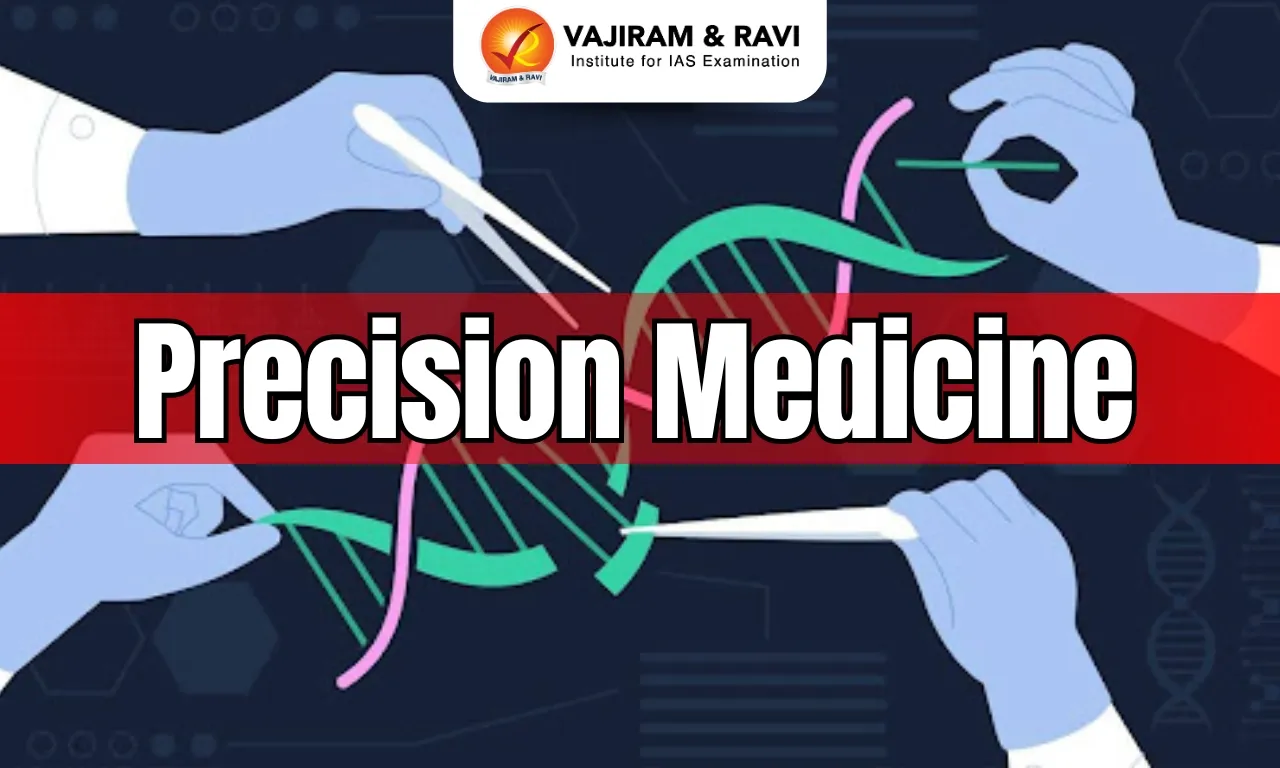
  • Precision biotherapeutics refers to medical interventions optimised for a patient’s specific genetic or molecular profile, rather than relying on generalised population-level data. 
  • This approach allows for early diagnosis, personalised treatment, and fewer adverse effects.
  • Key technologies shaping this field include:
    • Genomic and Proteomic Analysis: Decoding individual genetic and protein signatures to identify disease-causing mutations.
    • Gene Editing Therapies: Tools like CRISPR-Cas9 modify defective genes to correct underlying causes of disorders such as thalassemia and sickle-cell anaemia.
    • mRNA and Nucleic Acid Therapeutics: These therapies, popularised during the COVID-19 pandemic, use RNA molecules to instruct cells to produce or suppress specific proteins.
    • Monoclonal Antibodies and Biologics: Laboratory-engineered molecules that precisely target disease-related proteins, used in treatments for cancer, rheumatoid arthritis, and autoimmune diseases.
    • AI-Driven Drug Discovery: Machine learning models analyse vast datasets to predict molecule interactions, accelerating the discovery of new drugs.
  • Together, these technologies represent a shift from symptom management to disease correction at the molecular level, offering transformative potential for chronic and genetic illnesses.

The Global Precision Medicine Landscape

  • The precision medicine industry has seen exponential growth over the past decade.
  • According to Precedence Research, the global market, valued at approximately $12 billion in 2023, is expected to surpass $22 billion by 2027.
  • Key drivers of this growth include:
    • Advances in next-generation sequencing (NGS) and gene editing technologies.
    • Rising prevalence of non-communicable diseases (NCDs) like cancer, diabetes, and cardiovascular disorders.
    • Integration of AI and big data analytics in clinical decision-making.
    • Increased investment from pharmaceutical and biotech companies in personalised drug development.
  • The United States, Europe, and China currently lead global innovation in precision medicine. 
  • However, developing economies like India and Brazil are fast emerging as competitive hubs due to their cost advantage, skilled workforce, and growing genomic research infrastructure.

India’s Position in the Precision Medicine Ecosystem

  • India contributes nearly 65% of deaths from non-communicable diseases, underscoring the need for advanced diagnostic and therapeutic approaches. 
  • The country’s diverse genetic landscape, one of the most complex in the world, makes it an ideal testing ground for precision biotherapeutics.
  • Research and Institutional Strength
    • The Department of Biotechnology (DBT) has identified precision biotherapeutics as one of six focus areas under its Biotechnology for Economy, Environment, and Employment (BioE3) policy. 
  • Genomic Initiatives and Localisation
    • Projects like GenomeIndia and IndiGen are building reference genomic databases representing India’s vast population diversity. 
    • Such datasets enable customisation of global drug molecules to Indian genetic profiles, addressing the common issue where foreign-developed drugs show reduced efficacy among Indian patients.
  • Challenges Hindering India’s Precision Medicine Growth
    • Regulatory Gaps: There is no unified framework governing gene and cell therapies. Current regulations are fragmented and unclear on therapeutic use.
    • High Cost and Limited Access: Advanced biotherapeutics remain affordable only to urban elite, with costs running into lakhs per treatment.
    • Manufacturing Bottlenecks: India lacks large-scale facilities for biologics and cell-based therapies, forcing dependence on imports.
    • Ethical and Data Privacy Concerns: Genomic data, if not protected by robust data protection laws and consent frameworks, risks misuse and discrimination.
    • Addressing these gaps is crucial for India to emerge as a trusted global leader in affordable precision healthcare.

Opportunities for Growth

  • India’s advantages lie in its cost-effective research environment, data analytics capabilities, and biotechnology talent pool
  • By fostering public-private partnerships, strengthening biomanufacturing infrastructure, and creating ethical genomic data-sharing frameworks, India can:
    • Localise global therapies at lower costs.
    • Expand precision medicine access to rural populations.
    • Attract international investment in R&D and clinical trials.
  • Collaborations with global institutions, coupled with government support under ‘Make in India’ for Biotech, could position India as a global hub for precision therapeutics in the next decade.

Source : TH

Precision Medicine FAQs

Q1: What is precision medicine?

Ans: Precision medicine involves tailoring treatments based on an individual’s genetic, molecular, or cellular characteristics.

Q2: How large is the global precision medicine market?

Ans: The global precision medicine market is expected to exceed $22 billion by 2027, growing at a CAGR of over 10%.

Q3: What are the key technologies driving precision biotherapeutics?

Ans: Genomics, proteomics, gene editing (CRISPR), mRNA therapeutics, monoclonal antibodies, and AI-driven drug discovery are central technologies.

Q4: What are India’s main challenges in developing precision medicine?

Ans: India faces regulatory uncertainty, high treatment costs, limited biomanufacturing capacity, and genomic data privacy concerns.

Q5: How can India become a leader in global precision medicine?

Ans: By investing in R&D, expanding genomic databases, strengthening regulation, and localising high-cost therapies for affordable access.


CAG’s New Audit Priorities in India’s Path Toward Viksit Bharat 2047

CAG’s New Audit Priorities

CAG’s New Audit Priorities Latest News

  • On Audit Diwas (16 November), Comptroller and Auditor General of India (CAG) K. Sanjay Murthy outlined an expanded set of national audit priorities.
  • Audit Diwas commemorates the appointment of India’s first Auditor-General in 1860, marking the institution’s 166th year.
  • The shift aligns with the national vision of Viksit Bharat 2047 and evolving governance challenges.

Key Audit Focus Areas Announced by the CAG

  • Urban governance audit - Reinvigorated audits of Urban Local Governments (ULBs):
    • Rationale: Over 50% of India’s population will be urban by 2047.
    • Coverage: 101 major cities will be covered under the theme “Ease of Living”.
    • Parameters to be assessed: Infrastructure availability, environmental sustainability, service delivery efficiency, local economic growth.
    • Impact: Audit insights to affect over 40 crore urban citizens and guide urban policy reforms.
  • MSME sector audit - Ease of Doing Business for MSMEs:
    • Significance of MSMEs: MSMEs contribute significantly to employment generation, exports, regional economic growth.
    • Focus of audit: Paperless, faceless processes; ease of interface with government systems; efficiency of grievance-redressal mechanisms.
    • Objective: Identify procedural bottlenecks and strengthen MSME competitiveness.
  • Foundational literacy and numeracy (FLN) audit:
    • Human capital development is considered essential for the developed nation goal.
    • Pan-India assessment of early-grade learning outcomes, implementation of Foundational Literacy and Numeracy Mission.
    • Importance: Strong FLN outcomes are sine-qua-non for Viksit Bharat 2047 and align with NEP 2020.
  • Audit of multimodal logistics and Indian railways (under PM Gati Shakti framework):
    • A comprehensive cross-sectoral review of port connectivity, railways and freight corridors, logistics terminals, and inter-agency coordination.
    • Aim: To evaluate readiness for seamless multimodal transport and reduction of logistics costs.
    • Includes extensive consultations with the Ministry of Railways, port authorities, private freight operators.

Digital Transformation Initiatives of the CAG

  • CAG-Connect portal: It provides a real-time digital ecosystem linking 10 lakh auditee entities with audit offices. It ensures traceability, transparency, and efficient audit workflows
  • Development of CAG-LLM (Large Language Model): An indigenous AI-driven LLM designed to - 
    • Unlock institutional knowledge from decades of audits.
    • Process over 20,000 inspection reports annually.
    • Enable smarter, data-driven audits.
  • Capacity building and future-ready audit workforce: Partnership with IIT Madras for training in data science, Artificial Intelligence (AI), cybersecurity, IT auditing. Till now around 250 officers are trained, and the target is to train 5,000 officers in 5 years.

Significance of Auditing Highlighted by the Vice-President

  • Vice-President C P Radhakrishnan, who inaugurated the Audit Diwas celebrations, highlighted CAG’s role in promoting transparency, accountability and good governance in the management of public resources. 
  • He commended the institution’s significant strides in transforming audit processes to act as a facilitator of good governance and to strengthen executive accountability.
  • He emphasised that audit was no longer a retrospective exercise but a forward-looking instrument of reform, foresight, and innovation. 
  • He expressed confidence in the CAG’s role as a trusted partner in the Government’s pursuit of holistic development across the economic, social, technological, environmental, and institutional spheres.

Challenges

  • Data gaps and poor digital readiness among ULBs and MSME departments.
  • Coordination issues in multimodal logistics across multiple agencies.
  • Ensuring cybersecurity and privacy with digital audit tools.
  • Integration of AI systems like CAG-LLM into traditional audit workflows.
  • Standardising frameworks for measuring Ease of Living and Ease of Doing Business across states.

Way Forward

  • Strengthen digital capabilities of states, ULBs, and MSME agencies.
  • Institutionalise AI-supported auditing and data analytics.
  • Expand audits to include climate resilience, smart city projects, and social sector delivery.
  • Enhance stakeholder consultations for the multimodal transport audit.
  • Promote inter-ministerial coordination for PM Gati Shakti evaluations.
  • Build workforce capacity through continuous training and certification.

Conclusion

  • The CAG’s renewed audit priorities reflect a major shift towards proactive, real-time, future-ready auditing. 
  • By leveraging technology, strengthening institutional capacity, the CAG aims to significantly enhance transparency, accountability, and governance effectiveness in India's path toward Viksit Bharat 2047.

Source: IE

CAG’s New Audit Priorities FAQs

Q1: What is the significance of CAG’s renewed focus on auditing ULBs under the “Ease of Living” framework?

Ans: It strengthens evidence-based urban governance by assessing infrastructure, sustainability and service delivery across 101 major cities.

Q2: How does the CAG’s audit of MSMEs contribute to improving the Ease of Doing Business in India?

Ans: The audit identifies procedural bottlenecks and evaluates digital, paperless, faceless systems to enhance regulatory efficiency and MSME competitiveness.

Q3: Why is the pan-India audit of Foundational Literacy and Numeracy (FLN) critical for Viksit Bharat 2047?

Ans: Because strong FLN outcomes form the base of human capital development essential for India’s transition into a developed nation.

Q4: What is the role of the CAG’s multimodal logistics audit?

Ans: It evaluates planning, coordination and connectivity across ports, railways and freight systems to ensure integrated logistics and cost efficiency.

Q5: What is the relevance of CAG-LLM and CAG-Connect Portal in transforming India’s audit ecosystem?

Ans: These digital tools enable real-time connectivity with 10 lakh entities and AI-driven analysis of audit data.

Why Banks Are Raising Tier II Bonds: Surge in Long-Term Capital Issuance

Tier II Bonds

Tier II Bonds Latest News

  • Banks are rapidly issuing Tier II bonds to strengthen their capital base at a time when companies are raising record amounts through IPOs. 
  • The banking system is expected to raise about ₹25,000 crore this financial year, with ₹10,000 crore already raised.
  • The surge is fuelled by three key factors:
    • High demand for long-term debt instruments,
    • Expectations of a repo rate cut in the upcoming monetary policy, which would make current borrowing costs attractive, and
    • Regulatory requirements pushing institutions to invest in such bonds.
  • Together, these conditions have created a favourable window for banks to tap the market aggressively.

What Tier II Bonds Are and Why Banks Use Them

  • Tier II bonds are long-term debt instruments that banks issue to strengthen their capital base
  • With a minimum tenure of five years, they help banks meet Basel III capital adequacy norms and create an additional buffer to support future credit expansion.
  • These bonds allow banks to raise low-cost, long-term capital without diluting equity, making them an efficient funding tool. 
  • Experts note that Tier II instruments also improve a bank’s capital-to-risk weighted assets ratio (CRAR) by adding extra stability to its balance sheet.
    • CRAR is a key financial metric that measures a bank's capital against its risk-weighted assets to assess its financial strength. 
    • It is calculated by dividing a bank's capital (Tier 1 and Tier 2) by its risk-weighted assets and is expressed as a percentage. 
    • A higher CRAR indicates a bank is more capable of absorbing potential losses, which promotes financial stability and protects depositors. 

Banks Step Up Tier II Bond Issuances Amid Favorable Market Conditions

  • India’s top banks are accelerating Tier II bond issuances. 
    • SBI recently raised ₹7,500 crore at a competitive 6.93% via 10-year bonds, while ICICI Bank raised ₹1,000 crore in June. 
    • Experts estimate that banks may collectively raise up to ₹15,000 crore by December.
  • Many lenders waited earlier due to ample liquidity, lower deposit rates, and expectations of future rate cuts, which would reduce borrowing costs. Last year, banks had raised nearly ₹31,000 crore through Tier II bonds.
  • This renewed surge reflects improving market appetite and banks’ need to strengthen their capital base.

Why Banks Are Turning to Tier II Bonds

  • Banks are issuing more Tier II bonds because current market conditions make long-term borrowing cheaper than raising funds through deposits
  • With corporate issuers favouring shorter-term bonds this year, there is strong demand for long-duration, high-quality debt, creating a favourable window for banks.

Market Factors Driving the Surge

  • Expectation of a repo rate cut in December is encouraging investors to lock in long-term yields now.
  • Scarcity of top-rated long-tenor bonds has boosted appetite for Tier II issuances.
  • SBI’s aggressively priced 6.93% bond has acted as a benchmark, increasing confidence among other banks.
  • Provident and pension funds must meet regulatory investment quotas, pushing demand for long-term corporate bonds.

Regulatory and Strategic Considerations

  • Some banks also need to refinance older bonds whose call options were exercised. 
  • With stable markets and attractive yields, banks see this as the right time to strengthen capital buffers rather than wait for uncertain conditions later in the year.

Tier II Bonds Are Not the Primary Funding Source

  • Experts note that Indian banks still rely mainly on deposits for growth and capital needs. 
  • Most large banks have adequate internal capital generation and sufficient buffers, so future Tier II issuances will depend on how attractive market conditions remain.

Source: IE | BFSI

Tier II Bonds FAQs

Q1: What are Tier II bonds?

Ans: Tier II bonds are long-term debt instruments issued by banks to strengthen capital under Basel III norms, offering a low-cost way to boost CRAR without equity dilution.

Q2: Why are banks rushing to issue Tier II bonds now?

Ans: Strong demand for long-tenor bonds, expected RBI rate cuts, and investor appetite have created ideal conditions for banks to raise cheaper long-term capital.

Q3: How much capital are banks expected to raise through Tier II bonds?

Ans: Banks may raise around ₹25,000 crore this year, with ₹10,000 crore already raised and another ₹15,000 crore expected by December.

Q4: What market factors are driving investor appetite for Tier II bonds?

Ans: Scarcity of high-rated long-duration bonds, stable yields, pension fund investment requirements, and SBI’s benchmark pricing have boosted demand significantly.

Q5: Do Indian banks rely heavily on Tier II bonds for growth?

Ans: No. Indian banks remain deposit-funded with strong capital buffers. Tier II issuances are opportunistic, depending on market conditions and refinancing needs.

Bhang vs Cannabis in India: Why Bhang Is Legal but Growing Cannabis Isn’t

Bhang

Bhang Latest News

  • The Kerala High Court has dismissed a petition by a man who was caught with five cannabis plants on a terrace. 
  • He argued that since the plants had no “flowering or fruiting tops”, they couldn’t be considered ganja, which is illegal under the NDPS Act.
  • The Court rejected this argument, explaining that the law makes a clear distinction:
    • “Ganja” refers only to the flowering tops of the cannabis plant.
    • But the Act separately bans the cultivation of any cannabis plant, regardless of whether it has flowers or not.
  • The ruling settles a common misunderstanding — some parts of the cannabis plant may be exempt from the definition of a narcotic drug, but growing the plant itself is always illegal in India.

How the NDPS Act Defines Cannabis in India

  • Under the Narcotic Drugs and Psychotropic Substances (NDPS) Act, 1985— introduced under strong global pressure — India did not ban every part of the cannabis plant. 
  • Instead, the law defines “cannabis (hemp)” narrowly:
    • Charas: the resin extracted from the cannabis plant, including hashish oil.
    • Ganja: only the flowering or fruiting tops of the plant.
    • Excluded: the seeds and leaves, as long as they are not accompanied by the tops.
  • In short, the law criminalises the intoxicating parts (resin and flowering tops) but not the seeds and leaves by themselves.

Why Bhang Is Legal: The Leaves-and-Seeds Loophole

  • Bhang remains legal in India because the NDPS Act excludes cannabis leaves and seeds from the definition of “cannabis”. 
  • Since bhang is made from leaves, it is not treated as a narcotic drug, even though other parts of the plant — like the resin (charas) and flowering tops (ganja) — are banned.
  • However, bhang isn’t completely unregulated. The NDPS Act leaves its control to state governments, allowing them to regulate or even ban its production and sale.
  • As a result:
    • States like Uttar Pradesh and Rajasthan license bhang shops.
    • Others, like Assam, have banned it under state laws.
  • So, bhang is legal not because cannabis is allowed, but because the law treats leaves differently from the intoxicating parts of the plant.

Why Growing Cannabis at Home Is Illegal Even If Bhang Is Legal

  • Although cannabis leaves are not banned under the NDPS Act, growing the plant itself is a crime. 
  • The Kerala High Court reaffirmed this by pointing to Section 8(b), which clearly bans the cultivation of any cannabis plant unless authorised for medical or scientific use.
  • The law defines a “cannabis plant” as any plant of the genus cannabis, without distinguishing between plants with flowers and those without. 
  • The Court also clarified that “cultivation” includes raising or gardening a plant even in pots, not just farming in fields.

How the NDPS Act Punishes Cannabis Offences

  • The NDPS Act sets different punishments depending on the type and quantity of cannabis involved:
  • Small quantity
    • Ganja: up to 1 kg
    • Charas: up to 100 g
    • Punishment: Up to 1 year in jail, or a ₹10,000 fine, or both.
  • Commercial quantity
    • Ganja: 20 kg or more
    • Charas: 1 kg or more
    • Punishment: 10–20 years rigorous imprisonment + ₹1–2 lakh fine
  • Intermediate quantity (between small and commercial)
    • Punishment: Up to 10 years in jail + ₹1 lakh fine
  • Cultivating cannabis plants (even a few)
    • Punishment: Up to 10 years rigorous imprisonment + ₹1 lakh fine
  • In short, penalties rise sharply with quantity — and cultivation itself is treated as a serious offence.

When Cannabis Can Be Grown Legally in India

  • Even though the NDPS Act bans cannabis cultivation, it allows important industrial and medical exceptions
  • Section 14 of the act lets the government permit cultivation specifically for fibre, seeds, horticulture, or medical research.
  • Using this provision:
    • Uttarakhand became the first state (in 2018) to license industrial hemp, a low-THC variety of cannabis.
    • Uttar Pradesh, Himachal Pradesh, and Madhya Pradesh have followed with similar permissions.
    • The Union government has granted licences to scientific bodies like CSIR to grow cannabis for medical studies.
  • India’s first medical cannabis clinic opened in Bengaluru in 2020, prescribing cannabis-based medicines for certain conditions.
  • Meanwhile, the Delhi High Court has been examining a petition challenging the cannabis ban, arguing that the restrictions are outdated and lack scientific basis.

Source: IE | ZN

Bhang FAQs

Q1: Why is bhang legal but cannabis illegal in India?

Ans: Bhang is made from cannabis leaves, which are excluded from the NDPS Act definition. But cultivation of the cannabis plant itself is strictly prohibited, making the plant illegal.

Q2: What parts of the cannabis plant are banned under Indian law?

Ans: The NDPS Act bans resin (charas) and flowering tops (ganja). Seeds and leaves are excluded unless accompanied by tops, which is why bhang remains legal.

Q3: Why can’t you grow cannabis at home even for leaves?

Ans: Section 8(b) bans cultivation of any cannabis plant. The law makes no distinction between flowering and non-flowering plants, making all home cultivation illegal.

Q4: What are the punishments for cannabis-related offences?

Ans: Possession penalties depend on quantity—small, intermediate, commercial. Cultivation can lead to up to 10 years’ rigorous imprisonment and a fine of ₹1 lakh.

Q5: When is cannabis cultivation allowed legally?

Ans: Section 14 allows licensed cultivation for industrial hemp, fibre, seeds, or medical research. States like Uttarakhand and institutions like CSIR are authorised under this provision.

Thames River

Thames River

Thames River Latest News

A video of an Indian man washing his feet in London's River Thames has gone viral recently.

About Thames River

  • It is a 346-km river that flows through southern England.
  • It is the longest river in England and the second longest in the United Kingdom, right after the River Severn. 
  • Course
    • Origin: Its source is at Thames Head, near Kemble in the Cotswold Hills, Gloucestershire County.
    • It flows into the North Sea via the Thames Estuary.
    • The Nore is the sandbank that marks the mouth of the Thames Estuary and the confluence point of the Thames and the North Sea. 
  • The Thames’ basin covers an area of approximately 16,130 sq.km.
  • The Thames is tidal a few miles upstream from London. Past London it becomes an estuary.
  • Main Tributaries: 
    • Lea, Leach, Churn, Coln, Windrush, Kennet, Evenlode, Ock, and Loddon. 
    • The River Kennet is the largest one at 45 miles long.
  • The river passes numerous popular cities along its way, such as London, Reading, Hendley-on-Thomas, Windsor, and Oxford, where it is also called the Isis River.
  • It provides two-thirds of London’s drinking water.
  • It has been a vital transportation route since ancient times, facilitating trade and commerce between London and other parts of England.
  • There are 16 bridges that cross the River Thames in Greater London alone, most prominently the Golden Jubilee Bridges and the Millennium Bridges for pedestrians.

Source: NDTV

Thames River FAQs

Q1: What is the total length of the River Thames?

Ans: 346 km

Q2: The River Thames flows through which country?

Ans: United Kingdom

Q3: Where does the River Thames originate?

Ans: Its source is at Thames Head, near Kemble in the Cotswold Hills, Gloucestershire County.

Q4: Into which water body does the Thames flow?

Ans: North Sea

Senkakau Islands

Senkakau Islands

Senkaku Islands Latest News

Recently, a China Coast Guard ship formation passed through the disputed waters of the Senkaku Islands.

About Senkaku Islands

  • Location: These are an uninhabited group of islands situated in the East China Sea.
  • The islands comprise Uotsuri Island, Kuba Island, Taisho Island Kitakojima Island, Minamikojima Island, Tobise Island, Okinokitaiwa Island, and Okinominamiiwa Island. 
  • The total land area of all the islands is roughly 6.3 square kilometers.

Features of Senkaku Islands

  • This island consists of conglomerate sandstone (alternate layers of sandstone and conglomerate in some parts), tuff, andesite, andesitic lava, coral outcroppings elevated above sea level during the Holocene era, and other rocky material. 
  • The surrounding area is highly volcanic and features faults associated with this volcanic activity, and this affects land formation.
  • Dispute: The Senkaku Islands (called the Diaoyu Islands by China) have long been disputed between China and Japan.
  • Administration of Senkaku Islands: Currently, Japan administers and controls the Senkaku Islands as part of the city of Ishigaki in Okinawa Prefecture.

Source: TH

Senkaku Islands FAQs

Q1: Where are the Senkaku Islands located?

Ans: East China Sea

Q2: Which country currently administers the Senkaku Islands?

Ans: Japan

Sakurajima Volcano

Sakurajima Volcano

Sakurajima Volcano Latest News

Recently, Japan’s Sakurajima volcano erupted multiple times and sent a plume of smoke and ash as high as 4.4 kilometres into the air.

About Sakurajima Volcano

  • Location: It is located on the southern tip of Kyushu island near the city of Kagoshima, Japan.
  • It is one of Japan’s most active volcanoes and eruptions of varying levels take place on a regular basis.
  • Sakurajima is a stratovolcano formed from layers of lava and ash. It is situated on a convergent plate margin.
  • It is an andesitic volcano (meaning it has a high gas content and is very viscous) located at the southern edge of the Aira caldera.
  • It is formed by the central cones of the Kitadake (northern peak) and the Minamidake (southern peak).
  • Sakura-jima formed an island until 1914, when an explosive eruption produced enough material to join the island to the peninsula on the east.

What is Volcano?

  • A volcano is an opening on the surface of a planet or moon that allows material warmer than its surroundings to escape from its interior.
  • When this material escapes, it causes an eruption and it can last days, months, or even years. 
  • This eruption can be explosive, sending material high into the sky. Or it can be calmer, with gentle flows of material.

Source: DD News

Sakurajima Volcano FAQs

Q1: Sakurajima Volcano is located on which island?

Ans: Kyushu

Q2: What type of volcano is Sakurajima?

Ans: Stratovolcano

Portugal

Portugal

Portugal Latest News

Recently, violent weather from Storm Claudia killed three people and injured dozens in Portugal.

About Portugal

  • Location: It is the westernmost country of mainland Europe, located on the Iberian Peninsula.
  • Bordering Countries: It shares land border with Spain (north and east),
  • Maritime border: It is bounded by the North Atlantic Ocean to the south and west.
  • It also administers two autonomous regions: the Madeira and Azores archipelagos, located in the Atlantic Ocean.
  • Capital city: Lisbon

Geographical Features of Portugal

  • Climate: Its climate is very much like that of most Mediterranean countries. This means it's hot in the summer and temperate in the winter.
  • Rivers: The Tagus River, flowing west into the Atlantic ocean, divides Portugal into mountainous northern regions and rolling plains in the south.
  • Highest Point: Ponta do Pico (Pico Alto), located in the Azores.
  • Natural Resources: It mainly consists of iron ore, copper, zinc, tin, tungsten, silver, gold, uranium, marble, clay, gypsum.

Source: News On Air

Portugal FAQs

Q1: What is the capital of Portugal?

Ans: Lisbon

Q2: Where is Portugal located?

Ans: Western Europe

Enquire Now